Botanical Synergy: Gotu Kola, Horsetail, and Wild Geranium for Collagen Support
In our previous discussions, we established the foundational importance of amino acids as the direct building blocks of collagen and explored the unique, sustainable hydration offered by plant-based hyaluronic acid. Now, we venture into the third critical pillar of advanced skincare formulation: botanical synergy. This is where ancient herbal wisdom meets modern biochemical understanding, creating a powerful alliance that amplifies the skin's natural regenerative processes. It’s not enough to simply have the building blocks; the skin also needs intelligent, targeted support to assemble them correctly and protect the resulting structures. This is where a carefully curated complex of plant extracts, featuring Gotu Kola, Horsetail, and Wild Geranium, truly shines.
These are not just random additions to an ingredient list. Each botanical has been selected for its specific, scientifically validated role in supporting the collagen life cycle. They act as catalysts, protectors, and structural enhancers, working in concert with the amino acids and peptides to create a comprehensive support system for the skin's dermal matrix. This synergistic approach moves beyond single-ingredient marketing to deliver a holistic solution that addresses collagen synthesis, structural integrity, and environmental protection simultaneously. In this article, we will delve into the science behind each of these botanical powerhouses and reveal how their combined action creates a result far greater than the sum of their parts.
Key Takeaways
- Gotu Kola (Centella asiatica) is a potent collagen synthesis stimulator, directly activating fibroblasts to produce more Type I and Type III collagen through its active compounds, asiaticoside and madecassoside.
- Horsetail (Equisetum arvense) is one of nature's richest sources of silica, a crucial mineral that acts as a biological “cross-linker,” strengthening collagen fibers and improving the skin's structural integrity and elasticity.
- Wild Geranium (Geranium maculatum) provides powerful astringent properties due to its high tannin content, which helps to tighten and firm the skin, reduce inflammation, and protect collagen from degradation.
In This Article:
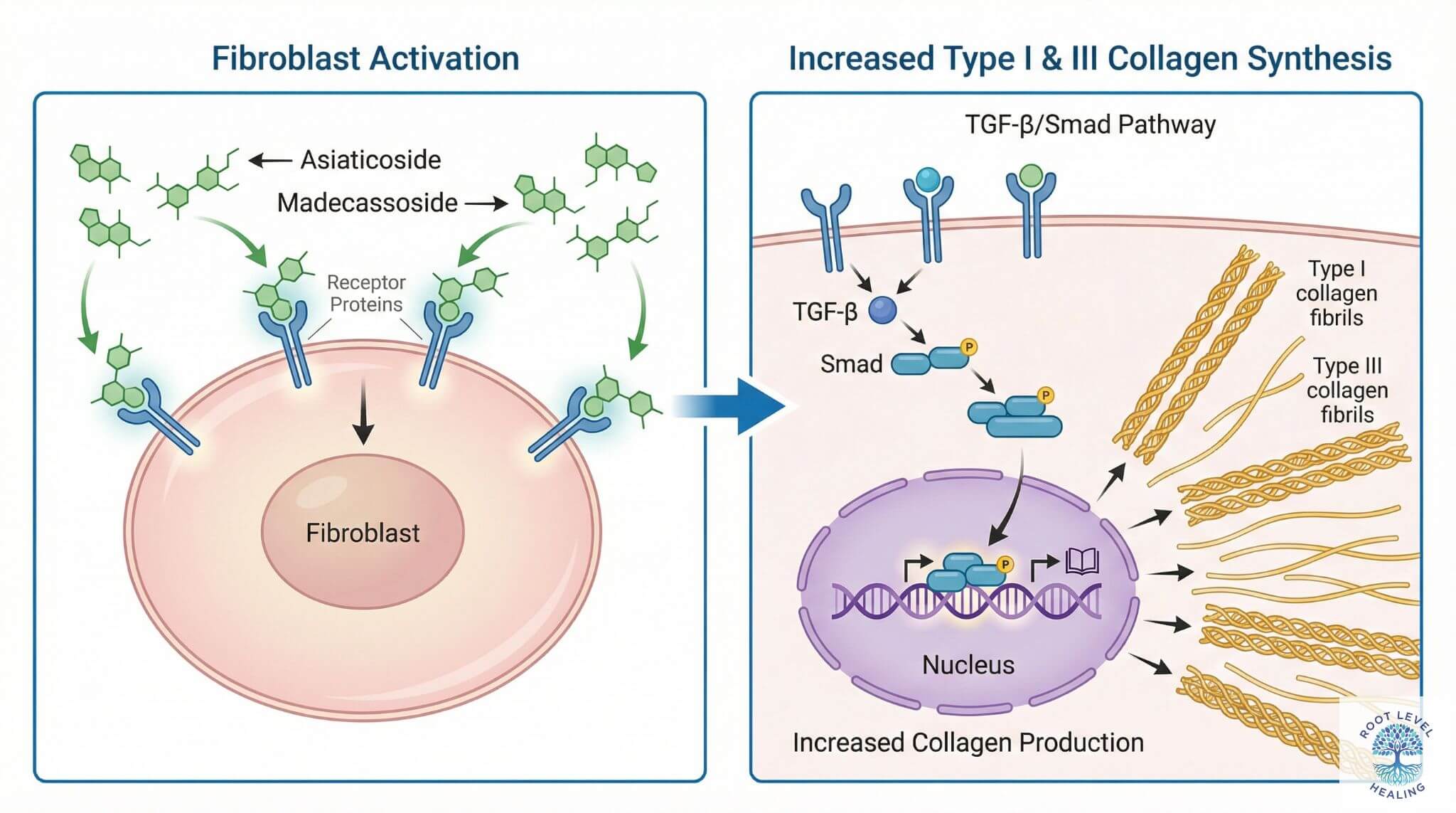
The active triterpenoids in Gotu Kola, such as asiaticoside, penetrate the dermis to directly signal fibroblasts, upregulating the gene expression for Type I and Type III collagen and accelerating the skin's natural repair and regeneration processes.
The Collagen Catalyst: Gotu Kola (Centella asiatica)
For centuries, Centella asiatica, commonly known as Gotu Kola or Tiger Grass, has been a cornerstone of Ayurvedic and Traditional Chinese Medicine, revered for its remarkable wound-healing and skin-rejuvenating properties. Modern science has now validated this ancient wisdom, identifying the key active compounds—asiaticoside, madecassoside, asiatic acid, and madecassic acid—as powerful modulators of connective tissue metabolism [1]. These triterpenoid saponins are the driving force behind Gotu Kola's ability to act as a potent catalyst for collagen synthesis.
The molecular mechanism behind this action is remarkably sophisticated. The triterpenoids in Gotu Kola, particularly asiaticoside and madecassoside, have been shown to modulate the TGF-β/Smad signaling pathway—a crucial cellular communication network that governs the synthesis of extracellular matrix proteins. Research published in the *Journal of Cellular and Molecular Medicine* has demonstrated that these compounds can induce the phosphorylation of Smad 2 and Smad 3 proteins [3]. Once activated, these proteins translocate to the nucleus and act as transcription factors, directly upregulating the gene expression for Type I and Type III collagen. This isn't just a passive boost; it's a targeted genetic instruction to the fibroblasts to build more of the specific collagen types that provide skin with its tensile strength and youthful elasticity.
Furthermore, the benefits extend beyond just collagen. Studies indicate that Centella asiatica also increases the synthesis of fibronectin, a glycoprotein that acts as a biological glue, helping to anchor cells to the matrix and guiding tissue repair. It also has a balancing effect, preventing the excessive collagen production that can lead to hypertrophic scars or keloids by downregulating the expression of TGF-βRI and TGF-βRII in cases of overactive signaling. This intelligent, modulatory effect makes Gotu Kola not just a powerful catalyst, but a smart regulator of dermal health, ensuring that the regenerative process is both robust and orderly. This regulatory function is crucial, as uncontrolled collagen production can lead to fibrosis and other undesirable outcomes. Gotu Kola ensures that the skin's response is powerful yet controlled, leading to healthy, well-structured tissue.
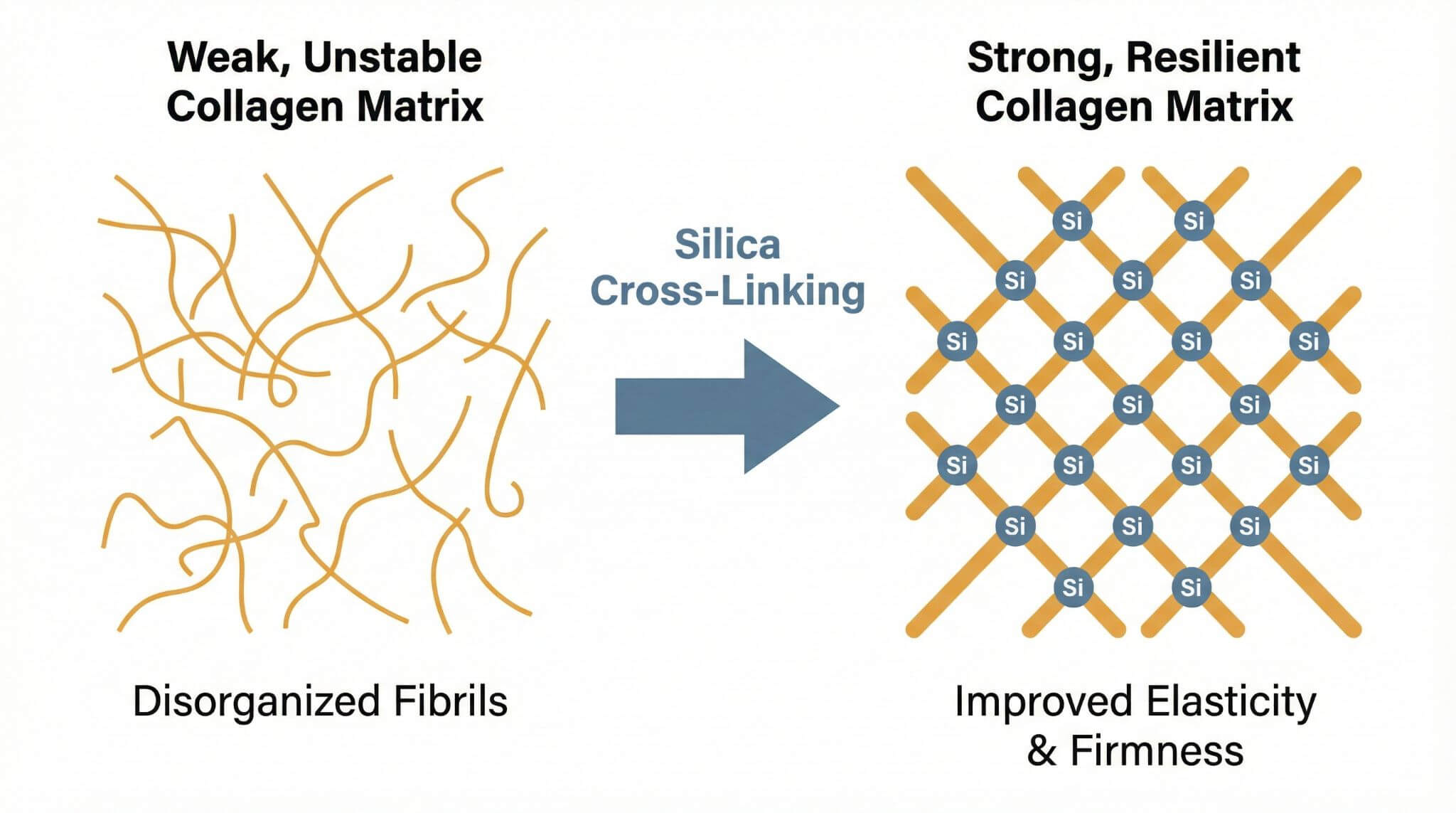
Silica from Horsetail extract acts as a vital co-factor in collagen synthesis, enabling the cross-linking of collagen fibrils into a strong, organized, and resilient matrix that provides the skin with firmness and elasticity.
The Structural Enhancer: Horsetail (Equisetum arvense)
If Gotu Kola is the catalyst that builds new collagen, Horsetail is the master craftsman that ensures its structural integrity. This ancient plant, a living fossil that predates the dinosaurs, is one of the most concentrated sources of silica in the plant kingdom, containing up to 25% of its dry weight as this essential mineral [2]. While often overlooked in skincare, silica is a fundamental component of healthy connective tissue, playing a vital role in the formation and stabilization of the collagen matrix.
Silica’s primary function in the skin is to act as a biological cross-linking agent, a role that is absolutely critical for the structural integrity of collagen. It is an essential co-factor for the enzyme prolyl hydroxylase, which catalyzes a key step in collagen synthesis: the hydroxylation of proline residues into hydroxyproline. This conversion is vital because hydroxyproline forms crucial hydrogen bonds that stabilize the collagen triple helix structure. Without adequate silica, this enzymatic process is impaired, leading to the formation of weak, under-hydroxylated, and unstable collagen fibers that are more susceptible to enzymatic degradation and mechanical stress. This is why a deficiency in silica can manifest as decreased skin elasticity and a more rapid appearance of wrinkles.
By providing a bio-available source of orthosilicic acid (the form of silica the body can use), Horsetail extract ensures that the newly synthesized collagen fibers are properly formed and cross-linked, creating a strong, resilient, and flexible dermal framework. This results in improved skin elasticity, firmness, and a reduction in the appearance of fine lines and wrinkles. Think of it as the mortar that holds the collagen bricks together, or the rebar that reinforces a concrete structure, transforming a simple collection of fibers into a robust and functional tissue that can withstand the tests of time and environmental stress. The impact of this structural reinforcement cannot be overstated. It is the difference between a flimsy, easily damaged structure and a robust, resilient one that maintains its shape and function over time.
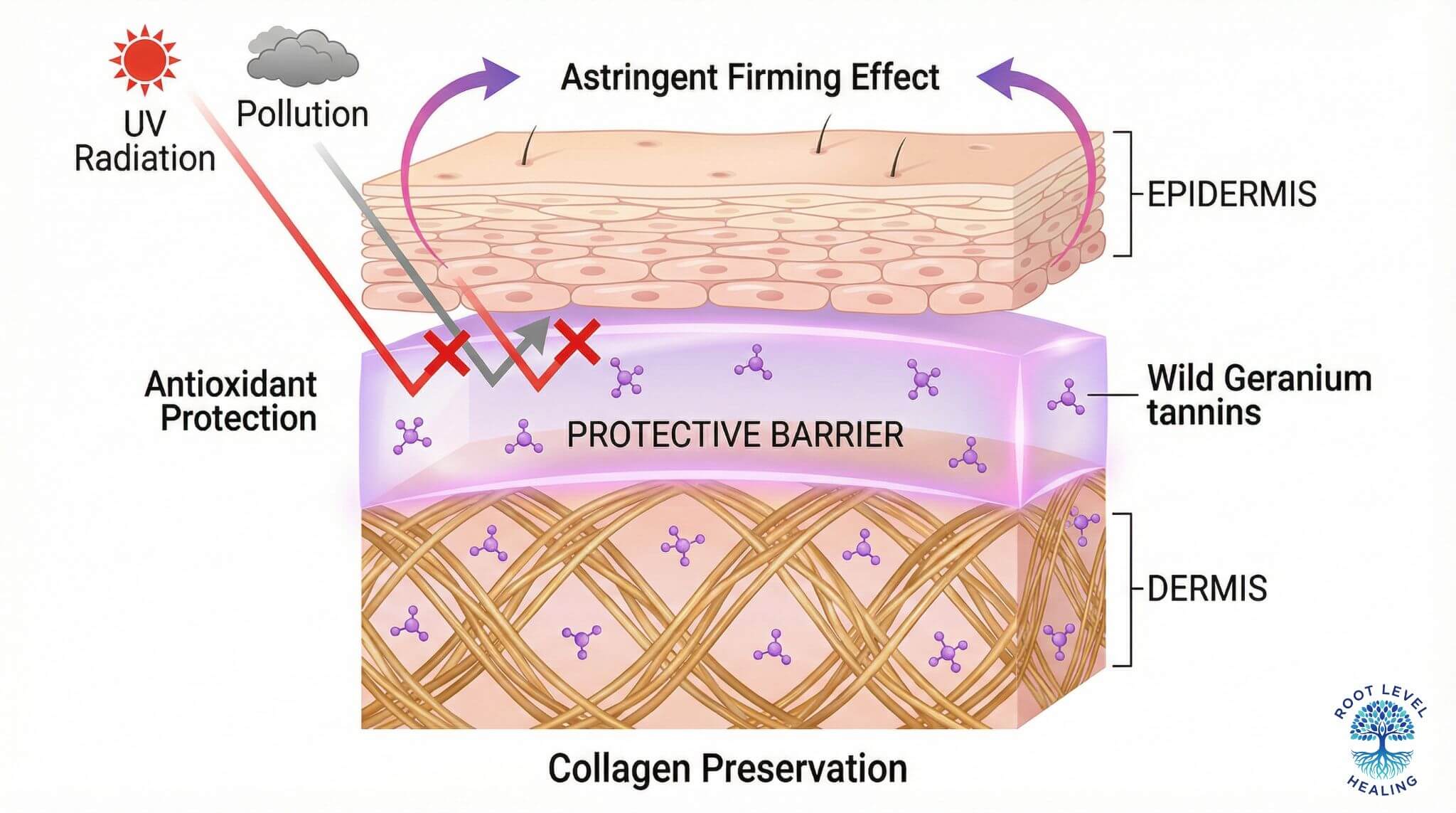
The tannins in Wild Geranium provide a dual benefit: their astringent properties instantly firm and tone the skin's surface, while their antioxidant and enzyme-inhibiting actions protect the deeper collagen structures from degradation.
The Protective Astringent: Wild Geranium (Geranium maculatum)
Completing our botanical trio is Wild Geranium, a powerful protector and toner. Its primary strength lies in its high concentration of tannins, natural polyphenolic compounds that provide potent astringent properties [4]. When applied to the skin, tannins cause a temporary contraction of tissues by cross-linking proteins. This action has several immediate and long-term benefits for the skin. In the short term, it helps to tighten the skin, reduce the appearance of enlarged pores, and create a smoother, more refined texture. This makes it an excellent ingredient for improving the overall appearance and feel of the skin.
Beyond its immediate toning effects, the polyphenolic tannins in Wild Geranium play a crucial protective role. As potent antioxidants, they help to neutralize free radicals generated by UV radiation and pollution, preventing the oxidative stress that triggers the activity of matrix metalloproteinases (MMPs)—enzymes that actively degrade collagen and elastin. Furthermore, tannins have been shown to inhibit the activity of collagenase and elastase directly. This dual-action protection—scavenging free radicals and inhibiting destructive enzymes—makes Wild Geranium an essential guardian of the dermal matrix. Its natural antiseptic and anti-inflammatory qualities also contribute to a balanced and healthy skin environment, preventing the microbial activity and low-grade inflammation that can lead to chronic collagen degradation. In the context of our botanical synergy, Wild Geranium acts as the vigilant protector, preserving the newly synthesized and strengthened collagen from the forces that seek to break it down. This protective action is essential for long-term results, as it prevents the undoing of the regenerative work done by the other ingredients.
The Power of Synergy: Why the Combination Matters
The true genius of this formulation lies not in the individual actions of these botanicals, but in their synergistic interplay. It’s a multi-pronged strategy that addresses the entire collagen life cycle:
- Amino Acids & Peptides provide the fundamental building blocks and the initial signal to build.
- Gotu Kola acts as the foreman, receiving the signal and directing the fibroblast “workers” to accelerate the production of new collagen and fibronectin.
- Horsetail serves as the quality control inspector, providing the essential silica needed to ensure the new collagen is properly constructed and cross-linked for maximum strength and resilience.
- Wild Geranium functions as the security detail, protecting the newly built structures from enzymatic degradation and environmental threats while keeping the skin environment calm and balanced.
This integrated approach ensures that the skin isn't just getting a random assortment of beneficial ingredients. Instead, it's receiving a coordinated team of specialists, each with a distinct role, working together to achieve a common goal: the restoration and preservation of a youthful, healthy, and resilient dermal matrix. This is the essence of botanical synergy—a concept that elevates skincare from simple ingredient application to intelligent, targeted biological support. The result is a formula that is not only more effective but also more balanced and less likely to cause irritation than high concentrations of single active ingredients.
Beyond the Ingredients: The Importance of Formulation
While the individual and synergistic actions of these botanicals are impressive, their ultimate effectiveness is determined by the formulation in which they are delivered. The concentration of each extract, the pH of the final product, and the presence of other ingredients that enhance penetration and stability are all critical factors. A well-designed formula will ensure that the active compounds from Gotu Kola, Horsetail, and Wild Geranium can reach their target sites within the dermis in a stable and bio-available form. This is where the science of cosmetic chemistry comes into play, creating a delivery system that maximizes the potential of these powerful plant extracts.
For example, the use of a lightweight serum base with penetration enhancers can help to shuttle the triterpenoids from Gotu Kola and the silica from Horsetail deep into the skin, where they can interact with fibroblasts and the collagen matrix. The pH of the formula must also be carefully controlled to ensure the stability and activity of the tannins from Wild Geranium. Furthermore, the inclusion of humectants like hyaluronic acid can create a hydrated environment that facilitates cellular communication and enzymatic processes. Ultimately, it is the thoughtful combination of high-quality, clinically validated ingredients within a sophisticated and stable delivery system that unlocks the true potential of botanical synergy and delivers visible, lasting results.
Frequently Asked Questions About Botanical Extracts
Q: Are these botanical extracts suitable for sensitive skin?
A: Yes, generally. Gotu Kola and Dandelion are known for their soothing and anti-inflammatory properties. Wild Geranium, while astringent, is typically well-tolerated and helps to calm irritation. Horsetail is primarily a source of minerals and is not known to be an irritant. As with any new product, a patch test is always recommended, but this combination is designed to be both effective and gentle.
Q: Can I get the same benefits from taking these herbs as supplements?
A: While oral supplementation with these herbs can offer systemic benefits, topical application delivers the active compounds directly to the skin cells where they are needed most for cosmetic purposes. For targeted effects on collagen synthesis and dermal structure, direct topical delivery is far more efficient and effective than relying on the digestive system to process and distribute the compounds.
Q: How do these botanicals interact with other active ingredients like retinol or Vitamin C?
A: This botanical complex is highly compatible with other active ingredients. In fact, it can be seen as a supportive complex. The anti-inflammatory and antioxidant properties of these extracts can help to mitigate some of the potential irritation from stronger actives like retinol, while their collagen-boosting effects work in concert with the benefits of Vitamin C, which is also a crucial co-factor for collagen synthesis.
References
- Gohil, K. J., Patel, J. A., & Gajjar, A. K. (2010). Pharmacological Review on Centella asiatica: A Potential Herbal Cure-all. *Indian Journal of Pharmaceutical Sciences*, 72(5), 546–556.
- Healthline. (2023). 7 Emerging Benefits and Uses of Horsetail.
- Diniz, L. R. L., et al. (2023). Centella asiatica and Its Metabolite Asiatic Acid: Wound Healing Effects and Therapeutic Potential. *Metabolites*, 13(2), 276.
- Ahmad, I., & Husain, F. M. (2019). Phytochemical and Pharmacological Review of Geranium maculatum. *International Journal of Pharmaceutical Sciences and Research*, 10(5), 2124-2131.
Ready to Discover Your Score?
This 2-minute quiz is the essential first step to understanding your body’s current toxic load and identifying the root cause of how you feel.
Take The Toxicity QuizExplore More Articles
Dive deeper into topics like detoxification, gut health, and mental clarity on our blog. Knowledge is the key to taking control of your health.
Visit The Blog