Plant-Based Hyaluronic Acid: Cassia Angustifolia Seed Extract for Sustainable Hydration
In our previous post, we established the critical role of amino acids as the foundational building blocks for collagen, elastin, and overall cellular repair. Now, we turn our attention to the second pillar of youthful skin: hydration. While hyaluronic acid (HA) has long been the gold standard for skin hydration, a powerful, sustainable, and arguably superior alternative is emerging from the world of botany: Cassia Angustifolia seed extract.
Key Takeaways
- 🌿Nature's Hydration Hero: Cassia Angustifolia seed extract is a plant-based alternative to hyaluronic acid that provides intense, long-lasting hydration.
- 💧Superior Moisturization: Studies show its unique polysaccharide structure can hold more water and for longer than traditional HA, creating a breathable, protective film on the skin.
- 🌍Sustainable & Ethical: As a vegan and sustainably sourced ingredient, it offers a powerful choice for conscious consumers without compromising on efficacy.
Plant-Based Hyaluronic Acid: Cassia Angustifolia Seed Extract for Ayurvedic Skin Hydration (A Quick Overview)
Before we dive deep into the science, watch this quick overview to discover the hydration evolution and learn how Cassia Angustifolia seed extract provides a sustainable, plant-based alternative to traditional hyaluronic acid.
In This Article:
- Revisiting Hyaluronic Acid: The Gold Standard and Its Limitations
- Introducing Cassia Angustifolia: The Botanical Hydration Powerhouse
- The Science of Plant Polysaccharides: How Cassia Angustifolia Works
- Cassia Angustifolia vs. Hyaluronic Acid: A Head-to-Head Comparison
- The Future of Hydration: Why Plant-Based is the Way Forward
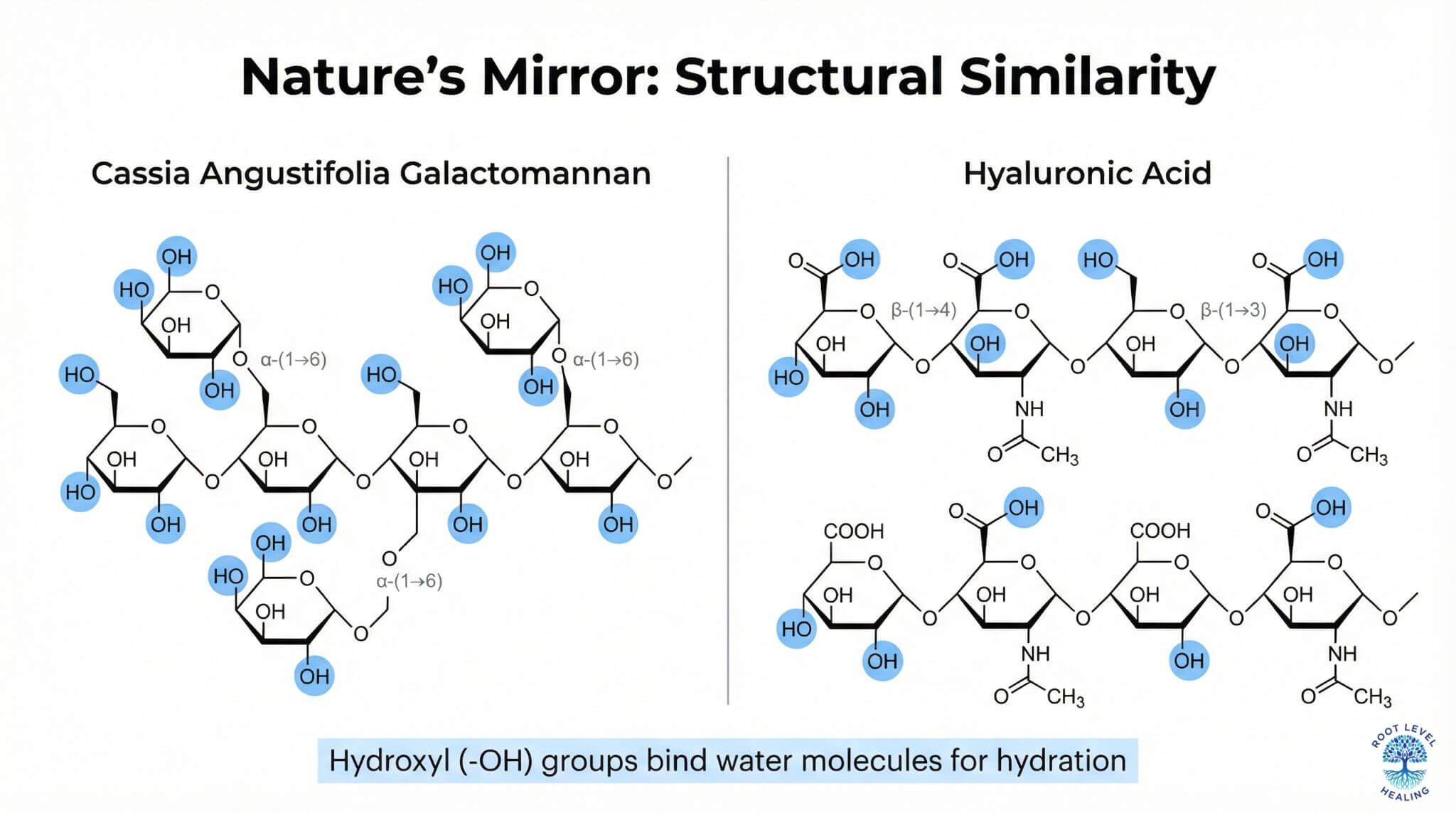
The complex polysaccharide structure of Cassia Angustifolia seed extract mimics the water-binding capacity of hyaluronic acid, creating a powerful natural humectant.
Revisiting Hyaluronic Acid: The Gold Standard and Its Limitations
For decades, hyaluronic acid (HA) has been the undisputed champion of skincare hydration. This glycosaminoglycan, naturally found in our skin, joints, and connective tissues, is a humectant with the remarkable ability to hold up to 1,000 times its weight in water. This property makes it incredibly effective at plumping the skin, reducing the appearance of fine lines, and maintaining a hydrated, dewy complexion.
However, the source and production of commercial HA raise important questions for the conscious consumer. Much of the HA used in skincare is derived from two main sources: rooster combs (animal-derived) or bacterial fermentation in a lab (synthetic). While effective, these sources present ethical and environmental concerns for many. Furthermore, the efficacy of HA is highly dependent on its molecular weight, with different sizes offering different benefits—a complexity often lost in marketing claims.
Introducing Cassia Angustifolia: The Botanical Hydration Powerhouse
Enter Cassia Angustifolia, also known as Senna, a plant native to India that has been used in Ayurvedic and Unani medicine for centuries [1]. While traditionally known for other medicinal properties, modern research has revealed that the polysaccharides extracted from its seeds possess a molecular structure and hydrating power remarkably similar to hyaluronic acid. This discovery has positioned Cassia Angustifolia as a leading plant-based, vegan, and sustainable alternative to traditional HA.
"The Cassia angustifolia extract is inspired by Ayurveda and rich in galactomannans and high content of polysaccharides, which naturally mimics hyaluronic acid." [2]
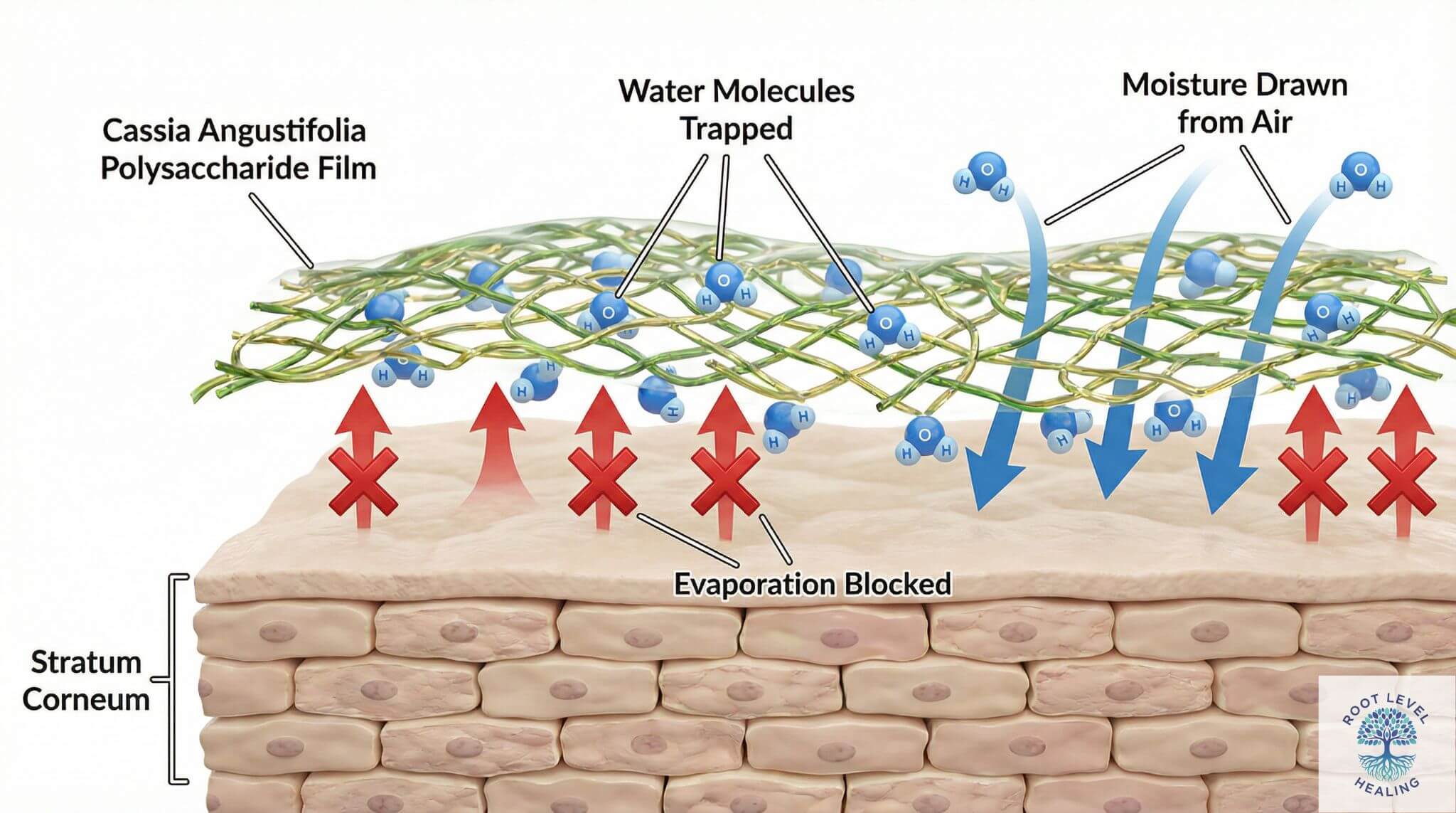
Unlike some humectants that can draw moisture out of the skin in dry environments, Cassia Angustifolia forms a protective, breathable film that locks in hydration for a sustained plumping effect.
The Science of Plant Polysaccharides: How Cassia Angustifolia Works
The magic of Cassia Angustifolia lies in its high concentration of polysaccharides, specifically a compound called galactomannan. These long-chain sugar molecules have a unique ability to bind with water, creating a powerful hydrating effect on the skin. But the mechanism is more sophisticated than simple water absorption.
When applied to the skin, the polysaccharides from Cassia Angustifolia form a breathable, flexible film on the stratum corneum (the outermost layer of the skin). This film serves two critical functions:
- Locks in Moisture: It prevents transepidermal water loss (TEWL), the process by which water evaporates from the skin into the environment. This keeps the skin's own natural moisture locked in.
- Attracts and Binds Water: Like HA, it draws moisture from the surrounding environment, binding it to the skin for a sustained plumping and hydrating effect.
At the molecular level, Cassia Angustifolia's galactomannan is a sophisticated polysaccharide with a high molecular weight ranging from 200,000 to 300,000 Daltons [4]. This structure consists of a linear backbone of mannose units connected by β-(1–4) glycosidic bonds, with single galactose units branching off at α-(1–6) positions. The mannose-to-galactose ratio in Cassia seed extract is approximately 5:1—one of the highest among commercially used galactomannans—which gives it unique properties compared to other plant-based hydrators like guar gum (1.6:1) or fenugreek (1:1) [5].
The hydrating power of galactomannans lies in their abundance of hydroxyl (-OH) groups. These polar functional groups have a strong affinity for water molecules, forming hydrogen bonds that trap and hold moisture [6]. In Cassia Angustifolia extract, the high mannose content means more hydroxyl groups are available along the linear backbone, creating an exceptionally efficient water-binding matrix. When applied to the skin, these long-chain molecules form a three-dimensional network that not only attracts water from the environment but also prevents transepidermal water loss by creating a protective hydrocolloid film.
The high molecular weight of Cassia galactomannan is critical to its superior performance. Unlike low molecular weight humectants that can sometimes draw moisture out of the skin in dry environments, the 200,000-300,000 Da chains of Cassia extract are too large to penetrate deeply into the stratum corneum. Instead, they remain on the surface, where they create a reservoir of bound water that the skin can draw from continuously. This sustained-release hydration mechanism provides longer-lasting plumping and smoothing effects compared to smaller molecules [7].
Some studies suggest that this botanical extract can deliver even longer-lasting hydration than synthetic HA. By creating this protective hydrocolloid film, it provides a continuous reservoir of moisture for the skin to draw from throughout the day, resulting in a smoother, more supple, and visibly more youthful complexion [3].
Cassia Angustifolia vs. Hyaluronic Acid: A Head-to-Head Comparison
While both ingredients are exceptional hydrators, there are key differences that make Cassia Angustifolia a compelling choice for modern skincare. Let"s break down the comparison:
| Feature | Hyaluronic Acid (Traditional) | Cassia Angustifolia Seed Extract |
|---|---|---|
| Source | Animal (rooster combs) or synthetic (bacterial fermentation) | 100% Plant-Based (seeds of the Cassia Angustifolia plant) |
| Mechanism | Directly binds water molecules | Forms a protective film that binds water and prevents TEWL |
| Hydration Duration | Effective, but can sometimes draw moisture from the skin in dry climates | Provides long-lasting, sustained hydration due to its film-forming properties |
| Ethical Profile | Can be non-vegan and involve industrial processes | Vegan, cruelty-free, and sustainably sourced |
| Additional Benefits | Primarily hydration and plumping | Also possesses skin-softening, smoothing, and anti-inflammatory properties |
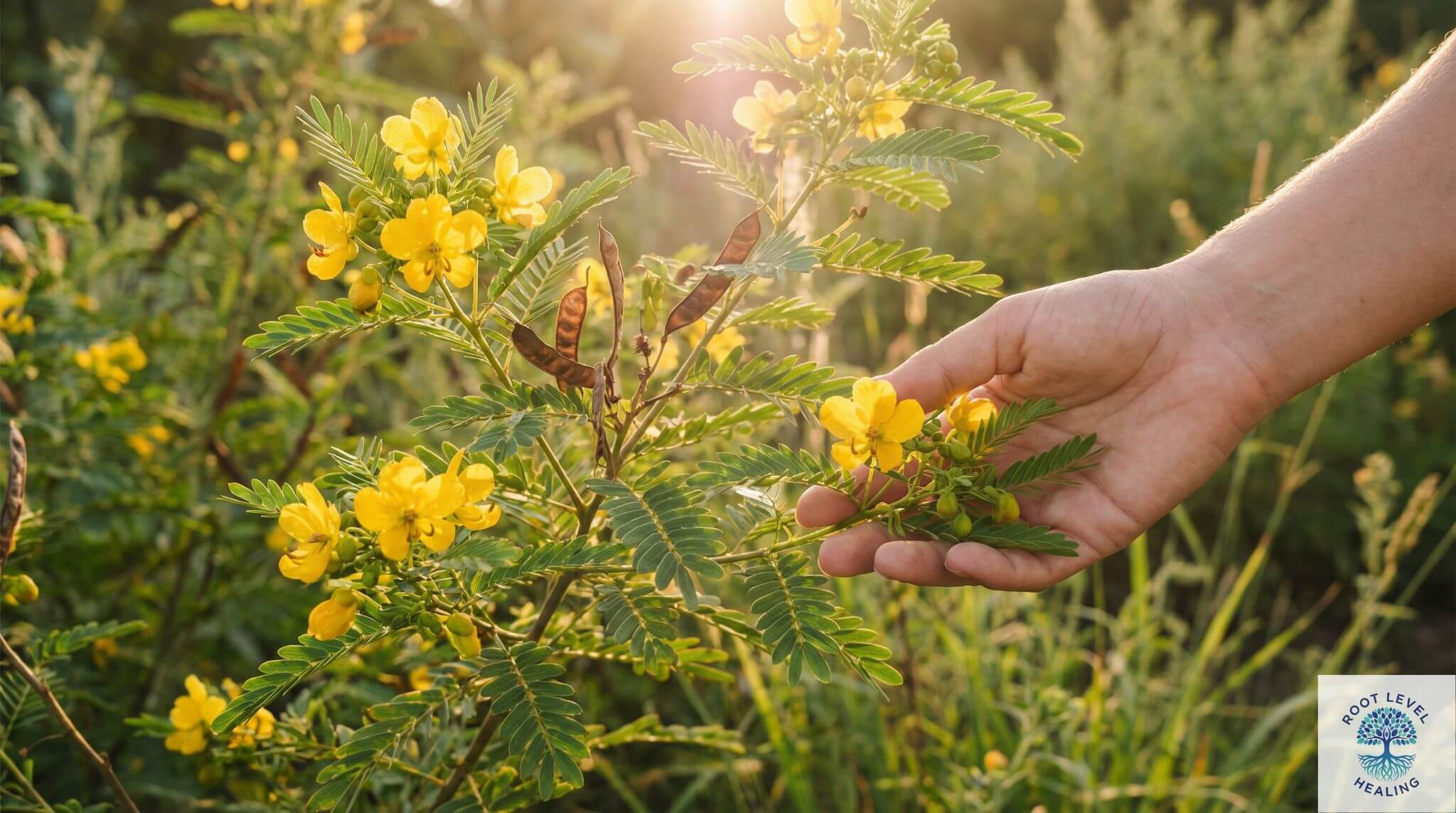
Choosing plant-based alternatives like Cassia Angustifolia not only benefits the skin but also supports a more sustainable and ethical beauty industry.
The Future of Hydration: Why Plant-Based is the Way Forward
The shift towards plant-based ingredients like Cassia Angustifolia seed extract is more than just a trend; it's a movement towards a more intelligent, sustainable, and holistic approach to skincare. By harnessing the power of botanicals that have been perfected by nature over millennia, we can achieve results that are not only effective but also gentle on our skin and the planet.
Cassia Angustifolia represents the best of this movement. It delivers on the promise of intense hydration, rivals the performance of the industry's gold standard, and does so with an impeccable ethical and environmental profile. It's proof that we don"t have to choose between performance and principles.
As we continue this series, we'll explore how this powerful botanical hydrator works in synergy with other plant-based compounds to create a truly comprehensive anti-aging solution. In our next post, we'll delve into the world of botanical synergy, exploring how a complex of Gotu Kola, Horsetail, and other extracts amplifies the effects of amino acids and peptides for unparalleled results.
The ethical implications of ingredient sourcing have never been more important to conscious consumers. Traditional hyaluronic acid derived from rooster combs requires industrial-scale animal farming, raising concerns about animal welfare and environmental impact. Even bacterial fermentation, while technically vegan, involves energy-intensive laboratory processes with significant carbon emissions. Cassia Angustifolia, by contrast, is harvested from the seeds of a plant that has been cultivated sustainably in India for centuries as part of traditional Ayurvedic medicine [1]. This botanical source is inherently vegan, cruelty-free, and has a significantly lower carbon footprint than its alternatives, making it the intelligent choice for the environmentally conscious consumer.
Plant-based polysaccharides like Cassia galactomannan offer another critical advantage: biodegradability. As a natural polymer, it breaks down completely in the environment without leaving microplastic residues or persistent chemical byproducts. This stands in stark contrast to some synthetic hydrators and film-formers that can accumulate in waterways and ecosystems, contributing to environmental pollution. By choosing botanical alternatives, we"re not only caring for our skin but also protecting the planet for future generations—a principle that aligns with the growing movement toward regenerative beauty.
The global shift toward clean, green beauty is accelerating at an unprecedented pace. The plant-based skincare market is experiencing explosive growth, driven by consumer demand for transparency, sustainability, and proven efficacy. Cassia Angustifolia represents the vanguard of this movement—an ingredient that delivers on all three fronts without compromise. As research continues to validate its performance and more brands adopt botanical alternatives, we"re witnessing a fundamental transformation in how the beauty industry approaches hydration and anti-aging. The future isn"t just plant-based; it"s intelligently designed, scientifically validated, and ethically sound.
Frequently Asked Questions
Q: Is Cassia Angustifolia seed extract safe for sensitive skin?
A: Yes, it is generally considered very safe and gentle, making it suitable for all skin types, including sensitive skin. Its natural anti-inflammatory properties can actually help to soothe and calm irritated skin.
Q: Can I use Cassia Angustifolia with other active ingredients like retinol or Vitamin C?
A: Absolutely. Cassia Angustifolia is a hydrating and soothing ingredient that pairs exceptionally well with more potent actives. It can help buffer potential irritation from ingredients like retinol while providing the hydration needed for them to work effectively.
Q: Does plant-based hyaluronic acid feel different on the skin?
A: Many users report that serums with Cassia Angustifolia feel incredibly smooth and silky, leaving a soft, non-tacky finish on the skin. It provides a feeling of immediate comfort and sustained hydration without the heaviness or stickiness that some HA serums can have.
Q: How does the molecular weight of Cassia Angustifolia compare to hyaluronic acid?
A: Cassia Angustifolia seed extract has a molecular weight of 200,000-300,000 Daltons, which is comparable to high molecular weight hyaluronic acid. This high molecular weight is ideal for surface hydration and film-forming, creating a protective barrier that locks in moisture without penetrating too deeply into the skin.
Q: Is Cassia Angustifolia suitable for all climates?
A: Yes, one of the advantages of Cassia Angustifolia over traditional HA is that it forms a protective film that prevents moisture loss, making it effective even in dry or low-humidity environments where some humectants can actually draw water out of the skin. It works beautifully in all climates—humid, dry, hot, or cold.
References
- Kumar, A., et al. (2022 ). An assessment, prospects, and obstacles of industrially important medicinal crop Indian Senna (Cassia angustifolia Vahl.): A review. Industrial Crops and Products, 187, 115459.
- Aveseena. (n.d. ). Secrets of 100% Natural Hyaluronic Acid: Cassia Angustifolia.
- The Green Kiss. (2025 ). Ingredient Spotlight: Cassia Angustifolia Explained.
- FAO. (2009 ). Cassia Gum Chemical and Technical Assessment. Joint FAO/WHO Expert Committee on Food Additives.
- Dos Santos, V. R. F., et al. (2015 ). Relationship between galactomannan structure and physicochemical properties of films produced thereof. Journal of Food Science and Technology, 52(12), 8292-8299.
- Geronço, M. S., et al. (2021 ). Are Structurally Modified Galactomannan Derivatives Biologically Active?? Polysaccharides, 2(1), 1-23.
- Mudgil, D., et al. (2018 ). Industrial Galactomannan Polysaccharides. In Handbook of Hydrocolloids (3rd ed.).

Ready to Discover Your Score?
This 2-minute quiz is the essential first step to understanding your body's current toxic load and identifying the root cause of how you feel.
Take The Toxicity QuizExplore More Articles
Dive deeper into topics like detoxification, gut health, and mental clarity on our blog. Knowledge is the key to taking control of your health.
Visit The Blog