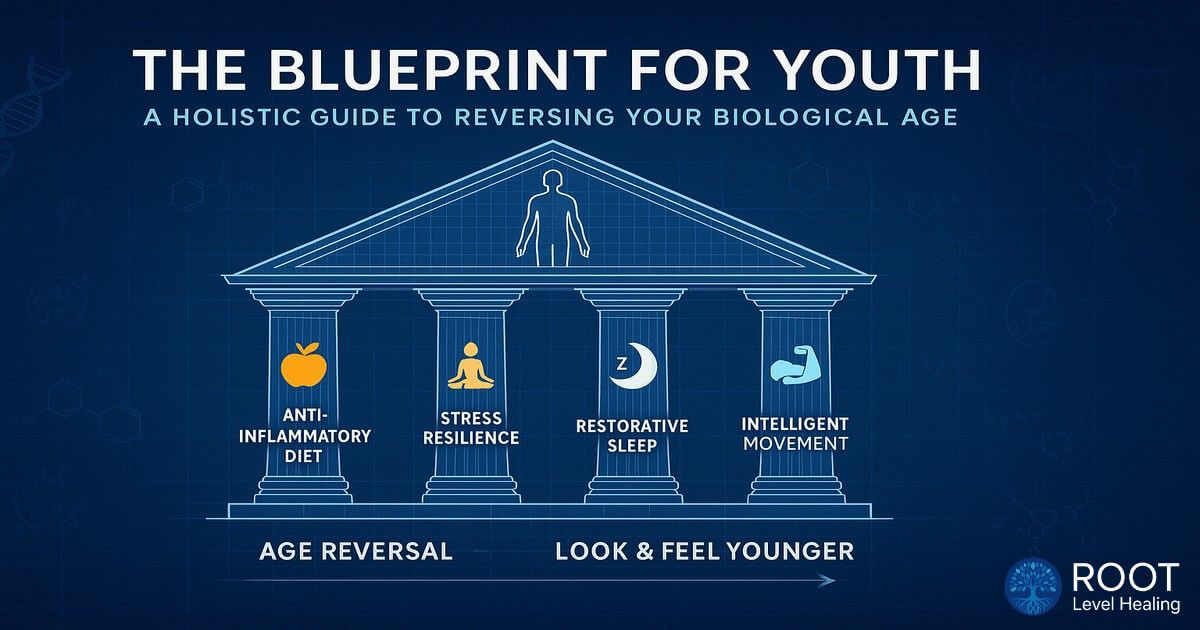
The Blueprint for Youth: A Holistic Guide to Reversing Your Biological Age
Key Takeaways
- 🍎Anti-Inflammatory Diet — Provides the cellular fuel to fight aging by maximizing polyphenols, healthy fats, and fiber while minimizing inflammatory foods.
- 🧘Strategic Stress Resilience — Tames cortisol, the silent ager that breaks down collagen and disrupts gut health, through mindfulness and adaptogenic practices.
- 😴Restorative Sleep — Activates your body's nightly repair cycle, maximizing growth hormone production and cellular regeneration for optimal anti-aging benefits.
- 💪Intelligent Movement — Stimulates mitochondrial biogenesis and muscle preservation, creating the metabolic foundation for sustained youthfulness and vitality.
In our first two posts, we established a powerful foundation for understanding modern anti-aging. We uncovered the gut as the surprising epicenter of aging and then revealed how the synergistic duo of collagen and colostrum act as the architect and bodyguard to rebuild and protect your body from the inside out. We have laid the groundwork. We have assembled the primary tools.
Now, it's time to put it all together.
True, lasting youthfulness isn't found in a single pill or a magic lotion. It's the result of a holistic system where diet, lifestyle, and targeted supplementation work in harmony to optimize your body at the cellular level. This is not about simply looking younger; it's about being biologically younger. In this comprehensive guide, we will provide the complete blueprint for reversing your biological age, integrating our foundational supplements with the four essential pillars of a truly anti-aging lifestyle.
How to Reverse Your Biological Age: The 4 Pillars of Youth
Before we dive deep into the four pillars, watch this quick overview explaining the science-backed strategies for reversing your biological age.
In This Article:
The Four Pillars of a Youthful Biology
Reversing your biological clock requires a multi-faceted approach. Think of your body as a high-performance vehicle. Collagen and colostrum provide the premium-grade materials to repair the engine and chassis, but you still need the right fuel, regular maintenance, and a skilled driver to ensure it runs optimally for decades. The four pillars of this system are:
The Anti-Inflammatory Diet: The fuel that fights cellular damage. Strategic Stress Resilience: Managing the silent ager—cortisol. The Science of Restorative Sleep: Your body's nightly repair cycle. Intelligent Movement: Building metabolic and mitochondrial health.
By integrating these four pillars with your foundational collagen and colostrum supplementation, you create a powerful feedback loop that slows aging, enhances vitality, and builds a resilient, youthful body from the ground up.
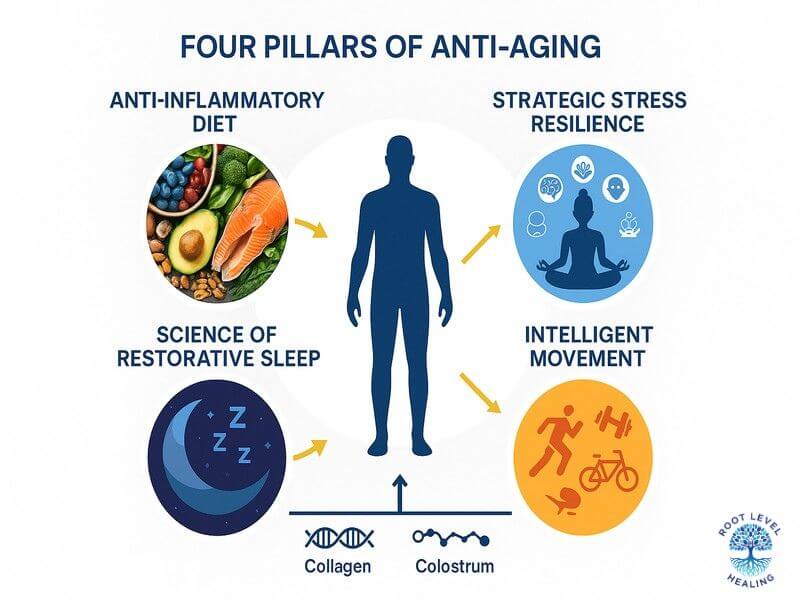
The four pillars work synergistically with collagen and colostrum to create a comprehensive anti-aging system that addresses aging at the cellular level.
Pillar 1: The Anti-Inflammatory Diet - Fueling Your Cells for Longevity
Every meal is a choice. You can either fuel inflammation or fight it. The modern Western diet, high in processed foods, sugar, and unhealthy fats, is a primary driver of chronic low-grade inflammation—the "inflammaging" we discussed in our first post. An anti-inflammatory diet, on the other hand, provides your body with a constant stream of antioxidants, polyphenols, and essential nutrients that protect your cells from damage and support their natural repair processes [1].
Key Principles of an Anti-Aging Diet:
Maximize Polyphenol Intake: Polyphenols are powerful antioxidant compounds found in plants that help neutralize free radicals, the unstable molecules that damage cells and accelerate aging. A 2022 study in Antioxidants confirmed that polyphenol-rich diets are strongly associated with reduced risk of age-related diseases and improved longevity markers [2]. Sources include berries (blueberries, raspberries), dark chocolate (70% cacao or higher), green tea, red wine (in moderation), and brightly colored vegetables.
Embrace Healthy Fats: Not all fats are created equal. Omega-3 fatty acids are potent anti-inflammatory agents that are critical for brain health, cardiovascular function, and skin integrity. Conversely, excessive omega-6 fatty acids (found in vegetable oils and processed foods) can promote inflammation. Sources of Omega-3s include fatty fish (salmon, mackerel, sardines), walnuts, flaxseeds, and chia seeds.
Prioritize Fiber for Gut Health: Fiber is the primary food source for your beneficial gut bacteria. A high-fiber diet promotes a diverse and robust microbiome, which is essential for producing anti-inflammatory compounds like butyrate. As we've established, a healthy gut is the foundation of a healthy aging process. Sources include legumes, whole grains, avocados, apples, and leafy greens.
Minimize Sugar and Refined Carbohydrates: Sugar is a pro-inflammatory substance that also contributes to the formation of Advanced Glycation End-products (AGEs). AGEs are harmful compounds that cross-link and stiffen proteins like collagen and elastin, leading directly to wrinkles, stiff joints, and arterial damage [3]. Reducing sugar is one of the most impactful dietary changes you can make for anti-aging.
How Diet Supports Your Supplements:
An anti-inflammatory diet creates the ideal environment for your collagen and colostrum supplements to work effectively. The vitamin C found in many fruits and vegetables is a necessary cofactor for collagen synthesis, meaning your body needs it to properly use the collagen peptides you consume [4]. Furthermore, a high-fiber diet nourishes the gut microbiome, which enhances the gut-sealing benefits of colostrum, creating a more resilient intestinal barrier.
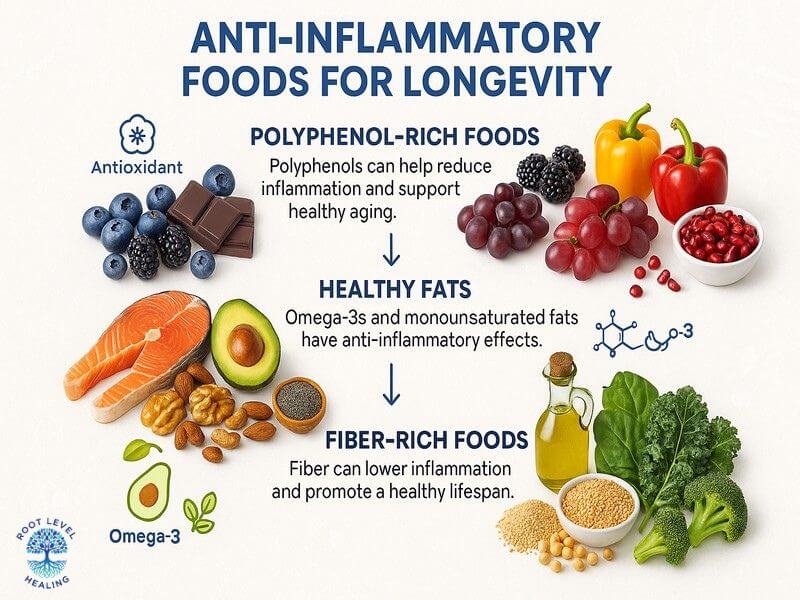
Anti-inflammatory foods provide the essential nutrients and antioxidants your body needs to fight cellular damage and support natural repair processes.
Pillar 2: Strategic Stress Resilience - Taming the Silent Ager
Chronic stress is one of the most potent accelerators of the aging process. When you are constantly stressed, your body is flooded with cortisol, the primary stress hormone. While cortisol is useful in short bursts for "fight or flight" situations, chronically elevated levels wreak havoc on your body.
Cortisol directly breaks down collagen in the skin, leading to premature wrinkles and thinning skin. It disrupts the balance of your gut microbiome, promoting the growth of inflammatory bacteria. It impairs immune function, making you more susceptible to illness. And it has been shown to shorten telomeres—the protective caps on the ends of your DNA that are a key biomarker of biological age [5]. A 2021 study in Translational Psychiatry found a direct correlation between high cortisol exposure and accelerated biological aging [6].
Building stress resilience is not about eliminating stress—that's impossible. It's about developing strategic practices to manage your body's response to it.
Key Practices for Stress Resilience:
Mindfulness and Meditation: Regular mindfulness practice has been clinically shown to reduce cortisol levels and decrease inflammatory markers in the body. Even 10-15 minutes of daily meditation can retrain your brain to be less reactive to stressors.
Breathwork: Simple breathing exercises, such as box breathing (inhale for 4 seconds, hold for 4, exhale for 4, hold for 4), can instantly activate the parasympathetic nervous system—your body's "rest and digest" mode—lowering heart rate and reducing acute feelings of stress.
Adaptogenic Herbs: Adaptogens are a class of plants that help the body adapt to stress and exert a normalizing effect upon bodily processes. Ashwagandha, for example, has been shown in multiple studies to significantly reduce cortisol levels and perceived stress [7].
How Stress Resilience Supports Your Supplements:
By managing cortisol, you protect your body's collagen from degradation, allowing the collagen peptides you supplement with to focus on rebuilding and repair rather than just damage control. Furthermore, a balanced stress response supports a healthy gut environment, enhancing the immune-modulating and gut-sealing effects of colostrum.
Pillar 3: The Science of Restorative Sleep - Your Body's Nightly Repair Cycle
Sleep is not a passive state of rest; it is an active and critical period of biological repair and rejuvenation. During deep sleep, your body goes to work repairing damaged tissues, consolidating memories, and clearing out metabolic waste from the brain. It is during this time that your body ramps up the production of Human Growth Hormone (HGH), a key hormone for stimulating cellular repair and collagen production [8].
When you consistently get poor sleep, you rob your body of this essential maintenance window. A single night of poor sleep can increase inflammatory markers, impair insulin sensitivity, and elevate cortisol levels the next day. Chronic sleep deprivation is directly linked to accelerated aging, cognitive decline, and an increased risk of nearly every chronic disease [9].
Key Strategies for Optimizing Sleep:
Consistent Sleep Schedule: Go to bed and wake up at the same time every day, even on weekends. This helps to regulate your body's internal clock, or circadian rhythm.
Create a Cool, Dark, and Quiet Environment: Your bedroom should be an oasis for sleep. Use blackout curtains, a white noise machine, and keep the temperature between 60-67°F (15-19°C) for optimal sleep.
Avoid Blue Light Before Bed: The blue light emitted from phones, tablets, and computers suppresses the production of melatonin, the hormone that signals your body it's time to sleep. Stop using electronic devices at least 60-90 minutes before bed.
Mindful Evening Routine: Develop a relaxing pre-sleep ritual, such as reading a physical book, taking a warm bath with Epsom salts, or gentle stretching. This signals to your body that it's time to wind down.
How Restorative Sleep Supports Your Supplements:
Deep sleep is when your body is most primed to use the building blocks you provide it. The HGH released during sleep works in concert with the growth factors from colostrum to maximize tissue repair and regeneration. Simultaneously, the amino acids from the collagen peptides are utilized most efficiently for rebuilding the skin's matrix and repairing connective tissues throughout the body. Quality sleep is the ultimate force multiplier for your supplement regimen.
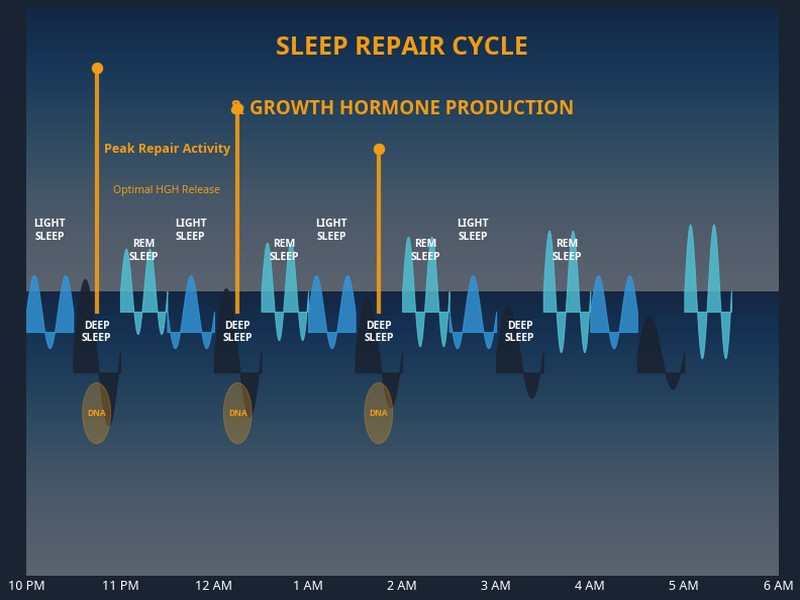
During deep sleep, your body maximizes growth hormone production and cellular repair processes, making it the optimal time for anti-aging regeneration.
Pillar 4: Intelligent Movement - Building Metabolic and Mitochondrial Health
Movement is life. Our bodies were designed to move, and regular physical activity is a cornerstone of any serious anti-aging strategy. But "intelligent movement" is about more than just burning calories; it's about sending the right signals to your cells to stay young and efficient.
Exercise stimulates mitochondrial biogenesis—the creation of new mitochondria. Mitochondria are the "power plants" of your cells, responsible for generating the energy (ATP) that fuels every biological process. As we age, mitochondrial function declines, leading to fatigue, metabolic slowdown, and increased oxidative stress. Exercise is the single most effective way to reverse this decline [10].
Key Forms of Intelligent Movement:
Resistance Training: Lifting weights or using your body weight for resistance is crucial for maintaining muscle mass, which naturally declines with age (a condition called sarcopenia). Muscle is metabolically active tissue that helps regulate blood sugar and improve insulin sensitivity. Aim for 2-3 sessions per week.
High-Intensity Interval Training (HIIT): HIIT involves short bursts of all-out effort followed by brief recovery periods. This form of exercise has been shown to be particularly effective at stimulating mitochondrial biogenesis and improving cardiovascular health in a shorter amount of time compared to steady-state cardio.
Zone 2 Cardio: This is low-to-moderate intensity aerobic exercise (e.g., brisk walking, jogging, cycling) where you can still hold a conversation. Zone 2 training is excellent for building an aerobic base and improving mitochondrial efficiency. Aim for 150-180 minutes per week.
Restorative Movement: Practices like yoga, Tai Chi, and regular stretching are vital for maintaining flexibility, improving circulation, and reducing the risk of injury. They also have a stress-reducing component that complements the other pillars.
How Intelligent Movement Supports Your Supplements:
Exercise increases blood flow, which helps deliver the nutrients from your diet and supplements—including collagen and colostrum peptides—to your cells more efficiently. The growth factors in colostrum can support muscle repair and growth after resistance training, while the amino acids in collagen are essential for maintaining the health of the joints, tendons, and ligaments that are stressed during physical activity.
The Blueprint in Action: Your Daily Anti-Aging Protocol
Integrating these pillars doesn't have to be overwhelming. Here is a sample daily structure that combines all the elements into a powerful, synergistic routine:
| Time | Activity | Pillar(s) Addressed |
|---|---|---|
| Morning | Hydrate: 16oz of water with lemon and sea salt. Supplement: Take Collagen & Colostrum on an empty stomach. Movement: 20-30 minutes of Zone 2 Cardio or HIIT. Breakfast: Protein and healthy fat-rich meal (e.g., omelet with avocado). |
Foundational Foundational Intelligent Movement Anti-Inflammatory Diet |
| Midday | Lunch: Large salad with leafy greens, colorful veggies, and lean protein. Mindfulness: 10-minute meditation or breathwork break. |
Anti-Inflammatory Diet Strategic Stress Resilience |
| Evening | Dinner: Fatty fish (salmon) with roasted vegetables. Wind-Down: No screens 90 minutes before bed. Read a book, stretch. |
Anti-Inflammatory Diet Restorative Sleep |
| Bedtime | Sleep: Aim for 7-9 hours in a cool, dark, quiet room. | Restorative Sleep |
This is a template, not a rigid prescription. The key is consistency. By consistently applying these principles, you are creating an environment where your body can heal, regenerate, and express its most youthful, vital potential.
Conclusion: You Are the Architect of Your Biology
The science of aging is no longer a mystery. We now understand the core mechanisms that drive the aging process—inflammation, cellular damage, and hormonal decline. More importantly, we know how to fight back.
This blueprint provides a clear, actionable path to reclaiming your youth. It starts with the foundational power of collagen to rebuild your body's structure and colostrum to protect and repair it. It is then amplified by the four pillars: an anti-inflammatory diet to provide the right fuel, stress resilience to tame the silent ager, restorative sleep to enable nightly repair, and intelligent movement to power your cells.
This is not a quick fix; it is a long-term strategy for a long, vibrant life. You hold the blueprint. You have the tools. The power to reverse your biological age is, and always has been, in your hands.
Frequently Asked Questions
Q: How do I know what my biological age is?
A: Several commercial tests are available that can measure your biological age. The most common methods include telomere length testing and DNA methylation analysis (often called an "epigenetic clock"). These tests can provide a baseline and help you track your progress as you implement these lifestyle changes.
Q: Can I really *reverse* my biological age?
A: Yes. While chronological age is fixed, biological age is malleable. Studies, such as the 2019 TRIIM trial, have shown that specific diet and lifestyle interventions can indeed reverse biological age as measured by epigenetic clocks. The key is a consistent, holistic approach like the one outlined in this guide.
Q: Which of the four pillars is the most important?
A: They are all interconnected and equally important. Think of it as a four-legged stool; if you remove one leg, the entire structure becomes unstable. The synergistic effect of addressing diet, stress, sleep, and movement simultaneously is what produces the most profound results.
Q: How long will it take to see a difference in my biological age?
A: While you may *feel* better within weeks (improved energy, better sleep), measurable changes in biological age biomarkers typically take longer. Most studies show significant changes after 3-6 months of consistent intervention. The key is to view this as a lifestyle, not a temporary diet.
Q: Do I need to do all of this perfectly every day?
A: No, consistency is more important than perfection. Aim for an 80/20 approach. If you are following the blueprint 80% of the time, you will see fantastic results. Don't let the pursuit of perfection lead to burnout. Focus on building sustainable habits.
References
- Ricker, M. A., & Haas, W. C. (2017). Anti-Inflammatory Diet in Clinical Practice: A Review. Nutrition in Clinical Practice, 32(3), 318–325. https://pubmed.ncbi.nlm.nih.gov/28350517/
- The Effect of Dietary Polyphenols on Vascular Health and Hypertension: Current Evidence and Mechanisms of Action. Antioxidants. https://pubmed.ncbi.nlm.nih.gov/35276904/
- The Role of Advanced Glycation End Products in Aging and Metabolic Diseases: Bridging Association and Causality. Science Direct. https://www.sciencedirect.com/science/article/pii/S1550413118305151
- DePhillipo, N. N., et al. (2018). Efficacy of Vitamin C Supplementation on Collagen Synthesis and Oxidative Stress After Musculoskeletal Injuries: A Systematic Review. Orthopaedic Journal of Sports Medicine, 6(10). https://pmc.ncbi.nlm.nih.gov/articles/PMC6204628/
- Epel, E. S., et al. (2004). Accelerated telomere shortening in response to life stress. Proceedings of the National Academy of Sciences, 101(49), 17312-17315. https://www.pnas.org/doi/10.1073/pnas.0407162101
- Lifetime Stress Accelerates Epigenetic Aging. Cambridge. https://www.cambridge.org/core/services/aop-cambridge-core/content/view/C48215F64CEEA80A92A2DCEE63ABE57B/S0924933800150606a.pdf/div-class-title-lifetime-stress-accelerates-epigenetic-aging-div.pdf
- Lopresti, A. L., et al. (2019). An investigation into the stress-relieving and pharmacological actions of an ashwagandha (Withania somnifera) extract. Medicine, 98(37). https://pmc.ncbi.nlm.nih.gov/articles/PMC6750292/
- Takahashi, Y., Kipnis, D. M., & Daughaday, W. H. (1968). Growth hormone secretion during sleep. Journal of Clinical Investigation, 47(9), 2079–2090. https://pmc.ncbi.nlm.nih.gov/articles/PMC297368/
- Carroll, J. E., et al. (2016). Partial sleep deprivation activates the DNA damage response (DDR) and the senescence-associated secretory phenotype (SASP) in aged cells. Brain, Behavior, and Immunity, 51, 84-91. https://pubmed.ncbi.nlm.nih.gov/26336034/
- Memme, J. M., et al. (2021). Exercise and Mitochondrial Health. Journal of Physiology, 599(3), 803-817. https://physoc.onlinelibrary.wiley.com/doi/full/10.1113/JP278853

Ready to Discover Your Score?
This 2-minute quiz is the essential first step to understanding your body's current toxic load and identifying the root cause of how you feel.
Take The Toxicity QuizExplore More Articles
Dive deeper into topics like detoxification, gut health, and mental clarity on our blog. Knowledge is the key to taking control of your health.
Visit The Blog