Nature's Guardian: The Anti-Aging Power of Green Tea Extract (EGCG) in Skincare
In our previous discussions, we explored how natural oils rebuild the skin's lipid barrier and how vitamins B5 and E act as a protective shield. Now, we delve into the world of botanical defenders, focusing on one of the most potent antioxidants in nature's arsenal: Green Tea Extract. Specifically, we will uncover the science behind its most powerful polyphenol, Epigallocatechin Gallate (EGCG), and its remarkable ability to protect and rejuvenate the skin.
Key Takeaways
- 🍃Multifaceted Protection: EGCG works through multiple pathways to provide comprehensive anti-aging benefits.
- 🛡️Collagen Guardian: EGCG protects existing collagen and supports the synthesis of new collagen.
- 💧Hydration Booster: EGCG enhances skin hydration by increasing NMF production and preventing hyaluronic acid breakdown.
Green Tea Extract (EGCG) for Anti-Aging & Collagen Protection Explained: A Quick Overview
Before we dive deep into the science, watch this quick overview to discover how EGCG, the most powerful polyphenol in green tea extract, acts as a guardian for your skin by protecting collagen and neutralizing free radicals.
In This Article:
- The Science of Green Tea Extract and EGCG
- The Multifaceted Mechanisms of EGCG
- EGCG vs. Other Antioxidants: A Comparison
- A Deeper Dive into the Molecular Mechanisms of EGCG
- Bioavailability and Formulation: Unlocking EGCG's Potential
- The Synergy of EGCG with Other Skincare Ingredients
- Frequently Asked Questions about EGCG in Skincare
The Science of Green Tea Extract and EGCG
Green tea (Camellia sinensis) has been consumed for centuries for its health benefits, but its topical application in skincare is a more recent innovation backed by extensive scientific research. The primary bioactive compounds in green tea are polyphenols known as catechins. Among these, EGCG is the most abundant and most powerful, making it the star of green tea's skin-protective effects [1].
EGCG's power lies in its multifaceted approach to skin health. It doesn't just perform one function; it orchestrates a symphony of protective and regenerative processes within the skin. This makes it a uniquely effective ingredient in the fight against premature aging.
The Multifaceted Mechanisms of EGCG
EGCG's anti-aging prowess stems from its ability to work on multiple fronts simultaneously. It's not just an antioxidant; it's a photoprotective agent, an anti-inflammatory, a collagen protector, and a hydration booster.
1. Potent Antioxidant Activity
Oxidative stress is a primary driver of skin aging. It's the result of an imbalance between free radicals (unstable molecules that damage cells) and the body's ability to neutralize them. UV radiation, pollution, and even our own metabolic processes generate free radicals. EGCG is a master at neutralizing these damaging molecules, protecting our skin cells from their harmful effects [2].
2. Photoprotection from UV Damage
UV radiation is the number one cause of extrinsic aging. EGCG has been shown to provide significant photoprotection, shielding the skin from the harmful effects of UV rays. It does this by absorbing UV radiation and by quenching the free radicals that UV exposure generates [1]. This dual-action protection helps prevent everything from sunburn to the breakdown of collagen.
3. Anti-Inflammatory Effects
Chronic inflammation is another key contributor to skin aging, a process sometimes referred to as "inflammaging." EGCG has potent anti-inflammatory properties, helping to calm the skin and reduce redness. It does this by modulating inflammatory signaling pathways, such as NF-κB, which helps to soothe irritated skin and prevent the long-term damage that chronic inflammation can cause [2].
4. Collagen Protection and Synthesis
Collagen is the protein that gives our skin its youthful firmness and elasticity. As we age, collagen production declines, and existing collagen is broken down by enzymes called matrix metalloproteinases (MMPs). EGCG has been shown to both protect existing collagen by inhibiting MMP activity and to support the synthesis of new collagen by protecting fibroblasts (the cells that produce collagen) from oxidative stress [3].
5. Enhanced Skin Hydration
Recent research has revealed that EGCG also plays a crucial role in skin hydration. It has been shown to increase the expression of key genes involved in the production of Natural Moisturizing Factors (NMFs), such as filaggrin and hyaluronic acid synthase (HAS). At the same time, it decreases the expression of hyaluronidase, the enzyme that breaks down hyaluronic acid. This dual effect of boosting production and preventing breakdown makes EGCG a powerful ally in maintaining skin hydration and suppleness [4].
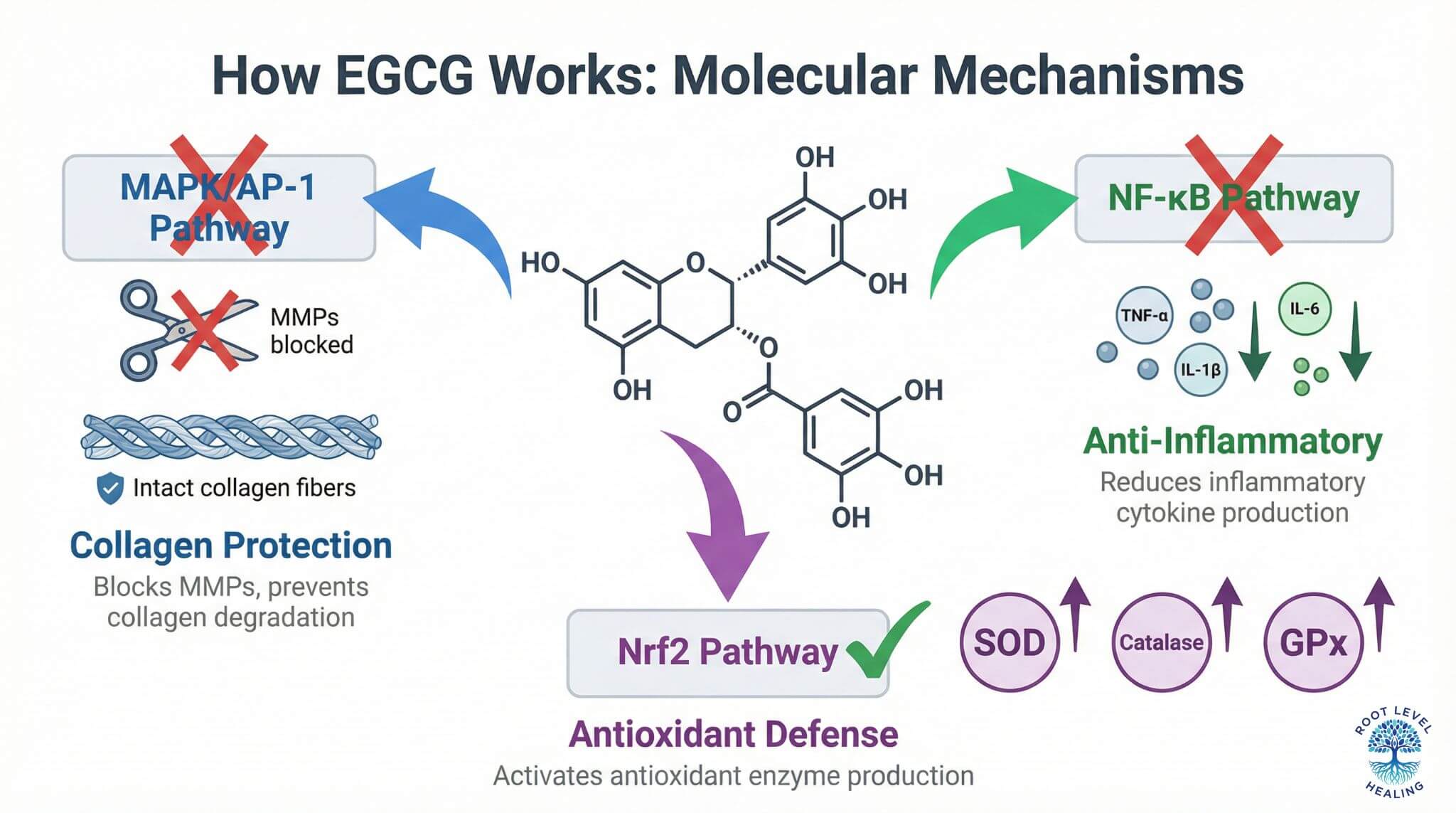
EGCG works at the molecular level through three key pathways: inhibiting the MAPK/AP-1 pathway to prevent collagen degradation, suppressing the NF-κB pathway to reduce inflammation, and activating the Nrf2 pathway to boost the skin's natural antioxidant defenses.
EGCG vs. Other Antioxidants: A Comparison
While there are many antioxidants used in skincare, EGCG stands out for its broad-spectrum activity. Here's how it compares to other popular antioxidants:
| Antioxidant | Primary Mechanism | Additional Benefits |
|---|---|---|
| EGCG (Green Tea) | Free radical scavenging, UV absorption | Anti-inflammatory, collagen protection, hydration boosting, anti-carcinogenic |
| Vitamin C (L-Ascorbic Acid) | Free radical scavenging, collagen synthesis | Brightening, photoprotection |
| Vitamin E (Tocopherol) | Free radical scavenging, lipid protection | Moisturizing, wound healing |
| Resveratrol | Free radical scavenging, sirtuin activation | Anti-inflammatory, anti-aging |
| Niacinamide (Vitamin B3) | Antioxidant, anti-inflammatory | Barrier repair, sebum regulation, brightening |
As the table shows, while all of these antioxidants are beneficial, EGCG offers an exceptionally wide range of benefits, making it a uniquely comprehensive anti-aging ingredient.
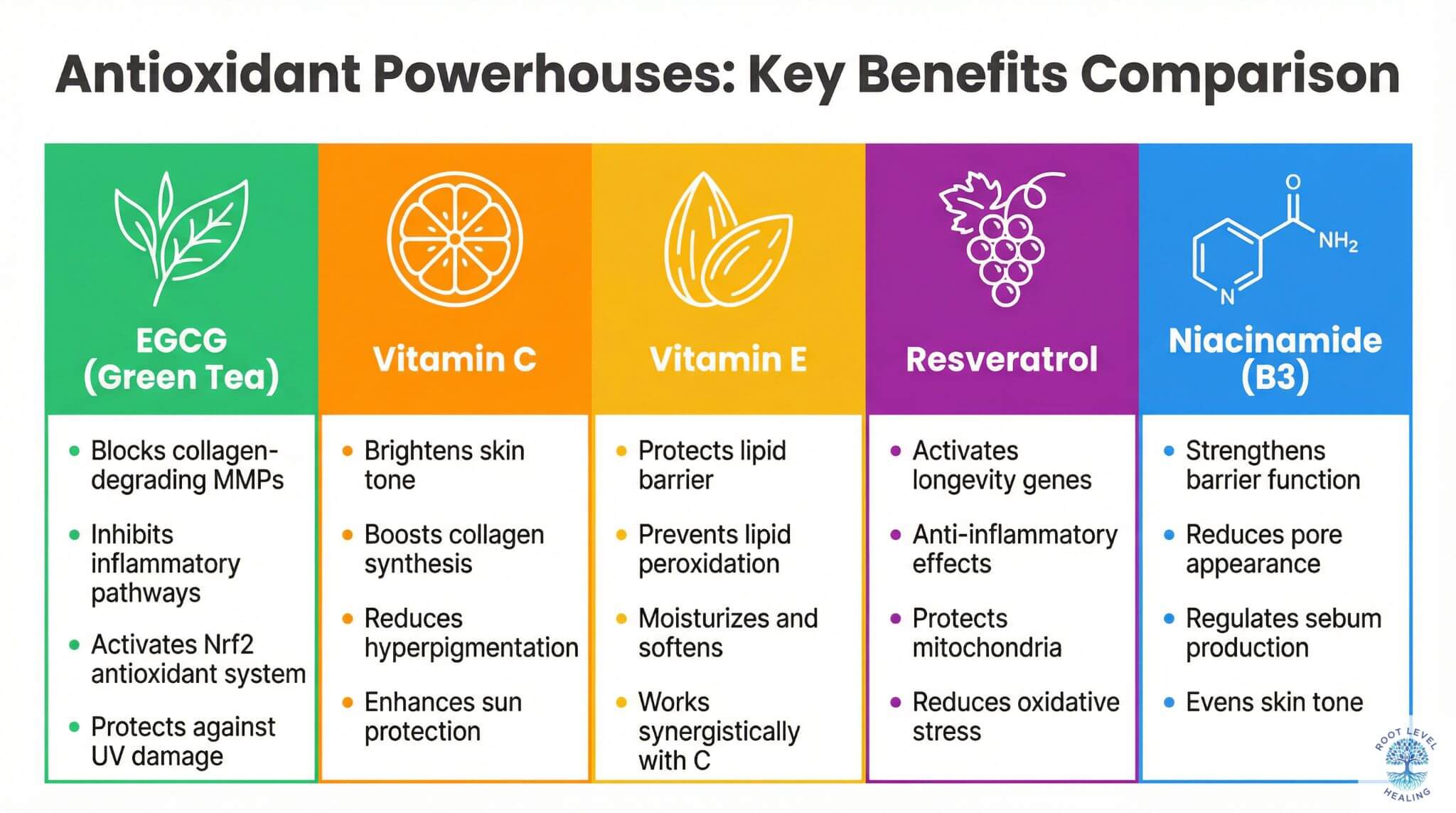
EGCG stands out among antioxidants for its comprehensive range of benefits, offering not only powerful free radical scavenging but also UV absorption, anti-inflammatory effects, collagen protection, and hydration enhancement—making it a uniquely versatile anti-aging ingredient.
A Deeper Dive into the Molecular Mechanisms of EGCG
To truly appreciate the power of EGCG, we need to look at the molecular level. EGCG's effects are not just superficial; they are deeply rooted in the complex signaling pathways that govern skin health.
The MAPK and AP-1 Pathways
One of the key ways EGCG works is by influencing the Mitogen-Activated Protein Kinase (MAPK) and Activator Protein-1 (AP-1) signaling pathways. These pathways are central to the skin's response to environmental stressors. When UV radiation hits the skin, it activates these pathways, which in turn leads to the production of MMPs, the enzymes that degrade collagen. EGCG has been shown to downregulate the MAPK and AP-1 pathways, effectively putting the brakes on collagen degradation [3].
The NF-κB Pathway
The NF-κB pathway is a master regulator of inflammation. When the skin is exposed to irritants or UV radiation, this pathway is activated, leading to the production of pro-inflammatory cytokines. EGCG has been shown to inhibit the activation of NF-κB, which helps to reduce inflammation and calm the skin [2]. This is why green tea extract is so effective at soothing redness and irritation.
The Nrf2 Pathway
The Nrf2 pathway is the body's own master antioxidant switch. When activated, it turns on a whole host of antioxidant and detoxification enzymes. EGCG has been shown to activate the Nrf2 pathway, which helps to bolster the skin's own natural defenses against oxidative stress. This is a key part of EGCG's long-term protective effects.
Bioavailability and Formulation: Unlocking EGCG's Potential
Despite its incredible potential, EGCG presents a significant challenge for cosmetic formulators: bioavailability. EGCG is a large, water-soluble molecule, which can make it difficult for it to penetrate the skin's lipid-rich outer layer. Furthermore, it is notoriously unstable and can degrade quickly when exposed to light, air, and certain pH levels.
This is where advanced formulation science comes in. To be effective, EGCG must be delivered in a way that protects it from degradation and enhances its penetration into the skin. Modern cosmetic science has developed several strategies to achieve this, including:
- Encapsulation: Encapsulating EGCG in liposomes or other nanocarriers can protect it from degradation and help it to penetrate the skin more effectively.
- pH Optimization: Formulating products at the optimal pH for EGCG stability (typically slightly acidic) can help to preserve its potency.
- Synergistic Formulations: Combining EGCG with other ingredients that enhance its stability and penetration, such as certain oils and penetration enhancers, can significantly improve its effectiveness.
When choosing a product with green tea extract, it's important to consider not just the presence of EGCG, but also the sophistication of the formulation. A well-formulated product will deliver EGCG to where it's needed most, allowing you to reap its full benefits.
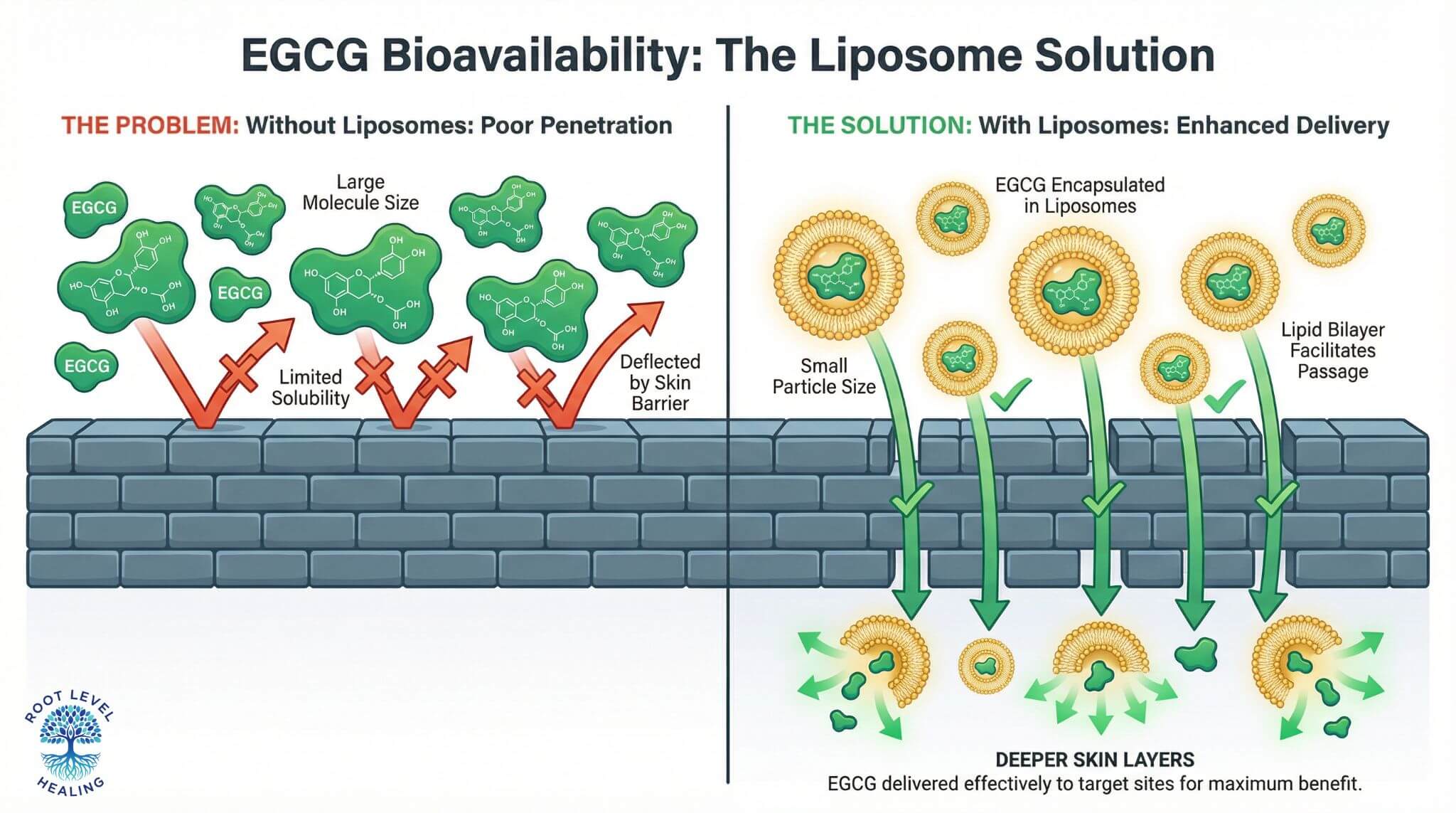
Advanced formulation techniques like liposome encapsulation are essential for EGCG's effectiveness. While free EGCG molecules struggle to penetrate the skin's lipid barrier, encapsulated EGCG can easily pass through, delivering its powerful anti-aging benefits where they're needed most.
The Synergy of EGCG with Other Skincare Ingredients
EGCG's benefits are amplified when it is combined with other skincare ingredients. This is the principle of synergy, where the whole is greater than the sum of its parts.
EGCG and Vitamin C
Vitamin C is a powerful antioxidant in its own right, but it is also notoriously unstable. EGCG has been shown to help stabilize Vitamin C, increasing its effectiveness and longevity. In return, Vitamin C can help to regenerate EGCG after it has been oxidized, allowing it to continue scavenging free radicals.
EGCG and Vitamin E
Vitamin E is a lipid-soluble antioxidant, meaning it works primarily in the lipid-rich environment of the cell membrane. EGCG, on the other hand, is water-soluble. When used together, they provide comprehensive antioxidant protection in both the aqueous and lipid compartments of the cell.
EGCG and Sunscreen
While EGCG provides some photoprotection on its own, it is not a substitute for sunscreen. However, when used in conjunction with a broad-spectrum sunscreen, it can provide an extra layer of protection against the UV damage that sunscreen might miss.
The Future of Botanical Skincare
The science behind natural compounds like EGCG is continually evolving, revealing new and exciting possibilities for skincare. As we continue to understand the complex interplay between these botanical actives and our skin's own biology, we move closer to a future where we can harness the full power of nature to achieve truly healthy, radiant skin.
In our next and final post in this series, we will bring everything together and explore how a well-formulated product can combine the power of natural oils, essential vitamins, and potent botanical extracts like green tea to create the ultimate skin-protective moisturizer.
Frequently Asked Questions about EGCG in Skincare
Q: Is EGCG safe for all skin types?
A: EGCG is generally well-tolerated by all skin types, including sensitive skin. Its anti-inflammatory properties make it particularly beneficial for those with reactive or acne-prone skin.
Q: How long does it take to see results from using EGCG?
A: While some benefits, such as reduced redness, may be visible relatively quickly, the more significant anti-aging effects, such as improved skin texture and reduced fine lines, typically take several weeks of consistent use to become apparent.
Q: Can I use EGCG with retinol?
A: Yes, EGCG and retinol can be a powerful combination. EGCG's antioxidant and anti-inflammatory properties can help to mitigate some of the irritation that can be associated with retinol use.
Q: What should I look for in a product with green tea extract?
A: Look for products that specify the concentration of EGCG or total polyphenols. Also, look for products that are packaged in opaque, air-tight containers to protect the EGCG from degradation by light and air.
Q: Does drinking green tea have the same effect as applying it topically?
A: While drinking green tea has numerous health benefits, the concentration of EGCG that reaches the skin through oral consumption is much lower than what can be achieved with topical application. For targeted skin benefits, topical application is more effective.
Q: Is there a difference between green tea extract and matcha?
A: Yes. While both come from the same plant, matcha is made from the whole, ground-up tea leaf, while green tea extract is a concentrated form of the active compounds. For skincare, an extract is generally preferred as it provides a higher, more standardized dose of EGCG.
References
- Zheng XQ, Zhang XH, Gao HQ, et al. Green Tea Catechins and Skin Health. Antioxidants (Basel ). 2024;13(12):1506. https://www.mdpi.com/2076-3921/13/12/1506
- Oyetakin-White P, Sugumaran M, Frei B. Protective Mechanisms of Green Tea Polyphenols in Skin. Oxid Med Cell Longev. 2012;2012:560682. https://pubmed.ncbi.nlm.nih.gov/22792414/
- Chen J, Zhang Y, Wang Y, et al. Anti-skin-aging effect of epigallocatechin gallate by regulation of connexin 43 and matrix metalloproteinase-1 expression. J Cosmet Dermatol. 2017;16(4 ):556-563. https://pubmed.ncbi.nlm.nih.gov/28343910/
- Kim E, Hwang K, Lee J, et al. Skin Protective Effect of Epigallocatechin Gallate. Int J Mol Sci. 2018;19(1 ):173. https://www.mdpi.com/1422-0067/19/1/173

Ready to Discover Your Score?
This 2-minute quiz is the essential first step to understanding your body's current toxic load and identifying the root cause of how you feel.
Take The Toxicity QuizExplore More Articles
Dive deeper into topics like detoxification, gut health, and mental clarity on our blog. Knowledge is the key to taking control of your health.
Visit The Blog