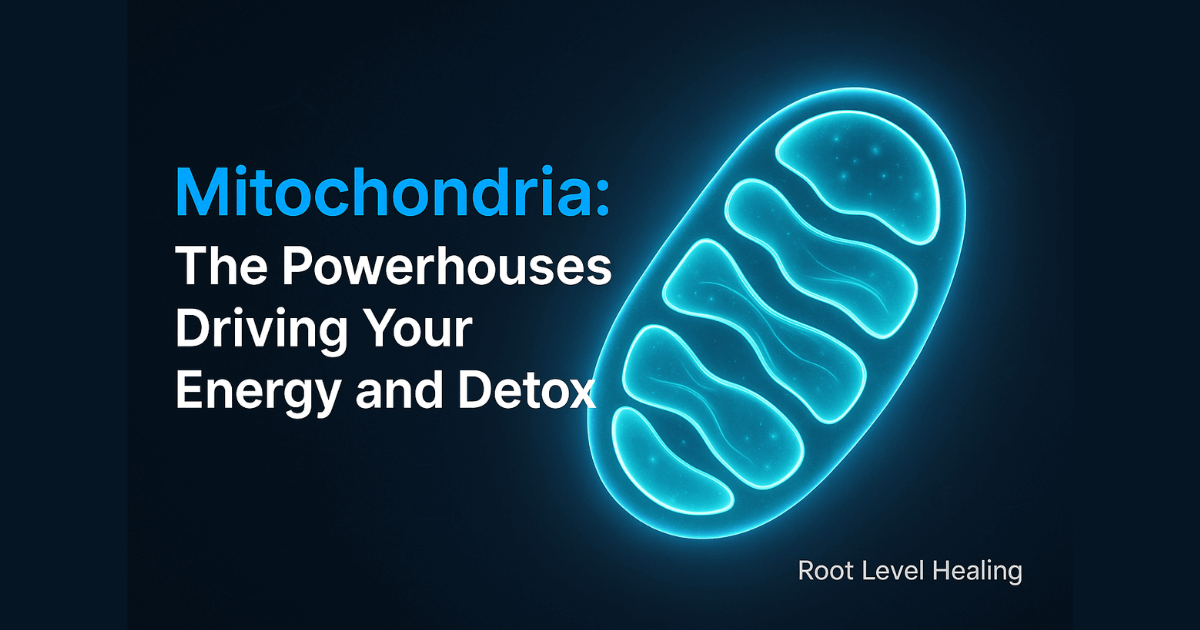
Mitochondria: The Powerhouses Driving Your Energy and Detox
You eat well, you try to sleep, but you still feel exhausted. Your brain feels sluggish, and your body just doesn't have the "spark" it used to. If this sounds familiar, the problem might not be your diet or your schedule, but something much deeper: the health of your cellular powerhouses, the mitochondria.
These tiny organelles, present in nearly every cell of your body, are responsible for generating over 90% of the energy you need to live, think, and function. When your mitochondria are healthy, you feel vibrant and alive. When they are damaged, your energy plummets. And one of the biggest threats to their health in our modern world is toxicity.
Key Takeaways
- 🔋Mitochondria are Your "Cellular Batteries": They convert food and oxygen into ATP, the energy currency that powers every bodily function [1].
- ☠️Toxins are Mitochondrial Poisons: Heavy metals, pesticides, and other chemicals directly damage mitochondria, crippling your energy production at the source [2].
- 😴Fatigue is a Symptom of Cellular Energy Crisis: Chronic fatigue and brain fog are classic signs that your mitochondria are struggling to produce enough ATP.
- ⚡Detoxification is Energy-Intensive: Your body needs massive amounts of mitochondrial energy to power its detox pathways. Damaged mitochondria create a vicious cycle of low energy and poor detoxification.
Mitochondria Detox: The #1 Cause of Chronic Fatigue? (Cellular Energy Crisis): A Quick Overview
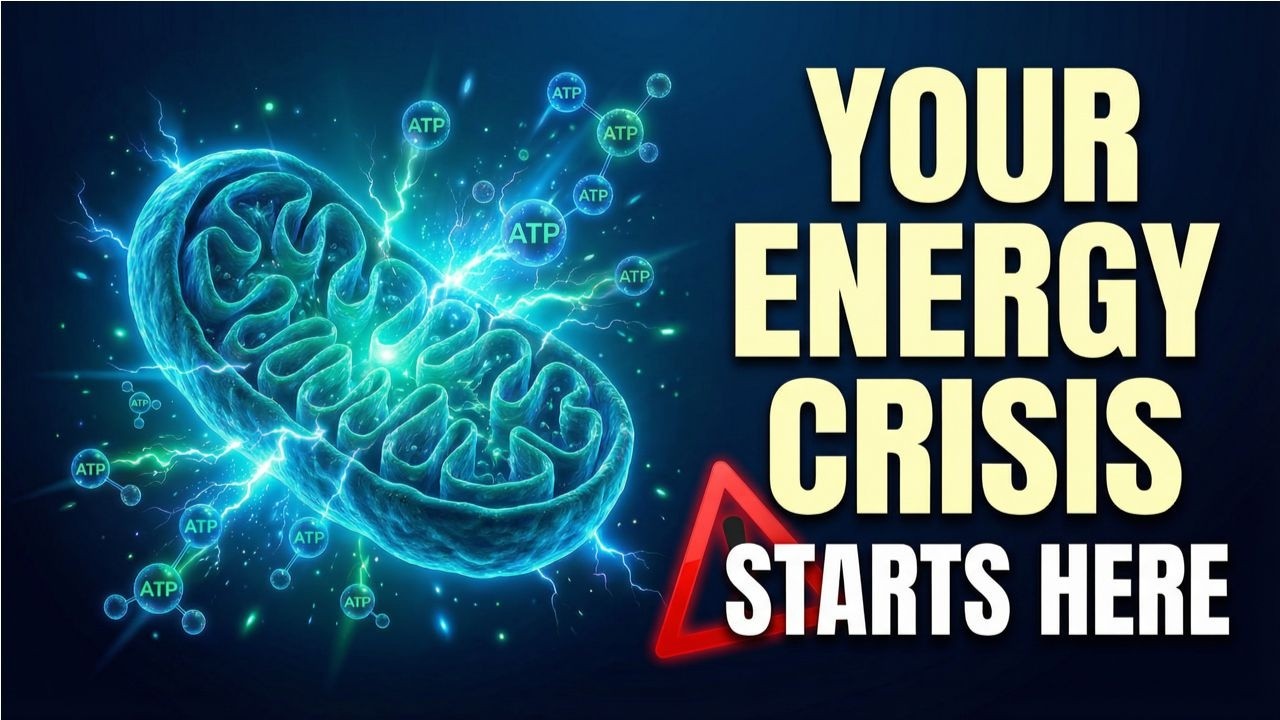
Watch our short video to learn how toxins are causing your energy crisis at the cellular level and how to fight back.
In This Article, You'll Learn:
What Are Mitochondria and Why Do They Matter?
Imagine your body is a bustling city. Mitochondria are the thousands of power plants scattered throughout, providing the electricity for everything. Your brain, heart, and muscles have the highest concentration of mitochondria because they have the highest energy demands.
Their primary job is to take the food you eat (glucose and fats) and the oxygen you breathe and turn it into Adenosine Triphosphate (ATP) through a process called oxidative phosphorylation [1]. ATP is the fundamental energy molecule for life. Every heartbeat, every thought, every muscle contraction is powered by ATP. Without healthy mitochondria, your "city" experiences a blackout.
How Toxins Sabotage Your Cellular Engines
Mitochondria are incredibly sensitive to their environment. When toxins enter your body, they don't just float around harmlessly—they launch a direct assault on these delicate power plants.
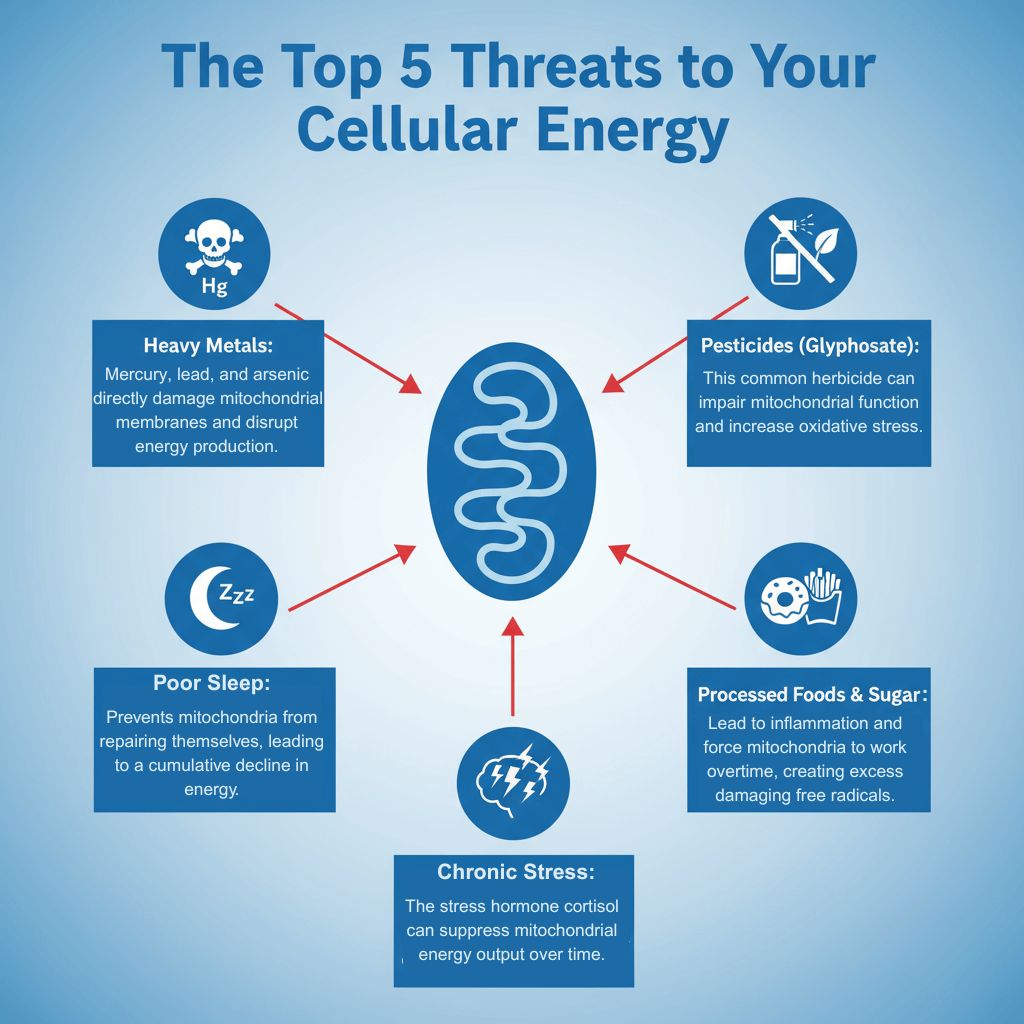
The Vicious Cycle: Low Energy and Impaired Detox
Here is the cruel irony of toxicity: detoxification itself is an incredibly energy-demanding process. Your liver needs a huge amount of ATP to run its detox pathways and neutralize chemicals. Your kidneys need ATP to filter your blood. Your immune cells need ATP to hunt down and eliminate pathogens.
This creates a devastating vicious cycle:
- Toxins enter the body and damage mitochondria [2].
- Damaged mitochondria produce less ATP (energy) [1].
- With less energy, the body's detoxification systems become sluggish and can't effectively remove the toxins.
- The toxins that remain in the body cause even more mitochondrial damage, creating a downward spiral of fatigue and illness.
This is why people with a high toxic load often feel "stuck." They are too tired to detox, and they are tired because they can't detox. Breaking this cycle is the key to restoring health.
The Root Level Healing Perspective: How to Break the Cycle
To break the cycle, you need a two-pronged approach: reduce the toxic burden AND support mitochondrial health directly.
Step 1: Remove the Toxic Interference
You cannot repair a power plant while it's still being bombarded. The first and most critical step is to remove the toxins that are causing the damage. This lightens the load on your mitochondria and gives them a chance to heal.
This is where a systemic binder like Clean Slate is essential. By trapping and removing heavy metals and other toxins from your cells and tissues, you are directly protecting your mitochondria from further harm [2]. This is the foundational step that makes all other efforts more effective.
Step 2: Provide the Raw Materials for Repair
Once the toxic assault has been lessened, you can provide your mitochondria with the nutrients they need to repair and thrive. This is where a formula like Restore comes in.
Restore is designed to provide a rich source of trace minerals and vitamin C—essential cofactors for hundreds of enzymatic reactions, including energy production and antioxidant defense. It helps replenish what toxins have depleted, giving your mitochondria the raw materials they need to get back online and function at their peak.
Discover the Clean Slate & Restore ProtocolBy combining the removal of toxins (Clean Slate ) with the replenishment of essential nutrients (Restore), you create the ideal environment for your mitochondria to heal, leading to a natural and sustainable increase in cellular energy.
Frequently Asked Questions
Q: Can mitochondria be repaired once they are damaged?
A: Yes. Your body has a natural process called "mitophagy" where it removes damaged mitochondria and replaces them with new, healthy ones. The key is to reduce the toxic load and provide the right nutrients to support this renewal process [3].
Q: How long does it take to notice an improvement in energy?
A: This varies for everyone, but many people report feeling a subtle shift in clarity and energy within the first few weeks of starting a dedicated detox and mitochondrial support protocol. Lasting change comes from consistent, long-term support.
Q: Is exercise good or bad for damaged mitochondria?
A: It's a balance. Intense, strenuous exercise can create more oxidative stress. However, gentle, consistent movement (like walking or yoga) and high-intensity interval training (HIIT) have been shown to stimulate the production of new, healthy mitochondria (a process called mitochondrial biogenesis).
Is Your Cellular Energy Under Attack?
Chronic fatigue is the #1 symptom of mitochondrial dysfunction driven by toxicity. Connect the dots and understand your personal toxic burden with our free, 2-minute quiz.
Take the Free Toxicity QuizReferences
- Alberts B, Johnson A, Lewis J, et al. (2002). *Molecular Biology of the Cell. 4th edition*. New York: Garland Science. The Mitochondrion. Available from: https://www.ncbi.nlm.nih.gov/books/NBK26894/
- Cheng, H., Yang, B., Ke, T., Li, S., Yang, X., Aschner, M., & Chen, P. (2021). Mechanisms of Metal-Induced Mitochondrial Dysfunction in Neurological Disorders. *Toxics*, 9(6), 142. https://www.mdpi.com/2305-6304/9/6/142
- Reddam, A., McLarnan, S., & Kupsco, A. (2022). Environmental Chemical Exposures and Mitochondrial Dysfunction: a Review of Recent Literature. *Current environmental health reports*, 9(4), 631–649. https://link.springer.com/article/10.1007/s40572-022-00371-7

Ready to Discover Your Score?
This 2-minute quiz is the essential first step to understanding your body's current toxic load and identifying the root cause of how you feel.
Take The Toxicity QuizExplore More Articles
Dive deeper into topics like detoxification, gut health, and mental clarity on our blog. Knowledge is the key to taking control of your health.
Visit The Blog