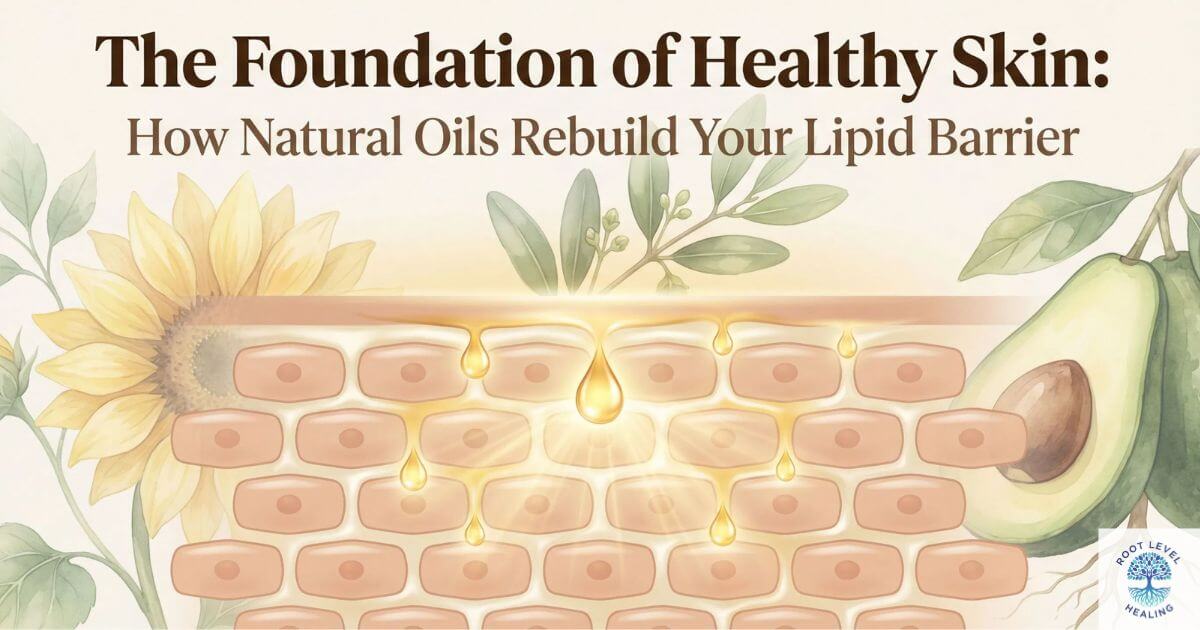
The Foundation of Healthy Skin: How Natural Oils Rebuild Your Lipid Barrier
In our modern world, we are constantly searching for the next "miracle" ingredient, the single molecule that promises to reverse the signs of aging and restore our skin to its youthful glory. But what if the secret to healthy, resilient skin isn't a single ingredient, but a complex, interconnected system that has been perfected by nature over millions of years? What if the key to unlocking our skin's true potential lies not in a high-tech lab, but in the heart of the natural world?
Welcome to the next chapter in our exploration of the science of skincare. In our previous series, we delved into the world of cellular renewal, exploring how amino acids, peptides, and botanical extracts can work in synergy to rebuild the skin from the inside out. Now, we turn our attention to the crucial next step in achieving optimal skin health: protecting and nourishing the skin barrier. This is the frontline of your skin's defense system, the gatekeeper that determines what enters and what stays out. And at the heart of this barrier lies a complex and fascinating structure: the lipid barrier.
Key Takeaways
- 🧱The Lipid Barrier is Key: Composed of ceramides, cholesterol, and fatty acids, this "mortar" for your skin cells is essential for hydration and protection.
- 🌿Natural Oils are Nature's Answer: Plant oils like sunflower, jojoba, and avocado are rich in the specific fatty acids (linoleic and oleic) needed to repair and fortify a compromised skin barrier.
- 🧪It's All About the Blend: The synergistic power of blending different oils provides a comprehensive spectrum of nutrients for optimal skin health, going beyond what any single oil can achieve.
Natural Oils for Skin Barrier Repair: Sunflower, Jojoba & Avocado Explained (A Quick Overview)
Before we dive deep into the science, watch this quick overview to discover the science behind your skin's lipid barrier and how a synergistic blend of sunflower, jojoba, and avocado oils can repair and protect it.
In This Article:
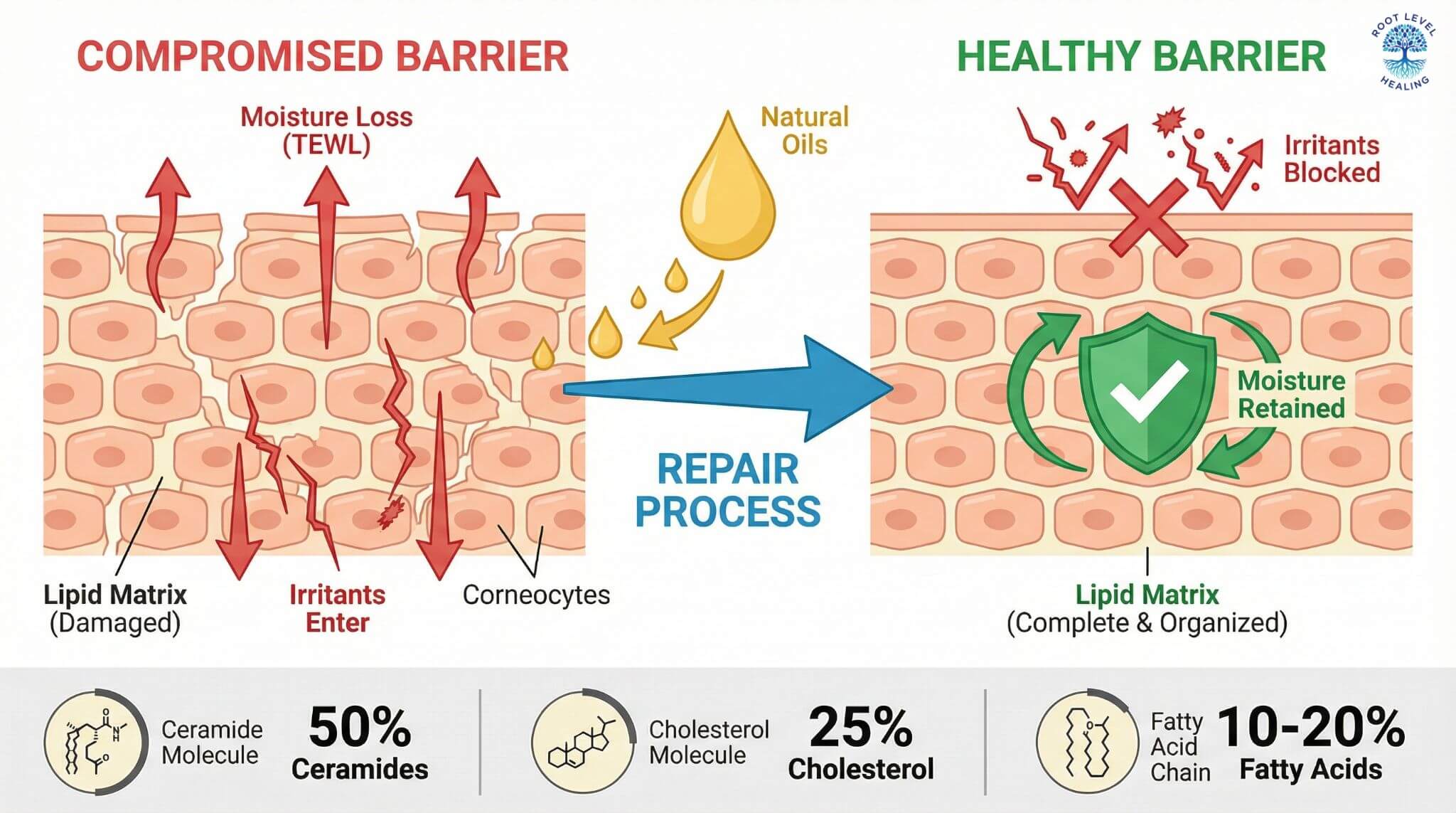
The skin's lipid barrier is a highly organized structure of corneocytes ("bricks") and an intercellular lipid matrix ("mortar") that locks in moisture and protects against external aggressors. Natural oils replenish the essential components of this mortar.
The Lipid Barrier: Your Skin's First Line of Defense
Imagine a brick wall. The bricks are the corneocytes, the flattened, non-living skin cells that form the outermost layer of your skin. But what holds these bricks together? What prevents moisture from escaping and irritants from entering? This is the role of the mortar, and in the case of your skin, the mortar is the lipid barrier.
This intricate matrix of lipids, primarily composed of ceramides (about 50%), cholesterol (about 25%), and free fatty acids (about 10-20%), creates a semi-permeable seal that is essential for skin health. This specific ratio is critical for the formation of the highly organized, lamellar structures that give the barrier its strength and flexibility. It performs two critical functions:
- It keeps the good stuff in: The lipid barrier prevents transepidermal water loss (TEWL), the process by which water evaporates from the skin. By locking in moisture, it keeps your skin hydrated, plump, and supple.
- It keeps the bad stuff out: The lipid barrier acts as a protective shield against a barrage of external aggressors, including UV radiation, pollution, allergens, and harmful bacteria. A healthy barrier is a resilient barrier, capable of neutralizing threats before they can trigger an inflammatory response.
When the lipid barrier is compromised, the consequences can be significant. A weakened barrier is like a leaky wall, allowing moisture to escape and irritants to penetrate. This can lead to a host of skin concerns, including:
- Dryness and Dehydration: Without a healthy lipid barrier, your skin is unable to retain moisture, leading to a feeling of tightness, flakiness, and a dull, lackluster appearance.
- Sensitivity and Redness: A compromised barrier allows irritants to penetrate the deeper layers of the skin, triggering an inflammatory response that manifests as redness, itching, and sensitivity.
- Premature Aging: Chronic inflammation and dehydration can accelerate the breakdown of collagen and elastin, the proteins that give your skin its firmness and elasticity, leading to the premature formation of fine lines and wrinkles.
- Acne and Breakouts: A damaged barrier can disrupt the skin's natural microbiome, creating an environment where acne-causing bacteria can thrive.
The Modern Assault on the Lipid Barrier
In our quest for "clean" and "squeaky-clean" skin, we have inadvertently declared war on our own lipid barrier. Over-exfoliation with harsh scrubs and chemical peels, the use of stripping cleansers that disrupt the skin's natural pH, and the overuse of products containing alcohol and other drying ingredients can all strip away the essential lipids that make up our skin's protective shield. Add to this the constant barrage of environmental stressors like UV radiation and pollution, and it's no wonder that so many of us are struggling with compromised skin barriers.
"Impairments in skin barrier function are inevitably present everywhere on skin surface in all Atopic Dermatitis patients independent of the clinical appearance of the skin. As a result, this impairment of the skin barrier is considered a primary event in AD pathogenesis." [1]
But here's the good news: the skin has a remarkable capacity for self-repair. And with the right tools and support, we can help to rebuild and fortify our lipid barrier, restoring our skin to a state of balance, resilience, and radiant health. This is where the power of natural oils comes into play.
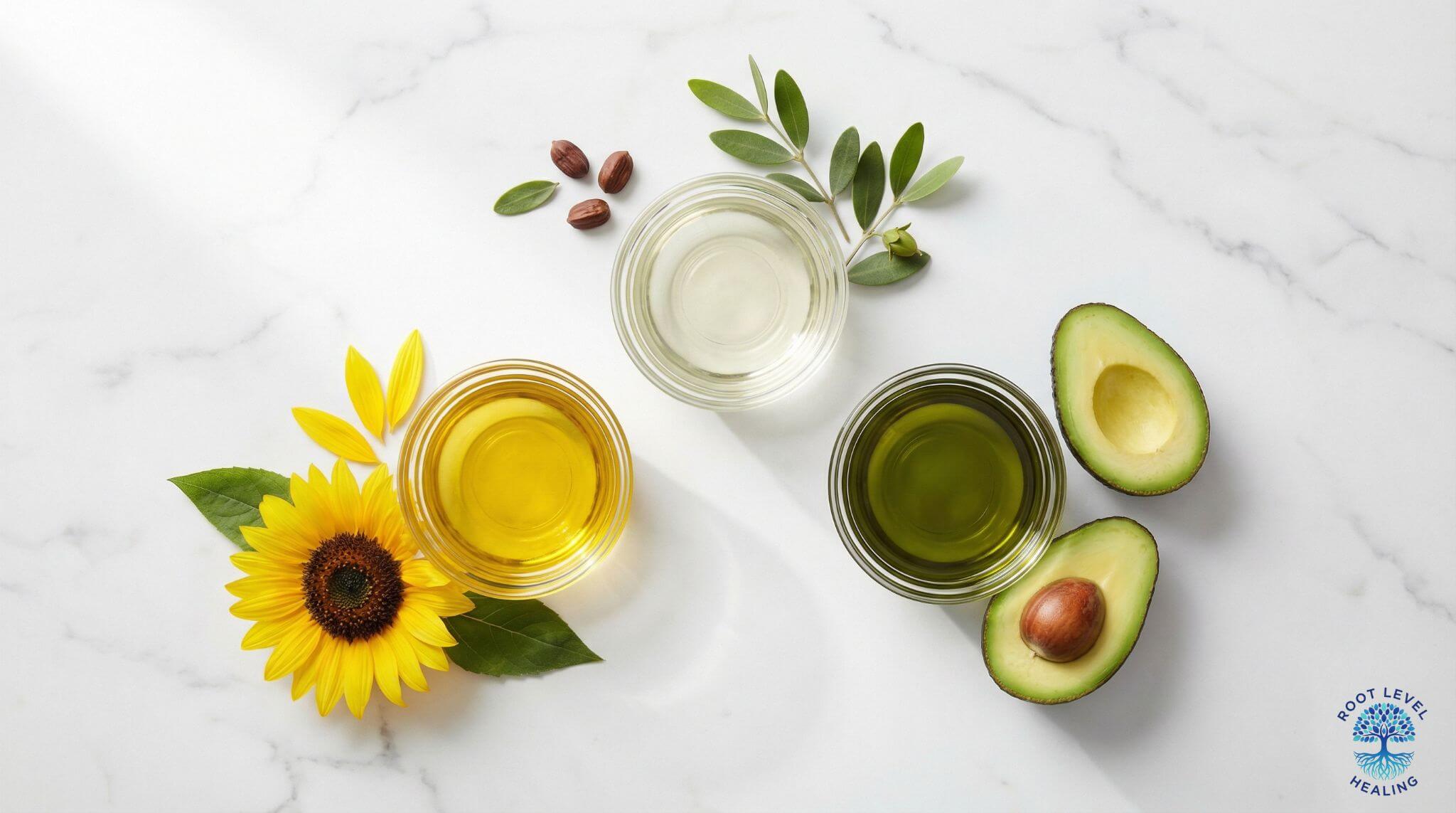
Sunflower, Jojoba, and Avocado oils each offer a unique profile of fatty acids and nutrients that work synergistically to repair and nourish the skin's lipid barrier.
Natural Oils: Nature's Answer to Barrier Repair
For centuries, cultures around the world have turned to plant-based oils for their remarkable skin-healing properties. But it is only recently that modern science has begun to unravel the complex mechanisms by which these natural wonders work their magic. It turns out that the secret lies in their fatty acid composition.
Different plant oils have unique fatty acid profiles, and it is this diversity that allows them to address a wide range of skin concerns. When it comes to barrier repair, two fatty acids are of particular importance: linoleic acid and oleic acid.
- Linoleic Acid (Omega-6): This essential fatty acid is a direct precursor to ceramides, the most abundant lipid in the skin barrier. When applied topically, linoleic acid is converted into ceramides, directly replenishing the "mortar" of your skin and strengthening its protective seal. Oils high in linoleic acid are generally lightweight, non-comedogenic, and ideal for all skin types, including oily and acne-prone skin.
- Oleic Acid (Omega-9): This monounsaturated fatty acid is a powerful emollient, meaning it helps to soften and smooth the skin. However, in high concentrations, it can also be a penetration enhancer, meaning it can temporarily disrupt the lipid barrier to allow other ingredients to penetrate more deeply. While this can be beneficial in some formulations, for those with already compromised barriers, a high concentration of oleic acid can be counterproductive. The key is balance.
This is why the careful selection and blending of oils is so crucial in creating a truly effective barrier-repairing product. It's not just about throwing a bunch of oils together; it's about understanding their unique fatty acid profiles and creating a synergistic blend that delivers the optimal ratio of linoleic and oleic acids to support and strengthen the skin's natural barrier function. Let's take a closer look at three of the most powerful barrier-repairing oils in nature's arsenal:
Sunflower Seed Oil: The Linoleic Acid Powerhouse
Don't let its humble origins fool you; sunflower seed oil is a true superhero when it comes to barrier repair. It boasts one of the highest concentrations of linoleic acid of any plant oil, making it a powerful tool for replenishing the skin's ceramide levels. Studies have shown that topical application of sunflower seed oil can significantly improve skin hydration, reduce TEWL, and enhance the integrity of the lipid barrier. It is also rich in Vitamin E, a potent antioxidant that helps to protect the skin from free radical damage. [2]
Jojoba Oil: The Biomimetic Wonder
Jojoba oil is unique in the plant kingdom in that its chemical structure is remarkably similar to that of human sebum, the natural oil produced by our skin. This makes it a highly effective and biocompatible moisturizer. It is a rich source of wax esters, which are a key component of the lipid barrier, and it has been shown to have a powerful anti-inflammatory effect, making it an excellent choice for soothing and calming irritated skin. Because it so closely mimics our own sebum, it can also help to balance oil production, making it suitable for both dry and oily skin types. [3]
Avocado Oil: The Nutrient-Rich Nourisher
Avocado oil is a rich, nourishing oil that is packed with a wide range of vitamins, minerals, and antioxidants. It is a good source of both oleic and linoleic acids, as well as palmitic acid, another key component of the lipid barrier. It is also rich in Vitamin E, carotenoids, and other phytonutrients that help to protect the skin from environmental damage. While it is a heavier oil, its rich nutrient profile makes it an excellent choice for those with very dry or mature skin.
Beyond Fatty Acids: The Unsaponifiable Fraction
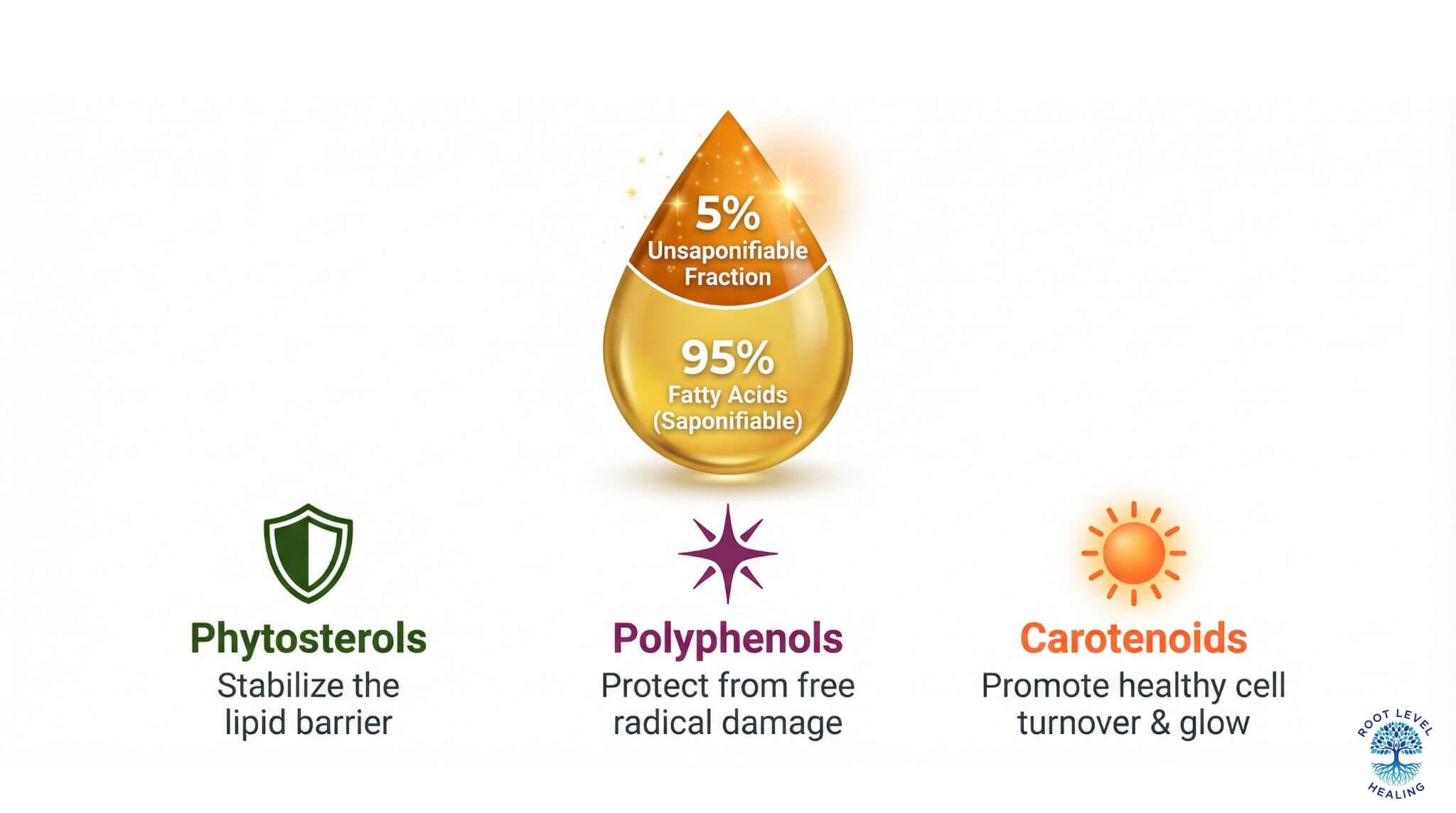
The unsaponifiable fraction of plant oils contains powerful bioactive compounds like phytosterols, polyphenols, and carotenoids that work synergistically with fatty acids to protect and nourish the skin.
While the fatty acid profile of an oil is crucial, it's not the whole story. The unsaponifiable fraction of an oil is the small percentage of the oil that is not made up of fatty acids. This fraction is a rich source of bioactive compounds, such as phytosterols, polyphenols, and carotenoids, which have powerful antioxidant and anti-inflammatory properties. These compounds work in synergy with the fatty acids to provide a comprehensive approach to skin health.
- Phytosterols, for example, have a similar structure to cholesterol and can help to stabilize the lipid barrier.
- Polyphenols, such as those found in olive oil and green tea, are potent antioxidants that can help to protect the skin from free radical damage.
- Carotenoids, such as beta-carotene, are converted into Vitamin A in the skin and can help to regulate cell turnover and promote a healthy glow.
This is why cold-pressed, unrefined oils are often superior to their refined counterparts. The refining process can strip away many of these valuable unsaponifiable compounds, reducing the oil's therapeutic potential.
How to Choose and Use Natural Oils for Your Skin Type
With so many oils to choose from, it can be overwhelming to know where to start. Here are a few tips to help you choose the right oils for your skin type:
- For Oily or Acne-Prone Skin: Look for oils high in linoleic acid, such as sunflower, safflower, or grapeseed oil. These oils are lightweight, non-comedogenic, and can help to balance sebum production.
- For Dry or Mature Skin: Look for oils that offer a balanced profile of linoleic and oleic acids, such as jojoba, avocado, or sweet almond oil. These oils are more nourishing and can help to replenish lost lipids.
- For Sensitive Skin: Look for oils with anti-inflammatory properties, such as jojoba, calendula, or chamomile oil. It's also a good idea to patch-test any new oil on a small area of skin before applying it to your entire face.
When incorporating oils into your routine, remember that a little goes a long way. Start with a few drops and gently press the oil into your skin as the last step in your routine (before sunscreen in the morning). You can also mix a few drops of oil into your favorite moisturizer for an extra boost of hydration.
The Synergistic Power of Blending
While each of these oils is powerful in its own right, the true magic happens when they are combined in a carefully balanced formulation. By blending oils with different fatty acid profiles and unsaponifiable fractions, it is possible to create a product that delivers a comprehensive approach to barrier repair. A well-formulated blend can provide the skin with the optimal ratio of linoleic and oleic acids, as well as a wide range of other beneficial compounds, such as vitamins, antioxidants, and anti-inflammatory agents.
This is the philosophy behind the next generation of advanced skincare products. It's not about relying on a single "miracle" ingredient; it's about harnessing the synergistic power of nature to create formulations that work in harmony with the skin's own innate intelligence. It's about understanding that the skin is a complex ecosystem, and that the key to unlocking its true potential lies in providing it with the complete spectrum of nutrients it needs to thrive.
In our next article, we will continue our exploration of the science of barrier protection by delving into the world of vitamins. We will uncover how specific vitamins, such as B5 and E, can work in synergy with natural oils to create a powerful protective shield against environmental aggressors. Stay tuned as we continue our journey into the heart of healthy skin.
Frequently Asked Questions
Q: What is the lipid barrier and why is it important?
A: The lipid barrier is the "mortar" that holds together the corneocytes (skin cells) in the outermost layer of your skin. It's composed of ceramides (50%), cholesterol (25%), and free fatty acids (10-20%). This barrier performs two critical functions: it prevents transepidermal water loss (TEWL) to keep skin hydrated, and it protects against external aggressors like UV radiation, pollution, allergens, and bacteria. A compromised lipid barrier leads to dryness, sensitivity, premature aging, and acne.
Q: Which natural oils are best for repairing the skin barrier?
A: The most effective barrier-repairing oils are those high in linoleic acid, which is a direct precursor to ceramides. Sunflower seed oil is one of the highest sources of linoleic acid and has been shown to significantly improve skin hydration and reduce TEWL [2]. Jojoba oil is unique because its structure closely mimics human sebum, making it highly biocompatible and effective for all skin types [3]. Avocado oil provides a rich blend of oleic and linoleic acids plus vitamins and antioxidants, making it ideal for dry or mature skin.
Q: What's the difference between linoleic acid and oleic acid?
A: Linoleic acid (omega-6) is an essential fatty acid that converts directly into ceramides when applied topically, replenishing the lipid barrier's "mortar." Oils high in linoleic acid are lightweight, non-comedogenic, and ideal for all skin types, including oily and acne-prone skin. Oleic acid (omega-9) is a powerful emollient that softens and smooths skin, but in high concentrations it can act as a penetration enhancer that temporarily disrupts the lipid barrier. The key is finding the right balance of both fatty acids for your skin type.
Q: Can I use natural oils if I have oily or acne-prone skin?
A: Absolutely! The key is choosing oils high in linoleic acid, such as sunflower, safflower, or grapeseed oil. These oils are lightweight, non-comedogenic, and can actually help balance sebum production. Research shows that acne-prone skin is often deficient in linoleic acid, and supplementing with linoleic-rich oils can help restore barrier function and reduce breakouts. Avoid heavy oils high in oleic acid, which can clog pores in oily skin types.
Q: What is the unsaponifiable fraction and why does it matter?
A: The unsaponifiable fraction is the small percentage of an oil (typically 0.5-5%) that is not made up of fatty acids. This fraction contains powerful bioactive compounds like phytosterols (which stabilize the lipid barrier), polyphenols (potent antioxidants that protect against free radical damage), and carotenoids (which convert to vitamin A and promote healthy cell turnover). Cold-pressed, unrefined oils retain more of these valuable compounds than refined oils, making them more therapeutically effective.
Q: Should I use cold-pressed or refined oils?
A: Cold-pressed, unrefined oils are generally superior because the refining process can strip away many of the valuable unsaponifiable compounds (phytosterols, polyphenols, carotenoids) that provide antioxidant and anti-inflammatory benefits. These bioactive compounds work synergistically with the fatty acids to provide comprehensive skin support. However, refined oils may be more stable and have a longer shelf life, so the choice depends on your priorities and how quickly you'll use the product.
Q: How do I incorporate natural oils into my skincare routine?
A: Start with a few drops and gently press the oil into your skin as the last step in your routine, after serums and moisturizers but before sunscreen in the morning. A little goes a long way—typically 2-4 drops for the entire face. You can also mix a few drops of oil into your favorite moisturizer for an extra hydration boost. For best results, apply to slightly damp skin to help lock in moisture. Patch-test any new oil on a small area before applying to your entire face, especially if you have sensitive skin.
Q: Can natural oils help with conditions like atopic dermatitis or eczema?
A: Yes, research shows that topical application of certain plant oils can have significant anti-inflammatory and barrier repair effects. Studies have found that "impairments in skin barrier function are inevitably present everywhere on skin surface in all Atopic Dermatitis patients" and that barrier repair is considered a primary treatment approach [1]. Oils high in linoleic acid like sunflower seed oil have been shown to improve barrier function and reduce inflammation in atopic dermatitis patients [1] [2]. However, always consult with a dermatologist for medical skin conditions.
Q: Why is blending different oils better than using a single oil?
A: Each oil has a unique fatty acid profile and unsaponifiable fraction, providing different benefits. By blending oils with complementary profiles, you can create a comprehensive formula that delivers the optimal ratio of linoleic and oleic acids, plus a wide spectrum of vitamins, antioxidants, and anti-inflammatory compounds. For example, combining sunflower oil (high linoleic acid), jojoba oil (biomimetic wax esters), and avocado oil (rich nutrients) provides more complete barrier support than any single oil alone. This synergistic approach mirrors the skin's natural lipid composition more closely.
Q: How long does it take to see results from using natural oils?
A: Most people notice improved hydration and a softer skin texture within 1-2 weeks of consistent use. Deeper barrier repair and reduction in sensitivity typically takes 4-6 weeks, as this is the time it takes for the skin to complete a full turnover cycle and rebuild its lipid matrix. For chronic conditions like atopic dermatitis or severe dryness, it may take 8-12 weeks of consistent use to see significant improvement. Consistency is key—daily application provides the best results.
References
- Lin, T. K., Zhong, L., & Santiago, J. L. (2017). Anti-Inflammatory and Skin Barrier Repair Effects of Topical Application of Some Plant Oils. International journal of molecular sciences, 19(1), 70. https://doi.org/10.3390/ijms19010070
- Vaughn, A. R., Clark, A. K., Sivamani, R. K., & Shi, V. Y. (2018 ). Natural Oils for Skin-Barrier Repair: Ancient Compounds Now Backed by Modern Science. American journal of clinical dermatology, 19(1), 103–117. https://doi.org/10.1007/s40257-017-0301-1
- Pazyar, N., Yaghoobi, R., Ghassemi, M. R., Kazerouni, A., Rafeie, E., & Jamshydian, N. (2013 ). Jojoba in dermatology: a succinct review. Giornale italiano di dermatologia e venereologia : organo ufficiale, Societa italiana di dermatologia e sifilografia, 148(6), 687–691. https://pubmed.ncbi.nlm.nih.gov/24442052/

Ready to Discover Your Score?
This 2-minute quiz is the essential first step to understanding your body’s current toxic load and identifying the root cause of how you feel.
Take The Toxicity QuizExplore More Articles
Dive deeper into topics like detoxification, gut health, and mental clarity on our blog. Knowledge is the key to taking control of your health.
Visit The Blog