
Skin Elasticity & Cellular Renewal: The Science of Youthful, Resilient Skin
In our previous discussions, we've explored the protective power of marine phytoplankton and the hydrating magic of hyaluronic acid. Now, we delve deeper into the very architecture of youthful skin, uncovering the two fundamental processes that dictate its firmness, resilience, and radiance: skin elasticity and cellular renewal. Understanding these interconnected mechanisms is the key to unlocking a truly effective anti-aging strategy.
Key Takeaways
- 🏗️The Skin's Scaffolding: Collagen provides strength and structure, while elastin allows the skin to stretch and bounce back. The health of this protein matrix is the foundation of skin elasticity.
- 🔄The Renewal Cycle: Cellular renewal, or skin turnover, is the natural process of shedding old skin cells and replacing them with new ones. This process slows with age, leading to dullness and a rough texture.
- ☀️The Aging Factors: Both intrinsic aging and external factors like UV radiation degrade collagen and elastin and slow cellular renewal, accelerating the signs of aging.
Skin Elasticity & Cellular Renewal: The Architecture of Youthful Skin (A Quick Overview)
Before we dive deep into the science, watch this quick overview to discover the architecture of youth and learn how skin elasticity and cellular renewal are the true secrets to a resilient complexion.
In This Article:

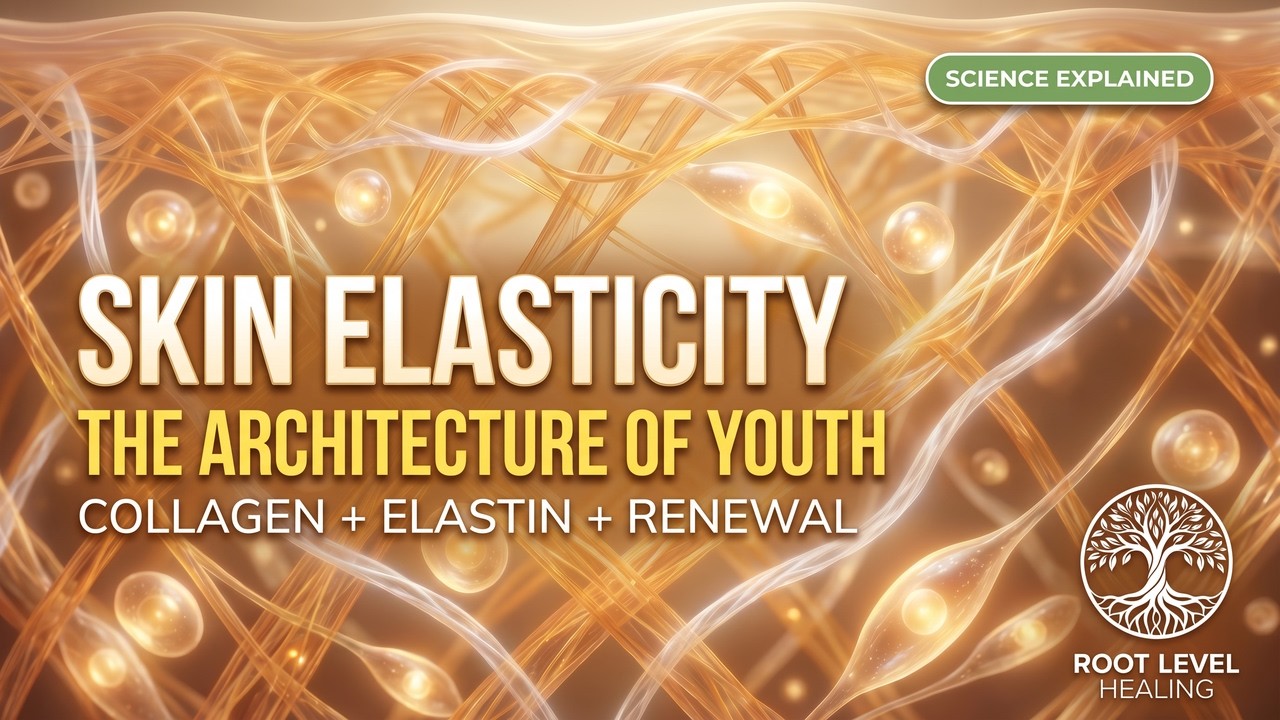
The dermal matrix is composed of densely packed collagen fibers that provide structural strength and resilient elastin coils that allow the skin to stretch and recoil. Together with glycosaminoglycans (GAGs) like hyaluronic acid, these proteins create the foundation of skin elasticity and firmness that characterizes youthful skin.
Understanding Skin Elasticity: The Foundation of Firmness
Skin elasticity is the skin's ability to stretch and then return to its original shape. It's what gives youthful skin its firm, supple quality. This remarkable property is governed by two critical proteins in the dermis: collagen and elastin.
Collagen: The Structural Backbone
Collagen is the most abundant protein in the human body and the primary structural component of the dermis. It forms a dense, fibrous network that provides the skin with strength, structure, and support. Think of it as the scaffolding that holds everything together. In youthful skin, this collagen framework is strong and well-organized, keeping the skin firm and resilient.
Elastin: The Elastic Fibers
Woven throughout the collagen matrix are fibers of another crucial protein: elastin. As its name suggests, elastin is what gives the skin its elasticity. These highly flexible fibers can stretch to many times their length and then recoil, allowing the skin to move and express without losing its shape. It's the elastin that allows your skin to snap back into place after being pinched or pulled.
"Three primary structural components of the dermis, collagen, elastin and GAGs [Glycosaminoglycans] have been the subjects of the majority of anti-aging research... Gradual loss of skin elasticity leads to the phenomenon of sagging." [1]
Together, collagen and elastin create a dynamic, resilient matrix that keeps the skin firm, smooth, and youthful. The ratio and organization of these two proteins are critical. In young skin, collagen is densely packed and well-organized, while elastin fibers are evenly distributed and highly functional. This creates a skin that is both strong and flexible, able to withstand the daily stresses of movement and expression without permanent damage.
However, this delicate balance is disrupted by the aging process and environmental factors. As collagen and elastin degrade, the skin loses its ability to maintain its shape, leading to wrinkles, fine lines, and sagging. The key to maintaining youthful skin is to protect these structural proteins and support the body's natural ability to produce them.
The Role of Glycosaminoglycans (GAGs)
In addition to collagen and elastin, the dermal matrix contains glycosaminoglycans (GAGs), which are long chains of sugar molecules that bind water and create a gel-like substance in the dermis. Hyaluronic acid, which we discussed in our previous post, is the most abundant GAG in the skin. GAGs work synergistically with collagen and elastin to maintain the skin's hydration, volume, and structural integrity. They fill the spaces between collagen and elastin fibers, providing cushioning and support.
The Science of Cellular Renewal: The Skin's Natural Reboot
While the dermal matrix provides the skin's structure, the epidermis is in a constant state of renewal. This process, known as cellular renewal or skin turnover, is the continuous cycle of shedding old, dead skin cells from the surface and replacing them with fresh, new cells from the deeper layers.
In young, healthy skin, this cycle takes approximately 28 days. New cells are born in the stratum basale (the deepest layer of the epidermis), and they gradually migrate upwards, maturing and differentiating along the way. By the time they reach the surface (the stratum corneum), they are essentially dead, flattened cells that form a protective barrier. These cells are then shed, revealing the newer, healthier cells underneath.
This constant turnover is essential for maintaining a smooth, radiant complexion. It helps to repair damage, prevent the buildup of dead cells that can lead to dullness, and ensure that the skin's surface is always fresh and vibrant.
This constant turnover is also tightly regulated by various growth factors and signaling molecules that control the rate of cell division and differentiation.
The Layers of Renewal
The epidermis is divided into several distinct layers, each representing a different stage in the cell's journey from birth to death. The stratum basale, or basal layer, is where keratinocytes (the primary cell type in the epidermis) are born through cell division. As these cells move upward, they enter the stratum spinosum, where they begin to produce keratin, a tough, fibrous protein that provides strength and protection.
Next, the cells move into the stratum granulosum, where they undergo further changes, including the production of lipids that will eventually form the skin's waterproof barrier. Finally, the cells reach the stratum corneum, the outermost layer of the skin. Here, they are essentially dead, flattened sacks of keratin that are tightly packed together to form a protective shield. These cells are eventually shed through a process called desquamation, making way for the new cells below.
Why Cellular Renewal Slows with Age
As we age, the rate of cellular renewal slows down significantly. This is due to a combination of factors, including a decrease in the activity of growth factors, a decline in cellular energy production, and an accumulation of cellular damage. The result is that dead cells linger on the surface longer, leading to a dull, rough, and uneven complexion. The slower turnover also means that the skin is less able to repair damage from UV radiation and other environmental stressors, further accelerating the aging process.

In youthful skin, the cellular renewal cycle takes approximately 28 days, with new keratinocytes born in the stratum basale migrating upward through the epidermal layers before being shed from the surface. As we age, this cycle slows to 45-60 days, causing dead cells to linger longer and resulting in dullness, rough texture, and impaired repair capacity.
What Causes the Decline? The Enemies of Elasticity and Renewal
The visible signs of aging—wrinkles, sagging, dullness—are the direct result of the decline in skin elasticity and the slowing of cellular renewal. This decline is caused by a combination of intrinsic (natural aging) and extrinsic (environmental) factors.
Intrinsic Aging
As we age, our bodies naturally produce less collagen and elastin. The overall collagen content in the skin is known to decline by approximately 1% per year after the age of 20 [1]. The remaining collagen and elastin fibers can also become disorganized and fragmented, further compromising the skin's structural integrity. At the same time, the cellular renewal cycle begins to slow down, extending from 28 days in young adulthood to 45-60 days in older age. This means dead cells linger on the surface longer, leading to a rough, dull appearance.
Extrinsic Aging: The Role of UV Radiation
Sun exposure is the single biggest contributor to extrinsic aging, accounting for up to 80% of visible facial aging. UV radiation triggers a cascade of damaging events in the skin, including the production of matrix metalloproteinases (MMPs). These enzymes are responsible for breaking down collagen and elastin at an accelerated rate. This leads to what is known as solar elastosis, a condition characterized by thick, damaged elastin fibers and a disorganized collagen network, which is a hallmark of photoaged skin [1].
UV radiation also generates free radicals, which are highly reactive molecules that cause oxidative damage to cellular structures, including DNA, proteins, and lipids. This oxidative stress not only damages existing collagen and elastin but also impairs the skin's ability to produce new, healthy fibers. The cumulative effect of years of sun exposure is a dramatic acceleration of the aging process, leading to deep wrinkles, sagging, and a leathery texture.
Other Extrinsic Factors
While UV radiation is the primary culprit, other environmental factors also contribute to the decline in skin elasticity and cellular renewal. These include pollution, smoking, and poor nutrition. Air pollutants can penetrate the skin and generate free radicals, while smoking reduces blood flow to the skin, depriving it of oxygen and nutrients. A diet lacking in essential vitamins, minerals, and antioxidants can also impair the skin's ability to repair and regenerate.
Supporting Youthful Skin: How to Boost Elasticity and Renewal
While we can't stop the aging process entirely, we can take steps to support the skin's natural mechanisms of elasticity and renewal. A comprehensive approach involves both protecting the skin from damage and providing it with the building blocks it needs to repair and regenerate.
1. Sun Protection
The most critical step in preserving skin elasticity is to protect it from the sun. Daily use of a broad-spectrum sunscreen with an SPF of 30 or higher is non-negotiable. This helps to prevent the UV-induced breakdown of collagen and elastin, preserving the skin's youthful structure.
2. Topical Ingredients
Certain topical ingredients have been shown to support collagen production and cellular renewal. These include:
- Retinoids: Vitamin A derivatives that are considered the gold standard for anti-aging. They help to stimulate collagen production and accelerate cellular turnover.
- Vitamin C: A powerful antioxidant that is essential for collagen synthesis and helps to protect the skin from free radical damage.
- Peptides: Short chains of amino acids that can act as signaling molecules, telling the skin to produce more collagen.
- Alpha Hydroxy Acids (AHAs): Such as glycolic and lactic acid, which help to exfoliate the skin and promote cellular renewal.
3. The Power of Marine Ingredients
As we've discussed, marine ingredients like phytoplankton and hyaluronic acid play a crucial role in supporting the skin's youthful functions. Phytoplankton provides a rich source of nutrients, including omega-3 fatty acids and antioxidants, that help to protect the skin from damage and support cellular health. Hyaluronic acid, by intensely hydrating the skin, creates the optimal environment for collagen and elastin to thrive and for cellular processes to function efficiently.
By combining these powerful ingredients, we can create a synergistic effect that addresses both skin elasticity and cellular renewal, leading to visibly firmer, smoother, and more radiant skin. This holistic approach is the foundation of our next and final post in this series, where we will unveil the ultimate solution that brings all these concepts together.
4. Lifestyle Factors
Beyond topical treatments, certain lifestyle factors can have a profound impact on skin elasticity and cellular renewal. These include:
- Adequate Sleep: During sleep, the body goes into repair mode, producing growth hormone and other factors that support cellular regeneration. Chronic sleep deprivation can impair this process, leading to accelerated aging.
- Stress Management: Chronic stress elevates cortisol levels, which can break down collagen and impair the skin's barrier function. Practices like meditation, yoga, and deep breathing can help to manage stress and protect the skin.
- Hydration: Drinking plenty of water is essential for maintaining skin hydration from the inside out. Well-hydrated skin is more plump, resilient, and better able to carry out its cellular functions.
- Exercise: Regular physical activity increases blood flow to the skin, delivering oxygen and nutrients that support cellular health and collagen production.
The Synergy of Marine Ingredients and Cellular Support
The true power of an effective anti-aging strategy lies in the synergy between ingredients. Marine phytoplankton provides a rich source of nutrients that nourish the skin at the cellular level, supporting the production of collagen and elastin. Hyaluronic acid creates the hydrated environment necessary for these processes to occur efficiently. Together, they address both the structural integrity of the dermis and the renewal processes of the epidermis, creating a comprehensive approach to maintaining youthful, resilient skin.
This holistic approach is the foundation of our next and final post in this series, where we will unveil the ultimate solution that brings all these concepts together in a single, powerful formulation designed to restore your skin's youthful glory.

The decline in skin elasticity and cellular renewal results from both intrinsic aging (natural collagen loss of 1% per year after age 20) and extrinsic factors like UV radiation, pollution, and lifestyle choices. A comprehensive anti-aging strategy combines sun protection, targeted active ingredients, nutrient-rich marine compounds, and healthy lifestyle practices to preserve the skin's structural integrity and regenerative capacity.
Frequently Asked Questions About Skin Elasticity and Renewal
Q: What is the difference between skin elasticity and skin firmness?
A: While often used interchangeably, they are slightly different. Skin elasticity is the skin's ability to stretch and snap back to its original shape, primarily governed by elastin. Skin firmness refers to the skin's density and resistance to sagging, which is more related to the amount and quality of collagen.
Q: At what age does skin elasticity start to decline?
A: The natural decline in collagen production begins around age 20, with a loss of about 1% per year. The noticeable effects of this decline, such as fine lines and a loss of firmness, typically become more apparent in our late 20s and early 30s.
Q: Can you really rebuild collagen and elastin in the skin?
A: While you can't completely reverse the aging process, you can certainly support and stimulate the skin's natural production of collagen and elastin. Using ingredients like retinoids, vitamin C, and peptides, combined with sun protection, can help to boost production and protect existing fibers.
Q: How can I speed up my skin's cellular renewal process?
A: Regular exfoliation is the most effective way to speed up cellular renewal. Using alpha hydroxy acids (AHAs) or retinoids helps to remove the buildup of dead skin cells from the surface, which in turn signals the skin to produce new cells more quickly.
Q: Does diet affect skin elasticity?
A: Yes, absolutely. A diet rich in antioxidants (from fruits and vegetables), healthy fats (like omega-3s), and protein provides the skin with the essential nutrients it needs to build collagen and protect against damage. Conversely, a diet high in sugar and processed foods can accelerate the breakdown of collagen through a process called glycation.
Q: How long does it take to see an improvement in skin elasticity?
A: With a consistent skincare routine that includes supportive ingredients and diligent sun protection, you can start to see improvements in skin texture and hydration within a few weeks. However, more significant changes in firmness and elasticity, which involve rebuilding collagen, can take 3-6 months of consistent use.

Ready to Discover Your Score?
This 2-minute quiz is the essential first step to understanding your body’s current toxic load and identifying the root cause of how you feel.
Take The Toxicity QuizExplore More Articles
Dive deeper into topics like detoxification, gut health, and mental clarity on our blog. Knowledge is the key to taking control of your health.
Visit The Blog