The Dynamic Duo: Why Calcium and Magnesium Are Your Body's Perfect Partnership
In our journey to understand our body's high-performance engine, we've uncovered the silent mineral crisis and explored the master mechanic's recovery blueprint. Now, it's time to get into the specifics of the fuel itself. Not all fuel is created equal, and for your body's engine, there is one premium blend that stands above the rest: the dynamic duo of calcium and magnesium. This isn't just about having enough of each; it's about the power of their partnership and the critical importance of their ratio.
Think of calcium as the high-octane fuel that provides explosive power for muscle contractions and nerve impulses. Magnesium, on the other hand, is the master lubricant and coolant that keeps the engine from overheating and seizing up. One provides the spark, the other provides the control. Without the perfect balance, your engine either sputters and stalls or redlines into a state of chronic tension and burnout. Understanding this calcium magnesium synergy is the key to unlocking a new level of health and performance.
Key Takeaways
- ⚖️The 2:1 Ratio is Critical: Scientific research confirms that a 2:1 calcium to magnesium ratio is optimal for health. Ratios higher than this, common in modern diets, are linked to increased inflammation and cardiovascular risk.
- 🤝A Partnership of Opposites: Calcium and magnesium have opposing yet complementary roles. Calcium excites nerves and contracts muscles, while magnesium calms nerves and relaxes muscles. This balance is essential for proper function.
- 🚫Magnesium Deficiency is Widespread: Up to 60% of adults may be deficient in magnesium, leading to common symptoms like muscle cramps, anxiety, and poor sleep. High calcium intake can worsen this deficiency by competing for absorption.
- 🦴Synergy is Key for Bone Health: Calcium provides bone structure, but magnesium is required to activate vitamin D, which is essential for calcium absorption. Without enough magnesium, calcium cannot be properly utilized for bone health.
The Dynamic Duo: Why Calcium and Magnesium Are Your Body's Perfect Partnership (A Quick Overview)
Before we dive deep into the science, watch this quick overview for a visual breakdown of how these two essential minerals work together as the ultimate spark and control system.
In This Article:
The Perfect Fuel Blend: Why the 2:1 Ratio Matters
For decades, the focus has been almost exclusively on calcium, leading to widespread supplementation and food fortification. However, this has created a dangerous imbalance. Groundbreaking research has revealed that the calcium to magnesium ratio is just as important, if not more so, than the absolute intake of either mineral. The scientific consensus points to an optimal ratio of 2:1—two parts calcium to one part magnesium [1].
Unfortunately, the modern Western diet often delivers a ratio of 3:1 or even higher. This imbalance is not just a minor issue; it has significant health consequences. A study published in *Current Developments in Nutrition* found that Ca:Mg ratios above 2:1 were significantly associated with increased markers of inflammation, such as interleukin-6 [1]. This means that by consuming too much calcium relative to magnesium, we are essentially creating a pro-inflammatory state in our bodies, putting unnecessary stress on our engines.
The reason for this comes down to competitive absorption. Calcium and magnesium are like two drivers trying to get through the same tollbooth in your gut. They compete for the same absorption pathways and transport proteins. When there’s a traffic jam of calcium, magnesium gets stuck waiting in line and is often excreted before it ever gets a chance to be absorbed [2]. This is why simply taking more magnesium isn’t always the answer; correcting the ratio is the key to ensuring both minerals get to where they need to go.
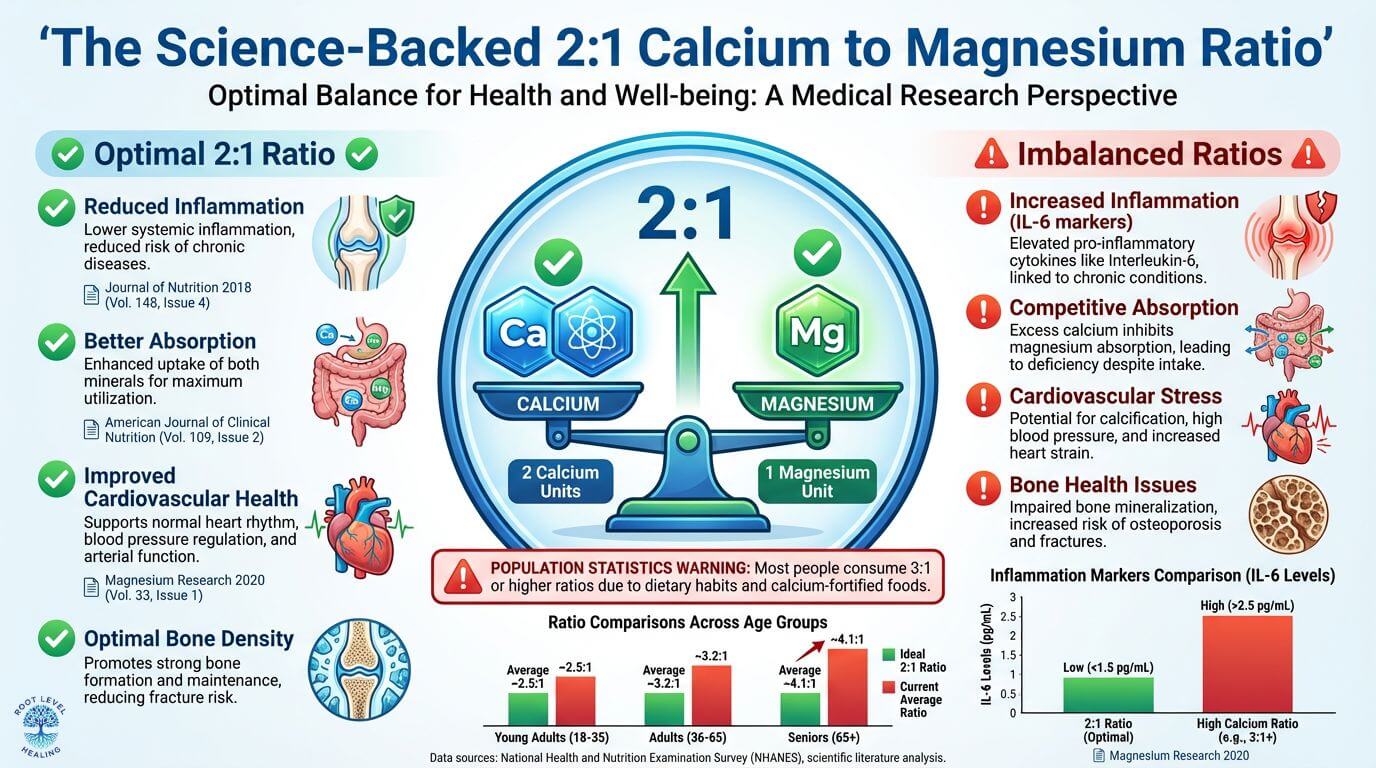
The scientifically validated 2:1 calcium to magnesium ratio is the optimal fuel blend for your body's engine, preventing inflammation and ensuring both minerals are properly utilized.
A Partnership of Opposing Forces: Spark and Control
The beauty of the calcium-magnesium partnership lies in their opposing yet perfectly complementary actions. They are the yin and yang of your body’s biochemistry, providing the delicate balance between tension and relaxation that is essential for life.
Calcium: The Accelerator (The Spark)
Calcium is an excitatory mineral. It is the spark that ignites a multitude of physiological processes:
- Muscle Contraction: When a nerve signals a muscle to move, it triggers a flood of calcium into the muscle cells, causing them to contract.
- Nerve Transmission: Calcium is essential for the release of neurotransmitters, the chemical messengers that allow your nerve cells to communicate.
- Blood Clotting: It plays a critical role in the complex cascade of events that allows your blood to clot and heal wounds.
Magnesium: The Brake (The Control)
If calcium is the accelerator, magnesium is the brake. It is a calming, relaxing mineral that acts as a natural calcium channel blocker, preventing over-excitation and maintaining control:
- Muscle Relaxation: After calcium causes a muscle to contract, magnesium is responsible for pushing it back out of the cell, allowing the muscle to relax. This is why magnesium deficiency symptoms so often include muscle cramps and spasms [3].
- Nerve Calming: Magnesium sits on nerve cell receptors (like the NMDA receptor) and prevents them from being over-stimulated, which helps maintain a calm and focused state.
- Heart Rhythm: It helps regulate the heart’s electrical activity, ensuring a steady, consistent beat by controlling the flow of calcium in and out of heart muscle cells.
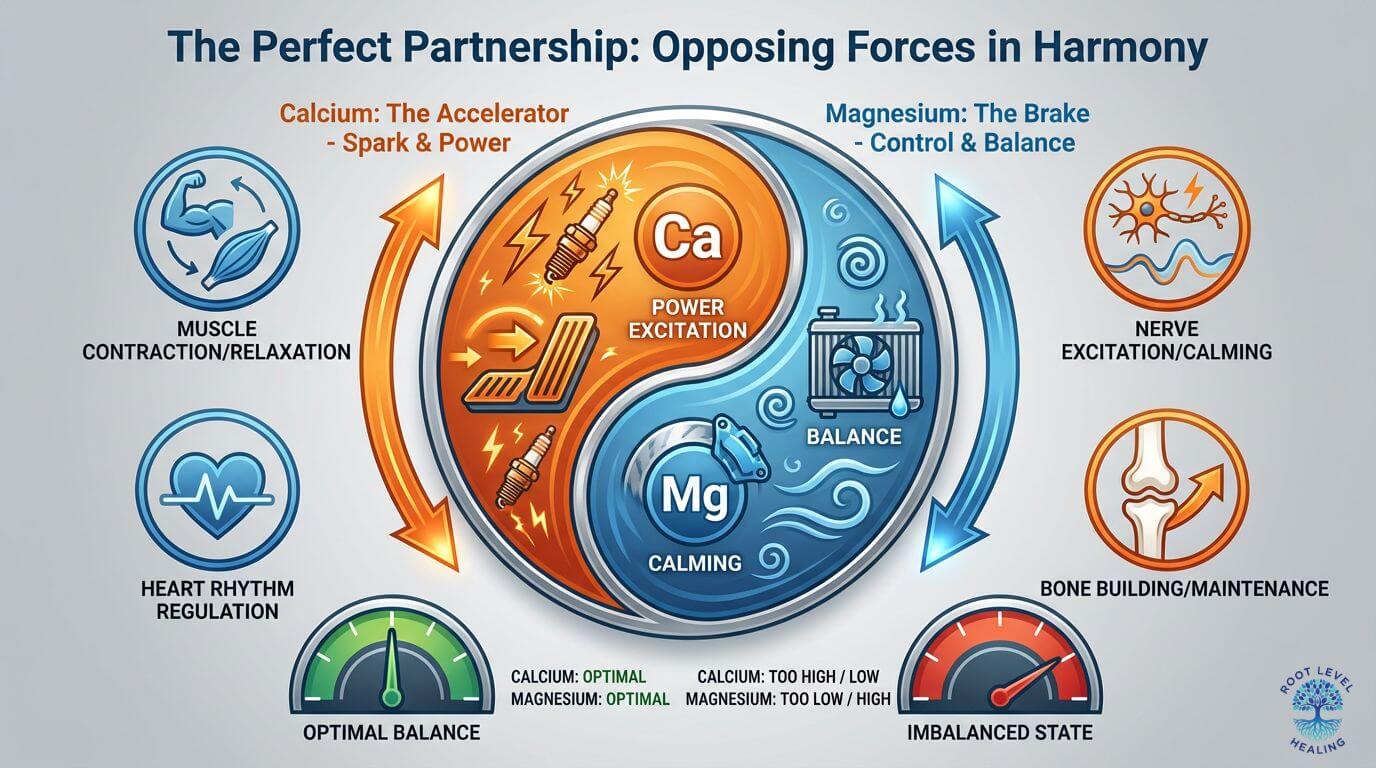
Calcium and magnesium work in a delicate balance. Calcium provides the spark for contraction and excitation, while magnesium provides the control for relaxation and calming.
The Unseen Crisis: Widespread Magnesium Deficiency
While calcium gets all the attention, the real crisis is the widespread, often undiagnosed, deficiency in magnesium. It’s estimated that up to 60% of adults in developed countries do not consume the recommended daily amount of this critical mineral [4]. This is a direct result of modern agricultural practices that have depleted magnesium from the soil, and food processing techniques that strip it from our foods.
The signs of magnesium deficiency are often subtle at first and can be easily dismissed as the normal aches and pains of modern life. However, they are the warning lights on your engine’s dashboard, signaling that a critical fluid is running low. Common magnesium deficiency symptoms include:
- Muscle cramps, twitches, and spasms (especially in the legs at night)
- Persistent muscle tension and soreness
- Anxiety, irritability, and a feeling of being “on edge”
- Difficulty falling asleep or staying asleep
- Fatigue and low energy
- Headaches and migraines
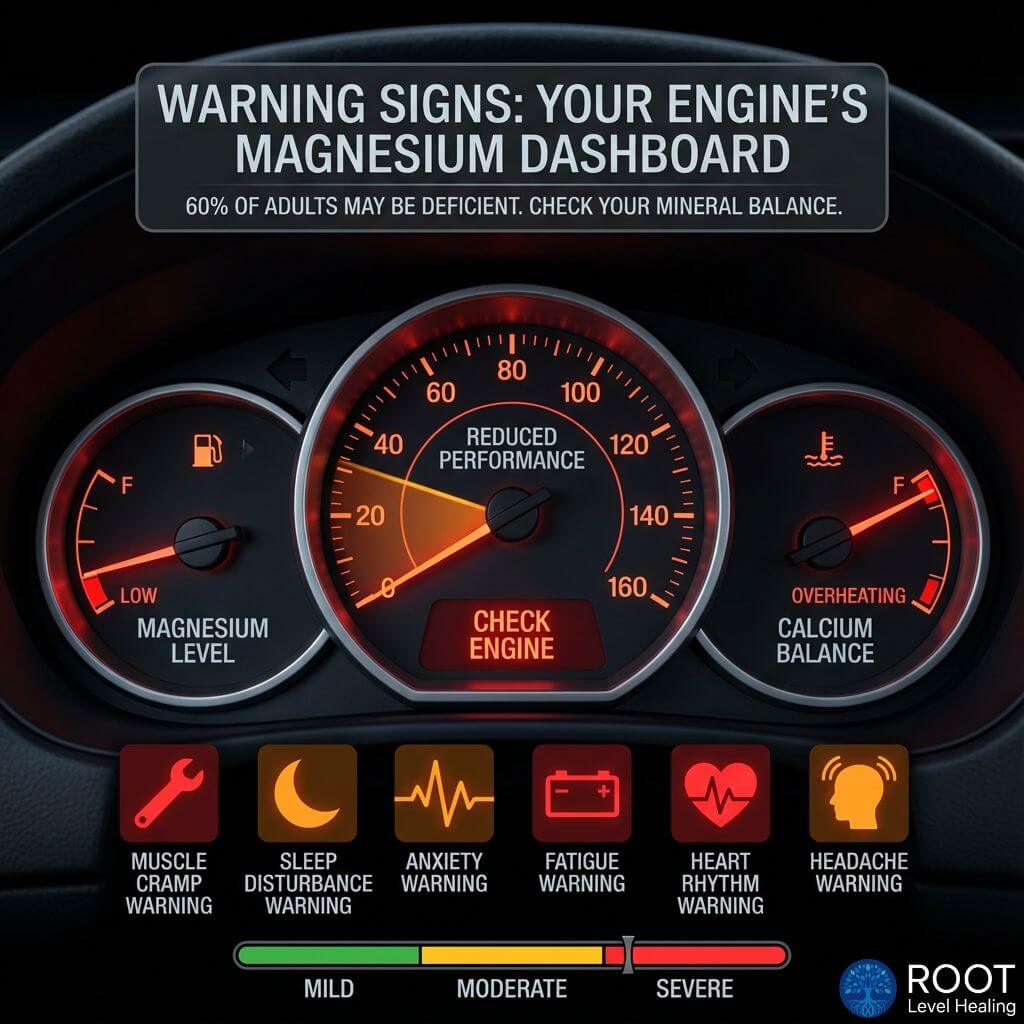
Widespread magnesium deficiency can manifest in many common symptoms that are often overlooked. Recognizing these signs is the first step to restoring balance.
Synergy in Action: Beyond Bone Health
The most well-known benefit of the calcium-magnesium partnership is for bone health, but their synergy extends far beyond the skeleton. While it’s true that calcium provides the raw material for bone density, magnesium is the master builder that makes it all happen. Magnesium is required to convert vitamin D into its active form, and without active vitamin D, your body cannot effectively absorb and utilize calcium to build strong bones [5]. Taking calcium supplements without adequate magnesium is like dumping a pile of bricks on a construction site with no workers to build the wall.
But their teamwork is just as critical for:
- Cardiovascular Health: By balancing the contractile action of calcium, magnesium helps maintain healthy blood pressure and a regular heart rhythm.
- Nervous System Function: The balance between calcium’s excitatory role and magnesium’s calming role is essential for mood regulation, focus, and stress resilience.
- Energy Production: Magnesium is a key component in the creation of ATP, the body’s primary energy currency, which powers all cellular activities, including the active transport of calcium.
Frequently Asked Questions
Q: Can I get enough magnesium from my diet alone?
A: While it is possible, it is increasingly difficult due to soil depletion and food processing. Foods rich in magnesium include leafy greens, nuts, seeds, and whole grains. However, to achieve the optimal 2:1 ratio with calcium, many people find that targeted supplementation is necessary to overcome the high calcium content of the modern diet.
Q: I take a calcium supplement for my bones. Should I be worried?
A: If you are taking a calcium supplement without also ensuring adequate magnesium intake, you could be inadvertently worsening a magnesium deficiency and increasing your risk for other health issues. It is crucial to look at the total intake of both minerals and aim for the 2:1 ratio. Always consult with your healthcare provider before changing your supplement regimen.
Q: What are the best forms of calcium and magnesium to take?
A: Bioavailability is key. For calcium, forms like citrate and malate are generally better absorbed than carbonate. For magnesium, forms like glycinate, malate, and citrate are superior to oxide in terms of absorption and gentleness on the stomach. The best form for you can depend on your individual digestive health and goals.
Q: How quickly can I feel the effects of balancing my calcium and magnesium?
A: Some effects, like relief from muscle cramps and improved sleep, can be noticed within a few days to a week of correcting a significant imbalance. However, deeper benefits, such as improved bone density and cardiovascular health, are the result of long-term, consistent maintenance of the optimal mineral ratio.
References
- DeLuccia, R., et al. (2019 ). Calcium to Magnesium Ratio Higher Than Optimal Across Age Groups. Current Developments in Nutrition.
- Dai, Q., et al. (2007 ). The relation of magnesium and calcium intakes and a genetic polymorphism in the magnesium transporter to colorectal neoplasia risk. American Journal of Clinical Nutrition.
- Bilbey, D. L., & Prabhakaran, V. M. (1996 ). Muscle cramps and magnesium deficiency: case reports. Canadian Family Physician.
- Gunnars, K. (2024 ). Low Magnesium (Magnesium Deficiency) Symptoms. Healthline.
- Fouhy, L. E., et al. (2023 ). Association between a Calcium-to-Magnesium Ratio and Bone Mineral Density in Middle-Aged Adults. Journal of Nutrition.

Ready to Discover Your Score?
This 2-minute quiz is the essential first step to understanding your body’s current toxic load and identifying the root cause of how you feel.
Take The Toxicity QuizExplore More Articles
Dive deeper into topics like detoxification, gut health, and mental clarity on our blog. Knowledge is the key to taking control of your health.
Visit The Blog