The Silent Mineral Crisis: How Modern Life Depletes Your Body's Essential Elements
What if you were told the high-performance engine you rely on every day—your body—was being systematically starved of the essential components it needs to run smoothly? You wouldn’t ignore a flashing oil light in your car, yet millions of us are ignoring our body's warning lights every single day. We experience fatigue, muscle cramps, poor sleep, and anxiety, attributing them to the normal grind of modern life. But what if these aren't just signs of a busy schedule? What if they are symptoms of a deeper, more pervasive issue: a silent mineral crisis?
Your body is the most sophisticated engine on the planet, with trillions of cells working in perfect harmony. This engine requires premium fuel to perform, and that fuel comes in the form of essential minerals like calcium, magnesium, zinc, and potassium. These aren't just passive elements; they are the spark plugs, the lubricants, and the cooling agents for your cellular machinery. Unfortunately, the modern world has created a perfect storm that is silently draining our tanks, leading to widespread mineral deficiency symptoms and leaving our engines sputtering.
Key Takeaways
- 📉A Widespread Decline: The nutritional quality of our food has dramatically decreased, with studies showing significant drops in essential minerals like magnesium (up to 35%) and calcium (up to 46%) in fruits and vegetables over the last 50-70 years.
- 🌪️The Modern Depletion Storm: A combination of processed foods, chronic stress, depleted soil, and lifestyle factors like alcohol and caffeine consumption creates a constant drain on your body's mineral reserves.
- ⚠️Ignoring the Warning Lights: Common issues like fatigue, muscle cramps, poor sleep, and anxiety are often the early warning signs of mineral deficiencies. These are not normal signs of aging but symptoms of your body's engine running on empty.
- ⚙️The Cascade Effect: A deficiency in one mineral can trigger a domino effect, impairing hundreds of enzymatic reactions and leading to a cascade of seemingly unrelated health problems, from poor gut motility to neurotransmitter imbalances.
The Silent Mineral Crisis: How Modern Life Depletes Your Body's Essential Elements (A Quick Overview)
Before we dive deep into the science, watch this quick overview for a visual breakdown of how modern life acts as a "mineral drain" on your body's engine.
In This Article:
The Hidden Fuel Crisis: Why Our Food is Failing Us
The foundation of our mineral supply has always been our food. However, the fuel quality has been steadily degrading for decades. Research published in journals like *Foods* and *Nutrition and Health* paints a stark picture. A comprehensive review of food composition data from 1940 to 2019 revealed alarming declines in the mineral content of our produce. Some studies show that the magnesium in vegetables has dropped by as much as 35%, calcium by up to 46%, and iron by over 50% [1], [2].
This isn't a conspiracy; it's a consequence of our modern agricultural system. The focus on high-yield, fast-growing crops has inadvertently bred the nutrients out of them. This, combined with widespread soil depletion from industrial farming, means that even a healthy diet of fruits and vegetables may not provide the same mineral punch it did for our grandparents. We are, in essence, filling our tanks with watered-down fuel.
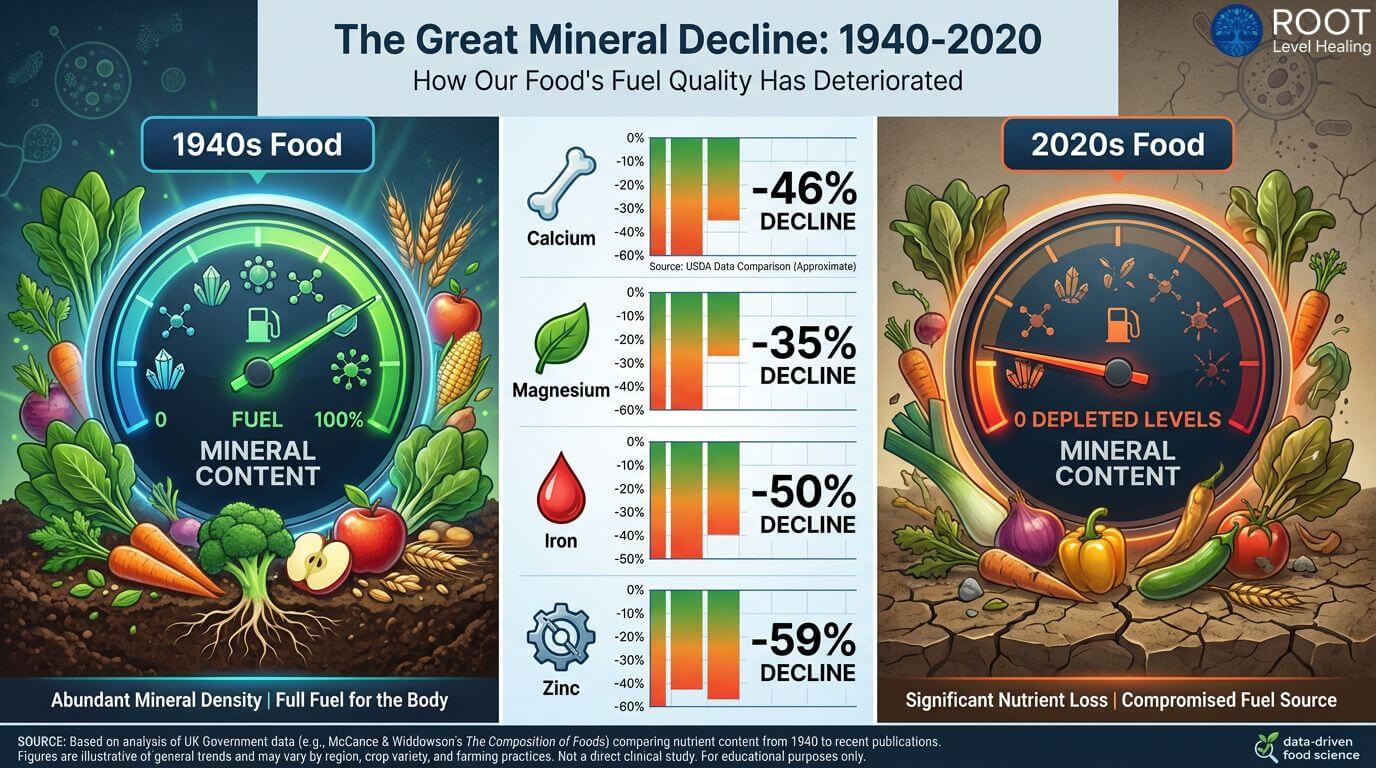
Studies show a significant decline in essential minerals like calcium and magnesium in our food supply over the past several decades, a key factor in the silent mineral crisis.
When Your Engine Starts Misfiring: Recognizing the Signs
When a high-performance engine runs on low-grade fuel, it doesn't just stop. It starts to misfire, lose power, and run rough. The same is true for your body. The signs of mineral deficiency are your body's check engine lights, signaling that a critical system is under strain.
Consider these common symptoms:
- Muscle Cramps & Twitching: Often one of the first signs of magnesium deficiency. Magnesium is the master relaxation mineral; without it, your muscles can't release properly, leading to what feels like engine knocking.
- Fatigue & Low Energy: Minerals are the spark plugs for your mitochondria, the powerhouses of your cells. A lack of essential minerals means your engine can't generate enough energy, leading to persistent fatigue.
- Poor Sleep & Restlessness: Magnesium plays a crucial role in regulating neurotransmitters that promote calm and sleep. A deficiency can feel like your engine's cooling system is broken, preventing it from properly resting and recovering overnight.
- Anxiety & Mood Imbalances: Minerals like magnesium and zinc are vital for regulating the stress response and producing mood-stabilizing neurotransmitters. An imbalance can leave your engine's electrical system frayed and prone to short-circuits.
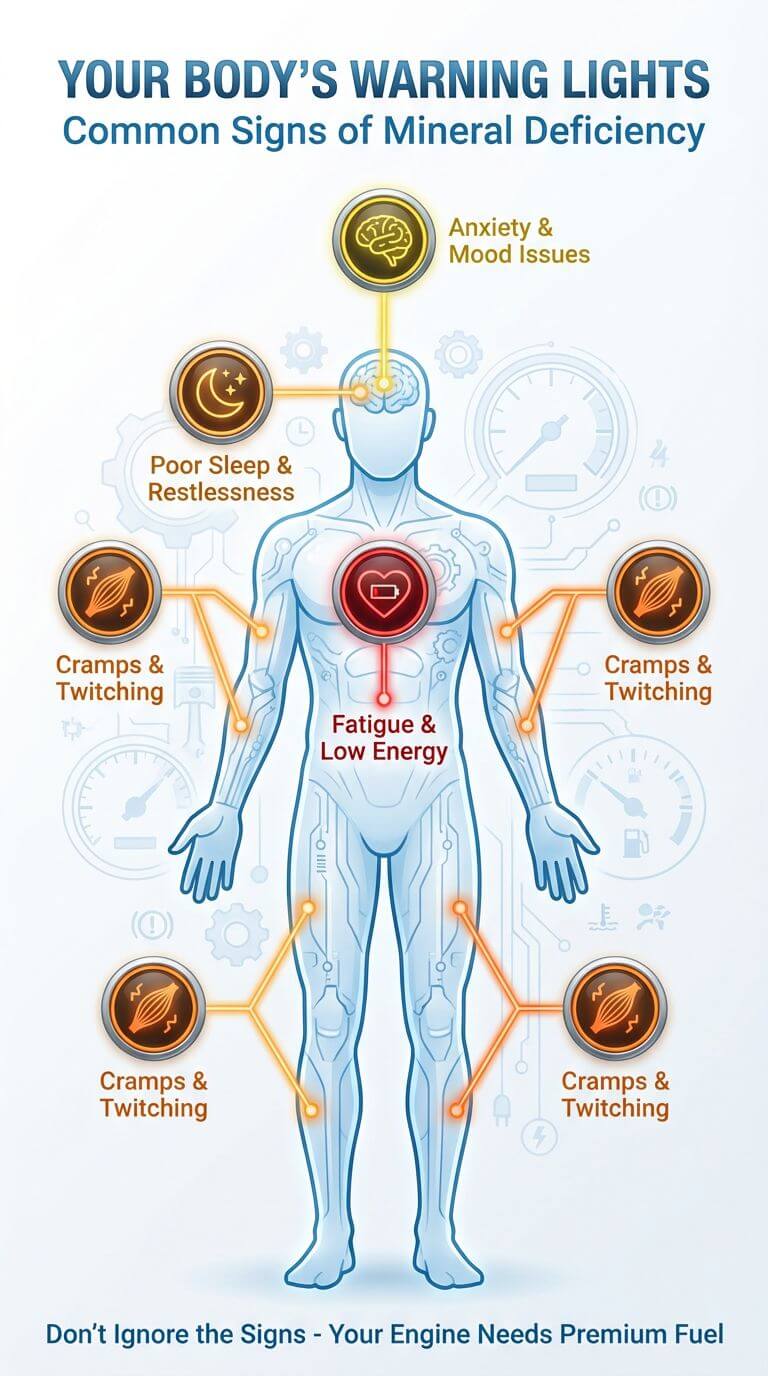
Common symptoms we often dismiss as normal are actually the body's warning lights for underlying mineral deficiencies.
The Modern Mineral Drain: How Your Lifestyle is Siphoning Your Tank
Even if you manage to find nutrient-dense food, the modern lifestyle is actively siphoning minerals from your tank. Chronic stress is a primary culprit. When you're stressed, your body enters a "fight or flight" mode, burning through minerals like magnesium at an accelerated rate to produce stress hormones like cortisol [3]. It's like constantly redlining your engine—you're burning fuel at an unsustainable pace.
Other lifestyle factors compound the problem:
- Processed Foods: These foods are the ultimate low-grade fuel. They are often stripped of their natural minerals during processing and require even more of your body's mineral reserves to be metabolized.
- Caffeine: That morning coffee acts like a turbo boost, but it also has a diuretic effect, causing you to excrete essential minerals like calcium, magnesium, and potassium through your urine.
- Alcohol: A night out can feel like using a harsh engine cleaner that strips away protective coatings. Alcohol is a potent diuretic and significantly impairs the absorption of key minerals, contributing to the classic symptoms of a hangover, which are, in large part, symptoms of acute mineral depletion [4].
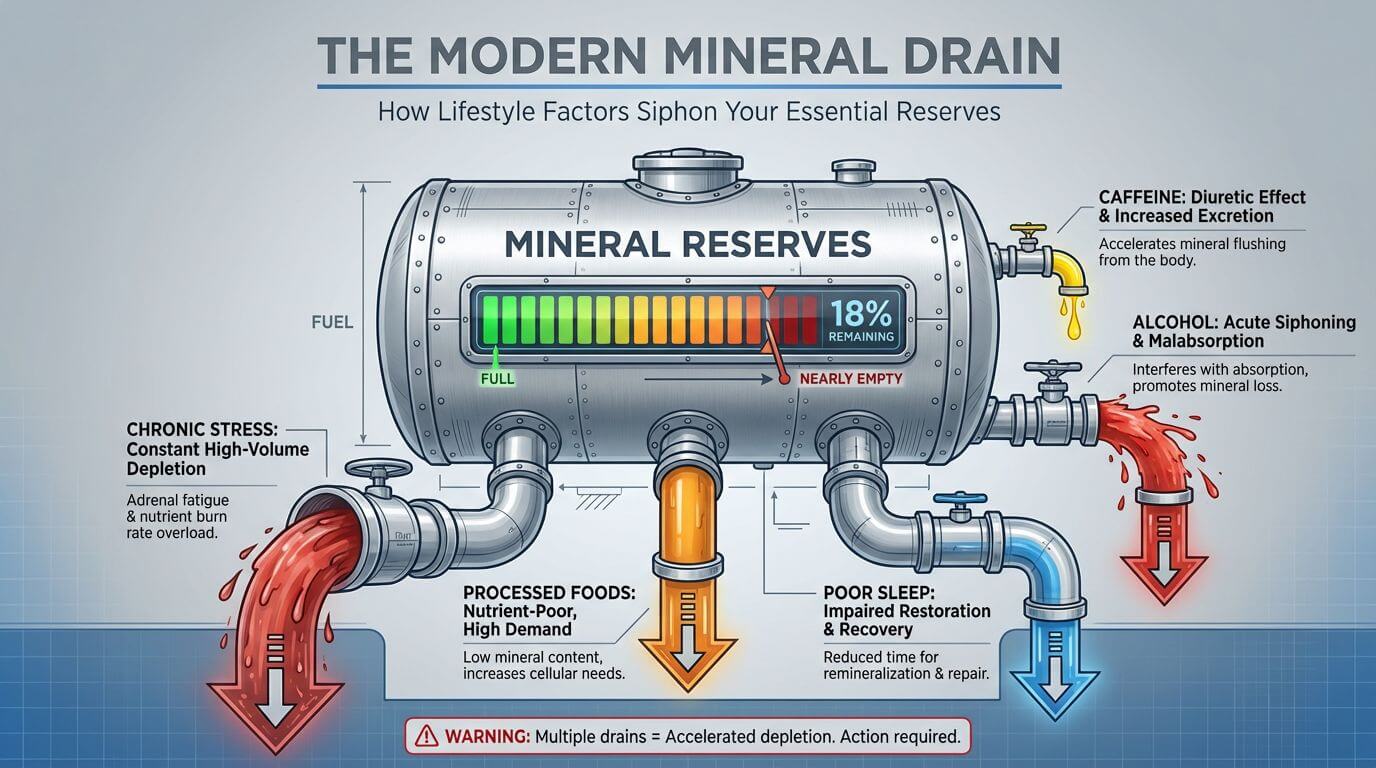
The modern lifestyle creates a perfect storm for mineral depletion, with stress, diet, and other factors constantly draining your body's essential reserves.
The Cascade Effect: Why One Deficiency Leads to Many Problems
Perhaps the most dangerous aspect of the silent mineral crisis is the cascade effect. In your body's engine, every component is interconnected. A single loose bolt can eventually lead to a catastrophic system failure. Similarly, a deficiency in a single key mineral can set off a chain reaction of dysfunction.
Magnesium, for example, is a cofactor in over 300 enzymatic reactions in the body. A deficiency doesn't just affect one system; it impairs energy production, DNA repair, neurotransmitter synthesis, and muscle function simultaneously. Furthermore, minerals often work in pairs. Magnesium is required to convert Vitamin D into its active form, and it helps regulate calcium levels in the cells. A lack of magnesium can therefore lead to functional deficiencies in both Vitamin D and calcium, even if your intake of those nutrients is adequate.
This is why seemingly unrelated symptoms—like digestive issues, headaches, and heart palpitations—can all stem from the same root cause of mineral imbalance. Your body is a complex, interconnected system. When you ignore the first warning lights, you risk a cascade of failures down the line. Understanding this crisis is the first, most critical step toward refilling your tank and restoring your high-performance engine to its peak potential.
Frequently Asked Questions
Q: Can I get enough minerals from my diet alone?
A: While a whole-foods diet is the best foundation, modern agricultural practices have led to significant soil and food nutrient depletion. As research shows, the fruits and vegetables we eat today are less nutrient-dense than they were decades ago, making it challenging to obtain optimal mineral levels from diet alone, especially under the pressures of modern life.
Q: What are the most common signs of mineral deficiency?
A: The most common early warning signs include fatigue, muscle cramps or twitching, poor sleep quality, restlessness, and feelings of anxiety. However, because minerals are involved in so many bodily processes, symptoms can be widespread and varied, affecting everything from digestion to cognitive function.
Q: How does stress cause mineral depletion?
A: During periods of stress, your body produces higher levels of stress hormones like cortisol. This process requires and consumes large amounts of essential minerals, particularly magnesium. Chronic stress leads to a continuous drain on these mineral stores and can also impair your body's ability to absorb new minerals from your food, creating a vicious cycle of depletion.
Q: Are all mineral supplements the same?
A: No, the form of the mineral, the dosage, and the other ingredients in the formula all play a crucial role in how well your body can absorb and utilize it. Some forms are more bioavailable than others, and certain minerals work synergistically, meaning they are more effective when taken together. We will explore this in more detail later in this series.
References
- Bhardwaj, R. L., et al. (2024 ). An Alarming Decline in the Nutritional Quality of Foods: The Biggest Challenge for Future Generations’ Health. Foods.
- Thomas, D. (2007 ). The mineral depletion of foods available to us as a nation (1940–2002). Nutrition and Health.
- Lopresti, A. L. (2019 ). The Effects of Psychological and Environmental Stress on Micronutrient Concentrations in the Body. Advances in Nutrition.
- Baj, J., et al. (2020 ). Magnesium, Calcium, Potassium, Sodium, Phosphorus, Selenium, Zinc, and Chromium Levels in Alcohol Use Disorder: A Review. Journal of Clinical Medicine.

Ready to Discover Your Score?
This 2-minute quiz is the essential first step to understanding your body's current toxic load and identifying the root cause of how you feel.
Take The Toxicity QuizExplore More Articles
Dive deeper into topics like detoxification, gut health, and mental clarity on our blog. Knowledge is the key to taking control of your health.
Visit The Blog