Your Gut: The Surprising Epicenter of Aging
Key Takeaways
- 🦠Gut Microbiome Decline: As we age, our gut microbiome loses diversity, directly contributing to frailty, inflammation, and accelerated aging throughout the body.
- 🔓Leaky Gut Syndrome: Increased intestinal permeability allows harmful substances into the bloodstream, triggering chronic inflammation that accelerates the aging process.
- 🔥Inflammaging Connection: Chronic low-grade inflammation originating from gut dysfunction is a primary driver of age-related diseases and cellular damage.
- ✨Gut-Skin Axis: Your gut health directly impacts skin aging by affecting collagen production, inflammation levels, and overall skin barrier function.
What if the secret to youthful vitality wasn't just skin deep? What if the key to slowing down the clock was hidden in an unexpected place: your gut? For decades, we've associated aging with wrinkles, gray hair, and achy joints. But groundbreaking research is revealing a profound connection between the health of our digestive system and the speed at which we age. This isn't just about digestion; it's about a complex ecosystem within you that dictates everything from your skin's radiance to your immune resilience and even your mental clarity. Welcome to the new frontier of anti-aging, where your gut is the surprising epicenter of it all.
Today, we're diving deep into the biochemical mechanisms that connect your gut health to the aging process. By understanding exactly how gut dysfunction accelerates aging, you'll finally understand why traditional anti-aging approaches often fall short and what you can do to address the root cause.
Your Gut and Aging The Surprising Connection And How to Reverse It: A Quick Overview
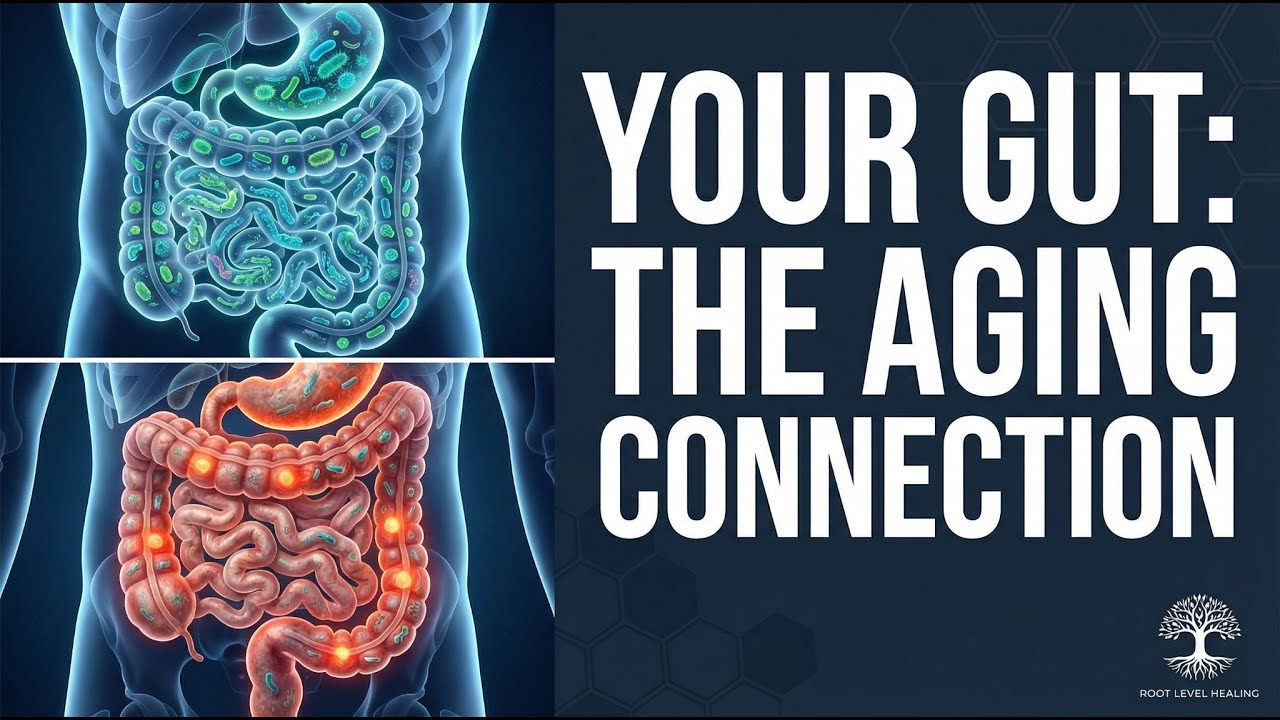
Watch this quick overview explaining the the connection between your gut and aging, and how to reverse the damage / aging process.
In This Article:
The Gut-Aging Connection: More Than Just a Feeling
The human gut is home to trillions of microorganisms, collectively known as the gut microbiome. This intricate community plays a crucial role in our overall health, influencing everything from nutrient absorption to immune function. As we age, the diversity and balance of this microbiome can shift dramatically. Studies have shown that the gut microbiome of a healthy older adult is vastly different from that of a younger person, and these changes are directly linked to age-related health decline [1].
A 2024 study published in Gut Microbes found that a less diverse gut microbiome in older adults is associated with increased frailty, slower walking speed, and overall poorer health [2]. This decline in microbial diversity isn't just a symptom of aging; it's a driving factor. An imbalanced gut, a condition known as dysbiosis, can lead to a cascade of issues that accelerate the aging process throughout the body.
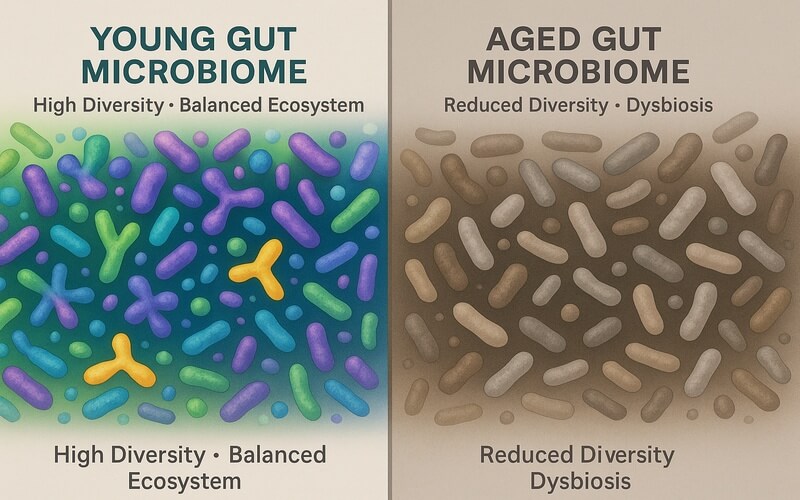
The gut microbiome becomes less diverse with age, leading to increased inflammation and accelerated aging processes.
Leaky Gut: The Breach in Your Body's Defenses
One of the most significant consequences of an unhealthy gut is increased intestinal permeability, commonly known as "leaky gut." Your intestinal lining is a tightly controlled barrier, designed to let nutrients in while keeping toxins, undigested food particles, and harmful bacteria out. With age, and due to factors like poor diet, stress, and environmental toxins, this barrier can become compromised.
When the gut "leaks," these harmful substances can enter the bloodstream, triggering a system-wide inflammatory response. Research has shown that zonulin, a protein that regulates intestinal permeability, is found in higher levels in older adults, indicating a more permeable gut barrier [3]. This breach in your body's defenses is a critical step in the aging process, as it sets the stage for chronic inflammation.
Key Insight: The Leaky Gut-Aging Cycle
As we age, our gut barrier naturally becomes more permeable. This allows inflammatory compounds to enter our bloodstream, which then accelerates aging throughout the body. It's a vicious cycle that can be broken with the right approach to gut health.
Inflammaging: The Slow Burn That Accelerates Aging
Inflammaging is a term used to describe the chronic, low-grade inflammation that develops with advanced age. This isn't the acute inflammation you experience with an injury; it's a persistent, smoldering fire that silently damages tissues and organs over time. And its primary fuel source? A leaky gut.
When inflammatory molecules from the gut continuously enter the bloodstream, they activate the immune system, keeping it in a constant state of high alert. This chronic inflammation is a hallmark of aging and is linked to a wide range of age-related diseases, including heart disease, neurodegenerative disorders, and even cancer [4]. By addressing the root cause of this inflammation—the gut—we can begin to extinguish the fire of inflammaging and slow down the aging process at a cellular level.
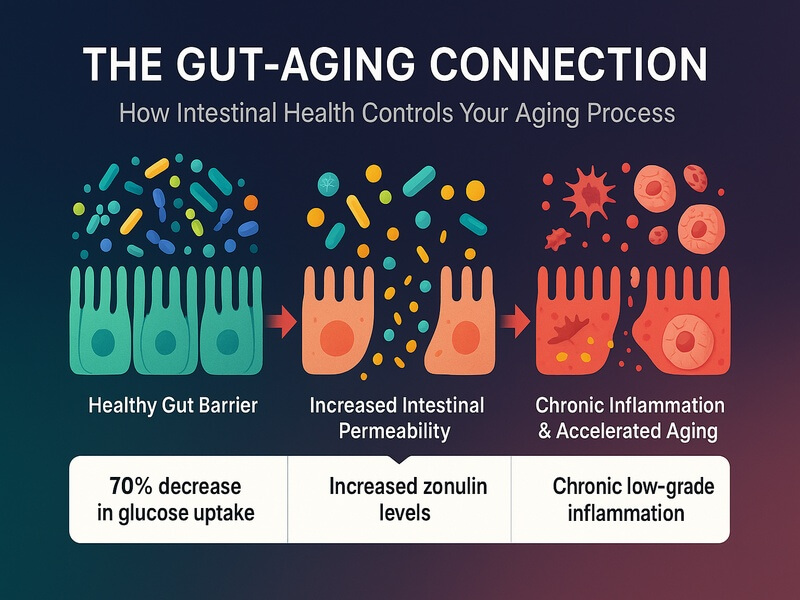
The gut-aging connection pathway: How intestinal permeability leads to chronic inflammation and accelerated aging throughout the body.
The Gut-Skin Axis: How Your Gut Health Shows on Your Face
The connection between your gut and your skin is so profound that it has its own name: the gut-skin axis. The health of your gut microbiome directly influences the health and appearance of your skin. An imbalanced gut can lead to skin issues like acne, eczema, and psoriasis, but it also plays a significant role in skin aging.
Inflammation originating from the gut can break down collagen and elastin, the proteins that keep your skin firm and youthful. This leads to wrinkles, sagging, and a loss of radiance. A 2024 study highlighted that a healthy gut microbiome can improve skin barrier function, reduce inflammation, and even protect against UV damage, all of which are crucial for maintaining a youthful complexion [5].
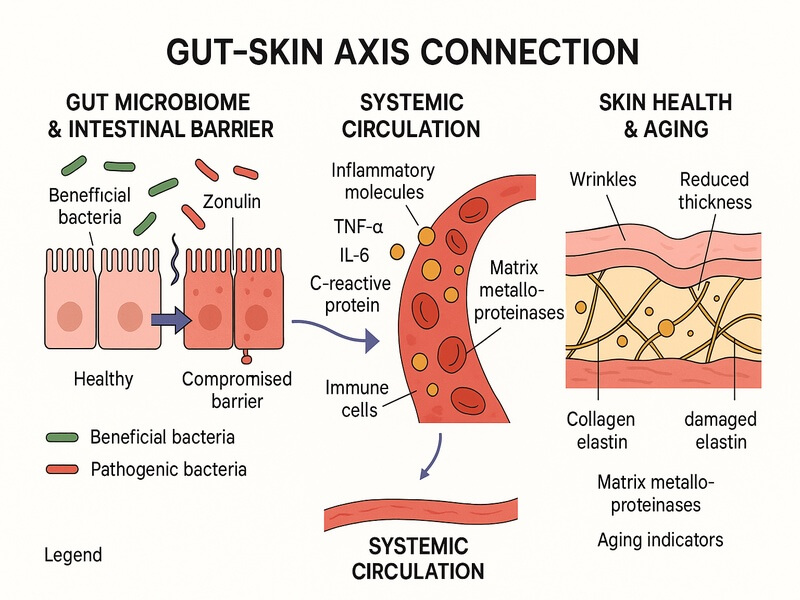
The gut-skin axis demonstrates how intestinal inflammation directly impacts skin health and accelerates visible signs of aging.
The Path to a Youthful Gut
So, how can we cultivate a gut environment that promotes youthfulness and vitality? The key lies in a multi-faceted approach that includes:
- A diet rich in fiber and prebiotics: These feed the beneficial bacteria in your gut.
- Probiotic-rich foods: Fermented foods like yogurt, kefir, and kimchi can introduce beneficial microbes.
- Stress management: Chronic stress can negatively impact gut health.
- Targeted supplementation: Certain compounds can help to repair the gut lining and restore balance to the microbiome.
By focusing on the health of our gut, we can address the root causes of aging, not just the symptoms. It's a paradigm shift in how we approach anti-aging, moving from external treatments to internal healing. The journey to a more youthful you truly begins in the gut.
Frequently Asked Questions
Q: How quickly can improving gut health impact the aging process?
A: While some improvements in energy and digestion can be noticed within weeks, meaningful changes to the aging process typically take 3-6 months of consistent gut health practices. The gut microbiome can begin to shift within days of dietary changes, but repairing intestinal permeability and reducing systemic inflammation takes longer.
Q: Can gut health really affect how my skin looks?
A: Absolutely. The gut-skin axis is well-documented in scientific literature. An unhealthy gut can trigger inflammation that breaks down collagen and elastin, leading to premature wrinkles and skin aging. Many people notice improvements in skin clarity and radiance within 6-8 weeks of improving their gut health.
Q: What are the most important foods for gut health and anti-aging?
A: Focus on fiber-rich foods like vegetables, fruits, and whole grains, which feed beneficial bacteria. Fermented foods like yogurt, kefir, sauerkraut, and kimchi provide probiotics. Bone broth contains compounds that help repair the gut lining. Avoid processed foods, excess sugar, and artificial additives that can damage the gut barrier.
Q: Is leaky gut a real medical condition?
A: Yes, increased intestinal permeability (leaky gut) is a recognized condition in medical literature. Research shows that zonulin levels, which regulate gut permeability, increase with age and are associated with various health conditions. While the term "leaky gut" is sometimes controversial, the underlying science is well-established.
Q: Can stress really age me through my gut?
A: Chronic stress significantly impacts gut health through the gut-brain axis. Stress hormones like cortisol can increase intestinal permeability, alter the microbiome composition, and promote inflammation. This creates a cycle where stress damages the gut, which then accelerates aging and makes you more susceptible to stress-related health issues.
Q: Are probiotics necessary for healthy aging?
A: While not absolutely necessary, probiotics can be beneficial, especially as we age and our natural microbiome diversity decreases. However, prebiotics (fiber that feeds good bacteria) are often more important than probiotics. The best approach combines both through diet and, when needed, targeted supplementation.
Q: How do I know if my gut health is affecting my aging?
A: Signs include digestive issues, skin problems, frequent infections, fatigue, joint pain, and mood changes. If you're experiencing premature aging symptoms alongside digestive concerns, your gut health may be a contributing factor. Comprehensive stool testing can provide insights into your microbiome health.
Q: Can improving gut health help with age-related diseases?
A: Research suggests that a healthy gut microbiome may help prevent or manage various age-related conditions, including cardiovascular disease, diabetes, cognitive decline, and autoimmune disorders. While gut health isn't a cure-all, it's a foundational aspect of healthy aging that can significantly impact disease risk.
References
- Bradley, E., & Haran, J. (2024 ). The human gut microbiome and aging. Gut Microbes, 16(1), 2359677. https://www.tandfonline.com/doi/full/10.1080/19490976.2024.2359677
- Wang, H., Chen, Y., Feng, L., Lu, S., Zhu, J., Zhao, J., ... & Li, L. (2024 ). A gut aging clock using microbiome multi-view profiles is associated with health and frail risk. Gut Microbes, 16(1), 2297852. https://www.tandfonline.com/doi/full/10.1080/19490976.2023.2297852
- Qi, Y., Goel, R., Kim, S., Richards, E. M., Carter, C. S., & Pepine, C. J. (2017 ). Intestinal Permeability Biomarker Zonulin is Elevated in Healthy Aging. Journal of the American Medical Directors Association, 18(9), 810-e1. https://pmc.ncbi.nlm.nih.gov/articles/PMC5581307/
- Li, X., Li, C., Zhang, W., Wang, Y., Qian, P., & Huang, H. (2023 ). Inflammation and aging: signaling pathways and intervention therapies. Signal Transduction and Targeted Therapy, 8(1), 239. https://www.nature.com/articles/s41392-023-01502-8
- Lee, H., Yoon, W., & Kim, K. (2024 ). Targeting Inflammation and Skin Aging via the Gut–Skin Axis. International Journal of Molecular Sciences, 25(11), 5863. https://www.ncbi.nlm.nih.gov/pmc/articles/PMC11676968/

Ready to Discover Your Score?
This 2-minute quiz is the essential first step to understanding your body's current toxic load and identifying the root cause of how you feel.
Take The Toxicity QuizExplore More Articles
Dive deeper into topics like detoxification, gut health, and mental clarity on our blog. Knowledge is the key to taking control of your health.
Visit The Blog