10 Early Warning Signs of Heavy Metal Toxicity
Your body is incredibly intelligent. When something is wrong, it sends you signals—sometimes subtle, sometimes not so subtle. But what happens when those signals are pointing to something you can't see, smell, or taste? What happens when the culprit behind your mysterious symptoms is invisible heavy metals silently accumulating in your tissues?
Heavy metal toxicity is one of the most overlooked health challenges of our time. We live in an increasingly toxic world where exposure to metals like mercury, lead, cadmium, and arsenic has become unavoidable. These metals don't just pass through your system—they accumulate, interfere with vital biological processes, and can trigger a cascade of health problems that often go undiagnosed for years.
The frustrating part? Many healthcare providers aren't trained to recognize the signs of heavy metal toxicity, leaving countless people suffering with symptoms that seem unrelated but actually stem from the same toxic source. If you've been struggling with unexplained health issues that don't seem to fit into a neat diagnostic box, heavy metal toxicity might be the missing piece of your health puzzle.
Key Takeaways
- ⚡Invisible Accumulation: Heavy metals like mercury, lead, cadmium, and arsenic accumulate silently in your tissues over years, triggering a cascade of seemingly unrelated health problems that are frequently misdiagnosed or left unexplained.
- 🔋Cellular Energy Disruption: Chronic fatigue that rest cannot fix is one of the earliest warning signs — heavy metals impair mitochondrial function and disrupt ATP energy production at the cellular level, creating bone-deep exhaustion no amount of sleep can resolve.
- 🧠Neurological Impact: As neurotoxins, heavy metals cross the blood-brain barrier and disrupt neurotransmitter function — producing brain fog, poor memory, mood swings, anxiety, and depression that have no clear external trigger.
- 🧬Systemic Body Damage: Heavy metals damage the gut lining and microbiome, trigger autoimmune responses through molecular mimicry, act as endocrine disruptors affecting thyroid and reproductive hormones, and drive chronic inflammation causing joint and muscle pain.
- 👅Overlooked Warning Signs: A persistent metallic taste in the mouth and newly developed chemical sensitivities are two of the most telling but frequently dismissed signs that your body's detoxification pathways are overwhelmed.
- 🎯The Root Cause Approach: If you recognize multiple signs from this list, the symptoms are not isolated problems — they share a common root cause. Assessing your personal toxic load is the essential first step toward addressing them at their source.
10 Warning Signs of Heavy Metal Toxicity: A Quick Overview
Before we dive deep into the 10 signs, watch this quick overview explaining these most common warning signs of heavy metal toxicity.
In This Article: The 10 Signs
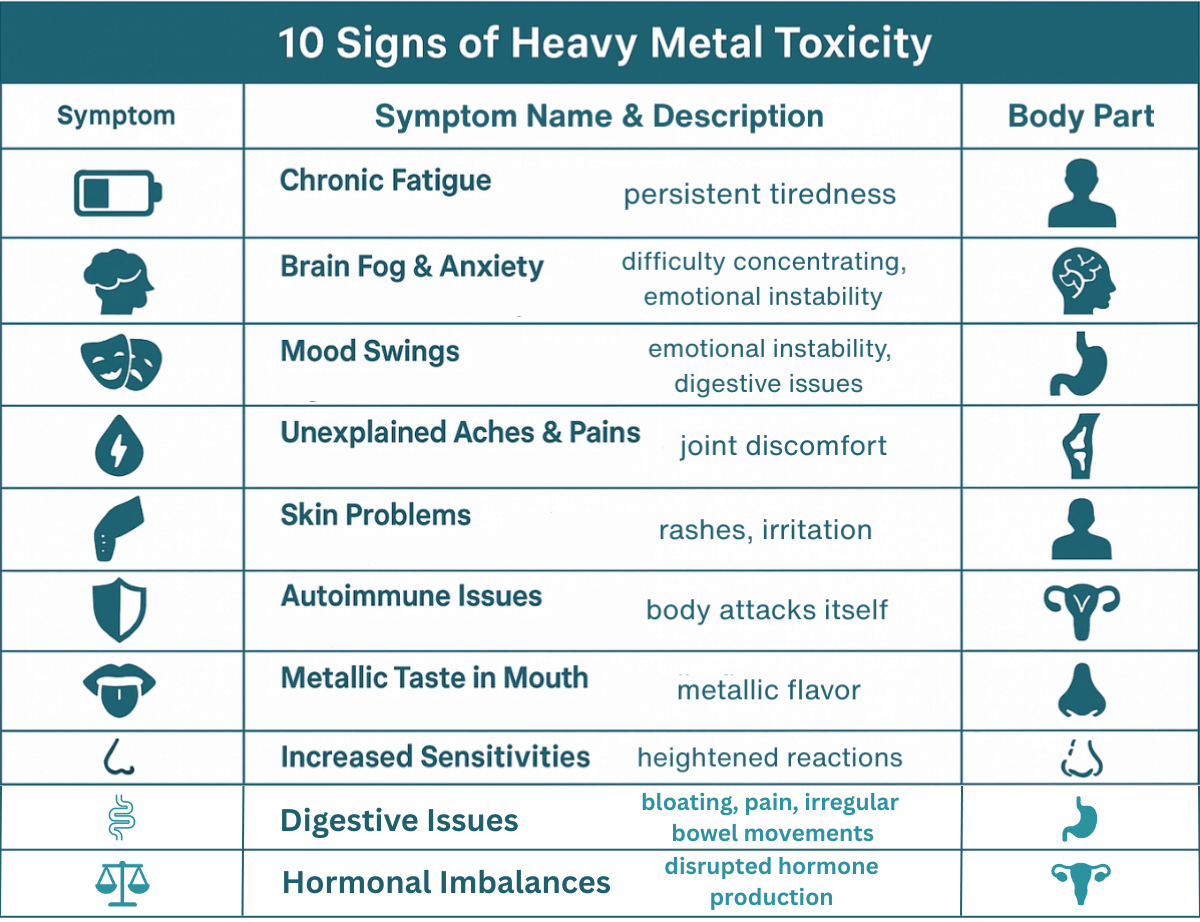
The 10 Warning Signs
Chronic Fatigue That Rest Can't Fix
If you're waking up tired despite getting a full night's sleep, or if you feel like you're running on empty no matter how much rest you get, heavy metals could be interfering with your cellular energy production. Heavy metals can interfere with your mitochondria—the powerhouses of your cells—disrupting energy production at a cellular level [1].
Research has shown that mitochondrial dysfunction is one of the main phenomena in heavy metal-induced cytotoxicity, with heavy metals impairing mitochondrial function by increasing reactive oxygen species production and decreasing antioxidant activity [1]. This cellular disruption manifests as the kind of bone-deep exhaustion that no amount of caffeine or rest seems to touch.
Unlike normal tiredness that improves with rest, heavy metal-induced fatigue is persistent and often accompanied by other symptoms like difficulty concentrating or muscle weakness. Your body is essentially struggling to produce energy efficiently because the very machinery responsible for energy production has been compromised.
Brain Fog & Poor Memory
Heavy metals are neurotoxins, meaning they can cross the blood-brain barrier and interfere with neurotransmitter function. If you're experiencing difficulty concentrating, memory problems, or that frustrating feeling of mental cloudiness, heavy metal accumulation in your brain tissue could be the culprit [2].
Scientific research demonstrates that accumulation of metals renders the brain susceptible to neurotoxic insults through multiple mechanisms, including mitochondrial dysfunction, neuronal calcium-ion dyshomeostasis, buildup of damaged molecules, compromised DNA repair, reduction in neurogenesis, and impaired energy metabolism [2].
Many people describe this as feeling like they're thinking through molasses or like there's a veil over their thoughts. Simple tasks that used to be automatic—like remembering where you put your keys or following a conversation—become surprisingly difficult. This isn't normal aging or stress; it's your brain struggling to function optimally under toxic burden.
Mood Swings, Anxiety, or Depression
Your mental health and heavy metal exposure are more connected than you might think. Metals like lead and mercury can disrupt the delicate balance of brain chemicals that regulate your mood, leading to unexplained anxiety, irritability, or feelings of depression that seem to come out of nowhere [3].
Large-scale research has shown that heavy metal exposure is associated with mental illnesses including cognitive dysfunction, bipolarity, schizophrenia, anxiety, and depression. The mechanism involves heavy metals causing significant oxidative stress, interfering with neurotransmitter release, damaging neurons, and ultimately damaging the central nervous system [3].
What makes this particularly challenging is that these mood changes often don't correlate with life events. You might find yourself feeling anxious or depressed without any clear trigger, or experiencing mood swings that feel completely out of character. This is your brain's chemistry being disrupted by toxic metals interfering with normal neurotransmitter function.
Digestive Issues
Your gut is often the first place you'll notice the effects of heavy metal toxicity. Bloating, gas, constipation, or leaky gut can all be linked to heavy metals. These toxins can damage the gut lining and disrupt the balance of your microbiome, leading to a host of digestive complaints that seem to resist conventional treatment [4].
Research on intestinal microbiome and metal toxicity reveals that disruption of a healthy microbiome (dysbiosis) has been linked to unfavorable health outcomes. Heavy metals have significant impacts on the composition, diversity, and function of the gut microbiome, as well as the modulation of metal toxicity by the microbiome [4].
Heavy metals don't just pass through your digestive system—they actively alter the environment in your gut. They can kill beneficial bacteria while allowing harmful bacteria to flourish, leading to an imbalanced microbiome that affects everything from nutrient absorption to immune function. This is why digestive issues related to heavy metal toxicity often don't respond well to typical digestive treatments until the underlying toxic burden is addressed.
Unexplained Aches and Pains
If you're dealing with joint pain, muscle aches, or general body stiffness that doesn't seem to have a clear cause, heavy metals might be triggering a chronic inflammatory response in your body. Metals can trigger a chronic inflammatory response, leading to muscle aches, joint pain, and general body stiffness that seems to have no other cause [5].
Scientific studies have demonstrated that heavy metals may exacerbate oxidative stress and could lead to sustained inflammation, which is linked to the pathogenesis of rheumatoid arthritis and other inflammatory conditions [5]. This chronic inflammation doesn't just affect your joints—it can create systemic pain throughout your body.
Unlike injury-related pain that has a clear cause and typically improves with time, heavy metal-induced inflammation creates a persistent, low-grade pain that can migrate throughout your body. You might wake up stiff, experience joint pain that seems to move around, or have muscle aches that don't correlate with your activity level.
Skin Problems
Your skin is a major detoxification organ, and when your internal detox systems are overloaded, toxins can be pushed out through the skin. This can lead to issues like eczema, psoriasis, acne, or unexplained rashes that don't respond to typical skin treatments [6].
Research has established that the general mechanism of cadmium, lead, and mercury toxicity is through the production of reactive oxygen species, which are known to play a role in the etiopathogenesis of skin disorders [6]. When your liver and kidneys are overwhelmed with heavy metals, your skin becomes a backup elimination route.
Heavy metal-related skin issues often have a few distinguishing characteristics: they tend to be persistent, don't respond well to topical treatments alone, and may be accompanied by other symptoms on this list. The skin problems are essentially your body's way of trying to eliminate toxins when the primary detox organs are overwhelmed.
Autoimmune Issues
Heavy metals can confuse your immune system through a process called molecular mimicry, causing it to attack your own healthy tissues. This can trigger or worsen autoimmune conditions like rheumatoid arthritis, thyroid disorders, or inflammatory bowel disease [7].
Scientific research shows that heavy metals can manipulate the immune system into mounting inappropriate immune responses. Metals may prime B cells and allow altered self-proteins to target autoantibodies via T cells, essentially teaching your immune system to attack your own tissues [7].
This molecular mimicry occurs when heavy metals bind to your body's proteins, changing their structure just enough that your immune system no longer recognizes them as "self." Your immune system then creates antibodies against these altered proteins, but these same antibodies can cross-react with your normal, healthy tissues, leading to autoimmune disease.
Hormonal Imbalances
Heavy metals are endocrine disruptors, meaning they can interfere with your hormone production and regulation. This can affect everything from your thyroid function to your reproductive hormones, leading to symptoms like irregular periods, low libido, weight gain, or temperature regulation issues [8].
Extensive research has documented that heavy metals can serve as endocrine disruptors in humans and animals, affecting hormone homeostasis and causing endocrine imbalance. The thyroid, being the largest endocrine gland with substantial blood supply, is particularly vulnerable to heavy metal disruption [8].
Heavy metals can interfere with hormone production at multiple levels—they can disrupt the glands that produce hormones, interfere with hormone transport in the blood, and even block hormone receptors so that hormones can't do their job effectively. This multi-level disruption is why heavy metal toxicity can cause such widespread hormonal chaos.
Metallic Taste in Mouth
A persistent metallic taste, especially if you have dental amalgam fillings, can be a direct sign that mercury is being released into your system. This taste often comes and goes and may be accompanied by other oral symptoms like gum inflammation or tooth sensitivity.
Clinical studies have identified metallic taste as one of the seven symptoms of mercury poisoning that were reported at a higher rate by exposed groups compared to control groups, along with arthritis, bloating, dry skin, headache, sleep disturbances, and unsteadiness.
This metallic taste isn't just in your imagination—it's a real physiological response to metal exposure. The taste can be particularly noticeable after eating certain foods, drinking hot beverages, or during times of stress when your body might be releasing stored metals from tissues.
Chemical Sensitivities
Heavy metal toxicity can make you hypersensitive to everyday chemicals like perfumes, cleaning products, or even certain foods. When your body's detoxification pathways become overwhelmed with heavy metals, you become reactive to things that never bothered you before [9].
Research on multiple chemical sensitivity has shown an increased prevalence of metal allergy and elevation of mercury levels in patients with chemical sensitivities. Studies found that 92.3 percent of patients had metal immune hypersensitivity, and 81.2 percent had elevated mercury levels [9].
This happens because your detoxification system has a limited capacity. When it's constantly working to process heavy metals, it becomes less efficient at handling other chemicals and toxins. This is why people with heavy metal toxicity often develop sensitivities to foods, fragrances, and chemicals that they previously tolerated without problems.
The Root Level Healing Perspective: Symptoms are Messengers
At Root Level Healing, we see these 10 signs not as individual problems to be managed, but as messengers from a body that is overburdened. Conventional medicine often tries to treat each symptom separately—a pill for the pain, a cream for the rash, an antidepressant for the mood. Our philosophy is different.
We believe in asking why. Why is the fatigue chronic? Why is the gut inflamed? The answer often leads back to an underlying root cause: toxicity. By focusing on removing these foundational toxins, we don't just mask the symptoms; we allow the body to heal itself, often resolving multiple issues at once.
Remember, your body has an incredible capacity to heal when given the right support. If you're experiencing multiple symptoms from this list, don't ignore your body's signals. Heavy metal toxicity is real, it's more common than most people realize, and most importantly—it's treatable.
Frequently Asked Questions
Q: Where do heavy metals come from?
A: Common sources include amalgam ("silver") dental fillings (mercury), contaminated water (lead, arsenic), large predatory fish (mercury), pesticides on non-organic food (cadmium, arsenic), and various industrial and household products like cookware and cosmetics. Even "healthy" foods like rice can contain arsenic, and many supplements aren't properly tested for heavy metal contamination.
Q: Can I test for heavy metal toxicity?
A: Yes, but it can be complex. A standard blood test often only shows recent, acute exposure. Hair mineral analysis can show longer-term exposure but can be unreliable. A "provoked" urine test, where a chelating agent is used to pull metals from tissues, is often considered a more accurate measure of total body burden, but should only be done under the guidance of a qualified practitioner.
Q: How long does it take to detox from heavy metals?
A: The timeline varies greatly depending on your toxic burden, overall health, and the detox approach used. Some people notice improvements within weeks, while others may need months or even years of gentle, consistent support. The key is working with a practitioner who understands safe detoxification protocols.
Q: Are there natural ways to support heavy metal detox?
A: Yes, there are many natural approaches that can support your body's detoxification processes. These include specific nutrients like vitamin C and glutathione, certain foods like cilantro and chlorella, and lifestyle practices like sweating and proper hydration. However, it's important to work with a knowledgeable practitioner to ensure you're detoxing safely and effectively.
Q: Is it safe to detox on my own?
A: It's crucial to be cautious. Aggressive detox protocols can be dangerous, as they can mobilize more toxins than your body can safely eliminate, leading to recirculation and worsening symptoms. The safest approach is to start by supporting your body's natural detox pathways (liver, kidneys, gut) and using a gentle, systemic binder that works passively without placing extra strain on your organs.
Do These Signs Sound Familiar?
If you recognized yourself in several of these warning signs, it's not in your head. The first step to taking back your health is understanding your unique situation. Our free 2-minute quiz can help you assess your potential toxic load and guide you toward the next steps.
Take the Free Toxicity QuizReferences
- Koyama, H., Kamogashira, T., & Yamasoba, T. (2024 ). Heavy Metal Exposure: Molecular Pathways, Clinical Implications, and Protective Strategies. Antioxidants, 13(1), 76. https://www.mdpi.com/2076-3921/13/1/76
- Ijomone, O. M., Ifenatuoha, C. W., Aluko, O. M., Ijomone, O. K., & Aschner, M. (2020 ). The aging brain: impact of heavy metal neurotoxicity. Critical reviews in toxicology, 50(9), 801–814. https://www.tandfonline.com/doi/full/10.1080/10408444.2020.1838441
- Zhang, L., Wang, Z., Liu, K., Li, J., & Li, Y. (2024 ). Investigation of the relationship between heavy metals in the blood and depression in people with different body mass indices using the NHANES database: A cross-sectional study. Journal of Affective Disorders, 344, 311–318. https://www.sciencedirect.com/science/article/abs/pii/S0165032723012272
- Assefa, S., & Köhler, G. (2020 ). Intestinal Microbiome and Metal Toxicity. Current opinion in toxicology, 19, 21–27. https://www.sciencedirect.com/science/article/abs/pii/S2468202019300671
- Fan W, Pi Z, Kong K, et al. (2024 ). Analyzing the impact of heavy metal exposure on osteoarthritis and rheumatoid arthritis: an approach based on interpretable machine learning. Frontiers in Nutrition, 11, 1422617. https://www.frontiersin.org/journals/nutrition/articles/10.3389/fnut.2024.1422617/full
- Wacewicz-Muczyńska, M., Socha, K., Soroczyńska, J., Niczyporuk, M., & Borawska, M. H. (2021 ). Cadmium, lead and mercury in the blood of psoriatic and vitiligo patients and their possible associations with dietary habits. Science of the total environment, 757, 143967. https://www.sciencedirect.com/science/article/pii/S0048969720374982
- Anka, A. U., Usman, A. B., Kaoje, A. N., Kabir, R. M., Bala, A., Arki, M. K., Hossein-Khannazer, N., & Azizi, G. (2022 ). Potential mechanisms of some selected heavy metals in the induction of inflammation and autoimmunity. European journal of inflammation, 20, 17217271221122719. https://journals.sagepub.com/doi/10.1177/1721727X221122719
- Liu, D., Shi, Q., Liu, C., Sun, Q., & Zeng, X. (2023 ). Effects of Endocrine-Disrupting Heavy Metals on Human Health. Toxics, 11(4), 322. https://www.mdpi.com/2305-6304/11/4/322
- Pigatto, P. D., Minoia, C., Ronchi, A., Brambilla, L., Ferrucci, S. M., Spadari, F., Passoni, M., Somalvico, F., Bombeccari, G. P., & Guzzi, G. (2013 ). Allergological and Toxicological Aspects in a Multiple Chemical Sensitivity Cohort. Oxidative medicine and cellular longevity, 2013, 356235. https://pubmed.ncbi.nlm.nih.gov/24367721/

Ready to Discover Your Score?
This 2-minute quiz is the essential first step to understanding your body’s current toxic load and identifying the root cause of how you feel.
Take The Toxicity QuizExplore More Articles
Dive deeper into topics like detoxification, gut health, and mental clarity on our blog. Knowledge is the key to taking control of your health.
Visit The Blog