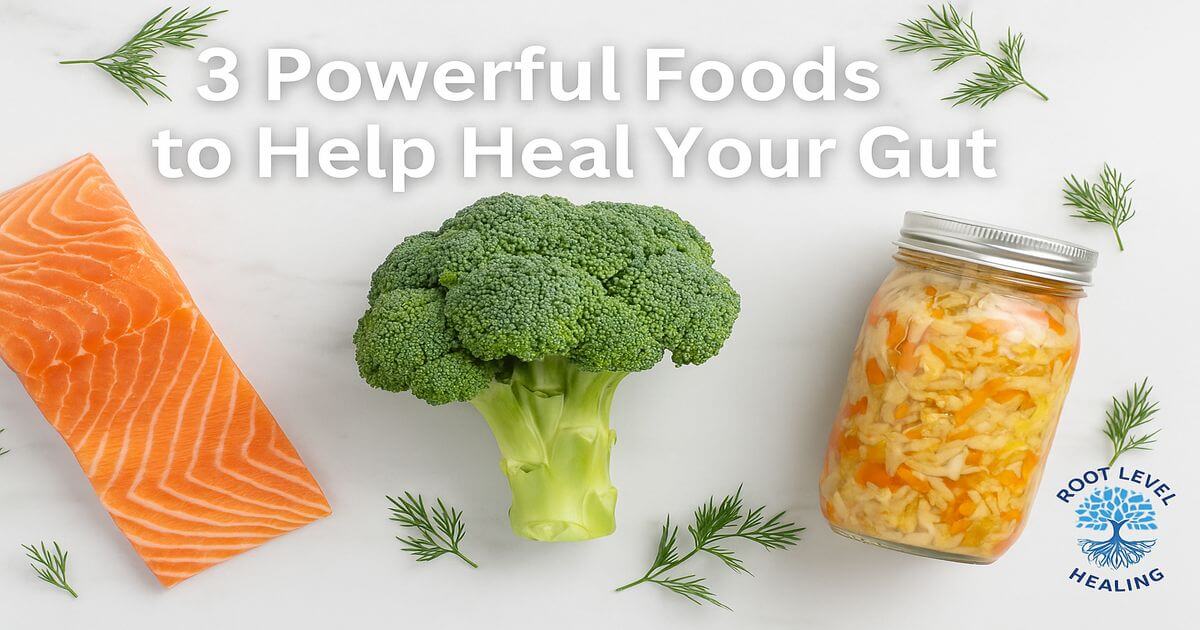
3 Powerful Foods to Help Heal Your Gut
Key Takeaways
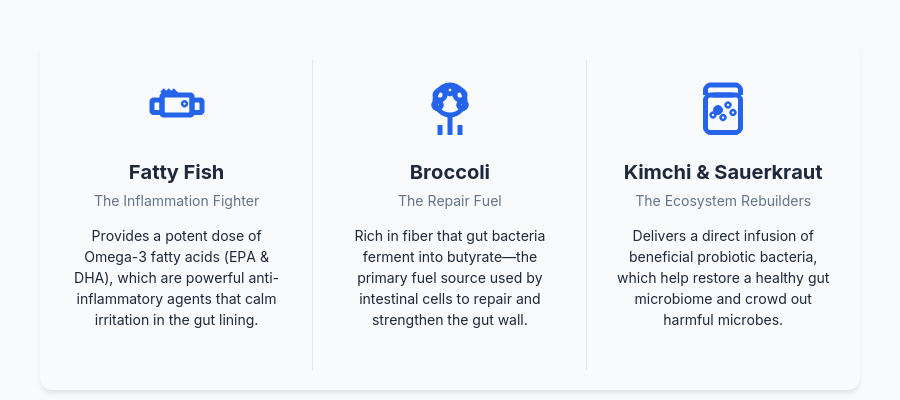
- 🐟Fight Inflammation: Fatty fish provide Omega-3s (EPA & DHA), which are powerful anti-inflammatory agents that calm irritation in the gut lining and improve intestinal barrier integrity [1].
- 🥦Boost Repair: Broccoli contains sulforaphane, which helps produce anti-inflammatory metabolites and supports the growth of beneficial gut microbiota [2].
- 🦠Rebuild Your Microbiome: Unpasteurized fermented foods introduce diverse probiotic strains that have been shown to fortify the intestinal barrier and reduce inflammation [3].
After understanding the signs of a leaky gut, the most empowering next step is to use your diet as a tool for healing. While a comprehensive protocol is often needed, incorporating specific, powerful foods can kickstart the repair process.
Here are three science-backed foods you can add to your diet to begin healing your gut lining from the inside out.
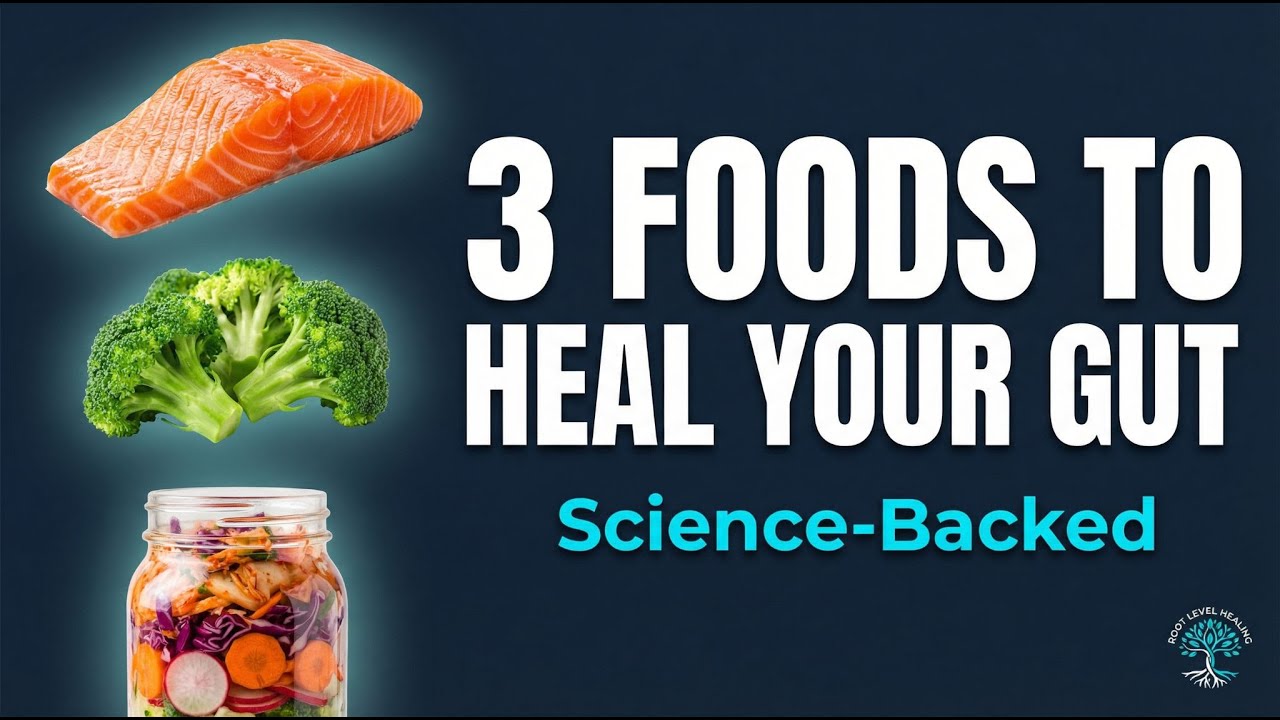
3 Powerful Foods to Heal Your Gut (Science-Backed): A Quick Overview
Before we dive deep into the 3 foods, watch this quick overview explaining their benefits to your gut microbiome.
In This Article:
Healing Food #1: Fatty Fish
Chronic inflammation is the primary driver of a leaky gut. To heal the wall, you must first calm the fire. This is where Omega-3 fatty acids come in. Fatty fish are the most potent dietary source of the specific Omega-3s EPA (eicosapentaenoic acid) and DHA (docosahexaenoic acid). These compounds are powerful anti-inflammatory agents that work systemically to reduce irritation. Research shows that Omega-3s have protective effects on the gut, helping to regulate and improve intestinal barrier integrity, which is crucial for reversing leaky gut [1]. By calming the inflammation, you give the cells of your intestinal lining a chance to rest, recover, and begin rebuilding their tight junctions.
Best Choices: Wild-Caught Salmon, Mackerel, Herring, and Sardines.
Pro Tip: Aim for two 4-ounce servings per week. A simple way to start is with canned wild sardines in olive oil for a quick, nutrient-dense lunch. Choose wild-caught whenever possible to ensure a better fatty acid profile and lower contaminant levels.
Healing Food #2: Broccoli & Cruciferous Veggies
The cells that make up your gut wall are incredibly hard-working and have a high energy demand. Their preferred fuel source is a short-chain fatty acid called butyrate. Your body doesn't just absorb butyrate; your gut bacteria produce it by fermenting dietary fiber.
Broccoli, along with its cruciferous family members like Cauliflower, Kale, and Brussels Sprouts, is packed with the specific type of fiber that "good" gut bacteria love to feast on. Furthermore, these vegetables contain a powerful compound called sulforaphane. Studies have shown that sulforaphane can beneficially alter the gut microbiome, leading to an increased production of anti-inflammatory metabolites that help protect the gut lining from oxidative stress [2].
Pro Tip: Lightly steaming or stir-frying is ideal, as over-boiling can destroy some beneficial compounds. For a concentrated dose of sulforaphane, try adding broccoli sprouts to your salads.
"Think of it this way: Omega-3s are the firefighters putting out the fire, while the fiber from broccoli is the truckload of bricks and mortar arriving to rebuild the damaged wall."
Healing Food #3: Fermented Foods
Healing a leaky gut isn't just about repairing the wall; it's also about managing the ecosystem within it. A healthy gut has a diverse population of beneficial bacteria (probiotics) that keep harmful microbes in check. Fermented foods like Kimchi, Sauerkraut, Miso, and unsweetened Kefir are a direct infusion of these beneficial bacteria. A systematic review of multiple randomized trials concluded that probiotics can significantly improve intestinal barrier function, alleviate inflammation, and help restore a healthy microbial balance [3].
Crucial Tip: Look for "unpasteurized" or "raw" fermented foods in the refrigerated section of your grocery store. Pasteurization (heating) kills the live probiotic cultures, rendering them ineffective for gut health.
Bonus: Just as Important—What to Remove
Adding healing foods is only half the battle. To truly allow your gut to repair, you must also remove the primary antagonists. Starting by minimizing these three culprits can make a significant difference:
Processed Sugar & Refined Carbs
These are super-fuel for harmful bacteria and yeast, promoting dysbiosis and inflammation.
Industrial Seed Oils
Oils like canola, soybean, and corn oil are high in inflammatory Omega-6 fatty acids. Switch to stable fats like olive oil, coconut oil, or avocado oil.
Glyphosate-Sprayed Grains
As discussed in our other articles, this herbicide can disrupt the gut microbiome. Choosing organic grains helps reduce this exposure.
Frequently Asked Questions
Q: Do I have to eat all of these every day?
A: Not at all. Aim for consistency over intensity. Try to incorporate fatty fish into your diet 2-3 times per week, and a serving of cruciferous vegetables and a small amount of fermented food daily or every other day.
Q: What if I'm vegetarian or vegan?
A: For Omega-3s, you can focus on sources like chia seeds, flaxseeds, and walnuts, or consider a high-quality algae-based EPA/DHA supplement. The other two categories—cruciferous veggies and fermented foods—are naturally plant-based.
Q: I've heard of L-Glutamine. Where does that fit in?
A: That's an excellent question. L-Glutamine is an amino acid that serves as a primary building block for the cells of the intestinal lining. While the foods listed above provide anti-inflammatory compounds and fuel (butyrate), L-Glutamine provides the raw material for reconstruction. It's often a key component in targeted gut-healing protocols, especially when significant repair is needed.
References
- Machuca, J., Wirkus, J., Ead, A. S., Vahmani, P., Matsukuma, K. E., Mackenzie, G. G., & Oteiza, P. I. (2025 ). Dietary ω-3 Fatty Acids Mitigate Intestinal Barrier Integrity Alterations in Mice Fed a High-Fat Diet: Implications for Pancreatic Carcinogenesis. *The Journal of nutrition*, 155(1), 197–210. https://www.sciencedirect.com/science/article/pii/S0022316624011325
- Marshall, S. A., Young, R. B., Lewis, J. M., Rutten, E. L., Gould, J., Barlow, C. K., ... & Gulliver, E. L. (2023 ). The broccoli-derived antioxidant sulforaphane changes the growth of gastrointestinal microbiota, allowing for the production of anti-inflammatory metabolites. *Journal of Functional Foods*, 107, 105645. https://www.sciencedirect.com/science/article/pii/S1756464623002451
- Zheng, Y., Zhang, Z., Tang, P., Wu, Y., Zhang, A., Li, D., ... & Yuan, C. S. (2023 ). Probiotics fortify intestinal barrier function: a systematic review and meta-analysis of randomized trials. *Frontiers in immunology*, 14, 1143548. https://www.frontiersin.org/journals/immunology/articles/10.3389/fimmu.2023.1143548/full

Ready to Discover Your Score?
This 2-minute quiz is the essential first step to understanding your body's current toxic load and identifying the root cause of how you feel.
Take The Toxicity QuizExplore More Articles
Dive deeper into topics like detoxification, gut health, and mental clarity on our blog. Knowledge is the key to taking control of your health.
Visit The Blog