When Diet Isn't Enough: 3 Reasons Your Gut Isn't Healing
Key Takeaways
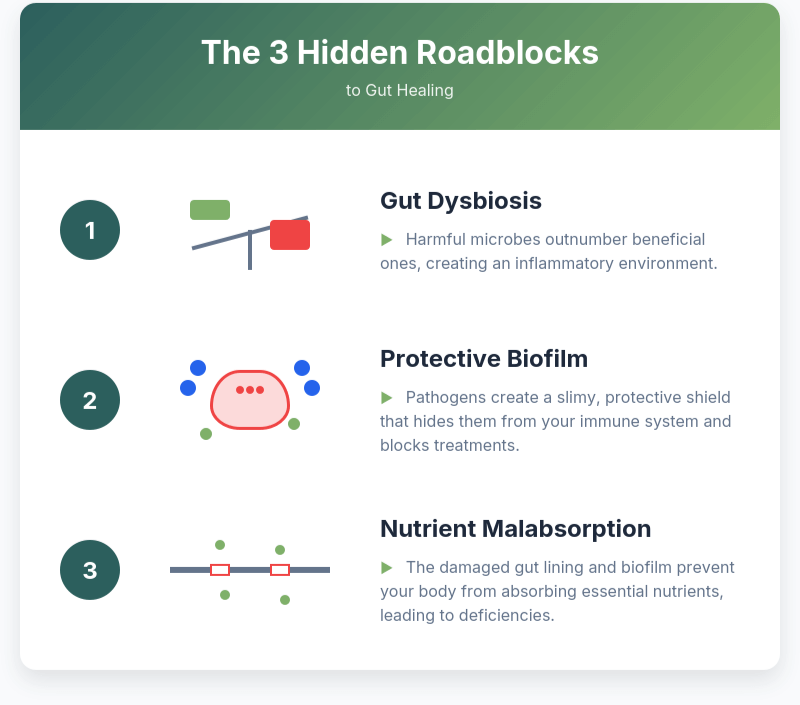
- 🦠Deep-Seated Dysbiosis: An imbalance of gut bacteria where harmful microbes outnumber the beneficial ones, creating constant inflammation that a good diet struggles to overcome.
- 🛡️The Problem of Biofilm: Harmful bacteria and fungi can create a protective, slimy shield called biofilm that makes them resistant to your immune system and dietary changes.
- 🧱Nutrient Gaps for Repair: Healing a damaged gut requires specific "building blocks" like certain amino acids, antioxidants, and minerals that may be insufficient even in a healthy diet.
It's one of the most frustrating experiences in a health journey: you're doing everything "right"—you've cut out junk food, you're eating the right foods, but you still feel... off. The bloating, brain fog, and fatigue persist. If your leaky gut diet is not working, you are not alone.
While diet is the cornerstone of gut health, sometimes it isn't enough to overcome deep-seated issues. Your gut may be facing roadblocks that prevent it from truly healing. Let's explore the three most common reasons why your gut isn't healing from diet alone.
When Diet Isn't Enough: 3 Roadblocks to Gut Healing: A Quick Overview
Eating clean but still bloated? Brain fog won't quit? Watch this quick video to discover the three hidden roadblocks preventing your gut from healing—even when you're doing everything right.
In This Article:
Reason #1: You Have Gut Dysbiosis
A healthy gut is a bustling metropolis of trillions of microbes, with beneficial bacteria keeping a small population of harmful ones in check. What is gut dysbiosis? It's the state where this balance is lost—the harmful bacteria, yeast, or even parasites begin to dominate the landscape [1].
This can happen due to a history of antibiotic use, chronic stress, or long-term exposure to toxins like glyphosate. When these harmful microbes take over, they produce inflammatory compounds, steal nutrients, and actively damage your gut lining [2]. While a healthy diet can support your "good" bacteria, it can be like sending a few police officers into a city already overrun by a powerful gang. The good guys are simply outnumbered and outgunned.
"Gut dysbiosis is not a passive state; it is an active, ongoing conflict that can be triggered by stress, environmental toxins, medications, and even a history of poor diet. While a healthy diet provides the right food for your 'good guys,' it often isn't enough to single-handedly win the war when the 'bad guys' have already fortified their position." - Research published in Gut Microbes [2]
Reason #2: You're Fighting Against Biofilm
This is one of the most overlooked aspects of chronic gut issues. Harmful bacteria and fungi are incredibly intelligent. To protect themselves from your immune system and from antimicrobial substances, they create a slimy, protective shield called biofilm [3].
This biofilm acts like an impenetrable fortress, allowing the bad microbes to thrive underneath, safe from harm. You can eat all the garlic and oregano in the world, but these natural antifungals often can't penetrate this shield [4]. Learning how to break down biofilm naturally is a critical step. Without it, you create a persistent, low-grade infection that constantly leaks inflammatory toxins into your system, preventing your gut lining from ever fully healing.
"Up to 80% of chronic microbial infections are linked to biofilms in the gut. This thick, sticky substance harbors the same toxins that cause you to continue feeling poorly. Gas, bloating, and digestive issues do not go away despite using typical antifungals... The only way to experience lasting relief is to break down these biofilms." - Dr. Amy Myers, Functional Medicine Physician [4]
Reason #3: You Have Nutrient Gaps for Repair
Healing a damaged gut is an intensive construction project. Your body needs a surplus of specific raw materials—the "building blocks"—to rebuild the intestinal wall, produce a healthy mucus layer, and support immune function. Even a nutrient-dense diet might fall short in providing the therapeutic doses of key compounds and supplements for gut repair needed for this level of work [5].
According to Cleveland Clinic, malabsorption prevents your body from effectively absorbing nutrients from your food, regardless of how much you eat [5]. The damage to the small intestine's mucous lining means that even if you consume essential vitamins and minerals, they may pass right through your system without ever being used.
Specific Amino Acids
L-Glutamine for gut lining repair is essential, as it's the primary fuel and building block for your intestinal cells [6].
Powerful Antioxidants
Compounds like resveratrol and curcumin (from turmeric) are needed to quell the intense oxidative stress happening at the gut lining [7].
Targeted Botanicals
Ingredients like black seed oil have unique properties that can help disrupt biofilm and rebalance the microbiome in ways that food alone cannot [8].
When these specific building blocks are in short supply, the healing process stalls. Your body has the blueprint, but it lacks the materials to complete the job. This creates a cruel, vicious cycle where gut damage prevents you from absorbing the very nutrients needed to repair the gut lining, leading to further nutrient deficiencies and weakened immune function [5].
Frequently Asked Questions
Q: How do I know if I have biofilm?
A: While there's no simple at-home test, persistent symptoms that don't respond to diet changes are a major clue. If your leaky gut diet is not working after months of effort, a hidden biofilm is a very likely culprit. Research shows that biofilms are present in up to 80% of chronic microbial infections [4].
Q: Can't probiotics alone fix dysbiosis?
A: Probiotics are helpful, but they can struggle to gain a foothold if the "bad" bacteria are too dominant or protected by biofilm. A successful strategy often involves first "weeding" the garden by disrupting the harmful microbes, and then "seeding" it with beneficial probiotics [2].
Q: Why doesn't my healthy diet provide enough nutrients for gut repair?
A: Even nutrient-dense foods may not provide the therapeutic concentrations needed for intensive gut repair. Additionally, if you have malabsorption due to gut damage, your body may not be able to extract and utilize nutrients effectively, regardless of dietary quality [5].
Q: So, what is the next step if diet isn't working?
A: The next step is to move beyond diet and incorporate a targeted, multi-faceted protocol. This involves using specific, powerful compounds that can help disrupt biofilm, rebalance the microbiome, and provide the concentrated building blocks your gut needs to finally seal and heal. This is where a professional-grade formulation becomes essential.
References
- Cleveland Clinic. (2022 ). Leaky Gut Syndrome. https://my.clevelandclinic.org/health/diseases/22724-leaky-gut-syndrome
- Aziz, T., et al. (2024 ). Elucidating the role of diet in maintaining gut health to reduce the risk of obesity, cardiovascular and other age-related inflammatory diseases: recent challenges and future recommendations. Gut Microbes, 16(1). https://pmc.ncbi.nlm.nih.gov/articles/PMC10773664/
- von Rosenvinge, E. C., et al. (2013 ). Microbial biofilms and gastrointestinal diseases. Pathogens and Disease, 67(1), 25-38. https://pmc.ncbi.nlm.nih.gov/articles/PMC4395855/
- Myers, A. (2025 ). How Biofilm in Your Gut Disrupts Digestive Health. Amy Myers MD. https://www.amymyersmd.com/blogs/articles/how-biofilm-in-your-gut-disrupts-digestive-health
- Cleveland Clinic. (n.d. ). Malabsorption (Syndrome): Symptoms, Causes & Treatment. https://my.clevelandclinic.org/health/diseases/22722-malabsorption
- Kim, M. H., & Kim, H. (2017 ). The Roles of Glutamine in the Intestine and its Implication in Intestinal Diseases. International Journal of Molecular Sciences, 18(5), 1051. https://pmc.ncbi.nlm.nih.gov/articles/PMC5454963/
- Salehi, B., et al. (2019 ). Resveratrol: A Double-Edged Sword in Health Benefits. Biomedicines, 6(3), 91. https://pmc.ncbi.nlm.nih.gov/articles/PMC6164842/
- Ahmad, A., et al. (2013 ). A review on therapeutic potential of Nigella sativa: A miracle herb. Asian Pacific Journal of Tropical Biomedicine, 3(5), 337-352. https://pmc.ncbi.nlm.nih.gov/articles/PMC3642442/

Ready to Discover Your Score?
This 2-minute quiz is the essential first step to understanding your body's current toxic load and identifying the root cause of how you feel.
Take The Toxicity QuizExplore More Articles
Dive deeper into topics like detoxification, gut health, and mental clarity on our blog. Knowledge is the key to taking control of your health.
Visit The Blog