5G and EMF Exposure: Understanding the Invisible Electromagnetic Threat to Your Health
In our previous article, we explored the remarkable properties of shungite, an ancient mineral with a unique ability to interact with electromagnetic fields. Now, we turn our attention to the problem itself: the invisible sea of electromagnetic radiation (EMF) that surrounds us in the modern world. With the global rollout of 5G technology, the intensity and complexity of our electromagnetic environment have reached unprecedented levels, raising significant questions about the potential long-term health implications.
For decades, the official stance from many government agencies and telecommunications companies has been that non-ionizing radiation—the type emitted by cell phones, WiFi routers, and 5G towers—is harmless. This position is based on the argument that this type of radiation lacks the energy to break chemical bonds or damage DNA directly, unlike ionizing radiation such as X-rays or gamma rays. However, a growing body of independent scientific research challenges this simplistic view, pointing to a more subtle but potentially significant biological mechanism: oxidative stress.
This article delves into the science of 5G and EMF exposure, moving beyond the outdated ionizing vs. non-ionizing debate to examine the evidence for biological effects. We will explore what EMF is, how 5G technology differs from previous generations, the scientific research linking EMF to oxidative stress, and the potential health concerns that arise from chronic, low-level exposure. Understanding this invisible threat is the first and most critical step toward taking proactive measures to protect your health.
Key Takeaways
- 📡Unprecedented Exposure: 5G technology utilizes higher frequency millimeter waves and requires a dense network of small cell towers, leading to a significant increase in the ambient levels of electromagnetic radiation in our environment.
- 🔬Oxidative Stress Mechanism: A substantial body of peer-reviewed research suggests that non-ionizing EMF exposure can induce oxidative stress in cells by increasing the production of reactive oxygen species (ROS), leading to cellular damage.
- 🧬Potential Health Concerns: Chronic oxidative stress from EMF exposure has been linked in scientific literature to a range of potential health issues, including neurological problems, reproductive system damage, immune dysfunction, and increased cancer risk.
- ⚖️Outdated Safety Standards: Current government safety limits for EMF exposure are primarily based on preventing thermal (heating) effects and do not adequately account for the non-thermal, biological effects demonstrated in independent research.
- 🛡️Proactive Protection is Key: Understanding the mechanisms of EMF-induced damage empowers individuals to adopt protective strategies, such as reducing exposure and utilizing shielding materials, to mitigate potential health risks.
5G & EMF Exposure: Understanding the Invisible Threat to Your Health (A Quick Overview)
Before we dive deep into the science, watch this quick overview to discover the science behind 5G and EMF exposure, and how the invisible sea of electromagnetic radiation triggers oxidative stress and cellular damage.
In This Article:
What is Electromagnetic Radiation (EMF)?
Electromagnetic radiation (EMF) is a form of energy that is all around us, consisting of oscillating electric and magnetic fields that travel through space at the speed of light. This energy exists on a spectrum, ranging from very low-frequency waves to very high-frequency waves. The electromagnetic spectrum is broadly divided into two categories: ionizing and non-ionizing radiation.
- Ionizing Radiation: This is high-frequency, high-energy radiation that has enough energy to knock electrons out of atoms and molecules, a process called ionization. This can directly damage DNA and is a known cause of cancer. Examples include X-rays, gamma rays, and ultraviolet (UV) radiation from the sun.
- Non-Ionizing Radiation: This is lower-frequency, lower-energy radiation that does not have enough energy to cause ionization. This category includes radio waves, microwaves, infrared radiation, and visible light. The EMF emitted by cell phones, WiFi routers, Bluetooth devices, and 5G towers falls into this category.
For many years, the prevailing safety paradigm was that non-ionizing radiation is harmless because it cannot directly break chemical bonds. However, this view is increasingly being challenged by scientific evidence demonstrating that non-ionizing EMF can cause biological effects through other mechanisms, most notably the induction of oxidative stress.
The 5G Difference: A New Kind of Exposure
The rollout of 5G (fifth-generation) wireless technology represents a significant shift in our electromagnetic environment. While previous generations (2G, 3G, 4G) primarily used frequencies below 6 GHz, 5G technology utilizes a broader range of frequencies, including higher-frequency millimeter waves (MMWs) from 24 GHz to over 100 GHz.
This shift has several important implications:
- Higher Frequencies: Millimeter waves have a much shorter range and are more easily blocked by obstacles like buildings and trees. To ensure reliable coverage, 5G requires a much denser network of antennas.
- Dense Network of Small Cells: Instead of large, distant cell towers, 5G relies on thousands of small cell antennas placed much closer to homes, schools, and workplaces—often on utility poles and streetlights.
- Increased Ambient Exposure: This dense network means that the ambient (background) level of EMF radiation in our environment is increasing significantly, leading to more chronic, close-range exposure for the general population.
While proponents of 5G emphasize its benefits—faster speeds and lower latency—a growing number of scientists and medical professionals have raised concerns about the lack of pre-market safety testing and the potential long-term health consequences of this unprecedented increase in EMF exposure.
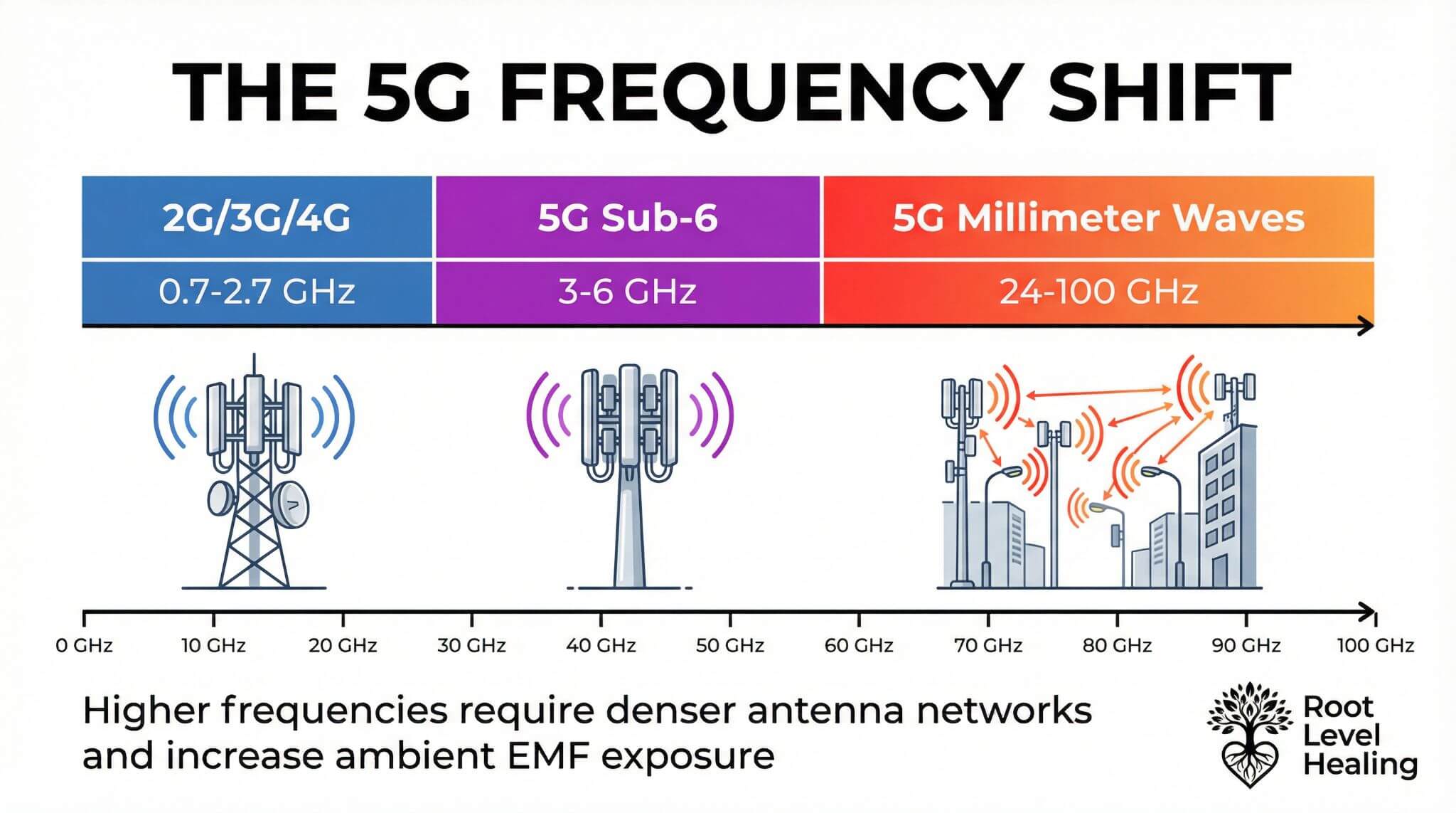
The shift to 5G millimeter waves (24-100 GHz) requires a much denser network of antennas compared to previous generations, significantly increasing ambient EMF exposure.
The Link Between EMF and Oxidative Stress
The most compelling evidence for the biological effects of non-ionizing EMF comes from research on oxidative stress. Oxidative stress is an imbalance between the production of free radicals (also known as reactive oxygen species, or ROS) and the body's ability to neutralize them with antioxidants.
A 2016 review by Yakymenko et al., published in Electromagnetic Biology and Medicine, analyzed 100 peer-reviewed studies and found that 93 of them demonstrated that low-intensity radiofrequency radiation (RFR) induces oxidative stress in biological systems [1]. The authors concluded that oxidative stress is a key mechanism by which RFR exposure can lead to cellular damage and potential health problems.
How does this happen? Research suggests that EMF exposure can activate voltage-gated calcium channels (VGCCs) in cell membranes, leading to an influx of calcium ions into the cell [2]. This excess intracellular calcium can trigger a cascade of biochemical reactions that result in the overproduction of ROS, such as superoxide and hydrogen peroxide. These highly reactive molecules can then damage cellular components, including lipids, proteins, and even DNA, leading to inflammation, cellular dysfunction, and an increased risk of chronic disease.
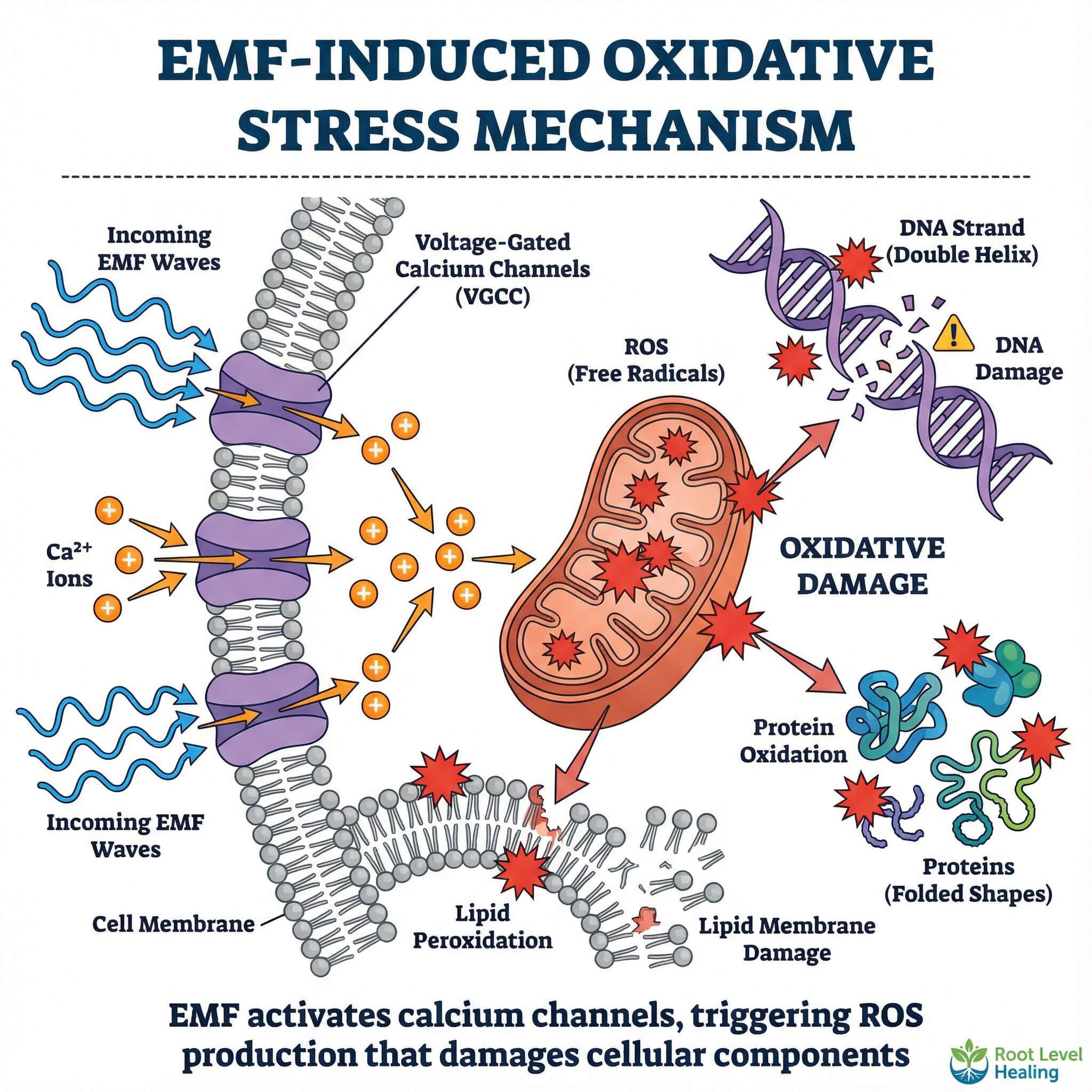
EMF exposure activates voltage-gated calcium channels (VGCC), triggering an influx of calcium ions that leads to the overproduction of reactive oxygen species (ROS), which damage cellular components including DNA, proteins, and lipid membranes.
Potential Health Concerns from Chronic EMF Exposure
Chronic oxidative stress is a well-established factor in the development of numerous health problems. The scientific literature has linked EMF-induced oxidative stress to a range of potential health concerns:
- Neurological and Cognitive Issues: The brain is particularly vulnerable to oxidative stress. Studies have linked EMF exposure to headaches, fatigue, sleep disturbances, memory problems, and an increased risk of neurodegenerative diseases.
- Reproductive System Damage: Numerous studies have shown that EMF exposure can reduce sperm count, motility, and viability in males and may affect female fertility as well.
- Immune System Dysfunction: Chronic EMF exposure may disrupt normal immune function, leading to increased inflammation and a reduced ability to fight off infections.
- Increased Cancer Risk: In 2011, the World Health Organization's International Agency for Research on Cancer (IARC) classified radiofrequency EMF as a "Group 2B" possible human carcinogen, based on studies linking long-term cell phone use to an increased risk of brain tumors [3]. The oxidative stress mechanism provides a plausible pathway for how non-ionizing radiation could contribute to cancer development over time.
EMF Exposure Sources Comparison
To better understand our daily exposure, it's helpful to compare the typical EMF levels from various sources. The following table provides a general comparison of power density from common devices.
| EMF Source | Frequency Range | Typical Power Density (μW/m²) | Exposure Type |
|---|---|---|---|
| 5G Small Cell (at 10m) | 24-40 GHz | 10,000 - 1,000,000+ | Continuous, Ambient |
| WiFi Router (at 1m) | 2.4 / 5 GHz | 1,000 - 100,000 | Intermittent, Local |
| Cell Phone (during call) | 0.7-2.7 GHz | 100,000 - 5,000,000+ | Direct, Close-Contact |
| Bluetooth Earbuds | 2.4 GHz | 1,000 - 50,000 | In-Ear, Direct |
| Microwave Oven (at 1m) | 2.45 GHz | 10,000 - 200,000 | Intermittent, Leakage |
| Natural Background | Various | < 0.001 | Continuous, Natural |
Note: These are general estimates. Actual values can vary significantly based on device, distance, and usage.
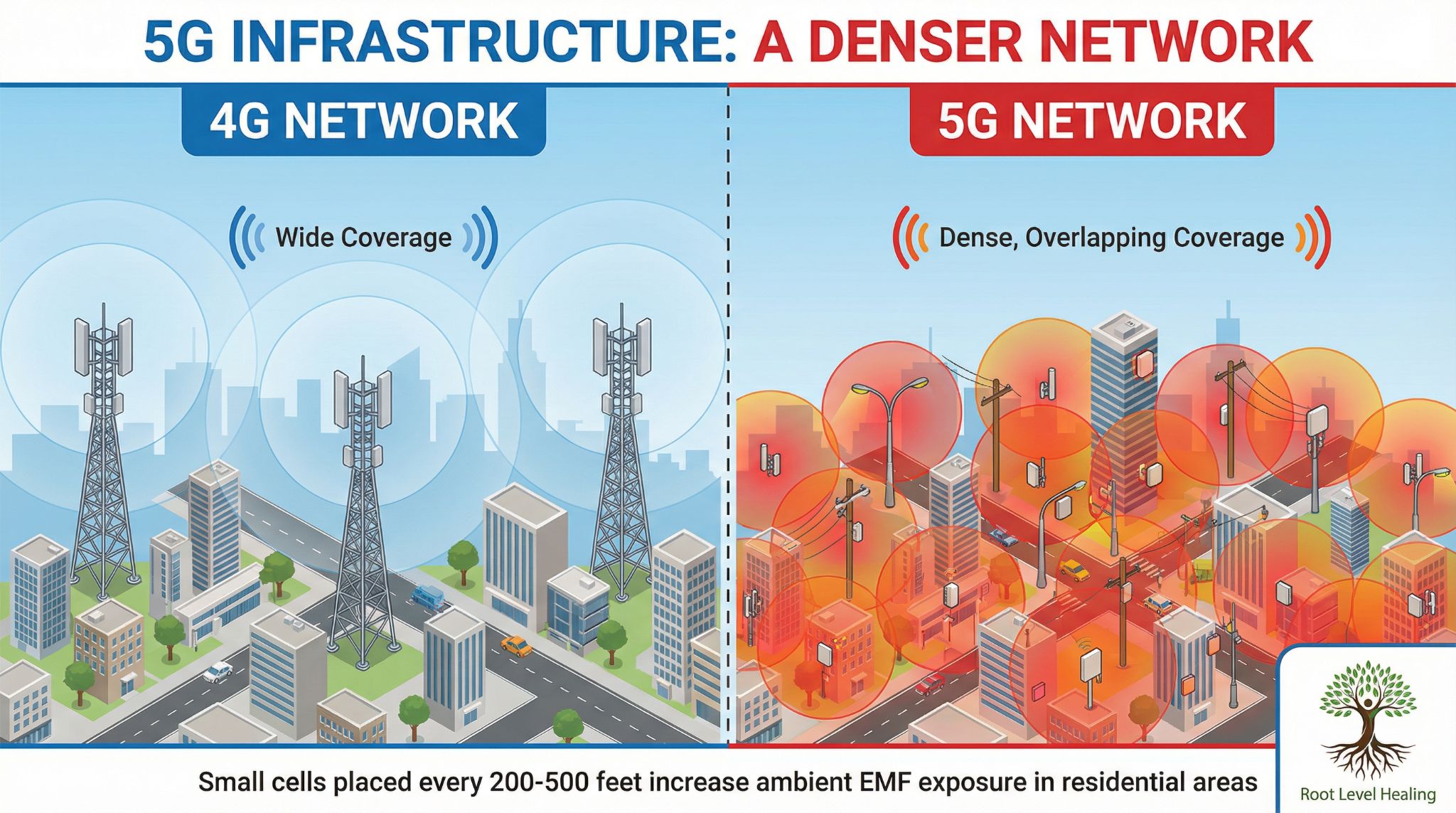
5G infrastructure requires small cells placed every 200-500 feet, creating overlapping coverage zones that significantly increase ambient EMF exposure in residential areas compared to the sparse 4G tower network.
Conclusion: Taking a Proactive Stance
The evidence strongly suggests that the current safety standards for EMF exposure are outdated and insufficient to protect public health from the non-thermal, biological effects of chronic exposure. The widespread deployment of 5G technology, without adequate pre-market safety testing, represents a massive and uncontrolled experiment on the human population.
While the debate continues, a growing body of scientific research points to oxidative stress as a key mechanism by which EMF radiation can cause cellular damage. Given the potential health risks, waiting for definitive proof of harm may be a dangerous gamble. A proactive, precautionary approach is warranted.
In our next article, we will explore the various solutions available for mitigating EMF exposure, from simple lifestyle changes to advanced shielding technologies. Understanding the problem is the first step; taking action is the next.
Frequently Asked Questions
Q: Aren't there official safety standards for 5G and EMF?
A: Yes, but they are widely considered outdated by independent scientists. Current standards, such as those set by the FCC in the United States, are based primarily on preventing thermal (heating) effects and do not account for the non-thermal biological effects like oxidative stress that have been demonstrated in thousands of peer-reviewed studies.
Q: Is there a scientific consensus that EMF is harmful?
A: There is a significant and growing body of independent scientific research (thousands of studies) demonstrating biological harm from EMF exposure. However, this is often contradicted by industry-funded research, creating a manufactured debate. Many scientific bodies and groups of independent scientists have issued warnings and called for more protective standards.
Q: Are children more vulnerable to EMF exposure?
A: Yes. Children are considered more vulnerable because their skulls are thinner, their brains contain more fluid, and their cells are dividing more rapidly, making them more susceptible to genetic damage. The World Health Organization and numerous other health bodies have recommended limiting children's use of wireless devices.
Q: What are millimeter waves (MMWs) used in 5G?
A: Millimeter waves are higher-frequency radio waves (typically 24-100 GHz) used in 5G to provide ultra-fast data speeds. While they have a shorter range and are absorbed more superficially by the skin, their biological effects are not well-studied, and their use requires a much denser network of antennas, increasing overall ambient exposure.
Q: Does distance from the source matter?
A: Absolutely. The power density of EMF radiation decreases significantly with distance (following the inverse-square law). This is why keeping devices like cell phones and WiFi routers away from your body is a primary strategy for reducing exposure.
Q: What is the difference between EMF and EMR?
A: The terms are often used interchangeably. EMF (Electromagnetic Fields) refers to the physical fields themselves, while EMR (Electromagnetic Radiation) refers to the waves of energy that propagate from those fields. For practical purposes in this context, they refer to the same phenomenon.
References
- Yakymenko, I., et al. (2016 ). Oxidative mechanisms of biological activity of low-intensity radiofrequency radiation. Electromagnetic Biology and Medicine, 35(2), 186-202. https://www.tandfonline.com/doi/full/10.3109/15368378.2015.1043557
- Pall, M. L. (2013 ). Electromagnetic fields act via activation of voltage-gated calcium channels to produce beneficial or adverse effects. Journal of Cellular and Molecular Medicine, 17(8), 958-965. https://www.ncbi.nlm.nih.gov/pmc/articles/PMC3780531/
- Miller, A. B., et al. (2019 ). Cancer epidemiology update, following the 2011 IARC evaluation of radiofrequency electromagnetic fields (Monograph 102). Environmental Research, 167, 673-683. https://pubmed.ncbi.nlm.nih.gov/30196934/
- Belpomme, D., et al. (2018 ). Thermal and non-thermal health effects of low intensity non-ionizing radiation: An international perspective. Environmental Pollution, 242, 643-658. https://pubmed.ncbi.nlm.nih.gov/30025338/
- Russell, C. L. (2018 ). 5G wireless telecommunications expansion: Public health and environmental implications. Environmental Research, 165, 484-495. https://www.sciencedirect.com/science/article/abs/pii/S0013935118300161
- Schuermann, D., & Mevissen, M. (2021 ). Manmade Electromagnetic Fields and Oxidative Stress—More for Than Against?. International Journal of Molecular Sciences, 22(13), 7185. https://pubmed.ncbi.nlm.nih.gov/33917298/

Ready to Discover Your Score?
This 2-minute quiz is the essential first step to understanding your body's current toxic load and identifying the root cause of how you feel.
Take The Toxicity QuizExplore More Articles
Dive deeper into topics like detoxification, gut health, and mental clarity on our blog. Knowledge is the key to taking control of your health.
Visit The Blog