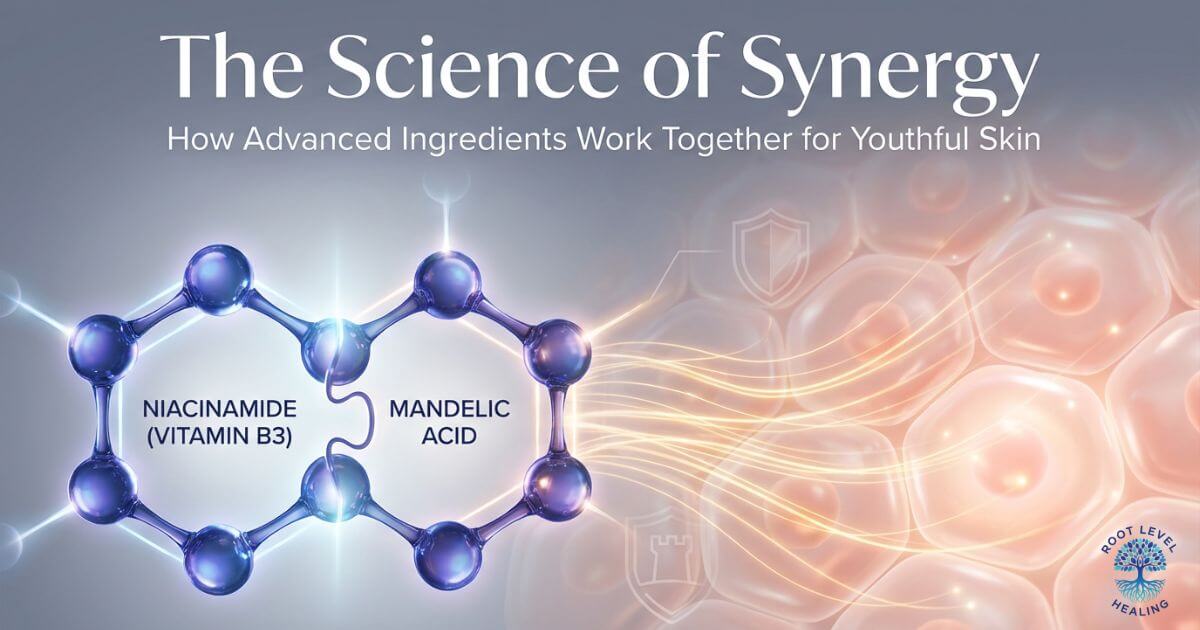
The Science of Synergy: How Advanced Ingredients Work Together for Youthful Skin
In our last briefing, we introduced nature's elite defense force—the powerful plant antioxidants that form the first line of defense for your skin's fortress. But in the modern world, even the most formidable natural defenses can be overwhelmed. To achieve true victory in the war against aging, we must call in the reinforcements: advanced, professional-grade skincare ingredients that work in perfect synergy with nature's defenders. This is where science elevates nature, creating a combined-arms approach that delivers results far beyond what either could achieve alone.
Key Takeaways
- 🔬The Power of Synergy: Combining advanced skincare ingredients like niacinamide and mandelic acid with natural antioxidants creates a powerful synergistic effect that amplifies their individual benefits.
- 🧱Niacinamide, the Master Engineer: This form of vitamin B3 is a master of fortification, strengthening the skin barrier, boosting collagen synthesis, and improving cellular energy.
- ✨Mandelic Acid, the Gentle Renovator: This large-molecule AHA provides gentle yet effective exfoliation, promoting cellular renewal and improving skin texture without the irritation of harsher acids.
Advanced Skincare Ingredients Synergy: Niacinamide & Mandelic Acid (A Quick Overview)
Before we dive deep into the science, watch this quick overview where we break down the "Science of Synergy" and explain how combining Niacinamide and Mandelic Acid creates the ultimate two-step process for skin renewal and barrier repair.
In This Article:
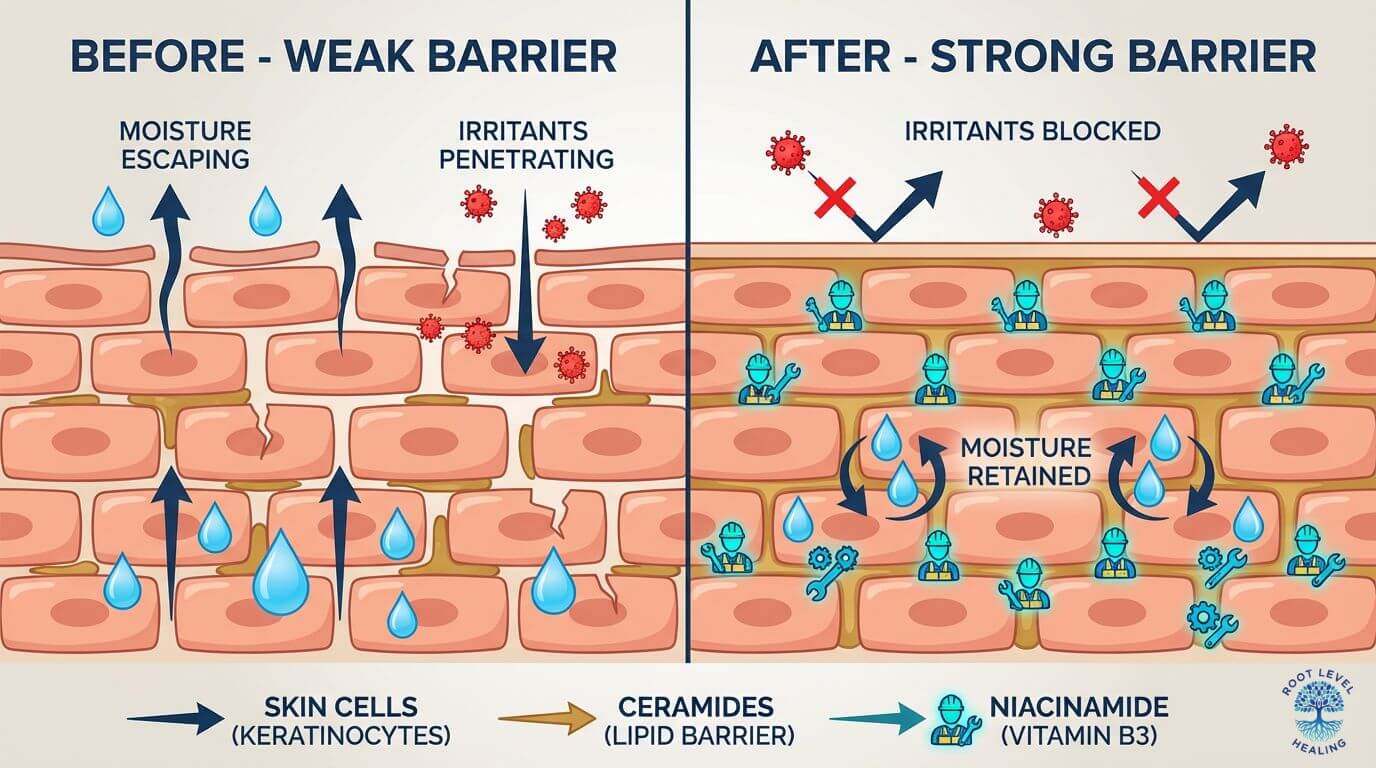
Niacinamide acts as the master engineer, reinforcing the skin's defensive walls by boosting the production of ceramides—the mortar that holds the fortress together.
The Next Wave of Defense: Advanced Skincare Ingredients
While the plant antioxidants we've discussed are essential for neutralizing immediate threats, advanced skincare ingredients provide the strategic, long-term support needed to repair, rebuild, and reinforce the skin's fortress. These are the professional-grade compounds, backed by extensive clinical research, that address the fundamental processes of aging. They don't just fight the battle; they change the battlefield itself, creating an environment where the skin is stronger, more resilient, and better equipped to defend itself.
The philosophy behind this integrated approach is simple: nature provides the shield, and science provides the sword. By combining the protective power of antioxidants with the restorative power of advanced ingredients, we can create a comprehensive anti-aging strategy that is both proactive and reactive. This is the essence of synergistic skincare—a whole that is far greater than the sum of its parts.
Consider the limitations of relying on a single ingredient or approach. A powerful antioxidant might neutralize free radicals effectively, but it cannot repair the damage that has already been done to collagen fibers. A potent exfoliant might clear away damaged surface cells, but without barrier support, it could leave the skin vulnerable to irritation and moisture loss. This is why the most advanced skincare formulations are built on the principle of complementary action—each ingredient addressing a specific aspect of skin health while supporting the function of the others.
The advanced ingredients we will discuss in this post—niacinamide and mandelic acid—represent two of the most well-researched and clinically-validated compounds in modern dermatology. They have been extensively studied not just in isolation, but in combination with other active ingredients, demonstrating their ability to work synergistically to enhance overall skin health. This evidence-based approach is what separates professional-grade skincare from over-the-counter products that rely on marketing hype rather than scientific validation.
Niacinamide: The Master Engineer of the Fortress
If your skin is a fortress, then niacinamide is its master engineer. This powerhouse form of vitamin B3 is a multitasking marvel, involved in over 40 different biochemical reactions and playing a critical role in maintaining the structural integrity and operational efficiency of your skin. Its primary mission is to ensure the fortress has the energy and resources it needs to function at peak performance [1].
One of niacinamide's most important jobs is to strengthen the skin's barrier function. It does this by stimulating the synthesis of ceramides, the waxy lipid molecules that act as the mortar between the bricks of your skin cells [2]. A strong ceramide barrier is essential for keeping moisture in and irritants out. By reinforcing this barrier, niacinamide makes the fortress walls more resistant to penetration, reducing water loss and protecting against environmental aggressors.
"Supplementation of nicotinamide restores cellular NAD+ pool and mitochondrial energetics, attenuates oxidative stress and inflammatory response, enhances extracellular matrix and skin barrier, and inhibits the pigmentation process in the skin." [1]
But niacinamide's engineering prowess doesn't stop at the walls. It also works deep within the fortress to boost collagen synthesis, the very foundation of youthful skin. Clinical studies have shown that topical niacinamide can significantly increase collagen production, leading to a reduction in fine lines and wrinkles and an improvement in skin elasticity [3]. It also inhibits protein glycation, a process where sugar molecules attach to collagen and elastin fibers, making them stiff and brittle. By preventing this cross-linking, niacinamide helps to keep the skin's support structures flexible and resilient.
Furthermore, niacinamide is a master of energy management. It is a precursor to NAD+ and NADP, two of the most important coenzymes in your cells. These molecules are essential for cellular energy metabolism, DNA repair, and antioxidant defense. By ensuring a healthy supply of these coenzymes, niacinamide provides the power your skin needs to carry out all its essential defensive and regenerative functions. This comprehensive support system makes niacinamide one of the most valuable assets in the anti-aging arsenal.
The clinical evidence supporting niacinamide's anti-aging benefits is extensive. In a landmark study by Bissett et al. (2005), topical application of 5% niacinamide for 12 weeks resulted in significant improvements in fine lines, wrinkles, hyperpigmented spots, red blotchiness, and skin yellowing [3]. The study also found improvements in skin elasticity, demonstrating that niacinamide's benefits extend beyond surface-level improvements to structural enhancements in the deeper layers of the skin.
What makes niacinamide particularly valuable is its excellent tolerability profile. Unlike some other powerful anti-aging ingredients that can cause irritation, dryness, or photosensitivity, niacinamide is well-tolerated by virtually all skin types, including sensitive skin. This makes it an ideal ingredient for daily use and for combination with other active ingredients. Its anti-inflammatory properties also make it an excellent choice for those with rosacea, acne, or other inflammatory skin conditions who still want to address signs of aging.
Mandelic Acid: The Gentle Renovation Specialist
Every fortress requires regular maintenance and renovation to stay in top condition. This is where mandelic acid, the gentle renovation specialist, comes in. Mandelic acid is an alpha hydroxy acid (AHA) derived from bitter almonds. What makes it unique among AHAs is its large molecular size. Unlike smaller AHAs like glycolic acid, which can penetrate the skin quickly and cause irritation, mandelic acid works more slowly and gently, making it an ideal choice for all skin types, including sensitive skin [4].
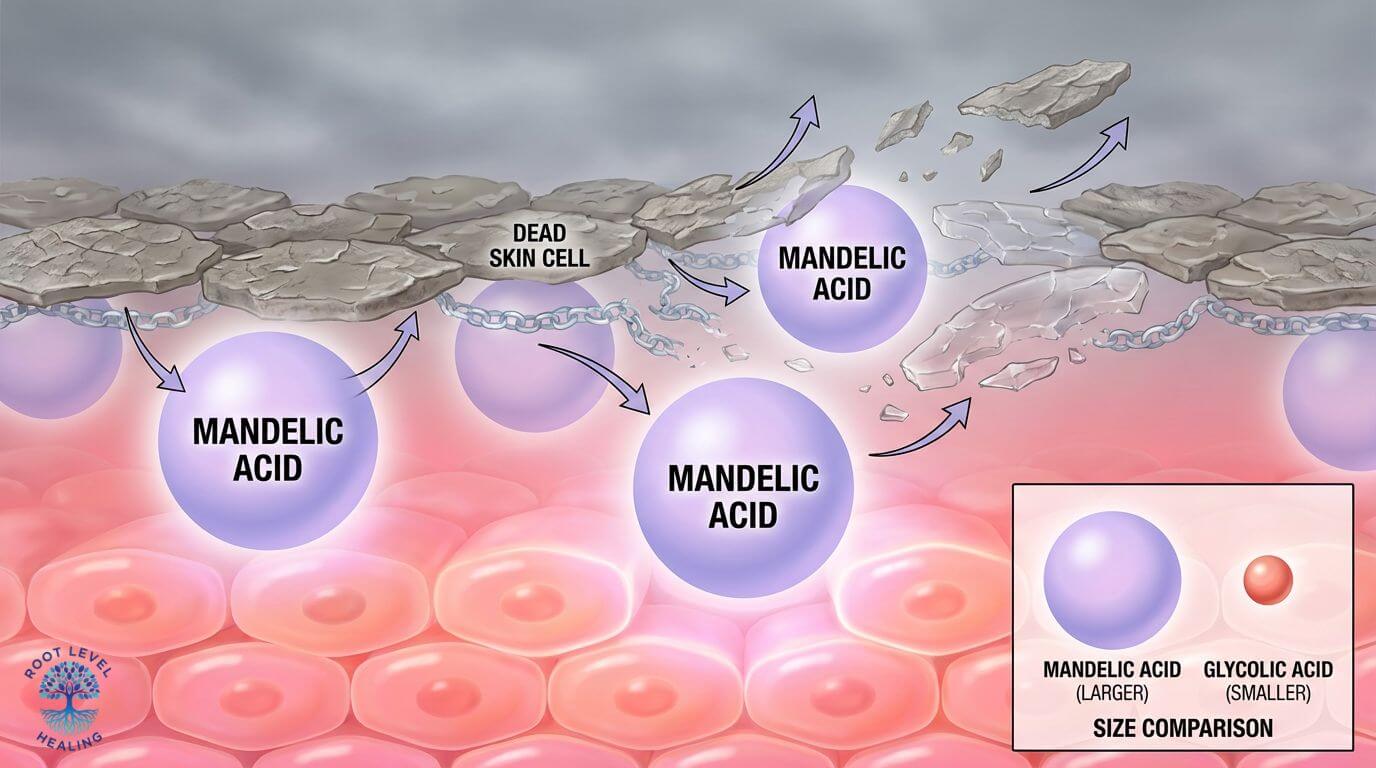
Mandelic acid's large molecular size allows it to perform a gentle, controlled exfoliation, removing damaged surface layers without causing irritation and promoting cellular renewal.
The primary role of mandelic acid is to promote cellular renewal through gentle exfoliation. It works by dissolving the bonds that hold dead skin cells to the surface, allowing them to be shed more easily. This process reveals the fresh, healthy new cells underneath, resulting in a smoother, brighter, and more even-toned complexion. But the benefits of this gentle renovation go far beyond surface-level improvements.
By accelerating cell turnover, mandelic acid also helps to stimulate collagen production in the deeper layers of the skin. This long-term structural benefit helps to reduce the appearance of fine lines and wrinkles and improve skin firmness and elasticity [5]. It's a two-pronged approach: immediate improvement in texture and radiance, and long-term reinforcement of the skin's support structures.
Mandelic acid is also lipophilic, meaning it is fat-soluble. This allows it to penetrate into the pores and exfoliate from within, helping to reduce congestion and prevent breakouts. This makes it an excellent choice for those with oily or acne-prone skin who are also concerned about aging. Its gentle nature means it can provide these benefits without the dryness and irritation that often accompany more aggressive acne treatments.
The unique properties of mandelic acid make it particularly well-suited for mature or sensitive skin that cannot tolerate more aggressive exfoliants. While glycolic acid, with its smaller molecular size, can penetrate quickly and deeply, it can also cause significant irritation, especially in those with compromised skin barriers. Mandelic acid, with its larger molecular size (approximately 152 Da compared to glycolic acid's 76 Da), penetrates more slowly and evenly, providing effective exfoliation without the harsh side effects [4].
Research has also shown that mandelic acid has antibacterial properties, making it particularly effective for acne-prone skin. It can help to reduce the population of *Propionibacterium acnes*, the bacteria responsible for inflammatory acne, while simultaneously addressing the signs of aging. This dual action makes it a valuable ingredient for those dealing with both breakouts and fine lines—a common concern for many adults. The gentle exfoliation also helps to fade post-inflammatory hyperpigmentation, the dark spots that often linger after acne lesions heal.
The Perfect Partnership: Niacinamide and Mandelic Acid Synergy
While niacinamide and mandelic acid are powerful ingredients on their own, their true genius is revealed when they are combined. This is the science of synergy in action. They work together in a perfect partnership, each one amplifying the benefits of the other to create a comprehensive renovation and reinforcement program for your skin's fortress.
Think of it as a two-stage process. First, mandelic acid, the renovation specialist, gently clears away the old, damaged surface layers. It removes the dead skin cells, smooths the texture, and prepares the ground for rebuilding. Then, niacinamide, the master engineer, comes in to do the heavy lifting. It strengthens the newly revealed skin barrier, boosts collagen production, and provides the energy needed for optimal cellular function. It's a one-two punch that delivers dramatic results.
This synergistic relationship also helps to mitigate potential side effects. While mandelic acid is gentle, any exfoliation can be potentially irritating. Niacinamide's powerful anti-inflammatory and barrier-strengthening properties help to calm and soothe the skin, reducing any redness or sensitivity that might occur. This allows you to get all the benefits of exfoliation without the downtime.
The synergy extends to pigmentation as well. Both ingredients have been shown to reduce hyperpigmentation, but they do so through different mechanisms. Mandelic acid helps to lift away pigmented surface cells, while niacinamide inhibits the transfer of melanin from the melanocytes to the keratinocytes. By combining them, you can address pigmentation issues from multiple angles, leading to a brighter, more even-toned complexion faster than you could with either ingredient alone [1], [4].
Building the Ultimate Arsenal: The Future of Skincare
The combination of advanced scientific ingredients like niacinamide and mandelic acid with the natural defenders we discussed in our previous post represents the pinnacle of modern skincare formulation. This is the integrated defense network—a multi-layered, multi-faceted approach that addresses every aspect of skin health and aging.
The plant antioxidants from green and white tea provide the frontline defense, neutralizing free radicals and protecting against UV damage. The fruit extracts offer specialized support, from the collagen-boosting power of vitamin C to the anti-inflammatory benefits of anthocyanins. Niacinamide then works behind the scenes, reinforcing the fortress walls, powering the cellular machinery, and boosting collagen production. And finally, mandelic acid provides the ongoing maintenance, clearing away damage and promoting constant renewal.
This is not just a collection of ingredients; it's a strategy. It's a recognition that the war against aging is fought on multiple fronts, and that victory requires a coordinated effort from a diverse team of specialists. It's the understanding that the best results come not from a single "miracle" ingredient, but from the intelligent combination of nature and science, working in perfect harmony.
In our final post, we will reveal the ultimate expression of this philosophy: a complete, all-in-one solution that combines all these powerful ingredients into a single, comprehensive system. We will show you how Era Face Lift brings together the best of nature and science to create the ultimate defensive arsenal for your skin's fortress, delivering a level of protection and rejuvenation that was once thought impossible.
Frequently Asked Questions
Q: Can I use niacinamide and mandelic acid together?
A: Yes, they are an excellent combination. Mandelic acid exfoliates while niacinamide strengthens the skin barrier and reduces inflammation, making the combination highly effective and well-tolerated.
Q: What are the main benefits of niacinamide for skin?
A: Niacinamide strengthens the skin barrier, boosts collagen production, reduces hyperpigmentation, calms inflammation, and improves skin elasticity. It is a true multitasking powerhouse.
Q: Why is mandelic acid better for sensitive skin than other AHAs?
A: Mandelic acid has a larger molecular size than other AHAs like glycolic acid. This means it penetrates the skin more slowly and evenly, causing less irritation while still providing effective exfoliation.
Q: How does skincare ingredient synergy work?
A: Synergy occurs when the combined effect of two or more ingredients is greater than the sum of their individual effects. They can work on different pathways to achieve the same goal, or one ingredient can support the function of another, leading to enhanced results.
Q: What is the difference between professional-grade and over-the-counter ingredients?
A: Professional-grade ingredients are typically used at higher, clinically-proven concentrations and are often formulated with advanced delivery systems to ensure they reach their target in the skin. They are backed by extensive scientific research and are designed for maximum efficacy.
Q: Can I combine these advanced ingredients with the plant antioxidants from the previous post?
A: Absolutely! In fact, that is the ideal approach. The antioxidants protect the skin from daily damage, while the advanced ingredients work to repair and rebuild. This combination creates a comprehensive, 360-degree approach to anti-aging.
References
- Boo, Y. C. (2021 ). Mechanistic Basis and Clinical Evidence for the Applications of Nicotinamide (Niacinamide) to Control Skin Aging and Pigmentation. *Antioxidants*.
- CeraVe. (n.d. ). A Guide to the Skin Care Benefits of Niacinamide (also known as Vitamin B3).
- Bissett, D. L., et al. (2005 ). Niacinamide: A B vitamin that improves aging facial skin appearance. *Dermatologic Surgery*.
- Vogue. (2023 ). Mandelic Acid Is an Anti-Aging Ingredient for Everyone.
- Prequel. (2025 ). Mandelic Acid In Skincare - Benefits & Uses.

Ready to Discover Your Score?
This 2-minute quiz is the essential first step to understanding your body's current toxic load and identifying the root cause of how you feel.
Take The Toxicity QuizExplore More Articles
Dive deeper into topics like detoxification, gut health, and mental clarity on our blog. Knowledge is the key to taking control of your health.
Visit The Blog