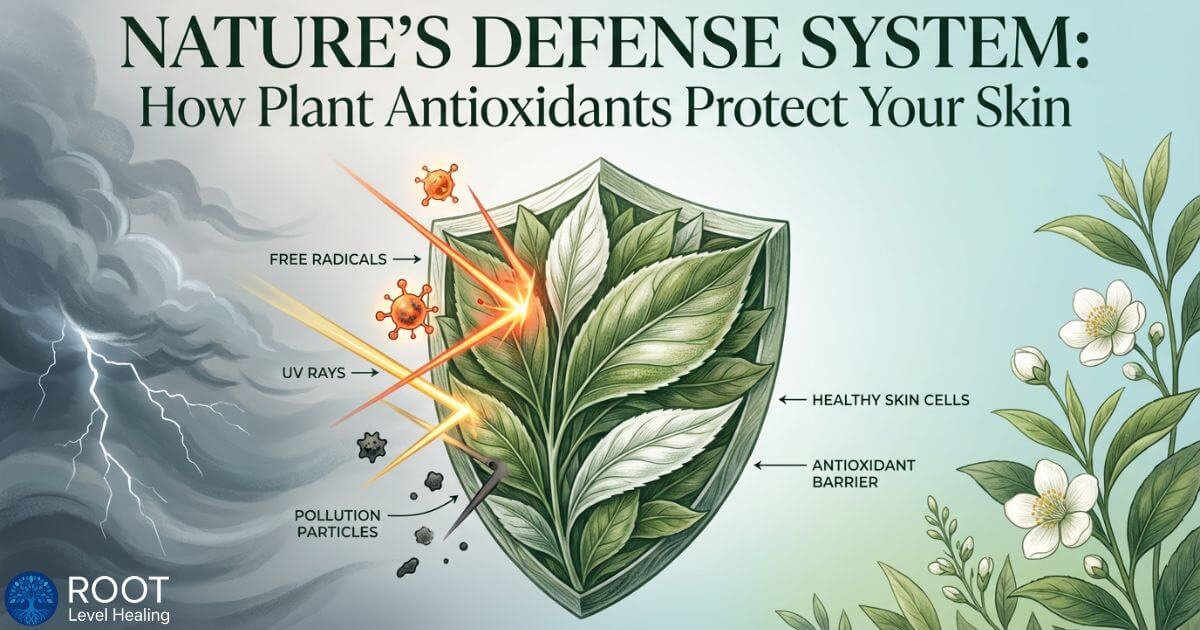
Nature's Defense System: How Plant Antioxidants Protect Your Skin
In our previous dispatch from the front lines of skin health, we revealed the relentless environmental assault that lays siege to your skin's fortress. Now, we turn our attention to the reinforcements—nature's elite defense force. For millennia, plants have been developing sophisticated chemical warfare capabilities to protect themselves from the same environmental threats we face. These powerful compounds, known as antioxidants, form the foundation of a resilient and youthful fortress, providing a multi-layered defense against the aging assault.
Key Takeaways
- 🌿Nature's Arsenal: Plants produce a vast array of antioxidants, including polyphenols, flavonoids, and catechins, which act as a powerful defense force against skin aging.
- 🛡️Tea's Elite Commandos: Green and white tea are rich in potent catechins like EGCG, which neutralize free radicals, protect against UV damage, and support collagen integrity.
- 🍇The Power of Synergy: Combining different plant antioxidants creates a synergistic effect, providing a more comprehensive and effective defense than any single compound alone.
Plant Antioxidants Protect Skin: Your Natural Anti-Aging Defense Force (A Quick Overview)
Before we dive deep into the science, watch this quick overview where we break down "The Botanical Arsenal" and explain how plant-based antioxidants act as your skin's elite defense force against premature aging.
In This Article:
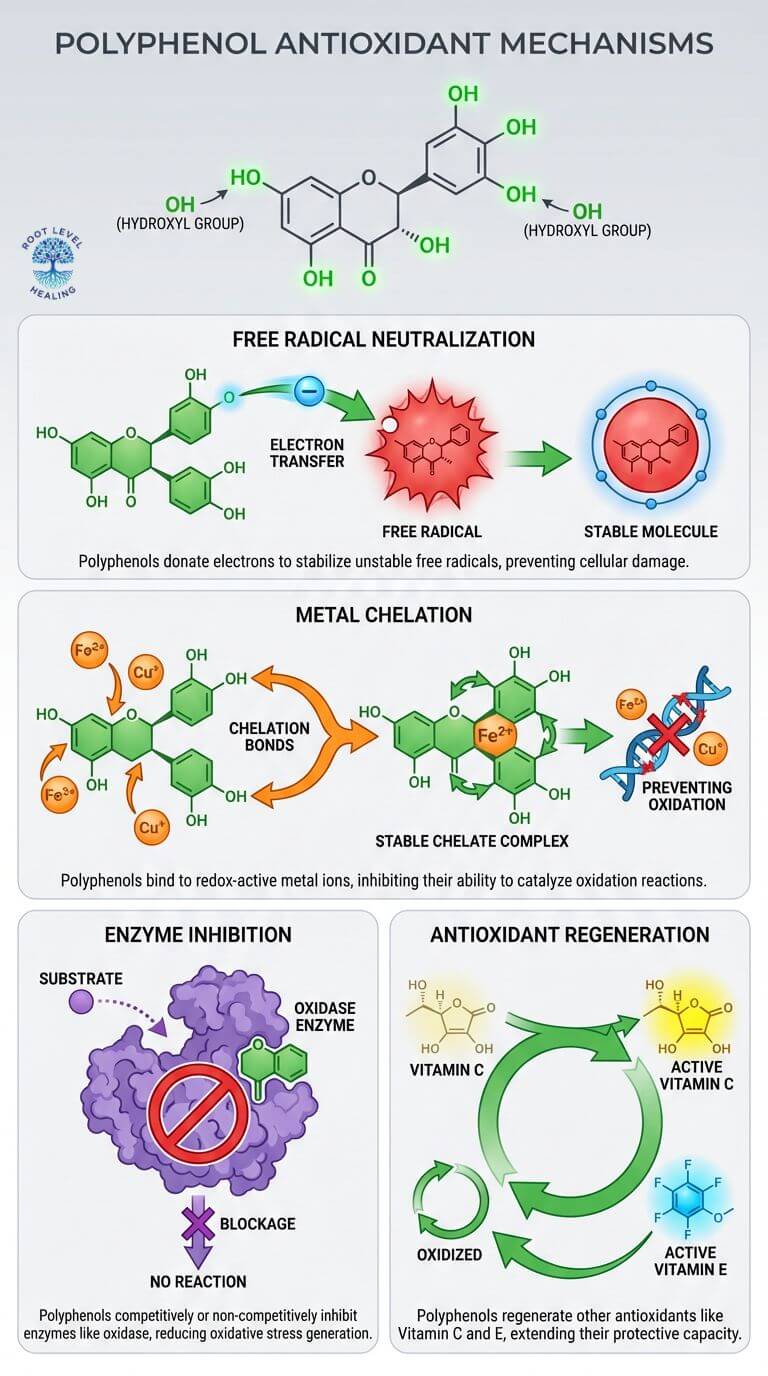
Polyphenols, the master tacticians of the plant world, employ multiple strategies to neutralize threats and protect the skin's structural integrity.
The Botanical Arsenal: Understanding Plant Antioxidants
Plants are the original masters of defense. Unable to flee from threats like UV radiation and environmental pollutants, they have evolved a complex internal pharmacy of protective compounds. These plant-derived antioxidants are the cornerstone of a resilient skincare strategy, offering a natural and effective way to reinforce your skin's fortress. This botanical arsenal is incredibly diverse, with several key classes of compounds playing a critical role in skin protection [1].
Polyphenols are the special forces of the plant world, a massive group of over 8,000 different compounds that includes flavonoids, phenolic acids, and stilbenes. Their primary mission is to neutralize the free radical saboteurs we discussed in our previous post. They accomplish this through several sophisticated mechanisms, including donating an electron to stabilize a rampaging free radical, chelating pro-oxidative metal ions that can trigger oxidative stress, and even inhibiting the enzymes that contribute to the breakdown of collagen and elastin [1].
"The diversity of polyphenol structures is linked to their multi-faceted biological activity. Polyphenols exert a strong antioxidant effect through mechanisms such as eliminating reactive oxygen species, inhibiting enzymes like oxidases, chelating pro-oxidative metal ions, and restoring the activity of other antioxidants like tocopherols and ascorbic acid." [1]
This multi-pronged approach makes plant antioxidants incredibly effective. They don't just offer a single line of defense; they create a comprehensive security network that addresses multiple threat vectors simultaneously. From the UV-protective properties of flavonoids to the depigmenting capabilities of phenolic acids, these natural compounds provide a holistic solution to the challenges of environmental aging.
Green Tea's Elite Commandos: The Power of EGCG
Within the vast army of plant antioxidants, the catechins found in green tea (_Camellia sinensis_) are the elite commandos. These compounds, particularly epigallocatechin gallate (EGCG), are renowned for their potent antioxidant and anti-inflammatory properties. EGCG is a master of hand-to-hand combat, capable of directly neutralizing multiple types of free radicals and preventing them from wreaking havoc on your skin's structural proteins [2].
But the defensive capabilities of green tea's catechins go far beyond simple free radical scavenging. They are also skilled strategists, capable of modulating the very pathways that lead to skin aging. For example, EGCG has been shown to inhibit the activity of matrix metalloproteinases (MMPs), the enzymatic wrecking crew that degrades collagen and elastin in response to UV exposure [3]. By disarming these destructive enzymes, green tea catechins help to preserve the structural integrity of your skin's fortress, preventing the formation of wrinkles and sagging.
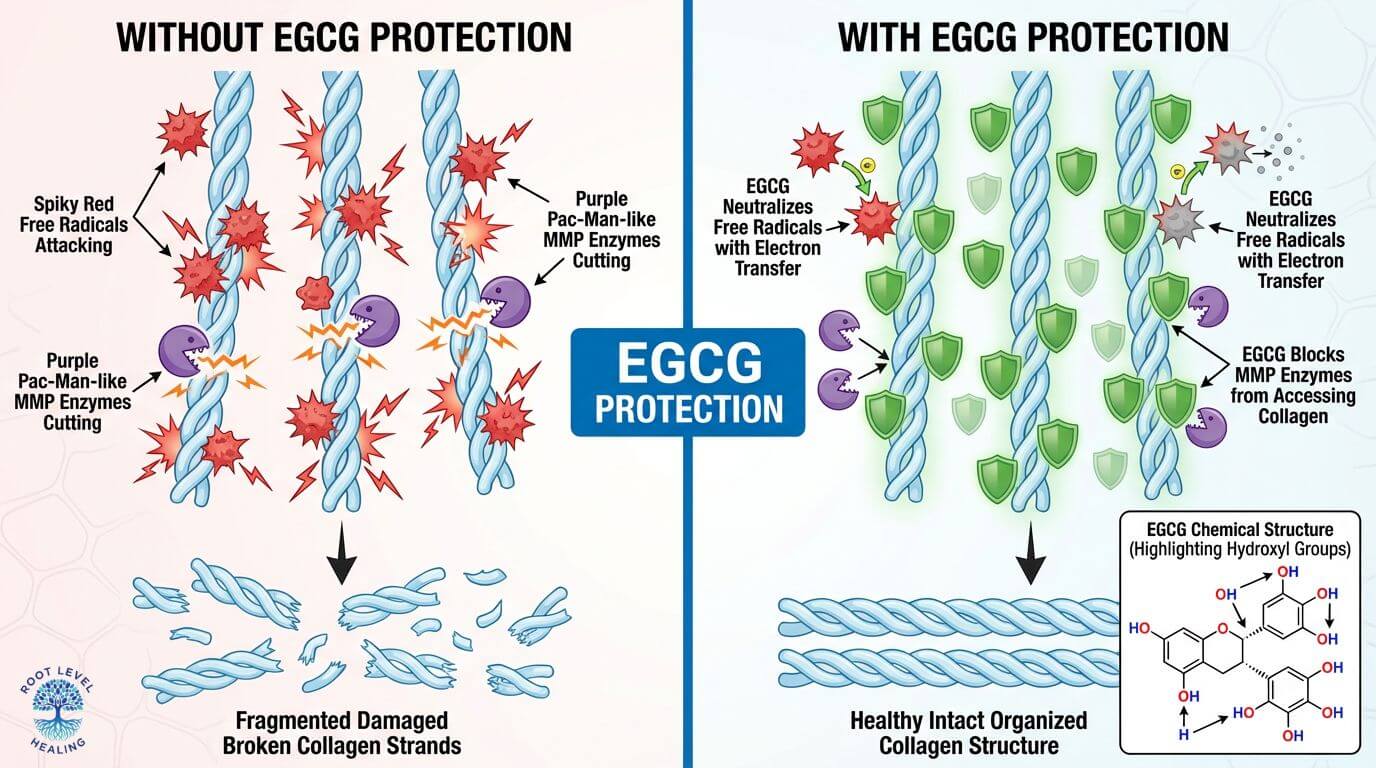
EGCG, the elite commando of the green tea arsenal, not only neutralizes free radicals but also inhibits the enzymes that break down collagen, preserving the skin's youthful structure.
Furthermore, clinical studies have demonstrated the photoprotective effects of green tea polyphenols. Topical application and oral supplementation have been shown to reduce the redness (erythema) and inflammation caused by UV radiation, effectively increasing the skin's tolerance to sun exposure [4]. This makes green tea a critical component of any defensive strategy, providing both immediate protection and long-term structural support.
The anti-aging benefits of green tea extend beyond UV protection. Research has shown that green tea polyphenols can stimulate the proliferation of keratinocytes, the primary cells of the epidermis, promoting skin renewal and regeneration [3]. This cellular-level support helps to maintain the skin's barrier function and overall health, creating a more resilient fortress that can better withstand environmental assaults. Additionally, EGCG has been shown to suppress the formation of sunburn cells and reduce DNA damage in skin cells exposed to UV radiation, providing a critical layer of protection against skin cancer [2].
The versatility of green tea catechins is truly remarkable. They function not just as reactive defenders, neutralizing threats as they arise, but also as proactive strategists, modulating the cellular pathways that govern skin health and aging. This dual action makes them an indispensable component of any comprehensive anti-aging regimen, providing both immediate relief and long-term resilience.
White Tea's Reconnaissance Unit: The First Line of Defense
If green tea's catechins are the elite commandos, then the polyphenols found in white tea are the reconnaissance unit—the first line of defense that provides an early warning system against incoming threats. White tea is made from the youngest leaves and buds of the _Camellia sinensis_ plant, and its minimal processing ensures that it retains an exceptionally high concentration of polyphenols, often even higher than green tea [5].
This minimal processing is key to white tea's superior defensive capabilities. A 2014 study comparing the anti-wrinkle effects of green, white, and black tea found that white tea extract was the most effective at reducing UV-induced erythema and inflammation [6]. The researchers attributed this to the high concentration of polyphenols, particularly EGCG and ECG, which are most efficient at inhibiting the inflammatory pathways triggered by UV radiation.
Think of white tea's polyphenols as a highly sensitive tripwire. They detect the first signs of oxidative stress and immediately neutralize the threat before it can escalate and trigger the fortress's emergency systems. This proactive defense helps to conserve the skin's resources, allowing it to focus on essential repair and maintenance functions rather than constantly fighting fires. By providing this frontline protection, white tea helps to prevent the chronic, low-grade inflammation that is a key driver of premature aging.
The same study that compared different tea extracts also measured their effects on matrix metalloproteinase-3 (MMP-3) expression, a key enzyme involved in collagen degradation. White tea extract reduced MMP-3 mRNA expression by 60% compared to the control group, demonstrating its powerful ability to protect the skin's structural proteins from enzymatic breakdown [6]. This effect was comparable to that of retinoic acid, a gold-standard anti-aging ingredient, but without the irritation and sensitivity that often accompany retinoid use.
Another advantage of white tea is its gentle nature. Because it undergoes minimal oxidation during processing, it retains not only a higher concentration of antioxidants but also a more balanced profile of other beneficial compounds, including amino acids and trace minerals. This makes white tea an ideal choice for those with sensitive skin or those looking for a gentler, more holistic approach to anti-aging skincare. It provides powerful protection without the harshness that can sometimes accompany more aggressive treatments.
The Fruit Extract Alliance: Specialized Defensive Support
No single soldier, no matter how skilled, can win a war alone. A successful defense requires a coordinated effort from a diverse team of specialists. This is where the fruit extract alliance comes in. Fruits are a rich source of a wide variety of antioxidants, each with its own unique set of skills and capabilities. By combining these different extracts, we can create a comprehensive defensive network that addresses multiple threat vectors simultaneously.
Citrus extracts, for example, provide a powerful artillery of vitamin C. This essential antioxidant not only scavenges free radicals in the skin's aqueous compartments but also plays a critical role in collagen synthesis, providing the raw materials needed to rebuild and reinforce the fortress walls [7]. Berry extracts, on the other hand, bring a battalion of anthocyanins to the fight. These pigments, responsible for the deep red and purple colors of many berries, are potent antioxidants that have been shown to protect against UV-induced oxidative stress and inflammation [8].
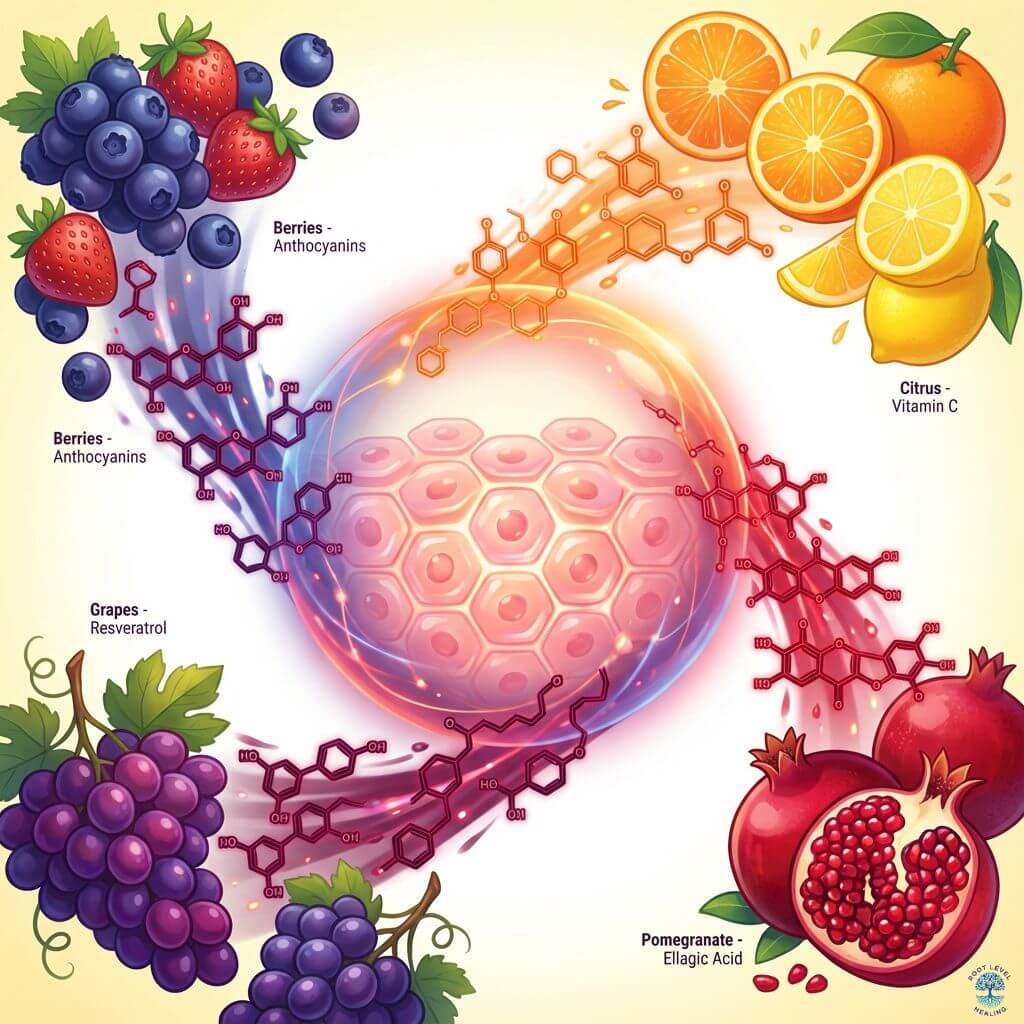
The fruit extract alliance provides a diverse range of specialized antioxidants, from the collagen-boosting power of vitamin C to the photoprotective effects of anthocyanins.
This is the power of botanical synergy. Each extract in the alliance contributes its unique strengths, creating a defensive system that is far more effective than the sum of its parts. From the brightening effects of citrus to the capillary-stabilizing properties of horse chestnut, a well-formulated blend of fruit extracts can provide a level of comprehensive protection that no single ingredient can match.
Consider the specific contributions of some key fruit extracts. Pomegranate extract, rich in ellagic acid and punicalagins, has been shown to inhibit the breakdown of collagen and promote its synthesis, effectively reinforcing the fortress walls from within [8]. Grape seed extract, a potent source of proanthocyanidins, provides exceptional protection against UV-induced oxidative stress and has been shown to improve skin elasticity and hydration [9]. Acerola cherry, one of the richest natural sources of vitamin C, delivers a concentrated dose of this essential antioxidant, supporting collagen production and providing powerful free radical scavenging capabilities [7].
The beauty of fruit extracts lies not just in their individual potency but in their complementary actions. While vitamin C works in the aqueous compartments of the cell, berry anthocyanins protect the lipid membranes. While citrus extracts brighten and even skin tone, pomegranate extracts strengthen the underlying structure. This multi-dimensional approach ensures that every aspect of skin health is addressed, creating a truly comprehensive defense against the aging assault.
Synergy in Defense: Why a Coordinated Attack Matters
The concept of synergy is central to modern military strategy, and it's equally important in the world of skincare. A coordinated defense is always more effective than a series of isolated actions. When different plant antioxidants are combined, their individual strengths are amplified, creating a powerful synergistic effect that provides superior protection against the aging assault.
For example, vitamin C and vitamin E work together in a classic antioxidant partnership. Vitamin E, a lipid-soluble antioxidant, is the primary defender against lipid peroxidation in cell membranes. When it neutralizes a free radical, it becomes oxidized and inactive. Vitamin C, an aqueous-soluble antioxidant, can then regenerate vitamin E, restoring its antioxidant capacity and allowing it to continue its protective work [9]. This recycling process dramatically enhances the overall effectiveness of the antioxidant network.
Similarly, the combination of different polyphenols can lead to synergistic effects. One study found that a combination of green tea polyphenols and resveratrol provided greater protection against UV-induced oxidative stress than either compound alone [10]. This is because different polyphenols have different molecular targets and mechanisms of action. By combining them, we can create a multi-layered defense that is more resilient and adaptable than any single line of defense.
This is the future of advanced skincare: not just a collection of individual ingredients, but a carefully orchestrated symphony of natural compounds working in perfect harmony. In our next post, we will explore how modern science is taking this concept of synergy to the next level, combining nature's most powerful defenders with cutting-edge ingredients to create the ultimate defensive system for your skin's fortress.
The implications of this synergistic approach are profound. It means that the most effective anti-aging strategies are not about finding a single "miracle ingredient" but about creating a comprehensive, multi-layered defense that addresses all the different pathways of aging simultaneously. It means that the wisdom of traditional medicine, which has long emphasized the use of complex herbal formulas rather than isolated compounds, is being validated by modern science. And it means that the future of skincare lies in harnessing the full power of nature's pharmacy, not in trying to replicate it with synthetic alternatives.
As we've seen, plant antioxidants offer a remarkable array of benefits for skin health and aging. From the direct free radical scavenging of polyphenols to the collagen-protective effects of EGCG, from the anti-inflammatory power of white tea to the synergistic support of fruit extracts, these natural compounds provide a comprehensive and effective defense against the environmental assault on our skin. But as powerful as these natural defenders are, they represent only the first line of defense. In the next installment of this series, we will explore how cutting-edge scientific ingredients can work in concert with these botanical powerhouses to create an even more formidable fortress—one that not only protects against aging but actively reverses its visible signs.
Frequently Asked Questions
Q: What are the most powerful plant antioxidants for skin?
A: Green and white tea catechins (especially EGCG), resveratrol, quercetin, ferulic acid, and vitamin C from fruit extracts are among the most potent and well-researched plant antioxidants for skin protection and anti-aging.
Q: How do plant antioxidants protect against UV damage?
A: They work through multiple mechanisms, including absorbing UV radiation, neutralizing free radicals generated by UV exposure, reducing inflammation, and inhibiting the enzymes that break down collagen and elastin.
Q: Is it better to use a single antioxidant or a blend?
A: A blend of different antioxidants is almost always more effective. Different antioxidants work through different mechanisms and in different parts of the cell, creating a synergistic effect that provides more comprehensive protection.
Q: What is the difference between green tea and white tea for skin?
A: White tea is less processed than green tea and often contains a higher concentration of polyphenols. Studies have shown that white tea extract can be more effective at reducing UV-induced inflammation and protecting against collagen breakdown.
Q: Can I get enough antioxidants for my skin from my diet?
A: While a diet rich in fruits and vegetables is essential for overall health, topical application of antioxidants is crucial for delivering a high enough concentration to the skin to effectively combat environmental damage.
Q: Are plant antioxidants safe for sensitive skin?
A: Yes, most plant-derived antioxidants are well-tolerated by sensitive skin. In fact, many have anti-inflammatory and soothing properties that can help to calm redness and irritation. However, it's always wise to patch-test any new product.
References
- Michalak, M. (2022 ). Plant-Derived Antioxidants: Significance in Skin Health and the Ageing Process. *International Journal of Molecular Sciences*.
- Zheng, X. Q., et al. (2024 ). Green Tea Catechins and Skin Health. *Antioxidants*.
- Chaikul, P., et al. (2020 ). Anti-skin aging activities of green tea (Camelliasinensis (L) Kuntze) in B16F10 melanoma cells and human skin fibroblasts. *European Journal of Integrative Medicine*.
- Vayalil, P. K., et al. (2001 ). Green tea polyphenolic antioxidants and skin photoprotection. *International Journal of Oncology*.
- Healthline. (2023 ). 10 Impressive Benefits of White Tea.
- Lee, K. O., et al. (2014 ). Anti-wrinkle Effects of Water Extracts of Teas in Hairless Mouse. *Toxicological Research*.
- Glimmer Goddess. (2025 ). Fruit-Derived Vitamin C for Skin.
- Orogold Cosmetics. (2025 ). 9 Superfruit Extracts That Will Transform the Look of Your Skin.
- Nobile, V., et al. (2021 ). Antioxidant and reduced skin-ageing effects of a proprietary dietary supplement. *Journal of Clinical Medicine*.
- Sitarek, P., et al. (2020 ). Potential synergistic action of bioactive compounds from plant extracts against skin infecting microorganisms. *International Journal of Molecular Sciences*.

Ready to Discover Your Score?
This 2-minute quiz is the essential first step to understanding your body's current toxic load and identifying the root cause of how you feel.
Take The Toxicity QuizExplore More Articles
Dive deeper into topics like detoxification, gut health, and mental clarity on our blog. Knowledge is the key to taking control of your health.
Visit The Blog