Black Cumin Seed: Ancient Wisdom Meets Modern Cleansing Science
In our previous discussions, we established the critical importance of the dermal-epidermal junction (DEJ) and the role of signal peptides in activating cellular repair, even within a cleanser. We learned that cleansing is not merely about removal but is the foundational first step in an effective anti-aging strategy. Now, we turn our attention to the protective pillar of this strategy: the potent, science-backed world of botanical antioxidants. At the forefront of this botanical vanguard is an ingredient with a history as rich as its biochemistry: Nigella sativa, commonly known as black cumin seed.
Key Takeaways
- 🌿Ancient Roots, Modern Proof: Black cumin seed (Nigella sativa), revered for centuries in traditional medicine, is now validated by modern science for its potent skin-protective benefits, primarily due to its active compound, thymoquinone.
- 🛡️Potent Antioxidant Power: Thymoquinone is a powerful antioxidant that neutralizes free radicals from UV and pollution, protecting against the oxidative stress that degrades collagen and accelerates skin aging.
- 🔬Anti-Inflammatory Action: It actively reduces inflammation by inhibiting pro-inflammatory pathways (like NF-κB and cytokines IL-6, TNF-α), calming the skin and preventing the chronic, low-grade inflammation that drives aging.
- 💧Efficacy in Cleansing: Even in a rinse-off product, the lipophilic nature of black cumin seed oil allows thymoquinone to begin its protective work, delivering antioxidant and anti-inflammatory benefits during the crucial first step of a skincare routine.
- 🤝Synergistic Protection: When combined with peptides and other botanical extracts, black cumin seed oil creates a multi-layered defense system, protecting the skin from environmental damage while preparing it for regenerative treatments.
Black Cumin Seed: Ancient Wisdom Meets Modern Cleansing Science (A Quick Overview)
Before we dive deep into the science, watch this quick overview to discover the seed of blessing and learn how the ancient wisdom of black cumin seed meets modern cleansing science to protect your skin.
In This Article:
- Introduction: The Seed of Blessing in Modern Skincare
- Thymoquinone: The Antioxidant Powerhouse of Black Cumin Seed
- Beyond Antioxidants: The Anti-Inflammatory Mechanism of Action
- The Rinse-Off Advantage: Delivering Protection During Cleansing
- The Protective Synergy: Black Cumin Seed and Peptides
- Frequently Asked Questions
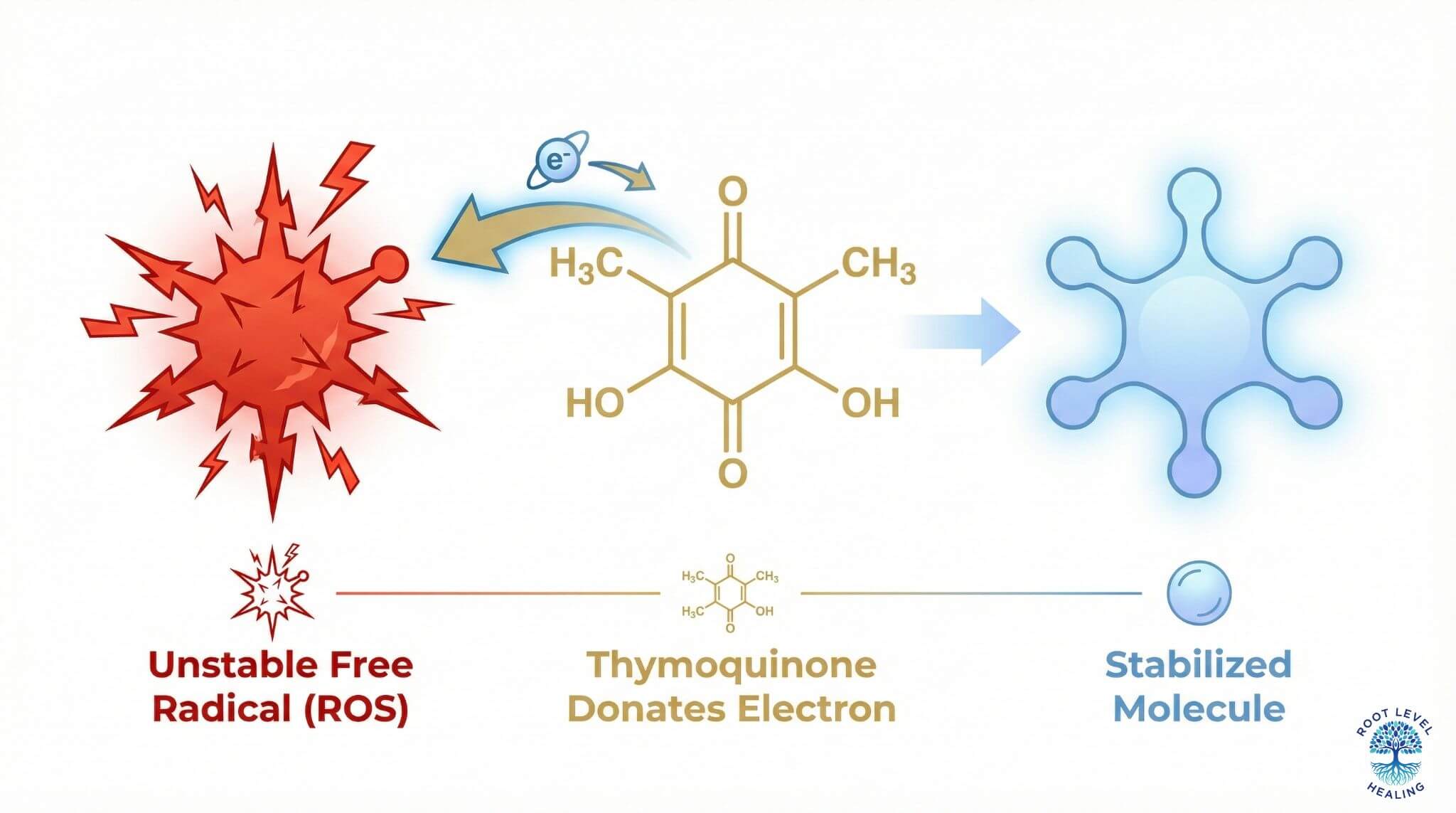
Thymoquinone, the primary active compound in black cumin seed oil, is a potent antioxidant that directly neutralizes reactive oxygen species (ROS) generated by UV radiation and pollution. By donating an electron, it stabilizes these damaging free radicals, preventing the oxidative stress that leads to collagen degradation and premature aging.
Introduction: The Seed of Blessing in Modern Skincare
Referred to as "Habbatul Barakah" or the "seed of blessing" in ancient texts, black cumin seed has been revered for millennia across cultures, from ancient Egypt to Greco-Arabic and Ayurvedic medicine. Avicenna, the celebrated physician, detailed its use in his "Canon of Medicine" for enhancing vitality and recovering from fatigue. [1] While traditional wisdom has long celebrated its therapeutic properties, modern science is now unlocking the precise molecular mechanisms that make it a formidable ally in the fight against skin aging. The focus of this research is its primary bioactive constituent: thymoquinone.
This article delves into the comprehensive science of black cumin seed and thymoquinone. We will explore its powerful dual-action role as both an antioxidant and an anti-inflammatory agent, investigate how it effectively prevents photoaging, and explain why its inclusion in a cleanser provides a critical protective advantage that sets the stage for true skin regeneration.
Thymoquinone: The Antioxidant Powerhouse of Black Cumin Seed
Every day, our skin is under assault from environmental aggressors, primarily ultraviolet (UV) radiation and pollution. This exposure generates a cascade of reactive oxygen species (ROS), or free radicals—highly unstable molecules that wreak havoc on a cellular level. This process, known as oxidative stress, is a primary driver of extrinsic aging. Free radicals damage vital cellular structures, including DNA, lipids, and, most critically for skin structure, proteins like collagen and elastin. [2] This damage manifests as wrinkles, loss of firmness, and uneven skin tone.
Antioxidants are our primary defense against this onslaught. They are molecules that can safely donate an electron to a free radical, thereby neutralizing it and halting the chain reaction of damage. Thymoquinone (TQ) has emerged in scientific literature as an exceptionally potent antioxidant. Its efficacy stems from several key actions:
Direct ROS Scavenging: TQ is highly effective at directly neutralizing a wide range of free radicals, including superoxide anions and hydroxyl radicals, which are among the most damaging to skin cells. [3] This immediate action provides the first line of defense against environmental oxidative stress.
Upregulation of Endogenous Antioxidants: Beyond its direct action, TQ also boosts the skin's own built-in antioxidant defense systems. Studies show it activates the Nrf2 pathway, a key regulator of cellular protection, which in turn increases the production of vital antioxidant enzymes like superoxide dismutase (SOD), catalase (CAT), and glutathione peroxidase (GPx). [4] This dual approach—providing external protection while strengthening internal defenses—makes it a uniquely comprehensive antioxidant.
Inhibition of Lipid Peroxidation: Free radicals can attack the lipids that form cell membranes, leading to a damaging chain reaction called lipid peroxidation. This weakens the skin barrier, causing moisture loss and increased sensitivity. TQ has been shown to effectively inhibit this process, thereby protecting cell membrane integrity and reinforcing the skin barrier. [5]
By neutralizing free radicals and bolstering the skin's natural defenses, thymoquinone directly counteracts the primary mechanism of photoaging. It helps preserve the existing collagen and elastin framework that gives skin its youthful structure and resilience.
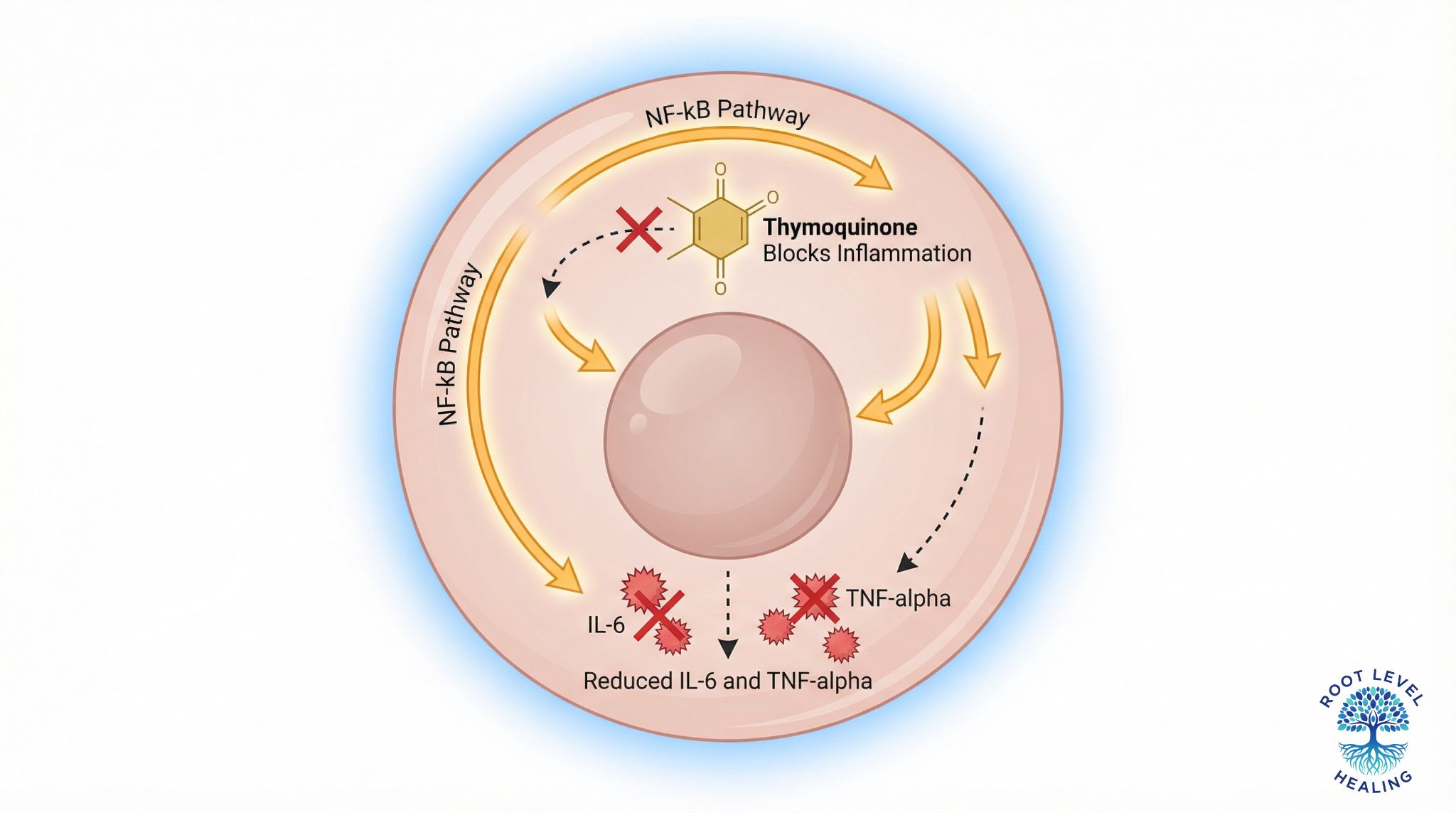
Beyond its antioxidant power, thymoquinone exhibits powerful anti-inflammatory properties by inhibiting the NF-κB pathway. This action reduces the production of pro-inflammatory cytokines like IL-6 and TNF-α, calming the skin, reducing redness, and preventing the chronic inflammation that accelerates the aging process.
Beyond Antioxidants: The Anti-Inflammatory Mechanism of Action
The connection between inflammation and aging, often termed "inflammaging," is a critical concept in modern dermatology. Chronic, low-grade inflammation, often triggered by the same environmental factors that cause oxidative stress, silently accelerates the aging process. This inflammatory state stimulates the production of matrix metalloproteinases (MMPs)—enzymes that actively break down collagen and elastin. [6]
Thymoquinone demonstrates remarkable anti-inflammatory properties that work in concert with its antioxidant effects. Its primary mechanism is the inhibition of the nuclear factor-kappa B (NF-κB) signaling pathway. [4] NF-κB is a master regulator of inflammation. When activated by stressors like UV radiation, it triggers the production of a host of pro-inflammatory mediators, including cytokines like interleukin-6 (IL-6) and tumor necrosis factor-alpha (TNF-α). These cytokines perpetuate the inflammatory cycle and signal for the production of collagen-degrading MMPs.
By inhibiting the NF-κB pathway, thymoquinone effectively short-circuits this inflammatory cascade at its source. This leads to a significant reduction in pro-inflammatory cytokines, calming the skin and reducing visible redness and irritation. It also decreases expression of MMP-1 (collagenase), the primary enzyme responsible for breaking down Type I collagen, thus preserving the skin's dermal structure. [3] The result is a more balanced cellular environment that is less prone to the chronic inflammation that drives premature aging.
This dual antioxidant and anti-inflammatory capability is what makes black cumin seed oil such a powerful protective ingredient. It not only defends against the initial free radical assault but also quells the subsequent inflammatory damage, providing a two-pronged strategy for preventing environmental aging.
The Rinse-Off Advantage: Delivering Protection During Cleansing
A common question in skincare formulation is whether active ingredients, particularly oil-soluble compounds like thymoquinone, can be effective in a rinse-off product like a cleanser. The answer lies in the ingredient's chemistry and the physiology of the cleansing process itself. The cleansing phase, though brief, represents a crucial window of opportunity.
Black cumin seed oil is lipophilic, or "oil-loving." When massaged onto the skin as part of a cleanser, its lipid-soluble components, including thymoquinone, can rapidly begin to interact with and penetrate the lipid-rich stratum corneum (the outermost layer of the skin). While it may not penetrate as deeply as it would in a leave-on serum, the contact time is sufficient for its surface-level benefits to take hold. During the 60-90 seconds of cleansing, thymoquinone can neutralize surface-level oxidants, immediately beginning to neutralize free radicals present on the skin's surface from daily environmental exposure, preventing them from initiating damaging chain reactions.
Its anti-inflammatory action can help mitigate the irritation that can be caused by the physical act of cleansing and by surfactants, even gentle ones. This is why a cleanser with black cumin seed oil often leaves the skin feeling calmer and less reactive than one without. By reducing the initial oxidative and inflammatory load, it creates a less "stressed" canvas. This allows the leave-on products that follow—such as the peptides and hydrators in a serum or moisturizer—to work more efficiently on repair and regeneration, rather than first having to overcome a state of environmental stress.
Therefore, including black cumin seed oil in a cleanser is a highly strategic move. It transforms the cleansing step from a simple utility into an active, protective treatment that preemptively defends the skin, making every subsequent step of the routine more effective.
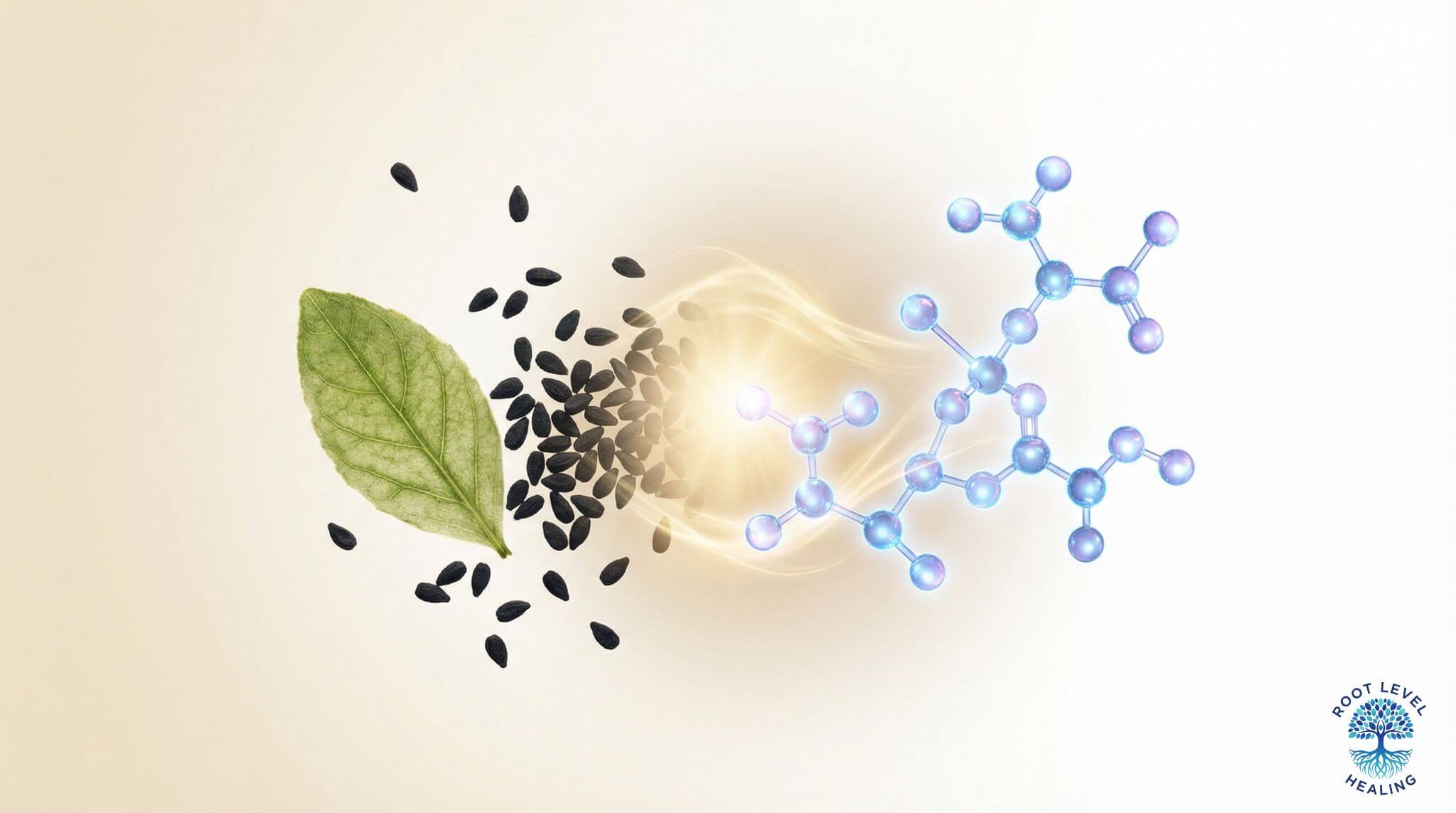
The ultimate power of advanced skincare lies in synergy. Combining the ancient, proven wisdom of botanical protectors like black cumin seed oil with the modern, targeted science of signal peptides creates a comprehensive formula that both defends the skin from daily damage and actively stimulates its own regenerative processes.
The Protective Synergy: Black Cumin Seed and Peptides
The true elegance of a sophisticated formula lies not just in its individual ingredients, but in their synergy. The combination of black cumin seed oil and signal peptides (like Matrixyl 3000) in a single cleanser creates a powerful, multi-faceted approach to anti-aging that is greater than the sum of its parts.
Think of it as a two-part strategy for cellular health. First, The Protective Shield (Black Cumin Seed): Thymoquinone acts as the first line of defense. It stands guard at the surface, neutralizing environmental aggressors and quelling inflammation. It protects the cellular machinery and the existing collagen framework from being damaged in the first place. Second, The Regenerative Signal (Peptides): With the cellular environment stabilized and protected, the signal peptides can perform their function more effectively. They deliver their message to the fibroblasts—"build more collagen, elastin, and fibronectin"—without having to compete with inflammatory signals or an environment under oxidative stress.
This synergy is crucial. Peptides can signal for new collagen, but if the skin is in a constant state of inflammation, MMP enzymes will be simultaneously breaking that new collagen down, resulting in a net zero gain. By incorporating a potent antioxidant and anti-inflammatory like black cumin seed oil, the formula ensures that the environment is optimized for repair. It protects what you have while creating the ideal conditions to build more.
This combination elevates a cleanser from a simple wash to a strategic anti-aging tool. It actively defends, calms, and primes the skin, ensuring that from the very first step of your routine, you are not just cleansing, but actively building the foundation for healthier, more resilient, and more youthful-looking skin.
Frequently Asked Questions
Q: Is black cumin seed oil suitable for oily or acne-prone skin?
A: Yes, surprisingly, it is often beneficial. Black cumin seed oil has natural antimicrobial and anti-inflammatory properties that can help soothe breakouts and reduce the bacteria associated with acne. [7] Furthermore, it is rich in linoleic acid, an essential fatty acid that can be deficient in the sebum of acne-prone individuals. Replenishing linoleic acid can help balance sebum composition and prevent clogged pores. When used in a well-formulated cleanser, it provides these benefits without leaving a heavy or greasy residue.
Q: Can I get the same benefits from ingesting black cumin seed oil?
A: Ingesting black cumin seed oil provides systemic antioxidant and anti-inflammatory benefits, which are excellent for overall health and can certainly contribute to healthier skin from the inside out. However, topical application delivers the active compounds directly to the skin cells where they are needed to combat environmental damage. For targeted photoaging prevention and direct protection against UV-induced oxidative stress, topical application is more direct and efficient. A combined internal and external approach offers the most comprehensive benefits.
Q: Does black cumin seed oil have a strong scent?
A: Unrefined, cold-pressed black cumin seed oil has a distinct peppery, slightly spicy, and herbaceous aroma. In a finished cosmetic formulation like the Ella Pure Peptide Cleanser, this scent is typically very subtle and is balanced by other natural botanical extracts in the formula. It is generally considered a pleasant, natural scent that dissipates quickly after rinsing.
Q: How does thymoquinone compare to other antioxidants like Vitamin C or Vitamin E?
A: Thymoquinone is unique because it operates through multiple mechanisms simultaneously — it directly scavenges free radicals, upregulates the skin's own endogenous antioxidant enzymes (via the Nrf2 pathway), and inhibits inflammatory pathways (via NF-κB). Vitamin C is a powerful direct antioxidant and collagen co-factor, while Vitamin E is primarily a lipid-soluble membrane protector. Thymoquinone's multi-mechanism action and its combined antioxidant and anti-inflammatory properties make it a highly complementary ingredient alongside these classic antioxidants.
Q: Is black cumin seed oil safe to use every day?
A: Yes. When formulated at appropriate concentrations in a cosmetic product, black cumin seed oil is considered safe for daily use. Its anti-inflammatory properties actually make it well-suited for frequent use, as it helps to calm any cumulative irritation from daily cleansing. As with any new skincare ingredient, a patch test is always recommended for those with known sensitivities.
References
- Kmail, A., et al. (2023 ). How Thymoquinone from Nigella sativa Accelerates Wound Healing through Multiple Mechanisms and Targets. Cells, 12(23), 2699.
- Pillai, S., Oresajo, C., & Hayward, J. (2005 ). Ultraviolet radiation and skin aging: roles of reactive oxygen species, inflammation and protease activation, and strategies for prevention of inflammation-induced matrix degradation - a review. International Journal of Cosmetic Science, 27(1), 17-34.
- Khaikin, E., et al. (2022 ). Screening of Thymoquinone Content in Commercial Nigella sativa (Black Cumin) Products. Foods, 11(18), 2839.
- Kundu, J. K., et al. (2013 ). Thymoquinone inhibits phorbol ester-induced activation of NF-κB and expression of COX-2, and induces expression of cytoprotective enzymes in mouse skin in vivo. Biochemical and Biophysical Research Communications, 438(4), 721-727.
- Edris, A. E. (2025 ). Role of Nigella sativa L. seed (black cumin) in preventing photoaging. Biomedical Reports, 22(1), 9.
- Zhang, S., & Duan, E. (2018 ). Fighting against Skin Aging: The Way from Bench to Bedside. International Journal of Molecular Sciences, 19(12), 3926.
- Shamama Javed a *, Muhammad H. Sultan, Waquar Ahsan, Andleeb Khan (2022. Chapter 5 - Dermatological effects of Nigella sativa: A cosmetic and therapeutic approach. Science Direct

Ready to Discover Your Score?
This 2-minute quiz is the essential first step to understanding your body's current toxic load and identifying the root cause of how you feel.
Take The Toxicity QuizExplore More Articles
Dive deeper into topics like detoxification, gut health, and mental clarity on our blog. Knowledge is the key to taking control of your health.
Visit The Blog