Peptides in Cleansing: The Science of Skin Regeneration at the Washing Stage
In our foundational article, we established the critical importance of the dermal-epidermal junction (DEJ) and why gentle cleansing is the first line of defense against structural aging. Now, we advance to the next frontier: activating skin regeneration during the cleansing process itself. It’s a concept that challenges conventional wisdom, which has long relegated active ingredients to leave-on treatments. But what if the first step in your routine could do more than just clean? What if it could initiate the very signaling cascades that rebuild youthful skin? This is the power of peptides in cleansing—a strategic intervention that turns a daily necessity into a potent anti-aging opportunity.
Key Takeaways
- 🧬Signaling, Not Just Cleaning: Signal peptides like Matrixyl 3000 are not passive ingredients; they are bioactive messengers that instruct skin cells to produce more collagen, elastin, and other essential proteins.
- ⏱️The Rinse-Off Revolution: Scientific evidence shows that peptides can penetrate the skin and bind to fibroblast receptors within minutes, making them effective even in rinse-off formulas like cleansers.
- 🛡️Dual-Action Defense: Palmitoyl Tetrapeptide-7, a key component of Matrixyl 3000, possesses powerful anti-inflammatory properties, inhibiting IL-6 to protect the DEJ from chronic inflammation and degradation during cleansing.
Peptides in Cleansing: The Science of Skin Regeneration at the Washing Stage (A Quick Overview)
Before we dive deep into the science, watch this quick overview to discover the rinse-off revolution and learn how signal peptides in your cleanser can actively initiate skin regeneration.
In This Article:
What Are Signal Peptides? The Messengers of Skin Regeneration
To understand how a cleanser can actively participate in skin repair, we must first understand the role of signal peptides. Unlike carrier peptides that deliver trace minerals or enzyme-inhibiting peptides that slow collagen breakdown, signal peptides are bioactive communicators. They are short chains of amino acids that mimic the body’s own natural protein fragments, specifically the fragments that are created when collagen and elastin degrade [1].
When skin cells, particularly fibroblasts in the dermis, detect these fragments, they interpret it as a sign of injury or degradation. This detection triggers a powerful, natural repair response. The fibroblasts ramp up production of new, healthy extracellular matrix (ECM) proteins—including collagen, elastin, fibronectin, and laminin—to replace the 'damaged' tissue [2]. Signal peptides essentially 'trick' the skin into initiating this regenerative process, even in the absence of actual damage.
"Signal peptides are active substances that can counteract the skin aging process by stimulating fibroblasts to act. As a result, there is an increased biological response, such as increased production of collagen, elastin, fibronectin, glycosaminoglycans, and proteoglycans." [3]
This mechanism is profound. Instead of just supplying the skin with external collagen, which is often too large to penetrate effectively, signal peptides empower the skin to rebuild itself from within. They are not building blocks; they are the foremen, instructing the cellular machinery to get to work. This is the fundamental principle that elevates a peptide-infused product from passive moisturization to active biological intervention.
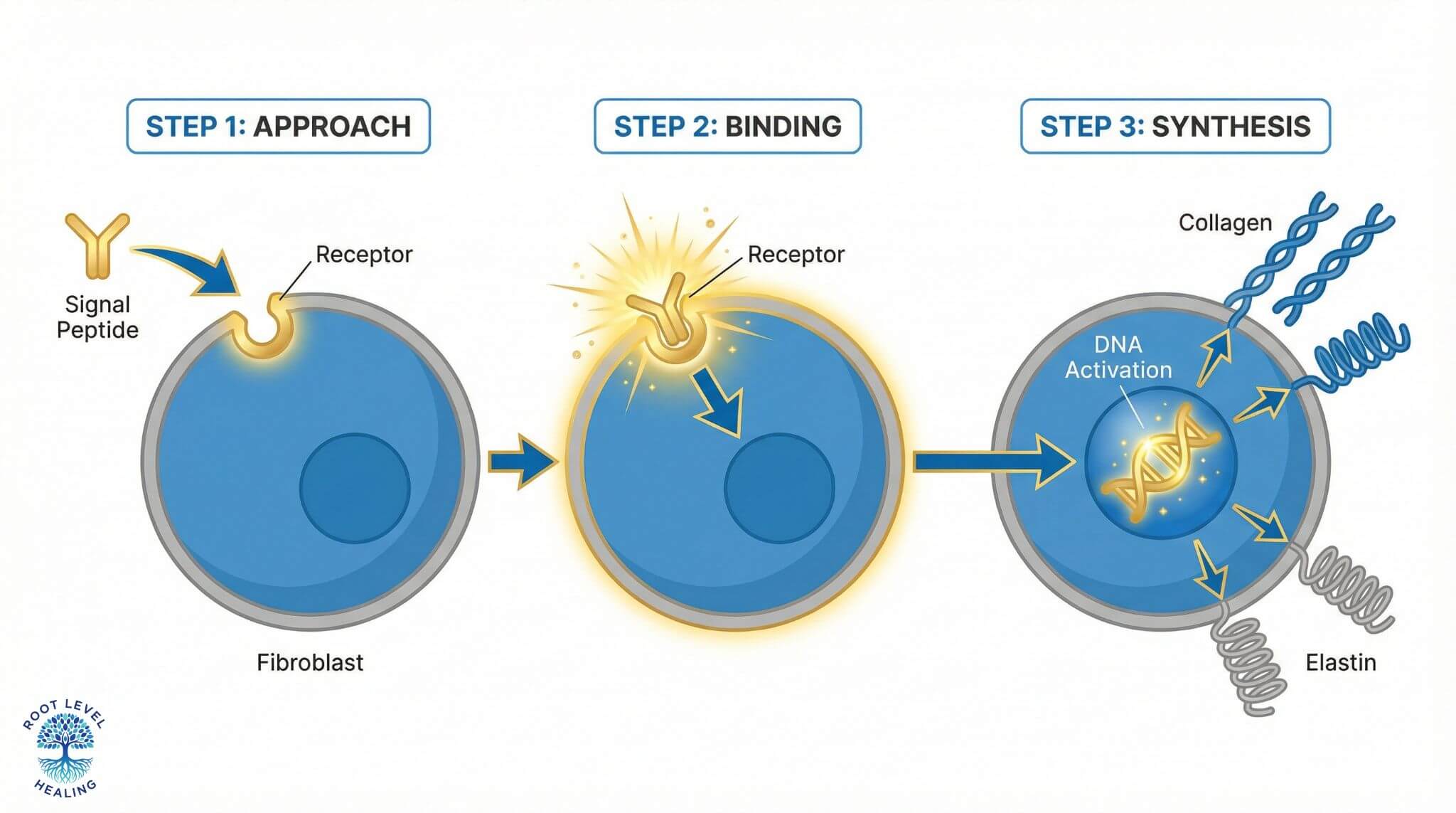
Signal peptides act as messengers, binding to specific receptors on fibroblast cells. This binding initiates an intracellular signaling cascade that activates genes responsible for producing essential matrix proteins like collagen and elastin, effectively telling the skin to repair and rebuild itself.
Matrixyl 3000 Decoded: A Dual-Peptide Synergy
Among the most researched and validated signal peptides is Matrixyl 3000, a synergistic combination of two distinct 'matrikines' (peptides derived from the extracellular matrix): Palmitoyl Tripeptide-1 and Palmitoyl Tetrapeptide-7 [3]. This is not simply a blend, but a strategic pairing where each peptide performs a unique and complementary function.
1. Palmitoyl Tripeptide-1 (Pal-GHK): This peptide is a fragment of the collagen type I molecule. Its presence signals to fibroblasts that collagen has been broken down, directly stimulating the synthesis of new collagen I, IV, fibronectin, and hyaluronic acid. It is the primary 'builder' signal in the duo.
2. Palmitoyl Tetrapeptide-7 (Pal-GQPR): This peptide has a different, yet equally critical, role. Its primary function is to down-regulate the production of Interleukin-6 (IL-6), a key inflammatory cytokine [3] [4]. Chronic, low-grade inflammation (inflammaging) is a major driver of skin aging, as IL-6 promotes the degradation of the ECM. By suppressing IL-6, Palmitoyl Tetrapeptide-7 protects existing collagen and creates a more favorable environment for new collagen to be synthesized. It acts as the 'protector' and 'calmer' in the duo.
The 'palmitoyl' group attached to each peptide is a fatty acid (palmitic acid) that makes the peptides more lipophilic (oil-soluble). This chemical modification is crucial, as it significantly enhances their ability to penetrate the lipid-rich stratum corneum and reach the fibroblasts in the dermis where they can perform their function [5].
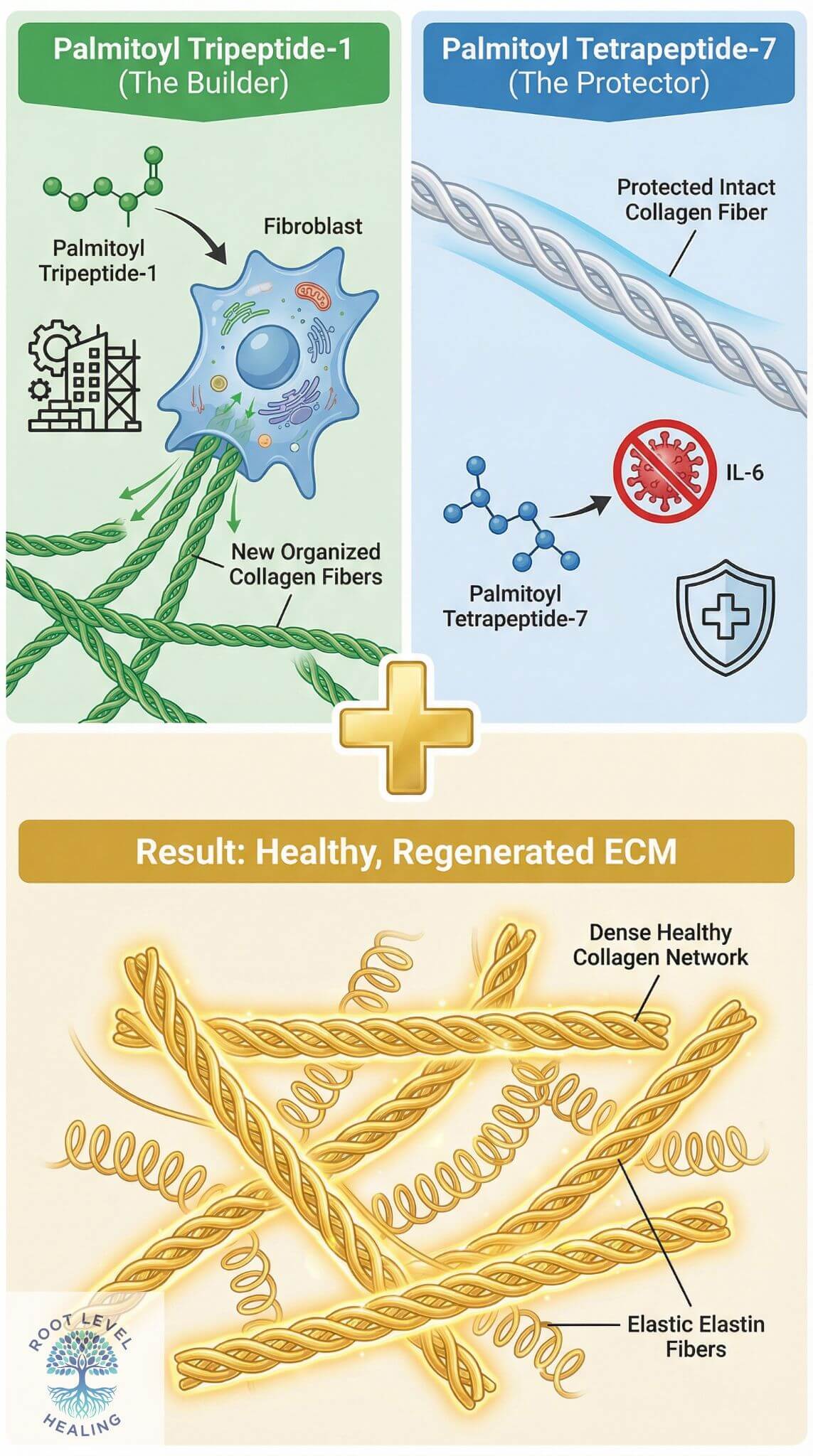
Matrixyl 3000's power lies in its dual-action synergy. Palmitoyl Tripeptide-1 acts as a direct signal for new collagen production, while Palmitoyl Tetrapeptide-7 reduces the inflammatory signals (like IL-6) that cause collagen degradation, creating a pro-regenerative, anti-inflammatory environment.
The Rinse-Off Debate: Can Peptides Work in a Cleanser?
The most common question regarding peptide cleansers is whether the active ingredients have enough time to work before being washed away. Traditional dermatological thinking has favored leave-on products for this reason. However, recent scientific understanding of peptide kinetics and skin permeability challenges this assumption, providing a strong case for the efficacy of peptides in rinse-off formulations.
The argument hinges on three key factors:
1. Speed of Penetration and Binding: Thanks to their lipophilic palmitoyl modification, signal peptides can penetrate the skin much faster than previously thought. Studies suggest that initial skin penetration and receptor binding can occur within minutes [6]. One study noted initial improvements in skin appearance as quickly as 15 minutes after application, indicating a very rapid onset of biological activity [7]. A 60-90 second cleansing process provides a viable window for these peptides to begin their work.
2. Enhanced Permeability During Cleansing: The cleansing process itself creates an ideal environment for peptide delivery. The presence of water and surfactants temporarily hydrates and fluidizes the stratum corneum, making it more permeable than dry skin. This allows the peptides in the cleanser to penetrate more efficiently during the brief application time.
3. The Priming and Cumulative Effect: A single application may not transform the skin, but the goal of a peptide cleanser is to initiate a signaling cascade. Once a peptide binds to a fibroblast receptor, the signal is sent. This 'primes' the cell. When this process is repeated twice daily, it creates a sustained, cumulative signal that continuously encourages collagen synthesis and reduces inflammation. Research has shown that even at very low concentrations, collagen peptides can significantly increase the gene expression of collagen, elastin, and versican in fibroblasts, suggesting that receptor saturation happens quickly and a high dose is not necessary [8].
While a leave-on serum will always provide a more concentrated, prolonged dose, a peptide cleanser acts as a powerful foundational step, ensuring the regenerative process begins at the earliest possible moment and protecting the vital DEJ from the inflammatory stress of cleansing.
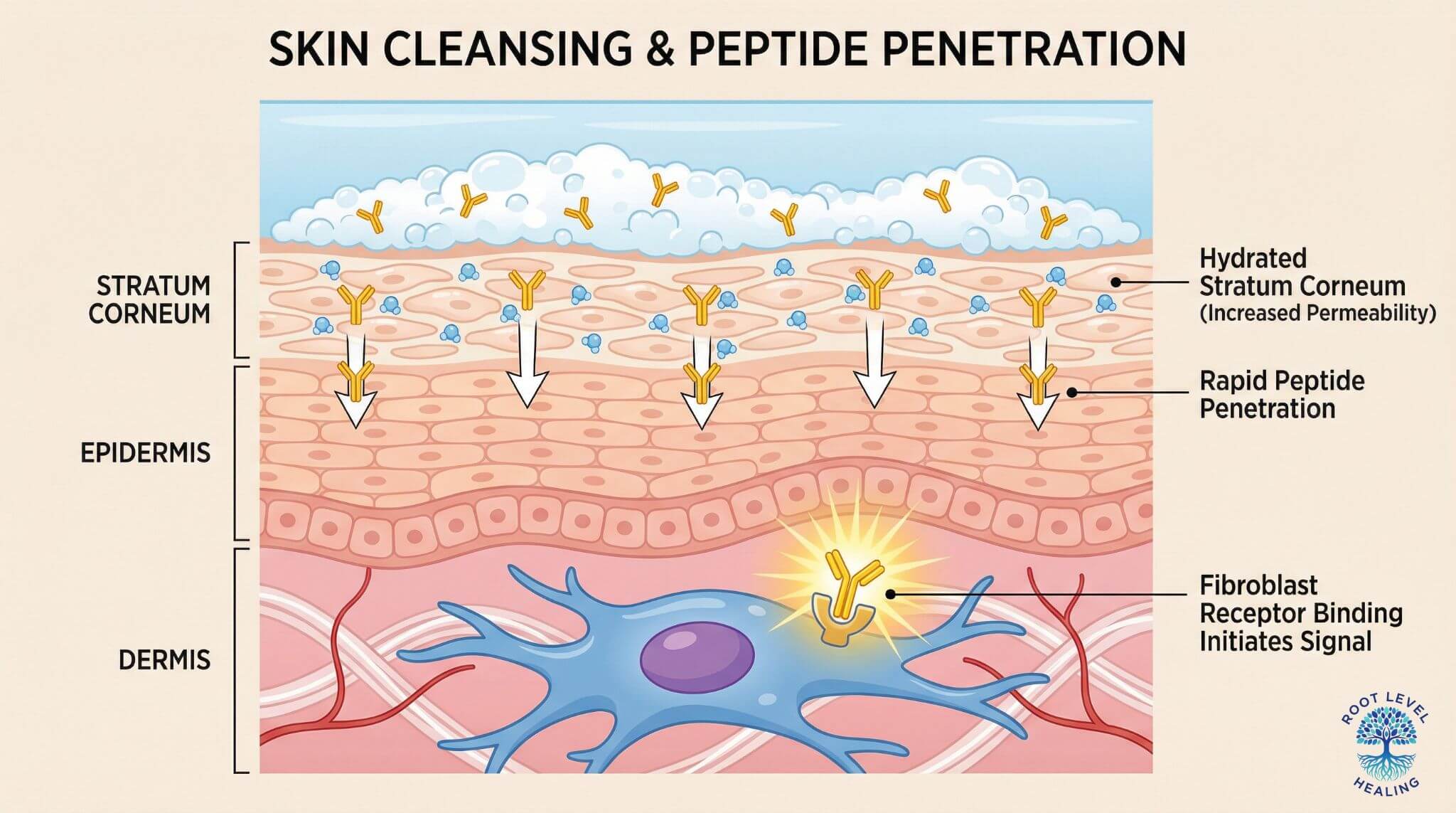
The efficacy of a peptide cleanser relies on rapid action. During washing, the skin is hydrated and more permeable. Lipophilic peptides quickly penetrate the outer layers, bind to fibroblast receptors, and initiate a signaling cascade. This 'priming' effect, repeated daily, leads to a cumulative increase in collagen production.
Priming the Engine: How Peptide Cleansers Prepare Skin for Regeneration
Viewing a peptide cleanser not as a standalone treatment but as the 'priming' step in a comprehensive anti-aging system reveals its strategic importance. It transforms cleansing from a potentially damaging chore into a proactive, regenerative ritual that prepares the skin for subsequent treatments.
Think of it like priming an engine before starting it. A leave-on peptide serum is the fuel, but the peptide cleanser is the primer that ensures the engine starts quickly and runs efficiently. By using a peptide cleanser, you are:
- Initiating the Signal Early: You are starting the collagen-stimulating conversation with your cells at the very beginning of your routine.
- Protecting the DEJ: The anti-inflammatory action of Palmitoyl Tetrapeptide-7 is never more critical than during cleansing, a process that can otherwise induce low-level inflammation and compromise the DEJ.
- Creating a Pro-Regenerative State: By reducing inflammatory cytokines like IL-6, the cleanser creates a dermal environment that is more receptive to the growth signals from your leave-on treatments.
- Enhancing Synergy: The peptides from the cleanser and the peptides from a follow-up serum work in synergy, creating a more powerful and sustained signal for skin regeneration than either product could achieve alone.
This approach reframes the entire skincare routine. It is no longer a sequence of disconnected steps, but an integrated system where each phase builds upon the last. The cleanser doesn't just prepare the skin by removing impurities; it prepares it on a biological level, switching on the cellular machinery that your serums and moisturizers will then fuel and support.
Frequently Asked Questions About Peptide Cleansers
Q: Are peptide cleansers suitable for all skin types, including sensitive skin?
A: Yes, absolutely. Peptides themselves are generally very well-tolerated. The key is the overall formulation. A well-formulated peptide cleanser will use gentle, sulfate-free surfactants (like decyl glucoside) and include anti-inflammatory peptides like Palmitoyl Tetrapeptide-7, making it ideal for sensitive skin. It actively works to reduce the inflammation that often causes sensitivity during cleansing.
Q: How long does it take to see results from a peptide cleanser?
A: While some initial improvements in hydration and skin feel can be immediate, the structural benefits of increased collagen production take time. Consistent use (twice daily) can lead to noticeable improvements in skin firmness, texture, and a reduction in fine lines within 4 to 12 weeks, as the skin completes its natural regeneration cycles. The primary immediate benefit is a calmer, more resilient, and less irritated post-cleanse feel.
Q: Can I use a peptide cleanser with other active ingredients like retinoids or Vitamin C?
A: Yes. A peptide cleanser is an excellent complementary product to use with other actives. Its anti-inflammatory properties can help mitigate some of the irritation associated with retinoids. By starting your routine with a gentle, regenerative cleanser, you create a healthy, resilient canvas that is better prepared to tolerate and utilize more potent leave-on treatments like Vitamin C serums or retinoid creams.
Q: What concentration of Matrixyl 3000 is effective in a cleanser?
A: Research suggests that signal peptides can trigger a biological response even at very low concentrations, as the mechanism relies on receptor binding rather than saturation. Studies have shown significant increases in collagen gene expression at concentrations as low as 1-2%. The key is the quality and stability of the peptide in the formula, and the use of lipophilic (palmitoyl) modifications to ensure skin penetration during the brief contact time.
Q: Is there a difference between using a peptide cleanser in the morning versus the evening?
A: Both applications are valuable but serve slightly different purposes. Morning cleansing with a peptide cleanser primes the skin for daytime protection and prepares it to better absorb any antioxidant serums applied afterward. Evening cleansing initiates the repair and regeneration signals that align with the skin's natural nighttime recovery cycle, when cell turnover is at its peak. Using it twice daily creates the most consistent and cumulative signaling effect.
By integrating signal peptides into the cleansing step, we are not just washing our face; we are initiating a conversation with our skin cells, setting the stage for profound and lasting regeneration. In our next post, we will explore the synergistic power of combining these advanced peptides with ancient botanical wisdom.
References
- Pai, V. V., Bhandari, P., & Shukla, P. (2017 ). Topical peptides as cosmeceuticals. Indian Journal of Dermatology, Venereology and Leprology, 83(1), 9-18.
- Edgar, S., Hopley, B., Genovese, L., Sibilla, S., Laight, D., & Shute, J. (2018 ). Effects of collagen-derived bioactive peptides and natural antioxidant compounds on proliferation and matrix protein synthesis by cultured normal human dermal fibroblasts. Scientific Reports, 8(1), 10474.
- Waszkielewicz, A. M., & Mirosław, K. (2024 ). Peptides and Their Mechanisms of Action in the Skin. Applied Sciences, 14(24), 11495.
- Lupo, M. P., & Cole, A. L. (2007 ). Cosmeceutical peptides. Dermatologic Therapy, 20(5), 343-349.
- Mortazavi, S. M., & Moghimi, H. R. (2022 ). Skin permeability, a dismissed necessity for anti-wrinkle peptide performance. International Journal of Cosmetic Science, 44(2), 131-145.
- Fields, K., Falla, T. J., Rodan, K., & Bush, L. (2009 ). Bioactive peptides: signaling the future. Journal of Cosmetic Dermatology, 8(1), 8-13.
- Dr. Oracle AI. (2025 ). Timeframe for Results from Peptide-Based Skincare.
- Dierckx, S., et al. (2024 ). Collagen peptides affect collagen synthesis and the expression of collagen, elastin, and versican genes in cultured human dermal fibroblasts. Frontiers in Medicine, 11, 1397517.

Ready to Discover Your Score?
This 2-minute quiz is the essential first step to understanding your body’s current toxic load and identifying the root cause of how you feel.
Take The Toxicity QuizExplore More Articles
Dive deeper into topics like detoxification, gut health, and mental clarity on our blog. Knowledge is the key to taking control of your health.
Visit The Blog