Brain Fog and Cognitive Decline: The Hidden Health Crisis
Key Takeaways
- 🧠Silent Epidemic: Brain fog affects millions worldwide, with cognitive impairment prevalence ranging from 5.1% to 41% globally.
- 🏭Environmental Toxins: Heavy metals, air pollution, and pesticides cross the blood-brain barrier, causing neuroinflammation and cognitive decline.
- 🔬Root Mechanisms: Neuroinflammation, mitochondrial dysfunction, and neurotransmitter imbalance are key drivers of brain fog symptoms.
Have you ever walked into a room, only to forget why you entered? Or struggled to find the right word in the middle of a conversation, feeling as though your thoughts are wading through a thick, invisible fog? You are not alone. This experience, often dismissed as a normal part of aging or a consequence of a busy life, is a sign of a much larger issue: a silent epidemic of cognitive decline that is affecting millions of people worldwide. This article will delve into the causes, symptoms, and far-reaching consequences of brain fog, and explore the environmental factors that contribute to this hidden health crisis.
Brain Fog? The Hidden Health Crisis: 3 Root Causes Explained: A Quick Overview
Before we dive deep into the science, watch this quick overview explaining the three root mechanisms behind brain fog and cognitive decline—and why this silent epidemic may be affecting you.
In This Article:
What is Brain Fog? Defining the Cloud of Cognitive Impairment
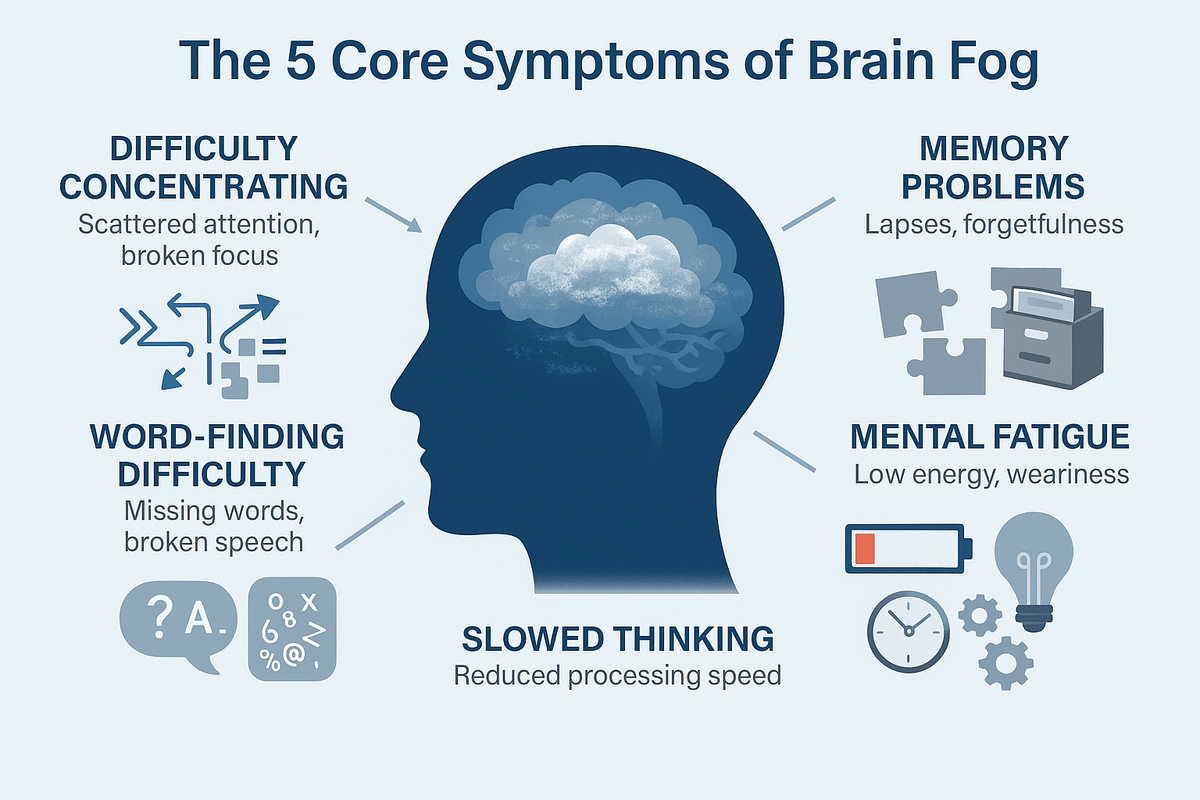
Brain fog is not a medically recognized condition in itself, but rather a collection of symptoms that point to an underlying cognitive impairment. The Cleveland Clinic defines brain fog as a group of symptoms that affect your ability to think clearly, focus, concentrate, remember, and pay attention [1]. It is a persistent state of mental cloudiness that can make even routine tasks feel challenging.
| Symptom | Description | Example |
|---|---|---|
| Difficulty Concentrating | An inability to focus on a single task or conversation for an extended period. | Losing your place while reading a book or being easily distracted during a meeting. |
| Memory Problems | Frequent forgetfulness, including misplacing items, forgetting appointments, or having trouble recalling recent events. | Forgetting a conversation you had just a few hours ago. |
| Mental Fatigue | A feeling of mental exhaustion that is not relieved by rest. | Feeling mentally drained even after a full night's sleep. |
| Slowed Thinking | A noticeable decrease in the speed of your thought processes and reaction times. | Taking longer than usual to solve a simple problem or make a decision. |
| Word-Finding Difficulty | Struggling to retrieve the right words to express your thoughts. | Knowing what you want to say but being unable to find the words to say it. |
It is crucial to distinguish between occasional forgetfulness and the persistent cognitive impairment of brain fog. While everyone experiences minor memory lapses from time to time, brain fog is a chronic condition that significantly impacts your daily life and overall well-being.
The Modern World: A Breeding Ground for Brain Fog
Our modern world, with its constant barrage of information, environmental toxins, and high-stress lifestyles, has created a perfect storm for cognitive decline. Research has shown a strong link between environmental toxins and neuroinflammation, which can lead to a host of cognitive problems. A study published in the Annals of Indian Academy of Neurology highlights how environmental chemicals with neurotoxic effects can result in a wide range of neurological and psychiatric disorders [2].
"Environmental neurotoxicity results from inhibition of mitochondrial activity, excess oxidative stress leading to neuroinflammation, and promoting apoptosis and neuronal cell death." [2]
Beyond environmental toxins, our modern lifestyle also plays a significant role. Chronic stress, poor sleep, and nutritional deficiencies can all contribute to the development of brain fog. The constant connectivity and information overload of our digital age also contribute to mental fatigue and reduced focus, further exacerbating the problem.
The Science of Brain Fog: What's Happening in Your Brain?
At its core, brain fog is a sign that your brain is not functioning optimally. This can be due to a variety of factors, including:
Neuroinflammation
When your brain is exposed to toxins or other stressors, it can trigger an inflammatory response. This inflammation can disrupt neural pathways and interfere with normal brain function.
Mitochondrial Dysfunction
Mitochondria are the powerhouses of your cells, and they are responsible for producing the energy your brain needs to function. When mitochondrial function is impaired, it can lead to mental fatigue and other symptoms of brain fog.
Neurotransmitter Imbalance
Neurotransmitters like serotonin and dopamine play a crucial role in regulating mood, focus, and cognitive function. When these neurotransmitters are out of balance, it can contribute to the development of brain fog.
Cognitive Decline: More Than Just a Senior Moment
While cognitive decline is often associated with aging, it is not an inevitable part of the process. In fact, a growing body of evidence suggests that cognitive impairment is on the rise in people of all ages. A systematic review published in Geriatrics found that the global prevalence of cognitive impairment ranged from 5.1% to 41%, with a median of 19.0% [3].
Chronic brain fog can also be a precursor to more serious neurodegenerative diseases like dementia and Alzheimer's disease. The economic and social impact of a population with declining cognitive function is staggering, affecting everything from healthcare costs to productivity and overall quality of life.
Key Takeaways & Actionable Steps
While the information presented in this article may seem daunting, there are steps you can take to protect your brain health and reduce the symptoms of brain fog. Simple lifestyle changes, such as improving your sleep hygiene, eating a nutrient-dense diet, and managing stress, can make a significant difference. Furthermore, addressing the root cause of brain fog often requires a focus on cellular detoxification to remove the environmental toxins that are contributing to neuroinflammation and cognitive decline. This will be the focus of our next article in this series.
Frequently Asked Questions
Q: Is brain fog a real medical condition?
A: While "brain fog" itself is not a formal medical diagnosis, it is a widely recognized set of symptoms that point to underlying cognitive dysfunction. Healthcare providers acknowledge it as a legitimate health concern that can significantly impact quality of life. It is treated by addressing the root causes, such as nutritional deficiencies, sleep disorders, stress, or underlying medical conditions [1].
Q: Can brain fog be a sign of something more serious?
A: Yes. While often temporary and caused by lifestyle factors, persistent brain fog can be an early symptom of more serious conditions, including autoimmune diseases (like lupus or multiple sclerosis), hormonal imbalances, diabetes, and neurodegenerative diseases like dementia or Alzheimer's [2]. It is important to consult a healthcare provider if your symptoms are severe or persistent.
Q: How is brain fog different from normal age-related memory loss?
A: Normal age-related memory changes are typically minor and do not significantly disrupt daily life (e.g., occasionally misplacing keys). Brain fog, however, involves a more persistent and broader range of cognitive impairments, including severe difficulty concentrating, mental exhaustion, and slowed thinking that can interfere with work, relationships, and routine tasks.
Q: What are the most common environmental toxins that cause brain fog?
A: Research points to several environmental toxins that can impair brain function. These include heavy metals like lead, mercury, and cadmium that are known neurotoxins and can accumulate in the body causing cognitive deficits [2]. Air pollution, particularly particulate matter (PM2.5) from traffic and industrial sources, is strongly linked to neuroinflammation, brain atrophy, and increased risk of dementia. Pesticides and herbicides, especially organophosphates and other agricultural chemicals, have been shown to negatively impact neurodevelopment and cognitive health.
Q: Can my diet really affect my mental clarity?
A: Absolutely. The brain requires a steady supply of nutrients to function optimally. Diets high in processed foods, sugar, and unhealthy fats can promote inflammation and oxidative stress, contributing to brain fog. Conversely, a diet rich in antioxidants, omega-3 fatty acids (found in fish), and vitamins (like B vitamins) can protect the brain and enhance cognitive function.
Q: How does stress contribute to brain fog?
A: Chronic stress triggers the release of cortisol, a stress hormone. Elevated cortisol levels can disrupt neurotransmitter function, shrink the prefrontal cortex (the area of the brain responsible for executive function), and promote neuroinflammation [1]. This creates a state of mental exhaustion and makes it difficult to think clearly and focus.
Q: Will brain fog go away on its own?
A: In many cases, brain fog caused by temporary factors like lack of sleep, a specific illness (like COVID-19), or a stressful period can resolve on its own once the underlying issue is addressed. However, when brain fog is chronic and linked to ongoing issues like environmental toxin exposure or a persistent health condition, it often requires proactive intervention to clear.
Q: What is the first step I should take to clear my brain fog?
A: A great first step is to focus on foundational lifestyle changes. Prioritize getting 7-9 hours of quality sleep per night, engage in regular physical activity to improve blood flow to the brain, and adopt a whole-foods, anti-inflammatory diet. Reducing stress through practices like meditation or yoga can also be highly effective.
Q: Are there supplements that can help with brain fog?
A: Several natural compounds and supplements, often called nootropics, may support cognitive function. These can include adaptogens to manage stress, antioxidants to fight oxidative damage, and specific nutrients that support brain health. However, it is crucial to address the root cause of brain fog rather than just treating the symptoms. We will explore this topic in greater detail in a future article.
Q: Why is detoxification important for cognitive health?
A: Our bodies are constantly exposed to toxins from the environment, food, and water. When the body's natural detoxification pathways become overwhelmed, these toxins can accumulate and cross the blood-brain barrier, causing neuroinflammation and cellular damage. Supporting the body's detoxification processes is a critical step in reducing this toxic load and restoring cognitive clarity and function [2].
References
- Cleveland Clinic. (2024, May 14 ). Brain Fog: What It Is, Causes, Symptoms & Treatment.
- Aggarwal, V., Mehndiratta, M. M., Wasay, M., & Garg, D. (2022 ). Environmental Toxins and Brain: Life on Earth is in Danger. Annals of Indian Academy of Neurology, 25(Suppl 1), S15–S21.
- Pais, R., Ruano, L., Carvalho, O. P., & Barros, H. (2020 ). Global Cognitive Impairment Prevalence and Incidence in Community Dwelling Older Adults—A Systematic Review. Geriatrics, 5(4), 84.

Ready to Discover Your Score?
This 2-minute quiz is the essential first step to understanding your body's current toxic load and identifying the root cause of how you feel.
Take The Toxicity QuizExplore More Articles
Dive deeper into topics like detoxification, gut health, and mental clarity on our blog. Knowledge is the key to taking control of your health.
Visit The Blog