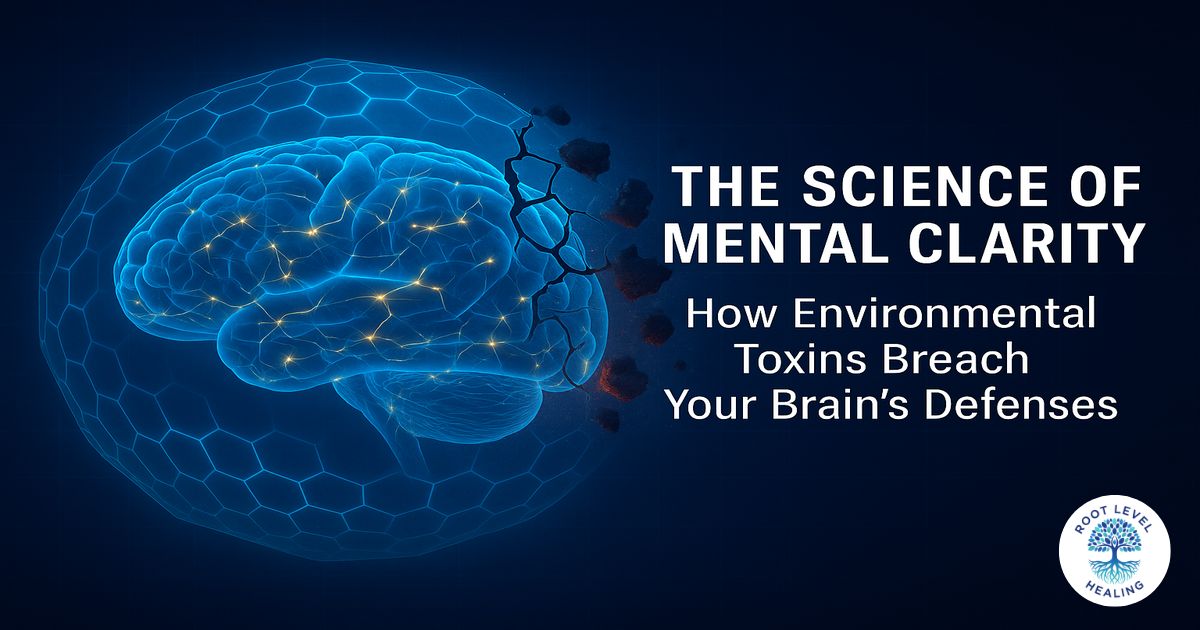
The Science of Mental Clarity: How Toxins Affect Your Brain
In our previous article, we explored the pervasive issue of brain fog and its impact on daily life. Now, we delve deeper into the science behind this cognitive cloud, uncovering the precise mechanisms by which our modern world can disrupt the very chemistry of our minds. The key to understanding this lies in a highly selective, protective shield known as the blood-brain barrier.
Key Takeaways
- 🛡️The Brain's Gatekeeper: The blood-brain barrier (BBB) is a protective shield, but it's not invincible.
- ☠️Toxic Invaders: Environmental toxins like heavy metals and air pollution can breach the BBB.
- 📡Communication Breakdown: Once inside, toxins cause neuroinflammation and disrupt key neurotransmitters essential for mental clarity.
The Science of Mental Clarity: How Toxins Break Into Your Brain [Brain Fog Root Cause]: A Quick Overview
Before we dive deep into the science, watch this quick overview explaining how environmental toxins breach your blood-brain barrier and trigger the cascade that leads to brain fog.
![The Science of Mental Clarity: How Toxins Break Into Your Brain [Brain Fog Root Cause]](https://img.youtube.com/vi/MlfHTI80mjY/maxresdefault.jpg)
In This Article:
The Blood-Brain Barrier: Your Brain's Elite Security Force
Think of the blood-brain barrier (BBB) as the most exclusive nightclub in your body. It is a complex and dynamic interface of specialized endothelial cells that line the brain's capillaries, fortified by astrocytes and pericytes. These cells are linked by "tight junctions," which are essentially protein stitches that form a nearly impenetrable seal. This structure meticulously regulates the passage of substances from the bloodstream into the delicate neural environment of the brain, allowing essential nutrients like glucose and oxygen to enter while blocking pathogens, toxins, and other harmful agents [1].
However, this fortress is not uniform. Certain areas of the brain, such as the hypothalamus and the area postrema, have a more permeable barrier. This is by design, as these regions need to "sample" the blood to monitor for toxins and regulate hormones. Unfortunately, this also makes them vulnerable entry points for neurotoxins circulating in our system [2].
How Environmental Toxins Infiltrate the Brain
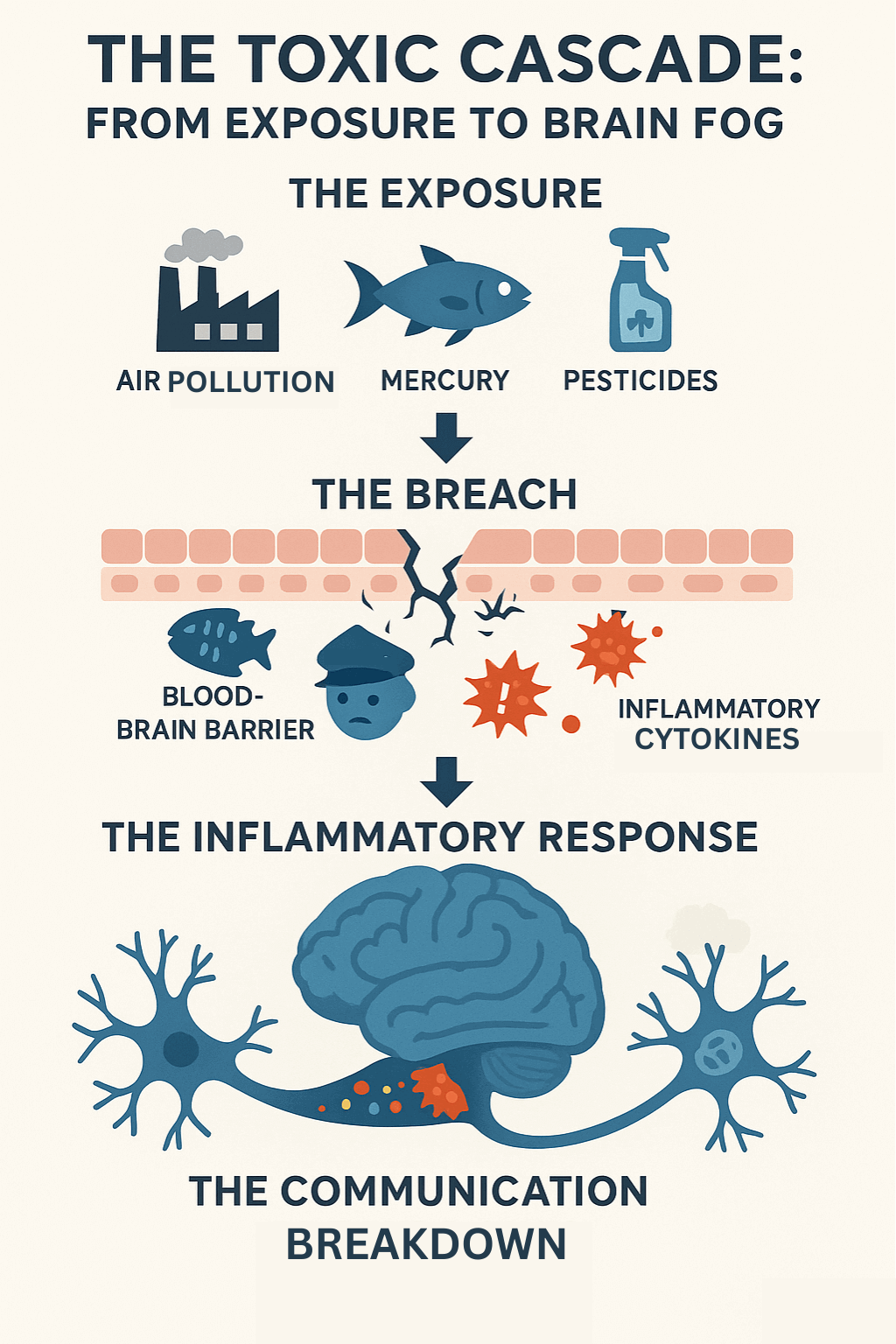
While the BBB is a formidable defense, it can be compromised. The constant barrage of environmental toxins in our modern world can weaken and breach this barrier. Heavy metals like lead and mercury, for instance, can directly damage the endothelial cells and loosen the tight junctions. Fine particulate matter from air pollution (PM2.5) has been shown to induce systemic inflammation that increases BBB permeability, allowing both the particles themselves and other circulating toxins to gain access to the brain [2].
"Loss of cerebrovascular integrity, often referred to as breakdown in the blood-brain barrier (BBB), has recently shown to be an early biomarker of human cognitive dysfunction and possibly underlying mechanism of age-related cognitive decline. Damage to the BBB may initiate or further invoke a range of tissue injuries causing synaptic and neuronal dysfunction and cognitive impairment..." [1]
Once these toxins cross the barrier, they trigger a destructive chain reaction.
The Neurotransmitter Disruption Cascade
The brain's response to toxic invaders is inflammation. Microglia, the brain's immune cells, become activated and release inflammatory cytokines. This state of chronic neuroinflammation leads to significant oxidative stress, a condition where harmful free radicals outnumber the body's antioxidant defenses. This environment is incredibly damaging to neurons.
One of the most critical consequences of this toxic, inflammatory state is mitochondrial dysfunction. Mitochondria are the powerhouses of our cells, and neurons have extremely high energy demands. When mitochondria are damaged, they can no longer produce enough energy (ATP) to fuel proper neuronal function. This energy crisis directly impairs the synthesis, release, and reuptake of neurotransmitters—the chemical messengers that govern our thoughts, mood, and focus [2].
Meet the Chemical Messengers of Your Mind
Neurotransmitters are the foundation of mental clarity. When their delicate balance is disrupted by neurotoxins and inflammation, the symptoms of brain fog emerge. The table below outlines the key players and how they are affected [3].
| Neurotransmitter | Role in Mental Clarity | Impact of Disruption |
|---|---|---|
| Acetylcholine | Memory, Learning & Attention | Forgetfulness & Inattention |
| Dopamine | Motivation, Focus & Reward | Apathy & Lack of Focus |
| Serotonin | Mood, Calm & Well-being | Anxiety & Low Mood |
| GABA & Glutamate | The Brain's On/Off Switch | Overwhelm & Brain Fog |
The First Step Towards Cognitive Resilience
Understanding this toxic cascade—from environmental exposure to a breached blood-brain barrier, neuroinflammation, and neurotransmitter disruption—is the first step toward reclaiming your mental clarity. It reveals that brain fog is not a personal failing but a physiological response to a toxic environment.
The logical next question is, what can be done? If toxins are getting in and disrupting our brain chemistry, how do we stop them and support the body's natural ability to remove them? Supporting the body's innate detoxification systems is a critical step in reducing this toxic load and restoring cognitive function. In our next article, we will explore the world of natural nootropics and scientifically-backed strategies to protect your brain and enhance cognitive function.
Frequently Asked Questions
Q: How do toxins cross the blood-brain barrier?
A: Toxins can cross the BBB in several ways: by directly damaging the cells of the barrier, by mimicking essential molecules to trick their way across via transport systems, or by leveraging systemic inflammation which makes the barrier more permeable.
Q: What neurotransmitters most affect memory?
A: Acetylcholine is the primary neurotransmitter associated with memory and learning. However, dopamine and serotonin also play crucial roles in memory consolidation and recall.
Q: Can environmental toxins really cause brain fog?
A: Yes. Scientific research has established a strong link between exposure to environmental toxins like heavy metals and air pollution and the development of cognitive symptoms like brain fog, due to their ability to cause neuroinflammation and disrupt neurotransmitter function [2].
Q: How can I improve my neurotransmitter function?
A: Improving neurotransmitter function involves a holistic approach: reducing your toxic load, consuming a nutrient-dense diet rich in precursors for neurotransmitter synthesis, managing stress, and getting adequate sleep. Specific supplements can also support this process.
Q: What are the main things that damage the blood-brain barrier?
A: The BBB can be damaged by chronic inflammation, high levels of stress (cortisol), a poor diet (high in sugar and processed foods), environmental toxins, and certain infections. Aging is also a factor in the gradual breakdown of the BBB [1].
Q: Is the damage to the blood-brain barrier permanent?
A: Not necessarily. The BBB has a capacity for repair. By reducing exposure to toxins, lowering inflammation, and providing the right nutrients, it is possible to support the integrity and function of the blood-brain barrier.
Q: What is neuroinflammation?
A: Neuroinflammation is the inflammatory response within the brain or spinal cord. While it is a protective mechanism in the short term, chronic neuroinflammation, often triggered by toxins, is highly destructive to neurons and is a root cause of many cognitive and neurodegenerative disorders.
Q: How does mitochondrial dysfunction affect the brain?
A: Since the brain is incredibly energy-intensive, mitochondrial dysfunction starves neurons of the energy they need to function, communicate, and repair themselves. This leads to impaired cognitive processes, cell damage, and ultimately, neuronal cell death.
Q: Are some people more susceptible to neurotoxins than others?
A: Yes. Genetic factors, the status of one's detoxification pathways, overall health, and nutritional status can all influence an individual's susceptibility to the effects of neurotoxins.
Q: What is the difference between a neurotoxin and any other toxin?
A: A neurotoxin is a substance that is specifically poisonous or destructive to nerve tissue (neurons). While many toxins can harm the body, neurotoxins have a particular affinity for and damaging effect on the brain and nervous system.
References
- Barisano, G., Montagne, A., Kisler, K., Schneider, J. A., & Wardlaw, J. M. (2022 ). Blood-brain barrier link to human cognitive impairment and Alzheimer's Disease. Nature Cardiovascular Research, 1(2), 108-115.
- Aggarwal, V., Mehndiratta, M. M., Wasay, M., & Garg, D. (2022 ). Environmental Toxins and Brain: Life on Earth is in Danger. Annals of Indian Academy of Neurology, 25(Suppl 1), S15–S21.
- Cleveland Clinic. (2022, March 14 ). Neurotransmitters: What They Are, Functions & Types.

Ready to Discover Your Score?
This 2-minute quiz is the essential first step to understanding your body's current toxic load and identifying the root cause of how you feel.
Take The Toxicity QuizExplore More Articles
Dive deeper into topics like detoxification, gut health, and mental clarity on our blog. Knowledge is the key to taking control of your health.
Visit The Blog