The Root Cause of Brain Fog: Is Your Gut To Blame?
You know the feeling. It's like trying to think through a thick haze. Words are on the tip of your tongue, simple tasks feel overwhelming, and your focus is nowhere to be found. This is brain fog, and for millions, it's a daily reality. While we often blame stress or lack of sleep, emerging science points to a surprising culprit: the health of your gut.
Key Takeaways
- 🧠The Gut-Brain Axis is Real: Your gut contains hundreds of millions of neurons and produces over 90% of your body's serotonin — making it a direct driver of your mental clarity, mood, and cognitive function, not just your digestion.
- 🔥Leaky Gut Triggers Neuroinflammation: When the gut lining is damaged, toxins and bacteria leak into the bloodstream, triggering a body-wide inflammatory response that crosses the blood-brain barrier — a primary driver of chronic brain fog.
- ⚗️Dysbiosis Disrupts Brain Chemistry: An imbalanced gut microbiome directly impairs the production of dopamine, serotonin, and GABA — the neurotransmitters responsible for focus, memory, and mood stability.
- ☠️Toxicity is the Root Cause: Gut damage is often a symptom, not the ultimate cause. Heavy metals like mercury and lead, along with environmental toxins like glyphosate, directly damage the gut lining and create the chronic inflammation that perpetuates the brain fog cycle.
- 🎯Healing Requires a Root Cause Approach: Probiotics and dietary changes help, but lasting relief requires removing the underlying toxic burden first — allowing the gut lining to truly heal and the gut-brain communication to be restored.
Brain Fog? Your Gut May Be the Root Cause: A Quick Overview
Before we dive deep into the science, watch this quick overview explaining the 3 ways your gut causes brain fog and what's really damaging your gut in the first place.
In This Article:
The idea that your digestive system could directly impact your mental clarity might seem strange, but the connection is powerful and profound. This communication network, known as the gut-brain axis, is a two-way street where the gut and brain are in constant dialogue. When one is out of balance, the other feels the effects [1].
The Gut-Brain Axis: Your Second Brain
Your gut is often called the "second brain" for a good reason. It contains hundreds of millions of neurons and produces over 90% of your body's serotonin, a key neurotransmitter for mood and well-being [2]. This intricate network is connected to your brain via the vagus nerve, the longest cranial nerve in your body.
But the conversation isn't just neurological. The trillions of bacteria living in your gut—your microbiome—play a starring role. A healthy, diverse microbiome produces beneficial compounds, while an unhealthy one can produce inflammatory substances that have a direct line to your brain.
How an Unhealthy Gut Causes Brain Fog
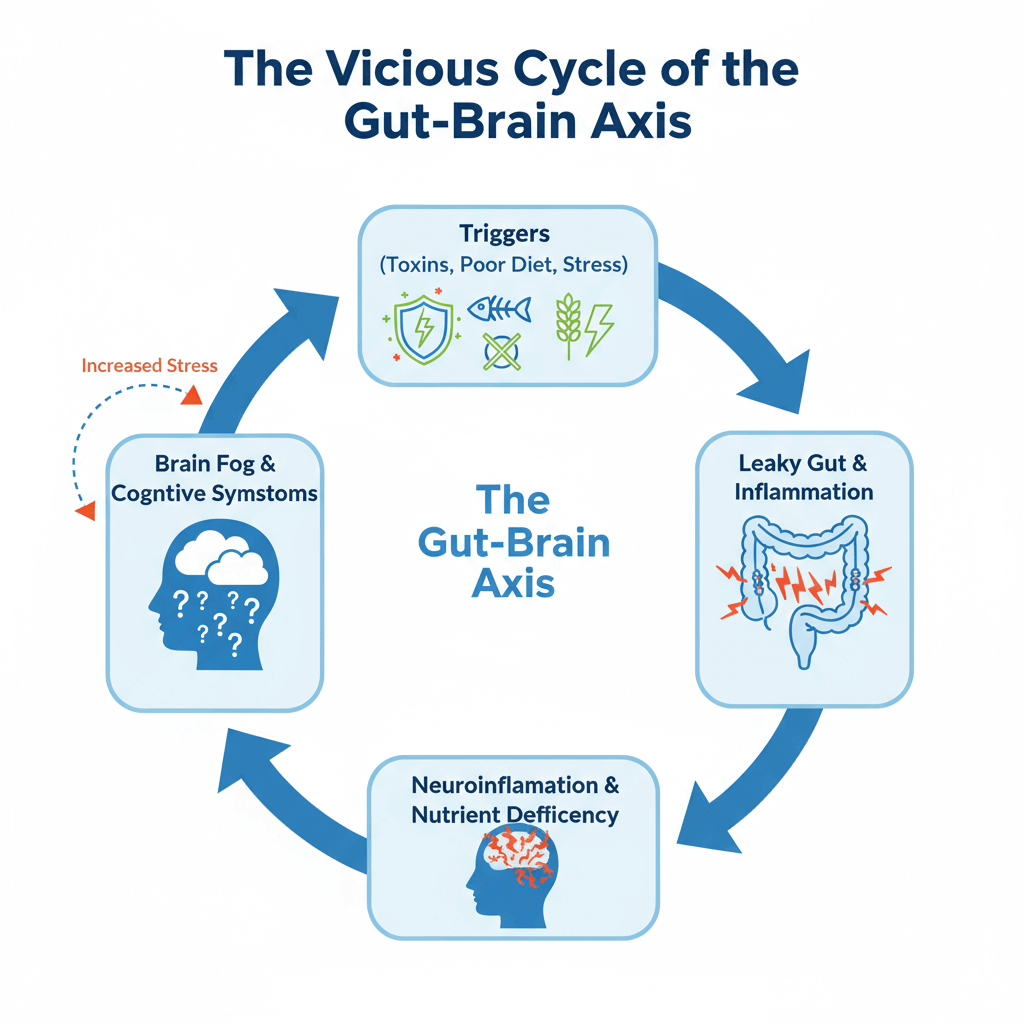
When your gut health is compromised, several mechanisms can trigger cognitive issues like brain fog:
1. Leaky Gut and Systemic Inflammation
An unhealthy diet, stress, or toxins can damage the lining of your intestines, creating a condition known as "leaky gut" or increased intestinal permeability. This allows undigested food particles, bacteria, and toxins like lipopolysaccharides (LPS) to "leak" into your bloodstream. Your immune system flags these as invaders, launching a body-wide inflammatory response. This inflammation doesn't stay in the body; it can cross the blood-brain barrier, leading to neuroinflammation—a primary driver of brain fog [3].
2. Imbalances in Neurotransmitters
As mentioned, your gut bacteria are little chemical factories. They produce and help regulate crucial neurotransmitters like serotonin, dopamine, and GABA. An imbalance in gut flora (dysbiosis) can lead to a shortage of these "feel-good" chemicals and an overproduction of others, directly impacting your mood, focus, and memory.
3. Nutrient Deficiencies
A damaged gut doesn't absorb nutrients effectively. You could be eating the healthiest diet in the world, but if your gut can't absorb key brain-boosting nutrients like B vitamins (especially B12), magnesium, and omega-3 fatty acids, your brain will be starved of the fuel it needs to function optimally.
The Root Level Healing Perspective: Why Gut Health Isn't the Whole Story
While healing the gut is essential, we believe it's often a symptom, not the ultimate root cause. At Root Level Healing, we ask: What is causing the gut to become unhealthy in the first place?
The answer, time and again, is toxicity. Heavy metals like mercury and lead, along with environmental toxins like glyphosate, can directly damage the gut lining and create chronic inflammation. They create the very "leaky gut" condition that allows the cycle of brain fog to begin. Simply managing gut symptoms without addressing the underlying toxic burden is like patching a leaky pipe while ignoring the corrosion that's causing the holes. Our approach is to remove the corrosive elements first, allowing the body to truly heal from the foundation up.
Actionable Steps to Heal Your Gut and Clear Your Mind
The good news is that you have the power to change the conversation between your gut and brain. By focusing on healing your gut, you can take significant steps toward lifting the fog.
- ❌ Remove Inflammatory Triggers: Identify and eliminate foods that cause inflammation for you. Common culprits include gluten, dairy, sugar, and highly processed industrial seed oils.
- 🥦 Incorporate Gut-Healing Foods: Add bone broth, fermented foods like sauerkraut, and prebiotic-rich foods like garlic and onions to feed your good bacteria.
- 🧘♀️ Reduce Stress: Chronic stress is devastating to gut health. Incorporate stress-management techniques like deep breathing, meditation, or spending time in nature.
- 🛡️ Consider Targeted Support: Supporting your body's natural detoxification processes with a safe, systemic binder can help remove underlying stressors, allowing the gut lining to finally heal.
Myths vs. Facts: Brain Fog and Gut Health
❌ Myth: Brain fog is just a normal part of aging or being busy.
✅ Fact: While occasional mental fatigue is normal, chronic brain fog is a sign of an underlying imbalance. It is not something you have to accept. It's a signal from your body that something—often related to inflammation originating in the gut—needs to be addressed.
❌ Myth: I can just take a probiotic to fix my gut and my brain fog will disappear.
✅ Fact: While probiotics can be beneficial, they are often not enough on their own. True healing requires a comprehensive approach that includes dietary changes, stress management, and addressing underlying issues like toxicity. Simply adding a probiotic without changing the environment it lives in is like planting a seed in barren soil.
❌ Myth: A "gut cleanse" or "detox tea" for a few days will reset my system.
✅ Fact: True healing takes time. Short-term, aggressive cleanses often do more harm than good. A sustainable, long-term approach focused on removing inflammatory foods and supporting your body's natural pathways is far more effective.
Frequently Asked Questions
Q: How long does it take to heal the gut-brain axis?
A: There is no one-size-fits-all answer, as it depends on the individual's level of gut damage and toxic load. However, many people begin to notice improvements in mental clarity and energy within 4-6 weeks of consistently implementing dietary and lifestyle changes. Deeper healing can take several months or longer.
Q: Can food allergies or sensitivities cause brain fog?
A: Absolutely. When you eat a food you are sensitive to (like gluten or dairy for many people), it can trigger an inflammatory response in your gut. This inflammation can become systemic and lead directly to neuroinflammation and brain fog, sometimes within hours of eating the offending food.
Q: What are the best foods for brain health?
A: Focus on anti-inflammatory, nutrient-dense foods. These include healthy fats (avocados, olive oil, wild-caught salmon), antioxidants (blueberries, leafy greens like spinach and kale), and clean proteins. These foods provide the building blocks your brain needs to repair itself and function optimally.
Don't Guess, Assess. What's Your Score?
Brain fog is a key indicator of toxicity. To understand if this is a root cause for you, the first step is to assess your potential burden. Our free, 2-minute quiz is designed to connect the dots between your symptoms and their underlying cause.
Take the Free Toxicity QuizReferences
- Tooley, K. L. (2020 ). Effects of the Human Gut Microbiota on Cognitive Performance, Brain Structure and Function: A Narrative Review. *Nutrients*, *12*(10), 3009. https://www.mdpi.com/2072-6643/12/10/3009
- Appleton, J. (2018 ). The Gut-Brain Axis: Influence of Microbiota on Mood and Mental Health. *Integrative medicine (Encinitas, Calif.)*, *17*(4), 28–32. https://pmc.ncbi.nlm.nih.gov/articles/PMC6469458/
- Kalyan, M., Tousif, A. H., Sonali, S., Vichitra, C., Sunanda, T., Praveenraj, S. S., Ray, B., Gorantla, V. R., Rungratanawanich, W., Mahalakshmi, A. M., Qoronfleh, M. W., Monaghan, T. M., Song, B. J., & Essa, M. M. (2022 ). Role of Endogenous Lipopolysaccharides in Neurological Disorders. *Cells*, *11*(24), 4038. https://www.mdpi.com/2073-4409/11/24/4038

Ready to Discover Your Score?
This 2-minute quiz is the essential first step to understanding your body's current toxic load and identifying the root cause of how you feel.
Take The Toxicity QuizExplore More Articles
Dive deeper into topics like detoxification, gut health, and mental clarity on our blog. Knowledge is the key to taking control of your health.
Visit The Blog