
The Dermal-Epidermal Junction: Why Your Cleanser Matters More Than You Think
In the vast universe of skincare, our attention is often captured by potent serums, luxurious creams, and high-tech treatments. We meticulously layer products, hoping to turn back the clock and preserve our skin's youthful vitality. But what if the most crucial step in this entire anti-aging ritual is the one we often rush through? What if the secret to maintaining a firm, resilient, and radiant complexion lies not in an expensive elixir, but in the humble act of cleansing? The truth is, the foundation of healthy skin is built—or broken—at the sink. This is where we introduce a critical, yet often overlooked, player in the game of skin aging: the dermal-epidermal junction (DEJ). This intricate, microscopic frontier is where the battle for youthful skin is truly won or lost, and your choice of cleanser is its first line of defense.
Key Takeaways
- 🔬The DEJ is Your Skin's Lifeline: The dermal-epidermal junction is a vital, protein-rich foundation that anchors your epidermis to the dermis. Its health is non-negotiable for nutrient exchange, structural integrity, and preventing wrinkles.
- 🛡️Cleansing is a High-Stakes Act: Harsh, alkaline cleansers can inflict significant damage on the delicate proteins of the DEJ and disrupt the skin's protective acid mantle, directly accelerating basement membrane aging and compromising overall skin barrier function.
- 🌿Gentle Surfactants are Superior: Choosing a pH-balanced cleanser formulated with gentle, sulfate-free surfactants like decyl glucoside and coco glucoside is the most fundamental and powerful step you can take to protect your DEJ and lay the groundwork for a successful anti-aging strategy.
The Dermal-Epidermal Junction: Why Your Cleanser Matters More Than You Think (A Quick Overview)
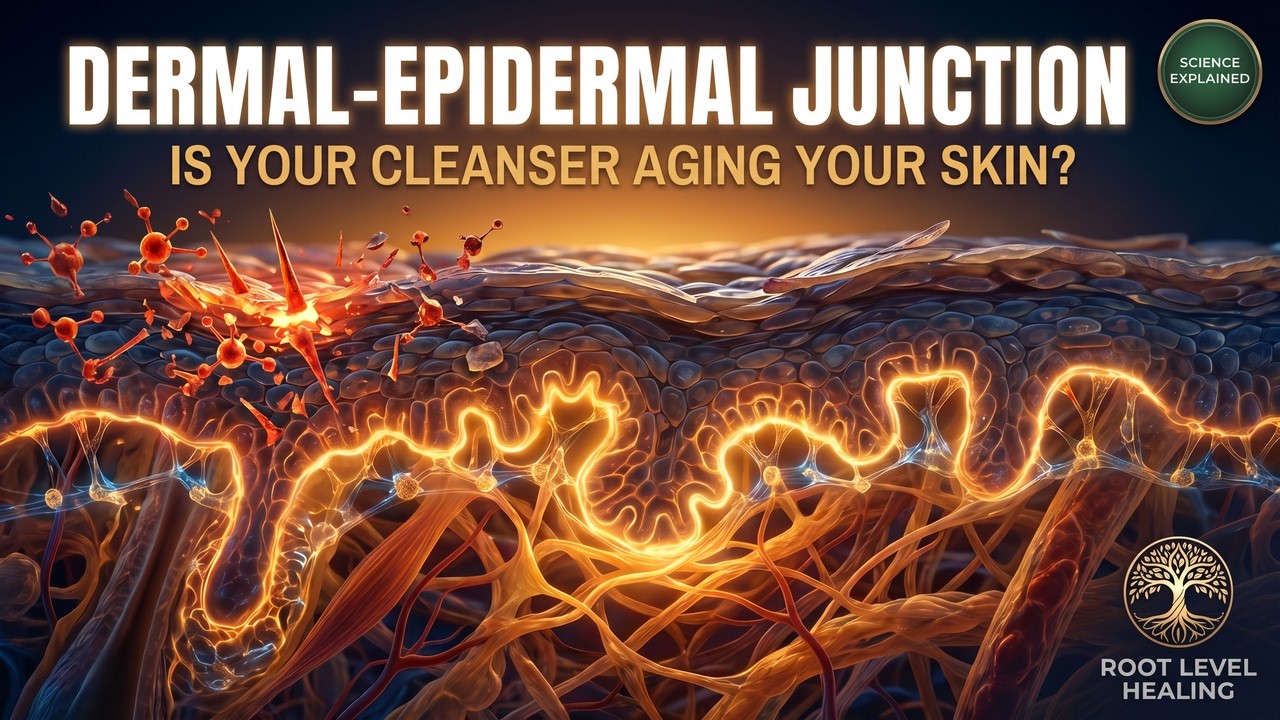
Before we dive deep into the science, watch this quick overview to discover the hidden foundation of youthful skin and learn why protecting your dermal-epidermal junction starts with your choice of cleanser.
In This Article:
- Unveiling the Dermal-Epidermal Junction: Your Skin’s Unsung Hero
- The Great Flattening: How Basement Membrane Aging Visibly Ages Your Skin
- The Cleansing Conundrum: How Your Face Wash Can Damage the DEJ
- The Acid Test: Why pH Balance is Critical for Skin Barrier Protection
- The Gentle Revolution: Choosing a Cleanser to Preserve Your DEJ

The dermal-epidermal junction is composed of four distinct layers and multiple specialized proteins, including laminin-332, collagen IV, collagen VII, and nidogen, all working together to anchor the epidermis to the dermis and facilitate vital nutrient exchange.
Unveiling the Dermal-Epidermal Junction: Your Skin's Unsung Hero
Imagine the epidermis, your skin's outermost layer, as a house. The dermal-epidermal junction is its foundation. It’s a highly specialized and complex structure that anchors the epidermis to the dermis below, ensuring the two layers are held together in a strong, cohesive unit. But the DEJ is far more than just biological glue. It is a dynamic, bustling hub of activity, a critical interface that governs the health, communication, and youthful appearance of your skin [1].
This foundation is primarily composed of the basement membrane, a thin, sheet-like network of specialized proteins. Think of it as a highly sophisticated, multi-layered mesh that provides both structural support and a communication highway. The key architectural proteins that make up this membrane are crucial for its function:
- Laminins (especially Laminin-332): These are the master organizers, essential for cell adhesion and forming the initial scaffold of the basement membrane. They are a key target for ensuring DEJ anchoring and cohesion [2].
- Collagens (Type IV and Type VII): These aren't the same collagens you find in the deeper dermis. Type IV collagen forms a flexible, sheet-like network that provides the main structural framework of the basement membrane. Type VII collagen forms anchoring fibrils that loop from the basement membrane into the dermis, like microscopic grappling hooks, securing the epidermis in place.
- Nidogen and Perlecan: These proteins act as vital connectors, linking the laminin and collagen networks together to create a stable, integrated structure.
"The dermal-epidermal junction has several functions. This area anchors the epidermis to the dermis and is responsible for the exchange of oxygen, nutrients and waste products between the vascularized dermis and the avascular epidermis. This connectivity between the epidermis and the dermis allows for a strong resistance against a possible physical stress." [2]
This intricate architecture allows the DEJ to perform its vital functions. It not only provides mechanical stability but also acts as a selective filter, controlling the flow of nutrients, oxygen, and signaling molecules from the blood-rich dermis up to the avascular epidermis. This cross-talk is essential for regulating cell growth, differentiation, and repair. Without a healthy DEJ, the epidermis is effectively cut off from its primary source of nourishment and communication, leading to a cascade of undesirable changes.
The Great Flattening: How Basement Membrane Aging Visibly Ages Your Skin
In youthful skin, the dermal-epidermal junction has a distinct, undulating, wave-like appearance. These "waves" are called rete ridges, and they dramatically increase the surface area between the epidermis and dermis. This large surface area creates a strong, interlocking connection and maximizes the efficiency of nutrient and oxygen transfer. However, as we age, a process of "basement membrane aging" begins, and one of the most significant changes is the flattening of these rete ridges [3].

With age, the dermal-epidermal junction undergoes significant structural changes. The prominent rete ridges of youthful skin flatten dramatically, reducing the surface area for nutrient exchange and weakening the bond between the epidermis and dermis—a primary driver of visible aging, wrinkles, and loss of elasticity.
This "great flattening" has profound consequences. The reduced surface area weakens the bond between the epidermis and dermis, making the skin more fragile and prone to injury. More importantly, it severely impairs the vital exchange of nutrients and communication signals. The epidermis receives less nourishment, leading to a slower rate of cell turnover, a duller complexion, and a diminished capacity for self-repair. Furthermore, the production of the DEJ's key structural proteins—including collagen VII, collagen XVII, nidogen, and laminin-332—declines significantly with age [3]. This degradation of the basement membrane's core components is a primary driver of visible aging, leading directly to:
- Loss of Elasticity: As the anchoring fibrils weaken, the skin loses its ability to snap back, resulting in sagging and laxity.
- Formation of Wrinkles: A compromised DEJ can no longer provide the firm, smooth foundation the epidermis needs, causing the surface to fold and form wrinkles.
- Increased Fragility: The weakened connection makes the skin more susceptible to shearing forces and damage.
This age-related decline is exacerbated by external factors, particularly UV radiation, which accelerates the breakdown of these crucial proteins. The science is clear: maintaining the structural integrity of the dermal-epidermal junction is paramount for preventing premature aging. And this preservation effort begins with the most fundamental step of your skincare routine.
The Cleansing Conundrum: How Your Face Wash Can Damage the DEJ
How can a product that's on your skin for less than a minute have such a profound impact on a structure as deep as the dermal-epidermal junction? The answer lies in the chemistry of cleansing and the cumulative effect of daily use. The cleansing process is the most frequent, and potentially the most aggressive, interaction your skin endures. Using the wrong type of cleanser, day after day, is like subjecting your skin's delicate foundation to a small but persistent earthquake.
The primary culprits are harsh surfactants, particularly sulfates like Sodium Lauryl Sulfate (SLS) and Sodium Laureth Sulfate (SLES). These are powerful degreasers, prized for their ability to create a rich, satisfying lather. However, their effectiveness comes at a steep price. These molecules are notoriously aggressive and can cause significant damage to the skin barrier in several ways:
- Protein Denaturation: Harsh surfactants have the ability to alter the natural structure of proteins, a process called denaturation. The delicate proteins of the basement membrane—collagen, laminin, and nidogen—are particularly vulnerable. Over time, this repeated assault can weaken and degrade the very structure of the dermal-epidermal junction [4].
- Lipid Stripping: These surfactants are indiscriminate in what they remove. Along with dirt and makeup, they strip away the skin's natural lipids, the essential fats that form the protective barrier of the stratum corneum. This leads to a compromised skin barrier function, increased dryness, and irritation.
- Inflammation Trigger: The irritation caused by harsh surfactants can trigger a low-grade inflammatory response in the skin. Inflammation is a key accelerator of the aging process, as it activates enzymes like matrix metalloproteinases (MMPs) that actively break down collagen and other essential proteins in the DEJ and dermis.
Every time you wash with a harsh, alkaline cleanser, you are potentially chipping away at the structural integrity of your dermal-epidermal junction. While the damage from a single wash may be imperceptible, the cumulative effect over months and years is significant, leading to accelerated basement membrane aging and the premature appearance of wrinkles, sagging, and sensitivity.
The Acid Test: Why pH Balance is Critical for Skin Barrier Protection
Closely linked to the issue of harsh surfactants is the concept of pH. Healthy skin is naturally acidic, with a pH typically ranging from 4.5 to 5.5. This natural acidity, known as the acid mantle, is a critical component of the skin barrier protection system. It serves two primary functions: it helps to keep the skin's lipid barrier strong and intact, and it creates an environment that inhibits the growth of harmful, pathogenic bacteria while allowing beneficial microbes to flourish [5].
"The 'acid mantle' of the stratum corneum seems to be important for both permeability barrier formation and cutaneous antimicrobial defense." [6]
Many traditional cleansers, especially bar soaps and those containing sulfates, are highly alkaline, with a pH of 9 or higher. When you use an alkaline cleanser, you temporarily disrupt the skin's acid mantle, raising its pH. The skin will eventually work to restore its natural acidity, but this process can take hours. During this time, the skin is left vulnerable. The enzymes responsible for synthesizing and maintaining the lipid barrier cannot function optimally in an alkaline environment, leading to a weakened barrier and increased transepidermal water loss (TEWL) [7].
This disruption has direct implications for the dermal-epidermal junction. A compromised barrier and the resulting inflammation put additional stress on the DEJ. Furthermore, the delicate protein structures within the basement membrane are themselves sensitive to pH changes. Maintaining a healthy, acidic skin surface is therefore a prerequisite for preserving the integrity of the DEJ. A pH-balanced cleanser, formulated to be within the skin's natural pH range, works in harmony with your skin. It effectively cleanses without stripping the acid mantle, thereby supporting optimal skin barrier function and protecting the underlying structures from unnecessary stress and degradation.
The Gentle Revolution: Choosing a Cleanser to Preserve Your DEJ
Given the critical importance of protecting the dermal-epidermal junction, the choice of cleanser becomes a foundational decision in any serious anti-aging skincare routine. The goal is to achieve effective cleansing without collateral damage. This is where the "gentle revolution" in surfactant technology comes into play, moving away from harsh sulfates and towards milder, plant-derived alternatives.
The gold standard for gentle cleansing lies with a class of non-ionic surfactants known as alkyl polyglucosides (APGs), such as decyl glucoside and coco glucoside. These ingredients represent a significant advancement in skincare formulation for several reasons:
- Plant-Derived and Biodegradable: They are derived from renewable resources like corn and coconut, making them an environmentally conscious choice.
- Exceptionally Mild: Unlike anionic sulfates, non-ionic glucosides are incredibly gentle on the skin. They do not strip the skin's natural lipids or denature its proteins, making them ideal for all skin types, especially sensitive and aging skin.
- pH-Compatible: Glucoside surfactants are effective in and can be formulated into cleansers that are pH-balanced to match the skin's natural acidity, thereby preserving the all-important acid mantle.
- Effective Cleansing: Despite their mildness, they are excellent cleansers, effectively removing dirt, oil, and impurities without causing dryness or irritation.

The choice of surfactant matters profoundly for long-term skin health. Harsh sulfates disrupt the skin barrier, denature proteins, and accelerate basement membrane aging, while gentle glucoside surfactants preserve the acid mantle, maintain barrier integrity, and protect the delicate proteins of the dermal-epidermal junction.
By making a conscious switch to a sulfate-free, pH-balanced cleanser that utilizes gentle surfactants like decyl glucoside and coco glucoside, you are taking the single most important step in protecting your dermal-epidermal junction. This simple act lays the foundation for all other skincare to follow. A well-cleansed, balanced, and non-irritated canvas is far more receptive to the active ingredients in your serums and creams. You are not just washing your face; you are preserving the very architecture of your skin, ensuring that the vital connection between your epidermis and dermis remains strong, healthy, and resilient for years to come. In the quest for youthful skin, the revolution begins at the sink.
Frequently Asked Questions
Q: How can I tell if my cleanser is too harsh?
A: A tell-tale sign of a harsh cleanser is a "squeaky clean," tight, or dry feeling after washing. Your skin should feel comfortable, soft, and hydrated, not stripped. Check the ingredient list for sulfates like Sodium Lauryl Sulfate (SLS) or Sodium Laureth Sulfate (SLES), which are common culprits.
Q: Is a foaming cleanser always harsh?
A: Not necessarily. While harsh sulfates create a lot of foam, gentle surfactants like decyl glucoside and coco glucoside can also produce a satisfying, soft lather. The presence of foam isn't the problem; the type of surfactant creating it is what matters for gentle cleansing.
Q: Can protecting the dermal-epidermal junction reverse existing wrinkles?
A: While protecting the DEJ is primarily a preventative strategy to slow down the formation of new wrinkles and loss of elasticity, it is a critical part of any restorative routine. By reducing chronic inflammation and providing a stable foundation, you create the optimal environment for other active ingredients (like peptides and retinoids) to work more effectively on repairing existing damage.
Q: What is the difference between decyl glucoside and coco glucoside?
A: Both are gentle, plant-derived non-ionic surfactants from the alkyl polyglucoside (APG) family. Decyl glucoside is derived from corn glucose and coconut alcohol, while coco glucoside comes from coconut oil and fruit sugars. They are often used together in formulas because their different carbon chain lengths provide complementary cleansing and foaming properties, creating a more effective yet still gentle result.
Q: How often should I cleanse my face to protect the DEJ?
A: Twice daily — morning and evening — is the standard recommendation. Morning cleansing removes overnight sebum and any residue from nighttime products, while evening cleansing removes the day's accumulation of pollutants, sunscreen, and makeup. Using a gentle, pH-balanced cleanser both times ensures you are protecting your DEJ with every wash rather than damaging it.
References
- Aleemardani, M., et al. (2021 ). The Importance of Mimicking Dermal-Epidermal Junction for Skin Tissue Engineering: A Review. Polymers, 13(22), 3985.
- Cornell, M. (2023 ). The Dermal-Epidermal Junction. NYSCC Blog.
- Shin, S. H., et al. (2023 ). Skin aging from mechanisms to interventions: focusing on dermal aging. International Journal of Molecular Sciences, 24(10), 8948.
- Ananthapadmanabhan, K. P., et al. (2004 ). Cleansing without compromise: the impact of cleansers on the skin barrier and the technology of mild cleansing. Dermatologic Therapy, 17(s1), 16-25.
- Kumar, P., et al. (2023 ). Acid mantle: What we need to know. Indian Journal of Dermatology, Venereology and Leprology.
- Schmid-Wendtner, M. H., & Korting, H. C. (2006 ). The pH of the skin surface and its impact on the barrier function. Skin Pharmacology and Physiology, 19(6), 296-302.
- Ali, S. M., & Yosipovitch, G. (2013 ). Skin pH: From Basic Science to Basic Skin Care. Acta Dermato-Venereologica, 93(3), 261–267.

Ready to Discover Your Score?
This 2-minute quiz is the essential first step to understanding your body's current toxic load and identifying the root cause of how you feel.
Take The Toxicity QuizExplore More Articles
Dive deeper into topics like detoxification, gut health, and mental clarity on our blog. Knowledge is the key to taking control of your health.
Visit The Blog