The Invisible Threat: How EMF & 5G Radiation Affects Your Pet's Health
As a devoted pet owner, you provide the best food, fresh water, and a safe, loving home. But what if an invisible threat is silently impacting your pet's health every day? In our hyper-connected world, our homes are saturated with electromagnetic fields (EMF ) and radiofrequency (RF) radiation from devices we use constantly, from WiFi routers to smartphones. While regulatory bodies have set safety standards for humans, these guidelines completely overlook our animal companions, who may be far more susceptible to the biological effects of this constant exposure [1].
Scientific research increasingly points to the reality that non-ionizing radiation, the kind emitted by our wireless gadgets, can act as a significant environmental stressor for animals. This article delves into the science behind how EMF and 5G radiation affect pets, why they are more vulnerable than humans, and the 12 subtle signs of EMF exposure you should be watching for.
Key Takeaways
- 📡Invisible Exposure: Pets are surrounded by constant EMF radiation from WiFi routers, smart devices, and cell phones, with indoor sources posing the highest risk.
- 🐕Higher Vulnerability: Smaller body size, hypersensitive nervous systems, and 24/7 indoor proximity make pets more susceptible to EMF effects than humans.
- ⚠️Observable Signs: Watch for behavioral changes like whining, pacing, hiding, as well as physical symptoms including appetite changes, sleep disturbances, and fatigue.
- 🔬Scientific Evidence: Peer-reviewed research shows EMF causes oxidative stress, disrupts magnetoreception, and affects cellular function in all animal species studied.
The Invisible Threat: How EMF & 5G Radiation Affects Your Pet's Health (A Quick Overview)
Before we dive deep into the science, watch this quick overview for a breakdown of how EMF and 5G radiation affect your pet at a cellular level and the 12 warning signs to watch for.
In This Article:
The Constant Hum: EMF Sources in the Modern Home
Our pets spend the majority of their lives indoors, surrounded by a dense web of electromagnetic fields. Unlike humans who move between different environments, many pets are confined to the home, amplifying their cumulative exposure. A groundbreaking 2021 study published in the journal Animals identified indoor RF-emitting devices, such as WLAN (WiFi ) routers, as the primary source of high EMF exposure for pets [2].
These sources create a constant, low-level electromagnetic "smog" that our pets cannot escape. Their proximity to the floor also places them closer to many of these devices and electrical wiring, potentially increasing their exposure levels.
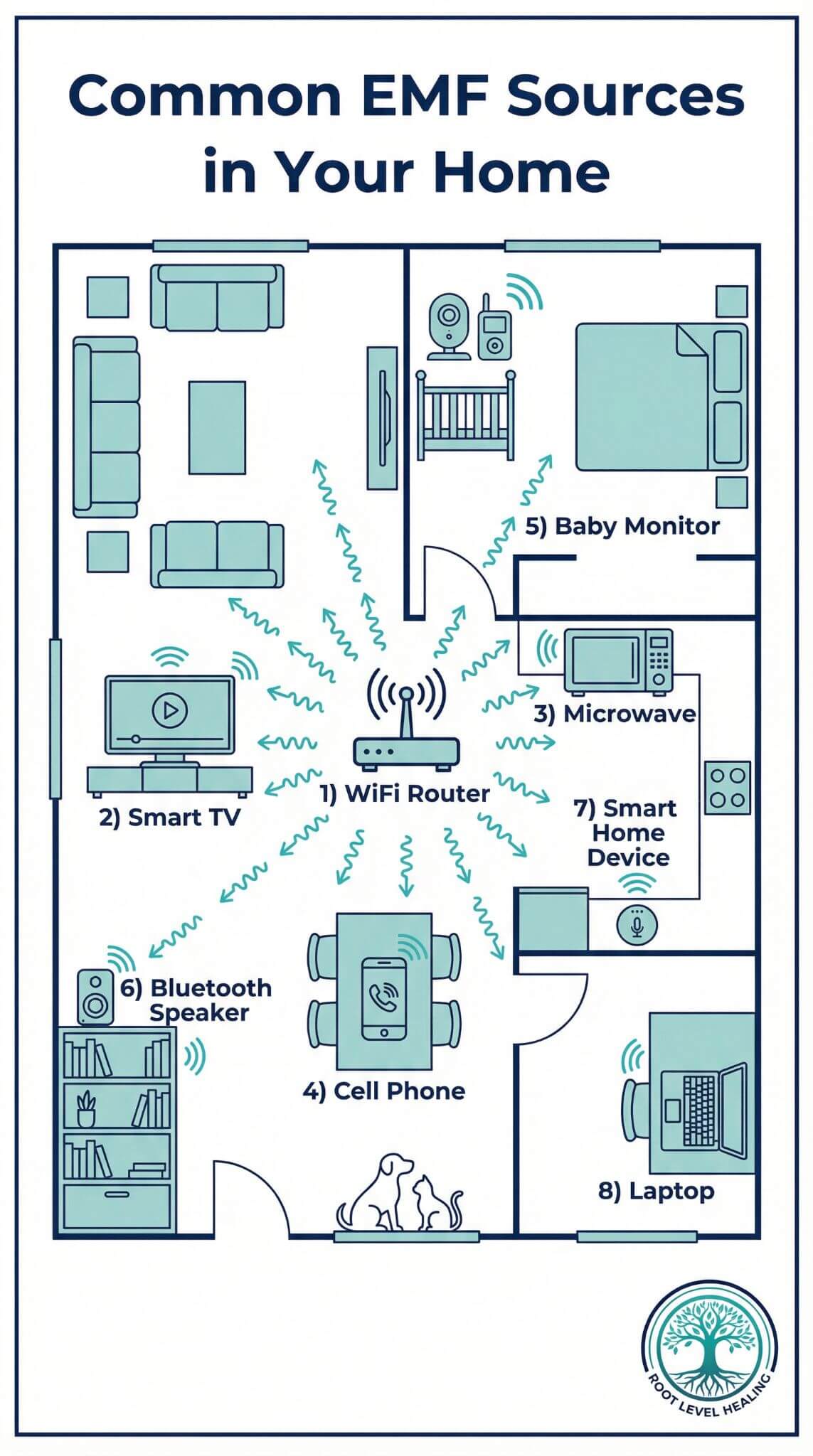
Modern homes contain multiple sources of electromagnetic field (EMF) radiation that pets are exposed to 24/7. WiFi routers are the primary indoor source of radiofrequency radiation, but smart TVs, microwaves, cell phones, baby monitors, Bluetooth speakers, smart home devices, and laptops all contribute to the cumulative electromagnetic "smog" that surrounds our pets at floor level where they spend most of their time.
Why Are Pets More Vulnerable to EMF Radiation?
Existing safety standards for EMF are based on the potential for thermal (heating) effects on a large adult human body over a short period. This model is fundamentally inadequate for protecting our pets. Research highlights several key factors that make animals, including dogs and cats, uniquely vulnerable to the non-thermal, biological effects of chronic EMF exposure.
"Any existing exposure standards are for humans only; wildlife is unprotected, including within the safety margins of existing guidelines, which are inappropriate for trans-species sensitivities and different non-human physiology." - Levitt, Lai, & Manville, Frontiers in Public Health [1]
Here is a breakdown of the key physiological differences that increase your pet's risk:
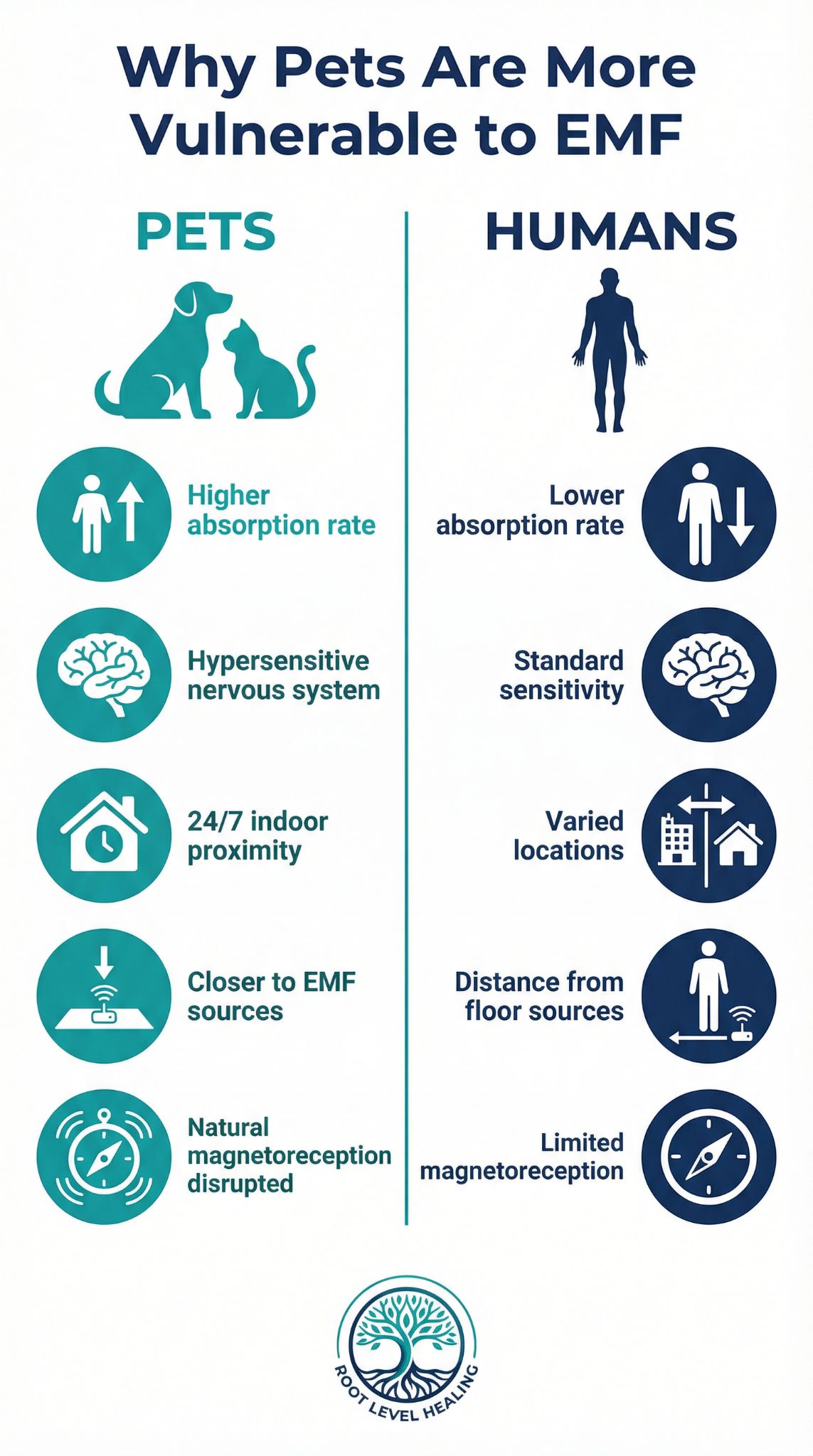
Pets face significantly higher vulnerability to electromagnetic field (EMF) and 5G radiation exposure compared to humans due to five critical factors: their smaller body size results in higher absorption rates, their hypersensitive nervous systems and natural magnetoreception abilities are more easily disrupted by man-made frequencies, they spend 24/7 in indoor environments with constant exposure, their position at floor level places them closer to many EMF sources, and existing safety standards are based solely on adult human physiology without consideration for animal vulnerabilities.
| Vulnerability Factor | Impact on Pets | Scientific Backing |
|---|---|---|
| Smaller Body Size | Smaller bodies can have a higher Specific Absorption Rate (SAR), meaning they may absorb more radiation relative to their size and weight. | Research on EMF absorption rates shows that size and geometry are critical factors in how energy is absorbed [3]. |
| Hypersensitive Nervous Systems | Many animals possess magnetoreception—the ability to sense the Earth's natural magnetic fields for navigation and orientation. Anthropogenic (man-made) EMF can interfere with this delicate biological sense [1]. | Studies on migratory birds show that man-made radio frequencies can disrupt their internal compass, and mammals have also been shown to possess these abilities [4]. |
| Constant Indoor Proximity | Pets often spend 24/7 in the same indoor environment, leading to chronic, uninterrupted exposure from sources like WiFi routers, which are a primary risk factor [2]. | The 2021 study in Animals specifically concluded that indoor devices pose the most significant and uncertain risk to pets. |
| Thinner Skulls & Less Body Mass | Less tissue and bone mass means radiation can penetrate deeper into their bodies and vital organs, including the brain. | The penetration depth of EMF is inversely related to frequency, but also dependent on the thickness and composition of the biological tissue it encounters [5]. |
The Science of Damage: How EMF Affects Your Pet at a Cellular Level
Man-made EMF is fundamentally different from the natural electromagnetic fields our pets have evolved with. It is polarized, which makes it more biologically active. This property allows it to "capture, entrain, and manipulate living cells' basic functioning architecture," leading to a cascade of biological effects [1].
The primary mechanism of damage from long-term, low-level EMF exposure is oxidative stress. This occurs when there is an imbalance between the production of damaging free radicals and the body's ability to counteract them with antioxidants. This cellular stress has been linked to a wide range of health issues, including inflammation, DNA damage, and cellular dysfunction [6].
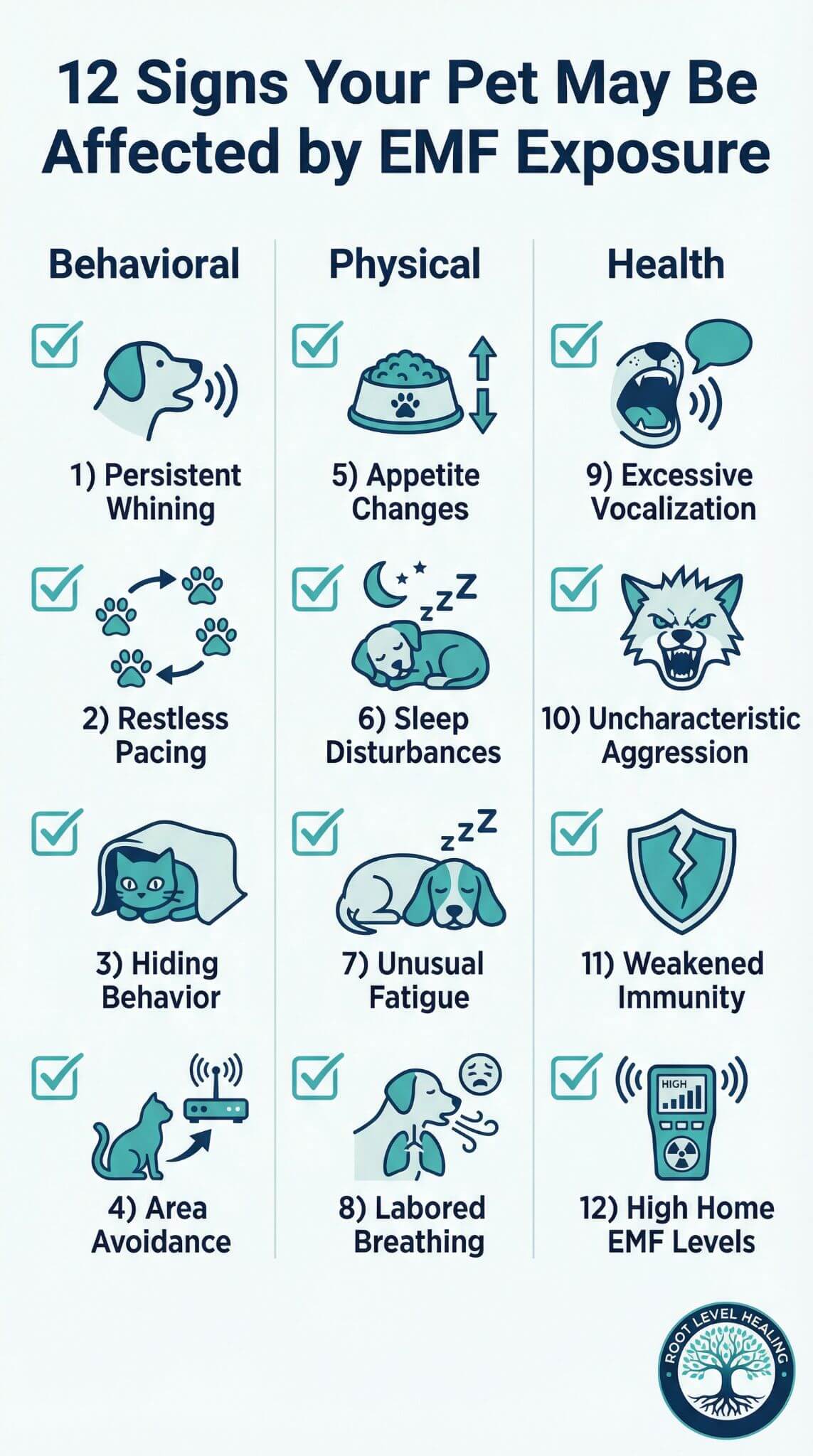
Recognizing the warning signs of EMF exposure in pets requires careful observation across three categories: behavioral changes (persistent whining, restless pacing, hiding behavior, area avoidance), physical symptoms (appetite changes, sleep disturbances, unusual fatigue, labored breathing), and general health indicators (excessive vocalization, uncharacteristic aggression, weakened immunity, high home EMF levels). If your pet exhibits multiple symptoms without a clear medical diagnosis, evaluating their electromagnetic environment may reveal the underlying cause.
12 Signs Your Pet May Be Affected by EMF Exposure
Because our pets can't tell us what's wrong, it's crucial for owners to become astute observers of their behavior and physical condition. Many of the symptoms of EMF sensitivity are subtle and can be easily mistaken for other issues. If your pet is exhibiting a cluster of these signs without a clear medical cause, it may be time to consider their electromagnetic environment.
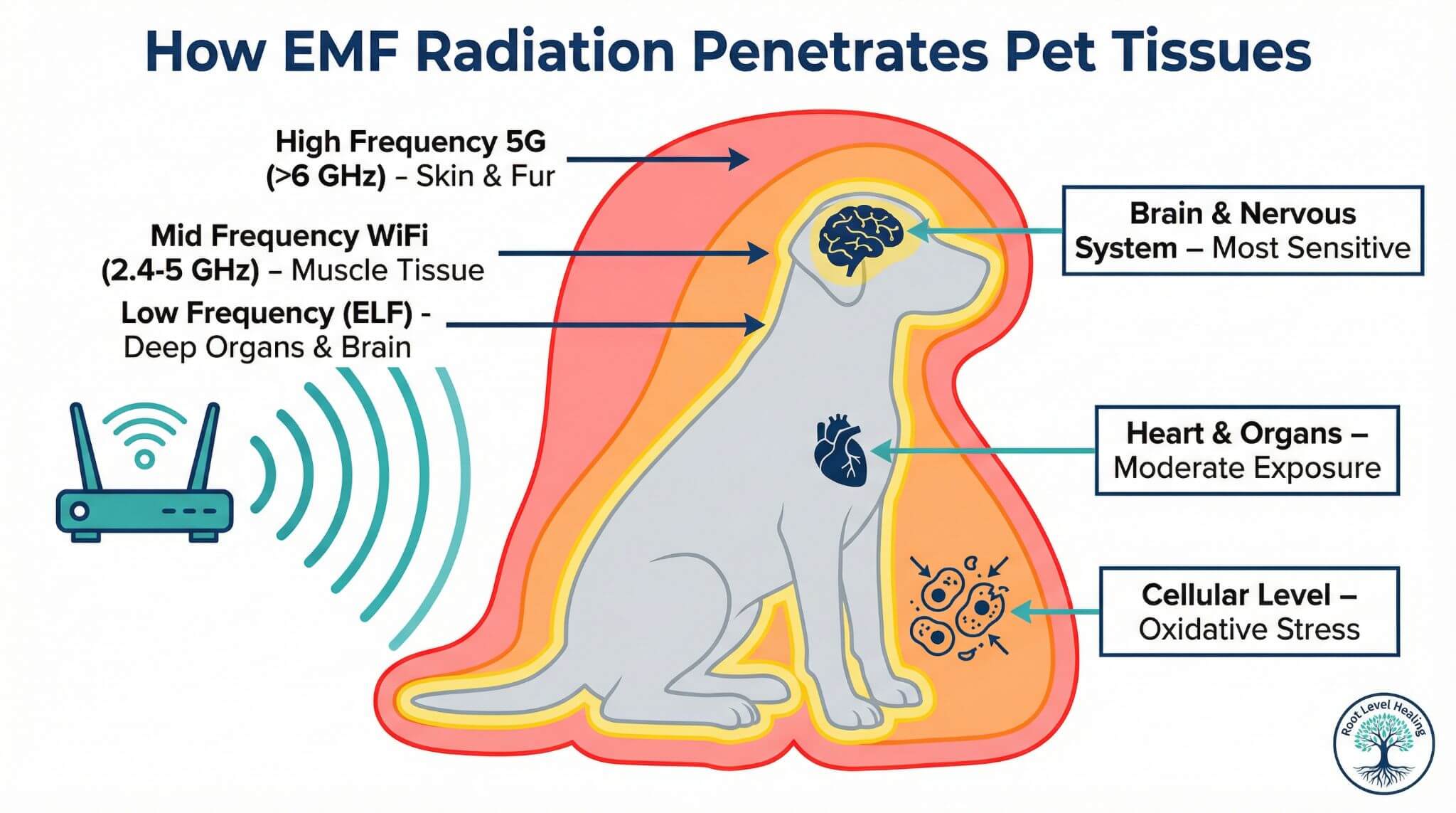
Different frequencies of electromagnetic radiation penetrate pet tissues to varying depths based on their wavelength characteristics. High-frequency 5G radiation (above 6 GHz) primarily affects the skin and fur surface, mid-frequency WiFi signals (2.4-5 GHz) penetrate into muscle tissue, while low-frequency extremely low frequency (ELF) waves can reach deep organs including the brain and heart. The brain and nervous system are most sensitive to EMF exposure, the heart and internal organs experience moderate exposure levels, and at the cellular level, all tissues can experience oxidative stress from chronic electromagnetic field exposure.
Behavioral Signs
-
Persistent Whining or Vocalization: An increase in whining, barking, or meowing can be a sign of distress or discomfort from an unseen stressor.
-
Restless Pacing: Repetitive walking back and forth can indicate anxiety and an inability to settle down.
-
Hiding or Avoidance: Your pet may suddenly start hiding in unusual places (like closets or under beds) or actively avoid areas near strong EMF sources, like the WiFi router or entertainment center.
-
Uncharacteristic Aggression: Irritability, snapping, or hissing in a normally docile pet can stem from chronic stress and discomfort.
Physical Signs
-
Changes in Appetite: A sudden loss of interest in food or unexplained digestive issues can be linked to chronic stress.
-
Disturbed Sleep Patterns: EMF can disrupt circadian rhythms. You might notice your pet is restless at night or unusually tired during the day.
-
Unusual Fatigue or Lethargy: A noticeable drop in energy levels without a clear cause could be a sign of the body struggling with an environmental stressor.
-
Labored Breathing or Panting: While this can be a sign of serious medical issues, some reports link it to the physiological stress response from EMF exposure [7].
General Health Signs
-
Weakened Immune System: If your pet seems to be getting sick more often or struggles with recurring infections, it could be a sign of a suppressed immune system, a known effect of chronic stress.
-
Skin Issues or Allergies: Inflammation is a common response to stress, which can manifest as skin problems or heightened allergic reactions.
-
Anxiety or Nervousness: A general increase in anxious behaviors, such as trembling, excessive grooming, or being easily startled.
-
Decline in Overall Health: A vague, undefined decline in your pet's vitality that veterinarians can't pinpoint to a specific illness.
Taking Action: Protecting Your Furry Family Members
Recognizing the potential impact of EMF on your pet is the first step toward creating a healthier home environment. While it's impossible to eliminate all sources of EMF, simple, practical steps can significantly reduce your pet's daily exposure. Our next article in this series will explore 10 practical strategies to reduce your pet's electromagnetic exposure.
In the meantime, start by observing your pet's behavior in relation to the technology in your home. Does your dog avoid lying next to the WiFi router? Does your cat seem more agitated when you're on a long phone call? These observations are valuable clues to understanding your pet's invisible environment.
Frequently Asked Questions
Q: Can EMF radiation really affect my pet's health?
A: Yes, scientific research indicates that pets can be affected by electromagnetic field (EMF) radiation. Studies published in peer-reviewed journals show that animals are more vulnerable than humans due to their smaller body size, hypersensitive nervous systems, and constant indoor proximity to EMF sources like WiFi routers. The effects are primarily non-thermal and can manifest as behavioral changes, sleep disturbances, and oxidative stress at the cellular level.
Q: What are the most common sources of EMF exposure for pets in the home?
A: The primary sources include WiFi routers (the most significant indoor source), smart TVs, microwave ovens, cell phones, baby monitors, Bluetooth speakers, smart home devices, and laptops. Because pets spend most of their time at floor level and indoors, they experience chronic, uninterrupted exposure from these devices, particularly WiFi routers which emit constant radiofrequency radiation.
Q: How can I tell if my pet is being affected by EMF exposure?
A: Watch for a cluster of behavioral and physical signs including persistent whining or vocalization, restless pacing, hiding or avoiding certain areas (especially near WiFi routers), changes in appetite, disturbed sleep patterns, unusual fatigue, and unexplained anxiety. If your pet exhibits multiple symptoms without a clear medical cause, consider evaluating their electromagnetic environment.
Q: Are certain pets more vulnerable to EMF than others?
A: Smaller pets with less body mass tend to have higher Specific Absorption Rates (SAR), meaning they absorb more radiation relative to their size. Additionally, animals with heightened natural magnetoreception abilities (like birds and some mammals) may be more sensitive to disruptions from man-made electromagnetic fields. Young, elderly, or immunocompromised pets may also be more vulnerable to the oxidative stress caused by chronic EMF exposure.
Q: Is 5G technology more dangerous for pets than previous wireless technologies?
A: 5G operates at higher frequencies (above 6 GHz) which have shorter penetration depth, primarily affecting the skin and fur. However, the concern lies in the cumulative exposure from multiple frequency bands (5G, 4G, WiFi, Bluetooth) all operating simultaneously in modern homes. The biological effects depend on frequency, intensity, duration of exposure, and the animal's individual vulnerability factors.
Q: Should I turn off my WiFi router at night to protect my pet?
A: Turning off your WiFi router at night is one of the simplest and most effective ways to reduce your pet's EMF exposure during sleep hours, when the body performs critical repair and detoxification processes. This single action can reduce indoor RF radiation by up to 90% during nighttime hours. Many pet owners report improvements in their pets' sleep quality and overall behavior after implementing this practice.
Q: Are there any safety standards that protect pets from EMF exposure?
A: Unfortunately, no. Current EMF safety standards are based solely on thermal (heating) effects on adult human bodies and do not account for the unique vulnerabilities of animals, including pets. As stated in research published in Frontiers in Public Health, "Any existing exposure standards are for humans only; wildlife is unprotected, including within the safety margins of existing guidelines."
Q: Can EMF exposure cause serious health problems in pets?
A: Long-term, low-level EMF exposure has been linked to oxidative stress, which can contribute to inflammation, cellular dysfunction, and weakened immune response. While acute effects are typically behavioral and stress-related, chronic exposure may contribute to a decline in overall health and vitality. More research is needed to fully understand the long-term health implications, but the precautionary principle suggests minimizing unnecessary exposure.
Q: What can I do to reduce my pet's EMF exposure?
A: Simple steps include turning off WiFi routers when not in use (especially at night), keeping cell phones and wireless devices away from pet sleeping areas, using wired connections instead of wireless when possible, creating low-EMF zones in your home where pets can rest, and avoiding the use of wireless pet tracking collars. Our next article in this series will provide 10 detailed, practical strategies for reducing your pet's electromagnetic exposure.
Q: Should I be concerned about EMF from my pet's tracking collar or smart device?
A: Yes, this is a valid concern. A 2021 study published in the journal Animals specifically examined RF-EMF exposure from pet tracking devices and found that these devices, worn directly on the pet's body, can contribute significantly to their total EMF exposure. Consider using non-wireless alternatives or limiting the use of these devices to times when they are truly necessary, such as during outdoor activities.
References
- Levitt, B. B., Lai, H., & Manville, A. M. (2022). Low-level EMF effects on wildlife and plants: What research tells us about an ecosystem approach. Frontiers in Public Health, 10, 1000840. https://www.frontiersin.org/articles/10.3389/fpubh.2022.1000840/full
- Klune, J., Arhant, C., Windschnurer, I., Heizmann, V., & Schauberger, G. (2021 ). Tracking Devices for Pets: Health Risk Assessment for Exposure to Radiofrequency Electromagnetic Fields. Animals (Basel), 11(9), 2721. https://pmc.ncbi.nlm.nih.gov/articles/PMC8465301/
- Christ, A., Kuster, N. (2005 ). Differences in RF energy absorption in adults and children. Bioelectromagnetics, 26(S7), 31-44. https://pubmed.ncbi.nlm.nih.gov/16142771/
- Wiltschko, W., & Wiltschko, R. (2019 ). Magnetoreception in birds. Journal of the Royal Society Interface, 16(158), 20190295. https://royalsocietypublishing.org/doi/10.1098/rsif.2019.0295
- International Commission on Non-Ionizing Radiation Protection (ICNIRP ). (2020). Guidelines for limiting exposure to electromagnetic fields (100 kHz to 300 GHz). Health Physics, 118(5), 483-524. https://www.icnirp.org/cms/upload/publications/ICNIRPrfgdl2020.pdf
- Yakymenko, I., Tsybulin, O., Sidorik, E., Henshel, D., Kyrylenko, O., & Kyrylenko, S. (2016 ). Oxidative mechanisms of biological activity of low-intensity radiofrequency radiation. Electromagnetic Biology and Medicine, 35(2), 186-202. https://www.tandfonline.com/doi/full/10.3109/15368378.2015.1043557
- Aulterra. (2025, June 4 ). 12 Signs Your Pet Is Suffering From EMF Exposure. https://aulterra.com/12-signs-your-pet-is-suffering-from-emf-exposure/

Ready to Discover Your Score?
This 2-minute quiz is the essential first step to understanding your body's current toxic load and identifying the root cause of how you feel.
Take The Toxicity QuizExplore More Articles
Dive deeper into topics like detoxification, gut health, and mental clarity on our blog. Knowledge is the key to taking control of your health.
Visit The Blog