The Pet Exposome: How Environmental Pollutants & Heavy Metals Damage Your Pet's Skin & Coat
In our previous article on EMF and 5G radiation effects on pets, we explored the invisible threat these electromagnetic fields pose to our companions. But the modern environment presents a much broader spectrum of challenges to their health. From the air they breathe to the floors they walk on, our beloved companions are constantly exposed to a complex cocktail of environmental pollutants and heavy metals. This cumulative exposure, known as the "pet exposome," can have a profound and often overlooked impact on their largest organ: the skin.
This article will delve into the science of the pet exposome, revealing how everyday toxins penetrate your pet's natural defenses, leading to a cascade of cellular damage that manifests as skin irritation, coat problems, and chronic inflammation. We will explore the specific mechanisms by which these pollutants disrupt the delicate skin barrier, and why our pets are often more vulnerable than we are.
Key Takeaways
- 🌍The Pet Exposome: The sum of all environmental exposures an animal encounters throughout its life, including pollutants, heavy metals, and toxins from indoor and outdoor sources.
- 📊Higher Bioaccumulation: Pets accumulate certain toxins like flame retardants and heavy metals at rates up to 23 times higher than humans due to their unique physiology and behaviors.
- 🛡️Skin Barrier Damage: Pollutants like PM2.5 and heavy metals penetrate the skin, causing oxidative stress, filaggrin degradation, and increased permeability, leading to inflammation and allergic reactions.
- 💧Transdermal Absorption: The skin is a primary route of entry for many environmental toxins, making topical protection a critical aspect of pet health.
The Pet Exposome: How Environmental Pollutants & Heavy Metals Damage Your Pet's Skin (A Quick Overview)
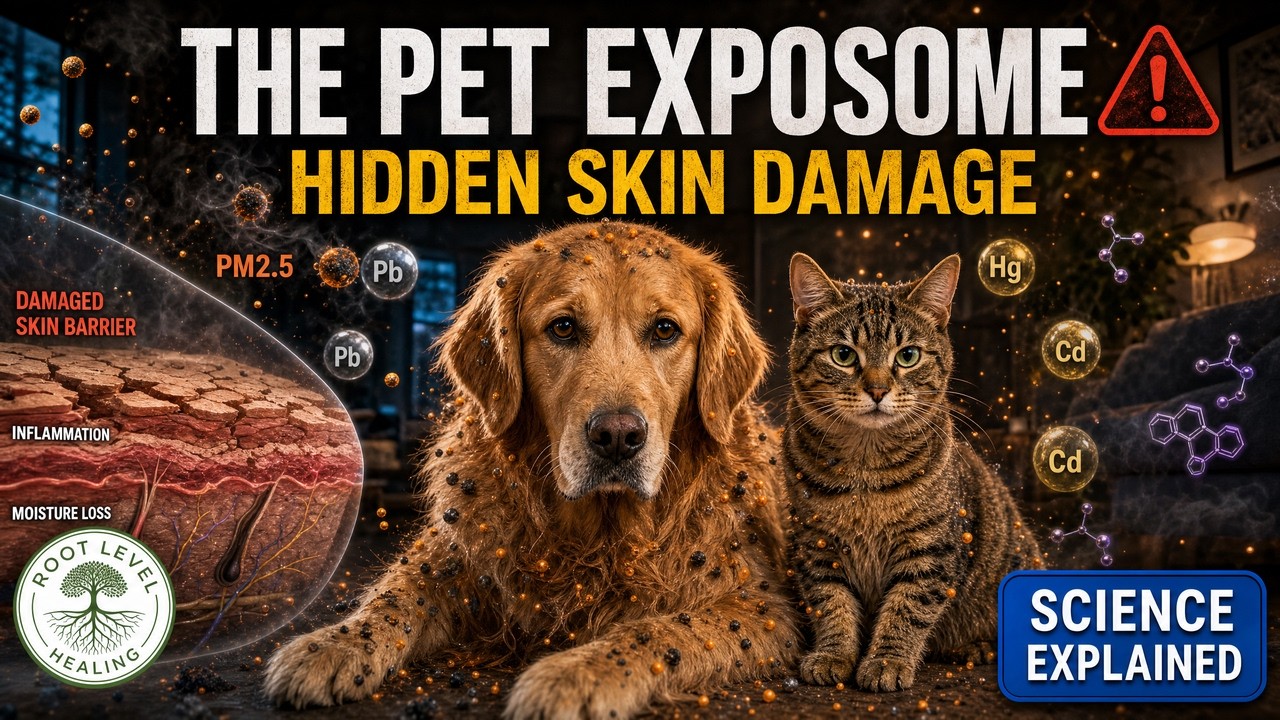
Before we dive deep into the science, watch this quick overview to discover the science behind the "pet exposome" and how environmental pollutants and heavy metals are silently damaging your pet's skin and coat.
In This Article:
The Pet Exposome: A Lifetime of Exposure
The concept of the exposome was first introduced in human health to describe the totality of environmental exposures from conception onwards. For our pets, this concept is even more critical. Their smaller body size, faster metabolism, and unique behaviors—such as grooming, sniffing the ground, and lying on floors—dramatically increase their exposure to environmental toxins.
Indoor vs. Outdoor Pollutants
Our homes, which we consider safe havens, are often concentrated sources of pollutants. Cleaning products, flame retardants in furniture and carpets, plasticizers like BPA and phthalates in toys and food bowls [4], and even the dust that accumulates on our floors all contribute to the indoor exposome. Outdoors, pets are exposed to traffic exhaust, industrial emissions, pesticides, and contaminated soil and water. These pollutants don't just stay outside; they are tracked into our homes on paws and fur, further concentrating the indoor toxic load.
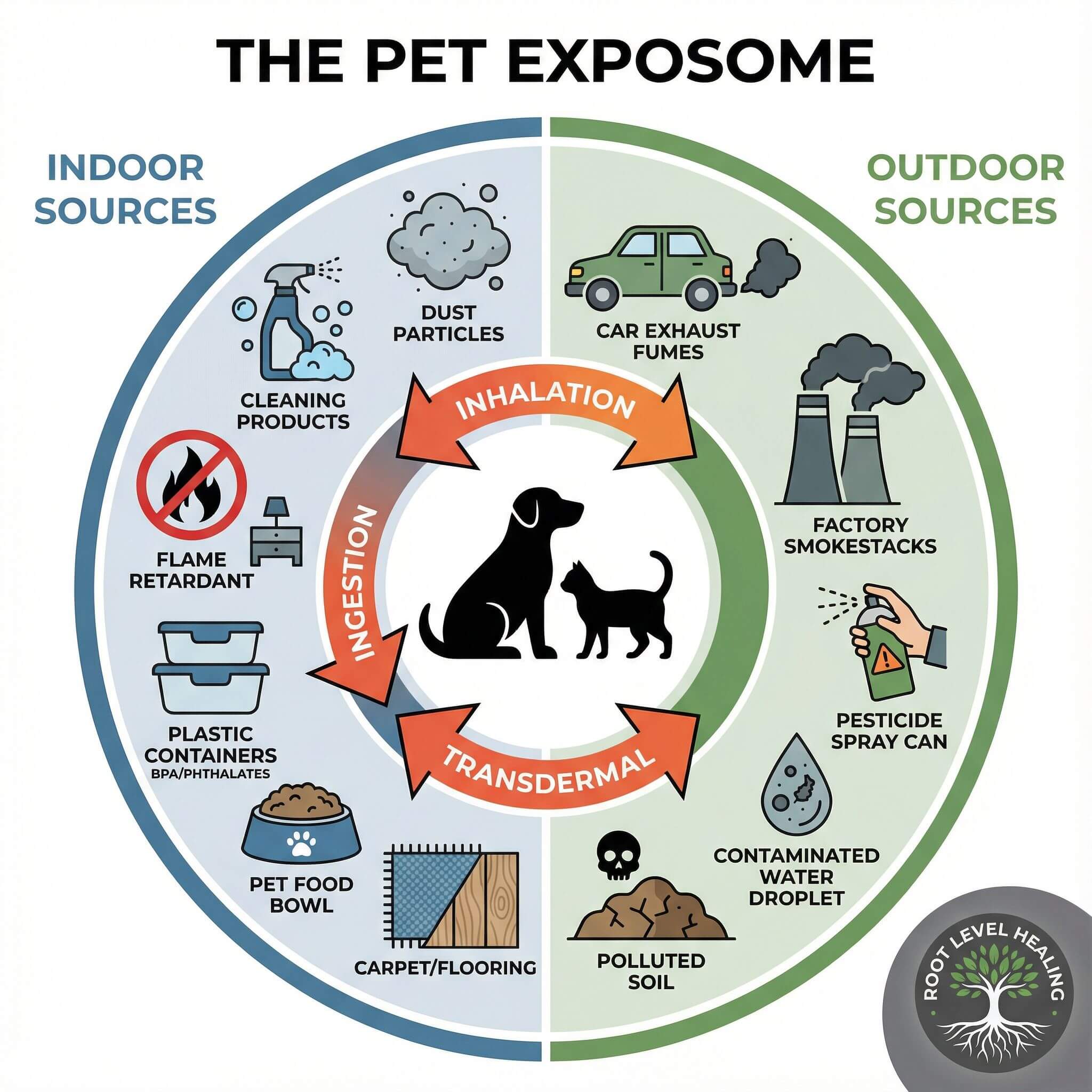
The pet exposome encompasses all environmental pollutants from indoor sources like cleaning products, flame retardants, and plasticizers, as well as outdoor sources including traffic exhaust, industrial emissions, and pesticides. Pets are exposed through three primary pathways: ingestion (grooming and eating), inhalation (breathing contaminated air), and transdermal absorption (direct skin contact), creating a cumulative toxic burden that significantly exceeds human exposure levels.
Higher Bioaccumulation: Why Pets Are More Vulnerable
Research has shown that pets accumulate environmental toxins at significantly higher rates than humans. A groundbreaking study by the Environmental Working Group (EWG) found that cats have levels of flame retardants that are 23 times higher than their owners [1]. Similarly, dogs have been found to have 2.4 times higher levels of perfluorochemicals (from stain- and grease-proof coatings) and 5 times more mercury than the average human [2].
This alarming disparity is due to several factors. Pets live closer to the ground, where heavy particles and dust settle. Their grooming habits mean they directly ingest pollutants that have settled on their coats by licking their fur and paws. A faster metabolic rate can sometimes lead to faster absorption and processing of toxins. Additionally, their smaller body mass means that even small doses of toxins can have a greater impact.
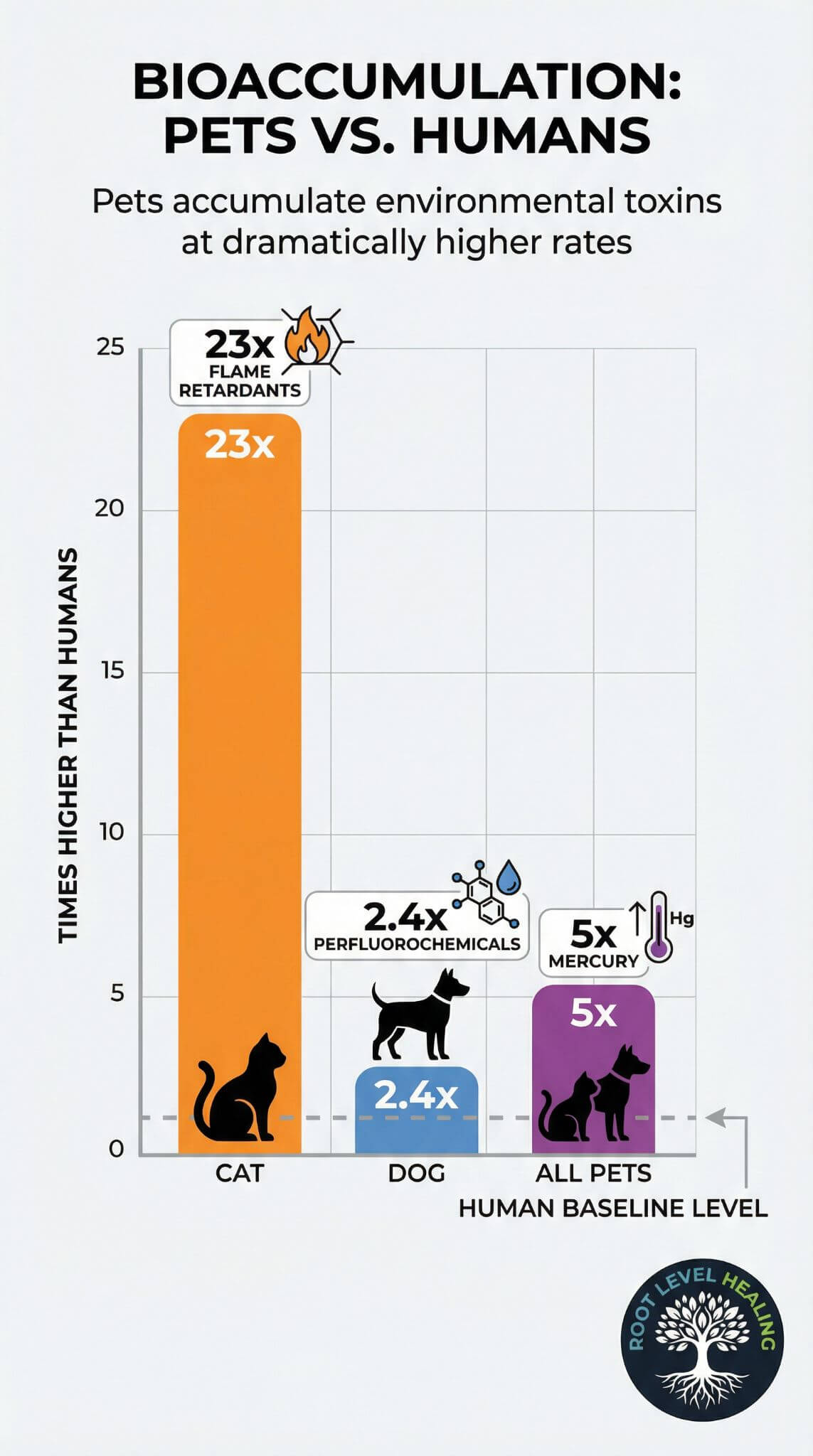
Pets accumulate environmental toxins at dramatically higher rates than humans, with cats showing 23 times higher levels of flame retardants, dogs accumulating 2.4 times more perfluorochemicals from stain-resistant coatings, and pets overall carrying 5 times more mercury than the average human baseline. This bioaccumulation disparity is driven by pets' proximity to contaminated surfaces, grooming behaviors that transfer toxins from fur to digestive system, smaller body mass amplifying dose-response effects, and faster metabolic rates that can accelerate toxin absorption and tissue deposition.
"In a shared environment, our companion animals became unintended sentinels for pollutant exposure consequences, developing even earlier similar conditions to humans. The latency period for showing chronic exposure effects to pollutants is just a few years in them, compared to considerably more, decades in humans."
— Hegedus et al., Animals, 2023 [2]
The Science of Skin Damage: How Pollutants Breach the Barrier
The skin is a remarkable organ, a dynamic barrier that protects the body from the outside world. However, persistent exposure to environmental pollutants can overwhelm its defenses, leading to a breakdown in its structure and function.
The Mechanism of Damage
| Stage | Process | Result |
|---|---|---|
| 1. Pollutant Penetration | Fine particulate matter (PM2.5) and lipophilic pollutants like PAHs penetrate the epidermis through hair follicles and directly through skin cells | Toxins reach deeper skin layers and enter bloodstream |
| 2. Oxidative Stress | Pollutants generate reactive oxygen species (ROS), causing oxidative stress that damages cellular structures including DNA, lipids, and proteins | Cellular dysfunction and inflammatory cascade initiation |
| 3. Barrier Breakdown | Oxidative stress inhibits production of filaggrin (FLG), the key barrier protein essential for skin hydration and structural integrity | "Leaky skin" with compromised protective function |
| 4. Inflammation & Permeability | Damaged barrier allows increased penetration of allergens and irritants, triggering chronic inflammatory response | Increased transepidermal water loss (TEWL), dry and flaky skin, susceptibility to infection |
This cascade of damage is not just a surface-level issue. The chronic inflammation and oxidative stress at the skin level can have systemic effects, contributing to a wide range of health problems. Research has shown that PM2.5 exposure significantly decreases filaggrin degradation products in the skin, compromising barrier function and increasing transepidermal water loss [3].
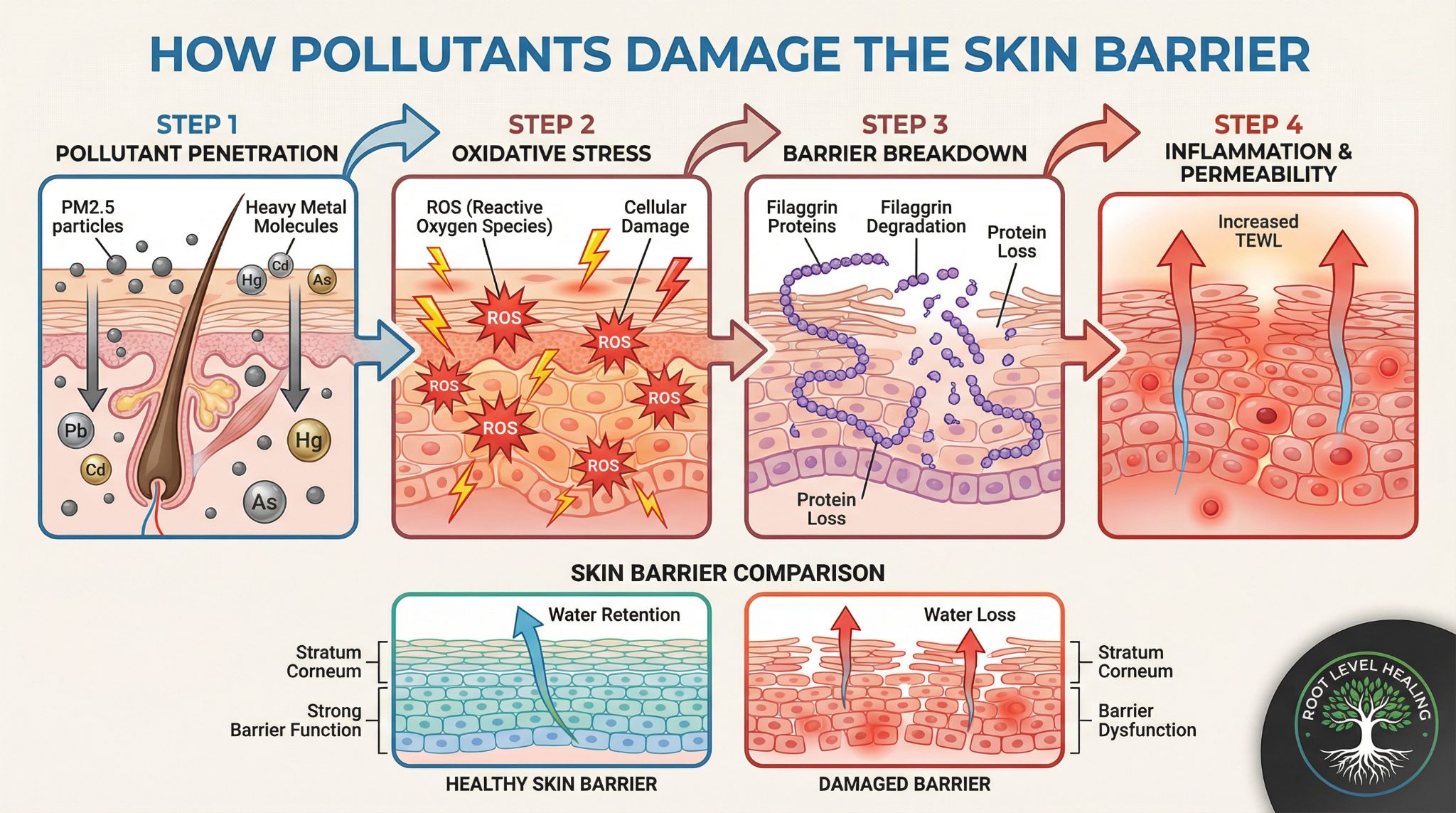
Environmental pollutants damage the skin barrier through a four-stage cascade: PM2.5 particles and heavy metals (lead, cadmium, mercury, arsenic) first penetrate through hair follicles and pores into deeper skin layers; these pollutants then generate reactive oxygen species (ROS) causing severe oxidative stress and cellular damage; oxidative stress inhibits filaggrin protein production leading to barrier breakdown and protein loss; finally, the compromised barrier becomes inflamed with increased permeability, allowing excessive transepidermal water loss (TEWL) and creating gaps that permit allergen penetration. The comparison between healthy intact skin layers and damaged barrier structure illustrates the profound impact of chronic pollutant exposure on skin integrity and protective function.
Observable Signs of Pollutant Exposure
How can you tell if your pet is suffering from a high toxic load? The skin and coat are often the first places to show signs of trouble. While these symptoms can have many causes, a persistent combination of the following may indicate an underlying issue with environmental pollutant exposure:
| Skin Symptoms | Coat Problems | Behavioral Signs | Systemic Effects |
|---|---|---|---|
| Chronic dermatitis and unexplained rashes | Dull, lifeless appearance | Compulsive scratching, licking, or chewing at the skin | Lethargy and weakness |
| Persistent irritation and hot spots | Excessive shedding beyond seasonal norms | Face and body rubbing against furniture | Gastrointestinal disturbances |
| Hair loss and bald patches | Dry and brittle texture | General restlessness or discomfort | Respiratory problems |
| Ulcerative lesions | Changes in coat color or discoloration | Increased grooming frequency | Chronic low-grade inflammation |
| Chronic inflammation and redness | Thinning or patchy fur | Avoiding physical contact or petting | Reduced appetite or weight changes |
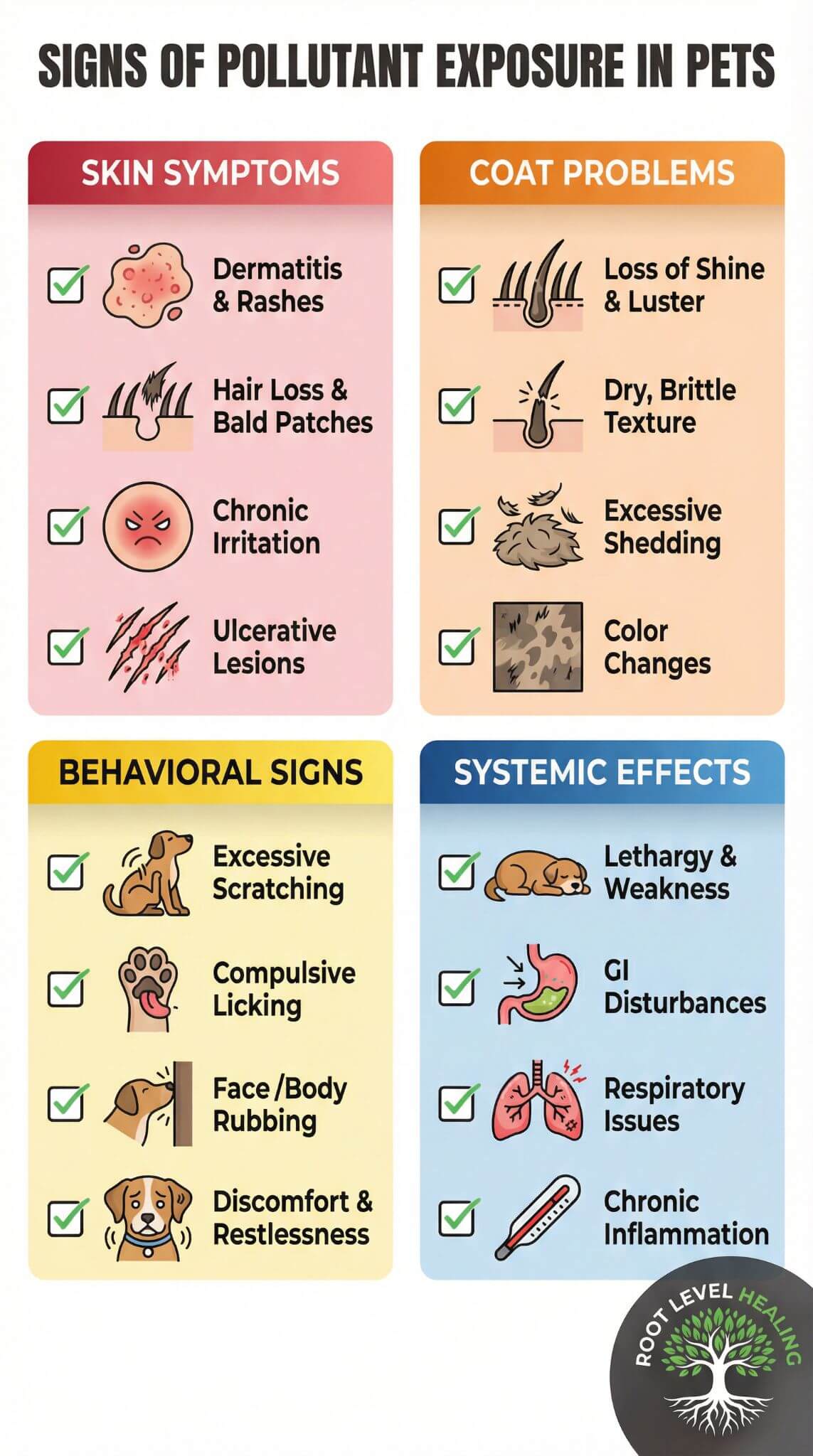
Environmental pollutant and heavy metal exposure manifests through four categories of observable symptoms in pets: skin symptoms including dermatitis, rashes, hair loss, chronic irritation, and ulcerative lesions; coat problems such as loss of shine and luster, dry brittle texture, excessive shedding, and color changes; behavioral signs including excessive scratching, compulsive licking, face and body rubbing, and general discomfort or restlessness; and systemic effects like lethargy, weakness, gastrointestinal disturbances, respiratory issues, and chronic inflammation. Pet owners should monitor for clusters of these symptoms as they may indicate high toxic burden requiring veterinary attention and environmental intervention.
Taking Action: The Need for a Protective Shield
The evidence is clear: our pets are navigating a world filled with invisible threats that directly impact their skin and overall health. The constant barrage of environmental pollutants and heavy metals compromises their natural defenses, leading to chronic inflammation and a host of related problems. While we cannot eliminate all sources of exposure, we can take steps to mitigate the damage and support their bodies' ability to defend against these modern challenges.
In our next article, we will explore the science behind protective barriers and how innovative solutions can help shield our pets from the harmful effects of the exposome, fortifying their skin and promoting a healthier, more resilient coat.
Frequently Asked Questions
Q: What is the pet exposome?
A: The pet exposome is the sum total of all environmental exposures an animal encounters throughout its life, including pollutants, heavy metals, toxins, and chemicals from both indoor and outdoor sources. This includes exposure through ingestion, inhalation, and transdermal (skin) absorption.
Q: Why do pets accumulate more toxins than humans?
A: Pets accumulate toxins at higher rates due to several factors: they live closer to the ground where heavy particles settle, they groom themselves by licking their fur and paws (ingesting pollutants), they have faster metabolisms, and their smaller body mass means even small doses have greater impact. Studies show cats have 23x higher flame retardants and pets have 5x more mercury than humans.
Q: What are the main sources of indoor pollutants for pets?
A: Main indoor sources include cleaning products, flame retardants in furniture and carpets, plasticizers (BPA and phthalates) in toys and food bowls, dust particles, pet food contamination, and off-gassing from flooring and carpets. These pollutants concentrate in indoor environments where pets spend most of their time.
Q: How do environmental pollutants damage the skin barrier?
A: Pollutants like PM2.5 penetrate the skin through hair follicles and pores, generating reactive oxygen species (ROS) that cause oxidative stress. This inhibits production of filaggrin, a key barrier protein, leading to barrier breakdown, increased permeability, inflammation, and transepidermal water loss (TEWL). The result is dry, irritated, and compromised skin.
Q: What are the visible signs of pollutant exposure in pets?
A: Visible signs include chronic dermatitis, unexplained rashes, hair loss and bald patches, dull and lifeless coat, excessive shedding, dry and brittle fur, coat color changes, compulsive scratching or licking, hot spots, and ulcerative lesions. Systemic effects may include lethargy, GI disturbances, and respiratory issues.
Q: Which heavy metals are most harmful to pets?
A: The most harmful heavy metals include lead (Pb), cadmium (Cd), mercury (Hg), arsenic (As), and chromium (Cr). These metals cause oxidative damage, disrupt cellular function, damage organs, and specifically affect the skin through dermatitis, ulcerative lesions, hair loss, and chronic inflammation.
Q: Can outdoor pollutants affect indoor pets?
A: Yes, outdoor pollutants are tracked indoors on paws, fur, and clothing, concentrating in the home environment. Traffic exhaust, industrial emissions, pesticides, and contaminated soil particles all enter homes this way. Indoor pets are then exposed through inhalation, ingestion during grooming, and skin contact with contaminated surfaces.
Q: What is oxidative stress and why does it matter for pet skin?
A: Oxidative stress occurs when pollutants generate excessive reactive oxygen species (ROS) that overwhelm the body's antioxidant defenses. In skin, this causes cellular damage, breaks down protective proteins like filaggrin, triggers inflammation, and compromises the barrier function. Chronic oxidative stress leads to premature aging, chronic inflammation, and increased disease susceptibility.
Q: How does PM2.5 affect pets differently than larger particles?
A: PM2.5 (particles smaller than 2.5 micrometers) can penetrate deeper into skin layers and even enter the bloodstream, unlike larger particles that stay on the surface. These fine particles carry absorbed pollutants, oxidants, and organic compounds directly to cells, causing more severe oxidative damage and systemic effects. Their small size makes them particularly dangerous.
Q: Is there a way to protect pets from environmental pollutants?
A: Yes, protection strategies include reducing indoor pollutant sources, using air purifiers, regular bathing and grooming, wiping paws after outdoor exposure, choosing non-toxic cleaning products, and using topical protective barriers. Our next article will explore the science of protective barriers and innovative solutions like Coato spray that create a defensive shield against environmental toxins.
References
- Environmental Working Group. (2008). Polluted Pets. https://www.ewg.org/research/polluted-pets
- Hegedus, C., Andronie, L., Uiuiu, P., Jurco, E., Lazar, E. A., & Popescu, S. (2023 ). Pets, Genuine Tools of Environmental Pollutant Detection. Animals (Basel), 13(18), 2923. https://pmc.ncbi.nlm.nih.gov/articles/PMC10525180/
- Kim, B. E., Kim, J., Goleva, E., Berdyshev, E., Lee, J., Vang, K. A., ... & Ahn, K. (2021 ). Particulate matter causes skin barrier dysfunction. JCI Insight, 6(5), e145185. https://pmc.ncbi.nlm.nih.gov/articles/PMC8021104/
- Pocar, P., Grieco, V., Aidos, L., & Borromeo, V. (2023 ). Endocrine-Disrupting Chemicals and Their Effects in Pet Dogs and Cats: An Overview. Animals (Basel), 13(3), 378. https://pmc.ncbi.nlm.nih.gov/articles/PMC9913107/

Ready to Discover Your Score?
This 2-minute quiz is the essential first step to understanding your body's current toxic load and identifying the root cause of how you feel.
Take The Toxicity QuizExplore More Articles
Dive deeper into topics like detoxification, gut health, and mental clarity on our blog. Knowledge is the key to taking control of your health.
Visit The Blog