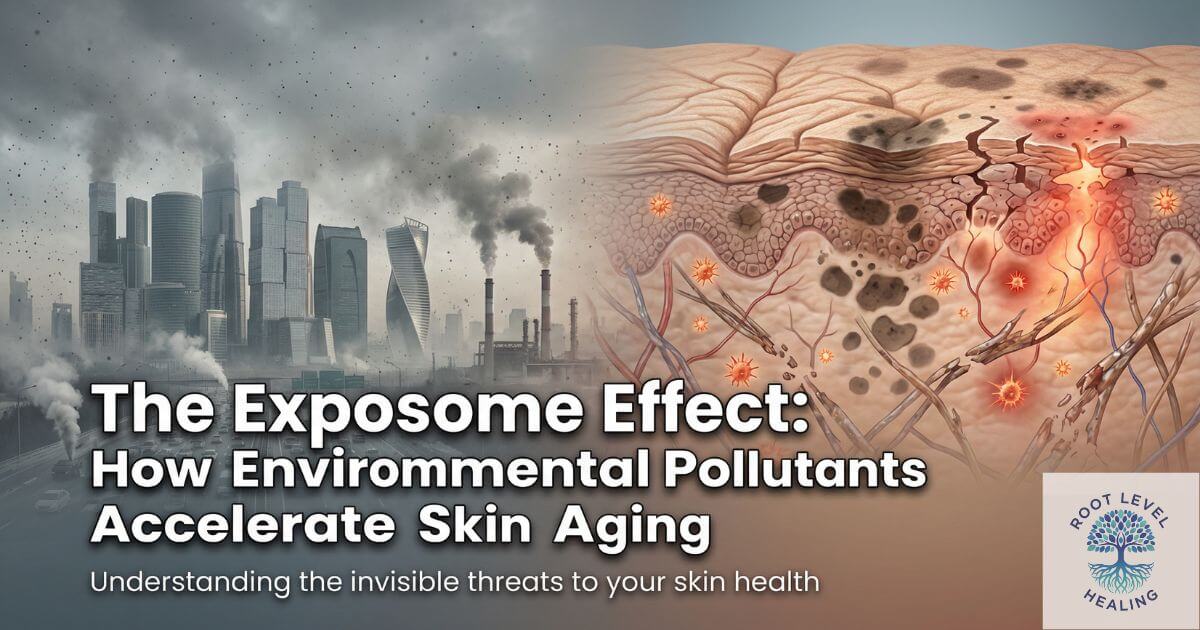
The Exposome Effect: How Environmental Pollutants Accelerate Skin Aging
In the bustling heart of a modern city, we are surrounded by a constant hum of activity—the rush of traffic, the glow of screens, and the towering structures that define urban life. Yet, amidst this vibrant energy, our skin is silently facing an onslaught of invisible aggressors. Every day, it is exposed to a complex cocktail of environmental pollutants that can accelerate the aging process in ways we are only just beginning to fully understand. This phenomenon, known as the "exposome," is the key to unlocking why our skin may appear older than our chronological age suggests.
For decades, the sun was considered the primary external factor in skin aging. While UV radiation remains a significant threat, a growing body of scientific evidence reveals that air pollution, heavy metals, and other environmental toxins play a crucial and distinct role in causing premature wrinkles, dark spots, and a loss of youthful elasticity. Understanding how these pollutants damage our skin at a molecular level is the first step toward building an effective defense strategy and preserving our skin's health and vitality in a rapidly changing world.
This article delves into the science of the exposome, exploring the major environmental threats your skin faces daily. We will uncover the mechanisms by which these pollutants penetrate the skin barrier, trigger oxidative stress, and set off a cascade of damage that leads to visible signs of aging. By the end, you will have a clear understanding of why urban skin often ages faster and what you can do to protect it.
Key Takeaways
- 🌍The Exposome Defined: The exposome encompasses all environmental factors that impact your skin's health throughout your life, from air pollution and UV rays to diet and stress.
- 💨Pollutant Penetration: Microscopic particles like PM2.5 can penetrate the skin's protective barrier, initiating a cascade of oxidative stress and inflammation deep within the tissue.
- ⚡
- 🛡️Antioxidant Defense: Topical antioxidants, such as vitamins C and E, are essential for neutralizing the free radicals generated by pollution exposure, thereby mitigating cellular damage.
- 🧴Barrier Protection: A strong, healthy skin barrier is your first line of defense. Reinforcing it with targeted ingredients can help prevent pollutants from penetrating in the first place.
The Exposome Effect: How City Pollution Accelerates Skin Aging (A Quick Overview)
Before we dive deep into the science, watch this quick overview to discover the science of the "exposome" and how invisible urban pollutants like PM2.5, ozone, and heavy metals trigger a destructive cascade of oxidative stress and collagen loss.
In This Article:
Understanding the Exposome: Your Skin's Environmental Biography
The term "exposome" was first coined in 2005 by cancer epidemiologist Dr. Christopher Wild to represent the totality of environmental exposures an individual experiences from conception to death. While originally applied to cancer research, the concept has been enthusiastically adopted by dermatologists to explain the complex interplay between our environment and our skin's health [3]. Think of it as your skin's environmental biography , a cumulative record of every external factor it has ever encountered.
This biography includes a vast range of inputs. The external exposome consists of everything outside our bodies: UV radiation from the sun, air pollutants like particulate matter and ozone, climate factors such as temperature and humidity, and lifestyle choices including diet, smoking, and stress.
The internal exposome, on the other hand, relates to our body's own metabolic processes and hormonal fluctuations. For the purposes of understanding premature aging, the external exposome is of primary concern.
Unlike our genetic code, which is fixed, the exposome is dynamic and constantly evolving. Every commute, every walk outside, and even the air within our homes contributes to our skin's cumulative exposure load. This is why two individuals with similar genetics can have vastly different skin aging trajectories based on where they live and their lifestyle. The science of the exposome helps us move beyond a one-size-fits-all approach to skincare, allowing us to develop targeted strategies that address the specific environmental challenges our skin faces every day.
The Major Environmental Threats to Skin Health
While the exposome is vast, a few key players have been identified as the primary drivers of pollution-induced skin aging. These microscopic aggressors are pervasive in urban environments and have been extensively studied for their detrimental effects on skin health.
Particulate Matter (PM)
Particulate matter refers to a mixture of solid particles and liquid droplets suspended in the air. It is categorized by size, with PM2.5 (particles less than 2.5 micrometers in diameter) being of greatest concern. To put this in perspective, a single PM2.5 particle is about 1/30th the width of a human hair, allowing it to easily penetrate the skin barrier and even enter hair follicles and sweat glands. Originating from vehicle exhaust, industrial emissions, and burning fossil fuels, these particles act as Trojan horses, carrying other toxic compounds like heavy metals and PAHs deep into the skin [1].
Polycyclic Aromatic Hydrocarbons (PAHs)
PAHs are a class of chemicals that are released into the air from the incomplete burning of coal, oil, gas, and other organic substances. They are lipophilic, meaning they readily dissolve in fats and oils. This property allows them to easily pass through the skin's lipid-rich barrier, where they can bind to cellular receptors and trigger a cascade of damaging reactions, including DNA damage and oxidative stress.
Ground-Level Ozone (O₃)
Unlike the protective ozone layer in the stratosphere, ground-level ozone is a harmful air pollutant. It is formed when nitrogen oxides (NOx) and volatile organic compounds (VOCs)—both byproducts of industrial and vehicle emissions—react in the presence of sunlight. As a powerful oxidant, ozone depletes the skin's natural antioxidant reserves (like vitamins C and E), leaving it vulnerable to free radical damage and impairing its barrier function.
Heavy Metals
Urban air is often contaminated with heavy metals such as lead, cadmium, arsenic, and mercury. These metals can accumulate in the skin's outermost layer, the stratum corneum, where they interfere with cellular processes and generate significant oxidative stress. Their presence disrupts the skin's natural defense mechanisms and contributes to chronic inflammation and accelerated aging.
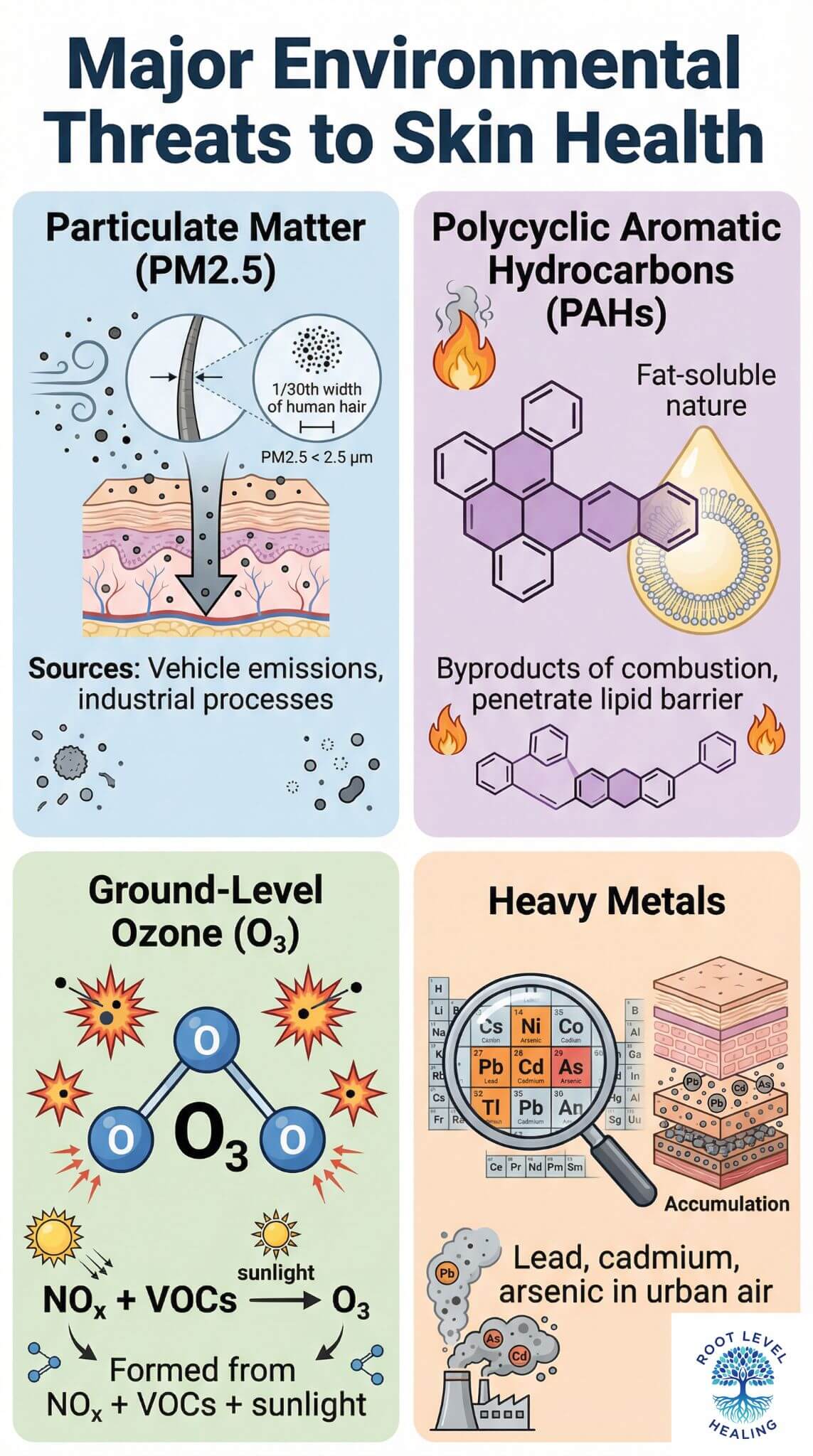
The four major categories of environmental pollutants that threaten skin health: microscopic particulate matter that penetrates the barrier, fat-soluble PAHs from combustion, oxidizing ozone formed by sunlight, and toxic heavy metals that accumulate in skin tissue.
How Pollutants Damage Your Skin: The Molecular Mechanisms
Once pollutants breach the skin's defenses, they initiate a multi-pronged attack at the cellular and molecular level. This cascade of damage is what ultimately translates into the visible signs of premature aging.
The Oxidative Stress Cascade
The primary mechanism of pollutant-induced damage is the generation of Reactive Oxygen Species (ROS), also known as free radicals. When pollutants interact with skin cells, they trigger an overproduction of these unstable molecules. ROS are highly reactive and seek to stabilize themselves by stealing electrons from healthy molecules, including lipids, proteins, and DNA.
This process, called oxidative stress, sets off a chain reaction of cellular damage. It leads to lipid peroxidation, which compromises cell membranes, and damages the mitochondria, the energy powerhouses of our cells [2].
The Inflammatory Response
The body perceives the damage from oxidative stress as an injury and mounts an inflammatory response. Pollutants activate a key inflammatory pathway known as NF-κB, which in turn triggers the release of pro-inflammatory cytokines like interleukins (IL-1, IL-6) and tumor necrosis factor-alpha (TNF-α). While acute inflammation is a healthy healing response, chronic exposure to pollutants leads to a state of persistent, low-grade inflammation known as "inflammaging."
This chronic inflammation constantly signals the skin to break down its structural components, accelerating the aging process.
Barrier Disruption
A healthy skin barrier is crucial for keeping moisture in and aggressors out. Pollutants directly attack this barrier by depleting its essential lipids and damaging the tight junctions that hold skin cells together. This leads to increased transepidermal water loss (TEWL), causing dehydration and sensitivity. A compromised barrier is also less effective at preventing further pollutant penetration, creating a vicious cycle of damage and dysfunction.
Collagen and Elastin Degradation
The structural integrity of our skin depends on a dense matrix of collagen and elastin fibers, which provide firmness and elasticity. The inflammatory cascade triggered by pollutants leads to the upregulation of enzymes called matrix metalloproteinases (MMPs). MMPs act like molecular scissors, chopping up healthy collagen and elastin fibers faster than the body can replenish them.
This degradation of the skin's structural support system is the direct cause of wrinkle formation, sagging, and a loss of firmness.
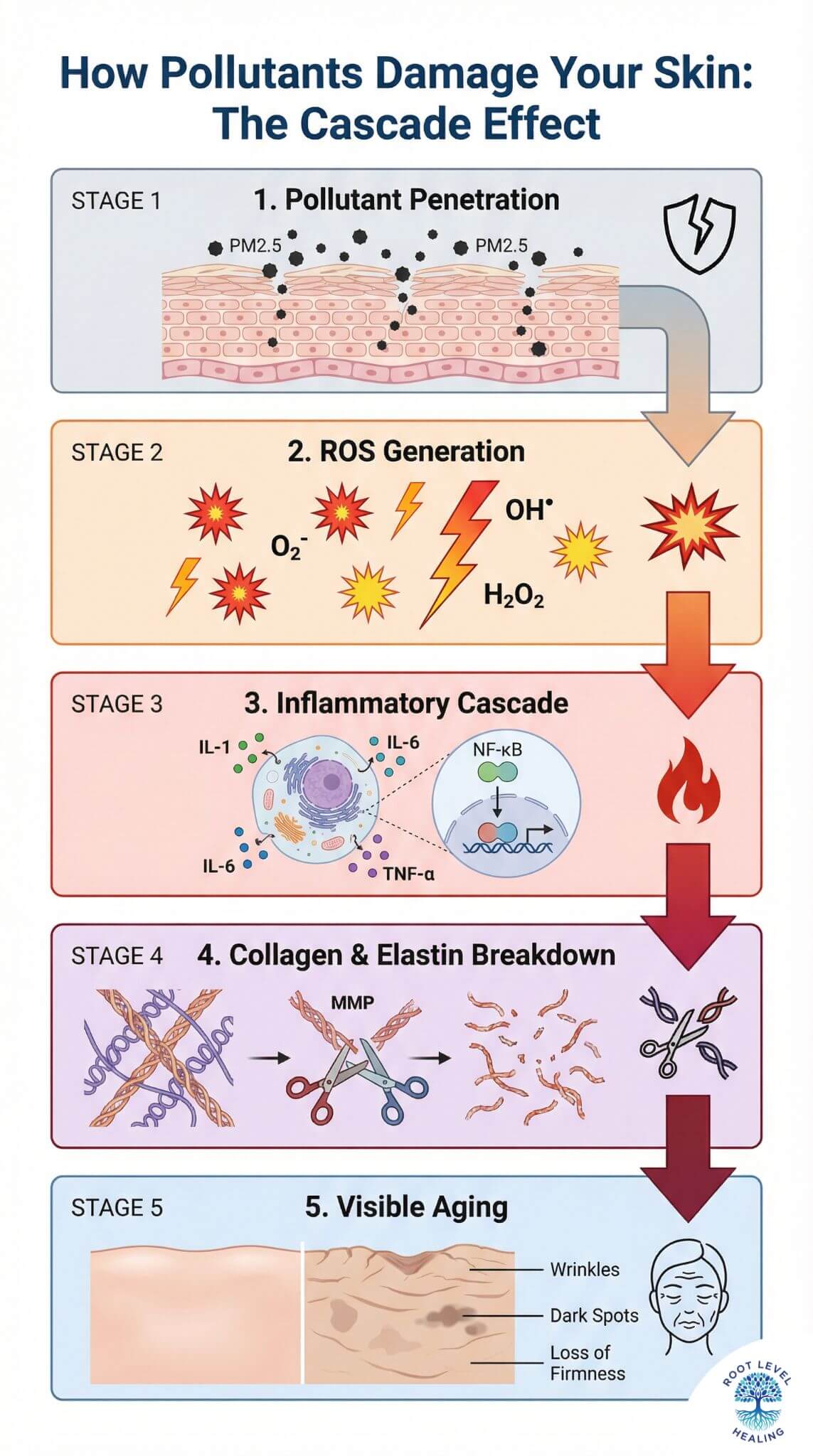
The cascade effect of pollution damage: from initial penetration of PM2.5 particles through the skin barrier, to the generation of reactive oxygen species, activation of inflammatory pathways, enzymatic breakdown of collagen and elastin, culminating in visible signs of premature aging.
Urban Skin vs. Rural Skin: The Visible Difference
The cumulative effect of these molecular mechanisms is starkly visible when comparing the skin of individuals living in highly polluted urban areas to those in cleaner, rural environments. Several large-scale clinical studies have confirmed that "pollution aging" is a distinct and measurable phenomenon.
One landmark study published in the Journal of Investigative Dermatology compared women living in urban and rural areas in Germany and China. The researchers found that exposure to traffic-related particulate matter was significantly correlated with a 20% increase in pigmentation spots on the forehead and cheeks. Another study found that women living in polluted cities had deeper wrinkles and more pronounced nasolabial folds (smile lines) than their rural counterparts, even after accounting for age and UV exposure.
This accelerated aging is often the result of a synergistic effect between pollution and UV radiation. Pollutants can deplete the skin's natural antioxidant defenses, making it more susceptible to sun damage. At the same time, UV rays can exacerbate the inflammatory response triggered by pollutants.
Together, they form a powerful pro-aging cocktail that overwhelms the skin's ability to repair itself. The result is skin that appears dull, uneven, and years older than its chronological age, a clear testament to the profound impact of the environmental exposome.
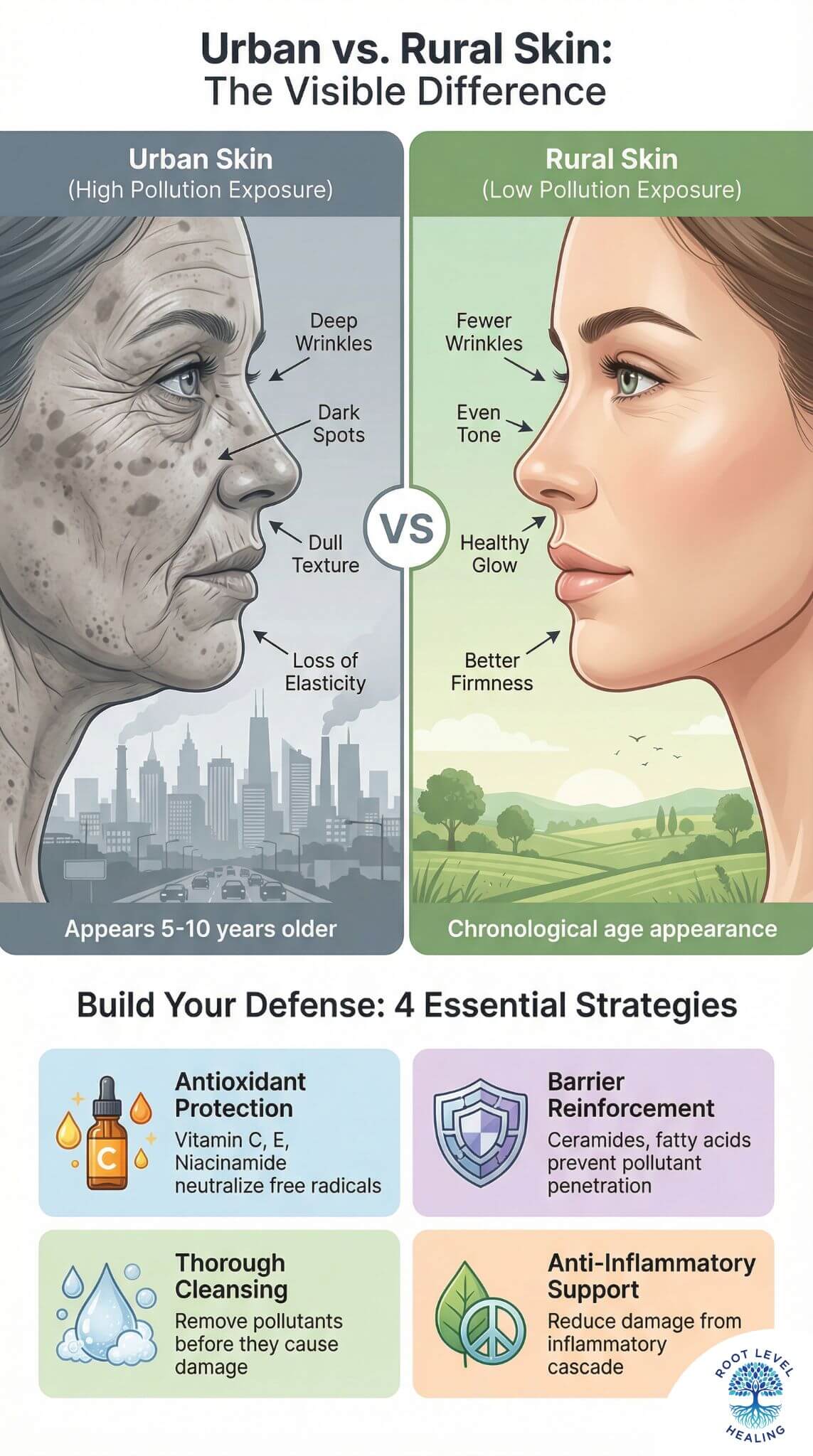
The visible difference between urban and rural skin aging, demonstrating how chronic pollution exposure leads to premature wrinkles, hyperpigmentation, and loss of firmness. The four essential defense strategies provide a comprehensive approach to environmental protection.
Conclusion: Building Your Environmental Defense Strategy
The science is clear: the environment we live in has a profound and measurable impact on how our skin ages. From the microscopic particles in city air to the invisible threat of ground-level ozone, our skin is under constant attack from a host of environmental aggressors. These pollutants are not just a surface-level concern; they penetrate deep into the skin to trigger a destructive cascade of oxidative stress, inflammation, and collagen degradation.
While moving to a pristine rural environment is not a realistic option for most, the knowledge of the exposome empowers us to take control. We can fight back by building a comprehensive environmental defense strategy for our skin. This is not about a single miracle ingredient, but rather a multi-pronged approach that addresses the different mechanisms of pollutant damage.
An effective strategy must include powerful antioxidants to neutralize free radicals, barrier-strengthening compounds to prevent pollutant penetration, and anti-inflammatory agents to calm the damaging immune response.
Now that we understand the invisible threats that make up the exposome, the next logical step is to explore the specific solutions that can protect our skin. In our final article in this series, we will introduce a comprehensive topical solution formulated by Dr. Christina Rahm that brings together the very ingredients needed to build a robust defense against the environmental challenges of modern life.
Frequently Asked Questions
Q: What is the exposome and why does it matter for my skin?
A: The exposome refers to the total environmental exposures you encounter throughout your life, from air pollution to UV radiation. For your skin, the exposome matters because these cumulative exposures accelerate aging, cause inflammation, and damage the skin barrier far beyond what natural aging would cause alone.
Q: Can air pollution really age my skin faster than the sun?
A: While UV radiation remains the primary cause of photoaging, research shows that air pollution significantly accelerates skin aging through different mechanisms. Pollutants generate oxidative stress, trigger chronic inflammation, and damage collagen and elastin. Studies comparing urban and rural populations show measurably more wrinkles, dark spots, and loss of firmness in city dwellers, even when controlling for sun exposure.
Q: How do pollutants actually penetrate the skin?
A: Particulate matter (PM2.5) is small enough to penetrate the skin barrier, especially when the barrier is compromised. Polycyclic aromatic hydrocarbons (PAHs) are lipophilic (fat-loving) and can dissolve through the skin's lipid matrix. Once inside, these pollutants generate reactive oxygen species (ROS) and trigger inflammatory cascades that damage cells and accelerate aging.
Q: Is there a difference between pollution damage and sun damage?
A: Yes. Sun damage (photoaging) primarily causes DNA damage through UV radiation, leading to wrinkles, pigmentation, and increased cancer risk. Pollution damage works through oxidative stress and chronic inflammation, causing barrier dysfunction, increased sensitivity, and accelerated breakdown of collagen and elastin. The two often work synergistically, with pollution + UV causing more damage than either alone.
Q: What can I do to protect my skin from environmental pollutants?
A: A comprehensive approach includes: (1) Antioxidants (vitamin C, vitamin E, niacinamide) to neutralize free radicals, (2) Barrier-strengthening ingredients to prevent pollutant penetration, (3) Anti-inflammatory compounds to reduce damage, (4) Thorough cleansing to remove pollutants from skin surface, and (5) Topical protection products designed specifically for environmental defense.
Q: Do I need environmental protection if I don't live in a big city?
A: While urban environments have higher pollution levels, environmental stressors exist everywhere. Even rural areas have UV radiation, ozone, agricultural chemicals, and seasonal pollution. Additionally, indoor air quality, lifestyle factors (smoking, diet), and climate all contribute to the exposome. Everyone benefits from environmental protection, though urban dwellers may need more intensive strategies.
References
- Bocheva, G., Slominski, R. M., & Slominski, A. T. (2023). Environmental Air Pollutants Affecting Skin Functions with Systemic Implications. Journal of the European Academy of Dermatology and Venereology, 37(7), 1381-1398. https://pmc.ncbi.nlm.nih.gov/articles/PMC10341863/
- Gu, Y., Han, J., Jiang, C., & Zhang, Y. (2024 ). Biomarkers, oxidative stress and autophagy in skin aging. PubMed. https://pubmed.ncbi.nlm.nih.gov/32105850/
- Krutmann, J., Bouloc, A., Sore, G., Bernard, B. A., & Passeron, T. (2017 ). The skin aging exposome. Journal of Dermatological Science, 85(3), 152-161. https://www.jdsjournal.com/article/S0923-1811(16 )30816-7/fulltext

Ready to Discover Your Score?
This 2-minute quiz is the essential first step to understanding your body’s current toxic load and identifying the root cause of how you feel.
Take The Toxicity QuizExplore More Articles
Dive deeper into topics like detoxification, gut health, and mental clarity on our blog. Knowledge is the key to taking control of your health.
Visit The Blog