
The Hidden Nutrient Gap: Why Even Healthy Eaters Need Greens Supplementation
Key Takeaways
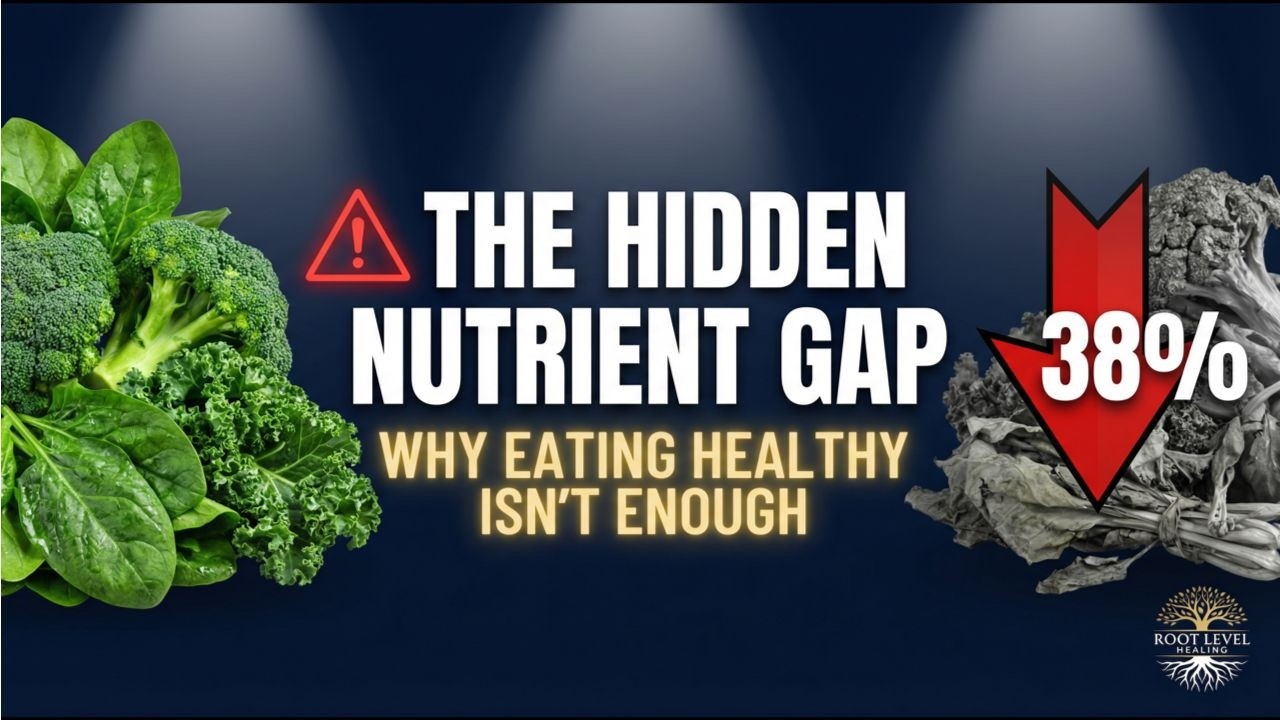
- 🌱The Soil Crisis: Modern agricultural practices have depleted soil nutrients by up to 38% since the 1950s, meaning today's vegetables contain significantly fewer vitamins and minerals.
- 📊The Consumption Gap: Only 12% of Americans meet daily vegetable recommendations, and even those who do may not get adequate nutrition due to depleted food quality.
- ⏰The Convenience Factor: Busy modern lifestyles make it challenging to consume the 7-13 servings of diverse vegetables needed for optimal nutrition.
- 🔬The Bioavailability Advantage: Quality greens supplements can provide concentrated, bioavailable nutrients that complement whole food intake.
You eat organic. You shop at farmers markets. You fill half your plate with vegetables at every meal. By all accounts, you're doing everything "right" when it comes to nutrition. So why do you still feel like something's missing? Why do you experience afternoon energy crashes, occasional brain fog, or that nagging sense that your body isn't operating at its peak?
The answer lies in a hidden crisis that's been decades in the making: the dramatic decline in the nutritional quality of our food supply. Even the most health-conscious individuals are facing a nutrient gap that whole foods alone may no longer be able to fill.
The Hidden Nutrient Gap: Why Healthy Eaters STILL Need Greens Supplementation: A Quick Overview
Watch our short video to discover the hidden nutrient gap that could be affecting your health, and learn how greens supplementation can help.
In This Article:
The Soil Depletion Crisis: When Good Food Isn't Good Enough
The foundation of nutritional health begins in the soil, and that foundation is crumbling. A landmark 2004 study published in the Journal of the American College of Nutrition analyzed the nutrient content of 43 garden crops between 1950 and 1999 [1]. The findings were alarming: significant declines in protein, calcium, phosphorus, iron, riboflavin, and vitamin C content.
"The median decline in six nutrients across all 43 crops was 6% for protein, 16% for calcium, 9% for phosphorus, 15% for iron, 20% for riboflavin, and 15% for vitamin C." - Journal of the American College of Nutrition
More recent research from the University of Washington found that some nutrients have declined by as much as 38% in certain vegetables [2]. This isn't a gradual shift—it's a nutritional collapse happening in real-time [4], [5]. The broccoli your grandmother ate in 1950 contained significantly more calcium, iron, and vitamin C than the broccoli on your plate today.
The culprit? Modern industrial agriculture practices that prioritize yield and appearance over nutritional density. Intensive farming, soil erosion, and the depletion of essential minerals have created a perfect storm of nutritional decline. Even organic farming, while superior in many ways, cannot fully compensate for decades of soil degradation.

The Consumption Reality: Most People Aren't Even Close
While soil depletion affects everyone, the problem is compounded by the stark reality of how most Americans actually eat. According to the Centers for Disease Control and Prevention, only 12.3% of adults meet the recommended daily fruit intake, and just 10% meet vegetable consumption guidelines [3].
But here's what's even more concerning: those recommendations—typically 2-3 cups of vegetables per day—were established based on the nutritional content of foods from decades ago. To get the same nutritional value our grandparents received from their vegetables, we would need to consume significantly more.
The Modern Vegetable Math
To get the same amount of iron that was in one cup of spinach in 1950, you would need to eat approximately 1.5 cups of today's spinach. For vitamin C from tomatoes, you'd need nearly twice as many. This means even people who think they're eating "enough" vegetables may be falling short nutritionally.
The Busy Life Factor: When Time Works Against Health
Even if we could source perfectly nutritious vegetables and had unlimited access to diverse, mineral-rich produce, there's still the practical challenge of modern life. Optimal nutrition requires consuming a wide variety of vegetables—ideally 7-13 servings of different colored plants daily to ensure a full spectrum of phytonutrients, vitamins, and minerals.
For most people, this level of vegetable consumption is simply not realistic. Between work demands, family responsibilities, and the general pace of modern life, preparing and consuming this volume of diverse vegetables becomes a full-time job in itself.
Consider the practical challenges:
Shopping Complexity
Sourcing 7-13 different types of fresh vegetables requires frequent grocery trips and significant meal planning.
Preparation Time
Washing, chopping, and preparing this variety of vegetables can take hours each week.
Storage Limitations
Fresh vegetables have limited shelf life, leading to waste and constant restocking.
Digestive Capacity
Some people struggle to digest large volumes of raw vegetables, limiting their intake.
Seasonal Availability
Optimal nutrition requires year-round access to diverse vegetables, which isn't always possible or affordable.
The Absorption Challenge: It's Not Just What You Eat
Even when we do consume adequate vegetables, absorption becomes another hurdle. Factors like stress, digestive health issues, medication use, and age can significantly impact how well our bodies extract and utilize nutrients from food.
Research published in the American Journal of Clinical Nutrition shows that nutrient absorption can vary dramatically between individuals. Some people may absorb only 30-40% of certain vitamins and minerals from whole foods, while others absorb 80-90%. This variability means that even people eating identical diets can have vastly different nutritional status.
Additionally, certain nutrients are better absorbed when consumed together (like vitamin C enhancing iron absorption), while others compete for absorption pathways. Achieving optimal nutrient synergy through food alone requires extensive nutritional knowledge and careful meal planning that most people simply don't have the time or expertise to implement.
The Quality Greens Solution: Bridging the Gap
This is where high-quality greens supplementation becomes not just helpful, but essential for optimal health. A well-formulated greens powder can provide:
Concentrated Nutrition
Multiple servings worth of vegetables in a single scoop, providing nutrients equivalent to what might have been available in foods decades ago.
Enhanced Bioavailability
Processing methods that break down cell walls and concentrate nutrients for better absorption than whole vegetables alone.
Convenience Factor
The nutritional equivalent of hours of vegetable preparation in a 30-second morning routine.
Targeted Nutrition
Carefully selected combinations of vegetables, fruits, and superfoods that work synergistically for optimal health benefits.
Not All Greens Are Created Equal
It's important to note that not all greens supplements are created equal. Many commercial products are filled with artificial flavors, synthetic vitamins, and low-quality ingredients that provide minimal nutritional benefit. When considering greens supplementation, look for:
- Organic, whole food ingredients rather than synthetic vitamins
- Diverse plant profiles including vegetables, fruits, and superfoods
- Prebiotic and probiotic support for digestive health
- Third-party testing for purity and potency
- Minimal processing that preserves nutrient integrity
The Complement, Not Replacement Approach
It's crucial to understand that greens supplementation should complement, not replace, a diet rich in whole vegetables. The goal is to fill the gaps that modern life and modern agriculture have created, not to abandon whole foods entirely.
Think of quality greens supplementation as nutritional insurance—a way to ensure your body receives the full spectrum of nutrients it needs to thrive, even when life gets in the way of perfect eating. When combined with a foundation of whole, nutrient-dense foods, greens supplementation can help bridge the gap between what we're able to consume and what our bodies actually need for optimal function.
Moving Forward: A Realistic Approach to Optimal Nutrition
The reality is that achieving optimal nutrition in the modern world requires a multi-faceted approach. While we should continue to prioritize whole, organic vegetables and support regenerative agriculture practices that can restore soil health, we also need to be realistic about the challenges we face.
For most health-conscious individuals, this means:
- Continuing to eat a variety of whole vegetables as the foundation of good nutrition
- Supporting local, regenerative farmers who are working to restore soil health
- Incorporating high-quality greens supplementation to fill nutritional gaps
- Focusing on overall lifestyle factors like stress management and sleep that affect nutrient absorption
The hidden nutrient gap is real, but it's not insurmountable. By acknowledging the challenges and taking proactive steps to address them, we can ensure our bodies receive the nutrition they need to not just survive, but truly thrive in the modern world.
Frequently Asked Questions
Q: Can't I just eat more vegetables to make up for the nutrient decline?
A: While eating more vegetables is beneficial, the volume required to match historical nutrient levels would be impractical for most people. You'd need to consume 1.5-2 times more of many vegetables, which presents challenges in terms of time, cost, digestion, and caloric intake.
Q: Are organic vegetables significantly more nutritious than conventional?
A: Organic vegetables typically contain higher levels of certain antioxidants and lower levels of pesticide residues, but they're still subject to the same soil depletion issues affecting all modern agriculture. Organic is better, but it doesn't fully solve the nutrient density problem.
Q: How do I know if I have nutrient gaps in my diet?
A: Common signs include persistent fatigue, brain fog, frequent illness, slow wound healing, and general feelings of not operating at peak capacity. However, many nutrient deficiencies are subtle and may not present obvious symptoms until they become severe.
Q: What should I look for in a quality greens supplement?
A: Look for organic, whole food ingredients; a diverse array of vegetables, fruits, and superfoods; prebiotic and probiotic support; third-party testing for purity; and minimal processing that preserves nutrient integrity. Avoid products with artificial flavors, synthetic vitamins, or excessive fillers.
Q: Can greens supplements replace vegetables entirely?
A: No, greens supplements should complement, not replace, whole vegetables in your diet. Whole foods provide fiber, water content, and nutrient combinations that supplements can't fully replicate. Think of greens supplements as nutritional insurance, not a replacement.
References
- Davis, D. R., Epp, M. D., & Riordan, H. D. (2004 ). Changes in USDA food composition data for 43 garden crops, 1950 to 1999. Journal of the American College of Nutrition, 23(6), 669-682.
- Montgomery, D. R., & Biklé, A. (2022 ). Soil health and nutrient density: preliminary comparison of regenerative and conventional farming. PeerJ, 10, e12848.
- Lee-Kwan, S. H., et al. (2017 ). Disparities in state-specific adult fruit and vegetable consumption—United States, 2015. MMWR Morbidity and Mortality Weekly Report, 66(45), 1241-1247.
- Bhardwaj, R. L. (2024 ). An alarming decline in the nutritional quality of foods. Current Research in Food Science, 8, 100703.
- Marles, R. J. (2017 ). Mineral nutrient composition of vegetables, fruits and grains: The context of reports of apparent historical declines. Journal of Food Composition and Analysis, 56, 93-103.

Ready to Discover Your Score?
This 2-minute quiz is the essential first step to understanding your body's current toxic load and identifying the root cause of how you feel.
Take The Toxicity QuizExplore More Articles
Dive deeper into topics like detoxification, gut health, and mental clarity on our blog. Knowledge is the key to taking control of your health.
Visit The Blog