How to Lose Stubborn Fat: The 3-Pathway Solution to Boost Metabolism
Key Takeaways
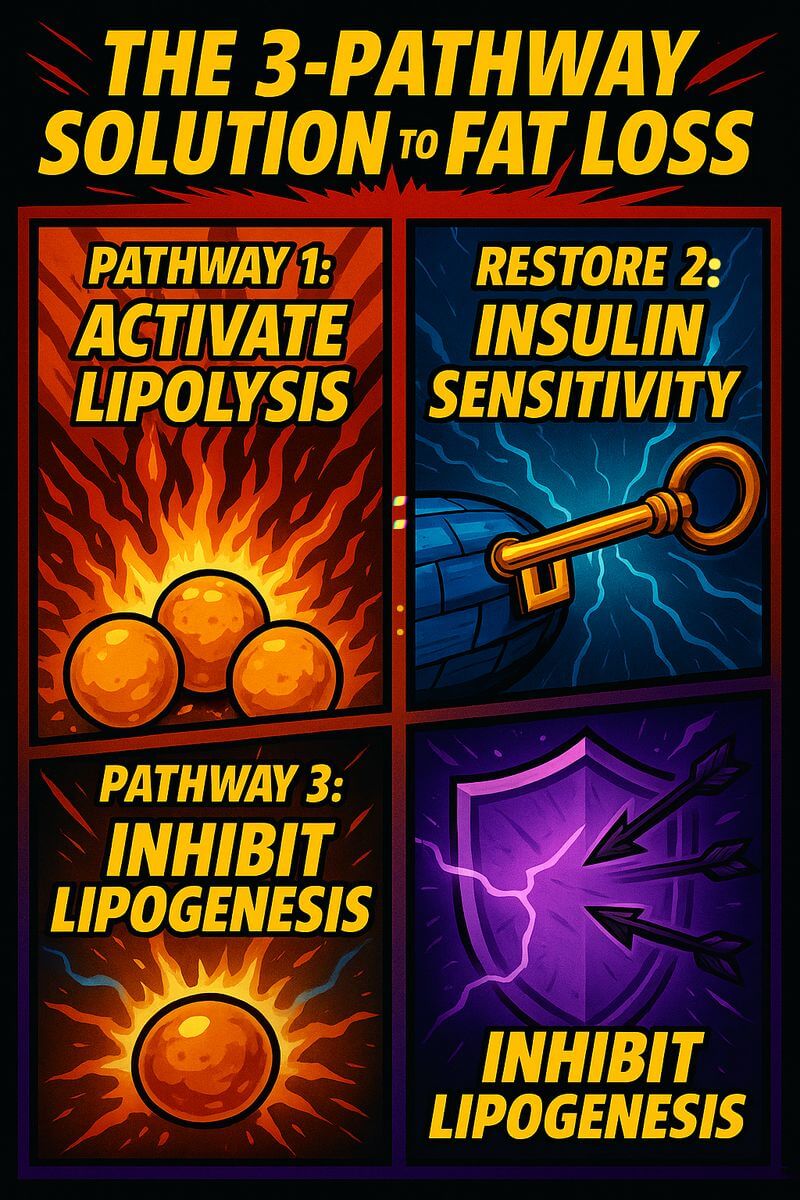
- 🔑The 3-Pathway Solution: To break the fat storage code, you must simultaneously activate lipolysis, restore insulin sensitivity, and inhibit lipogenesis.
- 🔥Activate Lipolysis: This is the process of breaking down stored fat into usable energy.
- 🔓Restore Insulin Sensitivity: This allows your muscle cells to properly absorb and use glucose, preventing it from being diverted to fat storage.
- 🛑Inhibit Lipogenesis: This is the process of blocking the creation of new fat from excess glucose.
You've been trapped in a metabolic prison. You eat well, you exercise, but the fat just won't budge. Sound familiar? That's because your body has been programmed to store fat, not burn it. But what if you could crack the code? What if you could flip the metabolic switch and turn your body into a fat-burning machine?
In our previous posts, we've explored how your body fights fat loss and how the glucose trap turns every extra calorie into stored fat. Now, it's time for the solution. It's not about another diet or a new workout craze. It's about a targeted, 3-pathway approach that addresses the root cause of fat storage.
How to Lose Stubborn Fat: The 3-Pathway Solution to Boost Metabolism & Activate Lipolysis: A Quick Overview
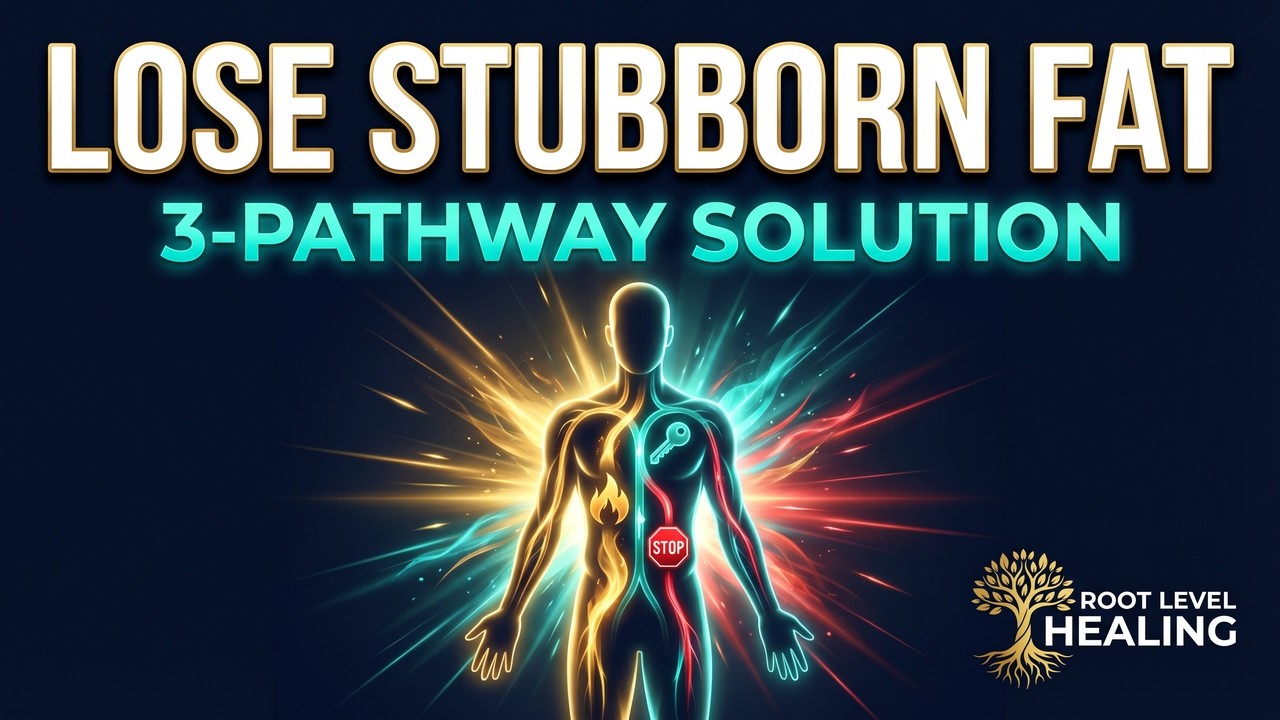
Before we dive deep into the science, watch this quick overview and discover the 3-Pathway Solution to losing stubborn fat — learn how to simultaneously activate lipolysis, restore insulin sensitivity, and inhibit lipogenesis to turn your body from a fat-storing machine into a fat-burning machine.
In This Article:
Pathway 1: Activating Lipolysis - Your Fat-Burning Switch
Lipolysis is the biochemical process of breaking down stored triglycerides (fat) into free fatty acids and glycerol, which can then be used for energy. Think of it as flipping the switch that tells your body to start burning its own fat reserves for fuel. When your body is in fat-storage mode, lipolysis is suppressed. To break the code, you need to turn it back on.
"Partial inhibition of adipose tissue lipolysis is a plausible strategy in the treatment of obesity-related insulin resistance."
Girousse et al., PLoS Biology, 2013 [1]
So, how do you activate lipolysis? It's not just about creating a calorie deficit. It's about sending the right signals to your fat cells. This involves managing insulin levels, as insulin is a potent inhibitor of lipolysis. When insulin is high, fat burning is turned off. By controlling insulin, you can create the hormonal environment that allows lipolysis to occur.
Pathway 2: Reversing Insulin Resistance - The Key to Fat Loss
As we discussed in "The Glucose Trap," insulin resistance is a key reason why your body stores fat so efficiently. When your muscle cells become resistant to insulin, they can't effectively absorb glucose from your bloodstream. This excess glucose is then rerouted to your liver, where it's converted into fat.
Restoring insulin sensitivity is like giving your muscle cells the keys to unlock their doors and let glucose in. When your muscles can properly use glucose for energy, there's less of it available to be stored as fat. This is a critical step in breaking the fat storage code.
"In human adipocytes, HSL gene silencing led to improved insulin-stimulated glucose uptake, resulting in increased de novo lipogenesis..."
Girousse et al., PLoS Biology, 2013 [1]
Improving insulin sensitivity involves a combination of strategies, including targeted nutrition, specific types of exercise, and supplementation with nutrients that have been shown to support healthy glucose metabolism.
Pathway 3: Inhibiting Lipogenesis - How to Stop Fat Storage
De novo lipogenesis (DNL) is the process by which your liver creates new fat from excess carbohydrates. When you're caught in the glucose trap, DNL is in overdrive. To break the code, you need to inhibit this process.
Inhibiting lipogenesis is like shutting down the fat factory in your liver. By reducing the amount of excess glucose that reaches your liver and by using specific nutrients that can downregulate the enzymes involved in DNL, you can effectively halt the production of new fat.
"The sensitivity of insulin to inhibit lipolysis in adipocytes is tenfold lower in subjects with the metabolic syndrome."
Kerr et al., Clinical Science, 2024 [2]
This is the final piece of the puzzle. By inhibiting lipogenesis, you're not just burning more fat; you're also preventing your body from creating new fat. This is the key to achieving sustainable fat loss.
The Synergy of the 3-Pathway Solution
The real power of this approach lies in the synergy of the three pathways. You can't just focus on one. If you only activate lipolysis without restoring insulin sensitivity, you'll be fighting a losing battle. If you only inhibit lipogenesis without activating lipolysis, you won't be burning the fat you already have.
By addressing all three pathways simultaneously, you create a powerful metabolic shift that turns your body from a fat-storing machine into a fat-burning machine. This is the secret to breaking the fat storage code and finally achieving the results you've been working so hard for.
Frequently Asked Questions
Q: What is the 3-pathway solution?
A: The 3-pathway solution is a targeted approach to fat loss that involves simultaneously activating lipolysis (fat burning), restoring insulin sensitivity, and inhibiting lipogenesis (fat creation).
Q: Why is insulin sensitivity so important?
A: Insulin sensitivity allows your muscle cells to properly absorb and use glucose for energy. When your muscles are resistant to insulin, excess glucose is converted to fat.
Q: Can I just focus on one pathway?
A: For optimal results, it's essential to address all three pathways simultaneously. They work together synergistically to create a powerful metabolic shift.
Q: What is lipolysis and how do I activate it?
A: Lipolysis is the biochemical process of breaking down stored triglycerides (fat) into free fatty acids and glycerol, which your body then uses for energy. The primary key to activating it is managing insulin levels. Since insulin is a potent inhibitor of lipolysis, high insulin means fat burning is essentially turned off. Controlling carbohydrate intake, improving insulin sensitivity, and using targeted nutrients can help create the hormonal environment that allows lipolysis to switch back on.
Q: What is de novo lipogenesis and how do I stop it?
A: De novo lipogenesis (DNL) is the process by which your liver converts excess glucose directly into new fat. When you are caught in the glucose trap, this pathway is in overdrive. Inhibiting it involves two things: reducing the amount of excess glucose reaching your liver in the first place, and using specific nutrients that can downregulate the key enzymes (like Acetyl-CoA Carboxylase and Fatty Acid Synthase) responsible for fat synthesis. Together, these strategies effectively shut down your body's fat factory.
References
- Girousse, A., Tavernier, G., Valle, C., Moro, C., & Langin, D. (2013). Partial inhibition of adipose tissue lipolysis improves glucose metabolism and insulin sensitivity without alteration of fat mass. PloS one, 8(2), e56360. https://journals.plos.org/plosbiology/article?id=10.1371/journal.pbio.1001485
- Kerr, A. G., & Adams, C. A. (2024). Insulin resistance in adipocytes: Novel insights into the pathophysiology of metabolic syndrome. Clinical Science, 138(1), 1-15. https://www.sciencedirect.com/science/article/pii/S0261561423004508

Ready to Discover Your Score?
This 2-minute quiz is the essential first step to understanding your body's current toxic load and identifying the root cause of how you feel.
Take The Toxicity QuizExplore More Articles
Dive deeper into topics like detoxification, gut health, and mental clarity on our blog. Knowledge is the key to taking control of your health.
Visit The Blog