
Hypochlorous Acid: The Immune System's Secret Weapon for Skin Protection
How does the human body, in its incredible complexity, defend itself against the constant barrage of microscopic invaders? Our largest organ, the skin, is the primary line of defense, but what happens when that barrier is breached? The answer lies within our own immune system, which manufactures a potent, fast-acting, and remarkably safe molecule to neutralize threats. This molecule is Hypochlorous Acid (HOCl), and it represents one of the most elegant and effective defense mechanisms in human biology.
For centuries, we have sought external solutions to cleanse and protect our skin, often turning to harsh chemicals that can disrupt its delicate balance. But what if the most powerful solution was already inside us?
Groundbreaking advancements in skincare science have allowed us to harness the power of this natural molecule, formulating it into topical applications that support the skin's innate ability to protect and heal itself. This article will delve into the fascinating science of HOCl, exploring how it works, what clinical studies have found about its benefits for skin health [1], and why it is now being hailed as a revolutionary ingredient for the challenges of modern life.
Key Takeaways
- 🛡️Immune Power: Hypochlorous Acid (HOCl) is a natural and vital part of the human immune system, produced by our own white blood cells to fight infection.
- 🦠Microbial Shield: It possesses broad-spectrum antimicrobial properties, effectively neutralizing a wide range of harmful bacteria, viruses, and fungi on contact.
- 🌿Inflammation Control: HOCl exhibits potent anti-inflammatory and immunomodulatory effects, making it exceptionally effective at calming red, irritated, and sensitive skin.
- 🩹Accelerated Healing: By reducing microbial burden and controlling inflammation, HOCl significantly accelerates the skin's natural wound healing and tissue repair processes.
- ✅Superior Safety: When professionally formulated at a stabilized, neutral pH, HOCl is non-toxic, non-irritating, and exceptionally gentle, making it safe for all skin types, even on the most sensitive areas.
Hypochlorous Acid (HOCl): Your Immune System's Secret Weapon for Skin Protection (A Quick Overview)
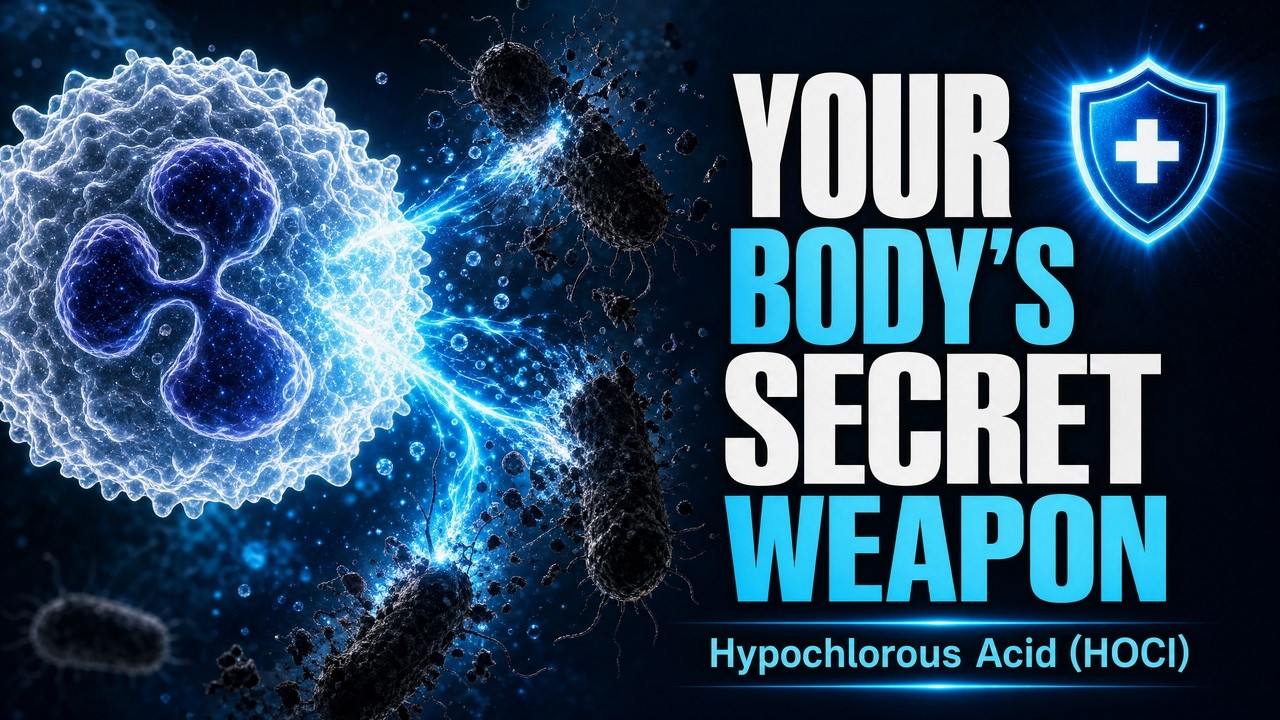
Before we dive deep into the science, watch this quick overview to discover how Hypochlorous Acid (HOCl)—the exact same molecule produced by your own white blood cells—provides a powerful, broad-spectrum defense against bacteria and inflammation.
In This Article:
What is Hypochlorous Acid (HOCl)?
At its core, Hypochlorous Acid is the very substance our own immune system creates to eradicate pathogens. When your body detects an injury or infection, it initiates a process called phagocytosis, where specialized white blood cells, known as neutrophils, are dispatched to the site. Upon arrival, these first responders engulf the invading microbes and, in a process called the "respiratory burst," release a shower of reactive oxygen species, with HOCl being one of the most powerful and effective components [1]. This innate mechanism is the body's frontline defense, efficiently destroying pathogens without harming the surrounding healthy tissue.
Chemically, HOCl is a weak acid with the formula HClO. It is crucial to distinguish it from sodium hypochlorite (NaOCl), the harsh chemical commonly known as bleach. While they are related, their properties and effects on the skin are vastly different.
The key to unlocking HOCl's therapeutic potential lies in its formulation, specifically its pH level. Scientific research has shown that HOCl is most stable and effective within a narrow pH range of 3.5 to 5.5 [1]. Outside of this optimal window, its integrity is compromised. At a lower, more acidic pH, it can degrade into chlorine gas, losing its benefits and becoming a potential irritant. At a higher, more alkaline pH, it converts into the hypochlorite ion, which is less effective and more characteristic of bleach. This is why creating a stabilized, pH-neutral HOCl formulation is a mark of advanced skincare science, ensuring maximum efficacy and superior safety for topical use.
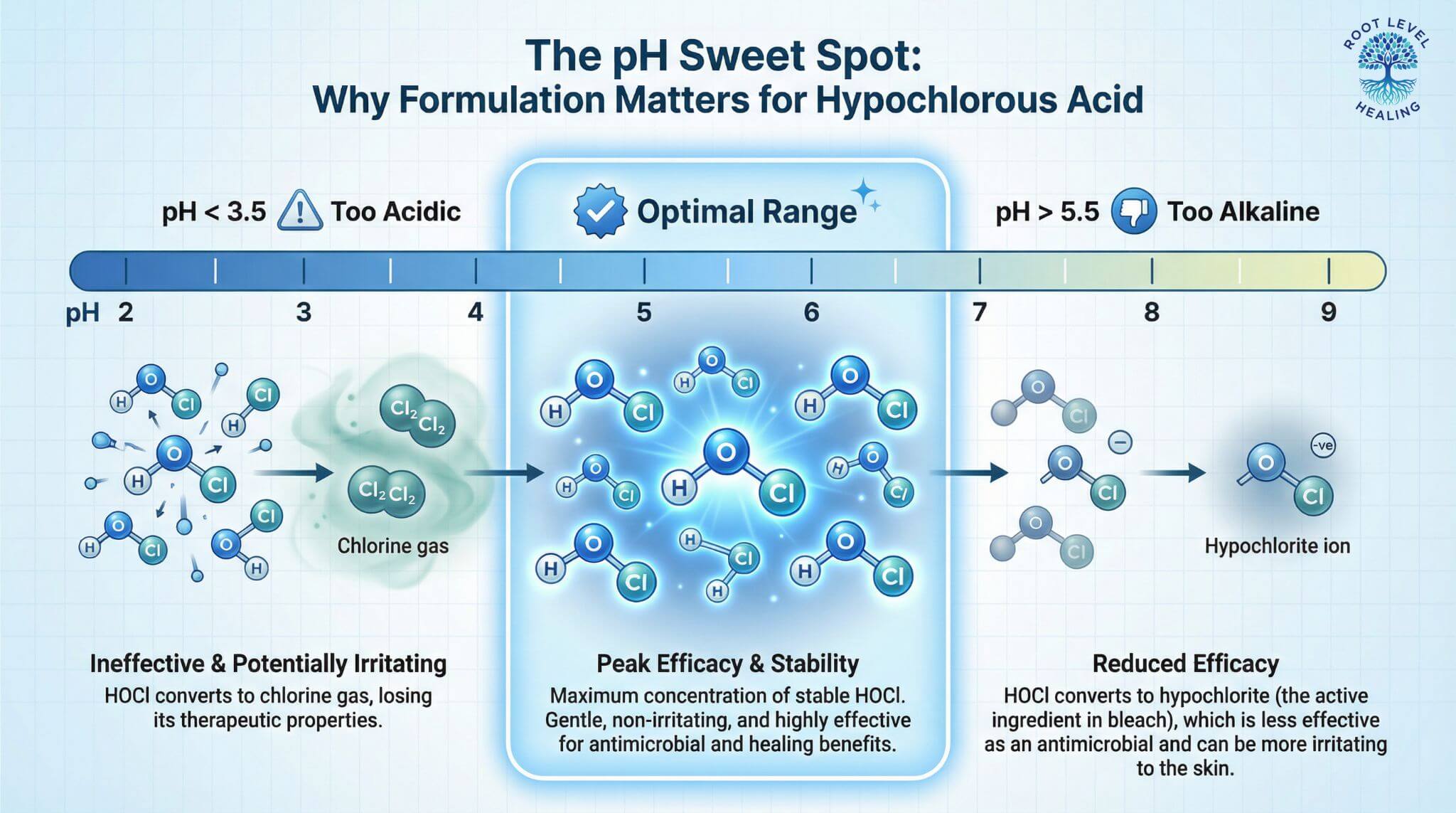
The stability and efficacy of Hypochlorous Acid are critically dependent on pH. Only within a narrow, slightly acidic window is the molecule optimized for therapeutic benefits without causing irritation.
The Antimicrobial Power of HOCl
One of the most remarkable attributes of Hypochlorous Acid is its incredibly broad and potent antimicrobial activity. Unlike many antibiotics that target specific metabolic pathways in bacteria, HOCl works through a direct, physical mechanism. It effectively neutralizes pathogens by denaturing their essential proteins and disrupting their cell membranes, causing them to quickly lose structure and disintegrate [2]. This method of action is so efficient that microbes are unable to develop resistance, a growing concern with traditional antibiotics.
This power is not limited to just one type of microbe. Studies have confirmed HOCl's efficacy against a vast array of pathogens, including many of the most common culprits behind skin issues. This includes gram-positive and gram-negative bacteria like Staphylococcus aureus (including MRSA) and Pseudomonas aeruginosa, various viruses, and fungi such as Candida albicans [1] [3]. Furthermore, HOCl has demonstrated the ability to penetrate and disrupt biofilms—slimy, resilient colonies of microbes that are notoriously difficult to eradicate and are a major factor in chronic wounds and infections [4].
| Clinical Application | Pathogen/Condition | Key Finding | Reference |
|---|---|---|---|
| Atopic Dermatitis | Staphylococcus aureus | Marked reduction in bacterial colonies and superior clinical improvement compared to control. | Sasai-Takedatsu et al. (1997) [5] |
| Acne Vulgaris | Inflammatory Acne | Clinical improvement comparable to benzoyl peroxide, with no adverse local side effects. | Tirado-Sanchez et al. (2009) [6] |
| Diabetic Foot Ulcers | Infected Wounds | Significantly greater bacterial clearance and shorter median healing time (43 vs. 55 days). | Dalla Paola et al. (2006) [7] |
These clinical results underscore the real-world effectiveness of HOCl. Whether it's reducing the bacterial load that exacerbates eczema, controlling the microbes involved in acne, or creating a clean environment for wounds to heal, HOCl provides a powerful and reliable antimicrobial shield.

HOCl provides a broad-spectrum defense, physically destroying bacteria, viruses, and fungi by disrupting their cellular structures, a mechanism that prevents microbial resistance.
Beyond Antimicrobial: Anti-Inflammatory and Healing Properties
While its ability to eliminate pathogens is profound, the benefits of Hypochlorous Acid extend far beyond simple disinfection. It is also a potent anti-inflammatory and immunomodulatory agent, meaning it helps to regulate the body's own immune and inflammatory responses, bringing irritated skin back into a state of balance.
Chronic inflammation is a root cause of many skin conditions, from acne and rosacea to premature aging. HOCl helps to break this cycle by down-regulating the production of inflammatory cytokines and inhibiting the degranulation of mast cells, which are key drivers of redness, swelling, and itching [1] [8].
This dual-action—cleansing and calming—makes HOCl an exceptional agent for wound healing. By first eliminating the microbial burden that can lead to infection and chronic inflammation, it sets the stage for the body's natural repair processes to take over. Clinical studies on diabetic ulcers and post-surgical wounds have shown that treatment with HOCl not only leads to faster bacterial clearance but also significantly accelerates healing time [7].
It helps create the ideal, clean, and calm environment for new tissue to form. This healing prowess is also evident in its ability to provide relief from pruritus (itching) associated with conditions like atopic dermatitis and to improve the appearance of hypertrophic scars and keloids by modulating the inflammatory response during tissue remodeling [1].

HOCl orchestrates a healing cascade, first neutralizing inflammatory triggers and then calming the immune response to allow for efficient tissue repair and regeneration.
The Unmatched Safety Profile of Stabilized HOCl
In the world of powerful active ingredients, efficacy often comes at the cost of tolerability. This is where Hypochlorous Acid truly stands apart. Because it is a natural part of our own biology, it is exceptionally biocompatible. When formulated correctly into a stabilized, pH-neutral solution, it is not recognized by the body as a foreign or toxic substance. Unlike traditional antiseptics like alcohol, hydrogen peroxide, or benzoyl peroxide, which can cause dryness, irritation, and damage to healthy skin cells, HOCl is non-cytotoxic. This means it selectively targets pathogens without harming the delicate keratinocytes and fibroblasts that are essential for maintaining a healthy skin barrier and generating new tissue [1].
This inherent gentleness makes stabilized HOCl safe for all skin types, including the most sensitive and compromised conditions. It can be used on delicate areas of the face, including around the eyes and mouth, without fear of stinging or irritation. This superior safety profile, combined with its powerful efficacy and the fact that microbes cannot build a resistance to it, makes HOCl a uniquely reliable and sustainable choice for long-term skin health.
Conclusion: The Future of Protective Skincare
Hypochlorous Acid represents a paradigm shift in how we approach skin health. It moves us away from a reliance on harsh, external chemicals and toward a more intelligent strategy of supporting the skin's own innate protective and regenerative capabilities. With its trifecta of proven benefits—powerfully antimicrobial, profoundly anti-inflammatory, and actively pro-healing—HOCl is not just another ingredient; it is a cornerstone of resilient skin. It provides a safe, effective, and biologically compatible solution for cleansing, purifying, and calming the skin.
In a world where our skin is constantly under assault from environmental aggressors, harnessing the power of our own immune system is the most logical path forward. HOCl provides an active, intelligent shield, helping to maintain a balanced microbiome and a calm cellular environment. Now that we understand how this remarkable molecule protects our skin, we can explore how to further strengthen its foundation. In our next article, we will delve into another crucial element for skin resilience: Orthosilicic Acid, the bioavailable form of silicon that helps build a stronger, more durable skin structure from within.
Frequently Asked Questions
Q: Is Hypochlorous Acid the same as bleach?
A: No. While both contain chlorine, they are chemically different. Hypochlorous Acid (HOCl) is a weak acid with the formula HClO, naturally produced by your immune system. Bleach is sodium hypochlorite (NaOCl), a harsh alkaline chemical. When HOCl is properly formulated at a pH of 3.5-5.5, it is gentle, non-irritating, and safe for skin, unlike bleach which can cause severe irritation and damage.
Q: Can I use Hypochlorous Acid on sensitive or damaged skin?
A: Yes. One of the most remarkable properties of stabilized HOCl is its exceptional gentleness. Because it is bioidentical to what your own immune cells produce, it is non-cytotoxic and safe for all skin types, including sensitive, compromised, or inflamed skin. It can even be used around the eyes and mouth without stinging or irritation.
Q: Will bacteria develop resistance to Hypochlorous Acid?
A: No. Unlike antibiotics that target specific metabolic pathways, HOCl works through a direct physical mechanism—denaturing proteins and disrupting cell membranes. This method of action is so fundamental that microbes cannot develop resistance to it, making HOCl a sustainable long-term solution for antimicrobial protection.
Q: How does HOCl compare to other antiseptics like hydrogen peroxide or benzoyl peroxide?
A: HOCl offers superior efficacy with far better tolerability. Traditional antiseptics like hydrogen peroxide, alcohol, and benzoyl peroxide can cause dryness, irritation, and damage to healthy skin cells. HOCl selectively targets pathogens without harming the keratinocytes and fibroblasts essential for maintaining a healthy skin barrier, making it both more effective and gentler.
Q: Why is pH so important for Hypochlorous Acid products?
A: The pH determines HOCl's stability and effectiveness. Only within the narrow range of 3.5-5.5 does the molecule remain in its optimal, therapeutic form. Below this range, it degrades into chlorine gas (ineffective and irritating). Above this range, it converts to hypochlorite ion (less effective and more like bleach). A properly stabilized, pH-neutral formulation is essential for safety and efficacy.
Q: Can Hypochlorous Acid help with acne, eczema, or wound healing?
A: Yes. Clinical studies have demonstrated HOCl's effectiveness across multiple skin conditions. For acne, it provides antimicrobial action comparable to benzoyl peroxide without side effects. For atopic dermatitis (eczema), it significantly reduces bacterial colonization and inflammation. For wounds, it accelerates healing by clearing infection and creating an optimal environment for tissue repair.
References
- Del Rosso, J. Q., & Bhatia, N. (2018). Status Report on Topical Hypochlorous Acid: Clinical Relevance of Specific Formulations, Potential Modes of Action, and Study Outcomes. The Journal of Clinical and Aesthetic Dermatology, 11(11), 36–39. https://pmc.ncbi.nlm.nih.gov/articles/PMC6303114/
- Wang, L., Bassiri, M., Najafi, R., et al. (2007). Hypochlorous acid as a potential wound care agent: part I. Stabilized hypochlorous acid: a component of the inorganic armamentarium of innate immunity. Journal of Burns and Wounds, 6, e5. https://pmc.ncbi.nlm.nih.gov/articles/PMC1853323/
- Sakarya, S., Gunay, N., Karakulak, M., Ozturk, B., & Ertugrul, B. (2014). Hypochlorous Acid: An Ideal Wound Care Agent with Powerful Microbicidal, Antibiofilm, and Wound Healing Potency. Wounds: A Compendium of Clinical Research and Practice, 26(12), 342–350. https://pubmed.ncbi.nlm.nih.gov/25785777/
- Sauer, K., Thatcher, E., Northey, R., & Gutierrez, A. A. (2009). Neutral super-oxidized solutions are effective in killing P. aeruginosa biofilms. Biofouling, 25(1), 45–54. https://www.tandfonline.com/doi/full/10.1080/08927010802441412
- Sasai-Takedatsu, M., Kojima, T., Yamamoto, A., et al. (1997). Reduction of Staphylococcus aureus in atopic skin lesions with acid electrolytic water--a new therapeutic strategy for atopic dermatitis. Allergy, 52(10), 1012–1016. https://pubmed.ncbi.nlm.nih.gov/9360754/
- Tirado-Sanchez, A., & Ponce-Olivera, R. M. (2009). Efficacy and tolerance of superoxidized solution in the treatment of mild to moderate inflammatory acne: a double-blinded, placebo-controlled, parallel-group, randomized, clinical trial. Journal of Dermatological Treatment, 20(5), 289–292. https://www.tandfonline.com/doi/full/10.1080/09546630902973995
- Dalla Paola, L., Brocco, E., Senesi, A., et al. (2006). Super-oxidized solution (SOS) for infected diabetic foot ulcers. Wounds: A Compendium of Clinical Research and Practice, 18(9), 262–270. https://www.nhp.com.tr/referanslar/referans_52.pdf
- Medina-Tamayo, J., Sanchez-Miranda, E., Ballez-Tapia, H., et al. (2007). Super-oxidized solution inhibits IgE-antigen-induced degranulation and cytokine release in mast cells. International Immunopharmacology, 7(8), 1013–1024. https://www.sciencedirect.com/science/article/abs/pii/S1567576907000859?via%3Dihub

Ready to Discover Your Score?
This 2-minute quiz is the essential first step to understanding your body’s current toxic load and identifying the root cause of how you feel.
Take The Toxicity QuizExplore More Articles
Dive deeper into topics like detoxification, gut health, and mental clarity on our blog. Knowledge is the key to taking control of your health.
Visit The Blog