Natural Nootropics: The Safe Path to Enhanced Cognitive Function
In our previous exploration of how environmental toxins disrupt brain chemistry, we uncovered the mechanisms behind cognitive decline. Now, we turn to nature's answer: a remarkable class of compounds that have been enhancing human cognition for thousands of years. Natural nootropics represent the intersection of ancient wisdom and modern science, offering a safe, effective path to cognitive enhancement without the risks associated with synthetic alternatives.
Key Takeaways
- 🌿Nature's Intelligence: Plant-based nootropics have been safely enhancing cognition for millennia, with extensive research validating their effectiveness.
- 🛡️Superior Safety Profile: Natural nootropics offer cognitive enhancement with minimal side effects, unlike synthetic alternatives.
- 🧠Multiple Mechanisms: These compounds work through various pathways to enhance memory, focus, neuroprotection, and stress resilience.
6 Natural Nootropics for Better Focus, Memory & Mental Clarity (Science-Backed): A Quick Overview
Before we dive deep into the science, watch this quick overview explaining six proven natural nootropics that can enhance your cognitive function safely and effectively.
In This Article:
- What Are Natural Nootropics? Understanding Nature's Cognitive Enhancers
- The Science Behind Natural Nootropics: How Plants Enhance Brain Function
- Proven Natural Nootropics: The Elite Cognitive Enhancers
- Natural vs. Synthetic: Why Nature Wins the Cognitive Enhancement Race
- Choosing Natural Nootropics: Your Guide to Safe Cognitive Enhancement
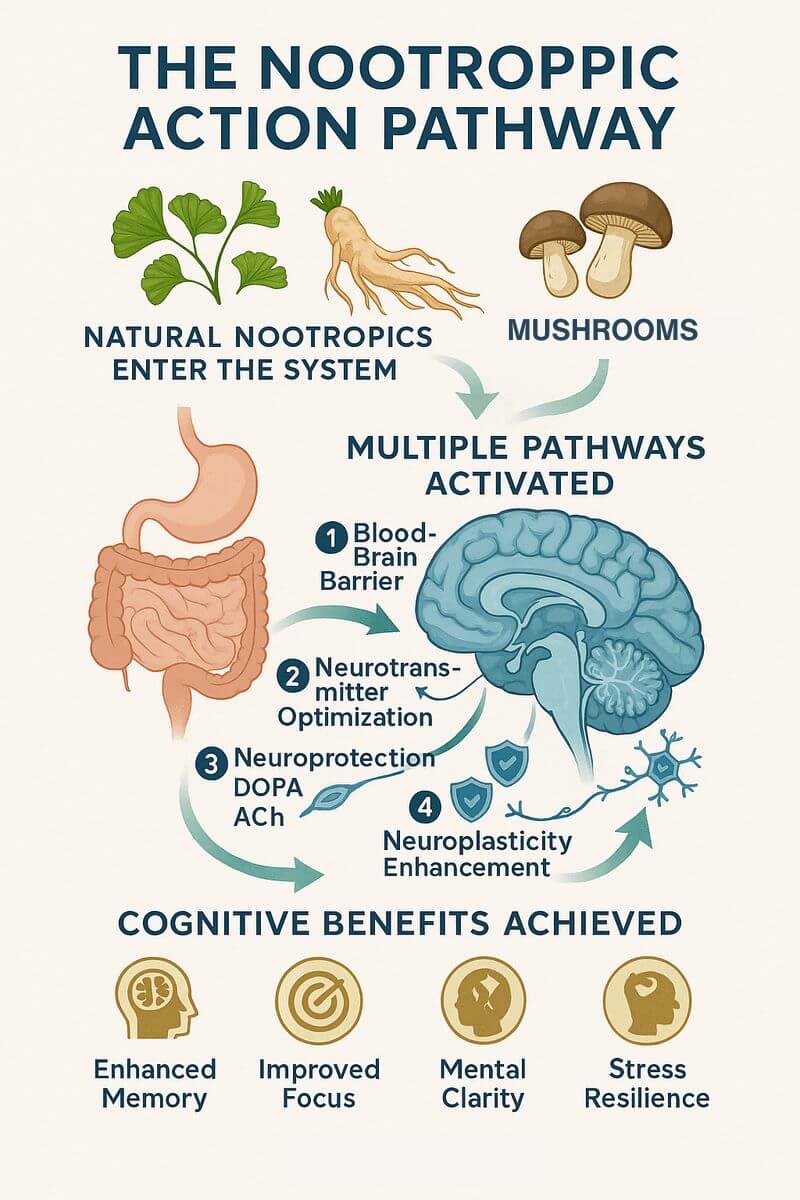
Natural nootropics enhance cognitive function through multiple physiological pathways, including improved cerebral blood flow, neurotransmitter modulation, neuroprotection against oxidative stress, and support for the brain's natural detoxification processes—creating a comprehensive, multi-targeted approach to brain optimization.
What Are Natural Nootropics? Understanding Nature's Cognitive Enhancers
Natural nootropics are plant-derived compounds that enhance cognitive function through various physiological mechanisms, offering a safer alternative to synthetic cognitive enhancers [1]. The term "nootropic," coined by Romanian psychologist Cornelius Giurgea in 1972, comes from the Greek words "nöos" (mind) and "tropein" (to turn or change), literally meaning "mind-turning" substances [2].
Unlike their synthetic counterparts, natural nootropics have been used for centuries in traditional medicine systems across cultures. From the ginkgo trees of ancient China to the adaptogenic herbs of Ayurveda, these compounds represent humanity's longest-running experiment in cognitive enhancement. What sets them apart is their gentle, multifaceted approach to brain optimization.
"Natural nootropics are proven in boosting the brain function while at the same time making the brain healthier. Nootropics act as a vasodilator against the small arteries and veins in the brain. Introduction of natural nootropics in the system will increase the blood circulation to the brain and at the same time provide the important nutrient and increase energy and oxygen flow to the brain." [3]
The fundamental difference between natural and synthetic nootropics lies in their mechanism of action. While synthetic compounds often target specific neurotransmitter systems with precision, natural nootropics work through multiple pathways simultaneously, creating a more balanced and sustainable enhancement of cognitive function.
The Science Behind Natural Nootropics: How Plants Enhance Brain Function
The mechanisms by which natural nootropics enhance cognitive function are as diverse as the plants themselves. Research has identified several key pathways through which these compounds optimize brain performance, each contributing to the overall enhancement of mental clarity and cognitive resilience.
Natural nootropics primarily work by improving cerebral blood flow, which is crucial given that the brain, despite representing only 3% of total body weight, receives approximately 15% of the body's blood supply and oxygen [3]. This enhanced circulation ensures optimal delivery of glucose and oxygen, the brain's primary fuel sources.
At the cellular level, natural nootropics influence neurotransmitter systems in sophisticated ways. They stimulate the release of dopamine, enhance choline uptake, improve cholinergic transmission, and modulate AMPA receptor function [3]. These compounds also increase the turnover of phosphatidylinositol and enhance phosphatase A2 activity, supporting the structural integrity of neuronal membranes [3].
One of the most significant advantages of natural nootropics is their neuroprotective properties. They reduce neuroinflammation, protect against oxidative stress, and support the brain's natural detoxification processes. This dual action of enhancement and protection makes them particularly valuable in our toxin-laden modern environment.
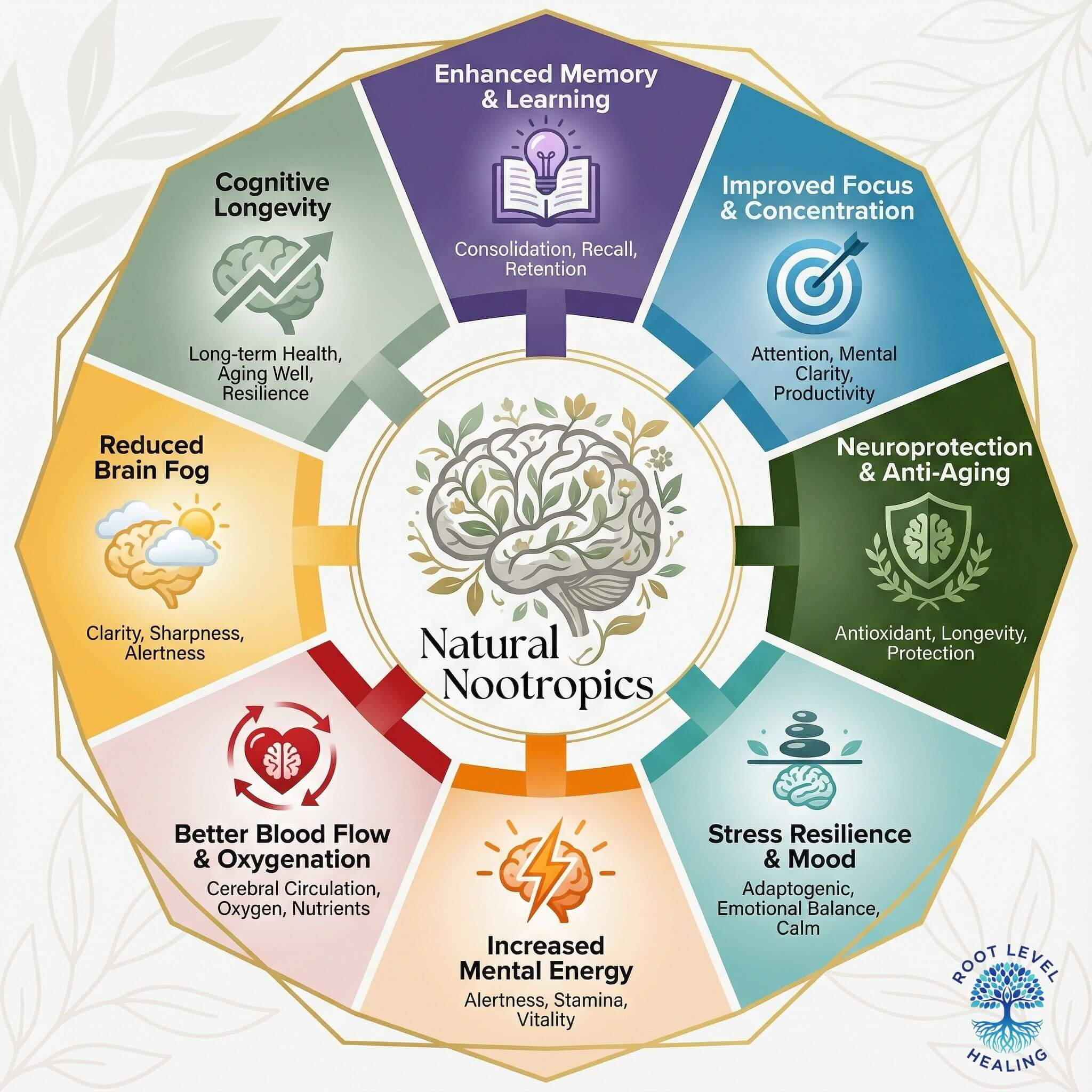
Natural nootropics enhance cognitive function through multiple interconnected pathways, providing comprehensive brain optimization that includes improved memory and learning, enhanced focus and mental clarity, neuroprotection against age-related decline, stress resilience, increased mental energy, and long-term cognitive health—all achieved through gentle, sustainable mechanisms that work in harmony with the brain's natural processes.
Proven Natural Nootropics: The Elite Cognitive Enhancers
Scientific research has validated the cognitive-enhancing properties of numerous natural compounds. The following table outlines some of the most well-researched natural nootropics and their specific benefits:
| Natural Nootropic | Primary Benefits | Mechanism of Action |
|---|---|---|
| Ginkgo Biloba | Memory, Circulation, Neuroprotection | Improves blood flow, antioxidant activity |
| Bacopa Monnieri | Learning, Memory Consolidation | Enhances protein synthesis in hippocampus |
| Panax Ginseng | Mental Energy, Stress Resilience | Modulates HPA axis, improves glucose metabolism |
| Rhodiola Rosea | Mental Fatigue, Cognitive Performance | Adaptogenic stress response, neurotransmitter balance |
| Lion's Mane Mushroom | Neurogenesis, Nerve Growth | Stimulates NGF production, supports myelin |
| Gotu Kola | Mental Clarity, Anxiety Reduction | GABA modulation, improved circulation |
Each of these natural nootropics has undergone extensive scientific scrutiny. Ginkgo biloba, for instance, has been the subject of over 400 clinical studies, demonstrating its ability to improve cognitive function in both healthy individuals and those with cognitive impairment [4]. Bacopa monnieri has shown remarkable effects on memory consolidation, with studies indicating significant improvements in learning ability and memory retention after 12 weeks of supplementation [1].
Natural vs. Synthetic: Why Nature Wins the Cognitive Enhancement Race
The debate between natural and synthetic nootropics extends beyond mere preference—it's a question of safety, sustainability, and long-term cognitive health. While synthetic nootropics like modafinil and racetams can provide immediate cognitive benefits, they often come with significant drawbacks that natural alternatives avoid.
Natural nootropics offer several distinct advantages over their synthetic counterparts. First, they have an established safety profile backed by centuries of traditional use and modern clinical research. The incidence of side effects is remarkably low, and when they do occur, they are typically mild and transient [2]. This contrasts sharply with synthetic nootropics, which can cause headaches, insomnia, anxiety, and in some cases, more serious cardiovascular effects.
The multitargeted approach of natural nootropics provides another significant advantage. Rather than forcefully manipulating a single neurotransmitter system, natural compounds work harmoniously with the brain's existing mechanisms. This gentler approach reduces the risk of tolerance, dependence, and rebound effects that can plague synthetic alternatives.
"The strongest evidence for the power and effectiveness of plant-based nootropics is when they're consumed in their original form – fresh fruit and vegetables. Plant-based nootropics are a diverse group of natural drugs that can improve cognitive abilities through various physiological mechanisms." [5]
Furthermore, natural nootropics often provide additional health benefits beyond cognitive enhancement. Many possess anti-inflammatory, antioxidant, and adaptogenic properties that support overall health and longevity. This holistic approach to wellness aligns with the growing understanding that optimal cognitive function depends on overall physiological health.
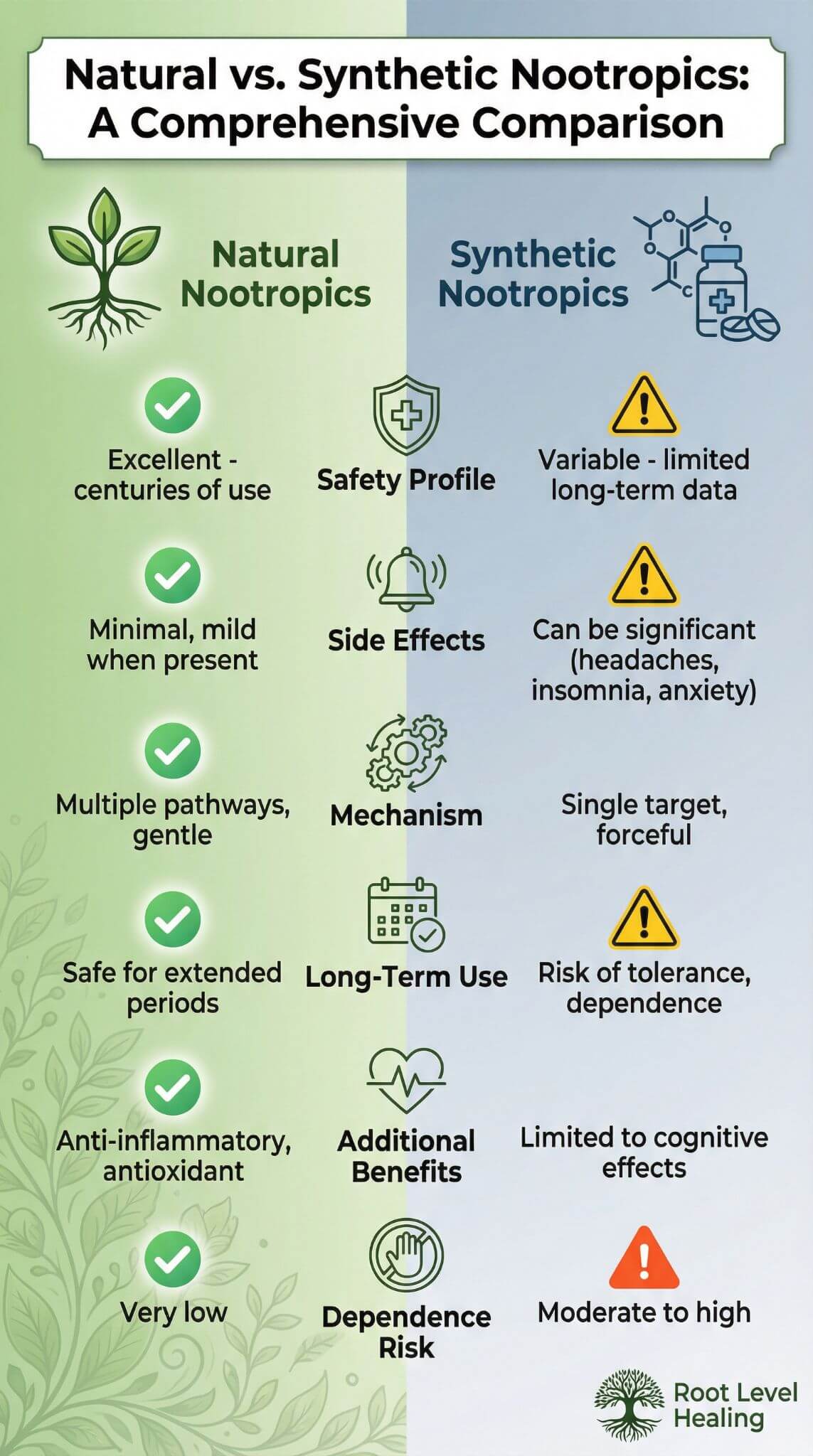
Natural nootropics offer superior safety profiles, multiple mechanisms of action, and additional health benefits compared to synthetic cognitive enhancers, making them ideal for sustainable, long-term brain optimization without the risks of tolerance, dependence, or serious side effects.
Choosing Natural Nootropics: Your Guide to Safe Cognitive Enhancement
Selecting the right natural nootropics requires understanding your specific cognitive goals and current health status. Unlike synthetic compounds that often provide immediate but temporary effects, natural nootropics typically require consistent use over weeks or months to achieve their full benefits [2].
Quality and sourcing are paramount when choosing natural nootropics. Look for standardized extracts that specify the concentration of active compounds. Third-party testing for purity and potency ensures you're getting a product free from contaminants and adulterants. Organic certification, while not always necessary, can provide additional assurance of quality.
Timing and dosage vary significantly among natural nootropics. Some, like ginseng, are best taken in the morning to avoid potential sleep disruption, while others, like ashwagandha, may be more beneficial when taken in the evening. Starting with lower doses and gradually increasing allows you to assess tolerance and optimize benefits.
It's crucial to consider potential interactions with medications and existing health conditions. While natural nootropics are generally safe, they can interact with certain medications, particularly blood thinners and medications for diabetes or blood pressure. Consulting with a healthcare provider familiar with botanical medicine is advisable, especially if you have existing health conditions or take prescription medications.
One advanced strategy for maximizing the benefits of natural nootropics involves strategic stacking—combining multiple compounds that work through complementary mechanisms. For example, pairing ginkgo biloba's circulation-enhancing properties with bacopa monnieri's memory-consolidation effects creates a synergistic boost to both immediate and long-term cognitive function. Similarly, combining an adaptogen like rhodiola rosea with a cholinergic enhancer like gotu kola addresses both stress resilience and mental clarity simultaneously. When stacking, it's essential to introduce compounds one at a time, allowing 2-3 weeks to assess individual effects before adding another. This methodical approach enables you to identify which combinations work best for your unique biochemistry and cognitive goals.
The future of cognitive enhancement lies not in synthetic manipulation of brain chemistry, but in working harmoniously with nature's time-tested solutions. As we continue to understand the intricate mechanisms by which natural compounds enhance cognitive function, we move closer to optimizing human potential safely and sustainably. In our next article, we'll explore how cutting-edge formulations combine these natural nootropics with modern delivery systems to create the next generation of cognitive enhancement solutions.
Frequently Asked Questions
Q: How long does it take for natural nootropics to work?
A: Natural nootropics typically require 2-12 weeks of consistent use to achieve their full benefits. Some effects, like improved mood or reduced stress, may be noticed within days, while cognitive enhancements like improved memory often take several weeks to become apparent.
Q: Are natural nootropics safe for long-term use?
A: Most natural nootropics have excellent safety profiles for long-term use, backed by centuries of traditional use and modern research. However, it's important to choose high-quality products and consult with a healthcare provider, especially if you have existing health conditions.
Q: Can I take multiple natural nootropics together?
A: Yes, many natural nootropics work synergistically when combined. However, it's best to start with one compound at a time to assess individual effects, then gradually add others. Some combinations are well-researched, like ginkgo and ginseng.
Q: Do natural nootropics have any side effects?
A: Natural nootropics generally have minimal side effects, which are typically mild when they occur. Common minor effects might include digestive upset if taken on an empty stomach, or mild headaches during the initial adjustment period.
Q: How do I know if a natural nootropic is working?
A: Effects may include improved focus and concentration, better memory recall, enhanced mental energy, reduced brain fog, improved mood, and better stress resilience. Keeping a cognitive journal can help track subtle improvements over time.
Q: Are natural nootropics better than synthetic ones?
A: Natural nootropics offer several advantages: better safety profiles, multiple mechanisms of action, additional health benefits, and lower risk of tolerance or dependence. While synthetic nootropics may provide more immediate effects, natural ones offer sustainable, long-term cognitive enhancement.
Q: Can natural nootropics help with age-related cognitive decline?
A: Research suggests that many natural nootropics can support cognitive health during aging. Compounds like ginkgo biloba and bacopa monnieri have shown promise in supporting memory and cognitive function in older adults, though they're not a cure for dementia or Alzheimer's disease.
Q: What's the difference between nootropics and adaptogens?
A: While there's overlap, nootropics specifically target cognitive function, while adaptogens help the body manage stress. Many compounds, like rhodiola and ginseng, are both nootropic and adaptogenic, providing cognitive benefits while supporting stress resilience.
Q: Should I cycle natural nootropics?
A: Unlike synthetic nootropics, most natural compounds don't require cycling due to their gentle mechanisms of action. However, some practitioners recommend occasional breaks to assess baseline function and prevent habituation to subtle effects.
Q: Can natural nootropics replace a healthy lifestyle?
A: No, natural nootropics work best as part of a comprehensive approach to brain health that includes proper nutrition, regular exercise, adequate sleep, stress management, and mental stimulation. They enhance but don't replace the fundamentals of cognitive wellness.
References
- Malík, M., & Tlustoš, P. (2023). Nootropic Herbs, Shrubs, and Trees as Potential Cognitive Enhancers. PMC10056569.
- Malík, M., & Tlustoš, P. (2022). Nootropics as Cognitive Enhancers: Types, Dosage and Side Effects of Smart Drugs. Nutrients, 14(16), 3367.
- Suliman, N. A., Mat Taib, C. N., Mohd Moklas, M. A., Adenan, M. I., Hidayat Baharuldin, M. T., & Basir, R. (2016). Establishing Natural Nootropics: Recent Molecular Enhancement Influenced by Natural Nootropic. Evidence-Based Complementary and Alternative Medicine, 2016, 4391375.
- WebMD. (2024). Nootropics ("Smart Drugs" or "Cognitive Enhancers"). Retrieved from WebMD Medical Reference.
- The Guardian. (2024). Big brain boost? What science says about the power of nootropics. Retrieved February 4, 2024.

Ready to Discover Your Score?
This 2-minute quiz is the essential first step to understanding your body's current toxic load and identifying the root cause of how you feel.
Take The Toxicity QuizExplore More Articles
Dive deeper into topics like detoxification, gut health, and mental clarity on our blog. Knowledge is the key to taking control of your health.
Visit The Blog