The Science of the Shield: How Protective Barriers Fortify Pet Health
In our last article, we uncovered the hidden dangers of the pet exposome and the damage caused by environmental pollutants and heavy metals. We learned how these invisible toxins can compromise our pets' skin, their largest organ, leading to a host of health issues. Now, we shift from identifying the problem to exploring the solution: the science of building a resilient, fortified protective barrier for our beloved companions.
This article delves into the innovative science behind creating a powerful shield for your pet. We will explore two remarkable, naturally-derived compounds—Hypochlorous Acid (HOCl) and Orthosilicic Acid (OSA)—and reveal how their synergistic action provides a comprehensive, dual-layered defense system against environmental threats.
Key Takeaways
- 🛡️Dual-Action Synergy: The combination of Hypochlorous Acid (HOCl) as a surface guardian and Orthosilicic Acid (OSA) as a structural architect creates a comprehensive protective barrier for pet skin.
- ⚡HOCl for Immediate Defense: HOCl is a natural, fast-acting antimicrobial that provides immediate protection against bacteria, viruses, and fungi without causing harm or resistance.
- 🏗️OSA for Long-Term Strength: OSA is a bioavailable form of silicon that stimulates Type 1 collagen synthesis, strengthening the skin's structural integrity and resilience from within.
- ✅Superior Safety Profile: Both HOCl and OSA are non-toxic and safe for pets, even if licked or ingested, offering a significant advantage over harsh chemical-based products.
The Science of the Shield: How HOCl & OSA Fortify Pet Skin Health (A Quick Overview)
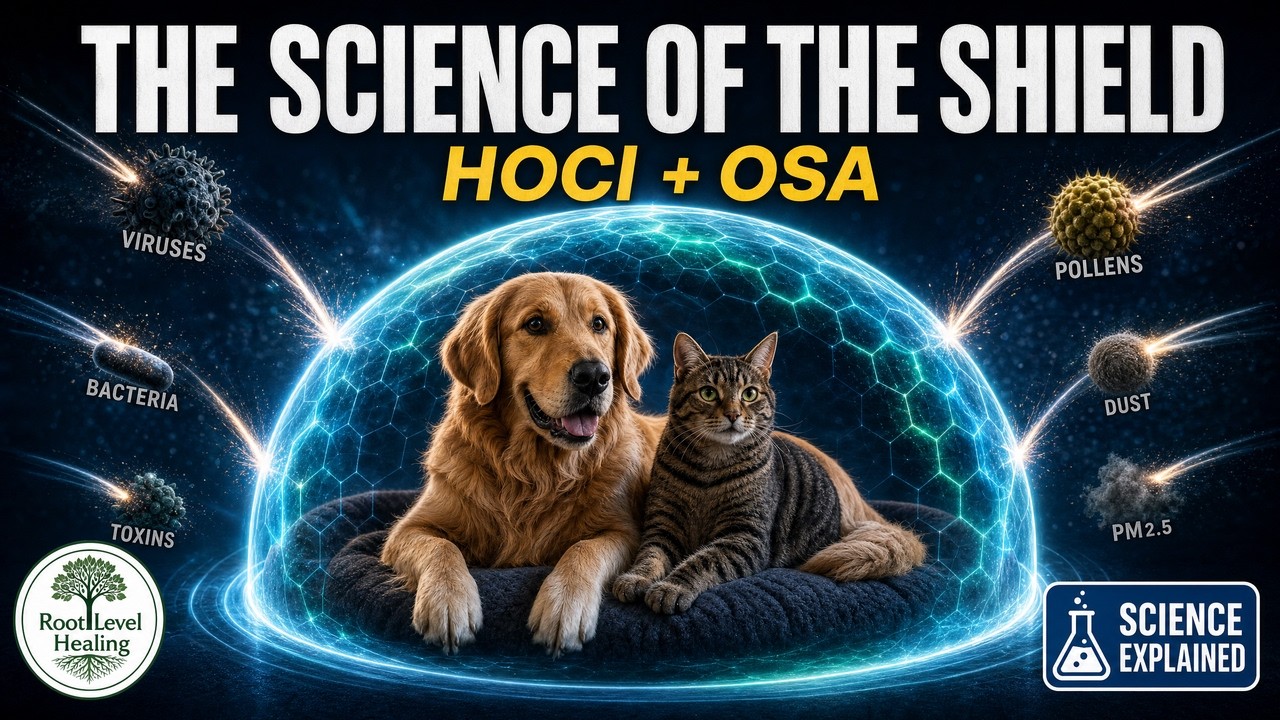
Before we dive deep into the science, watch this quick overview to discover the innovative science behind creating a resilient, dual-layered protective shield for your pet's skin using Hypochlorous Acid (HOCl) and Orthosilicic Acid (OSA).
In This Article:
The Skin Barrier: A Pet's First Line of Defense
The skin is far more than just a furry covering; it is a complex, dynamic organ that serves as the primary interface between your pet and the outside world. Its outermost layer, the stratum corneum, acts as a critical barrier, performing two essential functions:
- Keeping Harmful Elements Out: It prevents the penetration of pathogens (bacteria, viruses, fungi), allergens, pollutants, and chemical irritants.
- Keeping Essential Moisture In: It locks in water, preventing dehydration and maintaining the skin's suppleness and health.
When this barrier is compromised by the environmental stressors we discussed previously—such as PM2.5 pollutants, heavy metals, and EMF radiation—it becomes permeable and dysfunctional. This breach allows toxins to penetrate deeper into the body and moisture to escape, leading to a cascade of problems including chronic inflammation, allergic reactions, hot spots, and systemic health issues.
Therefore, fortifying this natural shield is not just about maintaining a healthy coat; it's about safeguarding your pet's overall health and well-being.
The Dual-Action Shield: A Two-Pronged Approach to Protection
To effectively counter the multi-faceted environmental threats our pets face, a single-mechanism solution is often insufficient. A truly robust protective strategy requires a dual-action approach that addresses both immediate surface threats and long-term structural integrity. This is where the powerful synergy of Hypochlorous Acid (HOCl) and Orthosilicic Acid (OSA) comes into play.
| Component | Function |
|---|---|
| The Surface Guardian (HOCl) | Provides an immediate, non-toxic antimicrobial shield on the skin's surface. |
| The Structural Architect (OSA) | Works deeper within the dermis to rebuild and fortify the skin's foundational structure. |
Together, they form a comprehensive defense system that protects, repairs, and strengthens the skin barrier from the outside in and the inside out.
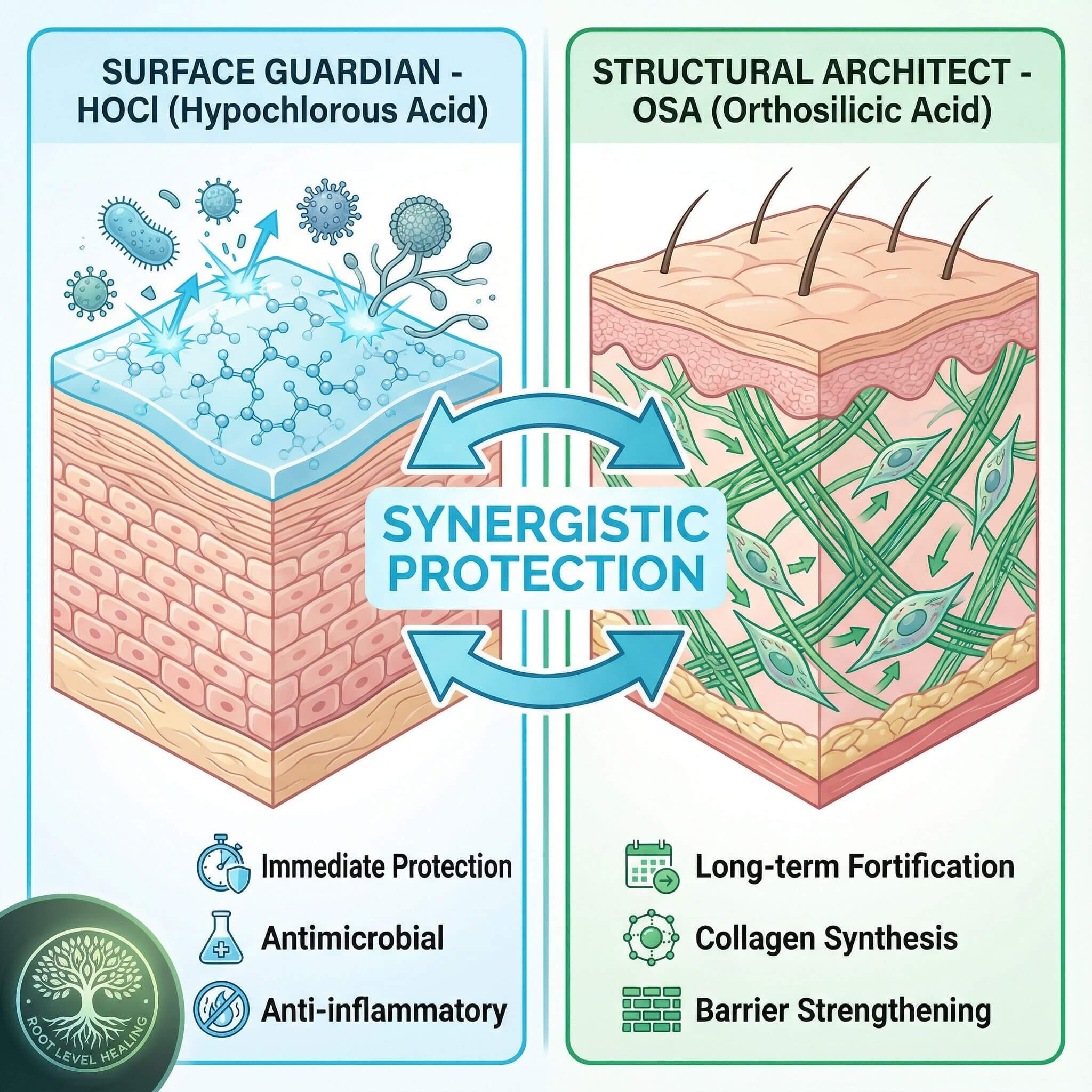
The dual-action protective barrier combines HOCl's immediate surface antimicrobial defense with OSA's long-term structural fortification through collagen synthesis, creating a comprehensive shield that protects pet skin from environmental threats while simultaneously rebuilding and strengthening the dermal foundation for lasting resilience.
HOCl: The Body's Own Antimicrobial Guardian
Hypochlorous Acid (HOCl) is not a harsh, synthetic chemical. It is a weak acid that is naturally produced by the white blood cells of all mammals, including dogs, cats, and humans, as a key part of the body's innate immune response to infection [1]. When a pathogen or irritant is detected, immune cells release HOCl to safely and effectively eliminate the threat.
How HOCl Works
Topical application of a stabilized HOCl solution mimics the body's natural defense mechanism. It provides rapid, broad-spectrum antimicrobial action against a wide range of pathogens without damaging healthy tissue.
| Benefit | Description |
|---|---|
| Broad-Spectrum Efficacy | HOCl is effective against bacteria (including resistant strains like MRSA), viruses, and fungi. |
| Anti-inflammatory | It helps to reduce the inflammation, redness, and pain associated with skin irritations. |
| Non-Toxic and Safe | Unlike traditional antiseptics like bleach or alcohol, HOCl is completely safe if licked or ingested. It is non-irritating to the skin, eyes, and ears [1]. |
| No Resistance | Because it works through a physical mechanism of action (denaturing proteins and disrupting cell walls), pathogens cannot develop resistance to HOCl, making it a safe solution for long-term use. |
HOCl vs. Traditional Antimicrobials
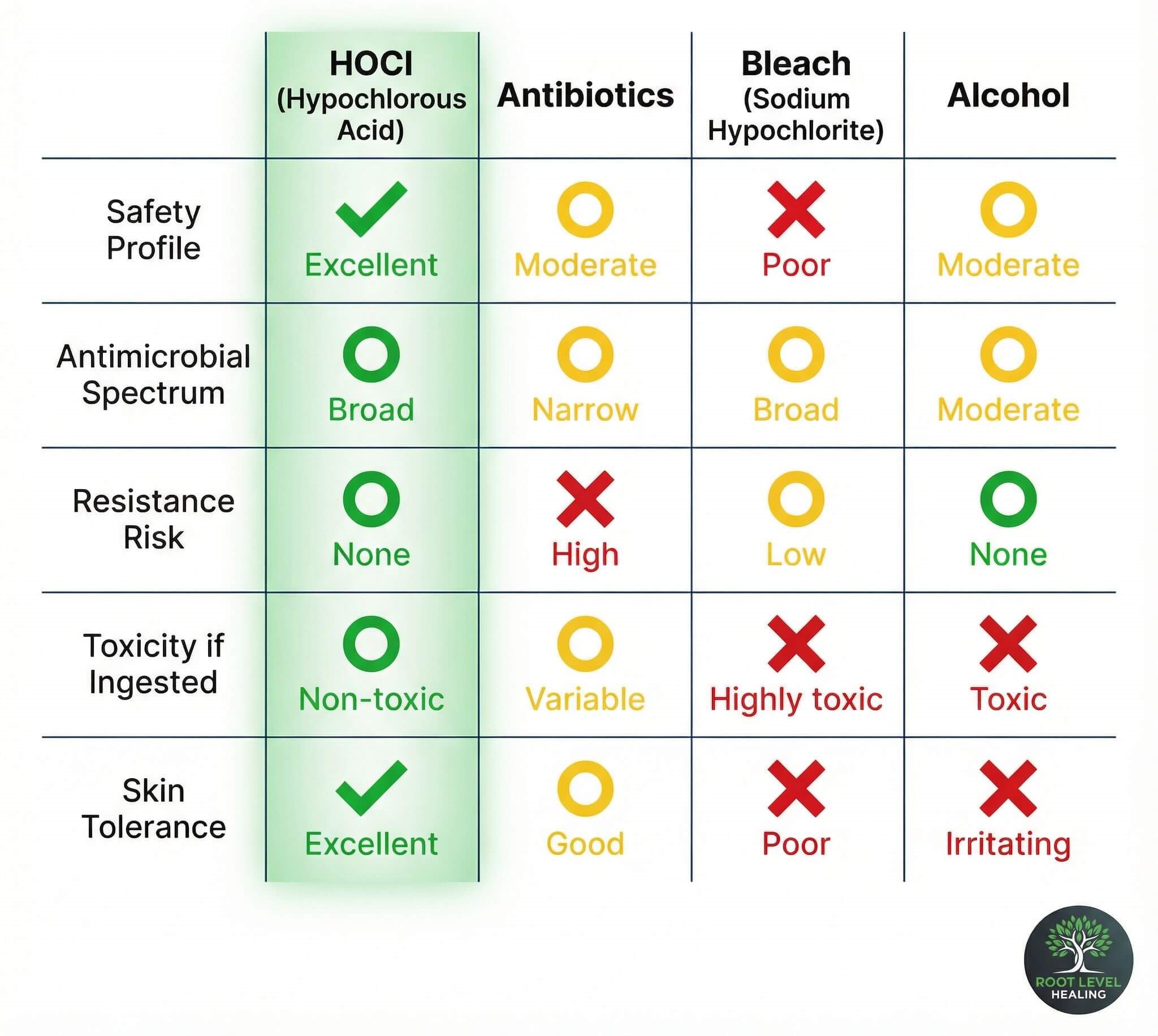
Hypochlorous Acid (HOCl) demonstrates a superior safety and efficacy profile compared to traditional antimicrobials, offering excellent safety, broad-spectrum coverage, zero resistance risk, non-toxicity if ingested, and excellent skin tolerance, making it the ideal choice for protecting pets from environmental pathogens without the risks associated with antibiotics, bleach, or alcohol-based products.
This superior safety and efficacy profile makes HOCl an ideal first line of defense, providing immediate surface protection to neutralize threats before they can penetrate the skin barrier.
OSA: The Architect of a Stronger Skin Barrier
While HOCl guards the surface, Orthosilicic Acid (OSA) works behind the scenes to rebuild the very foundation of the skin. OSA (H4SiO4) is the water-soluble, bioavailable form of silicon, an essential trace element for all living organisms [2].
Silicon is the third most abundant trace element in the human body and is found in the highest concentrations in connective tissues, including the skin, bones, aorta, and trachea. Its presence is critical for the synthesis and maintenance of these tissues.
The Collagen Connection
The primary role of OSA in skin health is its proven ability to stimulate the synthesis of Type 1 collagen [3]. Collagen is the most abundant protein in the body and provides the skin with its structure, strength, and elasticity. As pets age, or when their skin is damaged by pollutants, collagen production declines, leading to a weaker, more permeable barrier.
How OSA Strengthens the Skin
Scientific research has shown that OSA works through a specific cellular mechanism:
- Fibroblast Activation: OSA is taken up by fibroblast cells, the primary cells in the dermis responsible for producing collagen.
- Enzyme Modulation: Inside the cell, OSA modulates the activity of prolyl hydroxylase, a key enzyme required for the formation of stable collagen molecules [3].
- Increased Collagen Production: This enzymatic activation leads to an increase in the production of strong, healthy Type 1 collagen fibers.
- Barrier Fortification: The newly synthesized collagen reinforces the dermal matrix, improving the skin's density, elasticity, and structural integrity. This creates a stronger, more resilient barrier from within.
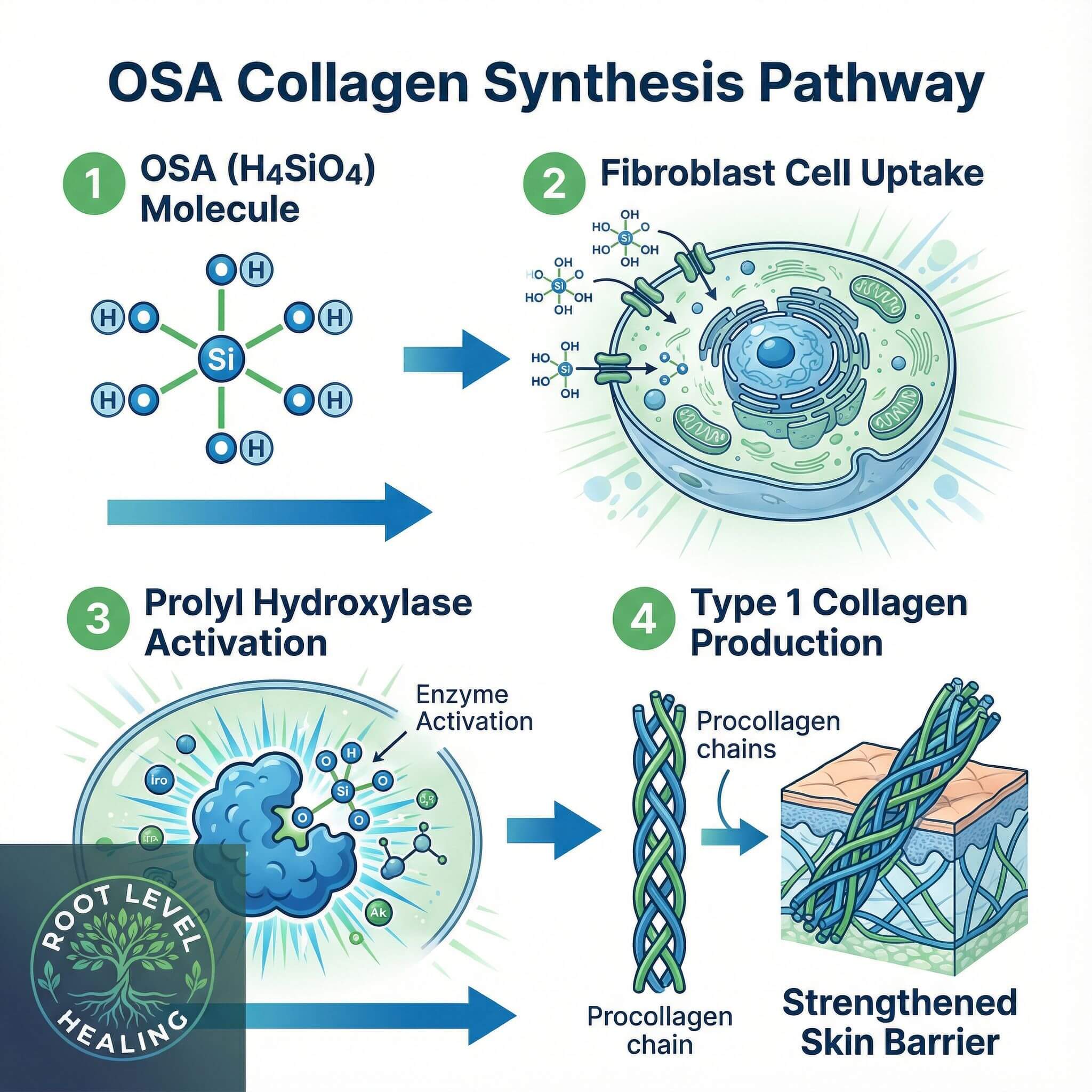
Orthosilicic Acid (OSA) strengthens pet skin through a precise four-step cellular mechanism: the bioavailable OSA molecule is absorbed by dermal fibroblast cells, where it activates the prolyl hydroxylase enzyme, which in turn stimulates the production of Type 1 collagen triple helix structures that fortify the skin barrier, creating long-term structural resilience against environmental damage in dogs and cats.
By promoting the natural production of collagen, OSA helps to repair damage, reduce moisture loss, and fortify the skin against future environmental assaults. Studies on oral supplementation with a stabilized form of OSA (ch-OSA) have demonstrated significant improvements in skin micro-relief, hair strength, and nail brittleness, underscoring its role in connective tissue health [4].
The Natural Advantage: Why This Synergy is Superior
Combining HOCl and OSA in a single, topical application offers a protective solution that is both powerful and inherently safe. This natural approach stands in stark contrast to many synthetic products that rely on harsh chemicals, which can carry risks of toxicity, skin irritation, and antibiotic resistance.
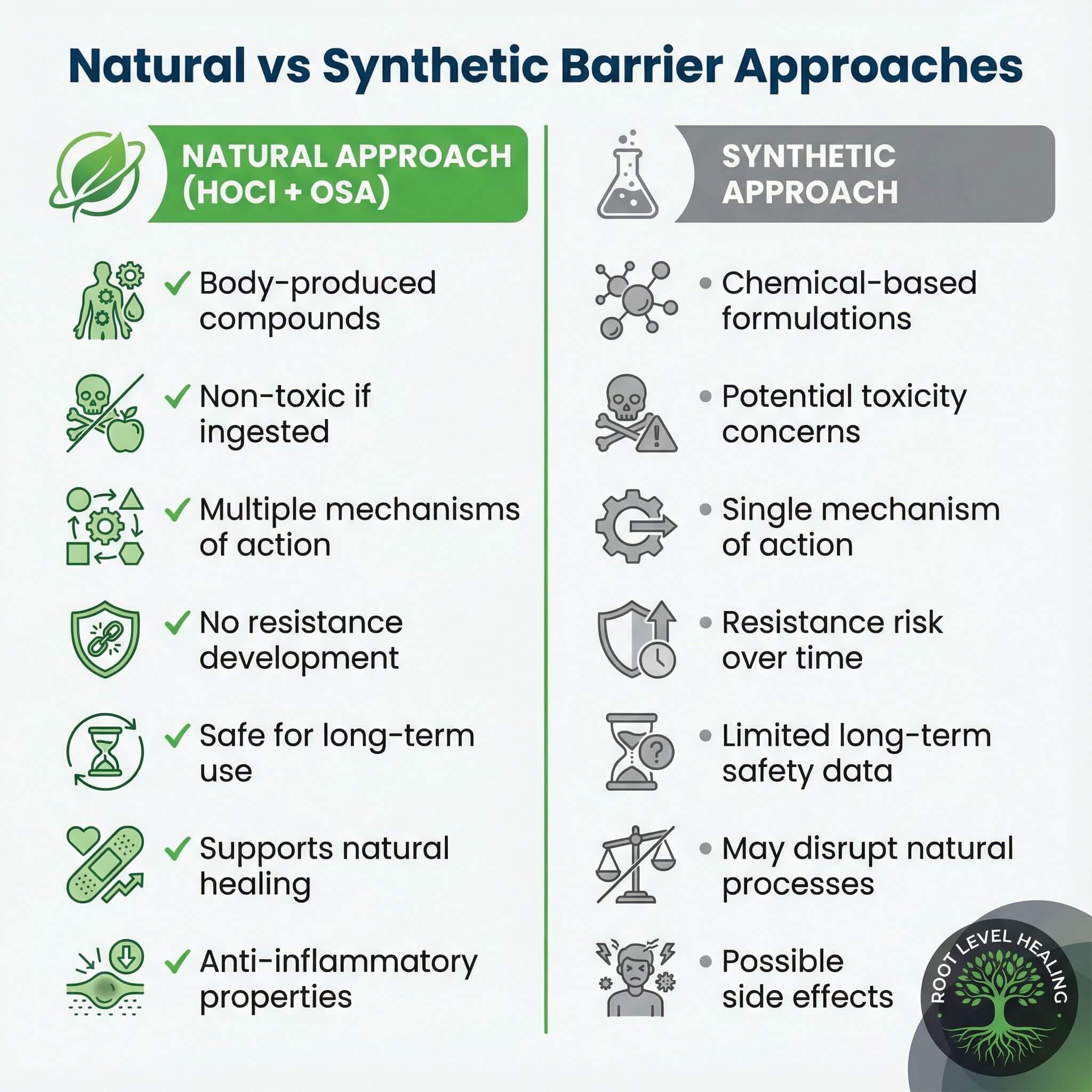
The natural protective barrier approach using HOCl and OSA offers seven key advantages over synthetic alternatives: body-produced compounds that work with natural biology, complete non-toxicity even if ingested, multiple synergistic mechanisms of action, zero risk of microbial resistance, proven safety for long-term preventative use, support for natural healing processes, and inherent anti-inflammatory properties, making it the superior choice for protecting pet skin health without the risks associated with chemical-based formulations.
By working with the body's own biological processes, this dual-action shield provides a sustainable, effective, and safe way to protect our pets in an increasingly toxic world.
In our next and final article in this series, we will introduce a revolutionary product that harnesses the power of this scientific synergy to deliver the ultimate environmental shield for modern pets.
Frequently Asked Questions
Q: Is this approach safe for all pets?
A: Yes, both HOCl and OSA are considered extremely safe for all animals, including dogs, cats, and other mammals. HOCl is naturally produced by their own bodies, and OSA is a bioavailable form of a natural element. They are non-toxic and non-irritating.
Q: How quickly does it work?
A: The protective effects are two-fold. HOCl provides immediate antimicrobial and anti-inflammatory action on the skin's surface within hours. OSA works systemically over weeks to months to rebuild collagen and strengthen the skin's deep structural layers for long-term resilience.
Q: Can this be used with other skin treatments?
A: Generally, yes. Due to their high safety profile and lack of known drug interactions, HOCl and OSA-based topicals can typically be used alongside other treatments. However, it is always best to consult with your veterinarian before combining products.
Q: Is this better than just giving my pet a bath?
A: While regular bathing is important for hygiene, it does not provide a lasting protective barrier. Bathing can strip natural oils and may not neutralize all pathogens. A protective spray provides a continuous shield that actively defends the skin between baths.
Q: What is the difference between OSA and silica?
A: Silica (silicon dioxide) is a common compound, but it is poorly absorbed by the body. Orthosilicic Acid (OSA) is the monomeric, water-soluble form of silicon that is readily bioavailable and can be utilized by cells to stimulate collagen synthesis.
Q: Does HOCl sting or burn like alcohol or bleach?
A: No. Unlike alcohol or bleach, HOCl is pH-neutral and does not sting or burn, even on open wounds or sensitive skin. It is known for being extremely gentle while remaining highly effective.
Q: Will this help with my pet's allergies?
A: By strengthening the skin barrier and reducing inflammation, this approach can help manage the symptoms of environmental allergies. A stronger barrier is less permeable to allergens, and HOCl can help calm the inflammatory response associated with allergic reactions.
Q: Is there scientific proof that OSA builds collagen?
A: Yes. A peer-reviewed study by Reffitt et al. published in the journal Bone demonstrated that orthosilicic acid stimulates Type 1 collagen synthesis in human skin fibroblast cells in vitro.
Q: Can I just give my pet a silicon supplement?
A: While oral silicon supplements exist, their bioavailability can vary greatly. A topical application ensures that the active ingredients are delivered directly to the target organ—the skin—for maximum efficacy in building a protective barrier.
Q: How does this protect against EMF and pollutants?
A: While no product can block all environmental exposures, a fortified skin barrier is the body's best natural defense. A stronger, less permeable barrier built by OSA is better able to resist the penetration of particulate matter and other toxins. HOCl helps to manage the surface-level oxidative stress and inflammation that these environmental factors can cause.
References
- VCA Animal Hospitals. (n.d. ). Hypochlorous Acid (HOCl) Topical. https://vcahospitals.com/know-your-pet/hypochlorous-acid-hocl-topical
- Jurkić, L. M., Cepanec, I., Pavelić, S. K., & Pavelić, K. (2013 ). Biological and therapeutic effects of ortho-silicic acid and some ortho-silicic acid-releasing compounds: New perspectives for therapy. Nutrition & Metabolism, 10(1), 2. https://link.springer.com/article/10.1186/1743-7075-10-2
- Reffitt, D. M., Ogston, N., Jugdaohsingh, R., Cheung, H. F., Evans, B. A., Thompson, R. P., ... & Powell, J. J. (2003 ). Orthosilicic acid stimulates collagen type 1 synthesis and osteoblastic differentiation in human osteoblast-like cells in vitro. Bone, 32(2), 127-135. https://www.sciencedirect.com/science/article/abs/pii/S875632820200950X
- Barel, A., Calomme, M., Timchenko, A., De Paepe, K., Demeester, N., Rogiers, V., ... & Vanden Berghe, D. (2005 ). Effect of oral intake of choline-stabilized orthosilicic acid on skin, nails and hair in women with photodamaged skin. Archives of Dermatological Research, 297(4), 147-153. https://link.springer.com/article/10.1007/s00403-005-0584-6

Ready to Discover Your Score?
This 2-minute quiz is the essential first step to understanding your body's current toxic load and identifying the root cause of how you feel.
Take The Toxicity QuizExplore More Articles
Dive deeper into topics like detoxification, gut health, and mental clarity on our blog. Knowledge is the key to taking control of your health.
Visit The Blog