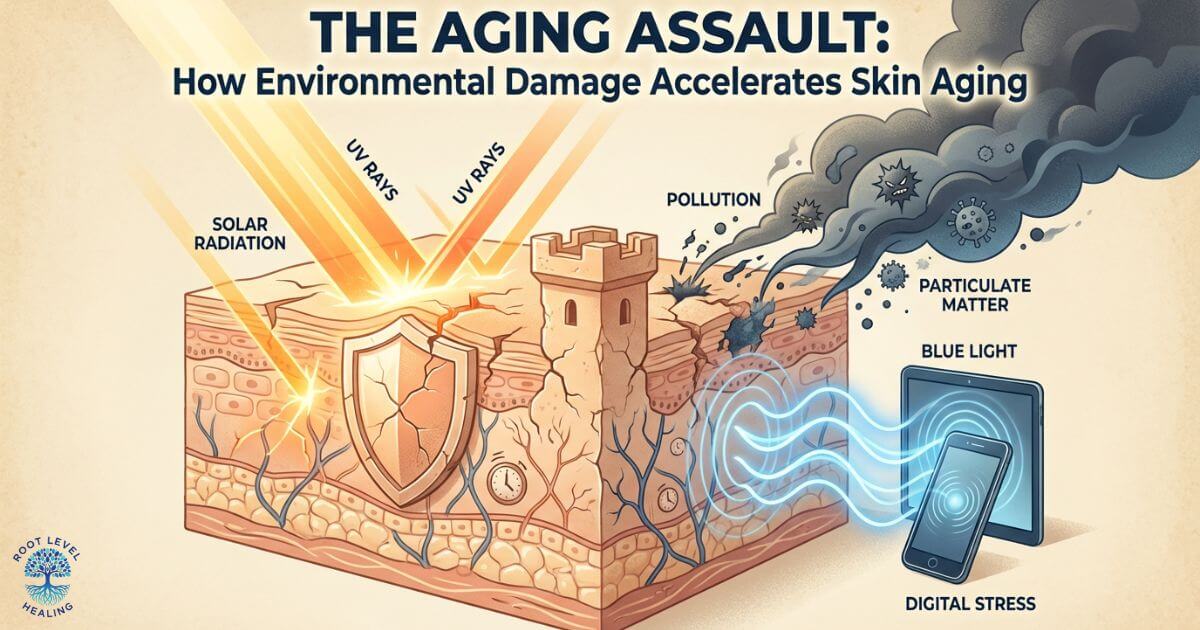
The Aging Assault: How Environmental Damage Accelerates Skin Aging
Your skin is a living fortress, a masterpiece of biological engineering designed to protect the precious life within. It's your first line of defense against the outside world, a sophisticated barrier that is both resilient and delicate. But in the modern world, this fortress is under a relentless, multi-front assault. Environmental aggressors, from the sun's powerful rays to invisible pollutants in the air, are launching a coordinated attack that can overwhelm even the most robust natural defenses, accelerating the aging process and compromising the structural integrity of your skin.
Key Takeaways
- 🛡️The Fortress Under Siege: Your skin is constantly bombarded by environmental aggressors like UV radiation, pollution, and blue light, which accelerate the aging process.
- 💥Free Radical Sabotage: These unstable molecules, generated by environmental stressors, cause a cascade of damage to your skin's collagen, elastin, and DNA.
- 🌿Nature's Defense: While your skin has natural defense and repair mechanisms, the intensity of modern environmental threats often exceeds its capacity, making antioxidant support crucial.
The Aging Assault: How Environmental Damage Accelerates Skin Aging (A Quick Overview)
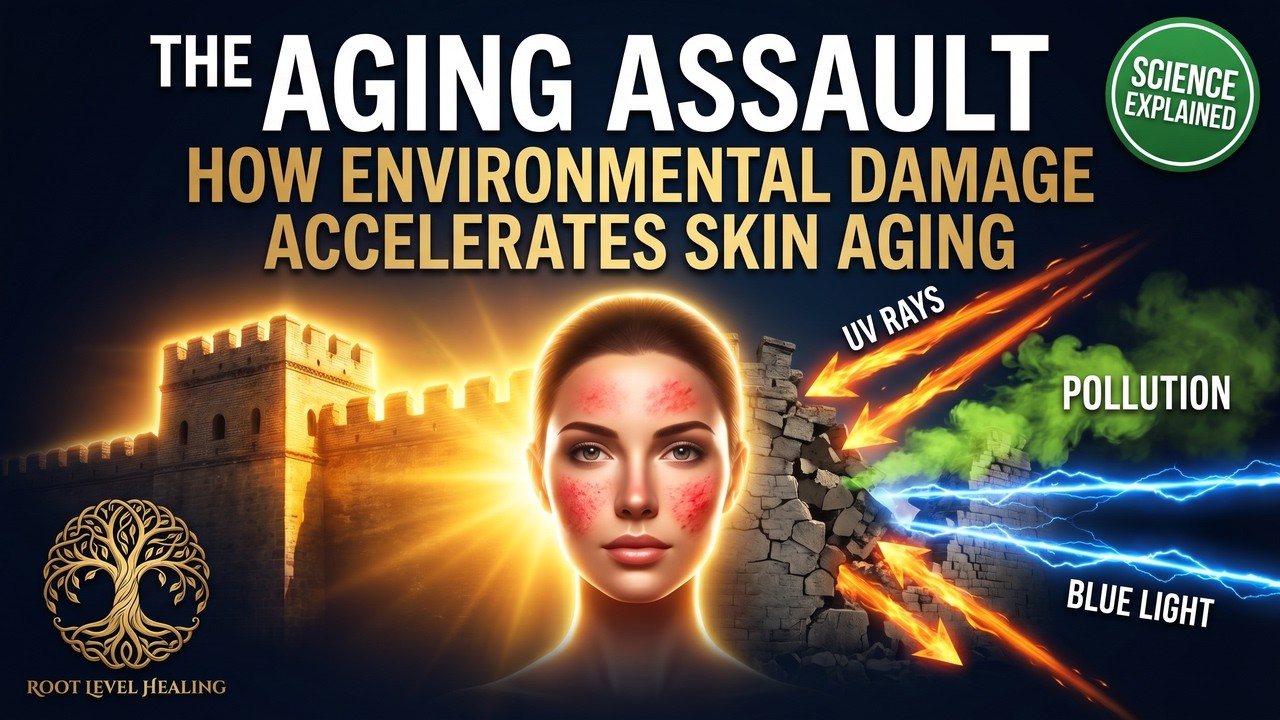
Before we dive deep into the science, watch this quick overview where we break down the "Aging Assault" and explain how environmental damage from UV rays, pollution, and blue light acts like microscopic scissors, actively chopping up your skin's collagen and elastin fibers.
In This Article:
- The Modern Battlefield: A New Era of Environmental Threats
- The Anatomy of Attack: Understanding Free Radicals and Oxidative Stress
- When Defenses Fail: The Visible Consequences of Environmental Damage
- The Invisible Enemy: How Blue Light Accelerates Aging
- Reinforcing the Fortress: The Critical Role of Antioxidants
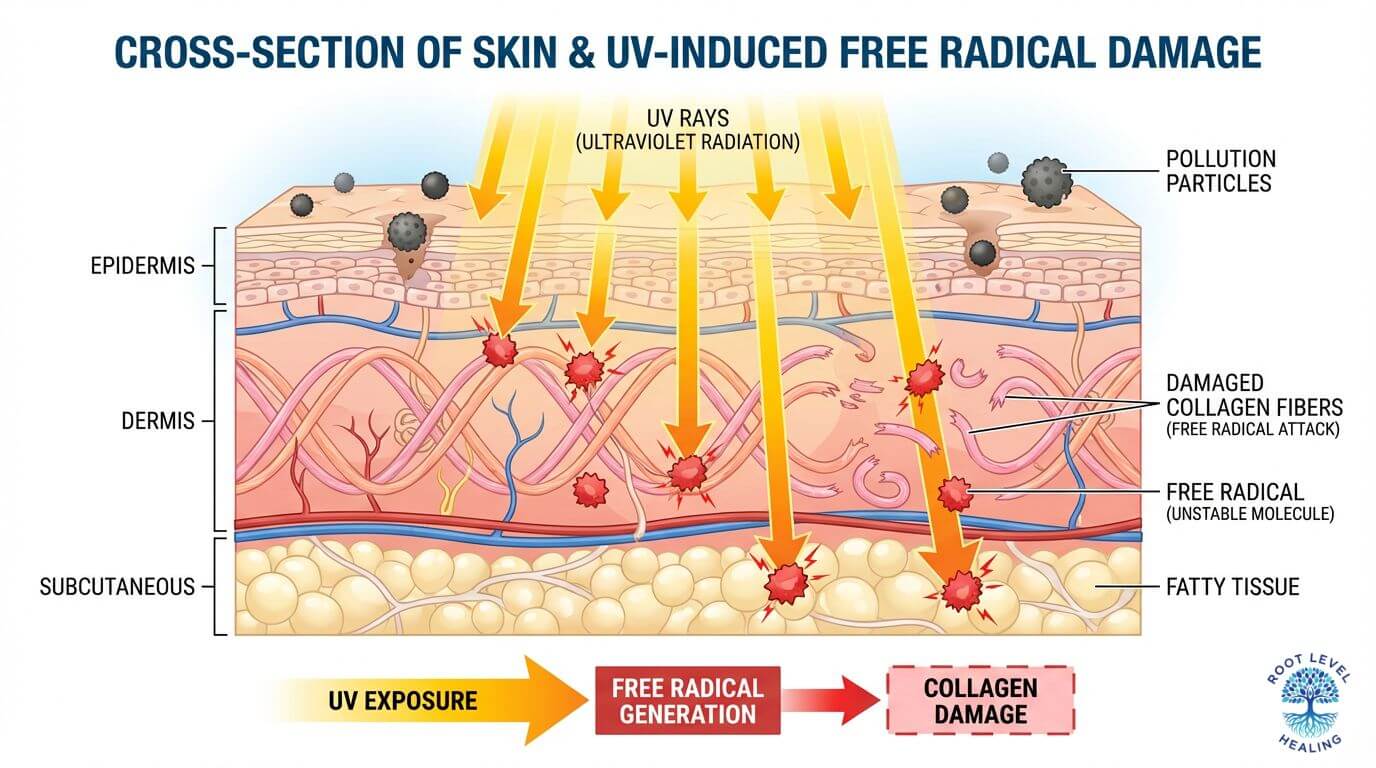
Environmental aggressors like UV radiation and pollution act as a one-two punch, breaking down the skin's structural integrity and accelerating the visible signs of aging.
The Modern Battlefield: A New Era of Environmental Threats
The environmental challenges our skin faces today are vastly different from those of previous generations. While the sun has always been a factor, the intensity of UV radiation exposure has increased, and it's now joined by a host of man-made aggressors. It is estimated that among all environmental factors, UV radiation contributes up to 80% of extrinsic skin aging [1]. This constant, multi-front assault creates a state of chronic stress for your skin, forcing its defensive and repair systems to work overtime.
Air pollution, a toxic cocktail of particulate matter, heavy metals, and volatile organic compounds, acts as a form of chemical warfare. These microscopic particles can penetrate the skin's outer layers, generating free radicals and triggering inflammatory responses that degrade collagen and elastin [2]. This is no longer a problem confined to major industrial cities; studies have shown that even moderate levels of air pollution can have a measurable impact on skin health and aging.
"Human skin is constantly directly exposed to the air, solar radiation, environmental pollutants, or other mechanical and chemical insults, which are capable of inducing the generation of free radicals as well as reactive oxygen species (ROS) of our own metabolism." [1]
This constant exposure means your skin's fortress is never truly at peace. It's in a perpetual state of high alert, diverting resources from essential maintenance and repair functions to deal with the immediate threats. Over time, this chronic defensive posture takes its toll, leading to a gradual decline in the skin's structural integrity and a visible acceleration of the aging process.
The Anatomy of Attack: Understanding Free Radicals and Oxidative Stress
At the heart of environmental skin damage lies a microscopic saboteur: the free radical. These are highly unstable molecules that are missing an electron. In their desperate search for stability, they steal electrons from healthy cells, setting off a destructive chain reaction known as oxidative stress. This process is akin to a molecular fire spreading through your skin, damaging everything it touches.
UV radiation is a primary generator of these molecular terrorists. When UV rays strike the skin, they trigger the formation of reactive oxygen species (ROS), including superoxide anions, hydrogen peroxide, and hydroxyl radicals [1]. These ROS are the foot soldiers of oxidative stress, carrying out the destructive orders of their environmental commanders. They attack the very foundations of your skin's fortress:
- Collagen Degradation: Free radicals activate enzymes called matrix metalloproteinases (MMPs), which act like molecular scissors, chopping up the collagen fibers that provide your skin with its strength and structure [3].
- Elastin Damage: The elastin fibers that give your skin its youthful bounce and resilience are also targeted, leading to sagging and a loss of firmness.
- DNA Damage: Oxidative stress can directly damage the DNA within your skin cells, impairing their ability to function and replicate correctly. This can lead to mutations that accelerate aging and increase the risk of more serious skin health issues.
This relentless molecular assault is the invisible engine driving premature aging. While you may not feel it happening, the cumulative damage becomes visible over time in the form of wrinkles, fine lines, and a loss of youthful volume.
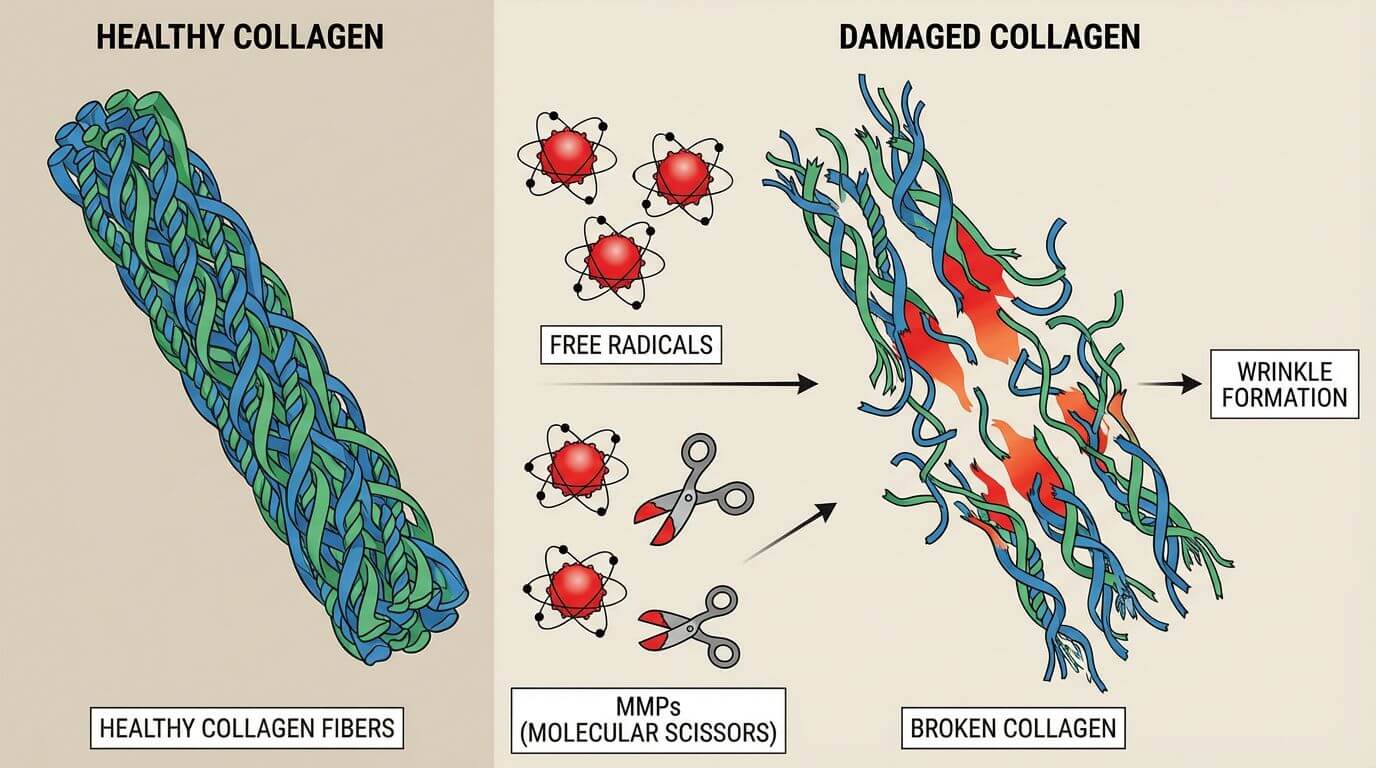
Free radicals act like molecular scissors, breaking down the collagen and elastin fibers that form the structural support of your skin, leading to visible signs of aging.
When Defenses Fail: The Visible Consequences of Environmental Damage
A fortress under constant siege will eventually begin to show signs of wear, and your skin is no different. When the relentless assault of environmental aggressors overwhelms your skin's natural defense and repair mechanisms, the damage becomes visible. The collagen content of young, healthy skin can exceed 75%, but this vital structural protein diminishes as we age, a process dramatically accelerated by environmental factors [3].
The visible consequences of this structural failure are all too familiar:
- Fine Lines and Wrinkles: These appear like stress fractures in the fortress walls, forming in areas where collagen and elastin have been weakened by repeated free radical attacks.
- Hyperpigmentation and Age Spots: These are signs that the skin's pigment-producing cells (melanocytes) have been damaged or have gone into overdrive in an attempt to protect the skin, leading to an uneven distribution of melanin.
- Loss of Firmness and Elasticity: As the elastin fibers snap and the collagen matrix collapses, the skin loses its youthful bounce and begins to sag.
- Dull, Uneven Skin Tone: A build-up of damaged cells on the skin's surface, combined with impaired microcirculation, can leave the complexion looking dull, tired, and uneven.
These are not just cosmetic concerns; they are the outward signs of a deeper structural crisis. They indicate that your skin's fortress is losing its ability to protect itself and maintain its youthful integrity. Without intervention, this process of degradation will only continue, leading to a progressive decline in skin health and appearance.
The Invisible Enemy: How Blue Light Accelerates Aging
In our hyper-connected world, a new and insidious environmental threat has emerged: high-energy visible (HEV) light, commonly known as blue light. Emitted by our smartphones, tablets, computers, and even energy-efficient light bulbs, blue light represents a form of siege warfare that our skin's defenses were not evolved to handle. While it doesn't cause the immediate burning effect of UV radiation, its long-term effects can be just as damaging.
Studies have shown that blue light can penetrate the skin more deeply than both UVA and UVB rays, reaching the dermis where collagen and elastin reside [4]. This deep penetration allows it to generate significant oxidative stress, contributing to the breakdown of your skin's structural proteins. Furthermore, exposure to blue light, particularly in the evening, can disrupt your skin's natural circadian rhythm. This interferes with the critical nighttime repair processes that are essential for healing the damage accumulated during the day, creating a vicious cycle of damage and impaired recovery.
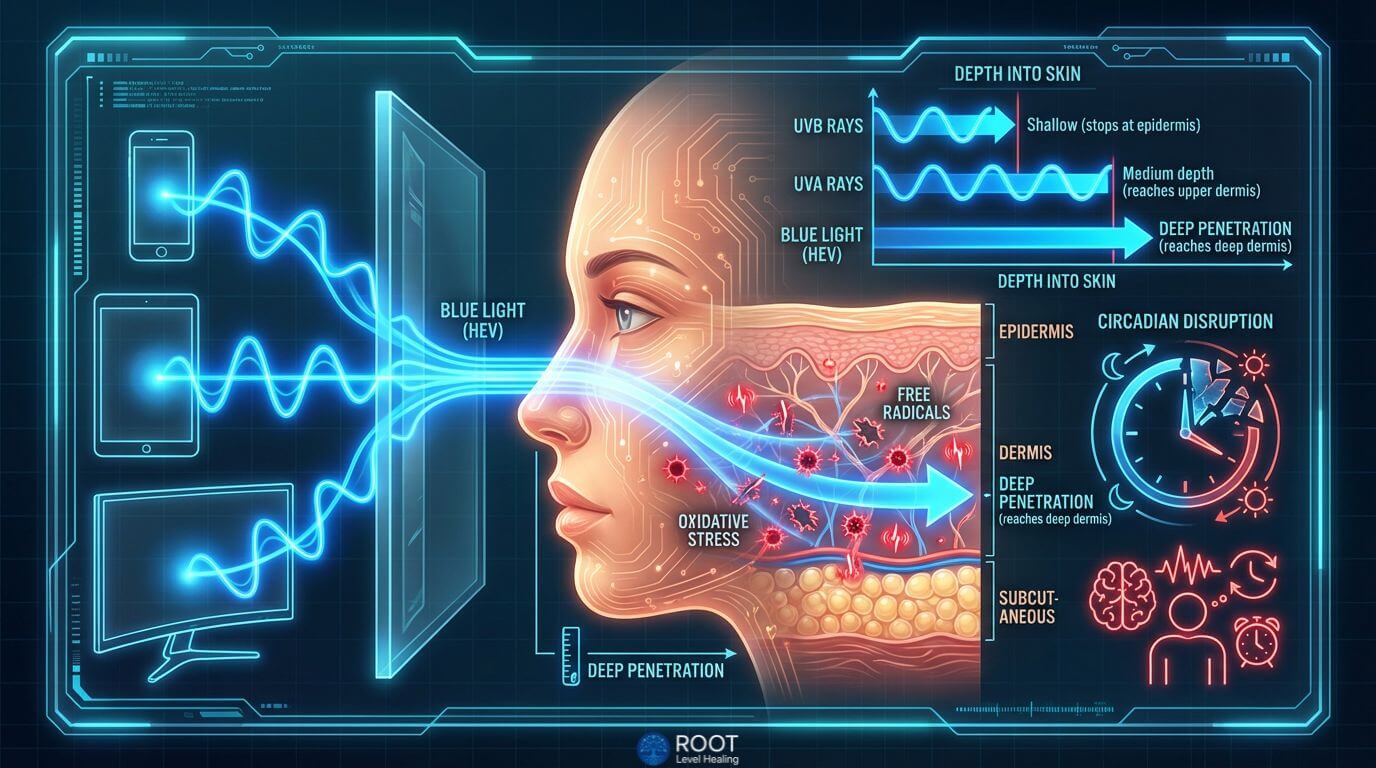
Blue light from our digital devices represents a modern environmental threat, penetrating deep into the skin to generate oxidative stress and disrupt crucial nighttime repair processes.
Reinforcing the Fortress: The Critical Role of Antioxidants
Faced with this relentless, multi-front assault, it's clear that your skin's natural defenses, while remarkable, are often outmatched. This is where antioxidants come in. These molecules are the reinforcements your fortress desperately needs, capable of neutralizing free radicals and halting the destructive cascade of oxidative stress. They work by generously donating an electron to a rampaging free radical, stabilizing it and preventing it from causing further damage.
While our bodies produce some antioxidants endogenously, the sheer scale of the modern environmental assault means that we need to supplement these natural defenses. This is the crucial first step in any effective anti-aging strategy: providing your skin with the antioxidant support it needs to withstand the daily siege. In our next post, we will explore nature's most powerful defenders—the plant-based antioxidants that form the foundation of a resilient and youthful fortress.
Frequently Asked Questions
Q: What is the biggest environmental factor in skin aging?
A: Research indicates that UV radiation from the sun is the single largest environmental factor, contributing up to 80% of the visible signs of extrinsic aging, such as wrinkles, fine lines, and hyperpigmentation.
Q: How do free radicals damage the skin?
A: Free radicals are unstable molecules that steal electrons from healthy cells, causing a chain reaction of damage known as oxidative stress. This process breaks down collagen and elastin, damages DNA, and impairs the skin's ability to repair itself.
Q: Can the damage from environmental factors be reversed?
A: While some damage can be permanent, a consistent skincare routine rich in antioxidants and other supportive ingredients can help to repair some of the damage, protect against future assaults, and improve the overall health and appearance of the skin.
Q: How does pollution affect skin aging?
A: Air pollution contains particulate matter, heavy metals, and volatile organic compounds that penetrate the skin, generating free radicals and triggering inflammatory responses that degrade collagen and elastin, accelerating the aging process.
Q: What is blue light and how does it age skin?
A: Blue light is high-energy visible light emitted by digital devices and LED lighting. It penetrates deeper into the skin than UV rays, generating oxidative stress and disrupting circadian rhythms, which interferes with the skin's natural repair processes.
Q: Are antioxidants effective against environmental skin damage?
A: Yes, antioxidants are highly effective at neutralizing free radicals and preventing oxidative stress. They work by donating electrons to unstable free radicals, stabilizing them and preventing them from damaging healthy skin cells.
References
- Poljšak, B., & Dahmane, R. (2012 ). Free Radicals and Extrinsic Skin Aging. Dermatology Research and Practice.
- Araviiskaia, E., et al. (2019 ). The Impact of Airborne Pollution on Skin. Journal of the European Academy of Dermatology and Venereology.
- Bolke, L., et al. (2019 ). A Collagen Supplement Improves Skin Hydration, Elasticity, Roughness, and Density. Nutrients.
- Coats, J. G., et al. (2017 ). The effects of blue light on the skin. Journal of the American Academy of Dermatology.

Ready to Discover Your Score?
This 2-minute quiz is the essential first step to understanding your body's current toxic load and identifying the root cause of how you feel.
Take The Toxicity QuizExplore More Articles
Dive deeper into topics like detoxification, gut health, and mental clarity on our blog. Knowledge is the key to taking control of your health.
Visit The Blog