The Oxidative Onslaught: How Environmental Stressors Weaken Your Immune Defenses
In our previous discussions, we established the importance of our natural immune barriers and the essential nutrients required to build them. We envisioned our body as a fortress, with strong walls and well-equipped soldiers. But what happens when the very air we breathe and the environment we live in launch a relentless, invisible attack on that fortress? What if, beyond nutrient deficiencies, there is a constant siege that wears down our defenses from the inside out? This is the reality of oxidative stress—a silent, pervasive force that can undermine even the most robust immune system.
This isn't a battle against a single pathogen, but a war against an unstable enemy created by our own metabolic processes and exacerbated by the modern world. Welcome to the oxidative onslaught, where we explore how environmental stressors generate an army of free radicals that directly target your immune health, and how the right antioxidant strategy is your key to victory.
Key Takeaways
- 💨The Double-Edged Sword: Oxidative stress is a natural process essential for immune function, but when environmental toxins cause it to become chronic and excessive, it turns against the body, damaging immune cells and weakening defenses.
- 🏭Modern World Threats: Air pollution, industrial chemicals, pesticides, and even chronic psychological stress are major external sources of free radicals that overwhelm our body's natural antioxidant capacity.
- 🛡️Antioxidant Army: Your body has a sophisticated antioxidant defense system, but it can be depleted. Nutrients like Vitamin C and Zinc are crucial frontline soldiers in neutralizing free radicals and protecting immune cells from oxidative damage.
- 🔗The Vicious Cycle: Oxidative stress triggers inflammation, which in turn generates more oxidative stress. This cycle can lead to chronic inflammation, a hallmark of many modern diseases and a significant drain on immune resources.
The Oxidative Onslaught: How Environmental Stressors Weaken Your Immune Defenses (A Quick Overview)
Before we dive deep into the science, watch this quick overview and discover the reality of the "oxidative onslaught" — learn how environmental stressors like air pollution, industrial chemicals, and chronic stress generate an army of free radicals that directly target your immune health, and how the right antioxidant strategy is your key to victory.
In This Article:
The Dual Role of Oxidative Stress: Friend and Foe
At its core, oxidative stress is an imbalance between the production of highly reactive molecules called free radicals (or more broadly, Reactive Oxygen Species - ROS) and the body's ability to neutralize them with antioxidants. It's crucial to understand that ROS are not inherently evil. In controlled amounts, they are vital for health. In fact, your immune cells, particularly phagocytes, weaponize ROS in a process called the "respiratory burst" to destroy invading bacteria and viruses [1]. This controlled generation of free radicals is a fundamental part of your defense mechanism.
The problem arises when the scale tips. When ROS production becomes excessive and chronic, it overwhelms your body's antioxidant defenses. This is the state of pathological oxidative stress. Instead of being targeted weapons against pathogens, these free radicals begin to attack your own cells indiscriminately. They are like unstable, rogue soldiers, causing collateral damage to lipids, proteins, and even your DNA. This damage is a key driver in aging and a wide array of chronic diseases, and your immune system is a primary target [2].
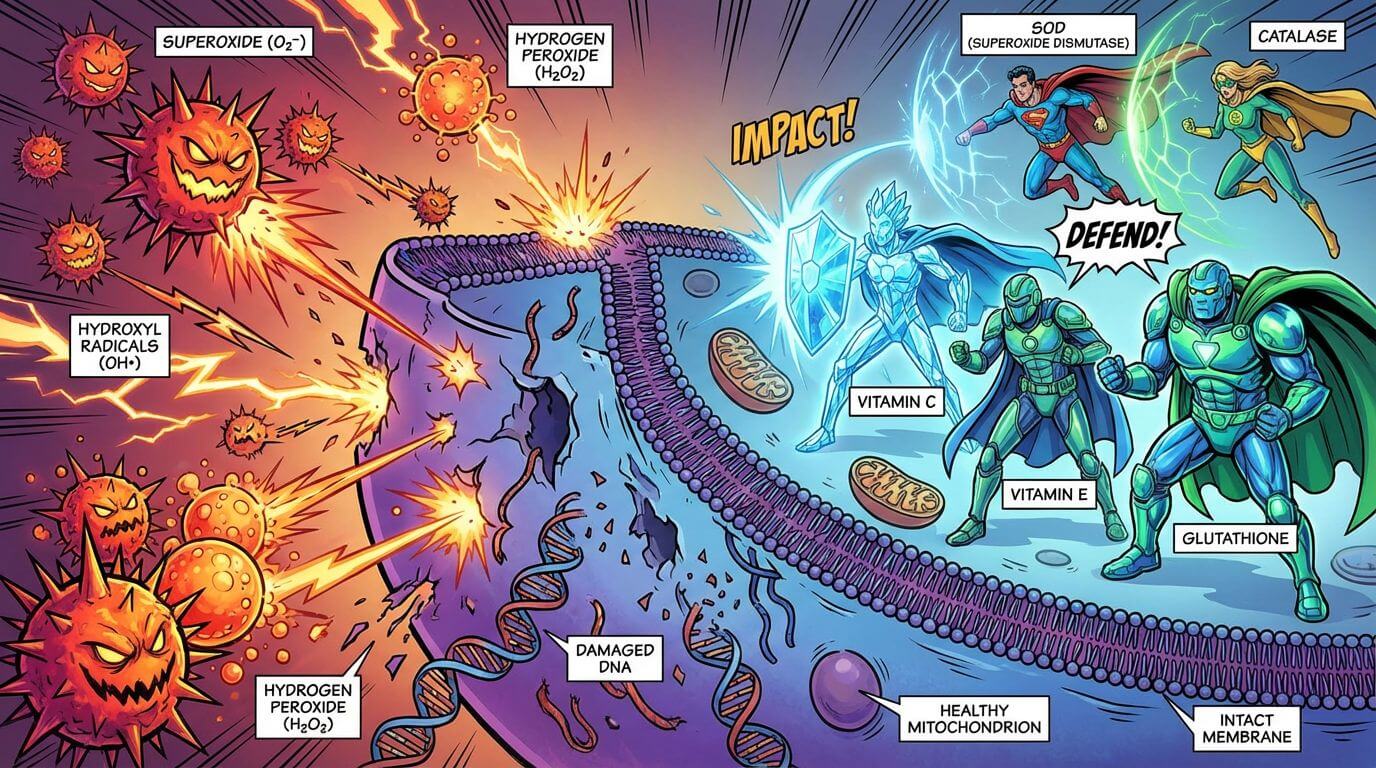
The battle at the cellular level: Free radicals, depicted as aggressive attackers, attempt to damage a cell, while antioxidants form a protective barrier, neutralizing the threat and preserving cellular health.
The Environmental Assault: Where Do Free Radicals Come From?
While some ROS are produced internally through normal metabolism, the modern world bombards us with external sources that can dramatically overload our system. Oxidative stress is now recognized as a unifying mechanism for the toxicity of a vast range of environmental pollutants [3].
Major environmental sources include:
- Air Pollution: Inhaling pollutants like ozone (O3), nitrogen dioxide (NO2), and particulate matter (PM2.5) from vehicle exhaust and industrial emissions directly generates ROS in the lungs and bloodstream. Ozone, for instance, reacts with lipids in our cell membranes to create a cascade of free radicals [4].
- Industrial Chemicals and Pesticides: Exposure to heavy metals (like lead and mercury), pesticides, and herbicides can impair mitochondrial function, causing them to "leak" excessive ROS. Many of these chemicals also deplete the body's primary antioxidant, glutathione.
- Radiation: UV radiation from the sun, X-rays, and other forms of radiation can split water molecules in the body to form highly reactive hydroxyl radicals, one of the most damaging types of free radicals.
- Lifestyle Factors: Chronic psychological stress, smoking, excessive alcohol consumption, and a diet high in processed foods and sugar all contribute significantly to the body's total oxidative load.
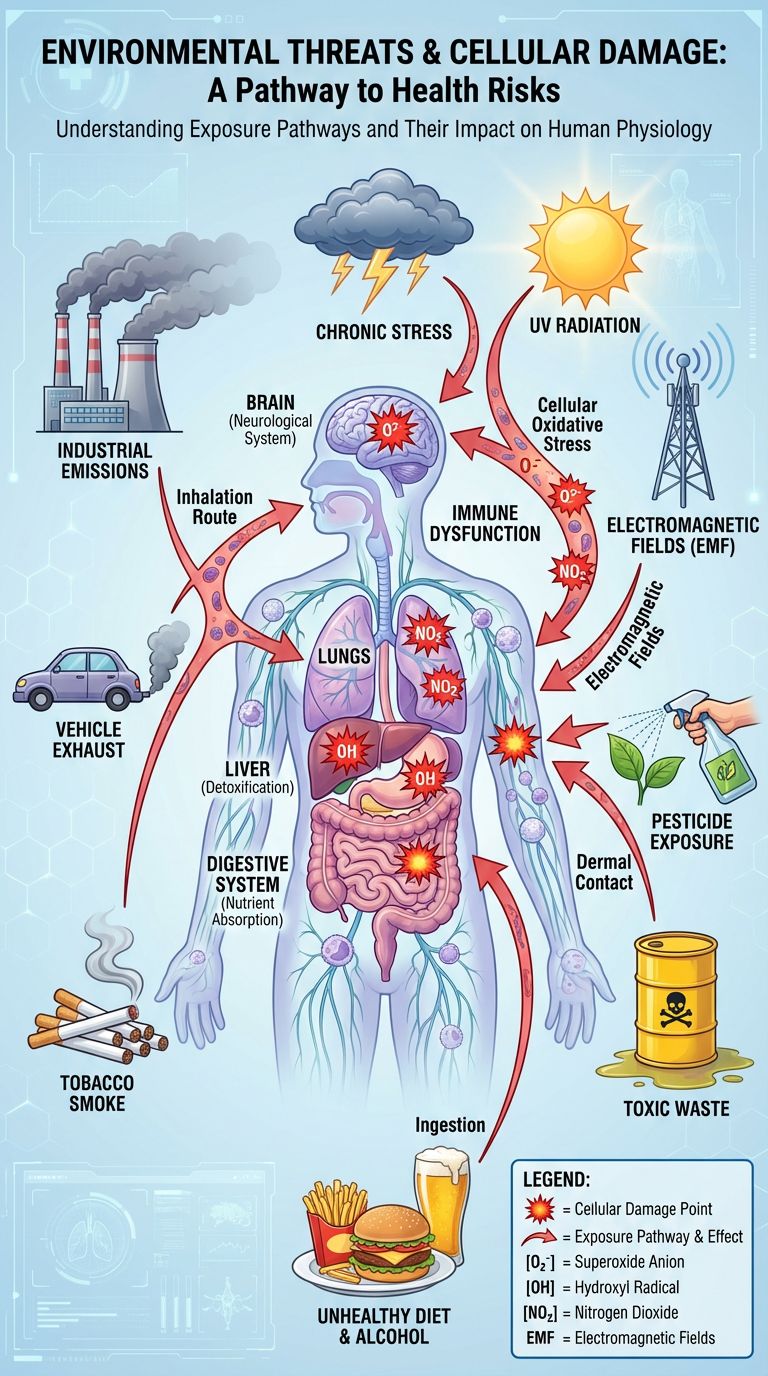
Our bodies are under constant assault from a variety of environmental and lifestyle factors that generate oxidative stress, including air and water pollution, industrial toxins, radiation, and even chronic stress.
The Price of Battle: How Oxidative Stress Damages Your Immune Cells
Immune cells are particularly vulnerable to oxidative damage. Their cell membranes are rich in polyunsaturated fatty acids, which are easily targeted by free radicals in a process called lipid peroxidation. This can make the cells leaky and dysfunctional. Furthermore, since immune cells actively use ROS as weapons, they exist in a high-oxygen environment, making them prime targets for collateral damage if the antioxidant system is weak [5].
The consequences of this damage are severe:
- Impaired Barrier Function: Oxidative stress can damage the tight junctions in the gut and respiratory linings, weakening our first line of defense and allowing more pathogens and toxins to enter the body.
- Reduced Lymphocyte Activity: It can inhibit the proliferation and function of T-cells and B-cells, the core components of your adaptive immune system, leaving you less able to fight specific infections.
- Chronic Inflammation: Damaged cells release inflammatory signals, which attract more immune cells. These new cells then produce more ROS to clean up the damage, creating a self-perpetuating vicious cycle of oxidative stress and inflammation that drains immune resources.
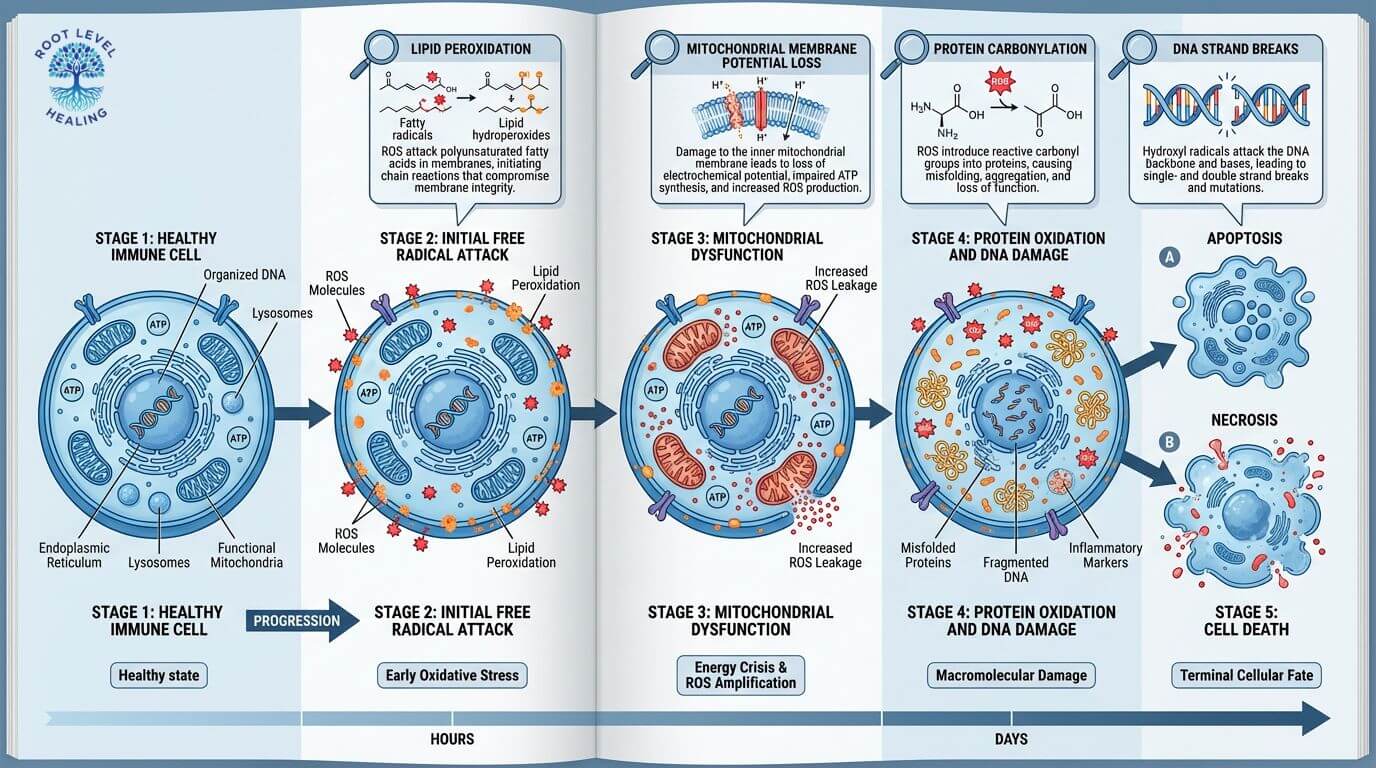
The progression of oxidative damage: A healthy immune cell (left) is attacked by free radicals, leading to membrane damage, mitochondrial dysfunction, and ultimately, impaired function or cell death (right), weakening the overall immune response.
The Antioxidant Defense Force: Your Body's Protective Shield
Fortunately, the body is not defenseless. It has a multi-layered antioxidant defense system designed to neutralize free radicals and repair the damage they cause. This system includes enzymes produced by the body, like superoxide dismutase (SOD) and catalase, as well as antioxidants we must obtain from our diet.
This is where the nutrients we discussed in our previous post become critically important again, but in a new role. Vitamin C is a potent, water-soluble antioxidant that can directly neutralize free radicals in the blood and within cells. It is also able to regenerate other antioxidants, like Vitamin E, making it a key player in the antioxidant network [6]. Zinc does not act as a direct antioxidant but is a crucial cofactor for the SOD enzyme, one of the body's most powerful internal antioxidants. A zinc deficiency can therefore cripple this primary defense line. It also helps protect cell membranes from lipid peroxidation [7].
When environmental exposure to toxins is high, the demand for these dietary antioxidants skyrockets. If our intake doesn't match the increased demand, our defenses falter, and the oxidative onslaught begins to win the war, leaving our immune system weakened, inflamed, and vulnerable.
Conclusion: Winning the War Within
The health of your immune system is not just about avoiding germs; it's about maintaining a delicate internal balance in the face of a challenging external world. The constant pressure from environmental toxins creates a state of chronic oxidative stress that can silently and effectively dismantle your immune defenses. Fortifying your body with the essential antioxidant nutrients is no longer just a good idea—it's a necessary strategy for survival in the modern world.
We have now seen how a lack of building blocks (nutrient deficiencies) can weaken our fortress walls and how a constant environmental siege (oxidative stress) can cause them to crumble. In our final post, we will bring it all together. We will introduce a targeted, strategic solution designed to both rebuild your barriers and provide the antioxidant reinforcements needed to withstand the oxidative onslaught, ensuring your fortress stands strong against any threat.
Frequently Asked Questions
Q: What's the difference between a free radical and an antioxidant?
A: A free radical is an unstable molecule with an unpaired electron. It desperately wants to be stable, so it steals an electron from a nearby molecule (like a protein, lipid, or DNA), damaging it in the process. An antioxidant is a stable molecule that can donate an electron to a free radical, neutralizing it without becoming unstable itself, thus stopping the chain reaction of damage.
Q: Can I just eat more fruits and vegetables to get enough antioxidants?
A: A diet rich in colorful fruits and vegetables is the absolute best foundation for antioxidant support. However, due to the high level of environmental toxin exposure in modern life and the depletion of nutrients in our soil, achieving an optimal level of protection through diet alone can be challenging. Targeted supplementation can help fill the gap, especially for individuals under high oxidative stress.
Q: Are all sources of stress the same when it comes to oxidative stress?
A: No, but they all contribute to the total load. Physical stress (like from pollution or intense exercise), chemical stress (from toxins), and emotional/psychological stress all trigger physiological pathways that increase the production of free radicals. Chronic psychological stress, for example, elevates cortisol, which can directly increase oxidative damage and inflammation.
Q: Is there a test for oxidative stress?
A: Yes, there are several biomarkers that can be measured in blood or urine to assess oxidative stress levels. These include tests for lipid peroxides (like TBARS), damaged DNA (like 8-OHdG), and levels of key antioxidants like glutathione. These tests can help a healthcare provider assess your oxidative load and guide a personalized intervention strategy.
Q: Can you have too many antioxidants?
A: While it's difficult to get too many antioxidants from whole foods, extremely high doses of certain isolated antioxidant supplements can sometimes have pro-oxidant effects or interfere with the body's natural signaling. This is why it's important to use a balanced formula and consult with a healthcare professional, rather than taking mega-doses of single nutrients.
References
- Yang, Y., et al. (2013 ). Reactive oxygen species in the immune system. Journal of Cellular and Molecular Medicine.
- Pizzino, G., et al. (2017 ). Oxidative Stress: Harms and Benefits for Human Health. Oxidative Medicine and Cellular Longevity.
- Samet, J. M., & Wages, P. A. (2018 ). Oxidative Stress from Environmental Exposures. Current Opinion in Toxicology.
- Kelly, F. J. (2003 ). Oxidative stress: its role in air pollution and adverse health effects. Occupational and Environmental Medicine.
- Tavassolifar, M. J., et al. (2020 ). The Influence of Reactive Oxygen Species in the Immune System. Journal of Clinical and Diagnostic Research.
- Carr, A. C., & Maggini, S. (2017 ). Vitamin C and Immune Function. Nutrients.
- Prasad, A. S. (2008 ). Zinc in human health: effect of zinc on immune cells. Molecular Medicine.

Ready to Discover Your Score?
This 2-minute quiz is the essential first step to understanding your body's current toxic load and identifying the root cause of how you feel.
Take The Toxicity QuizExplore More Articles
Dive deeper into topics like detoxification, gut health, and mental clarity on our blog. Knowledge is the key to taking control of your health.
Visit The Blog