The Missing Links: Are Nutrient Deficiencies Weakening Your Immune Armor?
In our last discussion, we explored the body's incredible first line of defense—its natural immune barriers. We likened them to the mighty walls of a fortress, designed to keep invaders at bay. But what happens when those walls are built with crumbling stones and weak mortar? What if the sentinels on the ramparts are asleep at their posts?
This is precisely what occurs when your body is deprived of the essential building blocks it needs to maintain a robust defense. You could have the most sophisticated fortress design in the world, but without the right materials, it's only a matter of time before it's breached. Welcome to the world of nutrient deficiencies—the silent saboteurs of your immune armor.
Key Takeaways
- 🍔Hidden Hunger: Modern diets, even when calorie-sufficient, are often poor in essential micronutrients, leading to a state of "hidden hunger" that compromises immune function.
- 🍊The Immune Trio: Vitamin C, Vitamin D, and Zinc are critical "generals" of the immune army. Deficiencies in any of these can severely impair your body's ability to fight off pathogens.
- 🤝Power of Synergy: These nutrients work together synergistically. A deficiency in one can limit the effectiveness of the others, making a combined approach to supplementation more effective.
- ❓Subtle Signs: Frequent colds, slow wound healing, fatigue, and skin issues can all be subtle signs of underlying nutrient deficiencies that are weakening your immune defenses.
The Missing Links: Are Nutrient Deficiencies Weakening Your Immune Armor? (A Quick Overview)
Before we dive deep into the science, watch this quick overview and discover the crisis of "hidden hunger" — learn how modern diets packed with calories but lacking in essential micronutrients force your body to prioritize immediate survival over long-term defense, and why Vitamin C, Vitamin D, and Zinc are the undisputed generals of your immune army.
In This Article:
The Modern Diet Dilemma: The Crisis of Hidden Hunger
In an age of abundance, it seems paradoxical that we could be malnourished. Yet, a significant portion of the population, even in developed countries, suffers from what is known as "hidden hunger." This isn't about a lack of calories; it's about a profound lack of micronutrients. Our modern food supply, dominated by processed foods, refined grains, and sugar, is often calorie-dense but nutrient-poor. Furthermore, modern agricultural practices have led to soil depletion, meaning the fruits and vegetables we do eat may have lower levels of essential vitamins and minerals than they did just a few decades ago [1].
This creates a dangerous gap between what our immune system needs to function optimally and what we're actually providing it. When your body is in a constant state of low-grade nutrient deficiency, it's forced to make tough choices. It prioritizes immediate survival functions, often at the expense of long-term maintenance and defense. Your immune system, a highly complex and energy-intensive network, is one of the first to suffer. The result is a weakened barrier, a sluggish response to threats, and an increased susceptibility to infections.
The Big Three: The Generals of Your Immune Army
While a wide range of micronutrients is essential for health, three stand out as the undisputed generals in the war against pathogens: Vitamin C, Vitamin D, and Zinc. When these are in short supply, the entire defense strategy can collapse.
Vitamin C: The Master Protector and Frontline Soldier
Vitamin C, or ascorbic acid, is perhaps the most famous immune-supporting nutrient, and for good reason. It is a potent antioxidant that plays a crucial role in every stage of the immune response. Think of Vitamin C as the master protector, shielding your immune cells from the very damage they create while fighting invaders. During an infection, immune cells like neutrophils produce reactive oxygen species (ROS) to destroy pathogens. However, this "friendly fire" can also damage the immune cells themselves. Vitamin C neutralizes these harmful byproducts, preserving the integrity and lifespan of your cellular army [2].
Furthermore, Vitamin C is vital for the function of phagocytes—cells that literally engulf and digest pathogens. It enhances their ability to move towards a site of infection (chemotaxis) and to consume the enemy. It also supports the proliferation and differentiation of lymphocytes (T-cells and B-cells), the key players in your adaptive immune response. The problem? Humans are one of the few mammals that cannot produce their own Vitamin C. We must obtain it from our diet, and during times of illness or stress, our bodies burn through it at an astonishing rate, making deficiency a real and present danger when we need it most.
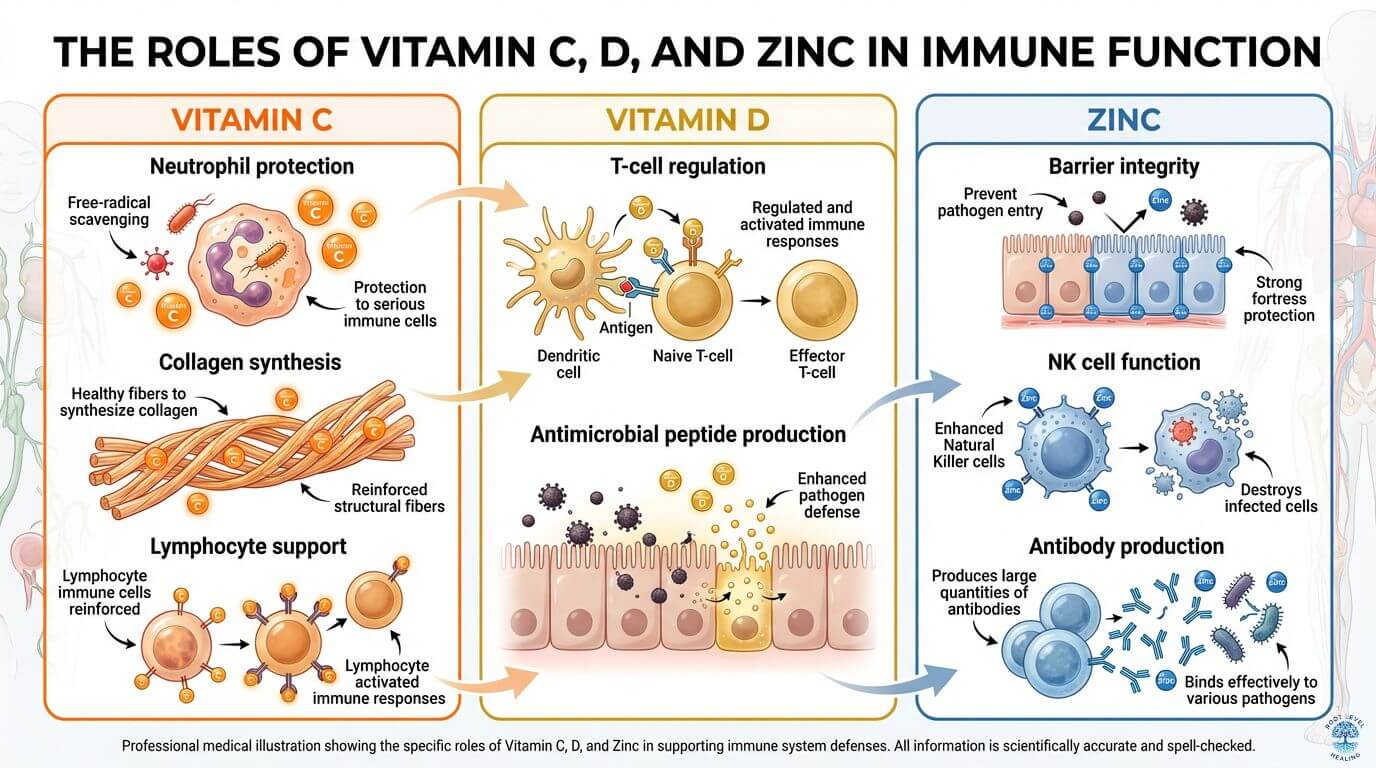
The three essential nutrients work as specialized forces within your immune system. Vitamin C acts as the frontline protector, Vitamin D serves as the intelligent commander, and Zinc functions as the master builder—each playing distinct but interconnected roles in maintaining your body's defensive capabilities.
Vitamin D: The Sunshine Modulator and Intelligent Commander
Traditionally known for its role in bone health, Vitamin D has emerged as a powerful modulator of the immune system. It acts more like a hormone than a vitamin, with Vitamin D receptors (VDR) found on virtually all immune cells, including T-cells, B-cells, and antigen-presenting cells. This indicates its profound influence on immune function. Vitamin D is the intelligent commander that ensures the immune response is both effective and balanced, preventing it from spiraling out of control into chronic inflammation or autoimmunity [3].
It plays a critical role in activating our innate defenses by stimulating the production of antimicrobial peptides like cathelicidin and defensins in the lining of the respiratory tract—a key part of our barrier defense. Simultaneously, it helps to regulate the adaptive immune system, ensuring that T-cells differentiate correctly and preventing an overzealous inflammatory response. With a vast portion of the global population being deficient in this crucial nutrient, particularly during winter months, it's no surprise that susceptibility to respiratory infections increases when our "sunshine vitamin" levels are low.
Zinc: The Gatekeeper, Builder, and Logistics Officer
If Vitamin C is the protector and Vitamin D is the commander, Zinc is the indispensable gatekeeper and logistics officer. This essential trace mineral is involved in hundreds of enzymatic reactions in the body, many of which are critical for a healthy immune system. Zinc is fundamental for the normal development and function of cells mediating innate immunity, neutrophils, and natural killer (NK) cells. A zinc deficiency can rapidly impair the function of these first responders [4].
Crucially, Zinc is vital for maintaining the integrity of your physical barriers. It plays a key role in the production of keratin and the formation of tight junctions in the skin and mucosal linings of the gut and respiratory tract. Without adequate Zinc, these barriers become weak and permeable, offering an open invitation to pathogens. Furthermore, Zinc is required for the development of lymphocytes and is essential for the production of antibodies by B-cells. Its deficiency not only weakens your defenses but can also lead to an unbalanced immune response, contributing to chronic inflammation.
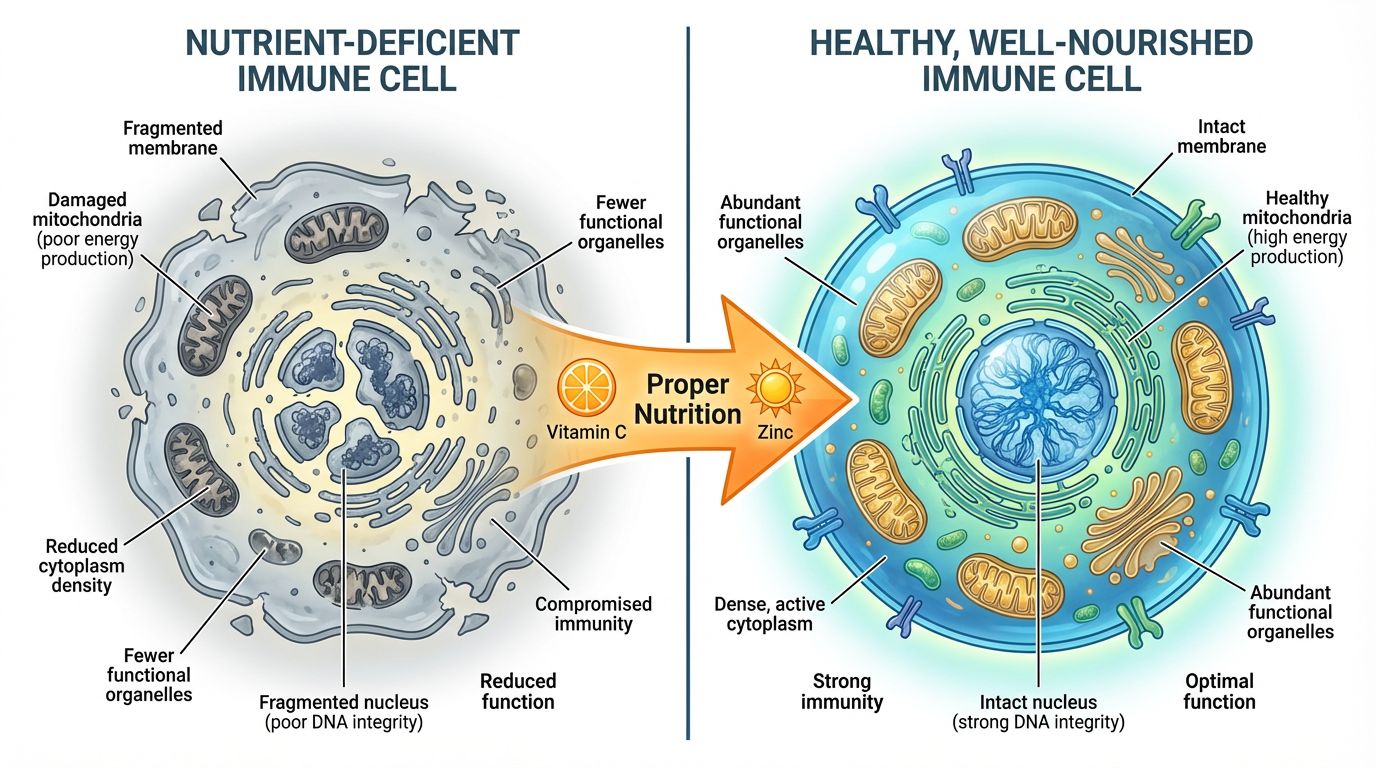
The stark difference between a well-nourished immune cell and a nutrient-deficient one reveals why proper nutrition is fundamental to immune function. While the healthy cell maintains strong structures and optimal function, the deficient cell shows compromised integrity and reduced defensive capabilities.
The Synergistic Effect: Why 1 + 1 + 1 = 10
While each of these nutrients is a powerhouse on its own, their true strength lies in their synergy. They work together in a complex, coordinated dance to ensure your immune system is prepared for any threat. For instance, Vitamin C can regenerate other antioxidants and is required for collagen synthesis, which is essential for the integrity of the skin barrier that Zinc helps to maintain. Vitamin D regulates the expression of genes involved in immune cell function, and Zinc acts as a cofactor for many of the enzymes involved in these processes [5].
Thinking back to our fortress analogy:
- Vitamin C is the tireless soldier on the front lines, actively fighting off invaders while also repairing the damage to the fortress walls caused by the battle.
- Vitamin D is the wise commander in the war room, directing the soldiers, calling for reinforcements (T-cells and B-cells), and ensuring the army doesn't accidentally burn down its own city (autoimmunity).
- Zinc is the master builder and quartermaster, ensuring the walls are strong, the gates are secure, and the soldiers have the weapons and armor they need to fight effectively.
Are You at Risk? Subtle Signs of a Weakened Immune Armor
You don't have to have a full-blown scurvy or rickets to be deficient. Low-grade, subclinical deficiencies are incredibly common and can manifest in subtle ways. Ask yourself:
- Do you catch colds more than two or three times a year?
- Do minor cuts and scrapes seem to take forever to heal?
- Do you often feel tired and run down, even after a good night's sleep?
- Do you suffer from frequent skin issues or rashes?
- Are you experiencing more digestive issues than usual?
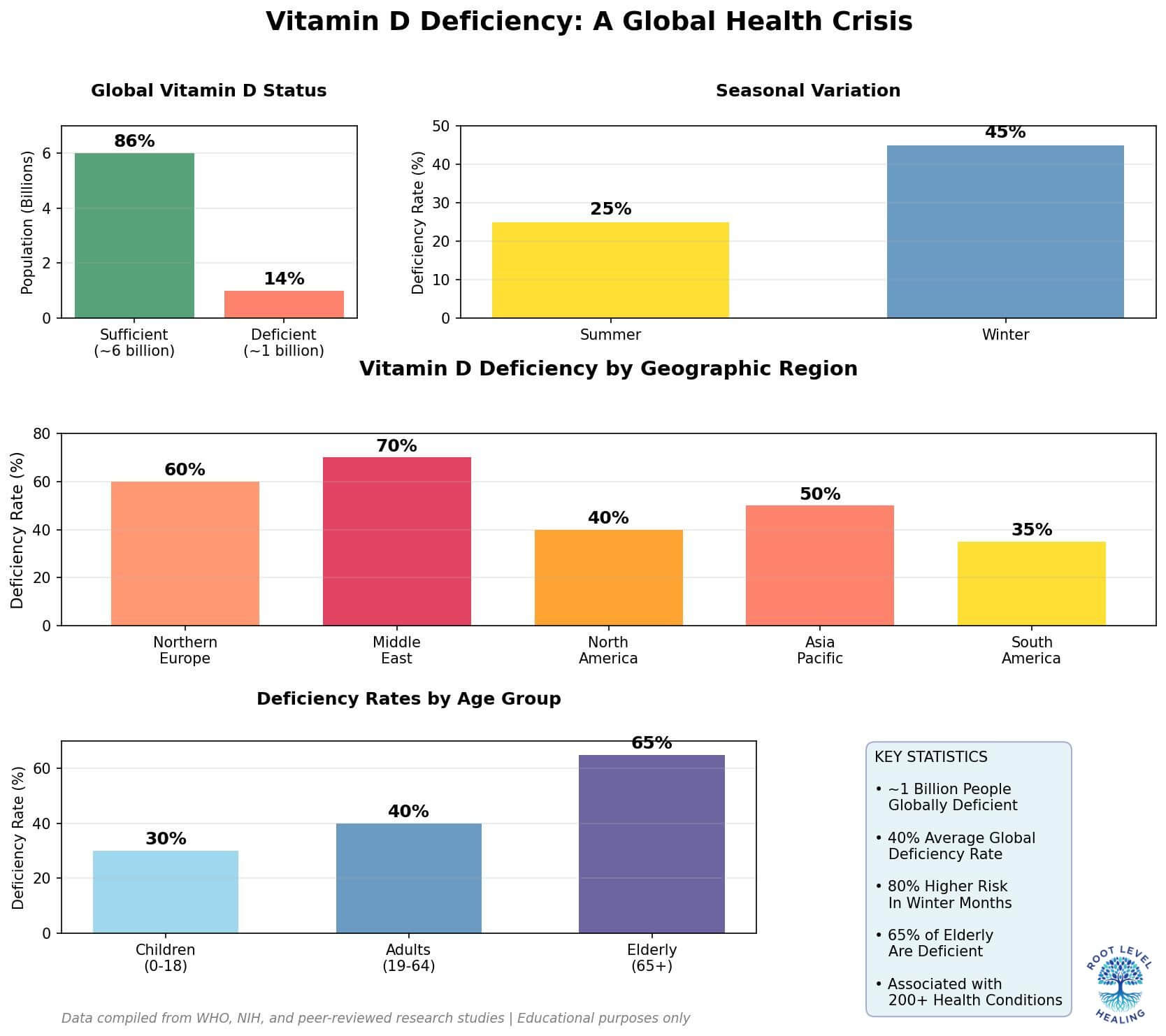
Vitamin D deficiency affects over one billion people worldwide, with higher rates in northern latitudes and during winter months. This widespread deficiency helps explain the seasonal patterns of respiratory infections and the importance of adequate supplementation for immune health.
Conclusion: Fortifying Your Defenses
Your immune system is a masterpiece of biological engineering, but it is not invincible. It relies on a constant supply of essential micronutrients to build, maintain, and operate its complex defensive network. In the face of modern dietary challenges, ensuring you have adequate levels of Vitamin C, Vitamin D, and Zinc is not just a good idea—it's a fundamental requirement for maintaining your health and resilience.
Now that we understand how missing building blocks can weaken our fortress, we must ask: is there anything else actively trying to tear it down? What if, in addition to nutrient gaps, your body is also under a constant, invisible siege from an enemy that accelerates aging and drains your immune resources? In our next post, we will delve into the world of oxidative stress—the silent, relentless attacker that can bring even the strongest defenses to their knees.
Frequently Asked Questions
Q: Can I get enough of these nutrients from food alone?
A: While a well-balanced diet rich in fruits, vegetables, and whole foods is the foundation of good nutrition, modern agricultural practices and food processing have reduced the nutrient density of many foods. Additionally, factors like stress, illness, and individual genetic variations can increase your needs beyond what diet alone can provide. Many people benefit from targeted supplementation, especially during times of increased immune stress.
Q: How quickly can I expect to see improvements if I address these deficiencies?
A: The timeline varies depending on the severity of the deficiency and individual factors. Some people notice improvements in energy and overall well-being within a few weeks, while immune function improvements may take 1-3 months of consistent supplementation. Vitamin D, in particular, can take several months to reach optimal levels if you're starting from a deficient state.
Q: Are there any risks to taking these supplements?
A: When taken within recommended dosages, Vitamin C, Vitamin D, and Zinc are generally safe for most people. However, it's always wise to consult with a healthcare provider before starting any supplement regimen, especially if you have underlying health conditions or take medications. Some nutrients can interact with medications or become toxic at very high doses.
Q: Why are these deficiencies so common if these nutrients are so important?
A: Several factors contribute to widespread deficiencies: modern processed diets, soil depletion reducing nutrient content in foods, indoor lifestyles limiting sun exposure (for Vitamin D), chronic stress increasing nutrient demands, and poor gut health affecting absorption. Additionally, the recommended daily allowances (RDAs) for many nutrients were established to prevent deficiency diseases, not necessarily to optimize immune function.
Q: Should I get tested for these deficiencies?
A: Testing can be valuable, especially for Vitamin D (25-hydroxyvitamin D test) and Zinc (serum or red blood cell zinc). Vitamin C testing is less commonly done but can be useful if you suspect a severe deficiency. These tests can help you and your healthcare provider determine appropriate supplementation levels and monitor your progress.
References
- Pecora, F., et al. (2020 ). The Role of Micronutrients in Support of the Immune Response against Viral Infections. Nutrients, 12(10), 3198.
- Carr, A. C., & Maggini, S. (2017 ). Vitamin C and Immune Function. Nutrients, 9(11), 1211.
- Aranow, C. (2011 ). Vitamin D and the immune system. Journal of Investigative Medicine, 59(6), 881-886.
- Prasad, A. S. (2008 ). Zinc in human health: effect of zinc on immune cells. Molecular Medicine, 14(5-6), 353-357.
- Gombart, A. F., et al. (2020 ). A Review of Micronutrients and the Immune System–Working in Harmony to Reduce the Risk of Infection. Nutrients, 12(1), 236.

Ready to Discover Your Score?
This 2-minute quiz is the essential first step to understanding your body's current toxic load and identifying the root cause of how you feel.
Take The Toxicity QuizExplore More Articles
Dive deeper into topics like detoxification, gut health, and mental clarity on our blog. Knowledge is the key to taking control of your health.
Visit The Blog