Unlocking Your Body's Master Detoxifier: The Ultimate Guide to Glutathione
Key Takeaways
- 🛡️Master Antioxidant: Glutathione is your body's most powerful natural defender, neutralizing toxins and regenerating other antioxidants like vitamins C and E.
- 🧬Liver's Lifeline: Phase II detoxification relies entirely on glutathione to neutralize toxic compounds like acetaldehyde and make them water-soluble for elimination.
- ⚠️Depletion Crisis: Alcohol consumption, poor nutrition, stress, and aging rapidly deplete glutathione, leaving you vulnerable to oxidative damage and disease.
- 🥬Natural Boosters: Sulfur-rich foods, NAC supplementation, quality sleep, and moderate exercise can naturally restore and maintain optimal glutathione levels.
Unlocking Your Body's Master Detoxifier: The Ultimate Guide to Glutathione (A Quick Overview)
Before we dive deep into the science, watch this quick overview and discover the science behind your body's "master antioxidant" — learn how glutathione neutralizes dangerous toxins in the liver, what causes your reserves to deplete, and the most effective ways to naturally rebuild your body's ultimate defense system.
In This Article:
In our previous posts, we've journeyed deep into the science of liver health, first uncovering the silent epidemic of liver disease and then exposing the toxic truth behind hangovers. We learned how alcohol consumption leads to the production of acetaldehyde, a highly toxic compound that wreaks havoc on our cells. Now, we arrive at the most critical part of our story: the solution.
Meet glutathione (GSH), your body's most powerful natural defender and the undisputed "master antioxidant." This comprehensive guide will illuminate the profound importance of glutathione, exploring its intricate synthesis process, its multifaceted roles in protecting your body, the severe consequences of its depletion, and most importantly, the actionable steps you can take to boost and maintain optimal levels of this life-sustaining molecule.
What is Glutathione? The Molecular Guardian
Glutathione is a small but mighty tripeptide, meaning it is a molecule composed of three amino acids: L-glutamate, L-cysteine, and glycine. It is synthesized in the cytosol of every single cell in the human body, with the highest concentrations found in the liver—our primary organ of detoxification [1].
What truly earns glutathione its prestigious title of "master antioxidant" is its unique and powerful ability to not only neutralize harmful free radicals on its own but also to regenerate and recycle other essential antioxidants, most notably vitamins C and E [2]. Imagine a military general who not only fights on the front lines but also re-arms and sends his fellow soldiers back into battle. That is the role glutathione plays, creating a synergistic and powerful antioxidant defense network that is far greater than the sum of its parts.
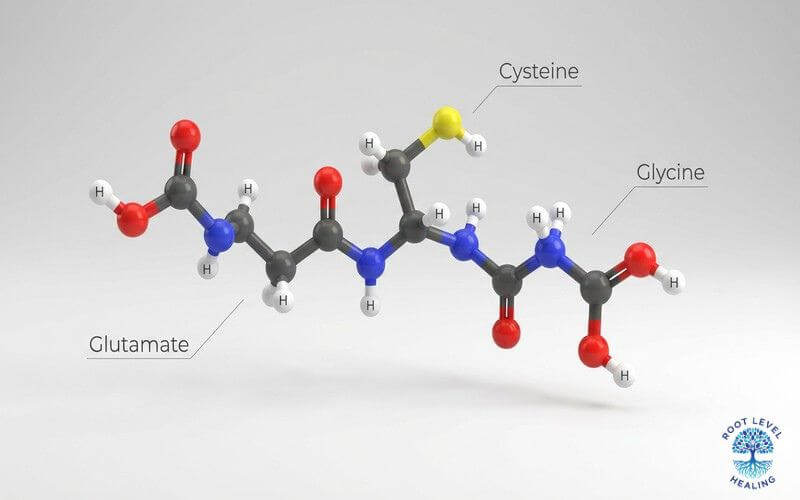
The molecular structure of glutathione, showing its three amino acid components: glutamate, cysteine, and glycine.
The Science of Glutathione Synthesis: A Two-Step Process
The production of glutathione is a tightly regulated, two-step enzymatic process that requires ATP (the body's energy currency). Understanding this process is crucial because it reveals exactly where the system can break down and how we can support it.
Step 1: The Rate-Limiting Step
The first reaction is catalyzed by the enzyme glutamate-cysteine ligase (GCL). This enzyme joins glutamate and cysteine together to form gamma-glutamylcysteine. The availability of cysteine is the most critical factor in this step; a shortage of cysteine directly limits the rate at which glutathione can be produced [1].
Step 2: The Final Assembly
The second reaction is catalyzed by GSH synthase (GS), which adds glycine to gamma-glutamylcysteine, completing the formation of the glutathione molecule. This synthesis is primarily regulated by the activity of the GCL enzyme and the availability of its precursors, especially cysteine.
The Critical Role of Glutathione in Liver Detoxification
The liver is your body's central processing plant for toxins. Its detoxification system, known as the cytochrome P450 pathway, operates in two phases, and glutathione is the undisputed star of Phase II.
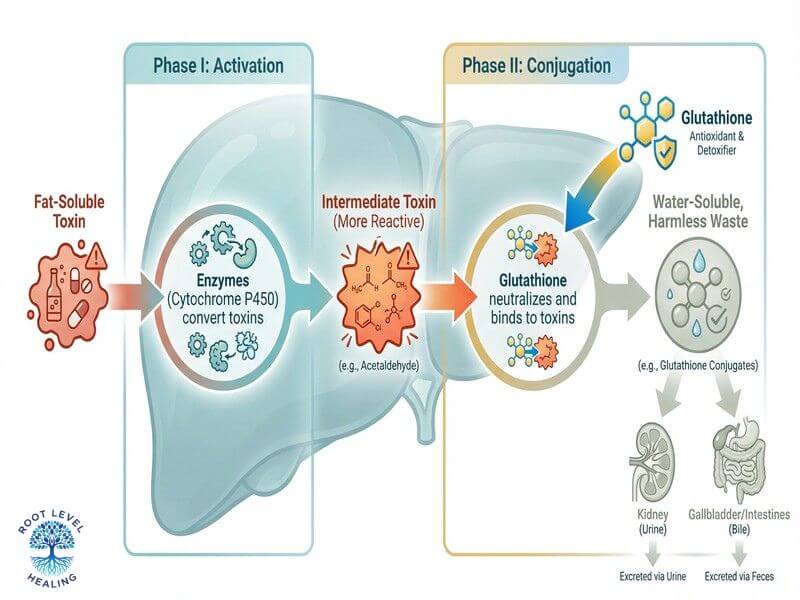
The two-phase liver detoxification process, showing how glutathione neutralizes toxic intermediates in Phase II.
Phase I Detoxification: In this phase, enzymes begin to process fat-soluble toxins (like alcohol, drugs, and pesticides), breaking them down through oxidation, reduction, and hydrolysis. While this is a necessary first step, the intermediate compounds created during Phase I are often even more toxic and reactive than the original substance. Acetaldehyde, the byproduct of alcohol metabolism, is a prime example.
Phase II Detoxification (The Glutathione Conjugation Pathway): This is where glutathione takes center stage. Through a process called conjugation, glutathione-dependent enzymes (glutathione S-transferases) attach the glutathione molecule directly to the reactive intermediate toxins from Phase I. This action has two profound effects: it instantly neutralizes the toxin's reactivity, and it makes the toxin water-soluble. This transformation is crucial, as it allows the now-harmless compound to be easily excreted from the body via urine or bile [1].
Without sufficient glutathione, the highly toxic byproducts of Phase I detoxification would accumulate, causing massive oxidative stress and cellular damage, leading directly to liver inflammation and disease.
The Consequences of Glutathione Depletion
When the body's demand for glutathione outpaces its ability to produce it, a state of glutathione deficiency occurs. This is a dangerous condition that contributes directly to oxidative stress and is a key factor in the aging process and the pathogenesis of numerous diseases [2].
Factors that lead to glutathione depletion include chronic alcohol consumption, poor nutrition lacking in amino acid precursors, environmental toxin exposure, chronic stress and lack of sleep, and the natural aging process. Glutathione deficiency has been linked to a host of serious health issues, including liver disease, neurodegenerative diseases like Parkinson's and Alzheimer's, cardiovascular disease, chronic fatigue, and impaired immune function.
How to Naturally Boost Your Glutathione Levels
Supporting your body's glutathione production is one of the most powerful proactive steps you can take for your long-term health. Here are the most effective strategies based on current scientific research:
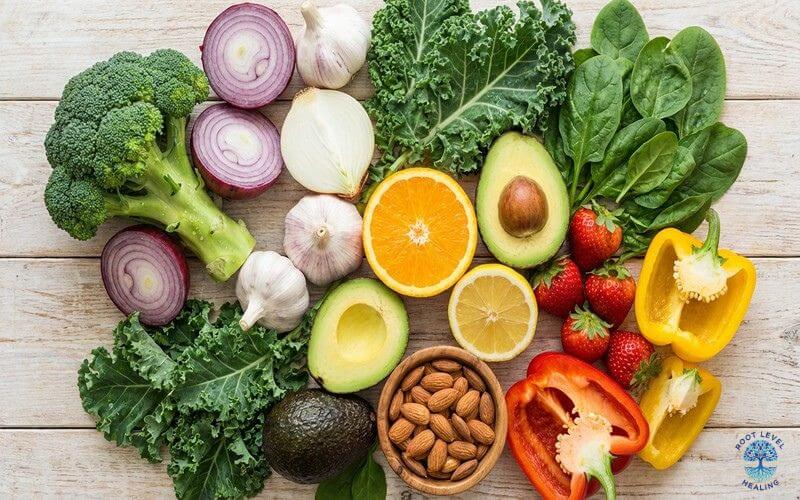
Nutrient-dense foods that naturally support glutathione production in the body.
Consume Sulfur-Rich Foods: Sulfur is essential for glutathione synthesis. Excellent dietary sources include garlic, onions, and cruciferous vegetables like broccoli, kale, cauliflower, and Brussels sprouts. These foods provide the raw materials your body needs to manufacture glutathione.
Boost Your Intake of N-Acetylcysteine (NAC): NAC is a supplement form of cysteine, the rate-limiting amino acid for glutathione production. Supplementing with NAC is one of the most direct and effective ways to boost glutathione levels in the body. It provides the direct precursor your body needs to ramp up production.
Eat Foods Rich in Vitamins C and E: These vitamins work synergistically with glutathione, helping to regenerate it. Include plenty of citrus fruits, berries, bell peppers, almonds, and sunflower seeds in your diet.
Prioritize High-Quality Sleep: The body performs much of its repair and regeneration, including replenishing glutathione stores, during sleep. Aim for 7-9 hours of uninterrupted sleep per night.
Regular, Moderate Exercise: Physical activity has been shown to boost the body's antioxidant defenses, including glutathione. Be mindful not to over-train, as excessive exercise can have the opposite effect.
Frequently Asked Questions
Q: What makes glutathione different from other antioxidants like Vitamin C?
A: While Vitamin C is an excellent antioxidant, glutathione is considered the "master" because it can regenerate and recycle other antioxidants, including Vitamin C and Vitamin E, after they have neutralized a free radical. This makes the entire antioxidant system more powerful and efficient.
Q: Can I just take a glutathione supplement directly?
A: Oral glutathione supplements have historically been shown to have poor bioavailability, meaning they are not well-absorbed by the digestive system. A more effective strategy is to supplement with its direct precursor, N-acetylcysteine (NAC), which the body can easily convert into glutathione.
Q: How quickly does alcohol deplete glutathione?
A: Glutathione depletion begins almost immediately upon alcohol consumption as the liver works to metabolize it and its toxic byproduct, acetaldehyde. Binge drinking or chronic, heavy drinking can lead to a severe and prolonged state of glutathione deficiency in the liver.
Q: Is there a test to check my glutathione levels?
A: Yes, specialized labs can measure glutathione levels in your blood. This is typically done through a physician and can help assess your body's overall antioxidant status and level of oxidative stress.
Q: What are the signs of glutathione deficiency?
A: Common signs include chronic fatigue, frequent infections, slow wound healing, brain fog, joint pain, and increased sensitivity to toxins. However, these symptoms can have many causes, so proper testing is recommended for accurate assessment.
References
- Lu, S. C. (2009 ). Regulation of glutathione synthesis. Molecular aspects of medicine, 30(1-2), 42–59. https://www.sciencedirect.com/science/article/abs/pii/S0098299708000502?via%3Dihub
- Wu, G., Fang, Y. Z., Yang, S., Lupton, J. R., & Turner, N. D. (2004 ). Glutathione metabolism and its implications for health. The Journal of nutrition, 134(3), 489–492. https://www.sciencedirect.com/science/article/pii/S0022316623026639?via%3Dihub

Ready to Discover Your Score?
Take our 2-minute quiz to learn about your body's toxic burden and how you can support your natural detoxification systems.
Take The Toxicity QuizExplore More Articles
Visit our blog for more in-depth articles on liver health, detoxification, and the science behind a healthier you.
Visit The Blog