
The Science of Hangovers: What Really Happens to Your Body When You Drink
Key Takeaways
- 🧪The Real Villain: It's not alcohol that causes hangovers—it's the toxic compound acetaldehyde that your liver produces when breaking down alcohol.
- ⚡Toxic Bottleneck: When you drink faster than your liver can process, acetaldehyde builds up, causing headaches, nausea, and cellular damage.
- 🛡️Glutathione Depletion: Alcohol burns through your body's master antioxidant, leaving you vulnerable to widespread oxidative damage and inflammation.
- 🧬Genetic Factor: Your genes determine how efficiently you process acetaldehyde, explaining why some people get worse hangovers than others.
The Science of Hangovers: What Really Happens to Your Body When You Drink: A Quick Overview
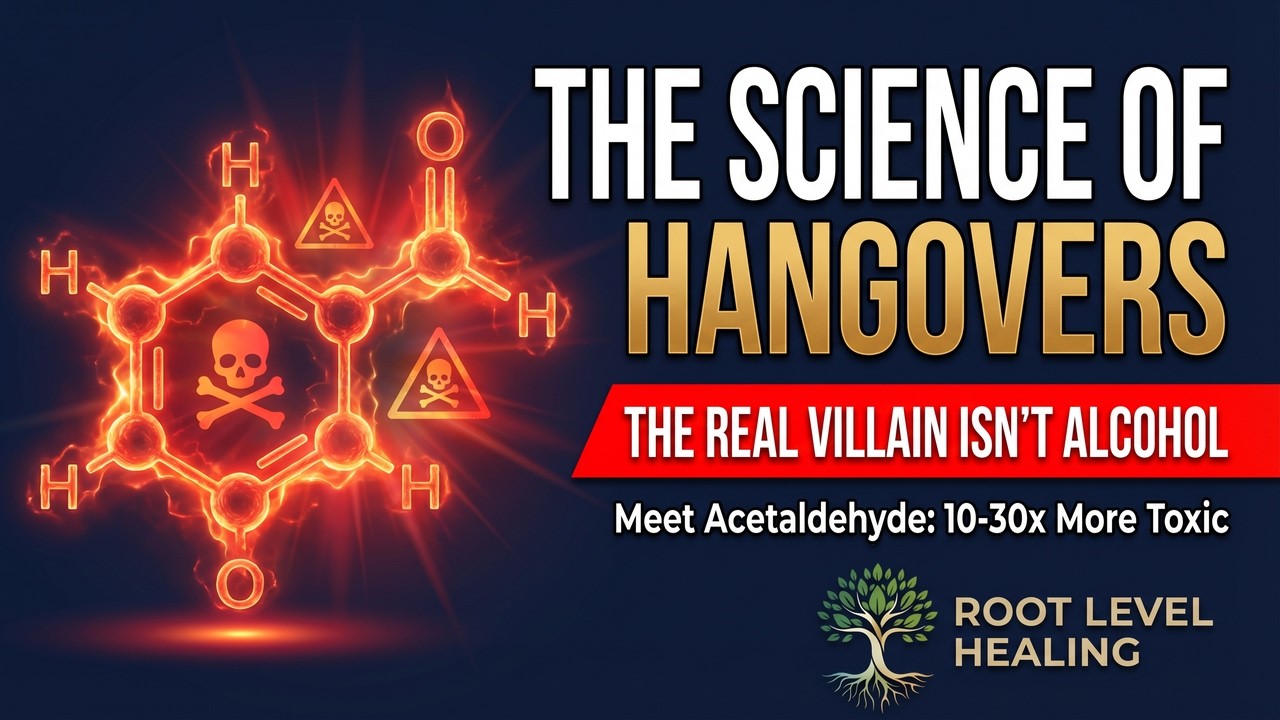
Before we dive deep into the science, watch this quick overview and discover the real science behind hangovers — learn why the toxic compound acetaldehyde (not the alcohol itself) is the true villain, how it depletes your body's master antioxidant glutathione, and what you can do to protect your liver and cellular health.
In This Article:
That familiar morning-after misery—the pounding headache, the queasy stomach, the overwhelming fatigue. We call it a hangover, but what is actually happening inside your body to cause such a symphony of suffering? The answer is far more complex than simple dehydration. It's a story of a toxic chemical battle, a depleted antioxidant army, and a full-blown inflammatory crisis.
In this deep dive, we'll uncover the science of what really happens when you drink, revealing that the true villain isn't the alcohol itself, but the toxic substance your body turns it into. Understanding this process is the first step to protecting your body and mitigating the damage.
The Two-Step Process: How Your Body Metabolizes Alcohol
When you take a sip of an alcoholic beverage, your body treats it as a poison and immediately prioritizes its removal. This detoxification process primarily occurs in the liver through a two-step enzymatic pathway.
Step 1: Alcohol to Acetaldehyde (The Real Villain)
First, an enzyme called alcohol dehydrogenase (ADH) goes to work, converting the ethanol (alcohol) into a highly toxic compound called acetaldehyde. Acetaldehyde is estimated to be between 10 and 30 times more toxic than alcohol itself [1]. It is a known carcinogen and is the primary culprit behind most hangover symptoms and the long-term damage associated with alcohol consumption.

The two-step alcohol metabolism process: ADH converts alcohol to toxic acetaldehyde, then ALDH converts acetaldehyde to harmless acetate.
Step 2: Acetaldehyde to Acetate (The Harmless Substance)
Next, a second enzyme, aldehyde dehydrogenase (ALDH), swoops in to quickly break down the toxic acetaldehyde into a harmless substance called acetate. Your body can then easily convert acetate into water and carbon dioxide, which are safely eliminated.
This two-step process is like a factory assembly line. When it's working efficiently, the toxic acetaldehyde is cleared out almost as quickly as it's created. However, this system can easily become overwhelmed.
The Acetaldehyde Bottleneck: When the System Fails
If you drink alcohol faster than your liver can process it, the ADH enzyme produces acetaldehyde faster than the ALDH enzyme can clear it. This creates a toxic bottleneck, leading to a buildup of acetaldehyde in your liver and bloodstream.
This accumulation of acetaldehyde is what triggers the classic hangover symptoms:
- Headaches: Acetaldehyde causes blood vessels to dilate, leading to pounding headaches.
- Nausea and Vomiting: It irritates the stomach lining and triggers the body's poison-control response.
- Facial Flushing: The infamous "Asian flush" is caused by a genetic deficiency in the ALDH enzyme, leading to rapid acetaldehyde buildup.

Acetaldehyde accumulation triggers the classic hangover symptoms by causing blood vessel dilation, stomach irritation, and inflammatory responses.
But the immediate misery of a hangover is just the beginning. The real danger lies in what this toxic compound does to your cells.
The Silent Damage: How Acetaldehyde Depletes Your Master Antioxidant
To defend against the toxic onslaught of acetaldehyde, your liver relies on its most powerful antioxidant: glutathione. Glutathione is the body's master detoxifier, responsible for neutralizing harmful compounds and protecting cells from oxidative stress.
However, producing glutathione is a resource-intensive process, and your liver only has a finite supply. When you drink alcohol, your liver burns through its glutathione reserves at an alarming rate to neutralize the flood of acetaldehyde [2].
This leads to glutathione depletion, leaving your liver and other organs vulnerable to widespread oxidative damage. With its primary defender offline, acetaldehyde is free to wreak havoc, damaging cellular DNA, proteins, and fats. This is the root cause of the inflammation and accelerated aging associated with chronic alcohol use.

Alcohol consumption rapidly depletes glutathione reserves, leaving cells vulnerable to acetaldehyde-induced oxidative damage and inflammation.
Why Do Some People Get Worse Hangovers? The Genetic Factor
Ever wonder why your friend can have three drinks and feel fine, while you're miserable after just one? The answer often lies in your genes.
As mentioned earlier, the ALDH enzyme is responsible for clearing toxic acetaldehyde. However, millions of people, particularly those of East Asian descent, have a genetic variation that results in a less effective ALDH enzyme. This condition, known as ALDH2 deficiency, causes acetaldehyde to build up much more quickly, leading to severe facial flushing, nausea, and rapid heart rate after even small amounts of alcohol.
Even if you don't have this specific genetic variant, your individual enzyme efficiency can vary, explaining why some people are naturally more susceptible to hangovers and alcohol-related damage.
Conclusion: It's Not the Drink, It's the Aftermath
The science is clear: the real danger of alcohol isn't the ethanol itself, but the toxic acetaldehyde your body produces during metabolism. This compound is the direct cause of hangover symptoms and, more importantly, the driver of the cellular damage and inflammation that accelerates aging.
By overwhelming your liver's detoxification pathways and depleting your master antioxidant, glutathione, alcohol leaves your body in a vulnerable, pro-inflammatory state. Understanding this process is the key to making smarter choices and finding effective ways to support your body's natural defenses.
In our next post, we'll explore the most powerful ways to boost your body's detoxification systems and protect your liver from the inside out.
Frequently Asked Questions
Q: Does eating a big meal before drinking really help prevent a hangover?
A: Yes, to some extent. Having food in your stomach, particularly meals containing fat, protein, and fiber, slows the absorption of alcohol into your bloodstream. This gives your liver more time to process the alcohol, preventing the rapid spike in acetaldehyde that can overwhelm your enzymes. However, it doesn't stop the process, it just slows it down.
Q: Is it true that darker liquors cause worse hangovers?
A: Yes, this is generally true. Darker alcoholic beverages like whiskey, red wine, and rum contain higher levels of congeners, which are minor chemical compounds produced during the fermentation and aging process. These congeners can contribute to the severity of hangover symptoms, in addition to the effects of acetaldehyde.
Q: Can I just take a pain reliever before bed to prevent a hangover headache?
A: This is not recommended. Taking NSAIDs like ibuprofen or aspirin can irritate the stomach lining, which is already inflamed by alcohol. More importantly, taking acetaminophen (Tylenol) after drinking can be extremely dangerous for your liver. When the liver is busy processing alcohol, it can convert acetaminophen into a highly toxic compound that can cause severe liver damage.
Q: How long does it take for the liver to recover after a night of drinking?
A: It depends on how much you drank and your individual health. The liver can begin to regenerate within days, but chronic heavy drinking can lead to long-term damage that takes months or even years to heal, if at all. Glutathione levels can take over 24 hours to return to normal after a single night of heavy drinking [3].
Q: What is the "Asian flush" and what causes it?
A: The "Asian flush" (also called alcohol flush reaction) is a condition where the face, neck, and chest turn red after drinking even small amounts of alcohol. It is caused by a genetic variant in the ALDH2 enzyme that makes it less efficient at breaking down acetaldehyde. People with this variant accumulate acetaldehyde in their blood much faster, causing the characteristic flushing, rapid heart rate, and nausea. Importantly, this also means they are at significantly higher risk for alcohol-related cellular damage and certain cancers.
References
- National Institute on Alcohol Abuse and Alcoholism. (n.d. ). Alcohol Metabolism: An Update. Retrieved from https://www.niaaa.nih.gov/publications/alcohol-metabolism
- Cederbaum, A. I. (2012 ). Alcohol metabolism. Clinics in liver disease, 16(4), 667–685. https://www.sciencedirect.com/science/article/abs/pii/S1089326112000852?via%3Dihub
- Veronica Coppersmith, Sarah Hudgins, Jill Stoltzfus, Holly Stankewicz (2021 ). The use of N-acetylcysteine in the prevention of hangover: a randomized trial. PMC. https://pmc.ncbi.nlm.nih.gov/articles/PMC8238992/

Ready to Discover Your Score?
This 2-minute quiz is the essential first step to understanding your body's current toxic load and identifying the root cause of how you feel.
Take The Toxicity QuizExplore More Articles
Dive deeper into topics like detoxification, gut health, and mental clarity on our blog. Knowledge is the key to taking control of your health.
Visit The Blog