The Unseen Enemy: How DNA Damage Accelerates Aging in Your Pet
As pet owners, we often view aging as an inevitable march of time—a natural process where our beloved companions gradually slow down, their once-bright eyes dimming, their playful energy fading. We accept graying muzzles, stiff joints, and cognitive changes as unavoidable consequences of growing old. But what if this perspective is fundamentally incomplete? What if aging is not simply about the passage of years, but rather a battle being waged at the microscopic level—a battle your pet's cells are slowly losing?
In our previous exploration of how environmental toxins assault your pet's cellular health, we uncovered the external threats that accelerate aging. Now, we turn our focus inward to the cellular command center itself: your pet's DNA. The integrity of this genetic blueprint determines not just how long your pet lives, but how well they live. Understanding DNA damage and genomic instability is the first critical step toward protecting your pet's health span and extending their quality years.
Key Takeaways
- 🧬DNA Damage Drives Aging: Genomic instability is now recognized as a fundamental cause—not just a consequence—of aging, with progressive DNA damage leading to cancer and reduced lifespan in dogs and cats.
- ⚡Oxidative Stress is the Primary Culprit: Free radicals from normal metabolism, inflammation, and environmental sources constantly attack your pet's DNA, creating mutations that accumulate over time.
- 🛡️Repair Mechanisms Decline with Age: While the body has sophisticated DNA repair systems, their efficiency decreases as pets age, allowing damage to overwhelm cellular defenses and trigger the visible signs of aging.
The Unseen Enemy: How DNA Damage Accelerates Aging in Your Pet (A Quick Overview)
Before we dive deep into the science, watch this quick overview to understand the microscopic battle happening inside your pet's cells and how DNA damage accelerates the aging process.
In This Article:
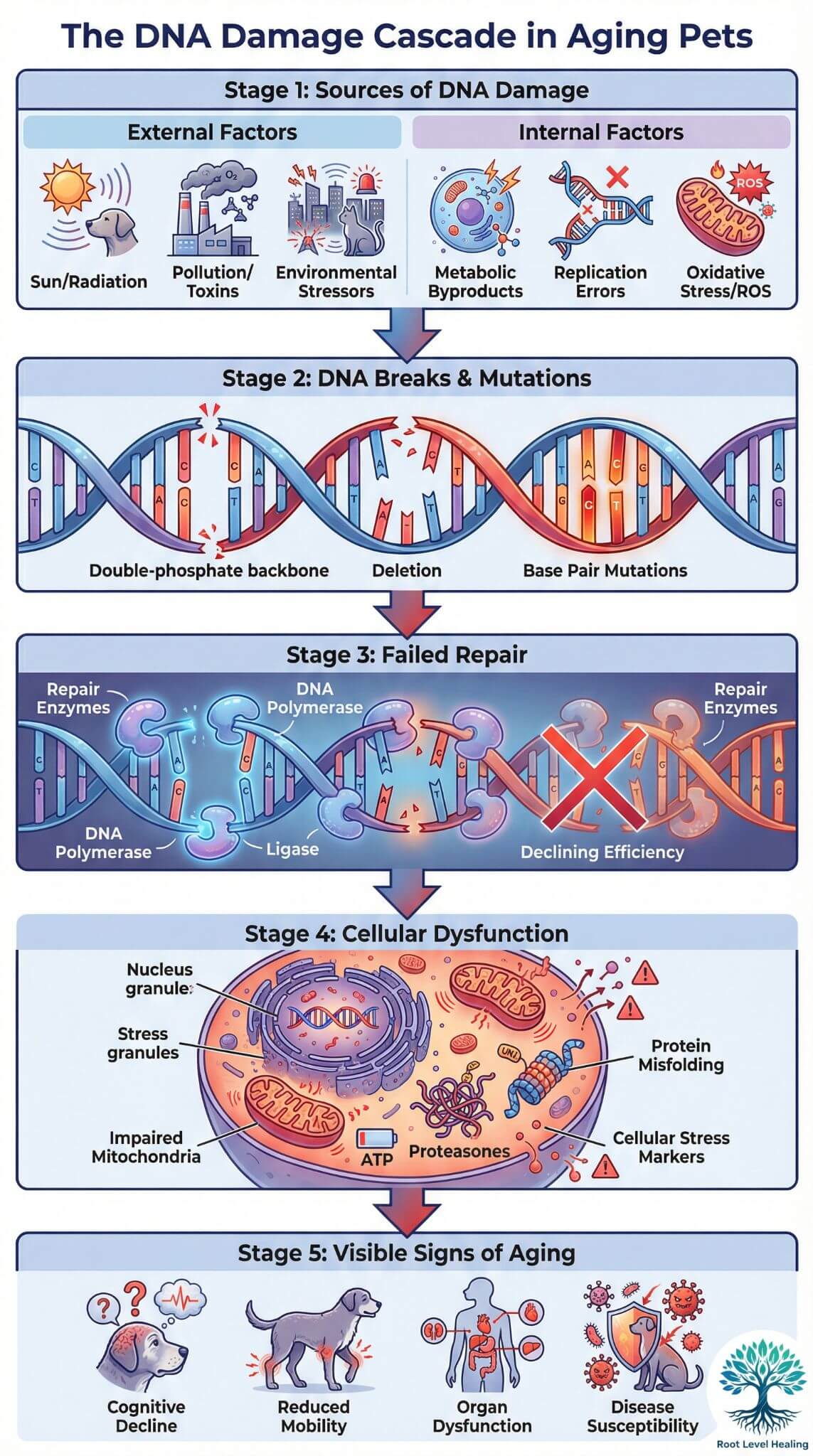
The DNA damage cascade illustrates how aging progresses from microscopic genetic damage to the visible signs pet owners recognize. External factors (radiation, toxins, environmental stressors) and internal factors (metabolic byproducts, replication errors, oxidative stress) create DNA breaks and mutations. When repair mechanisms fail to keep pace, cellular dysfunction follows, ultimately manifesting as cognitive decline, reduced mobility, organ dysfunction, and increased disease susceptibility.
What is Genomic Instability? The Real Root of Aging
For decades, scientists viewed DNA damage as an unfortunate side effect of aging—cellular wear and tear that accumulated as organisms grew older. This perspective has been fundamentally overturned by recent research. Genomic instability is now understood to be a primary driver of the aging process itself, not merely a consequence of it. As cells age, the nucleus—the command center housing genetic material—undergoes profound changes that affect how cells function and ultimately determine lifespan [1].
Think of your pet's DNA as an incredibly detailed instruction manual for building and maintaining every cell, tissue, and organ in their body. This manual contains roughly 2.4 billion base pairs in dogs and 2.7 billion in cats, encoding approximately 20,000-25,000 genes. Every time a cell divides, this entire instruction manual must be perfectly copied. Every time a protein needs to be made, the correct page must be read accurately. And every single day, this manual faces thousands of potential damage events.
Genomic instability represents a state where the integrity of this instruction manual is compromised. The damage manifests in multiple forms: base substitutions (where individual "letters" in the genetic code are changed), insertions or deletions of genetic sequences, chromosomal abnormalities (where large sections are rearranged or lost), telomere shortening (the protective caps on chromosome ends wearing down), and gene disruptions from viral integrations or transposon movements [1].
"It is now thought that genomic instability could be a fundamental cause, rather than a consequence, of aging. Over time, DNA integrity and stability are constantly challenged by external and internal factors. Progressive DNA damage in dogs leads to cancer and reduced lifespan." [1]
Key Insight: Genomic instability is now recognized as a fundamental cause—not just a consequence—of aging in dogs and cats. This state occurs when DNA damage accumulates faster than the body can repair it, leading to mutations, chromosomal abnormalities, and ultimately the visible signs of aging pet owners recognize.
This paradigm shift has profound implications for how we approach pet health and longevity. If genomic instability drives aging, then protecting DNA integrity becomes the cornerstone of any anti-aging strategy. The question becomes: what causes this instability, and can we slow or prevent it?
The Daily Assault on Your Pet's DNA
Your pet's DNA faces a relentless barrage of damaging agents every single day. These threats come from two primary sources: external environmental factors and internal cellular processes. Understanding both categories is essential for developing comprehensive protection strategies.
| Source Category | Specific Threats | Impact on DNA |
|---|---|---|
| External: Physical Agents | UV radiation, ionizing radiation, EMF exposure | Direct DNA strand breaks, base modifications, thymine dimers |
| External: Chemical Agents | Heavy metals, pesticides, air pollutants (PM2.5), cleaning products | DNA adduct formation, oxidative stress generation, epigenetic changes |
| External: Biological Agents | Viruses, bacteria, chronic infections | Viral integration, inflammation-induced ROS, immune-mediated damage |
| Internal: Replication Errors | DNA polymerase mistakes, proofreading failures | Base pair mismatches, insertions, deletions (1 error per 10 billion bases) |
| Internal: Spontaneous Reactions | Hydrolytic depurination, deamination | Loss of purine bases (~10,000 events/cell/day), cytosine to uracil conversion |
| Internal: Oxidative Stress | Mitochondrial ROS, inflammatory ROS, metabolic byproducts | 8-OHdG formation, strand breaks, lipid peroxidation products attacking DNA |
External Factors: Environmental Threats
The modern environment presents unprecedented challenges to cellular health. Physical agents include various forms of radiation—ultraviolet light from sun exposure, ionizing radiation from natural background sources, and electromagnetic fields (EMF) from wireless devices and household electronics. While the research on EMF effects remains debated, the cumulative exposure from multiple sources represents a novel environmental stressor that previous generations of pets never encountered.
Chemical agents pose an equally significant threat. Environmental pollutants including heavy metals (lead, mercury, cadmium), pesticides, herbicides, industrial chemicals, and air pollution particles can directly interact with DNA or generate reactive species that cause damage. The water your pet drinks, the food they eat, and even the cleaning products used in your home can introduce DNA-damaging compounds. Biological agents such as viruses and certain bacteria can also integrate into the genome or trigger inflammatory responses that indirectly damage DNA.
Internal Factors: The Enemy Within
Perhaps more insidious are the internal sources of DNA damage—threats that arise from normal cellular processes. Every time a cell divides, DNA must be replicated. Despite sophisticated proofreading mechanisms, errors inevitably occur. In rapidly dividing tissues like the intestinal lining or bone marrow, these replication errors accumulate over time.
Spontaneous hydrolytic reactions represent another internal threat. DNA is chemically unstable in aqueous environments. Water molecules can spontaneously break chemical bonds in DNA, causing depurination (loss of purine bases) at a rate of approximately 10,000 events per cell per day in mammals. While most of these are quickly repaired, the sheer volume creates constant stress on repair systems [1].
The most significant internal threat, however, comes from oxidative damage—the cellular equivalent of rusting. This process deserves special attention due to its central role in aging.
Key Insight: Your pet's DNA faces constant attack from both external sources (UV radiation, environmental toxins, EMF exposure) and internal sources (metabolic byproducts, replication errors, oxidative stress). The cumulative burden of these daily assaults overwhelms repair mechanisms with age, accelerating cellular dysfunction.
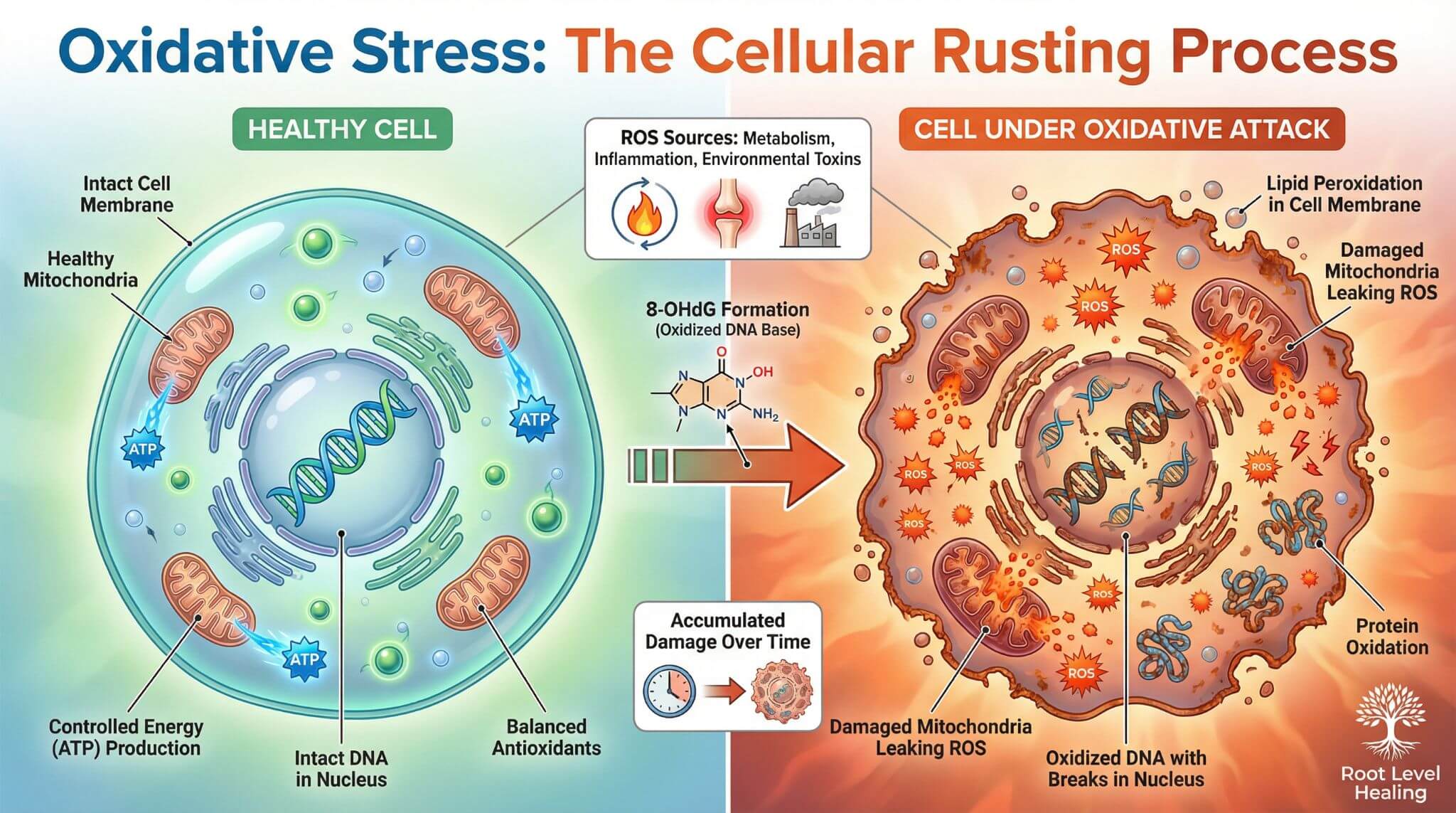
Oxidative stress represents the imbalance between free radical production and antioxidant defenses. In healthy cells (left), controlled ROS production is balanced by antioxidants, maintaining cellular integrity. Under oxidative attack (right), excessive free radicals overwhelm defenses, damaging mitochondria, oxidizing DNA to form 8-OHdG mutations, causing lipid peroxidation in cell membranes, and oxidizing proteins. This accumulated damage drives cellular aging and dysfunction.
Oxidative Stress: The Cellular Rusting Process
Oxidative stress is the primary mechanism by which internal cellular processes damage DNA. To understand this process, we must first understand reactive oxygen species (ROS)—highly reactive molecules that contain oxygen and act as free radicals. These molecules are characterized by unpaired electrons, making them chemically unstable and eager to react with other molecules, including DNA.
Sources of Reactive Oxygen Species
ROS are generated through multiple pathways in the body. The most significant source is mitochondrial respiration—the process by which cells produce energy (ATP). As mitochondria process oxygen to generate energy, approximately 1-2% of oxygen molecules are incompletely reduced, forming superoxide radicals. In a healthy young animal, this is manageable. But as mitochondria age and become damaged, they leak increasing amounts of ROS, creating a vicious cycle of damage [1].
Inflammation represents another major ROS source. When the immune system activates to fight infection or respond to tissue damage, immune cells deliberately produce ROS as weapons against pathogens. However, chronic inflammation—increasingly common in aging pets—means constant ROS production that damages healthy tissues. Enzymes such as NADPH oxidase and dual oxidase (DUOX) are specifically designed to produce ROS for immune defense, but their prolonged activation becomes problematic [1].
Environmental factors also contribute. Ionizing radiation directly generates ROS in tissues. Certain toxins and pollutants either generate ROS directly or interfere with antioxidant systems, tipping the balance toward oxidative stress.
How ROS Damage DNA
The mechanism by which ROS damage DNA is well characterized. The guanine base—one of the four nucleotide bases that make up DNA—is particularly vulnerable to oxidation. When a hydroxyl radical (a type of ROS) encounters guanine, it oxidizes it to form 8-hydroxydeoxyguanosine (8-OHdG). This modified base is problematic because during DNA replication, 8-OHdG can pair with adenine instead of its normal partner cytosine, resulting in G:C to T:A transversion mutations [1].
These mutations accumulate progressively with age. Research has confirmed that elderly dogs have significantly increased levels of oxidative damage in the brain, as indicated by the accumulation of carbonyl groups, lipofuscin (age pigment), 4-hydroxynonenal (a lipid peroxidation product), and malondialdehyde in neuronal tissue [1]. This oxidative damage to brain cells directly correlates with cognitive decline and the development of canine cognitive dysfunction syndrome.
Beyond direct DNA damage, ROS also attack other cellular components. Lipid peroxidation damages cell membranes, compromising their ability to regulate what enters and exits the cell. Protein oxidation causes misfolding and aggregation, interfering with normal cellular functions. The cumulative effect is widespread cellular dysfunction that manifests as the visible signs of aging.
"Oxidative stress (OS) is a major cause of intrinsic DNA damage. ROS oxidize the guanine base of DNA to form 8-hydroxydeoxyguanosine (8-OHdG). 8-OHdG can pair with adenine instead of cytosine during DNA replication, resulting in mutations in the DNA sequence. Research has established that oxidative DNA lesions accumulate progressively with age." [1]
Key Insight: Oxidative stress—caused by reactive oxygen species (ROS) from metabolism, inflammation, and environmental factors—is the primary mechanism of DNA damage in aging pets. ROS oxidize DNA bases to form 8-OHdG mutations, damage mitochondria, and create a vicious cycle of accelerating cellular decline.
When DNA Repair Fails: The Aging Tipping Point
The story of aging is not simply about DNA damage—it's about the race between damage and repair. Mammalian cells, including those of dogs and cats, possess remarkably sophisticated DNA repair mechanisms. These systems can recognize and fix many types of damage, from simple base modifications to complex double-strand breaks. The problem is that these repair systems themselves decline with age, creating a tipping point where damage begins to accumulate faster than it can be fixed [1].
The DNA Repair Arsenal
Cells employ multiple repair pathways, each specialized for different types of damage. Base excision repair (BER) handles small chemical modifications like the 8-OHdG lesions caused by oxidative stress. Nucleotide excision repair (NER) removes bulky DNA adducts caused by UV radiation or chemical toxins. Mismatch repair (MMR) corrects errors that escape proofreading during DNA replication. For the most severe damage—double-strand breaks—cells use either homologous recombination or non-homologous end joining.
These repair processes require significant cellular resources. They depend on specialized enzymes (DNA polymerases, ligases, helicases), energy in the form of ATP, and signaling molecules that coordinate the repair response. When any component of this system falters, repair efficiency drops.
Why Repair Mechanisms Decline
Several factors contribute to the age-related decline in DNA repair capacity. First, the repair enzymes themselves can be damaged by oxidative stress, reducing their catalytic efficiency. Second, the cellular energy supply (ATP) decreases with age as mitochondrial function declines, leaving insufficient fuel for energy-intensive repair processes. Third, the signaling pathways that detect damage and coordinate repair responses become less sensitive, meaning some damage goes undetected [1].
Research in canine cancer has revealed that DNA repair defects play a significant role in age-related disease. Golden Retriever lymphomas, for example, show reduced capacity for DNA damage response. Decreased expression of the ATM gene (a master regulator of DNA repair) has been observed in canine mammary tumors. Genetic variations in BRCA1 and TP53 genes—both critical for DNA repair and tumor suppression—have been linked to multiple types of canine cancers [1].
When repair capacity is overwhelmed, cells face a critical decision point. Some damaged cells activate programmed cell death (apoptosis), sacrificing themselves to prevent passing on mutations. Others enter a state of cellular senescence—they stop dividing but refuse to die, becoming what researchers call "zombie cells." These senescent cells accumulate with age and actively harm surrounding tissues by secreting inflammatory molecules, further accelerating the aging process.
Key Insight: While dogs and cats possess sophisticated DNA repair mechanisms, these systems decline with age due to oxidative damage to repair enzymes, reduced cellular energy (ATP), and impaired damage detection. When repair capacity is overwhelmed, cells enter senescence or die, contributing to tissue dysfunction and age-related disease.
From Cellular Damage to Visible Signs of Aging
The connection between microscopic DNA damage and the visible signs of aging your pet displays is direct and profound. As genomic instability increases and cellular function deteriorates, the effects cascade through tissues and organ systems, ultimately manifesting as the clinical signs that bring concerned pet owners to veterinarians.
Cognitive Decline and Brain Aging
The brain is particularly vulnerable to oxidative damage due to its high metabolic rate and relatively weak antioxidant defenses. Aged dog brains accumulate oxidative damage to proteins and lipids, leading to dysfunction of neuronal cells. The production of free radicals combined with a lack of compensatory increase in antioxidant enzymes leads to detrimental modifications to important macromolecules within neurons [2].
This cellular damage translates directly into canine cognitive dysfunction syndrome (CDS). In the United States alone, there are over 52 million senior and geriatric dogs over the age of seven years. Studies indicate that 18-75% of pet owners report at least one clinical symptom of CDS in their senior pets [2]. These symptoms include disorientation, decreased social interaction, loss of prior housetraining, sleep disturbances, decreased activity, destructive behaviors, inappropriate urination or defecation, and excessive vocalization.
Critically, CDS is progressive. Dogs with impairments in one behavioral category typically develop impairments in two or more categories within 12-18 months, demonstrating the accelerating nature of cellular damage [2].
Systemic Effects: Beyond the Brain
While cognitive decline is among the most noticeable effects, DNA damage and cellular dysfunction affect every organ system. In the cardiovascular system, oxidative damage to endothelial cells (the lining of blood vessels) contributes to arterial stiffness and reduced circulation. In the immune system, DNA damage in immune cells leads to immunosenescence—the age-related decline in immune function that makes older pets more susceptible to infections and less responsive to vaccinations.
The musculoskeletal system suffers as DNA damage in muscle satellite cells impairs the body's ability to repair and maintain muscle tissue, contributing to sarcopenia (age-related muscle loss). In the kidneys, accumulated cellular damage leads to nephron loss and declining filtration capacity. The liver's detoxification capacity diminishes as hepatocytes accumulate DNA damage and become less efficient at processing toxins.
Cancer risk increases dramatically with age, directly reflecting the accumulation of DNA mutations. When damage occurs in genes that regulate cell division (oncogenes and tumor suppressors), cells can escape normal growth controls and form tumors. The progressive accumulation of mutations explains why cancer incidence rises exponentially with age in both dogs and cats.
Key Insight: Accumulated DNA damage manifests as the clinical signs pet owners recognize: cognitive decline (affecting 18-75% of senior pets), reduced mobility, weakened immune function, organ dysfunction, and increased cancer risk. These visible symptoms reflect the underlying cellular crisis caused by genomic instability.
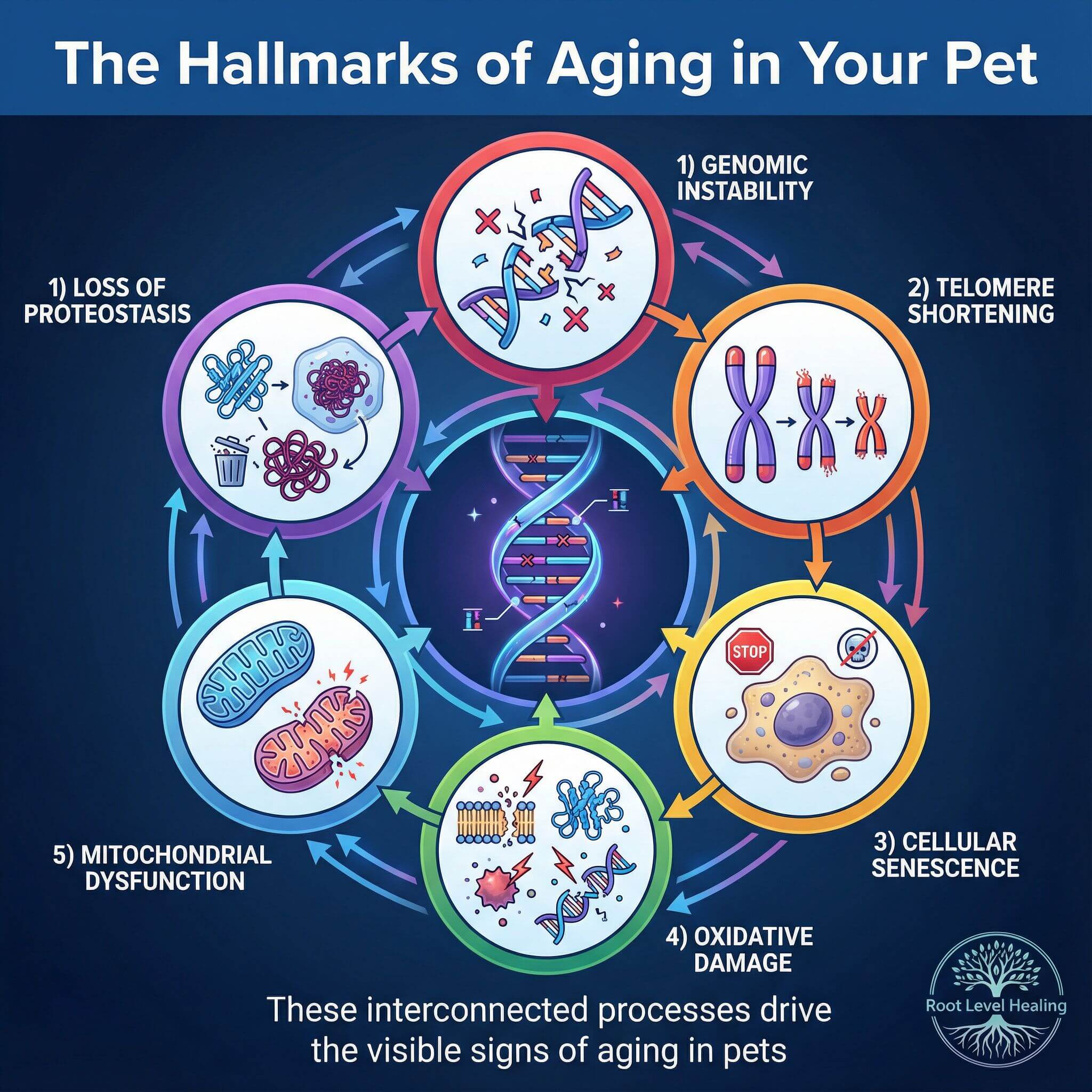
The hallmarks of aging represent interconnected processes that reinforce each other in a vicious cycle. Genomic instability triggers cellular senescence, which produces inflammatory molecules that cause oxidative damage, which in turn damages mitochondria, leading to more ROS production and further DNA damage. Telomere shortening limits cellular replication capacity, while loss of proteostasis (protein quality control) allows damaged proteins to accumulate. Understanding these interconnections is key to developing effective anti-aging interventions.
The Interconnected Hallmarks of Aging
Modern aging research has identified multiple "hallmarks of aging"—fundamental processes that drive the aging phenotype across species. While genomic instability stands as a primary hallmark, it does not act in isolation. These processes form an interconnected network where each hallmark influences and amplifies the others, creating a self-reinforcing cycle of decline.
Telomere Attrition
Telomeres are repetitive DNA sequences at the ends of chromosomes that protect genetic information during cell division. Each time a cell divides, telomeres shorten slightly. When they become critically short, cells can no longer divide and enter senescence or die. Telomere length has been studied in dogs and correlates with donor age, with shorter telomeres associated with reduced lifespan [3]. Oxidative stress accelerates telomere shortening, creating a direct link between ROS damage and cellular aging.
Cellular Senescence
As mentioned earlier, senescent cells accumulate with age. These cells secrete a complex mixture of inflammatory cytokines, growth factors, and proteases collectively called the senescence-associated secretory phenotype (SASP). SASP molecules damage surrounding healthy cells, promote chronic inflammation, and actually accelerate DNA damage in neighboring cells, creating a spreading wave of cellular dysfunction [4].
Mitochondrial Dysfunction
Mitochondria are both victims and perpetrators of oxidative damage. As mitochondrial DNA accumulates mutations (it's particularly vulnerable due to proximity to ROS production sites and limited repair mechanisms), mitochondria become less efficient at producing ATP and leak more ROS. This creates a vicious cycle: damaged mitochondria produce more ROS, which causes more mitochondrial damage, which produces even more ROS [1].
Loss of Proteostasis
Proteostasis refers to the cell's ability to maintain proper protein folding and remove damaged proteins. With age, this quality control system falters. Misfolded proteins accumulate, forming aggregates that interfere with cellular function. In the brain, protein aggregates (like beta-amyloid in dogs) contribute directly to cognitive decline. The accumulation of oxidatively damaged proteins creates additional ROS, further damaging DNA [2].
The Vicious Cycle
These hallmarks don't simply coexist—they actively reinforce each other. Genomic instability leads to cellular senescence, which produces SASP, which causes oxidative damage, which damages mitochondria, which produces more ROS, which causes more genomic instability. Breaking this cycle requires interventions that address multiple hallmarks simultaneously, a concept that will become central as we explore solutions in subsequent articles.
Key Insight: The hallmarks of aging—genomic instability, telomere shortening, cellular senescence, oxidative damage, mitochondrial dysfunction, and loss of proteostasis—form an interconnected network where each process amplifies the others. Breaking this vicious cycle requires interventions that address multiple hallmarks simultaneously.
Conclusion: Understanding the Enemy to Fight It
The journey from microscopic DNA damage to the visible signs of aging in your beloved pet is now clear. Genomic instability—driven primarily by oxidative stress and declining repair capacity—stands as the fundamental cause of aging, not merely a consequence. Every day, your pet's cells face thousands of damaging events from both external environmental factors and internal metabolic processes. While sophisticated repair mechanisms work tirelessly to fix this damage, their efficiency declines with age, allowing mutations and cellular dysfunction to accumulate.
This accumulated damage manifests in the signs pet owners know too well: the graying muzzle, the slower gait, the confusion in familiar surroundings, the increased susceptibility to disease. But understanding the root cause transforms our perspective. Aging is not an inevitable decline we must passively accept. It is a biological process driven by specific mechanisms—mechanisms we can potentially influence.
The question that naturally follows is: if DNA damage and oxidative stress drive aging, what powers the cellular repair and defense systems? What molecule provides the energy for DNA repair enzymes to function and enables cells to maintain their protective mechanisms? In our next article, we'll explore a critical coenzyme that has emerged as central to the aging process: NAD+ (nicotinamide adenine dinucleotide). We'll discover why NAD+ levels plummet with age, how this depletion cripples cellular function, and why restoring NAD+ has become a primary focus of modern longevity science.
The battle against aging begins with understanding the enemy. Armed with this knowledge, we can now explore the solutions that science has revealed—starting with the molecule that powers life itself.
Frequently Asked Questions
Q: What is DNA damage and how does it affect my pet's aging?
A: DNA damage refers to physical and chemical changes to your pet's genetic material that accumulate over time. This damage disrupts the cellular "instruction manual," leading to errors in protein production, cellular dysfunction, and ultimately the visible signs of aging like cognitive decline, reduced mobility, and increased disease susceptibility. Recent research shows that DNA damage is not just a consequence of aging—it's a fundamental cause that drives the entire aging process.
Q: What causes DNA damage in dogs and cats?
A: DNA damage in pets comes from both external and internal sources. External factors include UV radiation, environmental toxins, pollutants, and EMF exposure. Internal factors include metabolic byproducts (especially reactive oxygen species), DNA replication errors during cell division, and spontaneous chemical reactions. The combination of these factors creates constant stress on your pet's genetic material, with oxidative stress from free radicals being the most significant contributor.
Q: What is genomic instability?
A: Genomic instability is a state where DNA damage accumulates faster than the body can repair it. It's characterized by mutations, chromosomal abnormalities, telomere shortening, and gene disruptions. Recent research suggests genomic instability is not just a consequence of aging—it's a fundamental cause that drives the entire aging process. When the genome becomes unstable, cells lose their ability to function properly, leading to tissue dysfunction and age-related diseases.
Q: What is oxidative stress and how does it damage my pet's cells?
A: Oxidative stress occurs when reactive oxygen species (ROS)—highly reactive molecules produced during normal metabolism—overwhelm the body's antioxidant defenses. These free radicals attack DNA, proteins, and cell membranes, causing widespread cellular damage. In DNA specifically, ROS oxidize guanine bases to form 8-OHdG, which causes mutations during replication. This oxidative damage accumulates progressively with age, particularly in the brain, contributing to cognitive decline and other age-related conditions.
Q: At what age does DNA damage start affecting my pet?
A: DNA damage begins accumulating from birth, but the effects become noticeable when pets enter their senior years—typically around 7 years for dogs and 8-10 years for cats. However, the rate of damage accumulation varies based on breed, size, environment, and lifestyle factors. Larger dog breeds tend to show signs earlier than smaller breeds. The key is that damage accumulates gradually over a lifetime, with visible effects emerging when repair mechanisms can no longer keep pace with the damage rate.
Q: Can DNA damage be reversed in pets?
A: While existing DNA damage cannot be completely reversed, the body has sophisticated repair mechanisms that can fix many types of damage if given the right support. The key is to slow the rate of new damage while supporting the body's natural repair processes through proper nutrition, antioxidant supplementation, and reducing environmental stressors. Some interventions, such as NAD+ precursors and cellular support nutrients, can enhance repair capacity and help cells better manage oxidative stress.
Q: What are telomeres and why do they matter for my pet's aging?
A: Telomeres are protective caps on the ends of chromosomes, similar to the plastic tips on shoelaces. They shorten with each cell division, acting as a "cellular clock." When telomeres become critically short, cells can no longer divide properly, leading to cellular senescence or death. Telomere length is directly correlated with biological age and lifespan in dogs and cats. Oxidative stress accelerates telomere shortening, creating a direct link between free radical damage and cellular aging.
Q: What is cellular senescence?
A: Cellular senescence is a state where damaged cells stop dividing but refuse to die. These "zombie cells" accumulate with age and secrete inflammatory molecules (SASP) that damage surrounding healthy cells. Senescent cells contribute to chronic inflammation, tissue dysfunction, and accelerated aging throughout the body. They represent a key target for anti-aging interventions, with compounds called senolytics designed to clear these dysfunctional cells.
Q: How can I protect my pet from DNA damage?
A: Protection strategies include providing a diet rich in antioxidants, minimizing exposure to environmental toxins and excessive EMF radiation, ensuring adequate exercise to support cellular health, considering targeted supplementation with NAD+ precursors and cellular support nutrients, and maintaining a healthy weight to reduce metabolic stress. The most effective approach addresses multiple aspects of cellular health simultaneously, supporting both damage prevention and repair capacity.
Q: What are the visible signs that DNA damage is affecting my pet?
A: Visible signs include cognitive decline (disorientation, confusion, changes in sleep patterns), reduced mobility and energy, decreased immune function (frequent infections), changes in coat quality, organ dysfunction, and increased susceptibility to age-related diseases like cancer, kidney disease, and heart problems. These signs typically emerge gradually as accumulated cellular damage reaches a threshold where tissues can no longer compensate. Studies show that 18-75% of senior pet owners report at least one symptom of age-related decline.
References
- Guelfi G, Capaccia C, Tedeschi M, et al. Dog Aging: A Comprehensive Review of Molecular, Cellular, and Physiological Processes. Cells. 2024;13(24 ):2101. https://www.mdpi.com/2073-4409/13/24/2101
- Head E, Rofina J, Zicker S. Oxidative Stress, Aging and CNS disease in the Canine Model of Human Brain Aging. Vet Clin North Am Small Anim Pract. 2008 Jan;38(1 ):167-vi. https://pmc.ncbi.nlm.nih.gov/articles/PMC2390776/
- McKevitt TP, Nasir L, Wallis CV, et al. Telomere Lengths in Dogs Decrease with Increasing Donor Age. J Nutr. 2002;132(6 ):1604S-1606S. https://www.sciencedirect.com/science/article/pii/S0022316622151631
- Simon KE, Russell K, Mondino A, et al. A randomized, controlled clinical trial demonstrates improved owner-assessed cognitive function in senior dogs receiving a senolytic and NAD+ precursor combination. Sci Rep. 2024;14:12399. https://www.nature.com/articles/s41598-024-63031-w

Ready to Discover Your Score?
This 2-minute quiz is the essential first step to understanding your body's current toxic load and identifying the root cause of how you feel.
Take The Toxicity QuizExplore More Articles
Dive deeper into topics like detoxification, gut health, and mental clarity on our blog. Knowledge is the key to taking control of your health.
Visit The Blog