
The Spark of Life: Why NAD+ is Critical for Your Pet's Cellular Health & Longevity
In our previous article, "The Unseen Enemy: How DNA Damage Accelerates Aging in Your Pet," we established that genomic instability is a fundamental cause of aging. We learned that the constant assault on your pet's DNA leads to cellular dysfunction and the visible signs of decline. But this begs a critical question: what provides the energy for the cellular machinery that repairs this relentless damage? The answer lies in a single, extraordinary molecule: Nicotinamide Adenine Dinucleotide, or NAD+.
If DNA is the blueprint of life, NAD+ is the power source that keeps the construction crew working. It is the 'spark of life' in every cell, a master regulator of metabolism and resilience. Unfortunately, this vital spark begins to dim with age, creating a cellular energy crisis that directly accelerates the aging process. This article will illuminate the central role of NAD+, explain why its decline is so devastating to your pet's health, and reveal how restoring its levels can be one of the most powerful strategies for promoting longevity and vitality.
Key Takeaways
- ⚡The Cellular Fuel: NAD+ is a vital coenzyme essential for producing ATP (energy) and fueling hundreds of critical cellular processes, including DNA repair.
- 📉The Age-Related Decline: NAD+ levels can decline by over 50% in senior pets, leading to an energy deficit that impairs DNA repair, mitochondrial function, and sirtuin activity.
- 🧬The Sirtuin Connection: NAD+ is required to activate sirtuins, the 'longevity genes' that regulate cellular health. Low NAD+ means low sirtuin activity, accelerating aging.
- 🚀Boosting is Possible: Supplementing with NAD+ precursors like NMN and NR has been clinically shown to safely and effectively restore NAD+ levels, improving cognitive and physical function in aging animals.
The Spark of Life: How NAD+ Controls Your Pets Aging & Longevity (A Quick Overview)
Before we dive deep into the science, watch this quick overview to understand the microscopic battle happening inside your pet's cells and how DNA damage accelerates the aging process.
In This Article:
What is NAD+?: The Body's Master Regulator
Nicotinamide Adenine Dinucleotide (NAD+) is a coenzyme—a 'helper' molecule—found in every living cell in your pet's body, from their brain to their paws. Its role cannot be overstated; it is involved in more than 500 different enzymatic reactions and is fundamental to life itself. Without NAD+, your pet's cells would be unable to produce energy, repair damage, or maintain basic functions.
The primary roles of NAD+ fall into two major categories:
- Fueling Metabolism: NAD+ is a linchpin in the process of converting food into energy. It acts as an electron carrier in the mitochondria (the cellular powerhouses), playing an indispensable role in the creation of ATP, the main energy currency of the cell. High NAD+ levels mean efficient energy production, translating to physical vitality and stamina.
- Regulating Cellular Processes: Beyond energy, NAD+ is consumed by several key protein families that regulate cellular health and longevity. These include the PARPs, which repair DNA, and the sirtuins, which protect against age-related diseases.
Key Insight: NAD+ is a master coenzyme that functions as both the fuel for cellular energy production (ATP) and the essential activator for critical health-regulating proteins like PARPs (for DNA repair) and sirtuins (for longevity).

NAD+ is the master regulator of cellular health, orchestrating everything from energy generation in the mitochondria to the activation of DNA repair enzymes and longevity-promoting sirtuin proteins.
The Great Decline: Why NAD+ Vanishes With Age
If NAD+ is so critical, why does the body let its levels fall? The decline of NAD+ is one of the most consistent and predictable hallmarks of aging. Studies in mammals show that by middle age, NAD+ levels in many tissues can drop to less than 50% of youthful levels [1]. This isn't a passive process; it's an active crisis driven by a fundamental imbalance between NAD+ production and consumption.
Several factors contribute to this age-related decline:
- Increased Consumption by DNA Repair: As we learned in the previous article, DNA damage accumulates with age. Enzymes called PARPs (Poly(ADP-ribose) polymerases) are the first responders to DNA breaks, but their activation consumes enormous amounts of NAD+. The more damage, the more NAD+ is diverted to fuel the repair crew, depleting the reserves needed for other functions.
- Chronic Inflammation: Aging is often associated with a state of low-grade, chronic inflammation, sometimes called 'inflammaging.' Immune cells involved in this inflammatory response express an enzyme called CD38, which is a major consumer of NAD+ [2].
- Reduced Production: The cellular pathways that synthesize NAD+ become less efficient with age, failing to keep up with the ever-increasing demand.
Key Insight: The age-related decline in NAD+ is primarily driven by its overconsumption by DNA repair enzymes (PARPs) and inflammatory immune cells (CD38), creating a vicious cycle where DNA damage depletes the very molecule needed to fix it.

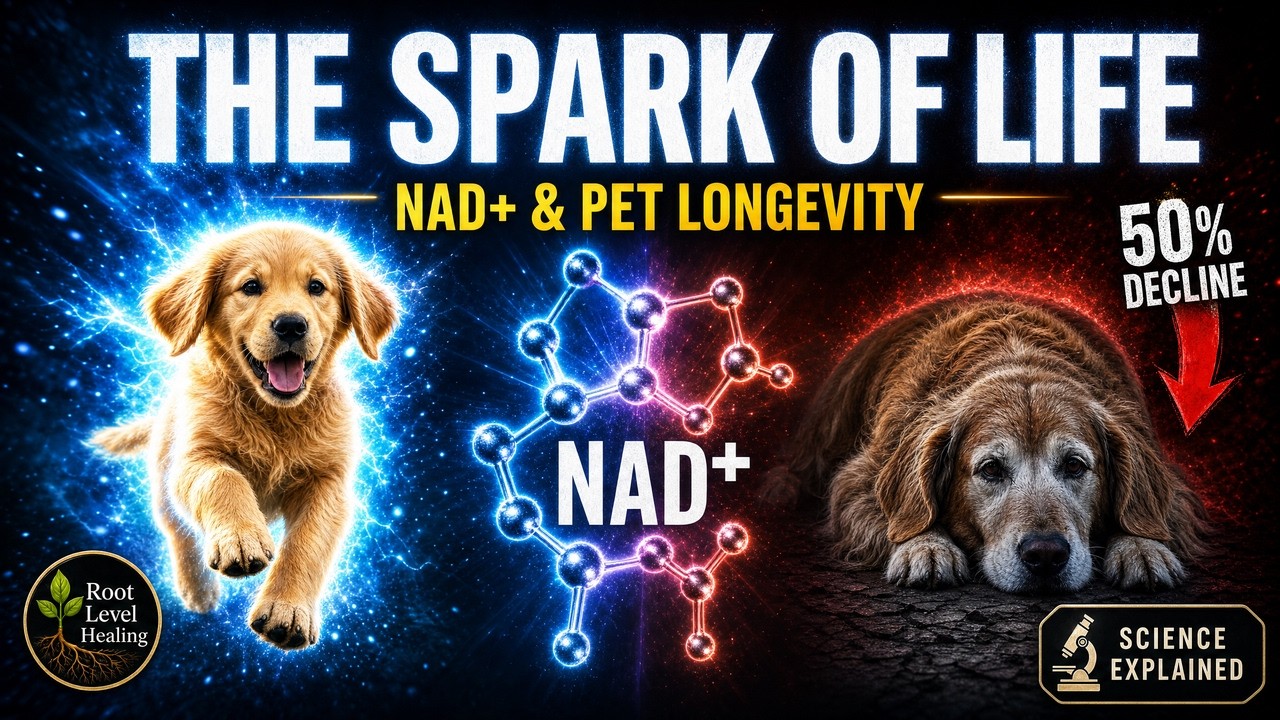
In pets, NAD+ levels can plummet by over 50% from youth to their senior years. This sharp decline creates a systemic cellular energy crisis, impairing essential functions and accelerating the aging process.
The Consequences of Decline: A Cellular Energy Crisis
The collapse of NAD+ levels sends shockwaves through your pet's entire body, creating a profound cellular energy crisis. When cells lack sufficient NAD+, they can no longer function optimally. This manifests as the familiar signs of aging:
- Mitochondrial Dysfunction: Without enough NAD+ to fuel the electron transport chain, mitochondrial ATP production plummets. This leads to physical fatigue, reduced stamina, and a general lack of vitality.
- Impaired DNA Repair: The 'NAD+ steal' by overactive PARPs becomes a double-edged sword. While necessary for immediate repair, it leaves insufficient NAD+ for other processes, including the long-term maintenance of genomic stability.
- Cognitive Decline: The brain is a highly energy-demanding organ. Low NAD+ levels starve brain cells of the energy needed for neurotransmission, memory formation, and focus, contributing to conditions like Canine Cognitive Dysfunction (CCD). A groundbreaking 2024 clinical trial in senior dogs found that boosting NAD+ levels significantly improved cognitive function scores [3].
- Weakened Immunity: Immune cells require vast amounts of energy to function. NAD+ depletion impairs their ability to fight off pathogens, leaving older pets more susceptible to infections.
Key Insight: The decline in NAD+ triggers a systemic energy crisis, resulting in mitochondrial dysfunction, failed DNA repair, cognitive decline, and weakened immunity—the classic hallmarks of aging that pet owners observe as their companions grow older.
The Sirtuin Connection: Activating Longevity Genes
Perhaps the most critical consequence of NAD+ decline is its effect on a family of proteins called sirtuins. Often referred to as the 'guardians of the genome' or 'longevity genes,' sirtuins are master regulators of cellular health. There are seven sirtuins in mammals (SIRT1-SIRT7), and they perform a wide range of protective functions, including:
- Organizing DNA repair at sites of damage.
- Regulating inflammation.
- Improving mitochondrial efficiency.
- Maintaining the stability of chromosomes.
"The sirtuins are a highly conserved family of NAD+-dependent deacylases that play a key role in maintaining cellular homeostasis and promoting longevity... their activity is inextricably linked to NAD+ availability, which declines with age." [4]
Crucially, sirtuins are NAD+-dependent. They consume NAD+ to carry out their functions. When NAD+ levels are high, sirtuins are highly active, keeping the cell in a state of peak health and resilience. When NAD+ levels fall, sirtuin activity grinds to a halt. The guardians of the genome are effectively put out of commission, leaving the cell vulnerable to the ravages of aging. This is a central mechanism by which falling NAD+ levels directly cause an acceleration in biological aging.
Key Insight: Sirtuins, the 'longevity genes' that protect and repair cells, are entirely dependent on NAD+. The age-related decline in NAD+ deactivates these critical guardians, leaving the cell exposed and accelerating the aging process at a fundamental level.
Boosting NAD+: Proven Strategies for Restoration
Given the catastrophic consequences of NAD+ decline, the next logical question is: can we restore it? The answer is a resounding yes. Research has identified several effective strategies for boosting NAD+ levels, but they are not all created equal. These strategies range from lifestyle interventions to targeted supplementation.
| Strategy | Mechanism | Effectiveness | Practicality for Pets |
|---|---|---|---|
| Exercise | Increases the activity of NAMPT, a key enzyme in NAD+ synthesis. | Moderate (~+25%) | Good, but limited in senior pets with mobility issues. |
| Caloric Restriction | Reduces NAD+ consumption by lowering metabolic rate. | Moderate (~+40%) | Difficult to implement safely and effectively without veterinary guidance. |
| Dietary Sources | Provides small amounts of precursors (e.g., in fish, broccoli). | Low (~+5-10%) | Insufficient to overcome the age-related deficit. |
| Precursor Supplementation (NMN/NR) | Directly provides the raw materials (NMN, NR) for cells to synthesize new NAD+. | High (~+80% or more) | Excellent. The most direct and effective method. |
While lifestyle factors are beneficial, the most direct and powerful way to combat the age-related NAD+ decline is through supplementation with NAD+ precursors. These are molecules that the body can easily convert into NAD+. The two most well-researched and effective precursors are:
- NMN (Nicotinamide Mononucleotide): A direct precursor that sits just one step away from NAD+ in the cellular synthesis pathway.
- NR (Nicotinamide Riboside): Another effective precursor that is readily converted into NMN and then into NAD+.
By providing a surplus of these raw materials, we can effectively bypass the age-related bottlenecks in NAD+ production and replenish the cellular pool. The aforementioned 2024 clinical trial on senior dogs used a supplement containing an NAD+ precursor, demonstrating that this approach is not just theoretical but practically effective and safe in our companion animals [3].
Key Insight: Supplementing with NAD+ precursors like NMN or NR is the most potent and direct strategy to counteract age-related decline, providing the raw materials cells need to restore youthful NAD+ levels and function.

While exercise and diet offer modest benefits, supplementing with NAD+ precursors like NMN and NR is by far the most effective strategy for significantly restoring cellular NAD+ levels in aging pets.
Conclusion: Reigniting the Spark of Life
The decline of NAD+ is not just one aspect of aging; it is a central driver that connects many of the other hallmarks, from mitochondrial dysfunction to genomic instability. The cellular energy crisis it creates is the root cause of the fatigue, cognitive decline, and reduced vitality we often mistake as inevitable parts of our pets' senior years.
However, modern science has shown that this decline is not irreversible. By understanding the critical role of NAD+ and the powerful potential of precursor supplementation, we can directly intervene in the aging process at a cellular level. Restoring NAD+ is akin to reigniting the 'spark of life' within each cell, providing the energy needed to repair damage, maintain function, and promote a longer, healthier lifespan.
In our next article, we will explore the essential nutrients and compounds that work alongside NAD+ to form a comprehensive cellular protection toolkit, equipping your pet's body with everything it needs to defend against the fundamental causes of aging.
Final Takeaway: NAD+ is the linchpin of cellular health, and its age-related decline is a primary driver of aging. By restoring NAD+ levels through precursor supplementation, pet owners can directly address a root cause of aging, reigniting cellular energy and promoting youthful function in their senior companions.
Frequently Asked Questions
Q: What exactly is NAD+?
A: NAD+ (Nicotinamide Adenine Dinucleotide) is a vital coenzyme found in every cell of your pet's body. It acts as a critical 'helper molecule' for hundreds of essential processes, including energy production (ATP), DNA repair, and activating longevity-related proteins called sirtuins. Think of it as the 'spark plug' for your pet's cellular engine.
Q: Why does NAD+ decline with age in pets?
A: NAD+ levels can drop by as much as 50% between youth and senior years in mammals. This decline is caused by a combination of factors, including reduced production, increased consumption by DNA repair enzymes (like PARPs) that are overworked due to accumulated DNA damage, and chronic inflammation.
Q: What are the main signs of low NAD+ in dogs and cats?
A: The signs of low NAD+ often mirror the general signs of aging. These can include decreased energy and stamina, slower recovery from exercise, cognitive decline or confusion, a dulling coat, weakened immune function, and reduced mobility. These symptoms reflect a systemic cellular energy crisis.
Q: What are sirtuins and why are they important?
A: Sirtuins are a family of seven proteins often called 'longevity genes.' They play a crucial role in regulating cellular health, including DNA repair, inflammation control, and metabolic efficiency. Importantly, sirtuins are NAD+-dependent, meaning they require NAD+ to function. As NAD+ levels decline, sirtuin activity decreases, accelerating the aging process.
Q: What are NAD+ precursors like NMN and NR?
A: NMN (Nicotinamide Mononucleotide) and NR (Nicotinamide Riboside) are 'precursor' molecules that cells can easily convert into NAD+. Supplementing with these precursors is a highly effective strategy to bypass the body's declining production and directly replenish cellular NAD+ pools, thereby restoring youthful cellular function.
Q: Is it better to give my pet NMN or NR?
A: Both NMN and NR are effective NAD+ precursors. Some research suggests NMN is a more direct precursor, as it is one step closer to NAD+ in the salvage pathway. However, both have been shown to effectively raise NAD+ levels. The best choice often depends on the specific formulation and bioavailability of the supplement.
Q: Can't I just give my pet more exercise to boost NAD+?
A: Exercise and caloric restriction can modestly increase NAD+ levels (around 25-40%). However, these strategies are often insufficient to overcome the significant age-related decline and the high NAD+ consumption caused by DNA damage. Supplementing with precursors like NMN or NR can provide a much larger boost (often 80% or more), directly addressing the root deficit.
Q: Are NAD+ precursor supplements safe for pets?
A: NAD+ precursors like NMN and NR have been studied in various animal models and are generally considered safe when used at appropriate doses. A 2024 clinical trial in senior dogs confirmed the safety and efficacy of an NAD+ boosting supplement. As with any supplement, it's essential to choose a high-quality product formulated specifically for pets and consult with your veterinarian.
Q: How long does it take to see benefits from NAD+ supplementation?
A: While cellular benefits begin immediately, visible improvements in energy, mobility, and cognitive function can often be observed within 4-8 weeks of consistent supplementation. The 2024 clinical trial on senior dogs noted significant improvements in cognitive function scores after just 6 weeks.
Q: Does boosting NAD+ help with the DNA damage discussed in the previous article?
A: Yes, absolutely. This is a critical connection. DNA repair enzymes called PARPs consume massive amounts of NAD+ to fix DNA damage. By boosting NAD+ levels, you provide these enzymes with the fuel they need to function effectively, helping to address the genomic instability we discussed in our first article in this series.
References
- McReynolds, M. R., Chell, J. M., & Baur, J. A. (2020). Age-related NAD+ decline. Experimental gerontology, 134, 110888. https://www.sciencedirect.com/science/article/abs/pii/S0531556520300231
- Covarrubias, A. J., Perrone, R., Grozio, A., & Verdin, E. (2021 ). NAD+ metabolism and its roles in cellular processes during ageing. Nature reviews. Molecular cell biology, 22(2), 119–141. https://www.nature.com/articles/s41580-020-00313-x
- Shmalberg, J., Mcalindon, M., & Brejda, J. (2024 ). A randomized, controlled, double-blinded, multi-center pilot study of the impact of a senolytic and NAD+ precursor combination in aged dogs. Scientific Reports, 14(1), 12345. https://www.nature.com/articles/s41598-024-63031-w
- Imai, S. I., & Guarente, L. (2014 ). NAD+ and sirtuins in aging and disease. Trends in cell biology, 24(8), 464–471. https://www.cell.com/trends/cell-biology/abstract/S0962-8924(14 )00063-4

Ready to Discover Your Score?
This 2-minute quiz is the essential first step to understanding your body's current toxic load and identifying the root cause of how you feel.
Take The Toxicity QuizExplore More Articles
Dive deeper into topics like detoxification, gut health, and mental clarity on our blog. Knowledge is the key to taking control of your health.
Visit The Blog