Your Body's First Line of Defense: Understanding Your Natural Immune Barriers
Imagine your body as a magnificent, ancient fortress, standing resilient against a world teeming with unseen threats. Every day, this fortress is besieged by an endless barrage of invaders—bacteria, viruses, fungi, and environmental toxins. Yet, in most cases, it remains unharmed. How? Because it is protected by one of the most sophisticated defense systems ever created: your immune system. This intricate network of cells, tissues, and organs works tirelessly in a coordinated effort to protect you. But before the elite soldiers of the immune system are ever called to battle, the fortress relies on its first and most crucial line of defense: its walls, moats, and gatekeepers. These are your body's natural immune barriers, the unsung heroes of your health.
In this deep dive, we will embark on a journey to understand these foundational defenses. We will explore the science behind your skin, gut, and respiratory system, revealing how they form a formidable front line against infection and disease. Understanding these barriers is the first step toward truly fortifying your health from the inside out.
Key Takeaways
- 🛡️First Line of Defense: Your body's primary protection against pathogens is not immune cells, but its physical and chemical barriers: the skin, gut, and respiratory tract.
- 🔬Innate vs. Adaptive Immunity: The innate immune system, which includes these barriers, provides immediate, non-specific defense, while the adaptive system offers a slower, targeted, and memorable response.
- 🧱The Three Great Walls: The skin acts as a physical and chemical shield, the gut serves as a massive immune hub with a selective barrier, and the respiratory system uses a "mucociliary escalator" to trap and remove airborne threats.
- 🦠The Microbiome's Role: Both the skin and gut host trillions of beneficial microbes that are essential for training the immune system, outcompeting pathogens, and maintaining barrier integrity.
Your Body's First Line of Defense: Understanding Your Natural Immune Barriers: A Quick Overview
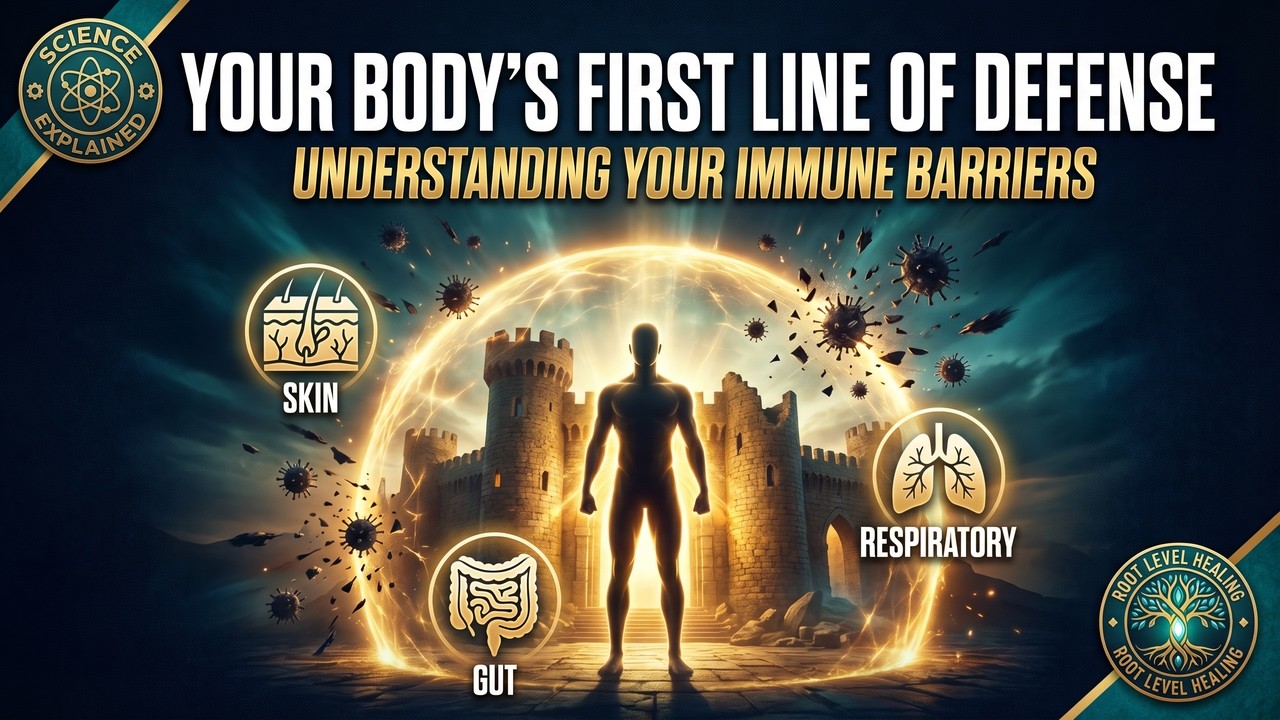
Before we dive deep into the science, watch this quick overview and discover your body's true first line of defense — learn how your skin, gut lining, and respiratory tract act as an ancient fortress to block pathogens, and why modern threats like processed foods and chronic stress are causing these vital walls to crumble.
In This Article:
The Innate Immune System: Your Body's Always-On Security Detail
Your immune system is broadly divided into two main branches: the innate and the adaptive. The adaptive immune system is the highly specialized, intelligent force that learns to recognize and remember specific pathogens, creating targeted antibodies and long-lasting immunity. It's the reason you typically only get chickenpox once. However, the adaptive system takes days to mount a full response. In the critical initial hours of an invasion, your body relies on its immediate, always-on security detail: the innate immune system [1].
The innate immune system is your body's first responder. It is a non-specific defense mechanism that you are born with, ready to act within minutes of detecting a threat. It doesn't distinguish between one type of bacteria and another; instead, it recognizes general patterns associated with pathogens. While it doesn't have the long-term memory of the adaptive system, its speed and efficiency are what prevent the vast majority of potential infections from ever taking hold. The primary components of this system are physical barriers, specialized phagocytic cells like macrophages that engulf invaders, and chemical responses like inflammation. Of these, the physical barriers are the most fundamental, serving as the literal first line of defense.
The Skin: The Outer Rampart
Covering an area of about 20 square feet, the skin is your body's largest organ and its most visible barrier. It is a multi-layered, resilient shield that provides robust protection against physical damage, UV radiation, and microbial invasion [2]. The outermost layer, the epidermis, is composed of tightly packed cells called keratinocytes. The very top layer of the epidermis, the stratum corneum, consists of dead, flattened cells that are constantly being shed, a process that helps to physically remove any microbes that have attached to the surface.
But the skin's defense is more than just physical. It also maintains a "chemical shield" known as the acid mantle. The skin's surface has a slightly acidic pH of around 5.5, which creates an inhospitable environment for many pathogenic bacteria and fungi that prefer a more neutral pH [3]. Furthermore, the skin produces its own natural antibiotics called antimicrobial peptides (AMPs), such as defensins and cathelicidins. These molecules can directly kill a wide range of microbes by disrupting their cell membranes.
Finally, the skin is home to a vast and diverse community of beneficial microorganisms known as the skin microbiome. This living shield of bacteria, fungi, and viruses plays a crucial role in immunity by outcompeting harmful pathogens for space and nutrients, and by producing substances that inhibit their growth. A healthy skin microbiome is a key component of a healthy skin barrier.
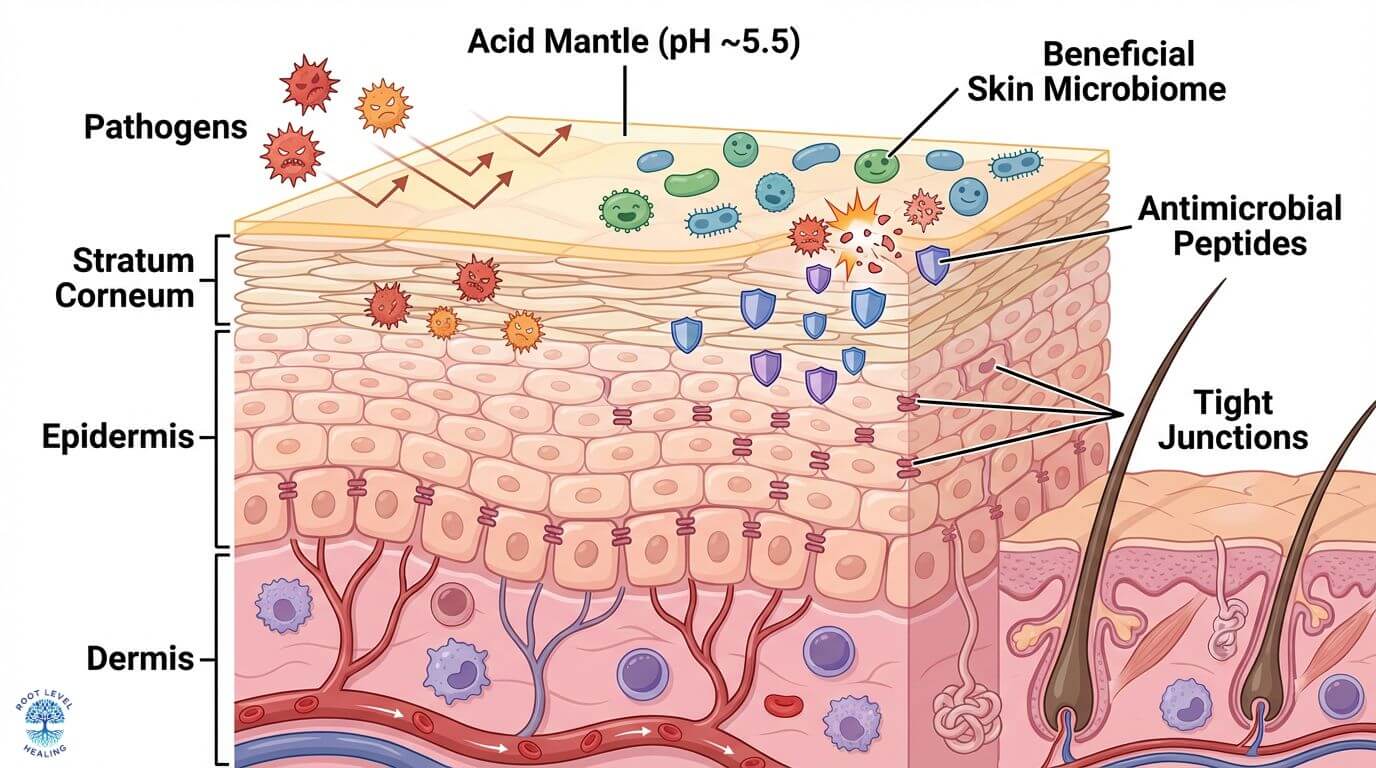
The skin is a complex barrier with physical, chemical, and microbial defense mechanisms.
The Gut: The Inner Gatehouse
While the skin protects you from the outside world, your gut barrier protects you from the world you let inside. The gastrointestinal tract is a massive interface, and it is estimated to contain over 70% of the body's immune cells, making it the largest single immune organ [4]. Its primary defense is a single, delicate layer of specialized epithelial cells that lines the entire intestinal tract. These cells are linked together by complex protein structures called tight junctions, which act like a highly selective gate, allowing beneficial nutrients to pass through while blocking harmful substances, toxins, and microbes.
This epithelial layer is further protected by a thick layer of mucus. This mucus acts as a physical barrier, trapping pathogens and preventing them from making direct contact with the epithelial cells. The gut also employs powerful chemical defenses, including potent stomach acid that destroys many ingested microbes, and a host of antimicrobial peptides secreted by specialized cells in the intestinal lining called Paneth cells.
Just like the skin, the gut is home to a complex ecosystem of trillions of microbes—the gut microbiome. This internal garden of bacteria is essential for immune health. It helps to digest food, produces essential vitamins, and, most importantly, educates and trains your immune system. The gut microbiome communicates constantly with the Gut-Associated Lymphoid Tissue (GALT), the immune tissue of the gut, helping it to distinguish between friend and foe. A healthy and diverse gut microbiome is therefore fundamental to a properly functioning immune system [5].
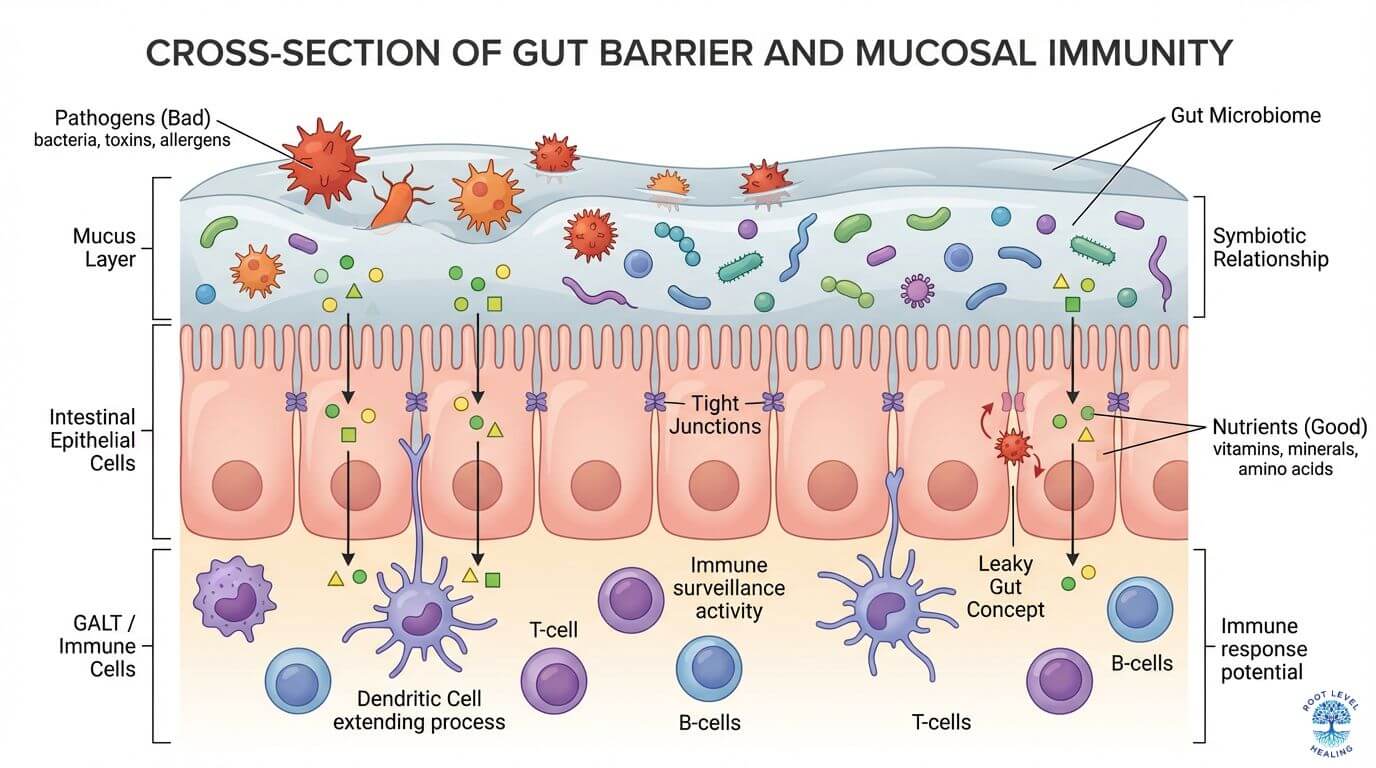
The gut barrier is a dynamic interface between the body and the external environment, regulated by the microbiome and immune cells.
The Respiratory System: The Watchtower
Every day, you breathe in and out over 11,000 liters of air, which is filled with a mixture of dust, pollen, pollutants, and airborne microbes. Your respiratory system has a remarkably effective filtration system to handle this constant exposure: the mucociliary escalator. This system is a masterpiece of biological engineering. The airways are lined with specialized cells called goblet cells that produce a sticky layer of mucus. This mucus traps inhaled particles, preventing them from reaching the delicate tissues of the lungs.
But trapping the particles is only half the battle. The airways are also lined with millions of microscopic, hair-like structures called cilia. These cilia beat in a coordinated, wave-like motion, continuously propelling the mucus layer upward, away from the lungs and toward the throat. This "escalator" moves the trapped debris to a point where it can be swallowed and destroyed by stomach acid or expelled by coughing. This constant cleansing mechanism is a primary innate defense for your lungs [6]. For any particles that manage to evade the mucociliary escalator and reach the deepest parts of the lungs (the alveoli), there is a final line of defense: specialized immune cells called alveolar macrophages. These cells act as the cleanup crew, engulfing and destroying any remaining invaders.
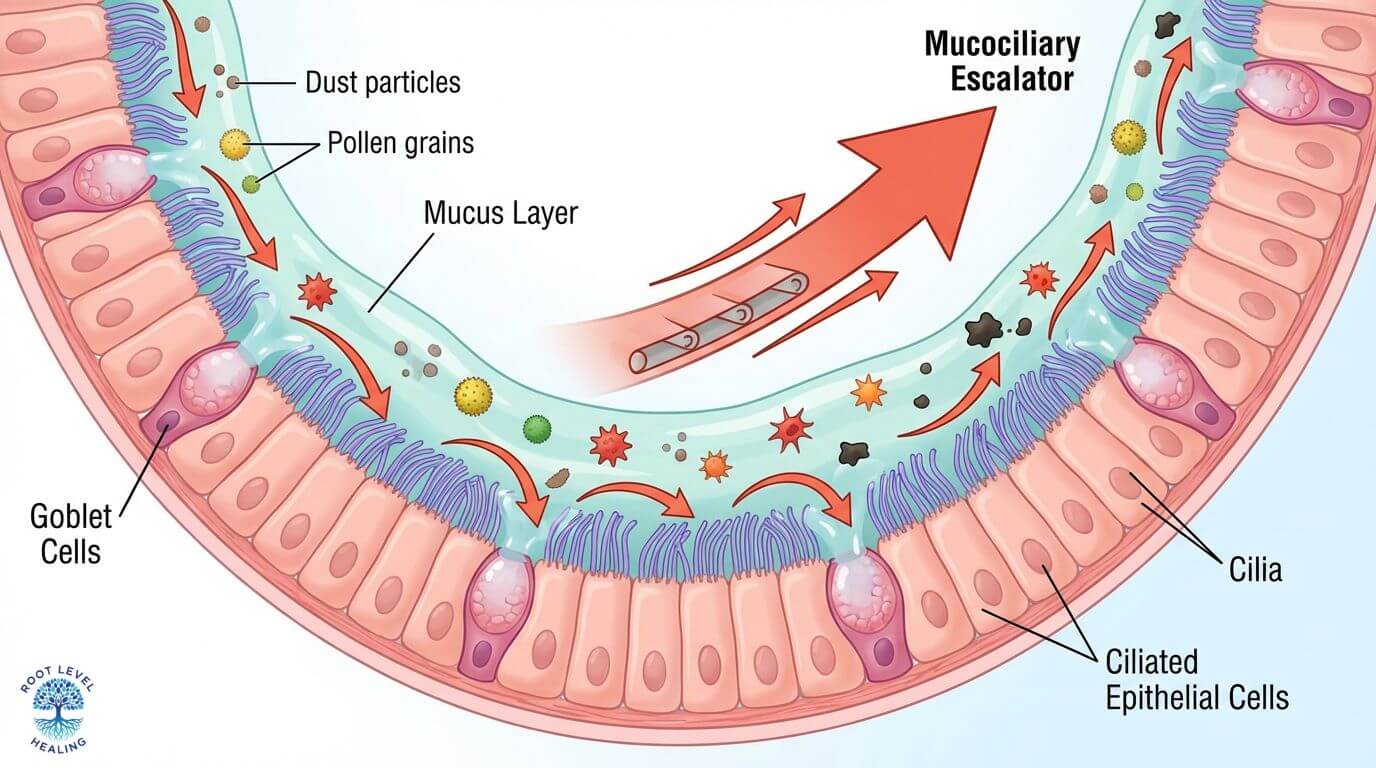
The mucociliary escalator is a critical defense mechanism that keeps the lungs clear of pathogens and debris.
When the Walls Crumble: The Consequences of Weakened Barriers
These natural barriers are incredibly resilient, but they are not invincible. Modern life can take a heavy toll on their integrity. A diet high in processed foods and low in fiber can starve the beneficial bacteria in your gut, leading to a condition known as "leaky gut," where the tight junctions between epithelial cells become compromised. Chronic stress elevates cortisol levels, which can suppress immune function and damage the skin barrier. Environmental toxins from pollution can paralyze the cilia in your respiratory tract, impairing the function of the mucociliary escalator.
Perhaps most importantly, these barriers have high metabolic and nutritional demands. They are constantly rebuilding and require a steady supply of specific vitamins and minerals to function optimally. When these essential nutrients are lacking, the walls of your immune fortress can begin to crumble. A breach in one barrier can have a domino effect, leading to systemic inflammation and placing a heavy burden on the entire immune system. This is why maintaining the strength and integrity of your natural barriers is a cornerstone of proactive health.
Fortifying Your Defenses from the Inside Out
Your body's natural immune barriers are a testament to the elegance and power of evolutionary biology. The skin, gut, and respiratory system work in silent, constant coordination to form a formidable first line of defense that protects you from a world of potential threats. True immune health, therefore, doesn't begin with fighting off infections; it begins with maintaining the integrity of the walls that keep those infections out in the first place.
Now that you understand the critical role of your body's natural barriers, the next question is: are you providing them with the essential building blocks they need to stay strong? In our next post, we'll explore the missing links in modern diets and how common nutrient deficiencies can leave your immune armor full of holes, compromising your first line of defense.
Frequently Asked Questions
Q: What is the main difference between innate and adaptive immunity?
A: Think of it like a castle's defenses. Innate immunity is the castle wall — it's always there, providing a non-specific, immediate defense against all invaders. Adaptive immunity is the army inside the castle; it takes longer to mobilize, but it learns to recognize specific enemies and launches a highly targeted attack, creating a "memory" to defeat that same enemy faster in the future.
Q: What is "leaky gut" and how does it relate to immune barriers?
A: "Leaky gut" (or increased intestinal permeability) is a condition where the tight junctions between the cells of your gut lining become loose. This allows undigested food particles, toxins, and bacteria to "leak" into your bloodstream, triggering an immune response and systemic inflammation. It's a direct failure of the gut's barrier function.
Q: Can I improve my skin's immune barrier with skincare?
A: Yes. Using gentle, pH-balanced cleansers helps protect the skin's acid mantle. Moisturizers with ingredients like ceramides and hyaluronic acid help reinforce the physical barrier. Avoiding harsh scrubs and irritants can prevent damage, while pre- and post-biotic skincare can help support a healthy skin microbiome.
Q: Why is mucus so important for the respiratory and gut barriers?
A: Mucus is a critical component of barrier defense. It acts as a sticky trap, physically capturing pathogens and preventing them from reaching the delicate cells underneath. In the respiratory tract, the mucociliary escalator then removes this trapped debris. In the gut, it creates a physical distance between gut bacteria and the intestinal wall, preventing inflammation.
Q: Does stress really weaken my immune barriers?
A: Absolutely. Chronic stress leads to elevated levels of the hormone cortisol. High cortisol can suppress the production of antimicrobial peptides in the skin, decrease mucus production in the gut and airways, and negatively alter the composition of your gut microbiome, directly weakening your body's first line of defense.
References
- Innate and adaptive immune systems. (2023 ). In *InformedHealth.org*. Institute for Quality and Efficiency in Health Care.
- Proksch, E., Brandner, J. M., & Jensen, J. M. (2008 ). The skin: an indispensable barrier. *Experimental dermatology*, 17(12), 1063–1072.
- Schmid-Wendtner, M. H., & Korting, H. C. (2006 ). The pH of the skin surface and its impact on the barrier function. *Skin pharmacology and physiology*, 19(6), 296–302.
- Takiishi, T., Fenero, C. I. M., & Câmara, N. O. S. (2017 ). Intestinal barrier and gut microbiota: shaping our immune responses throughout life. *Tissue Barriers*, 5(4), e1373208.
- Belkaid, Y., & Harrison, O. J. (2017 ). Homeostatic Immunity and the Microbiota. *Immunity*, 46(4), 562–576.
- Benam, K. H., Villenave, R., Lucchesi, C., Varone, A., Hubeau, C., Lee, H. H., ... & Ingber, D. E. (2018 ). Mucociliary Defense: Emerging Cellular, Molecular, and Clinical Insights. *Annual review of pathology*, 13, 1–25.

Ready to Discover Your Score?
This 2-minute quiz is the essential first step to understanding your body's current toxic load and identifying the root cause of how you feel.
Take The Toxicity QuizExplore More Articles
Dive deeper into topics like detoxification, gut health, and mental clarity on our blog. Knowledge is the key to taking control of your health.
Visit The Blog