Environmental Toxins Affecting Your Pet's Health: What Every Pet Owner Needs to Know
Our pets share our homes, our lives, and unfortunately, our environmental exposures. From the food they eat to the air they breathe, companion animals are exposed to the same toxins that threaten human health—often developing conditions earlier than we do [1]. The 2007 pet food crisis, which involved melamine contamination and resulted in thousands of pet deaths, heightened awareness of the hidden dangers lurking in our pets' environment [2]. Today, growing concerns about PFAS "forever chemicals," BPA in pet food packaging, pesticides on lawns, and air pollution from wildfires paint a complex picture of the toxic burden our pets carry. Understanding these environmental toxins empowers pet owners to make informed decisions and take proactive steps to protect their beloved companions.
Key Takeaways
- 🔬Sentinel Animals: Pets develop environmental health conditions earlier than humans, serving as early warning systems for toxic exposures in shared living spaces.
- 🍽️Food Contamination Crisis: 17-20% of commercial pet food contains co-contamination with toxic metals, and PFAS "forever chemicals" have been detected in pet food packaging.
- 📈Increasing Trends: While lead levels in pet food have decreased over the past decade, arsenic, nickel, and uranium concentrations are INCREASING.
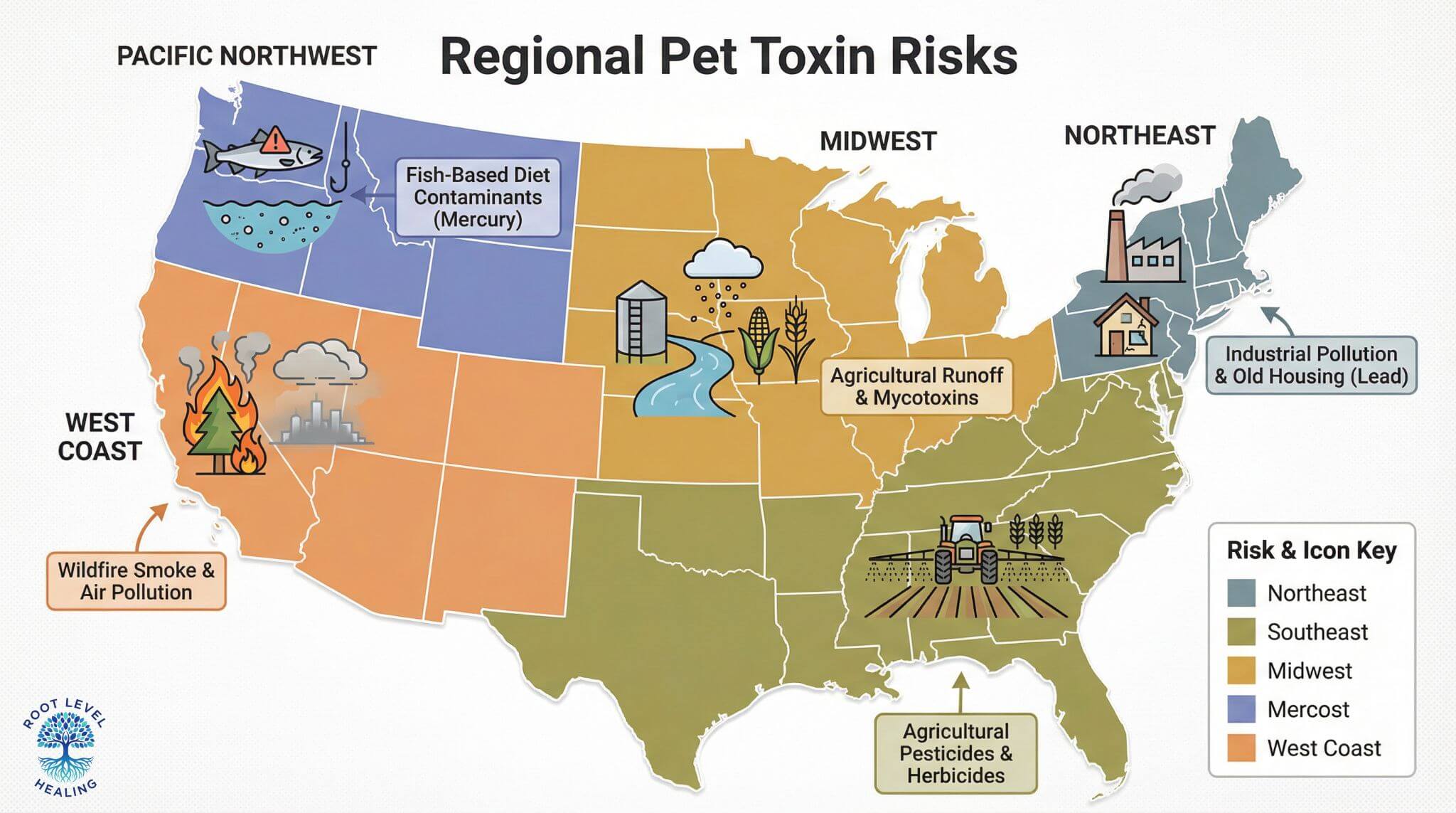
- 🌍Geographic Variations: Regional toxin risks vary significantly—from industrial pollution in the Northeast to agricultural pesticides in the Midwest to wildfire smoke on the West Coast.
Environmental Toxins in Pets: PFAS, BPA & Pesticides — What Every Pet Owner Must Know (A Quick Overview)
Before we dive deep into the science, watch this quick overview for a breakdown on how environmental toxins like PFAS, BPA, and pesticides affect your pets, and learn actionable steps to protect them.
In This Article:
The Pet-Human Environmental Connection
Pets occupy a unique position in environmental health research. Unlike humans, who engage in diverse occupational activities and lifestyle habits that can confound epidemiological findings, pets share our living spaces without the variables that complicate human studies. They breathe the same air, drink from the same water sources, and are exposed to the same household chemicals—making them invaluable sentinel animals for detecting environmental hazards [1].
This concept, known as the "One Health" approach, recognizes that pet health, human health, and environmental health are inextricably linked. Dogs and cats develop many of the same conditions as humans, including cancer, diabetes, thyroid disorders, and neurological diseases. Importantly, they often develop these conditions earlier than their human companions, providing an early warning system for environmental threats [1].
The sentinel role of pets has been documented in numerous studies. Research shows that pets living in polluted areas develop health problems that mirror those seen in human populations, but the effects manifest sooner due to pets' smaller body size, higher metabolic rates, and closer proximity to ground-level contaminants. This makes monitoring pet health not just an act of compassion, but a critical component of public health surveillance.
Major Environmental Toxins Affecting Pets
PFAS "Forever Chemicals"
Per- and polyfluoroalkyl substances (PFAS) are a group of synthetic chemicals that have been used since the 1940s in products ranging from non-stick cookware to water-resistant fabrics. These chemicals are called "forever chemicals" because they do not break down in the environment or in the body, leading to persistent accumulation over time [3].
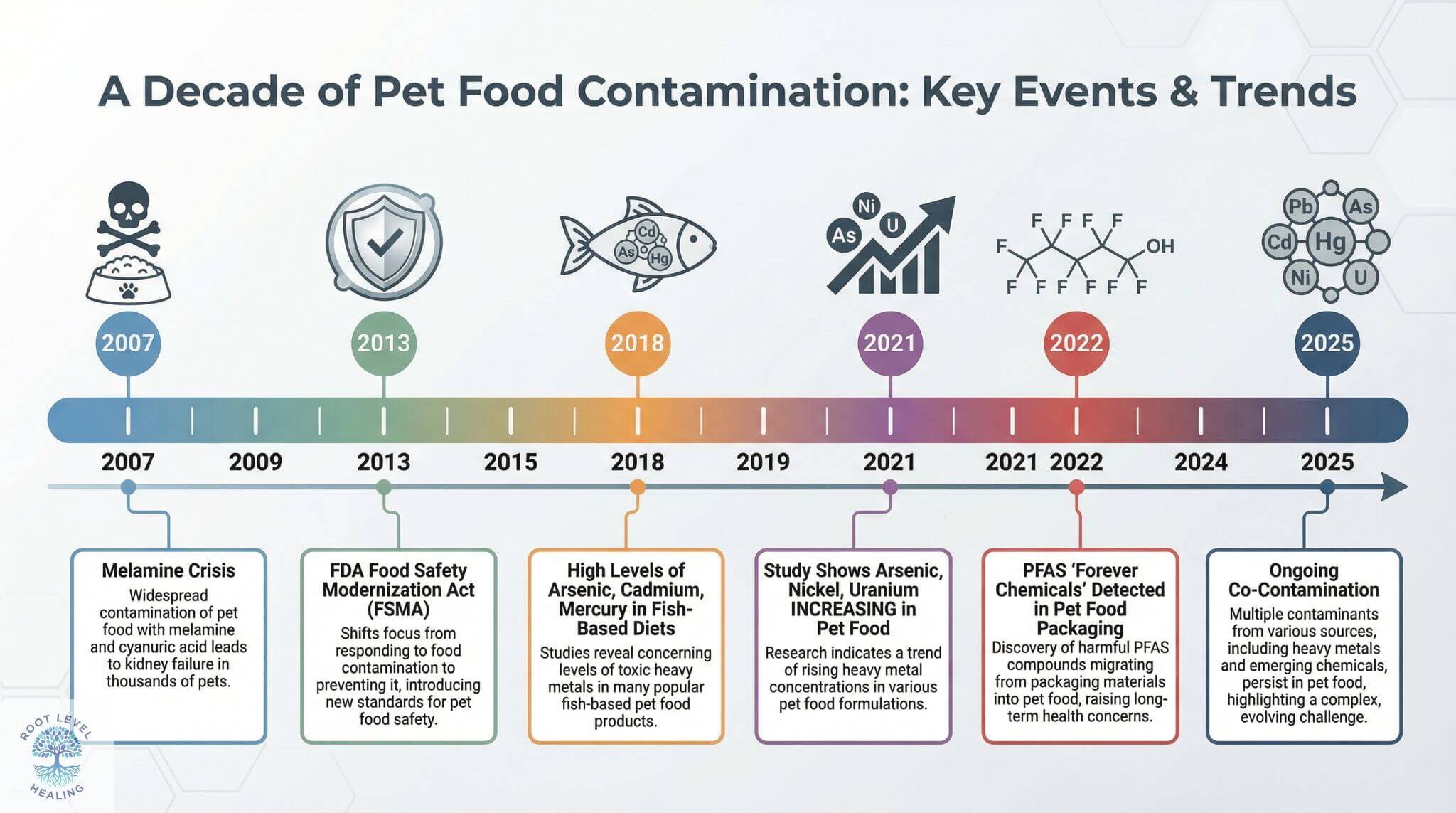
In 2022, a groundbreaking study detected PFAS in pet food packaging materials, raising serious concerns about chronic exposure through daily feeding [3]. These chemicals are known endocrine disruptors, meaning they interfere with hormone systems, and have been linked to immune suppression, liver damage, thyroid disease, and increased cancer risk in both humans and animals.
BPA (Bisphenol A)
Bisphenol A (BPA) is found in the lining of most pet food cans, particularly those containing dog food. This endocrine-disrupting chemical leaches into food, especially when cans are heated or stored for extended periods. Studies have shown that BPA exposure is associated with metabolic changes, gut microbiome disruption, and reproductive issues [4].
For pets eating canned food daily, the cumulative exposure to BPA can be significant. The constant, low-level exposure may contribute to chronic health conditions that develop over years, making it particularly concerning for pets maintained on exclusively canned diets.
Pesticides and Herbicides
Lawn chemicals represent a major source of pesticide exposure for pets. Glyphosate (the active ingredient in Roundup) and 2,4-D are among the most commonly used herbicides on residential lawns. Pets walking on treated grass absorb these chemicals through their paw pads and ingest them during grooming.
Agricultural runoff contaminates water sources, and residues on produce used as table scraps can add to the toxic burden. Even flea and tick products, when misused or over-applied, contribute to pesticide exposure. The health effects of chronic pesticide exposure include neurological damage, increased cancer risk, and reproductive issues.
Air Pollution
Air quality significantly impacts pet health, with brachycephalic breeds (Bulldogs, Pugs, Boston Terriers) being particularly susceptible due to their compromised respiratory anatomy. Wildfire smoke, which contains PM2.5 particulates, industrial emissions, and vehicle exhaust all contribute to poor air quality [5].
Studies have shown a correlation between poor air quality days and increased veterinary visits for respiratory distress. Indoor air quality is equally important, with cleaning products, air fresheners, and volatile organic compounds (VOCs) from furniture and flooring contributing to the toxic load.
Mycotoxins (Aflatoxins)
Mycotoxins are toxic compounds produced by molds that grow on grains and other ingredients used in pet food. Aflatoxins, in particular, can cause severe liver damage and death at high concentrations. The FDA monitors pet food for mycotoxin contamination and issues recalls when dangerous levels are detected.
Mycotoxin contamination is more common in grain-based foods that have been stored improperly in warm, humid conditions. Even low-level chronic exposure can contribute to liver disease over time.
Microplastics
Microplastics are tiny plastic particles found in water, food, and air. These particles accumulate in tissues and act as carriers for other toxins, including heavy metals and persistent organic pollutants (POPs). While research on microplastic health effects in pets is still emerging, the ubiquitous nature of these particles and their ability to cross biological barriers raises significant concerns.
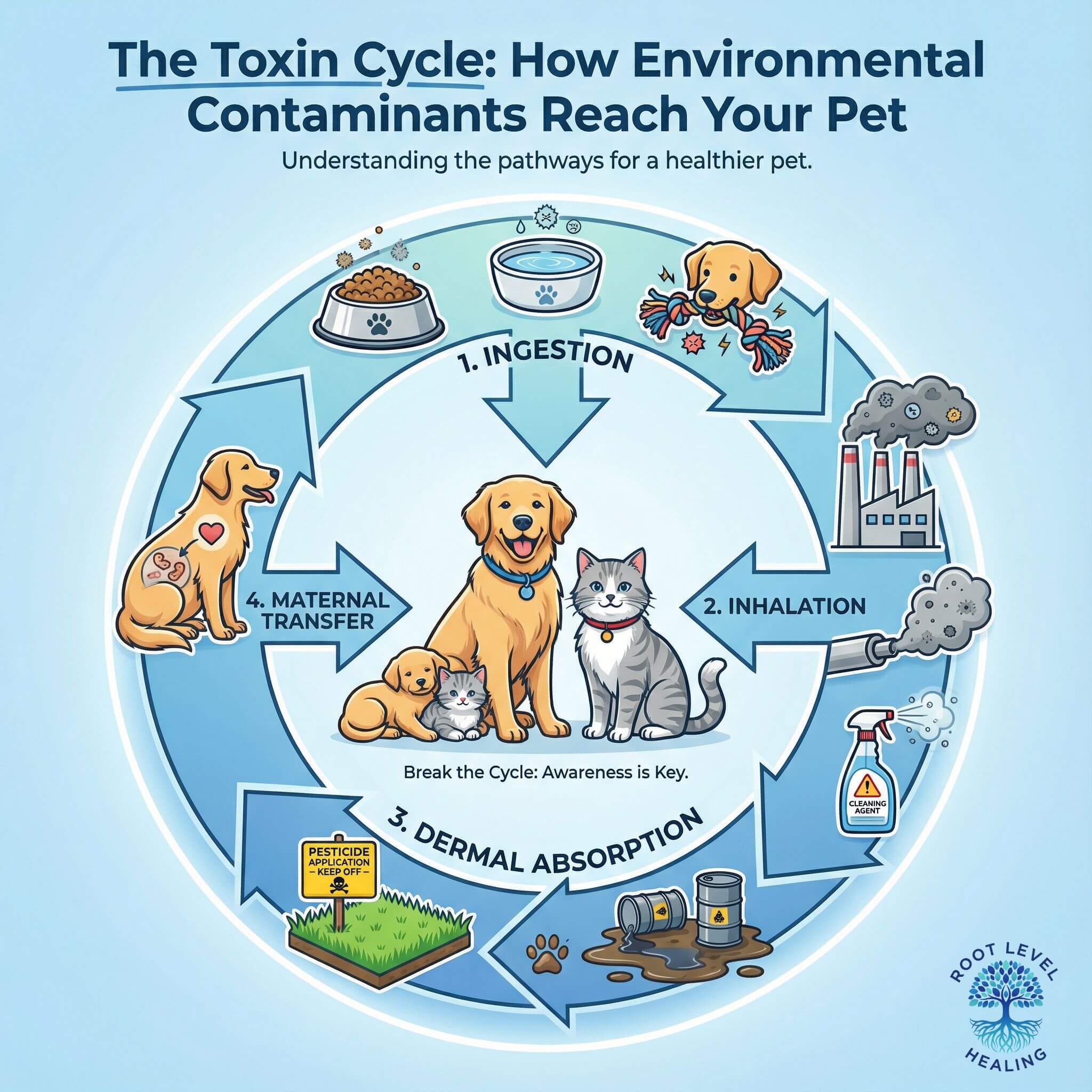
Environmental Toxins and Their Sources
| Toxin Category | Common Sources | Primary Health Concerns | Exposure Route |
|---|---|---|---|
| PFAS | Food packaging, fabrics, cookware | Endocrine disruption, cancer | Ingestion, inhalation |
| BPA | Pet food cans | Metabolic changes, gut dysbiosis | Ingestion |
| Pesticides | Lawns, agriculture, produce | Neurological, cancer | Dermal, ingestion |
| Air Pollution | Smoke, emissions, indoor chemicals | Respiratory, cardiovascular | Inhalation |
| Mycotoxins | Moldy pet food/grains | Liver damage, death | Ingestion |
| Microplastics | Water, food, environment | Tissue accumulation, toxin carrier | Ingestion, inhalation |
Pet Food Contamination: A Deeper Dive
Commercial pet food contamination represents one of the most significant and consistent sources of toxic exposure for companion animals. Recent research reveals that 17.78% of cat food and 20.83% of dog food samples show co-contamination with multiple toxic metals, including lead, chromium, mercury, and arsenic [2].
The type of food matters significantly. Dry food (kibble) tends to have higher heavy metal contamination rates compared to canned food, though canned food presents its own concerns with BPA leaching from can linings. Fish-based diets are particularly problematic, containing significantly higher levels of arsenic, cadmium, and mercury due to bioaccumulation in marine food chains [4].
Perhaps most concerning is the trend over the past decade. While lead concentrations in pet food have decreased—likely due to increased regulatory oversight following the 2007 melamine crisis—levels of arsenic, nickel, and uranium have actually INCREASED [6]. This suggests that as the pet food industry addresses known contaminants, new sources of contamination are emerging.
The FDA Food Safety Modernization Act (FSMA), implemented in 2013, shifted the focus from responding to food contamination to preventing it by introducing new standards for pet food safety. However, enforcement remains challenging, particularly for imported ingredients, which make up a significant portion of commercial pet food formulations.
Pet Food Contamination Rates by Type
| Food Type | Heavy Metal Contamination | Primary Contaminants | Risk Level |
|---|---|---|---|
| Dry Dog Food | 20.83% co-contamination | Pb, Cr, Hg, As | Moderate to High |
| Dry Cat Food | 17.78% co-contamination | Pb, Cr, Hg, As | Moderate to High |
| Fish-Based Diets | Significantly higher | As, Cd, Hg | High |
| Canned Food | Lower heavy metals, higher BPA | BPA, some heavy metals | Moderate |
Breed and Age Susceptibility
Not all pets face equal risk from environmental toxins. Breed-specific anatomical and genetic factors create varying levels of vulnerability. Brachycephalic breeds—including Bulldogs, Pugs, French Bulldogs, and Boston Terriers—are significantly more susceptible to air pollution due to their compromised respiratory anatomy. Their shortened airways and narrowed nostrils make breathing difficult even in clean air; poor air quality exacerbates these challenges dramatically [5].
Small breed dogs and cats face a different challenge: a higher toxin-to-body-weight ratio. When exposed to the same environmental concentrations as larger animals, small pets accumulate proportionally higher tissue concentrations of toxins. This makes them more vulnerable to the effects of contaminated food, water, and air.
Age also plays a critical role in susceptibility. Young animals—puppies and kittens—have greater gastrointestinal absorption of toxins, more permeable blood-brain barriers, and less efficient detoxification pathways. This makes them particularly vulnerable to neurological effects from environmental exposures.
Conversely, geriatric animals carry the burden of cumulative lifetime exposure. Their organs may be compromised by years of low-level toxic accumulation, making them less resilient to additional exposures. Research shows that older dogs living in polluted areas face an 8.97 times higher mortality risk compared to those in cleaner environments [7].
Geographic and Seasonal Variations
Where you live significantly impacts your pet's toxic exposure profile. Urban environments present higher levels of air pollution from vehicle exhaust and industrial emissions, while rural areas may have lower air pollution but higher pesticide and herbicide exposure from agricultural operations.
Industrial areas, particularly those near mines, smelters, or manufacturing facilities, have elevated soil contamination with heavy metals. Coastal regions face unique challenges with seafood-related mercury contamination, while agricultural regions deal with pesticide runoff in water sources.
Seasonal variations also matter. Wildfire season brings dangerous air quality spikes, particularly affecting the Western United States. Winter months can worsen indoor air quality as homes are sealed against the cold, trapping VOCs and other indoor pollutants. Spring and summer bring increased lawn chemical applications, elevating pesticide exposure risks.
Cumulative Effect and Bioaccumulation
Perhaps the most insidious aspect of environmental toxin exposure is its cumulative nature. Unlike acute poisoning events, which produce dramatic symptoms, chronic low-level exposure builds silently over years. Pets eating the same food daily face concentrated, repeated exposure to whatever contaminants that food contains.
Toxins accumulate in fat tissue, bones, and vital organs like the liver and kidneys. This bioaccumulation means that even "safe" levels of exposure can become dangerous over time as tissue concentrations rise. The synergistic effects of multiple toxins—where the combined impact exceeds the sum of individual effects—further complicate the picture.
The Italian study on canine mortality in polluted versus clean environments powerfully illustrates this cumulative burden. Dogs living in polluted areas showed an 8.97-fold increase in mortality among older animals, demonstrating how concentrations absorbed in youth become clinically significant and life-threatening in old age [7].
Interestingly, research on wild boars versus farm animals shows that wild animals consuming undergrowth in contaminated areas accumulate higher heavy metal levels than farm animals eating controlled diets. This suggests that environmental foraging—or in the case of pets, eating grass, dirt, or prey—can significantly increase toxic exposure.
Protection and Mitigation Strategies
While environmental toxins are pervasive, pet owners can take meaningful steps to reduce their companions' toxic burden. The key is a multi-faceted approach addressing food, water, air, and environmental exposures.
Food Selection and Rotation
Choose high-quality pet food brands that conduct third-party testing for contaminants and publish their results. Look for foods that comply with AAFCO (Association of American Feed Control Officials) standards and have undergone feeding trials. Rotate protein sources rather than feeding exclusively fish-based diets, as fish accumulate mercury and arsenic. Consider brands that source ingredients from regions with stricter environmental regulations.
For pets eating canned food, seek out BPA-free packaging or consider transitioning to fresh or frozen food options. Store dry food properly in airtight containers in cool, dry locations to prevent mycotoxin growth.
Water Filtration
Install water filtration systems certified to remove heavy metals, PFAS, and other contaminants. Reverse osmosis systems are highly effective but remove beneficial minerals as well. Carbon block filters offer a good balance of contaminant removal and mineral retention. Replace filter cartridges according to manufacturer recommendations to maintain effectiveness.
Lawn and Garden Care
Minimize or eliminate lawn chemical use. If chemical applications are necessary, keep pets off treated areas for at least 48-72 hours and follow label instructions carefully. Consider pet-safe alternatives for weed and pest control. Create designated pet areas with non-toxic ground covers.
Air Quality Management
Monitor air quality using apps or websites that provide real-time AQI (Air Quality Index) data. Keep pets indoors during poor air quality days, especially during wildfire season. Use HEPA air purifiers indoors to remove particulates. Avoid using air fresheners, scented candles, and harsh cleaning products around pets. Ensure adequate ventilation when using any household chemicals.
Regular Grooming
Wipe your pet's paws with pet-safe wipes after walks to remove environmental contaminants before they can be ingested during grooming. Bathe pets regularly using gentle, non-toxic shampoos to remove accumulated pollutants from fur.
Detoxification Support
Consider implementing regular detoxification protocols to support your pet's natural elimination pathways. This becomes particularly important for pets in high-risk environments or those showing signs of chronic toxic burden. Natural chelation compounds and nutritional support can help reduce accumulated toxins over time.
When to Seek Veterinary Care
Recognizing when environmental toxin exposure requires immediate veterinary attention can be life-saving. Seek emergency care if your pet exhibits acute symptoms such as seizures, difficulty breathing, collapse, severe vomiting or diarrhea (especially with blood), sudden behavioral changes, or loss of consciousness. These signs may indicate acute poisoning requiring immediate intervention.
Schedule a veterinary appointment within 24-48 hours for non-emergency but concerning symptoms, including persistent loss of appetite lasting more than two days, unexplained lethargy or weakness, chronic gastrointestinal issues, skin problems that don't respond to treatment, or increased thirst and urination. If you know your pet was exposed to toxins—such as walking on freshly treated lawns, ingesting contaminated food, or experiencing heavy smoke exposure during wildfires—consult your veterinarian even if symptoms haven't appeared yet. Early intervention significantly improves outcomes.
For pets in high-risk environments (urban areas, pre-1980 homes, agricultural regions), consider annual toxin screening as part of routine wellness exams to detect subclinical exposure before it becomes symptomatic.
Frequently Asked Questions
Q: How do I know if my pet is being affected by environmental toxins?
A: Environmental toxin exposure typically causes subtle, chronic symptoms rather than acute illness. Watch for gradual health decline, chronic conditions that don't respond well to standard treatment, persistent gastrointestinal issues, unexplained skin problems, or behavioral changes. If multiple pets in your household develop similar issues, environmental factors should be strongly considered.
Q: Are certain types of pet food safer than others?
A: Research shows that dry food (kibble) tends to have higher heavy metal contamination than canned food, but canned food has BPA concerns from can linings. Fish-based diets contain significantly higher levels of mercury, arsenic, and cadmium. The safest approach is to choose high-quality brands that conduct third-party testing, rotate protein sources, and avoid exclusive fish-based diets.
Q: What are PFAS "forever chemicals" and why should I be concerned?
A: PFAS (per- and polyfluoroalkyl substances) are synthetic chemicals that don't break down in the environment or body, leading to persistent accumulation. They've been detected in pet food packaging and are known endocrine disruptors linked to immune suppression, liver damage, thyroid disease, and cancer. Because they accumulate over time, even low-level exposure becomes concerning.
Q: Is it safe to use lawn chemicals if I have pets?
A: Lawn chemicals like glyphosate and 2,4-D pose risks to pets who walk on treated grass and then lick their paws. If you must use lawn chemicals, keep pets off treated areas for at least 48-72 hours, follow label instructions carefully, and consider pet-safe alternatives. Better yet, transition to organic lawn care methods or create designated pet areas with non-toxic ground covers.
Q: How does air pollution affect my pet?
A: Air pollution, especially PM2.5 particulates from wildfire smoke and vehicle exhaust, can cause respiratory distress, cardiovascular stress, and increased veterinary visits. Brachycephalic breeds (Bulldogs, Pugs) are particularly vulnerable due to their compromised airways. Monitor air quality and keep pets indoors during poor AQI days, especially during wildfire season.
Q: Should I filter my pet's water?
A: Yes, water filtration is one of the most effective ways to reduce toxic exposure. Look for filters certified to remove heavy metals, PFAS, and other contaminants. Reverse osmosis systems are highly effective, while carbon block filters offer good contaminant removal with mineral retention. Replace filter cartridges regularly to maintain effectiveness.
Q: Are small dogs and cats more vulnerable to environmental toxins?
A: Yes, small pets face a higher toxin-to-body-weight ratio, meaning they accumulate proportionally higher tissue concentrations when exposed to the same environmental levels as larger animals. This makes them more vulnerable to contaminated food, water, and air. Young animals are also more susceptible due to greater absorption and less efficient detoxification.
Q: What is the "One Health" approach mentioned in the article?
A: The One Health approach recognizes that pet health, human health, and environmental health are interconnected. Pets serve as sentinel animals—developing environmental health conditions earlier than humans because they share our living spaces without confounding lifestyle variables. Monitoring pet health provides early warnings about environmental hazards that may also affect humans.
Q: How can I reduce BPA exposure from canned pet food?
A: Look for brands that use BPA-free can linings, transition to fresh or frozen food options, or rotate between canned and other food types to reduce cumulative exposure. If you must use canned food, avoid heating cans (which increases BPA leaching) and don't feed exclusively canned food—rotate with other formats.
Q: Does where I live affect my pet's toxic exposure?
A: Absolutely. Urban areas have higher air pollution, industrial zones have soil contamination, agricultural regions have pesticide runoff, and coastal areas face seafood-related mercury issues. The West Coast deals with wildfire smoke, while the Northeast has industrial pollution and old housing with lead paint. Understanding your regional risks helps you take targeted protective measures.
Q: Can detoxification help my pet?
A: Yes, regular detoxification protocols can support your pet's natural elimination pathways and reduce accumulated toxic burden. This is particularly important for pets in high-risk environments, senior animals with cumulative exposure, or those showing signs of chronic toxicity. Natural chelation compounds and nutritional support can help, but consult your veterinarian before starting any detox protocol.
Q: What should I do during wildfire season to protect my pet?
A: Monitor air quality using AQI apps or websites. Keep pets indoors when AQI exceeds 100, limit outdoor exercise to early morning when air is clearest, use HEPA air purifiers indoors, keep windows closed, and watch for respiratory distress signs. Brachycephalic breeds need extra caution even at moderate AQI levels.
References
- Hegedus C, et al. Pets, Genuine Tools of Environmental Pollutant Detection. Animals (Basel ). 2023;13(18):2923. https://www.mdpi.com/2076-2615/13/18/2923
- Du J, et al. Individual and combined contamination of the toxic metals in commercial cat and dog food. Sci Rep. 2025. https://www.nature.com/articles/s41598-025-98066-0
- New tests find toxic “forever chemicals” in pet food bags and baby textiles. November 2022. https://www.ewg.org/news-insights/news-release/2022/11/new-tests-find-toxic-forever-chemicals-pet-food-bags-and-baby
- Kim HT, et al. Arsenic, Cadmium, Lead, Mercury in Dog Foods. Korean J Vet Res. 2018;58(4 ):227-231. https://doi.org/10.14405/kjvr.2018.58.4.227
- Cornell University College of Veterinary Medicine. Dog safety during poor air quality alerts or wildfire smoke. Riney Canine Health Center. https://www.vet.cornell.edu/departments-centers-and-institutes/riney-canine-health-center/canine-health-topics/dog-safety-during-poor-air-quality-alerts-or-wildfire-smoke
- Atkins P. Changes in Heavy Metal Contamination in Pet Food Over the Past Decade. Spectroscopy Online. 2021. https://www.spectroscopyonline.com/view/heavy-metals-in-pet-food-changes-over-the-past-decade
- Giugliano R, et al. Mortality and heavy metals environmental exposure in dogs. Front Vet Sci. 2024;10:1297311. https://www.frontiersin.org/journals/veterinary-science/articles/10.3389/fvets.2023.1297311/full

Ready to Discover Your Score?
This 2-minute quiz is the essential first step to understanding your body's current toxic load and identifying the root cause of how you feel.
Take The Toxicity QuizExplore More Articles
Dive deeper into topics like detoxification, gut health, and mental clarity on our blog. Knowledge is the key to taking control of your health.
Visit The Blog