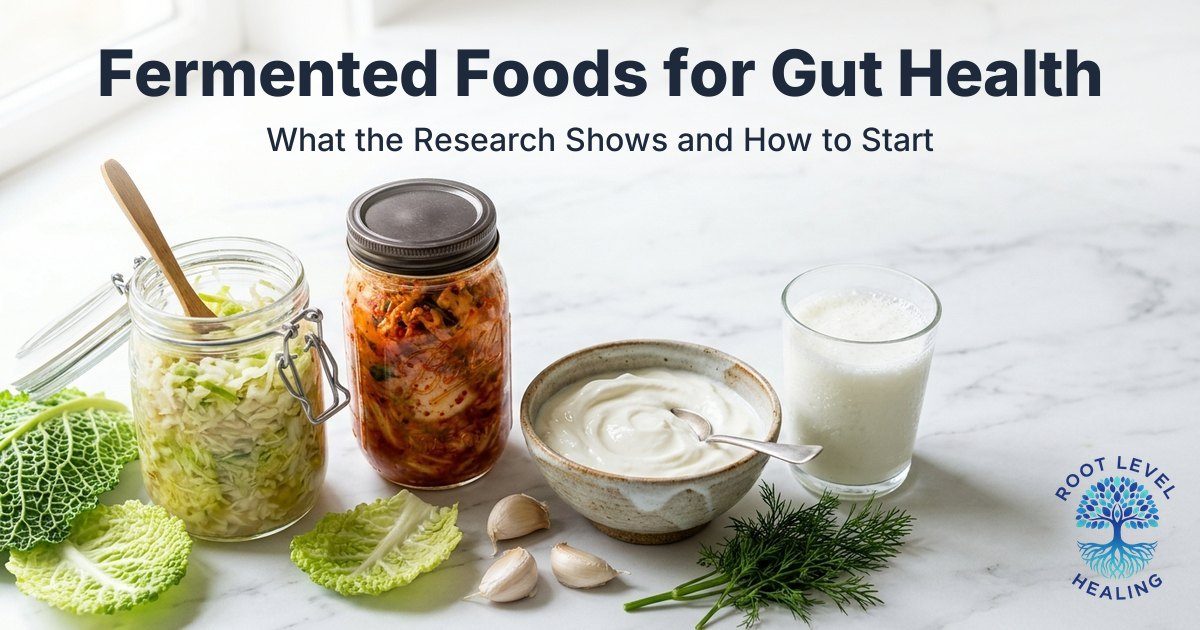
Fermented Foods for Gut Health: What the Research Shows and How to Start
If you've read anything about gut health in the last few years, you've probably seen yogurt, kefir, kimchi and sauerkraut on the list. Fermented foods for gut health have become one of the most talked-about topics in nutrition, and for once, there is a growing body of human research behind the interest. There's also a lot of overpromising, and I'd rather give you the research as it actually stands.
In this article, we'll look at what fermented foods actually are, what a widely cited Stanford study found, which fermented foods still contain live cultures by the time they reach your plate, and a simple, practical way to add them to your week. As always, the goal is understanding, not a quick fix.
Key Takeaways
- A clear definition: fermented foods are made through the controlled growth of microbes. Not all of them still contain live microbes when you eat them.
- Human research is growing: in a 10-week Stanford study, a diet high in fermented foods increased gut microbiome diversity and lowered several inflammation markers in healthy adults.
- Label reading matters: look for "live and active cultures" and refrigerated, unpasteurized products if live microbes are what you're after.
- Start small: add one serving a day and build up, alongside a fiber-rich diet.
In This Article:
What Are Fermented Foods?
In 2021, an international panel of scientists from the International Scientific Association for Probiotics and Prebiotics (ISAPP) agreed on a simple definition: fermented foods are "foods made through desired microbial growth and enzymatic conversions of food components" [2]. In plain words, microbes such as bacteria and yeasts are allowed to grow on purpose, and they change the food as they do.
That change can be dramatic. Milk becomes yogurt or kefir, cabbage becomes sauerkraut or kimchi, soybeans become miso, tempeh or natto, and sweetened tea becomes kombucha. Fermentation was originally a way to preserve food long before refrigerators existed, and it also changes flavor, texture and, in some cases, how easily a food is digested.
Fermented foods are not the same as probiotics
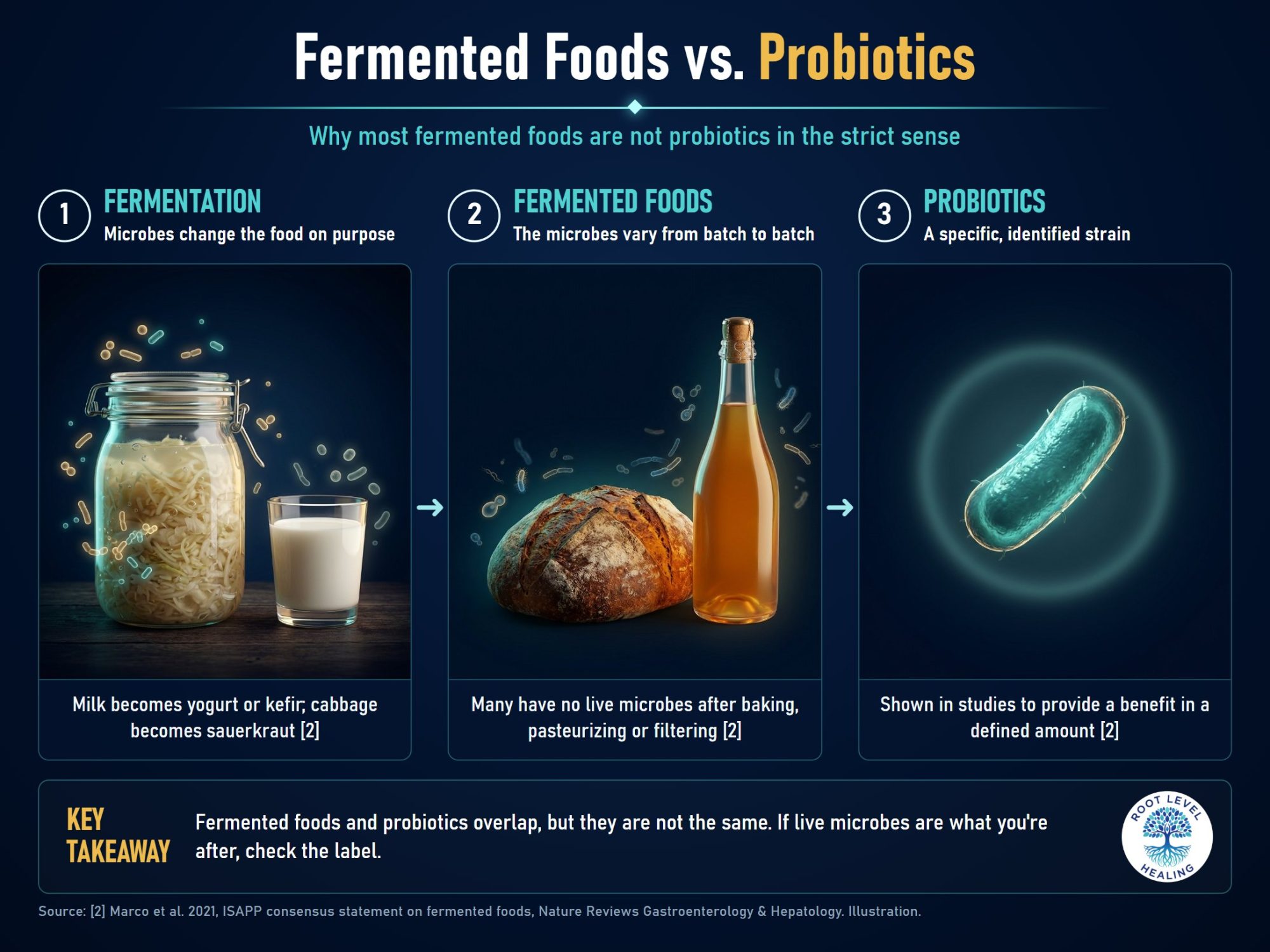
The ISAPP panel draws a careful line here. A probiotic is a specific live microorganism, identified down to the strain, that has been shown in studies to provide a benefit in a defined amount. Most fermented foods are not probiotics in that strict sense. The microbes they contain vary from batch to batch, and many fermented foods contain no live microbes at all by the time they are eaten, because they were baked, pasteurized, smoked or filtered after fermentation [2]. Sourdough bread, most beer and wine, and shelf-stable sauerkraut all fall into that second group.
 (opens a larger view)
Fermented foods and probiotics overlap, but most fermented foods are not probiotics in the strict sense the ISAPP panel uses.
What the Research Shows
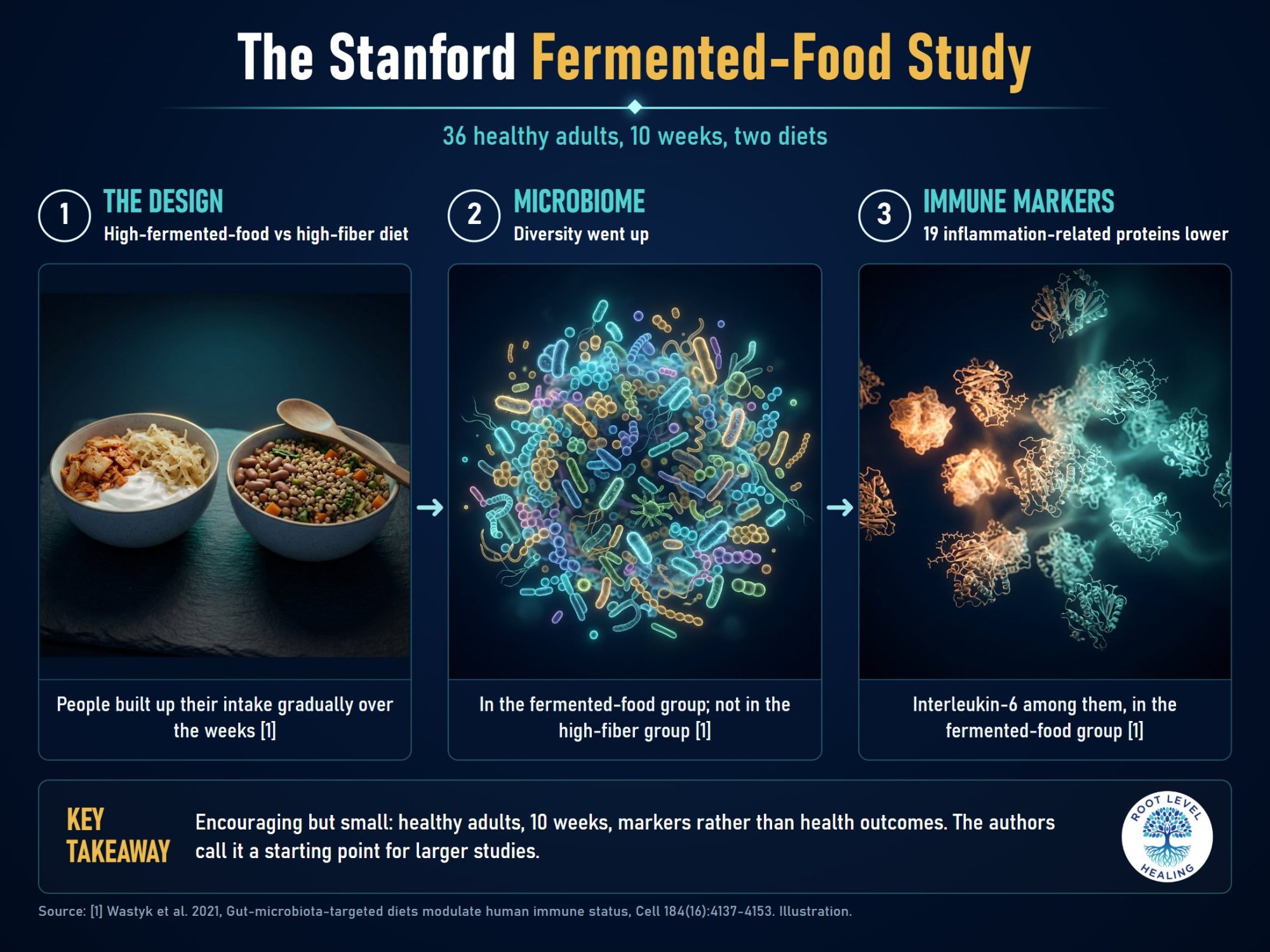
Most of the excitement about fermented foods comes from one carefully designed human study. In 2021, researchers at Stanford University randomly assigned 36 healthy adults to either a high-fermented-food diet or a high-fiber diet for 10 weeks, and tracked their gut microbiome and immune markers before, during and after [1].
- Fermented-food group: people gradually increased their intake of foods like yogurt, kefir, fermented cottage cheese, kimchi, other fermented vegetables, vegetable brine drinks and kombucha. Over the 10 weeks, the diversity of their gut microbiome increased, and 19 inflammation-related proteins measured in the blood went down, including interleukin-6 [1].
- High-fiber group: microbiome diversity did not increase over the same period, and the immune markers responded differently from person to person [1].
This is promising, but it's worth reading carefully. It was a small study in healthy adults, it measured markers rather than health outcomes, and it lasted 10 weeks. The authors themselves describe it as a starting point for larger studies.
Broader reviews come to a similar, measured conclusion. A 2019 review in Nutrients found that some fermented foods can change the composition of the gut microbiota, but that well-designed clinical trials on specific digestive outcomes are still limited, and that most of the clinical evidence so far comes from fermented milk products such as kefir [3]. Another review points out that fermentation can also produce or release compounds such as peptides and vitamins, so some of the effects of fermented foods may come from more than their live microbes [5].
One well-established example: yogurt and lactose
The best-understood effect is a practical one. The live cultures in yogurt contain their own lactase, the enzyme that breaks down milk sugar. When yogurt with live cultures is eaten, those cultures help digest the lactose in the yogurt itself, which is why many people who have trouble with milk find they tolerate yogurt better [4].
 (opens a larger view)
The Stanford study was small and measured markers rather than health outcomes, which is why its authors describe it as a starting point.
Which Fermented Foods Still Contain Live Cultures?
If you're adding fermented foods to your diet for their microbes, the details on the label matter. Here's a practical guide based on how each food is usually made and stored [2]:
- Usually live: yogurt and kefir labeled "live and active cultures", refrigerated unpasteurized sauerkraut and kimchi (often sold in the refrigerated section, sometimes labeled "raw"), traditionally made pickles fermented in salt brine (not vinegar), and miso added at the end of cooking rather than boiled.
- Sometimes live: kombucha (it varies by brand and processing; many also contain added sugar), aged cheeses, and tempeh before cooking.
- Usually not live: sourdough bread (baked), shelf-stable sauerkraut and pickles in vinegar (pasteurized or never fermented), most beer and wine (filtered or pasteurized), and soy sauce.
| Live cultures when you eat it | Examples | Why |
|---|---|---|
| Usually | Yogurt and kefir labeled "live and active cultures", refrigerated raw sauerkraut and kimchi, brine-fermented pickles | Kept cold and not heated after fermenting |
| Sometimes | Kombucha, aged cheeses, tempeh before cooking | Varies by brand and processing |
| Usually not | Sourdough bread, shelf-stable sauerkraut, pickles in vinegar, most beer and wine, soy sauce | Baked, pasteurized, filtered or never fermented |
Foods in the last group can still be part of a healthy diet. They simply don't deliver live microbes, which is worth knowing if that's your reason for eating them.
How to Add Fermented Foods to Your Week
You don't need to change everything at once. In the Stanford study, participants built up their intake gradually over several weeks [1]. A sensible approach for most people looks like this:
- Start with one serving a day. A small bowl of plain yogurt or kefir at breakfast, or a forkful of sauerkraut or kimchi with lunch.
- Add variety over two to four weeks. Different fermented foods contain different microbes, so rotating between dairy and vegetable ferments makes sense.
- Read the label. Look for "live and active cultures" and check the added sugar in flavored yogurts and kombucha, and the salt in kimchi, sauerkraut and miso.
- Notice how you feel. Some people notice more gas or bloating at first. Going slowly usually helps.
- Pair them with fiber. Vegetables, beans, whole grains, nuts and seeds feed the microbes already living in your gut (more on this below).

Refrigerated, unpasteurized sauerkraut and kimchi and live-culture kefir are easy foods to start with, one small serving a day.
A few words of caution. If you have a weakened immune system, any ongoing health condition, or a reason to watch histamine or salt, talk to your doctor before making fermented foods (especially unpasteurized ones) a large part of your diet. If you're watching your sodium, small portions of brined vegetables go a long way.
Exploring Gut Support From ROOT
Fermented foods are a food-first habit. If you're also curious about supplements, this is one ROOT describes for digestive wellness:

Restore
"Formulated with Black Cumin Seed Oil (Nigella sativa), Turmeric, Resveratrol, Aloe Vera, Raspberry Extract, Apple Cider Vinegar, and D-Ribose, RESTORE brings together ingredients studied for their roles in antioxidant activity, digestive wellness, and cellular energy metabolism."
— The ROOT Brands
I am a Root Ambassador, and I may earn rewards from qualifying purchases.Referral code ROOTLEVELHEALING is applied automatically through this link.
Fermented Foods and Fiber Work Together
Fermented foods bring new microbes and fermentation products to the table, while fiber feeds the microbes you already have. Both are part of the same picture. If you want to build on this, our article on three foods for gut health looks at fiber-rich and polyphenol-rich foods, and the four pillars in our Gut Health & Microbiome guide put fermented foods in the context of sleep, stress and everyday habits.
The honest summary is this: fermented foods are a long-standing part of many traditional diets, early human research is encouraging, and adding a little variety is a low-risk change for most people. They're one helpful habit among several, not a fix for everything, and a doctor or registered dietitian is the right person to talk to if you have ongoing digestive symptoms. In our next article, we'll look at what research says about the gut lining and why it matters.
References
- Wastyk, H. C., Fragiadakis, G. K., Perelman, D., et al. (2021). Gut-microbiota-targeted diets modulate human immune status. Cell, 184(16), 4137–4153. https://doi.org/10.1016/j.cell.2021.06.019
- Marco, M. L., Sanders, M. E., Gänzle, M., et al. (2021). The International Scientific Association for Probiotics and Prebiotics (ISAPP) consensus statement on fermented foods. Nature Reviews Gastroenterology & Hepatology, 18, 196–208. https://doi.org/10.1038/s41575-020-00390-5
- Dimidi, E., Cox, S. R., Rossi, M., & Whelan, K. (2019). Fermented foods: definitions and characteristics, impact on the gut microbiota and effects on gastrointestinal health and disease. Nutrients, 11(8), 1806. https://doi.org/10.3390/nu11081806
- Savaiano, D. A. (2014). Lactose digestion from yogurt: mechanism and relevance. The American Journal of Clinical Nutrition, 99(5 Suppl), 1251S–1255S. https://doi.org/10.3945/ajcn.113.073023
- Marco, M. L., Heeney, D., Binda, S., et al. (2017). Health benefits of fermented foods: microbiota and beyond. Current Opinion in Biotechnology, 44, 94–102. https://doi.org/10.1016/j.copbio.2016.11.010
Frequently Asked Questions
Q: Are fermented foods good for your gut?
A: Early human research is encouraging. In a 10-week Stanford study, healthy adults who ate more fermented foods had a more diverse gut microbiome and lower levels of several inflammation markers. The study was small and measured markers rather than health outcomes, so fermented foods are best seen as one helpful habit within an overall healthy diet, not a fix on their own.
Q: How many servings of fermented foods should I eat a day?
A: There is no official recommendation. In the Stanford study, participants built up their intake gradually over several weeks. For most people, starting with one serving a day, such as a small bowl of yogurt or a forkful of sauerkraut, and adding variety over a few weeks is a sensible approach. Going slowly also gives your digestion time to adjust.
Q: Do all fermented foods contain probiotics?
A: No. Many fermented foods contain no live microbes by the time you eat them, because they were baked, pasteurized or filtered. Sourdough bread, most beer and wine, and shelf-stable sauerkraut are examples. Scientists also use the word probiotic only for specific, identified strains shown to provide a benefit, which most fermented foods are not.
Q: How can I tell if a fermented food has live cultures?
A: Look for the words "live and active cultures" on yogurt and kefir. For vegetables, choose refrigerated, unpasteurized sauerkraut, kimchi and brine-fermented pickles, often labeled "raw". Products kept on the shelf at room temperature, or pickled in vinegar, are usually pasteurized or were never fermented in the first place.
Q: Is kombucha a good fermented food for gut health?
A: It depends on the brand. Kombucha is a fermented tea, and some brands contain live microbes, but it varies a lot by brand and processing. Many kombuchas also contain added sugar. If you enjoy it, check the label for sugar content and treat it as one fermented option among several rather than your main source.
Q: Can fermented foods cause bloating?
A: Some people notice more gas or bloating when they first add fermented foods, especially in larger amounts. Starting with small servings and increasing slowly usually helps. If digestive symptoms are ongoing or severe, talk to a doctor or a registered dietitian rather than pushing through.
This article is part of our gut health and microbiome guide.

Ready to Discover Your Score?
This 2-minute quiz is the essential first step to understanding your body's current toxic load and identifying the root cause of how you feel.
Take The Toxicity QuizExplore More Articles
Dive deeper into topics like detoxification, gut health, and mental clarity on our blog. Knowledge is the key to taking control of your health.
Visit The Blog