
The Great Nutrient Heist: How Alcohol Steals Your Body's Essential Vitamins and Minerals
Key Takeaways
- 📉Impaired Absorption: Alcohol damages the GI tract, preventing your body from absorbing essential nutrients, even from a healthy diet.
- 💧Increased Excretion: As a diuretic, alcohol flushes out water-soluble vitamins (like B-complex and C) and minerals before they can be used.
- ⚡Metabolic Hijacking: Your body prioritizes metabolizing alcohol, using up the very nutrients needed for detoxification and energy production.
- 🎯Key Targets: B-vitamins, magnesium, zinc, and antioxidants like Vitamin C and E are the most heavily depleted nutrients.
The Great Nutrient Heist: How Alcohol Steals Your Vitamins & Minerals (A Quick Overview)
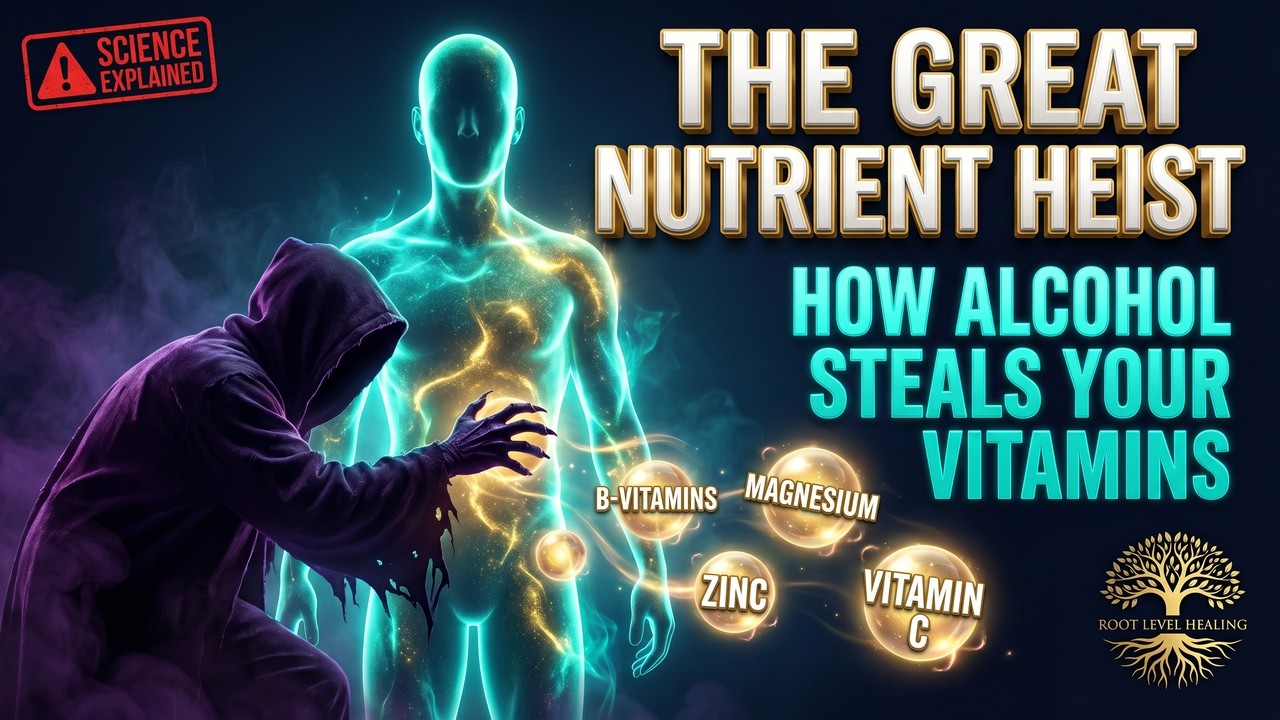
Before we dive deep into the science, watch this quick overview and discover the science behind "The Great Nutrient Heist" — learn how alcohol acts as a diuretic, damages your gut lining, and forces your liver to burn through critical stores of B-Vitamins, Magnesium, Zinc, and Antioxidants just to metabolize the toxins.
In This Article:
In our last post, we explored the immediate, noticeable effects of alcohol—the post-alcohol fog that leaves you feeling drained, anxious, and sore. But beneath that surface-level misery lies a deeper, more insidious problem: a systematic robbery of your body's most vital resources. Alcohol is a master thief, and its target is the very nutrients that keep you healthy, energized, and resilient.
This isn't just about empty calories. Alcohol actively interferes with your body's ability to absorb, store, and utilize essential vitamins and minerals. It's a multi-front attack that leaves your systems depleted and struggling to function. In this post, we'll uncover the three main ways alcohol orchestrates this great nutrient heist and reveal which of your body's precious resources are most at risk.
The Three-Pronged Attack: How Alcohol Depletes Your Nutrients
Alcohol's assault on your nutritional status is relentless and happens through three primary mechanisms:
1. Impaired Digestion and Absorption: Think of your gastrointestinal (GI) tract as a sophisticated processing plant, responsible for breaking down food and absorbing nutrients. Alcohol is like a saboteur, directly damaging the lining of your stomach and intestines. [2] This damage makes it incredibly difficult for your body to absorb key nutrients, especially water-soluble vitamins like B-complex and Vitamin C, as well as minerals like zinc and magnesium. Even if you're eating a healthy diet, the nutrients may not be making it from your gut into your bloodstream where they're needed. [1]

Alcohol damages the intestinal lining, creating a barrier that prevents essential nutrients from being absorbed into the bloodstream.
2. Increased Urinary Excretion: Alcohol is a well-known diuretic, meaning it makes you urinate more frequently. While this might seem like a minor inconvenience, it has significant nutritional consequences. This increased urine output flushes out essential water-soluble vitamins and minerals before your body has a chance to use them. It's like trying to fill a bucket with a hole in the bottom—the more you drink, the more you lose.
3. Metabolic Competition: Your body treats alcohol as a toxin and prioritizes its metabolism above all else. This means that the metabolic pathways normally used to process and utilize nutrients are hijacked to deal with the alcohol. This competition not only slows down the absorption of other nutrients but also uses up the very vitamins and minerals needed for the detoxification process itself, creating a vicious cycle of depletion.
The Most Wanted: Key Nutrients Targeted by Alcohol
While alcohol affects a wide range of nutrients, some are hit particularly hard. These are the unsung heroes of your body's operating system, and their depletion can have far-reaching consequences.

Alcohol consumption leads to a significant depletion of B-Vitamins, Magnesium, Zinc, and Vitamins C & E.
- B-Complex Vitamins (The Energy Crew): This family of vitamins, especially Thiamine (B1), Folate (B9), and B12, is critical for energy production, brain function, and mood regulation. Alcohol devastates B-vitamin levels, leading to fatigue, irritability, and the cognitive fuzziness that's all too familiar after a night of drinking. Chronic deficiency can even lead to severe neurological damage.
- Magnesium (The Relaxation Mineral): Magnesium is involved in over 300 enzymatic reactions in the body, including muscle function, nerve transmission, and blood pressure regulation. Alcohol consumption causes a significant increase in the urinary excretion of magnesium. This depletion is a major contributor to the muscle tension, cramps, and poor sleep quality associated with hangovers.
- Zinc (The Immune Guardian): Zinc is essential for a healthy immune system, wound healing, and DNA synthesis. It's also a critical cofactor for the enzymes that break down alcohol (alcohol dehydrogenase). By depleting zinc, alcohol not only weakens your immune defenses but also impairs your body's ability to process the alcohol itself, prolonging the toxic effects.
- Vitamin C & E (The Antioxidant Duo): As we learned in the last series, alcohol metabolism generates a massive amount of oxidative stress. Vitamin C and Vitamin E are your body's primary antioxidant defenders. Alcohol consumption uses them up at an accelerated rate, leaving your cells vulnerable to damage and inflammation.
Understanding this nutrient heist is the second key to reclaiming your vitality. It's not just about the immediate hangover; it's about the long-term nutritional debt that alcohol creates. In our next post, we'll explore the final piece of the puzzle: how this nutrient depletion, combined with the toxic effects of acetaldehyde, creates a perfect storm of cellular stress and sets the stage for a deeper level of damage.
Frequently Asked Questions
Why do I feel so tired after drinking, even if I slept a long time?
This is a direct result of B-vitamin depletion. Your body uses B-vitamins to convert food into energy. When alcohol flushes them out, your energy production plummets, leading to profound fatigue regardless of how long you sleep.
Can't I just take a multivitamin before drinking?
While a multivitamin can help, it's often not enough. Alcohol's damage to the GI tract impairs absorption, and its diuretic effect means you'll likely excrete many of those vitamins before they can be used. A more targeted approach is needed to counteract the specific effects of alcohol.
Is the nutrient depletion worse with certain types of alcohol?
The type of alcohol (beer, wine, or liquor) is less of a factor than the amount consumed. The more you drink, the greater the diuretic effect and the more metabolic resources are diverted to detoxification, leading to more significant nutrient depletion.
Why is zinc so important for processing alcohol?
Zinc is a critical cofactor for alcohol dehydrogenase — the primary enzyme your liver uses to break down alcohol into acetaldehyde. When alcohol depletes your zinc stores, it actually impairs your body's ability to metabolize the alcohol itself, prolonging the toxic effects and creating a self-reinforcing cycle of damage.
How long does it take to replenish nutrients lost from drinking?
It depends on the severity of depletion and the nutrients involved. Water-soluble vitamins like B-complex and Vitamin C can begin to be replenished within hours with targeted supplementation. Fat-soluble vitamins and minerals like magnesium and zinc take longer — often several days to weeks — especially if the gut lining has been damaged and absorption is impaired.
References
- Center for Living. (2024). What are the effects of alcoholism on vitamin depletion? Center for Living. https://centerforliving.org/what-are-the-effects-of-alcoholism-on-vitamin-depletion/
- Bishehsari, F., et al. (2017). Alcohol and Gut-Derived Inflammation. Alcohol Research. https://pubmed.ncbi.nlm.nih.gov/28988571/

Ready to Discover Your Score?
This 2-minute quiz is the essential first step to understanding your body's current toxic load and identifying the root cause of how you feel.
Take The Toxicity QuizExplore More Articles
Dive deeper into topics like detoxification, gut health, and mental clarity on our blog. Knowledge is the key to taking control of your health.
Visit The Blog