Krill Oil vs Fish Oil: Why Antarctic Krill Oil is 3X More Effective
🔑 Key Takeaways
- 🧬Superior Bioavailability: Krill oil's phospholipid structure makes it 3X more bioavailable than fish oil's triglyceride form, ensuring better absorption and cellular integration.
- 🛡️Natural Antioxidant Protection: Astaxanthin in krill oil provides powerful antioxidant protection that fish oil lacks, preventing rancidity and supporting cellular health.
- 🌊Pristine Source: Antarctic krill from the cleanest waters on Earth versus fish from increasingly polluted oceans with heavy metal contamination risks.
- ♻️Sustainable Choice: Krill harvesting is strictly regulated and sustainable, while many fish populations face overfishing and depletion.
In our previous article, we uncovered the shocking reality that 85% of the global population is deficient in essential omega-3 fatty acids. Now that you understand the scope of this crisis, the next logical question is: what's the best way to restore your omega-3 levels? While fish oil has been the traditional go-to supplement, emerging research reveals that Antarctic krill oil is dramatically superior in virtually every measurable way.
The difference isn't just marginal—it's transformational. Studies show that krill oil can be up to 3 times more bioavailable than fish oil, meaning your body can actually use more of what you're taking [1]. This isn't just about getting more bang for your buck; it's about achieving therapeutic omega-3 levels that can genuinely transform your health. Let's explore why krill oil represents the next evolution in omega-3 supplementation.
Krill Oil vs Fish Oil: Why Krill is 3X More Effective: A Quick Overview
Before we dive deep into the science of omega-3s, watch this quick overview explaining why krill oil is 3X more effective than fish oil.
In This Article:
The Bioavailability Revolution: Phospholipids vs Triglycerides
The fundamental difference between krill oil and fish oil lies in their molecular structure, and this difference changes everything about how your body processes these essential fatty acids. Fish oil contains omega-3s in triglyceride form, while krill oil delivers them as phospholipids—the same form found in your cell membranes.
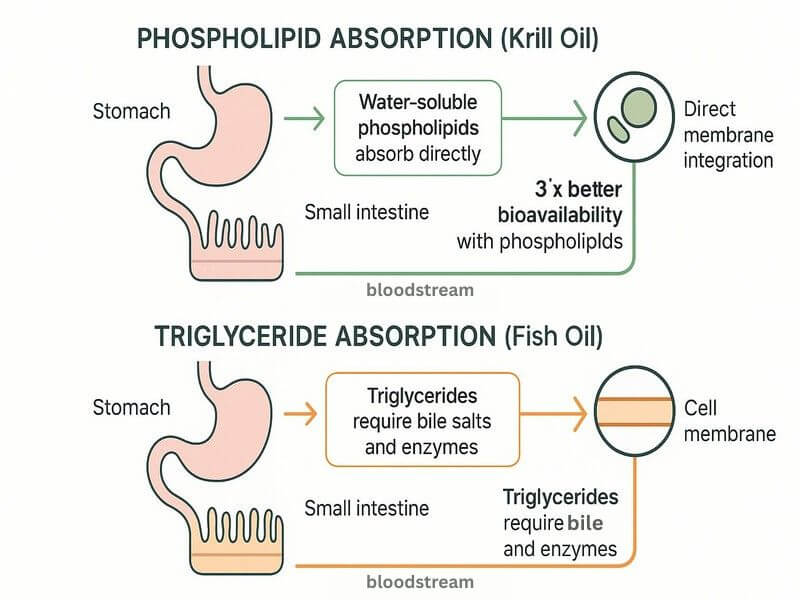
Phospholipids from krill oil integrate directly into cell membranes, while triglycerides from fish oil require complex processing before absorption.
Why Phospholipids Are Superior
Phospholipids are naturally water-soluble, which means they don't require the complex digestive processes that triglycerides do. When you take fish oil, your body must first break down the triglycerides using bile salts and pancreatic enzymes before the omega-3s can be absorbed. This process is inefficient and can be compromised by digestive issues, age, or simply taking the supplement on an empty stomach.
Krill oil's phospholipid structure bypasses these limitations entirely. The omega-3s are readily absorbed and transported directly to your cell membranes, where they can immediately begin their beneficial work. A landmark study published in Lipids found that krill oil achieved the same omega-3 blood levels as fish oil using 62.8% less EPA and 60.2% less DHA [1].
The Cell Membrane Connection
Perhaps even more importantly, phospholipids don't just deliver omega-3s—they become integral parts of your cell membranes. This means that krill oil doesn't just increase your omega-3 levels; it actually improves the structure and function of your cells themselves. Healthier cell membranes mean better cellular communication, improved nutrient transport, and enhanced overall cellular function.
The Astaxanthin Advantage: Nature's Most Powerful Antioxidant
One of the most significant advantages of krill oil is its naturally occurring astaxanthin content. This powerful carotenoid gives krill their distinctive red color and provides benefits that fish oil simply cannot match.
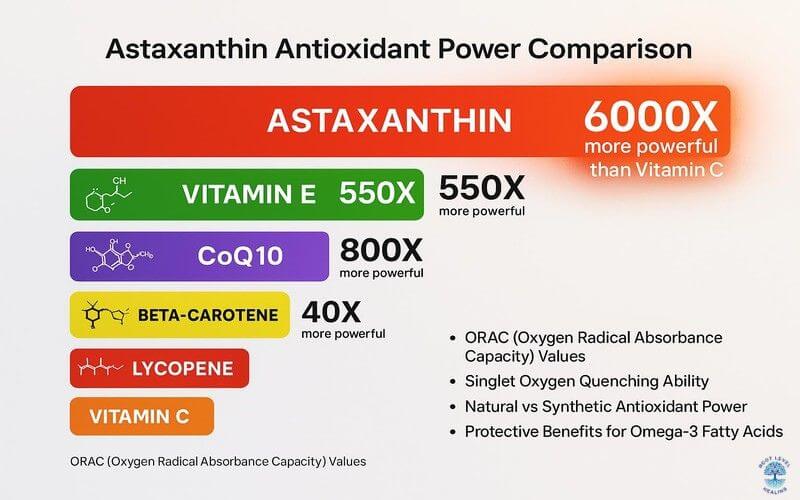
Astaxanthin's antioxidant power far exceeds that of vitamin E, beta-carotene, and other common antioxidants, providing superior protection for omega-3 fatty acids.
Protecting Your Investment
Omega-3 fatty acids are highly susceptible to oxidation, which can render them not just ineffective but potentially harmful. Fish oil supplements often become rancid during processing, storage, or even in your body after consumption. Astaxanthin acts as a natural preservative, protecting the delicate omega-3s from oxidative damage both in the bottle and in your body.
Research shows that astaxanthin is up to 6,000 times more powerful than vitamin C and 800 times more potent than CoQ10 as an antioxidant [2]. This means that krill oil doesn't just deliver omega-3s—it delivers them in their most potent, protected form.
Additional Health Benefits
Astaxanthin provides its own impressive array of health benefits beyond protecting omega-3s. Studies have shown it can improve skin health, enhance athletic performance, support eye health, and provide powerful anti-inflammatory effects [3]. With krill oil, you're getting two powerful supplements in one.
Purity and Sustainability: Antarctic Waters vs Polluted Oceans
The source of your omega-3s matters more than you might think. While fish oil comes from increasingly polluted oceans, Antarctic krill are harvested from some of the cleanest waters on Earth. [5]
The Pollution Problem
Fish used for oil production often come from waters contaminated with heavy metals like mercury, lead, and cadmium, as well as industrial pollutants like PCBs and dioxins. While reputable fish oil manufacturers use molecular distillation to remove these contaminants, the process isn't perfect, and trace amounts often remain.
Antarctic krill, on the other hand, live in pristine waters far from industrial pollution. The Antarctic ecosystem is protected by international treaties, and krill harvesting is strictly regulated to ensure sustainability. This means cleaner, purer omega-3s with minimal contamination risk.
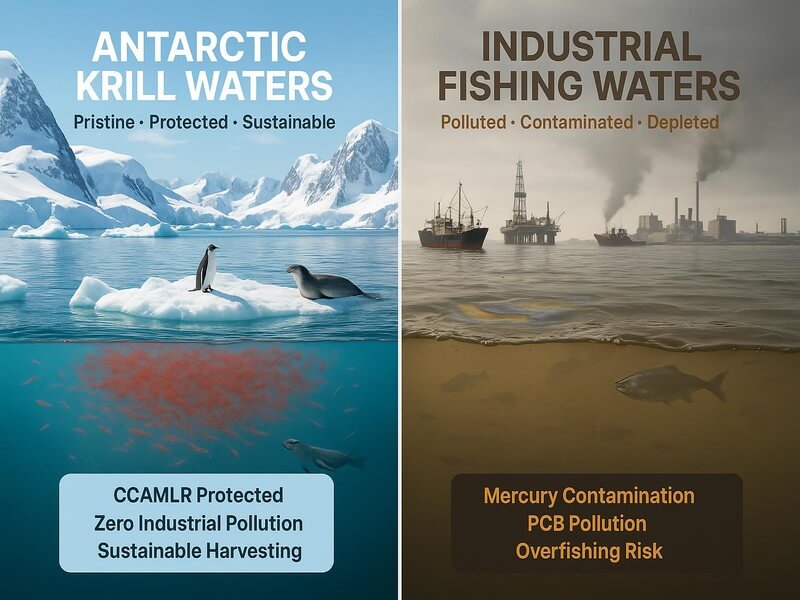
Antarctic waters remain among the cleanest on Earth, while many fish oil sources come from increasingly polluted industrial fishing areas.
Sustainability Matters
Krill represent one of the largest biomasses on Earth, and their harvesting is carefully managed by the Commission for the Conservation of Antarctic Marine Living Resources (CCAMLR). Current krill harvesting represents less than 1% of the estimated krill population, making it one of the most sustainable marine resources available [4].
In contrast, many fish populations used for oil production are facing severe depletion due to overfishing. By choosing krill oil, you're making a choice that supports both your health and the health of our oceans.
Head-to-Head Comparison: Krill Oil vs Fish Oil
| Factor | Krill Oil | Fish Oil |
|---|---|---|
| Bioavailability | 3X more bioavailable (phospholipid form) | Lower absorption (triglyceride form) |
| Antioxidant Protection | Natural astaxanthin protection | Often requires added synthetic antioxidants |
| Source Purity | Pristine Antarctic waters | Often from polluted industrial fishing areas |
| Sustainability | Strictly regulated, <1% of biomass harvested | Many fish populations facing depletion |
| Digestive Tolerance | No fishy burps or aftertaste | Common digestive side effects |
| Cellular Integration | Direct membrane incorporation | Requires conversion for membrane use |
Frequently Asked Questions
Q: Is krill oil more expensive than fish oil, and is it worth the cost?
A: While krill oil typically costs more per capsule, its superior bioavailability means you need less to achieve the same omega-3 blood levels. When you factor in the 3X better absorption, krill oil often provides better value per absorbed omega-3. Plus, you're getting the added benefits of astaxanthin and phospholipids.
Q: Can people with shellfish allergies take krill oil?
A: Krill are not shellfish—they're marine crustaceans more closely related to shrimp. However, people with severe crustacean allergies should consult their healthcare provider before taking krill oil. Most krill oil is highly purified and contains minimal allergenic proteins.
Q: How much krill oil should I take compared to fish oil?
A: Due to its superior bioavailability, you typically need about one-third the EPA/DHA content in krill oil compared to fish oil to achieve similar blood levels. A typical effective dose is 1-2 grams of krill oil daily, providing 200-400mg of combined EPA and DHA.
Q: Does krill oil cause the same digestive issues as fish oil?
A: No, krill oil is much better tolerated digestively. The phospholipid structure eliminates the fishy burps and aftertaste common with fish oil. Many people who can't tolerate fish oil find krill oil much more pleasant to take.
Q: What is astaxanthin and why does it matter in krill oil?
A: Astaxanthin is a naturally occurring carotenoid pigment that gives krill their distinctive red color. It is one of the most powerful antioxidants found in nature — research shows it is up to 6,000 times more potent than vitamin C. In krill oil, it serves a dual purpose: it protects the delicate omega-3 fatty acids from oxidizing (going rancid) both in the bottle and inside your body, and it provides its own independent health benefits for skin, eyes, and athletic performance.
The Clear Choice for Optimal Health
The evidence is overwhelming: krill oil represents a significant advancement over traditional fish oil supplementation. With its superior bioavailability, natural antioxidant protection, pristine source, and sustainable harvesting, krill oil addresses every major limitation of fish oil while providing additional benefits.
For those serious about optimizing their omega-3 status and addressing the deficiency crisis we explored in our previous article, krill oil isn't just a better choice—it's the logical evolution of omega-3 supplementation. In our next article, we'll explore the comprehensive health benefits you can expect when you achieve optimal omega-3 levels with this superior source.
Research References
- Ulven, S. M., Kirkhus, B., Lamglait, A., Basu, S., Elind, E., Haider, T., ... & Holven, K. B. (2011). Metabolic effects of krill oil are essentially similar to those of fish oil but at lower dose of EPA and DHA, in healthy volunteers. Lipids, 46(1), 37-46. https://link.springer.com/article/10.1007/s11745-010-3490-4
- Nishida, Y., Yamashita, E., & Miki, W. (2007). Quenching activities of common hydrophilic and lipophilic antioxidants against singlet oxygen using chemiluminescence detection system. Carotenoid Science, 11, 16-20. https://www.cyanotech.com/pdfs/bioastin/batl40.pdf
- Fakhri, S., Aneva, I. Y., Farzaei, M. H., & Sobarzo-Sánchez, E. (2019). The neuroprotective effects of astaxanthin: therapeutic targets and clinical perspective. Molecules, 24(14), 2640. https://www.mdpi.com/1420-3049/24/14/2640
- Nicol, S., Foster, J., & Kawaguchi, S. (2012). The fishery for Antarctic krill–recent developments. Fish and Fisheries, 13(1), 30-40. https://people.uncw.edu/emslies/documents/Nicoletal.2012krillfisheryreview.pdf
- Tou, J. C., Jaczynski, J., & Chen, Y. C. (2007). Krill for human consumption: nutritional value and potential health benefits. Nutrition Reviews, 65(2), 63-77. https://pubmed.ncbi.nlm.nih.gov/17345959/

Ready to Discover Your Score?
This 2-minute quiz is the essential first step to understanding your body's current toxic load and identifying the root cause of how you feel.
Take The Toxicity QuizExplore More Articles
Dive deeper into topics like detoxification, gut health, and mental clarity on our blog. Knowledge is the key to taking control of your health.
Visit The Blog