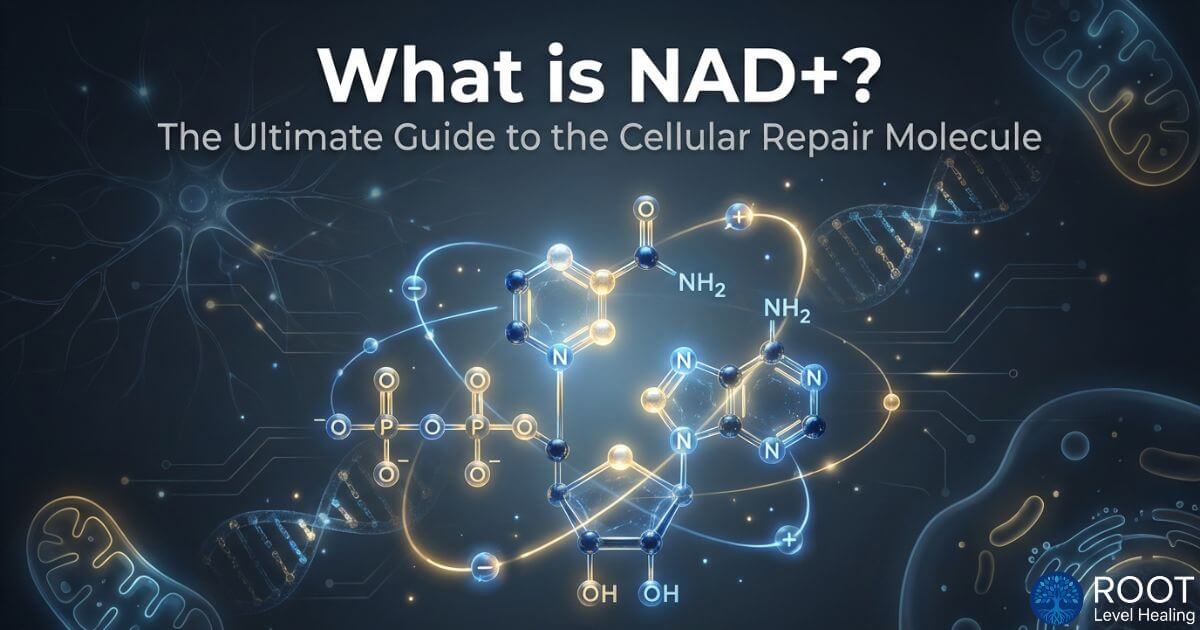
What is NAD+? The Ultimate Guide to the Cellular Repair Molecule
In our previous article, we explored the cellular aging crisis and the devastating impact of DNA damage. We learned that our cells are under constant assault, leading to genomic instability, cellular senescence, and a cascade of aging processes. But what if there was a single molecule at the heart of our cellular defense and repair system—a molecule so critical that its decline is considered a primary driver of aging itself? That molecule is Nicotinamide Adenine Dinucleotide, or NAD+.
First discovered over a century ago, NAD+ was initially known only for its role in energy metabolism. Today, it is recognized as one of the most important molecules in the human body, a master regulator of cellular health, and a key player in the fight against aging. Its decline with age is now seen as an "Achilles' heel" of aging, contributing to a wide range of age-related diseases. Understanding NAD+ is the next crucial step in our journey to taking control of our cellular health.
Key Takeaways
- 📉The Great Decline: NAD+ levels can decline by as much as 50% every 20 years, leaving your cells without the fuel they need for repair and maintenance.
- 🔥Fuel for Repair: NAD+ is the essential fuel for critical enzymes like Sirtuins (longevity genes) and PARPs (DNA repair crew), which protect your cells from damage.
- 💊Precursors are Key: Direct NAD+ supplementation is ineffective. The body must create NAD+ from precursors like NMN and NR, which have been proven safe and effective in human clinical trials.
- ✅Clinically Proven: Human studies show that NMN supplementation at doses of 600-900mg per day safely increases blood NAD+ levels and improves physical performance.
What is NAD+: The Science of Cellular Aging and How to Reverse It: A Quick Overview
Before we dive deep into NAD+, watch this quick overview explaining the science of cellular aging and how it can be reversed.
In This Comprehensive Guide:
- What is NAD+? The Master Regulator of Cellular Health
- The Great Decline: Why NAD+ Levels Plummet with Age
- The Cellular Repair Crew: How NAD+ Fuels Sirtuins and PARPs
- The Precursor Solution: Why NMN and NR are the Keys to Boosting NAD+
- The Clinical Evidence: What Human Trials Say About NAD+ Supplementation
What is NAD+? The Master Regulator of Cellular Health
Nicotinamide Adenine Dinucleotide (NAD+) is a coenzyme found in every cell of your body. It is essential for life, playing a central role in hundreds of metabolic processes. Think of NAD+ as the "CEO of the cell"—it doesn't do all the work itself, but it directs and enables the critical functions that keep the cell alive and healthy.
NAD+ exists in two forms: NAD+ (the oxidized form) and NADH (the reduced form). This pair is crucial for redox reactions, which are fundamental to how your body converts food into energy. But its role extends far beyond simple energy production. Modern research has revealed that NAD+ is a critical signaling molecule that orchestrates cellular defense, repair, and overall function [1].
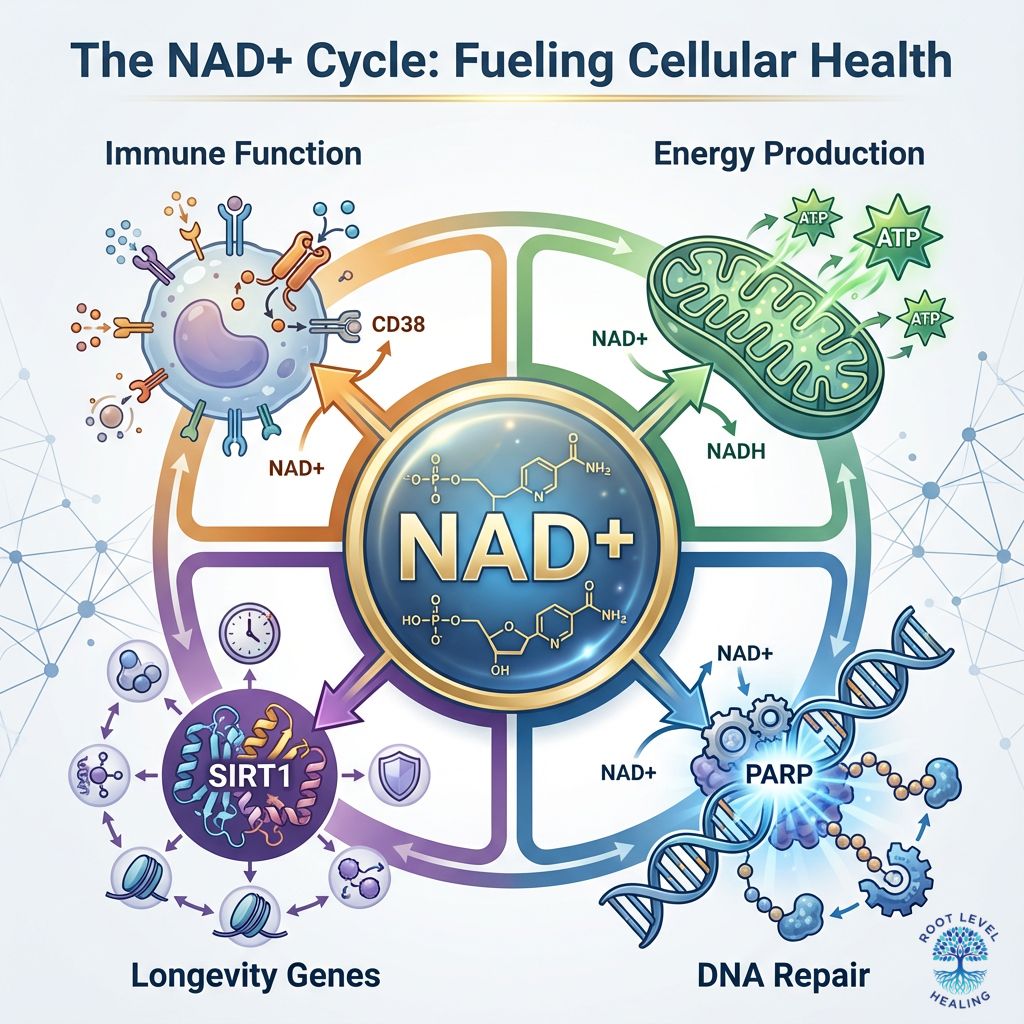
NAD+ is a master regulator, directing cellular resources towards energy production, DNA repair, and the activation of longevity genes.
The Four Pillars of NAD+ Function
NAD+ is the essential fuel for four families of critical enzymes that govern cellular health:
- Sirtuins: Often called "longevity genes," sirtuins are a family of proteins that regulate cellular health, metabolism, and DNA repair. They are completely dependent on NAD+ to function.
- PARPs (Poly-ADP-ribose polymerases): This is your cell's primary DNA repair crew. When DNA damage occurs, PARPs are activated and consume large amounts of NAD+ to carry out repairs.
- CD38 and CD157: These are ectoenzymes on the surface of immune cells that regulate immune responses and calcium signaling. They are also major consumers of NAD+.
- Dehydrogenases: These are the classic metabolic enzymes that use NAD+ to convert food into ATP, the energy currency of the cell.
Without sufficient NAD+, all of these critical processes suffer. DNA repair slows, sirtuin activity declines, immune function is compromised, and energy production falters. This is why the age-related decline in NAD+ is so devastating to our health.
The Great Decline: Why NAD+ Levels Plummet with Age
One of the most consistent findings in aging research is that NAD+ levels decline dramatically as we get older. Studies suggest that by middle age, our NAD+ levels may have dropped to half of what they were in our youth [2]. This decline is not a passive process; it is driven by a combination of decreased production and, more importantly, increased consumption.
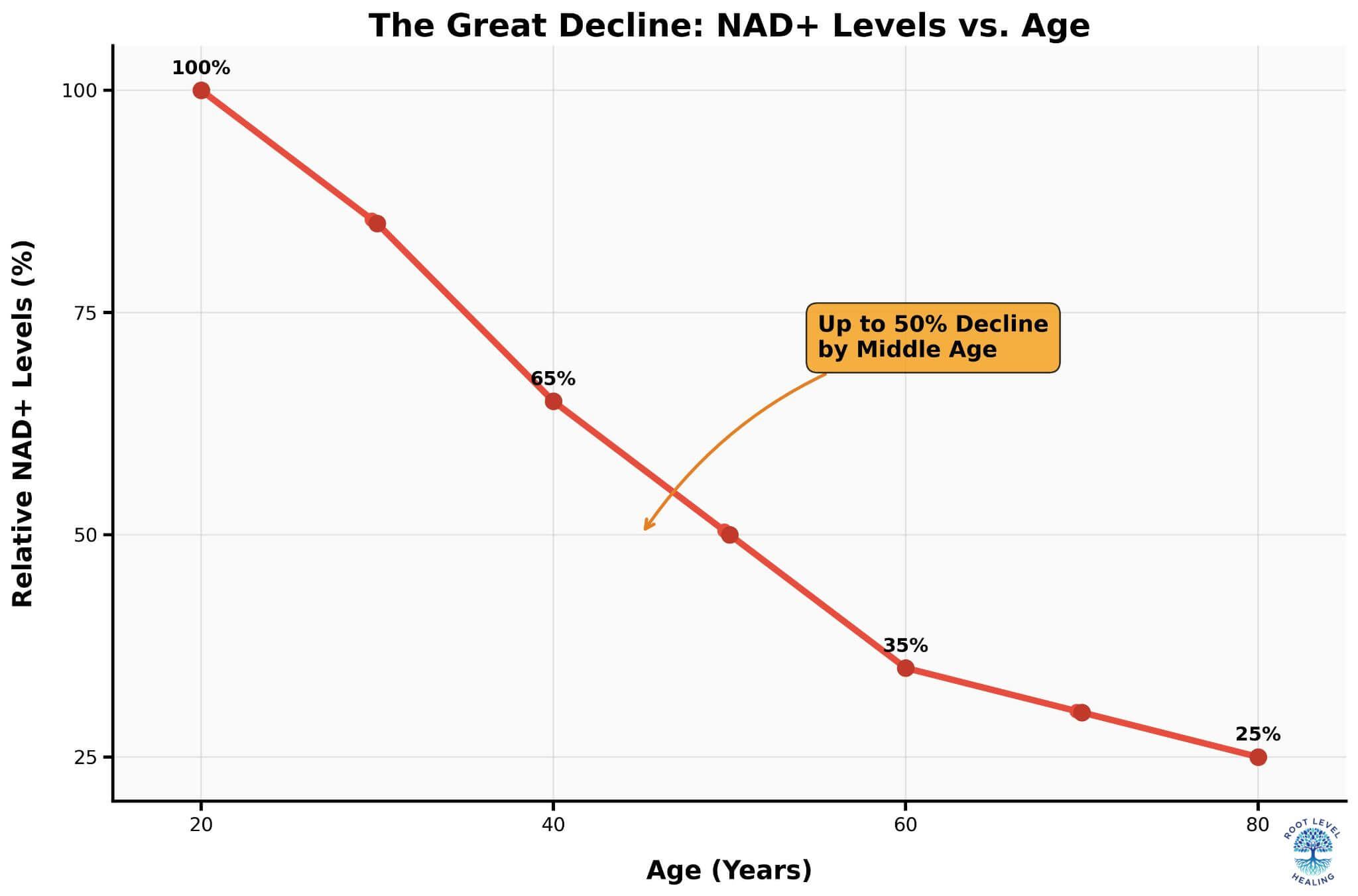
The age-related decline in NAD+ is a primary driver of cellular aging, leaving cells with insufficient resources for repair and maintenance.
What Causes NAD+ to Decline?
The primary reason for the age-related decline in NAD+ is the increasing burden of cellular damage. As we saw in the previous article, our DNA is under constant attack. Every time DNA damage occurs, the PARP enzymes are activated to repair it. This repair process consumes massive amounts of NAD+.
This creates a vicious cycle:
- Accumulated DNA damage increases with age.
- Increased DNA damage leads to hyperactivation of PARP enzymes.
- PARP hyperactivation consumes large amounts of NAD+.
- Lower NAD+ levels leave less fuel for sirtuins and other essential functions.
- Reduced sirtuin activity leads to further cellular dysfunction and more damage.
Another major consumer of NAD+ is the immune enzyme CD38. As we age, chronic inflammation (inflammaging) increases, leading to higher levels of CD38 activity. CD38 can consume up to 100 molecules of NAD+ for every single reaction it catalyzes, making it a major drain on cellular NAD+ pools [3].
The Cellular Repair Crew: How NAD+ Fuels Sirtuins and PARPs
To truly understand the importance of NAD+, we need to look closer at the two most critical processes it fuels: DNA repair by PARPs and cellular maintenance by sirtuins.
PARPs: The DNA Damage First Responders
When a DNA strand breaks, PARP1 is one of the first proteins to arrive at the scene. It acts like a molecular beacon, flagging the damage and recruiting other repair proteins to fix it. To do this, PARP1 consumes NAD+ to create long chains of poly-ADP-ribose (PAR) on itself and other proteins. This PAR chain acts as a scaffold to assemble the repair machinery.
This process is incredibly effective, but it comes at a cost. Severe DNA damage can trigger such a strong PARP response that it can completely deplete a cell's NAD+ supply, leading to energy failure and cell death. This is a protective mechanism to eliminate heavily damaged cells, but the chronic, low-level activation of PARPs with age creates a constant drain on NAD+.
Sirtuins: The Guardians of the Genome
Sirtuins are a family of seven proteins (SIRT1-SIRT7) that act as master regulators of cellular health. They are NAD+-dependent, meaning they cannot function without it. Sirtuins perform a wide range of protective functions:
| Sirtuin | Location | Primary Functions |
|---|---|---|
| SIRT1 | Nucleus | DNA repair, inflammation control, circadian rhythm |
| SIRT3 | Mitochondria | Mitochondrial health, energy production, antioxidant defense |
| SIRT6 | Nucleus | Genomic stability, telomere maintenance, advanced DNA repair |
When NAD+ levels are high, sirtuins are active, and the cell is in a state of high alert and robust defense. When NAD+ levels fall, sirtuin activity declines, leaving the cell vulnerable to damage and dysfunction. This is why maintaining high NAD+ levels is so critical for healthy aging.
The Precursor Solution: Why NMN and NR are the Keys to Boosting NAD+
If declining NAD+ is the problem, why not just supplement with NAD+ directly? Unfortunately, it's not that simple. The NAD+ molecule is too large to easily cross cell membranes, and it is not well absorbed when taken orally. The body must synthesize NAD+ inside the cells using smaller building blocks, known as NAD+ precursors.
The two most well-researched and effective NAD+ precursors are:
- Nicotinamide Mononucleotide (NMN)
- Nicotinamide Riboside (NR)
These molecules are essentially one step away from NAD+ in the cellular synthesis pathway. They are small enough to be easily transported into cells, where they are quickly converted into NAD+.
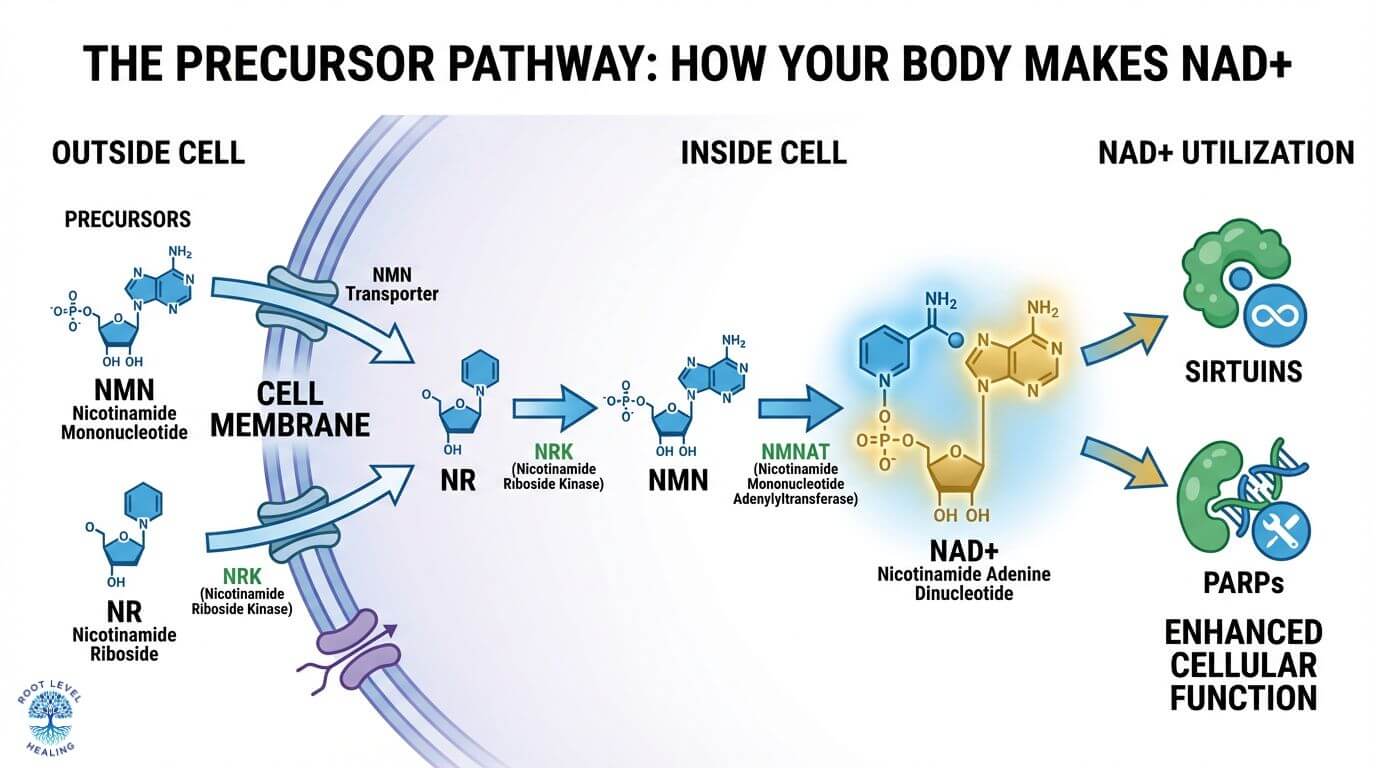
NAD+ precursors like NMN and NR provide the raw materials your cells need to synthesize new NAD+, effectively refilling the tank.
Supplementing with these precursors allows you to bypass the bottlenecks in NAD+ production and directly increase cellular NAD+ levels, providing the fuel your cells need to power their repair and maintenance systems.
The Clinical Evidence: What Human Trials Say About NAD+ Supplementation
While the benefits of NAD+ have been demonstrated extensively in animal models, the most exciting developments have come from recent human clinical trials. These studies have confirmed that supplementing with NAD+ precursors is both safe and effective in humans.
A landmark 2023 study published in the journal GeroScience provided definitive evidence for the efficacy of NMN supplementation in healthy middle-aged adults [4]. This randomized, double-blind, placebo-controlled trial—the gold standard of clinical research—found that:
- NMN supplementation significantly increased blood NAD+ concentrations.
- It was safe and well-tolerated at doses up to 900mg per day.
- The optimal dose for clinical efficacy was found to be 600mg per day.
- Participants taking NMN showed improved physical performance and walking distance.
This study, along with several others on both NMN and NR, confirms that oral supplementation is a viable strategy for combating the age-related decline in NAD+. By restoring NAD+ levels, we can provide our cells with the resources they need to fight back against the hallmarks of aging, repair DNA damage, and maintain youthful function.
Now that we understand the critical role of NAD+ and how to boost it, our next article will explore another powerful tool in the fight against aging: senolytics, the molecules that can clear out harmful "zombie cells." We will focus on quercetin, one of the most potent natural senolytics.
Frequently Asked Questions
Q: What is NAD+ and why is it important?
A: NAD+ (Nicotinamide Adenine Dinucleotide) is a critical coenzyme found in every cell that is essential for energy metabolism, DNA repair, and the function of longevity genes called sirtuins. Its decline with age is a primary driver of cellular aging.
Q: How much do NAD+ levels decline with age?
A: NAD+ levels can decline by as much as 50% every 20 years. A 60-year-old may have only a quarter of the NAD+ levels they had in their youth, leaving cells starved for the energy needed for repair.
Q: What are the main causes of NAD+ decline?
A: The primary causes are increased consumption by DNA repair enzymes (PARPs) due to accumulated DNA damage and by immune enzymes (CD38) due to chronic inflammation. Essentially, the body "spends" its NAD+ on constant repairs.
Q: What are sirtuins and PARPs?
A: Sirtuins are "longevity genes" that regulate cellular health and defense. PARPs are the "DNA repair crew" that fix breaks in your DNA. Both are completely dependent on NAD+ to function.
Q: Why can't I just take an NAD+ supplement directly?
A: The NAD+ molecule is too large to be effectively absorbed or to enter cells directly. It must be synthesized inside the cell from smaller building blocks called precursors, such as NMN and NR.
Q: Are NAD+ precursors like NMN and NR safe?
A: Yes. Multiple human clinical trials have shown that both NMN and NR are safe and well-tolerated, even at high doses. They have been proven to effectively and safely increase NAD+ levels in the body.
References
- Covarrubias, A. J., Perrone, R., Grozio, A., & Verdin, E. (2021 ). NAD+ metabolism and its roles in cellular processes during ageing. Nature Reviews Molecular Cell Biology, 22(2), 119-141.
- Imai, S., & Guarente, L. (2014 ). NAD+ and sirtuins in aging and disease. Trends in Cell Biology, 24(8), 464-471.
- Camacho-Pereira, J., Tarragó, M. G., Chini, C. C., et al. (2016 ). CD38 dictates age-related NAD decline and mitochondrial dysfunction through a SIRT3-dependent mechanism. Cell Metabolism, 23(6), 1127-1139.
- Yi, L., Maier, A. B., Tao, R., et al. (2023 ). The efficacy and safety of β-nicotinamide mononucleotide (NMN) supplementation in healthy middle-aged adults: a randomized, multicenter, double-blind, placebo-controlled, parallel-group, dose-dependent clinical trial. GeroScience, 45(1), 29-43.

Ready to Discover Your Score?
This 2-minute quiz is the essential first step to understanding your body's current toxic load and identifying the root cause of how you feel.
Take The Toxicity QuizExplore More Articles
Dive deeper into topics like detoxification, gut health, and mental clarity on our blog. Knowledge is the key to taking control of your health.
Visit The Blog