The Brain-Rebuilding Mushroom: How Lion's Mane Stimulates Nerve Growth Factor
If you have ever experienced chronic brain fog, memory slips, or the frustrating sensation that your mind is simply not as sharp as it used to be, you are not alone. In our modern environment, our brains are under constant assault from environmental toxins, chronic stress, and systemic inflammation.
For decades, neuroscience operated under a grim assumption: that we are born with a fixed number of brain cells, and once they die, they are gone forever. We now know this is entirely false. The brain is highly plastic, capable of growing new neurons and forming new connections throughout our entire lifespan—a process known as neurogenesis.
But neurogenesis does not happen in a vacuum. It requires a specific biological catalyst. That catalyst is a protein called Nerve Growth Factor (NGF). And when it comes to naturally stimulating NGF, one remarkable functional mushroom stands entirely alone in the scientific literature: Hericium erinaceus, commonly known as Lion's Mane.
Key Takeaways
- The NGF Bottleneck: Nerve Growth Factor (NGF) is essential for brain repair, but it cannot cross the blood-brain barrier. You cannot supplement it directly.
- The Only Natural Solution: Lion's Mane is the only known natural compound containing molecules small enough to cross the barrier and stimulate NGF production internally.
- Two Powerful Compounds: Hericenones (from the fruiting body) and Erinacines (from the mycelium) work synergistically to trigger neurogenesis.
- Neuroplasticity: Higher NGF levels lead to faster neural signaling, sharper memory, and protection against cognitive decline.
Lion's Mane & Nerve Growth Factor: The Brain-Rebuilding Mushroom (A Quick Overview)
Before we dive deep into the science of neurogenesis, watch this quick overview explaining how Lion's Mane mushroom stimulates Nerve Growth Factor to eradicate brain fog and rebuild your brain's infrastructure.
In This Article:
The Blood-Brain Barrier and the NGF Problem
Nerve Growth Factor is the master architect of your brain's infrastructure. It is a neuropeptide primarily responsible for the growth, maintenance, proliferation, and survival of neurons. When NGF levels are optimal, your brain easily repairs damaged myelin sheaths, forms new synaptic connections for learning, and maintains sharp cognitive function.
When NGF levels drop—often due to aging, stress, or gut-driven inflammation—neurons begin to degrade. This degradation manifests as memory loss, slow processing speed, and eventually, severe cognitive decline.
The logical solution seems simple: if we need more NGF, why not just take an NGF supplement? This is where we hit a biological wall known as the blood-brain barrier (BBB).
The blood-brain barrier is a highly selective semipermeable border of endothelial cells that prevents solutes in the circulating blood from non-selectively crossing into the extracellular fluid of the central nervous system. It is your brain's security system. NGF is a high-molecular-weight protein. It is simply too large to pass through the blood-brain barrier.
If you consume NGF directly, it will circulate in your bloodstream but will never reach your brain. To increase NGF in the brain, you cannot introduce it from the outside; you must stimulate the brain to synthesize it internally.
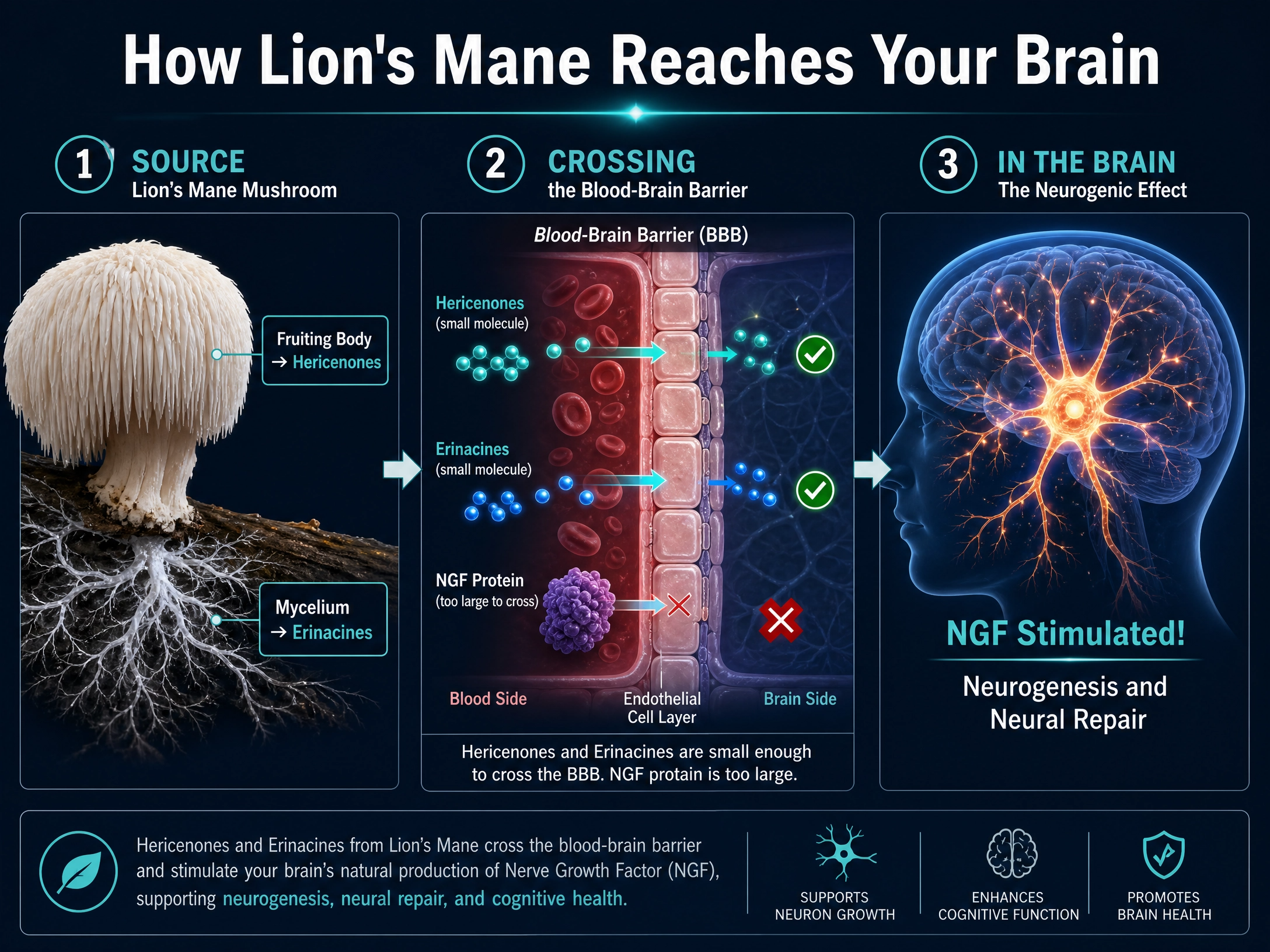
Unlike large NGF proteins, the low-molecular-weight compounds in Lion's Mane easily cross the blood-brain barrier to trigger internal neurogenesis.
How Lion's Mane Crosses the Barrier
This is where Lion's Mane transitions from a traditional remedy to a scientifically validated neurological tool. Researchers have discovered that Lion's Mane contains two unique families of compounds that are small enough—low enough in molecular weight—to easily pass through the blood-brain barrier.
Once across the barrier, these compounds bind to specific receptors in the brain and trigger the synthesis of Nerve Growth Factor directly at the source. Lion's Mane is currently the only known natural substance capable of this specific mechanism of action [1].
These two compound families are:
- Hericenones: Found in the fruiting body (the visible mushroom).
- Erinacines: Found in the mycelium (the underground root network).
Hericenones vs. Erinacines: The Complete Profile
Understanding the difference between these two compounds is critical, because it dictates how you should evaluate a Lion's Mane supplement. Many commercial products only use the fruiting body, completely missing out on the erinacines.
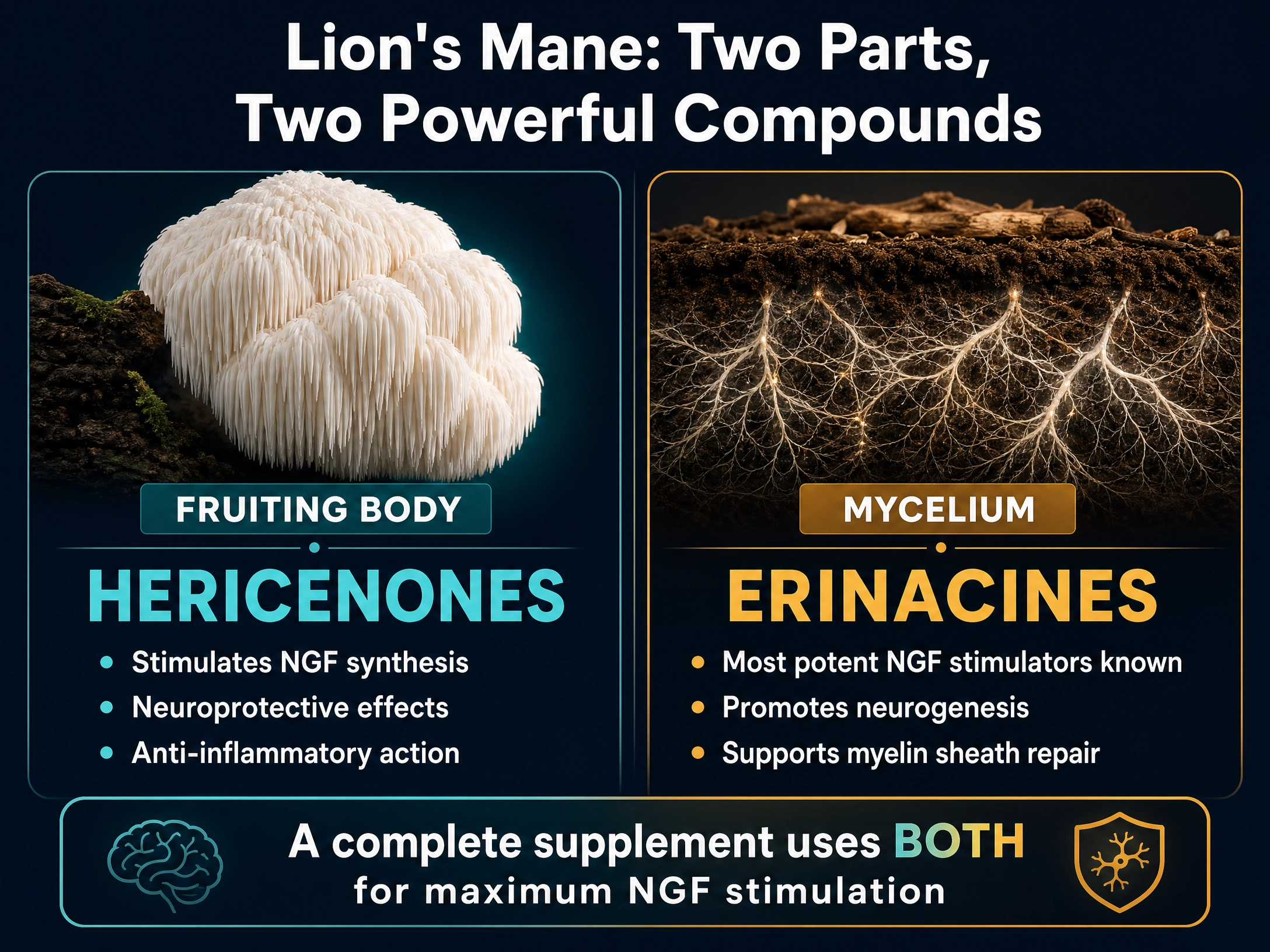
A complete neurological profile requires both the fruiting body and the mycelium to capture the full spectrum of NGF-stimulating compounds.
While both compounds stimulate NGF, research indicates that erinacines (from the mycelium) are actually the more potent stimulators of Nerve Growth Factor [2]. They have been shown to significantly increase NGF mRNA expression in the hippocampus and locus coeruleus—the brain regions most critical for memory and learning.
| Compound Family | Source Location | Primary Neurological Action |
|---|---|---|
| Hericenones | Fruiting Body (Above ground) | Stimulates NGF synthesis, provides neuroprotective effects against oxidative stress, and reduces neuroinflammation. |
| Erinacines | Mycelium (Below ground) | Most potent known natural NGF stimulators, actively promotes neurogenesis, and supports myelin sheath repair. |
This is why, when we review specific Lion's Mane products later in this series, we will look exclusively for dual-extracted formulas that utilize both the fruiting body and the mycelium. You need the complete biological profile to achieve maximum neuroplasticity.
The Impact of Neurogenesis on Daily Life
What does this cellular repair actually feel like? When NGF levels are optimized and neurogenesis is actively occurring, the subjective experience is often described as a "lifting of the fog."
Because NGF repairs the myelin sheath—the protective coating around your nerves that allows electrical impulses to transmit quickly and efficiently—neural signaling speed increases. This translates to faster recall, sharper focus, and the ability to hold complex thoughts without losing your train of thought [3].
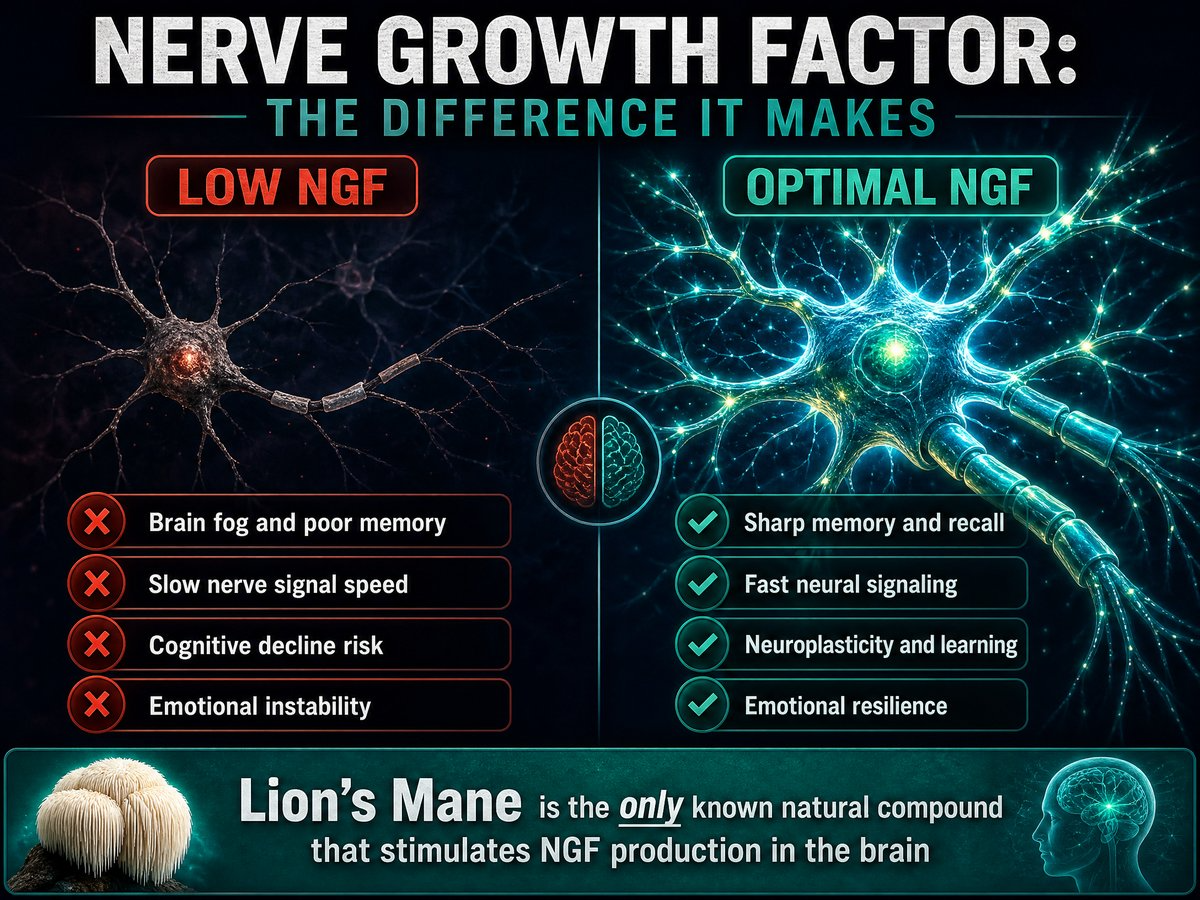
Optimal NGF levels are the biological foundation for sharp memory, fast neural signaling, and emotional resilience.
Furthermore, by stimulating the growth of new neurons in the hippocampus, Lion's Mane directly supports the brain's ability to encode new memories and adapt to new information. This neuroprotective effect is why Lion's Mane is currently the subject of extensive clinical trials regarding age-related cognitive decline and neurodegenerative conditions [4].
In the next article in this series, we will dive deeper into the specific clinical outcomes of Lion's Mane supplementation, focusing exactly on how it impacts memory, focus, and the eradication of brain fog.
Frequently Asked Questions
Q: What is Nerve Growth Factor (NGF)?
A: Nerve Growth Factor (NGF) is a critical protein in the brain responsible for the growth, maintenance, and survival of neurons. It is essential for neuroplasticity, learning, memory, and repairing damaged nerve cells.
Q: Why can't I just take an NGF supplement?
A: NGF is a large protein molecule that cannot cross the blood-brain barrier. If you consume NGF directly, it will not reach your brain. You must consume compounds that cross the barrier and stimulate your brain to produce its own NGF internally.
Q: What makes Lion's Mane unique for brain health?
A: Lion's Mane is the only known natural source of hericenones and erinacines—two low-molecular-weight compounds that easily cross the blood-brain barrier and directly stimulate the synthesis of Nerve Growth Factor within the brain.
Q: What is the difference between the fruiting body and mycelium?
A: The fruiting body is the visible mushroom above ground, which contains hericenones. The mycelium is the root-like network below ground, which contains erinacines. Erinacines are actually considered the more potent NGF stimulators, which is why a complete supplement must include both parts.
Q: How long does it take to notice results from Lion's Mane?
A: Most people begin to notice subtle improvements in mental clarity and focus within 2–4 weeks of consistent daily use. The deeper neuroregenerative benefits — such as improved memory, nerve repair, and mood stability — typically build over 4–8 weeks, as NGF stimulation and neuroplasticity changes take time to accumulate at the cellular level. Consistency is key; Lion's Mane is not a one-dose stimulant but a long-term brain health investment.
References
- Lai, P. L., Naidu, M., Sabaratnam, V., Wong, K. H., David, S. R., Kuppusamy, U. R., Abdullah, N., & Malek, S. N. (2013). Neurotrophic properties of the Lion's mane medicinal mushroom, Hericium erinaceus (Higher Basidiomycetes) from Malaysia. International journal of medicinal mushrooms, 15(6), 539–554. https://pubmed.ncbi.nlm.nih.gov/24266378/
- Kawagishi, H., Shimada, A., Shirai, R., Okamoto, K., Ojima, F., Sakamoto, H., Ishiguro, Y., & Furukawa, S. (1994). Erinacines A, B and C, strong stimulators of nerve growth factor (NGF)-synthesis, from the mycelia of Hericium erinaceum. Tetrahedron Letters, 35(10), 1569–1572. https://www.sciencedirect.com/science/article/abs/pii/S0040403900767608
- Mori, K., Inatomi, S., Ouchi, K., Azumi, Y., & Tuchida, T. (2009). Improving effects of the mushroom Yamabushitake (Hericium erinaceus) on mild cognitive impairment: a double-blind placebo-controlled clinical trial. Phytotherapy research : PTR, 23(3), 367–372. https://pubmed.ncbi.nlm.nih.gov/18844328/
- Spelman, K., Sutherland, E., & Bagade, A. (2017). Neurological Activity of Lion's Mane (Hericium erinaceus). Journal of Restorative Medicine, 6(1), 19-26. https://restorativemedicine.org/journal/neurological-activity-lions-mane-hericium-erinaceus/

Ready to Discover Your Score?
This 2-minute quiz is the essential first step to understanding your body's current toxic load and identifying the root cause of how you feel.
Take The Toxicity QuizExplore More Articles
Dive deeper into topics like detoxification, gut health, and mental clarity on our blog. Knowledge is the key to taking control of your health.
Visit The Blog