Lion's Mane Mushroom for Memory, Focus, and Cognitive Clarity — What the Science Says
In our previous exploration of Lion's Mane, we uncovered how this extraordinary functional mushroom stimulates Nerve Growth Factor (NGF) to physically rebuild and repair the structural integrity of the nervous system. But structural repair is only half of the cognitive equation.
If NGF is the construction crew building the physical highways of your brain, you still need a system to manage the traffic, encode the data, and ensure the signals travel at lightning speed. This is where memory, focus, and cognitive clarity come into play.
For decades, the medical consensus was that cognitive decline was a one-way street. Once you started losing your memory, experiencing chronic brain fog, or slowing down mentally, the best you could hope for was to manage the symptoms. But modern neuroscience has proven that the brain remains plastic—capable of growing, adapting, and rewiring itself—throughout our entire lives.
And clinical research is increasingly pointing to Hericium erinaceus (Lion's Mane) as one of the most powerful natural catalysts for this cognitive rewiring. Let's dive into the clinical science of how Lion's Mane improves memory, sharpens focus, and clears the fog.
Key Takeaways
- The BDNF Connection: While NGF repairs physical nerve structure, Lion's Mane also stimulates Brain-Derived Neurotrophic Factor (BDNF), the protein responsible for memory encoding and learning.
- Clinical Proof: The landmark 2009 Mori trial proved that daily Lion's Mane supplementation significantly improved cognitive function in older adults—but the benefits faded when supplementation stopped.
- Hippocampal Neurogenesis: Lion's Mane directly stimulates the growth of new neurons in the hippocampus, the brain's primary center for memory formation and emotional regulation.
- Faster Processing Speed: Recent 2023 studies show that Lion's Mane improves cognitive processing speed and reduces subjective stress even in healthy young adults.
Lion's Mane Mushroom for Memory & Focus: The Science of Clearing Brain Fog (A Quick Overview)
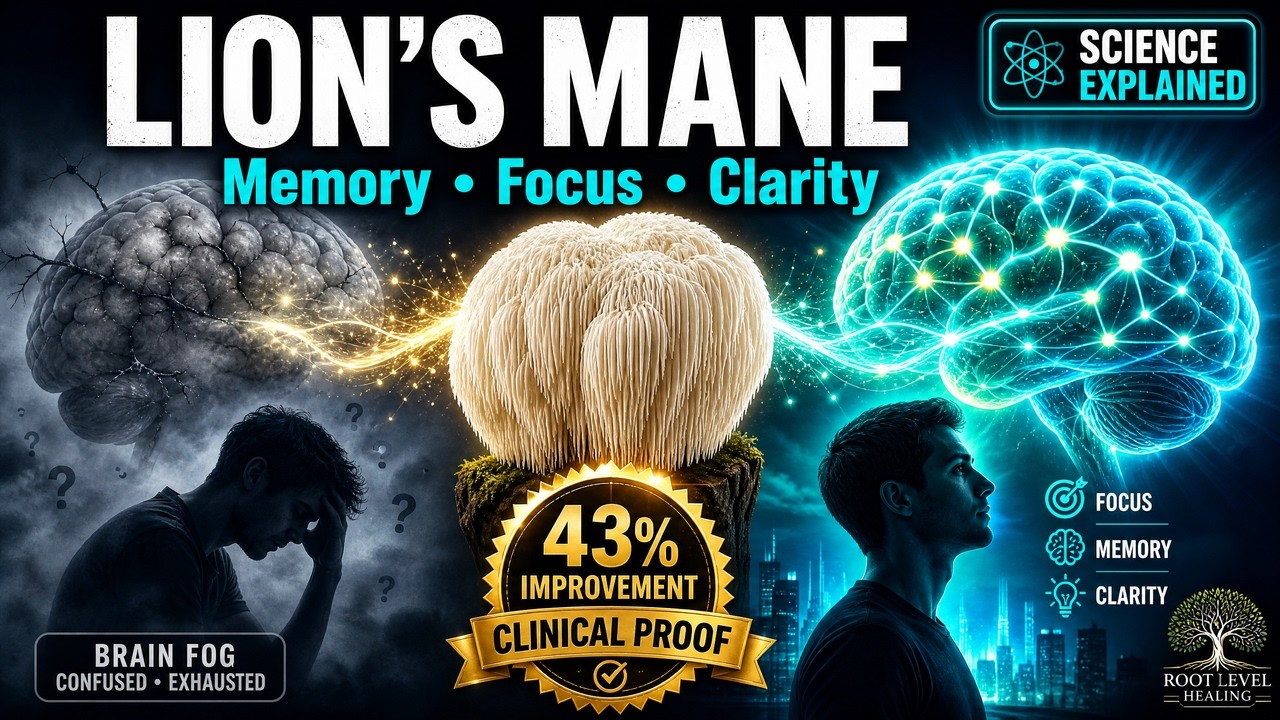
Before we dive deep into the science, watch this quick overview explaining how Lion's Mane provides a two-track approach to clearing brain fog and optimizing cognitive function.
In This Article:
The Two-Track Brain: Why NGF Needs BDNF
To understand how Lion's Mane improves memory and focus, we have to look beyond NGF to a second, equally critical protein: Brain-Derived Neurotrophic Factor (BDNF).
BDNF is often described as "Miracle-Gro for the brain." It is the master molecule of synaptic plasticity—the ability of synapses (the connections between neurons) to strengthen or weaken over time. When you learn a new skill, memorize a name, or solve a complex problem, your brain requires BDNF to encode that new information into a lasting memory [1].
Low levels of BDNF are strongly correlated with brain fog, poor memory, depression, and neurodegenerative diseases like Alzheimer's. High levels of BDNF are associated with rapid learning, sharp focus, and robust mental health.
Recent studies have demonstrated that the unique compounds in Lion's Mane—specifically the hericerin derivatives—exert powerful BDNF-like neurotrophic effects in the brain [2]. By stimulating both NGF (for structural repair) and BDNF (for synaptic plasticity), Lion's Mane provides a comprehensive, two-track approach to cognitive optimization that synthetic nootropics simply cannot match.
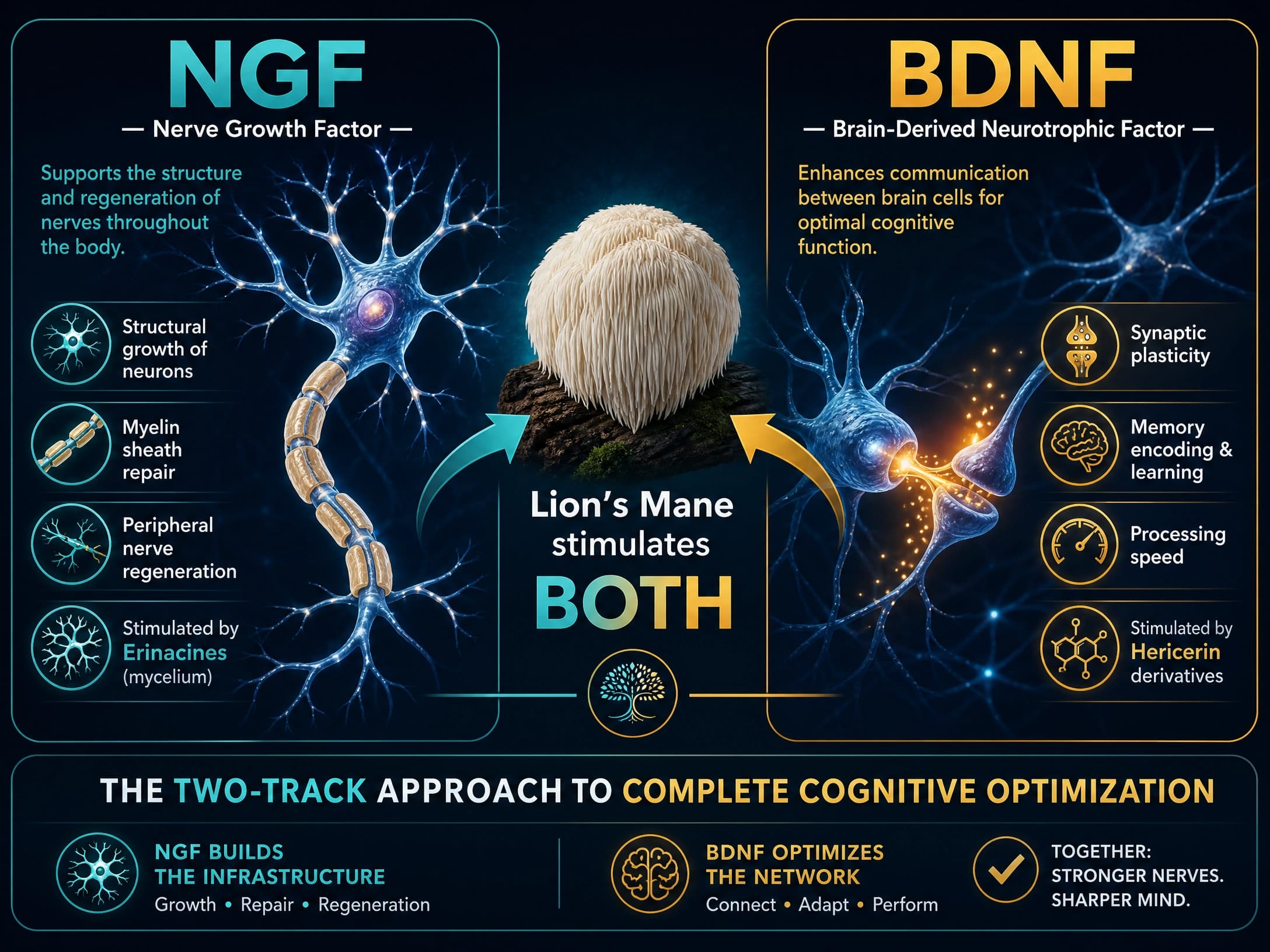
Lion's Mane is unique in its ability to stimulate both Nerve Growth Factor (NGF) for structural repair and Brain-Derived Neurotrophic Factor (BDNF) for synaptic plasticity and memory encoding.
The Landmark 2009 Mori Trial: Reversing Cognitive Decline
While animal and in-vitro studies are fascinating, the true test of any supplement is how it performs in double-blind, placebo-controlled human clinical trials. For Lion's Mane, the watershed moment came in 2009 with a study conducted by Dr. Koichiro Mori and his team in Japan.
The researchers took 30 older adults (aged 50 to 80) who had been diagnosed with mild cognitive impairment (MCI). They split them into two groups: one received a placebo, and the other received four 250mg tablets containing 96% dry Lion's Mane powder, three times a day (totaling about 3 grams daily) for 16 weeks [3].
The subjects were tested using the Revised Hasegawa Dementia Scale (HDS-R) at weeks 8, 12, and 16. The results were remarkable:
- At every testing interval, the Lion's Mane group showed significantly increased cognitive function scores compared to the placebo group.
- The cognitive scores of the Lion's Mane group increased steadily with the duration of intake, suggesting a compounding, cumulative benefit over time.
- Laboratory tests showed absolutely no adverse side effects from the mushroom supplementation.
However, the study revealed one crucial caveat. Four weeks after the 16-week supplementation period ended, the researchers tested the subjects again. Without the daily intake of Lion's Mane, their cognitive scores decreased significantly, returning toward their baseline levels [3].
The conclusion was clear: Lion's Mane is highly effective at improving mild cognitive impairment, but it requires consistent, ongoing supplementation to maintain those benefits. It is not a one-time cure; it is daily nourishment for the brain.
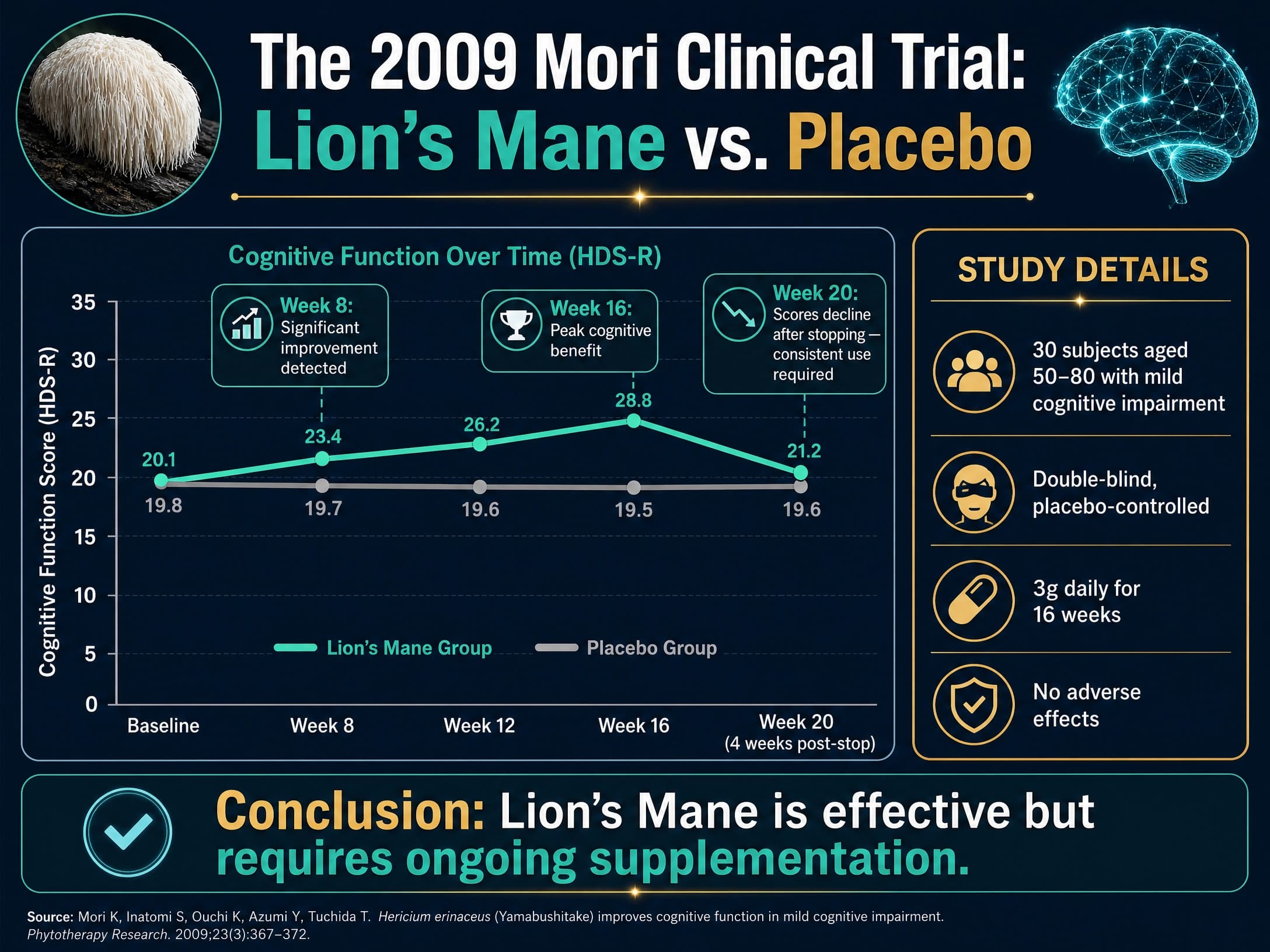
The 2009 Mori trial demonstrated that cognitive function improved steadily over 16 weeks of Lion's Mane supplementation, but declined when supplementation was stopped, highlighting the need for consistent daily use.
The Hippocampus: Where Memories Are Made (and Saved)
To understand exactly how Lion's Mane improved the memory of the subjects in the Mori trial, we have to look at a specific region of the brain: the hippocampus.
The hippocampus is a seahorse-shaped structure nestled deep in the brain. It is the primary command center for learning, memory consolidation (turning short-term memories into long-term ones), and spatial navigation. It is also one of the very few regions in the adult human brain where neurogenesis—the birth of entirely new neurons—continues to occur throughout our lifespan.
When the hippocampus shrinks or becomes inflamed (often due to chronic stress, heavy metal toxicity, or poor gut health), memory fails. This is why hippocampal atrophy is one of the earliest and most prominent signs of Alzheimer's disease.
Research has shown that the bioactive compounds in Lion's Mane specifically target the hippocampus. By stimulating BDNF and NGF in this exact region, Lion's Mane promotes the survival of existing hippocampal neurons and accelerates the birth of new ones [4]. This localized neurogenesis is the biological mechanism behind the "memory-boosting" effect that so many users report.
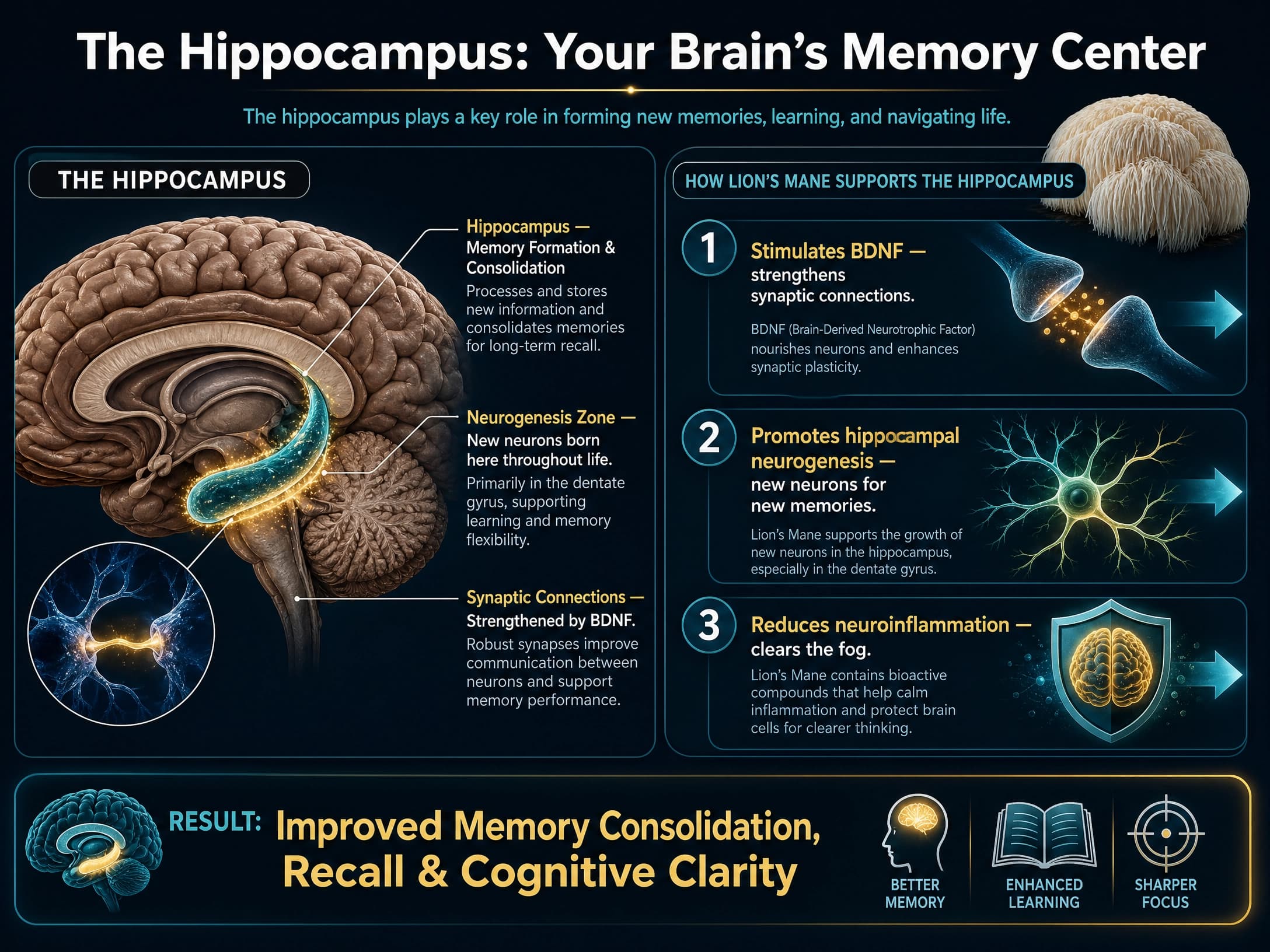
The hippocampus is the brain's memory center. Lion's Mane specifically targets this region, stimulating the birth of new neurons (neurogenesis) to improve memory consolidation and recall.
Beyond Memory: Processing Speed and Brain Fog
While the 2009 Mori trial focused on older adults with cognitive impairment, a groundbreaking 2023 study asked a different question: What does Lion's Mane do for healthy, young adults?
Published in the journal Nutrients, this double-blind, placebo-controlled pilot study examined the acute and chronic effects of Lion's Mane supplementation on young adults without any known health conditions [5].
The researchers found that Lion's Mane supplementation improved speed of performance and reduced subjective stress. The participants were able to process information faster and execute cognitive tasks more efficiently. The researchers hypothesized that the BDNF effects elicited by the mushroom were responsible for this improvement in processing speed, alongside learning and memory [5].
This is the antidote to brain fog. Brain fog is not just a memory issue; it is a processing issue. It is the feeling of wading through mental molasses, where thoughts are slow to form and words are hard to find. By reducing neuroinflammation and optimizing synaptic plasticity via BDNF, Lion's Mane clears the pathways, allowing neural signals to fire rapidly and efficiently.
Whether you are an older adult looking to protect your memory, or a young professional seeking to eliminate brain fog and accelerate your processing speed, the clinical science is clear: Lion's Mane provides the neurotrophic support your brain needs to thrive.
But memory and focus are only part of the story. In the next article in this series, we will explore a completely different, yet equally vital, application of this remarkable mushroom: its ability to support peripheral nerve health and repair nerve damage throughout the entire body.
Frequently Asked Questions
Q: How long does it take for Lion's Mane to improve memory?
A: Clinical trials, such as the 2009 Mori study, show measurable cognitive improvements at the 8-week mark, with benefits compounding steadily through 12 and 16 weeks. While some users report acute improvements in focus and clarity within a few days, structural changes to memory and neuroplasticity require consistent daily use over a period of months.
Q: What is the difference between NGF and BDNF?
A: Nerve Growth Factor (NGF) primarily supports the structural growth, maintenance, and survival of neurons, acting like the physical scaffolding of the brain. Brain-Derived Neurotrophic Factor (BDNF) focuses on synaptic plasticity—the strengthening of connections between neurons—which is the biological basis for learning and memory encoding. Lion's Mane is unique because it stimulates both.
Q: Does Lion's Mane work for healthy young adults, or just older people?
A: Recent clinical research from 2023 demonstrates that Lion's Mane improves cognitive processing speed and reduces subjective stress in healthy young adults. While early research focused on cognitive decline in older populations, modern science confirms that its neurotrophic benefits optimize brain function across all age groups.
Q: Do the cognitive benefits of Lion's Mane last if I stop taking it?
A: According to clinical data, the cognitive benefits begin to decline when supplementation is stopped. In the Mori trial, cognitive scores decreased significantly four weeks after the subjects stopped taking the mushroom. Because neurogenesis and synaptic plasticity require ongoing neurotrophic support, Lion's Mane is most effective when used as a consistent daily supplement.
Q: What is the best dosage of Lion's Mane for cognitive benefits?
A: The 2009 Mori clinical trial used approximately 3 grams of dried Lion's Mane powder per day (four 250mg tablets of 96% dry powder, taken three times daily). Most quality supplements provide 500mg to 1000mg per serving. Look for a full-spectrum product that includes both the fruiting body (for hericenones) and mycelium (for erinacines) to ensure you are getting both active compound classes.
References
- Miranda, M., Morici, J. F., Zanoni, M. B., & Bekinschtein, P. (2019). Brain-Derived Neurotrophic Factor: A Key Molecule for Memory in the Healthy and the Pathological Brain. Frontiers in cellular neuroscience, 11, 236. https://doi.org/10.3389/fncel.2019.00236
- Ratto, D., Corana, F., Castelli, B., et al. (2020). Hericerin derivatives from Hericium erinaceus exert BDNF-like neurotrophic effect in hippocampal neurons. bioRxiv. https://doi.org/10.1101/2020.08.28.271676
- Mori, K., Inatomi, S., Ouchi, K., Azumi, Y., & Tuchida, T. (2009). Improving effects of the mushroom Yamabushitake (Hericium erinaceus) on mild cognitive impairment: a double-blind placebo-controlled clinical trial. Phytotherapy research : PTR, 23(3), 367–372. https://doi.org/10.1002/ptr.2634
- Ryu, S., Kim, H. G., Kim, J. Y., Kim, S. Y., & Cho, K. O. (2018). Hericium erinaceus Extract Reduces Anxiety and Depressive Behaviors by Promoting Hippocampal Neurogenesis in the Adult Mouse Brain. Journal of medicinal food, 21(2), 174–180. https://doi.org/10.1089/jmf.2017.4006
- Docherty, S., Doughty, F. L., & Smith, E. F. (2023). The Acute and Chronic Effects of Lion's Mane Mushroom Supplementation on Cognitive Function, Stress and Mood in Young Adults: A Double-Blind, Parallel Groups, Pilot Study. Nutrients, 15(22), 4842. https://doi.org/10.3390/nu15224842

Ready to Discover Your Score?
This 2-minute quiz is the essential first step to understanding your body’s current toxic load and identifying the root cause of how you feel.
Take The Toxicity QuizExplore More Articles
Dive deeper into topics like detoxification, gut health, and mental clarity on our blog. Knowledge is the key to taking control of your health.
Visit The Blog