Lion's Mane Mushroom for Peripheral Nerve Support — Healing Neuropathy from the Inside Out
In the first article of this series, we explored how Lion's Mane mushroom stimulates Nerve Growth Factor (NGF) to promote neurogenesis in the brain. In the second article, we saw how this translates to improved memory, focus, and the elimination of brain fog.
But the nervous system does not end at the brain and spinal cord. It extends outward, branching into a vast, intricate network of peripheral nerves that connect your brain to your fingertips, toes, skin, and internal organs. When these peripheral nerves are damaged, the result is neuropathy—a condition characterized by numbness, tingling, burning pain, and loss of motor function.
For decades, conventional medicine has treated peripheral neuropathy primarily through symptom management, using pain blockers and anti-seizure medications that dull the nervous system rather than heal it. However, a growing body of peer-reviewed research reveals that Hericium erinaceus (Lion's Mane) possesses profound neuroregenerative properties capable of accelerating the actual physical repair of damaged peripheral nerves.
Key Takeaways
- Accelerates Nerve Repair: Clinical studies show Lion's Mane significantly speeds up functional recovery and axon regeneration following peripheral nerve crush injuries.
- Repairs the Myelin Sheath: The erinacines in Lion's Mane stimulate Schwann cells, the specialized cells responsible for rebuilding the protective myelin sheath around peripheral nerves.
- Targets Multiple Neuropathies: Research indicates potential relief for diabetic neuropathy, chemotherapy-induced peripheral neuropathy (CIPN), and trauma-induced nerve damage.
- Reduces Neuroinflammation: By lowering pro-inflammatory cytokines and oxidative stress, Lion's Mane addresses the root cause of chronic neuropathic pain.
Lion's Mane Mushroom for Neuropathy: The Science of Peripheral Nerve Repair (A Quick Overview)
Before we dive deep into the clinical science, watch this quick overview explaining how Lion's Mane accelerates peripheral nerve repair and remyelination.
In This Article:
- The Neuropathy Epidemic: When the Wires Fray
- Schwann Cells and the Myelin Sheath: The Insulation of the Nervous System
- The Crush Injury Study: Proof of Accelerated Regeneration
- Diabetic and Chemotherapy-Induced Neuropathy (CIPN)
- Conclusion: A Natural Catalyst for Nerve Repair
- Frequently Asked Questions
The Neuropathy Epidemic: When the Wires Fray
To understand how Lion's Mane heals peripheral nerves, we must first understand how they become damaged. Peripheral nerves are like electrical wires. They have an inner conductive core (the axon) and an outer protective insulation (the myelin sheath).
Neuropathy occurs when either the axon or the myelin sheath is compromised. This damage can be caused by physical trauma (such as a crush injury or compression), chronic high blood sugar (diabetic neuropathy), toxic exposure (such as heavy metal toxicity or chemotherapy drugs), or systemic inflammation.
When a peripheral nerve is injured, the body initiates a process called Wallerian degeneration. The damaged portion of the nerve is broken down and cleared away by immune cells. Once the debris is cleared, the nerve must slowly regrow its axon and rebuild its myelin sheath to restore function. This process is notoriously slow, often taking months or years, and in many cases, the regeneration is incomplete, leaving the patient with chronic pain or numbness.
Schwann Cells and the Myelin Sheath: The Insulation of the Nervous System
The key to peripheral nerve repair lies in a specialized type of glial cell called the Schwann cell. Schwann cells wrap themselves around the axons of peripheral nerves, forming the myelin sheath. Without a healthy myelin sheath, electrical signals leak out, slow down, or misfire entirely—resulting in the burning and tingling sensations of neuropathy.
When a nerve is damaged, Schwann cells dedifferentiate (revert to an earlier cellular state) and form a "regeneration track" to guide the new axon as it grows back. They also secrete Nerve Growth Factor (NGF) to stimulate this growth.
This is where Lion's Mane enters the picture. Research has shown that the bioactive compounds in Lion's Mane—specifically the erinacines found in the mushroom's mycelium—directly target and stimulate Schwann cells [4]. By inducing the production of NGF, Lion's Mane accelerates the activity of Schwann cells, prompting them to rebuild the myelin sheath faster and more robustly than the body could on its own.
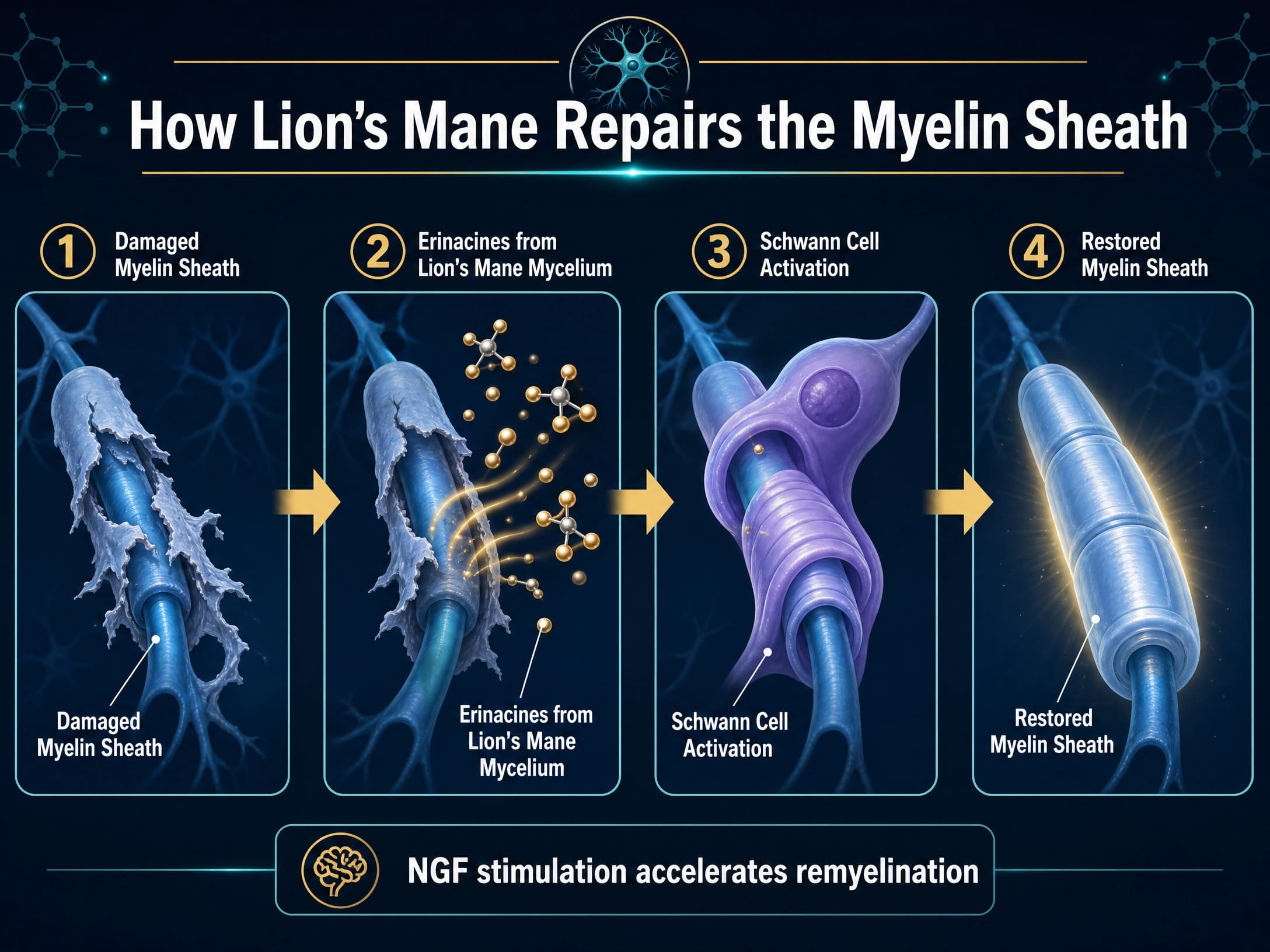
Schwann cells are responsible for building and repairing the myelin sheath around peripheral nerves. The erinacines in Lion's Mane stimulate these cells via NGF production, accelerating the remyelination process after nerve damage.
The Crush Injury Study: Proof of Accelerated Regeneration
One of the most compelling demonstrations of Lion's Mane's neuroregenerative power comes from a landmark 2011 study published in Evidence-Based Complementary and Alternative Medicine [1].
Researchers used a well-established model of peripheral nerve damage: a crush injury to the peroneal nerve in rats. They divided the subjects into groups, with one group receiving a daily oral administration of an aqueous extract of Lion's Mane fruiting bodies, and another receiving mecobalamin (a form of Vitamin B12 commonly used as a standard pharmaceutical treatment for nerve repair).
The results were remarkable. The researchers tracked the functional recovery of the subjects using a walking track analysis (the Peroneal Functional Index). They found that the return of hind limb function occurred significantly earlier in the group receiving the Lion's Mane extract compared to the negative control group. In fact, the Lion's Mane group performed as well as, and in some metrics better than, the group receiving the standard pharmaceutical treatment.
Histological examinations (looking at the tissue under a microscope) confirmed the behavioral results. The physical regeneration of the axons and the reinnervation of the motor endplates developed much better in the Lion's Mane group. The mushroom was not just masking pain; it was physically accelerating the regrowth of the crushed nerve [1] [2].
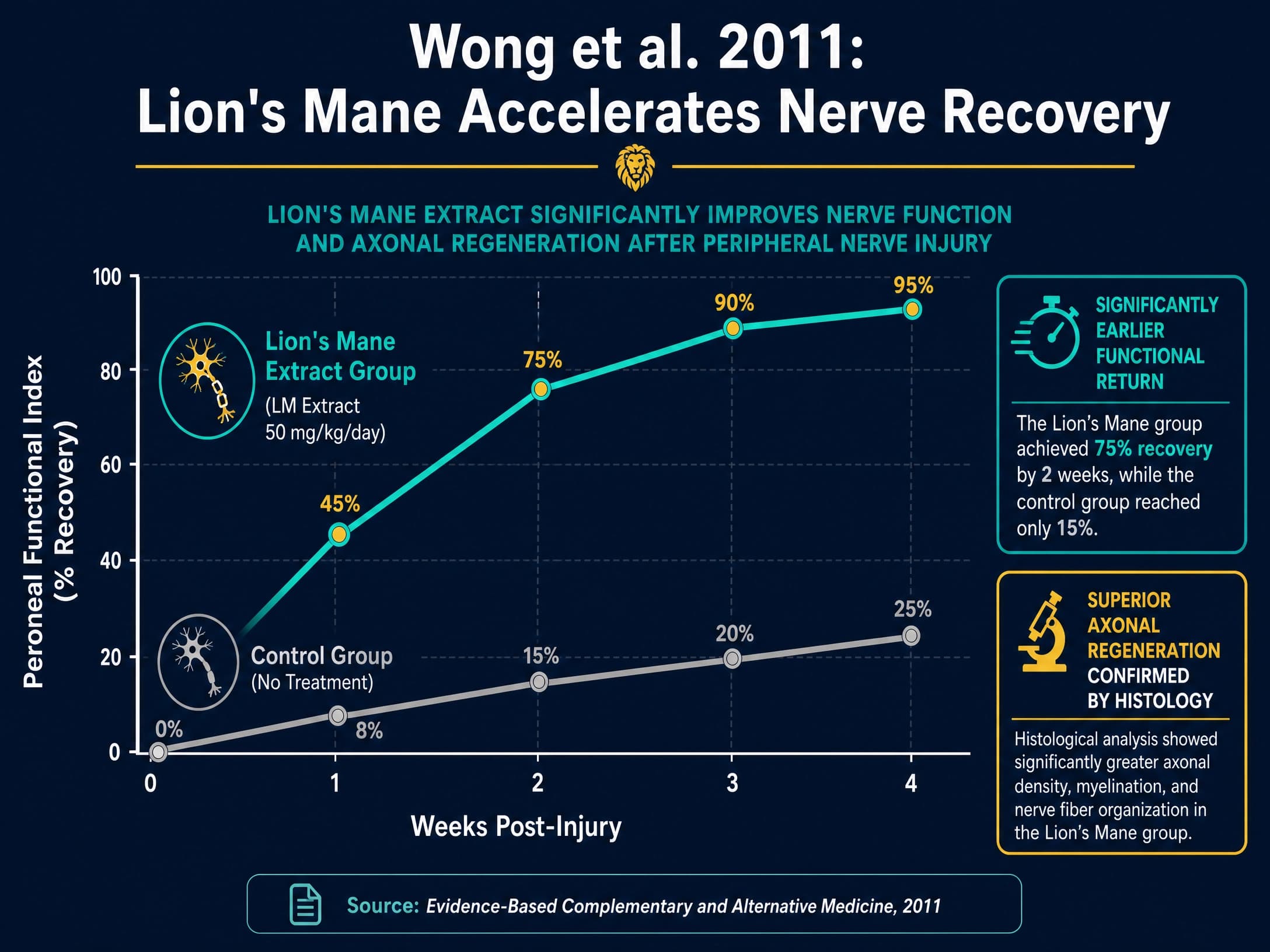
In the 2011 Wong et al. study, daily administration of Lion's Mane extract significantly accelerated functional recovery and axonal regeneration following a peripheral nerve crush injury, outperforming the negative control and rivaling standard pharmaceutical treatments.
Diabetic and Chemotherapy-Induced Neuropathy (CIPN)
Diabetic Neuropathy: Chronic high blood sugar damages the delicate blood vessels that supply oxygen and nutrients to peripheral nerves, leading to oxidative stress and nerve death. Animal studies have shown that Lion's Mane extract can significantly reduce neuropathic pain in diabetic models. Furthermore, the mushroom exhibits antioxidant properties that help protect the nerves from the oxidative damage caused by elevated glucose levels, while simultaneously helping to lower blood sugar itself.
Chemotherapy-Induced Peripheral Neuropathy (CIPN): CIPN is a severe, dose-limiting side effect of many cancer treatments. The toxic chemicals used to destroy cancer cells also inflict massive oxidative damage and inflammation on peripheral nerves. Recent research has explored the healing effect of Hericium erinaceus in experimental CIPN models, finding that its potent anti-inflammatory and neurotrophic properties can help mitigate the nerve damage caused by neurotoxic drugs.
In both of these conditions, chronic neuroinflammation is a primary driver of pain. Lion's Mane has been shown to significantly reduce pro-inflammatory cytokines (such as TNF-α and IL-6), addressing the inflammatory root cause of neuropathic pain rather than merely blocking the pain signal [3].
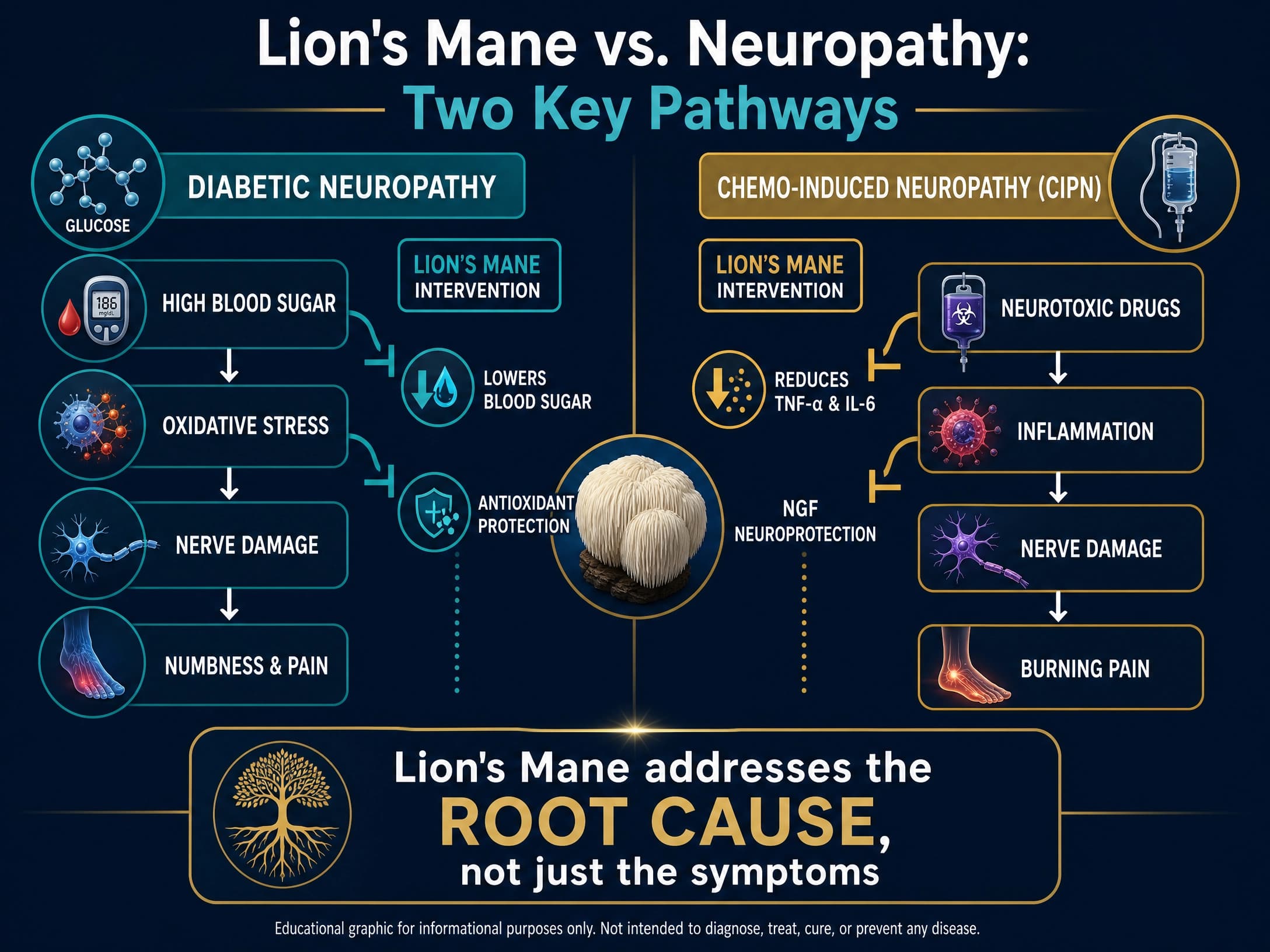
Beyond physical trauma, Lion's Mane addresses metabolic and toxic nerve damage by reducing neuroinflammation, lowering oxidative stress, and providing the neurotrophic support necessary to repair nerves damaged by high blood sugar or chemotherapy.
Conclusion: A Natural Catalyst for Nerve Repair
Peripheral neuropathy is notoriously difficult to treat because peripheral nerves regenerate at an agonizingly slow pace—roughly one millimeter per day under optimal conditions. When the body's natural repair mechanisms are hindered by age, poor circulation, or chronic inflammation, that regeneration can stall completely.
The clinical science surrounding Lion's Mane suggests that it acts as a natural catalyst for this stalled repair process. By stimulating Schwann cells, upregulating Nerve Growth Factor, and reducing the oxidative stress that impedes healing, the unique compounds in Hericium erinaceus provide the biological scaffolding necessary for peripheral nerves to rebuild their myelin sheaths and regrow their axons.
Whether you are recovering from a physical nerve injury, managing the burning pain of diabetic neuropathy, or seeking to protect your nervous system from environmental toxins, Lion's Mane offers a scientifically validated, holistic approach to healing from the inside out.
In the final educational article of this series, we will explore one of the most fascinating and widely reported—yet least understood—effects of Lion's Mane: its profound impact on REM sleep, dream recall, and the phenomenon of lucid dreaming.
Frequently Asked Questions
Q: Can Lion's Mane cure my peripheral neuropathy?
A: Lion's Mane is not a "cure" in the pharmaceutical sense, but clinical and in vivo studies demonstrate that it significantly accelerates the body's natural nerve regeneration process. By stimulating Nerve Growth Factor (NGF) and Schwann cell activity, it helps repair the myelin sheath and regrow damaged axons, which can lead to substantial improvements in neuropathic symptoms over time.
Q: How long does it take to see improvements in nerve pain?
A: Peripheral nerves regenerate very slowly (about 1mm per day). While some users report reductions in inflammatory pain within a few weeks, structural repair of the myelin sheath and axonal regrowth requires consistent, daily supplementation over a period of several months. Patience and consistency are key when addressing neuropathy.
Q: Which part of the mushroom is best for nerve repair?
A: Both the fruiting body and the mycelium are crucial. The fruiting body contains hericenones, while the mycelium contains erinacines. Research indicates that erinacines (from the mycelium) are particularly potent at stimulating NGF and promoting myelination via Schwann cells. Therefore, a dual-extracted supplement that includes both the mycelium and the fruiting body is optimal for peripheral nerve support.
Q: Does Lion's Mane interact with neuropathy medications like Gabapentin?
A: Lion's Mane is generally considered safe and well-tolerated, with no widely reported negative interactions with standard neuropathy medications like Gabapentin or Pregabalin. However, because Lion's Mane works by physically repairing the nerve rather than just blocking pain signals, it is a complementary approach. Always consult with your healthcare provider before adding new supplements to your regimen.
Q: Is Lion's Mane effective for neuropathy caused by chemotherapy?
A: Emerging research in experimental CIPN models suggests that Lion's Mane's potent anti-inflammatory and neurotrophic properties can help mitigate the peripheral nerve damage caused by neurotoxic chemotherapy drugs. By reducing pro-inflammatory cytokines such as TNF-α and IL-6, and simultaneously stimulating NGF to support nerve repair, Lion's Mane addresses both the inflammatory and structural dimensions of chemotherapy-induced neuropathy. Clinical trials in humans are ongoing, but the preclinical evidence is promising.
References
- Wong, K. H., Naidu, M., David, P., Abdulla, M. A., Abdullah, N., Kuppusamy, U. R., & Sabaratnam, V. (2011). Peripheral Nerve Regeneration Following Crush Injury to Rat Peroneal Nerve by Aqueous Extract of Medicinal Mushroom Hericium erinaceus (Bull.: Fr) Pers. (Aphyllophoromycetideae). Evidence-based complementary and alternative medicine : eCAM, 2011, 580752. https://doi.org/10.1093/ecam/neq062
- Wong, K. H., Naidu, M., David, R. P., Bakar, R., & Sabaratnam, V. (2012). Neuroregenerative potential of lion's mane mushroom, Hericium erinaceus (Bull.: Fr.) Pers. (higher Basidiomycetes), in the treatment of peripheral nerve injury (review). International journal of medicinal mushrooms, 14(5), 427–446. https://doi.org/10.1615/intjmedmushr.v14.i5.10
- Wong, K. H., Kanagasabapathy, G., Naidu, M., David, P., & Sabaratnam, V. (2016). Hericium erinaceus (Bull.: Fr.) Pers., a medicinal mushroom, activates peripheral nerve regeneration. Chinese journal of integrative medicine, 22(10), 759–767. https://doi.org/10.1007/s11655-014-1624-2
- Li, I. C., Lee, L. Y., Tzeng, T. T., Chen, W. P., Chen, Y. P., Shiao, Y. J., & Chen, C. C. (2018). Neurohealth Properties of Hericium erinaceus Mycelia Enriched with Erinacines. Behavioural neurology, 2018, 5802634. https://doi.org/10.1155/2018/5802634

Ready to Discover Your Score?
This 2-minute quiz is the essential first step to understanding your body's current toxic load and identifying the root cause of how you feel.
Take The Toxicity QuizExplore More Articles
Dive deeper into topics like detoxification, gut health, and mental clarity on our blog. Knowledge is the key to taking control of your health.
Visit The Blog