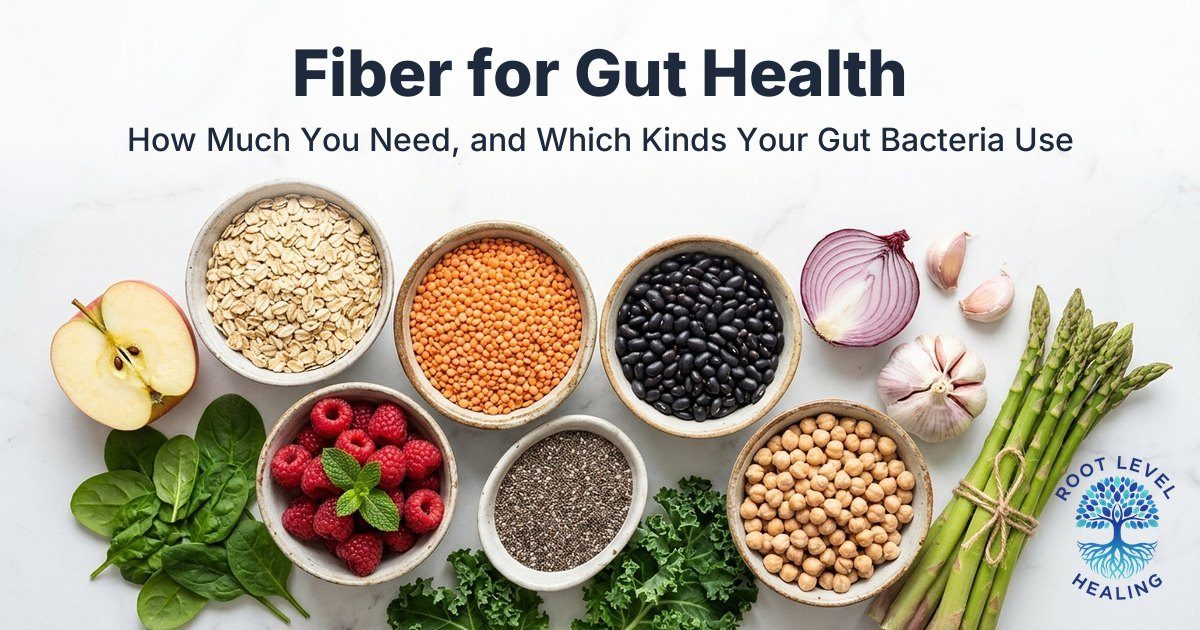
Fiber for Gut Health: How Much You Need, and Which Kinds Your Gut Bacteria Use
You've probably heard that you should eat more fiber, but what does fiber for gut health actually mean in practice? How much do you need, does it matter which kind, and why does a bowl of beans sometimes leave you feeling more bloated than better? These are fair questions, and the answers are more useful than the usual "eat your vegetables."
In this article, we'll look at what fiber does once it reaches your gut, how much adults are advised to eat, the main kinds of fiber and where to find them, what the research on fiber and the gut microbiome actually shows, and how to add more without discomfort. If you've read our article on three foods for gut health, this is the next step: the "why" behind many of those foods.
Key Takeaways
- Fiber feeds your gut bacteria: much of it passes your stomach and small intestine undigested, and bacteria in your large intestine ferment it into compounds called short-chain fatty acids.
- Most people fall short: the recommendation for adults is about 21 to 38 grams a day, depending on age and sex, while the average American eats about 15 to 16 grams.
- Different kinds do different jobs: soluble fiber turns to gel, insoluble fiber adds bulk, and fermentable fiber is the kind gut bacteria use most.
- Go slowly and drink water: adding fiber gradually over a few weeks, with enough fluid, helps avoid gas and bloating.
In This Article:
What Fiber Does in Your Gut
Dietary fiber is the part of plant foods your own digestive enzymes can't break down. Most carbohydrates are digested and absorbed in your small intestine, but fiber largely isn't, so it travels on to your large intestine, where trillions of bacteria live [2].
That's where things get interesting. Many of those bacteria can do what you can't: they break down, or ferment, certain fibers. In the process they make short-chain fatty acids such as acetate, propionate and butyrate, compounds that act on your gut lining, your immune system and your metabolism [1] [2]. Think of fiber as a meal you eat partly on behalf of your gut bacteria.
Not every fiber is fermented, and that's fine too. Some fibers hold water and add bulk, which helps things move along. Both roles matter, which is why the kind of fiber is worth knowing about, not just the amount.
How Much Fiber Do You Need?
The recommendation for older children, teenagers and adults is about 21 to 38 grams of fiber a day; the exact amount depends on your age and sex [5]. On food labels in the United States, the Daily Value for dietary fiber is 28 grams [6], which is a handy single number to aim for if you read labels.
Here's the honest part: most of us don't come close. Americans eat about 15 to 16 grams of fiber a day on average [3] [5], and national surveys suggest only about 5% of people meet the recommendation [4]. Many people also believe they already eat enough [4], so it can help to check for a few days how much you really get.
Reading the Nutrition Facts label is the simplest way to start. The "Dietary Fiber" line tells you the grams per serving and the percentage of the 28-gram Daily Value [6].
The Main Kinds of Fiber, and Where to Find Them
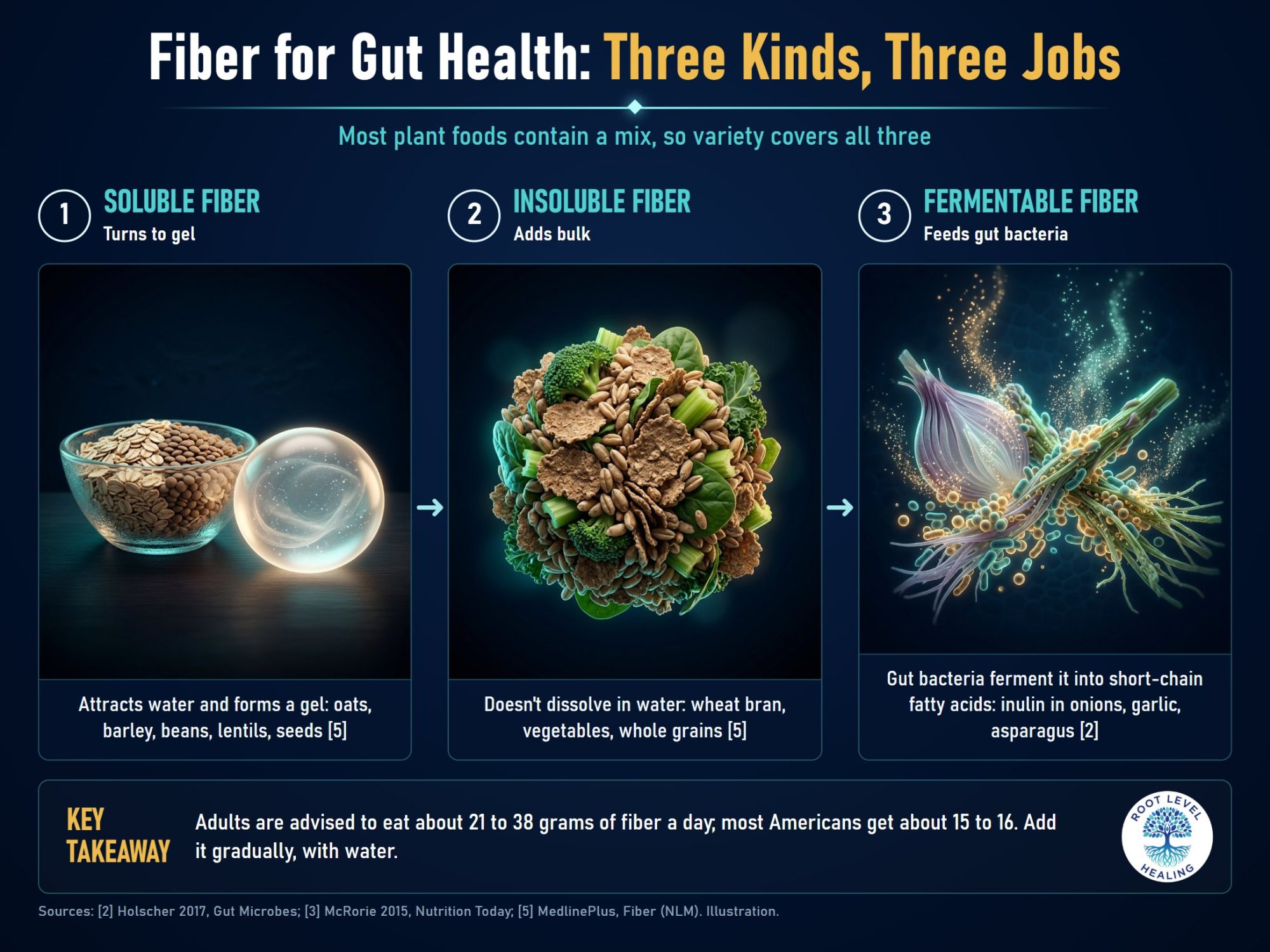
Fiber isn't one thing. Researchers describe fibers by how well they dissolve in water, how thick or gel-like they get, and how readily gut bacteria ferment them [2] [3]. For everyday eating, three groups are useful to know.
Soluble fiber
Soluble fiber attracts water and turns to gel during digestion. You'll find it in oat bran, barley, nuts, seeds, beans, lentils, peas and some fruits and vegetables [5]. Some soluble fibers, like the gel-forming fiber in psyllium, are viscous, and that thickness is what researchers link with many of fiber's effects in the small intestine [3].
Insoluble fiber
Insoluble fiber doesn't dissolve in water. It's found in wheat bran, vegetables and whole grains [5], and it mainly adds bulk, helping food move through your digestive system.
Fermentable (prebiotic) fiber
Fermentable fibers are the ones your gut bacteria use most. When a fiber is selectively used by beneficial microbes, it's often called a prebiotic, and inulin, found in foods such as chicory root, onions, garlic, leeks and asparagus, is one of the best-studied examples [2]. How much a given fiber changes your gut bacteria depends on its structure, how much you eat and the bacteria you already have [2].
 (opens a larger view)
Most plant foods contain a mix of fibers, so variety covers all three kinds.
| Kind of fiber | What it does | Where to find it |
|---|---|---|
| Soluble | Attracts water and turns to gel [5] | Oat bran, barley, nuts, seeds, beans, lentils, peas, some fruits and vegetables |
| Insoluble | Doesn't dissolve; adds bulk [5] | Wheat bran, vegetables, whole grains |
| Fermentable (prebiotic) | Fermented by gut bacteria into short-chain fatty acids [2] | Inulin in chicory root, onions, garlic, leeks and asparagus; many beans and whole grains |
In real food these groups overlap. A bowl of oats, a handful of lentils or an apple each contains several kinds of fiber at once, which is one more reason to eat a variety of plant foods rather than focusing on a single "best" fiber.
What the Research Shows About Fiber and Gut Bacteria
Reviews of the research describe fiber as one of the main ways diet shapes the gut microbiome: fiber feeds particular bacteria, and the short-chain fatty acids they make link those bacteria to your gut and the rest of your body [1] [2]. Much of the detailed evidence, though, comes from animal studies, and human studies don't always show the same thing.
What happens when fiber is scarce
In a well-known study in mice carrying human gut bacteria, a diet low in the carbohydrates gut microbes can use, which are found in dietary fiber, reduced the diversity of their gut bacteria. Within one generation the change was largely reversible, but over several generations some groups of bacteria were lost and didn't come back when fiber returned [8]. It's a mouse study, so it can't tell us exactly what happens in people, but it's a striking picture of how much gut bacteria depend on what we feed them.
A diet study in people
In a randomized study at Stanford, 36 healthy adults spent several weeks either gradually increasing plant-based fiber or eating more fermented foods [7]. In the high-fiber group, the gut microbiome's capacity to break down fiber increased, but the overall diversity of gut bacteria stayed stable during the study. The fermented-food group, by contrast, showed a steady rise in diversity [7]. The researchers also saw that people responded differently depending on the gut bacteria they started with.
So what can we take from this? Fiber clearly matters to your gut bacteria, but a few weeks of extra fiber isn't a quick switch, and responses vary from person to person. Fiber and fermented foods for gut health also seem to do different things, so they work well together rather than as substitutes.
How to Add More Fiber Without Discomfort
If you jump from 15 grams to 35 grams overnight, your gut will probably let you know. Eating a lot of fiber quickly can cause gas and bloating, which is why the usual advice is to add fiber gradually over a few weeks and to drink enough water, since water helps fiber pass through your digestive system [5]. Here's a gentle way to go about it:
- Add one change at a time. Swap white bread or rice for a whole-grain version, or add a spoonful of beans or lentils to a soup, and give your gut a week or so before the next change [5].
- Start the day with fiber. Oats, barley or a high-fiber cereal topped with fruit, nuts or seeds is an easy way to add several grams before lunch.
- Eat a variety of plants. Vegetables, fruits, beans, whole grains, nuts and seeds each bring different fibers, which covers all three kinds.
- Include some prebiotic foods. Onions, garlic, leeks and asparagus contain inulin [2]; cooked into everyday meals, they're an easy addition.
- Drink enough fluid. As your fiber goes up, so should your water [5].
- Check the label. The Dietary Fiber line and its % Daily Value help you compare breads, cereals and snacks quickly [6].
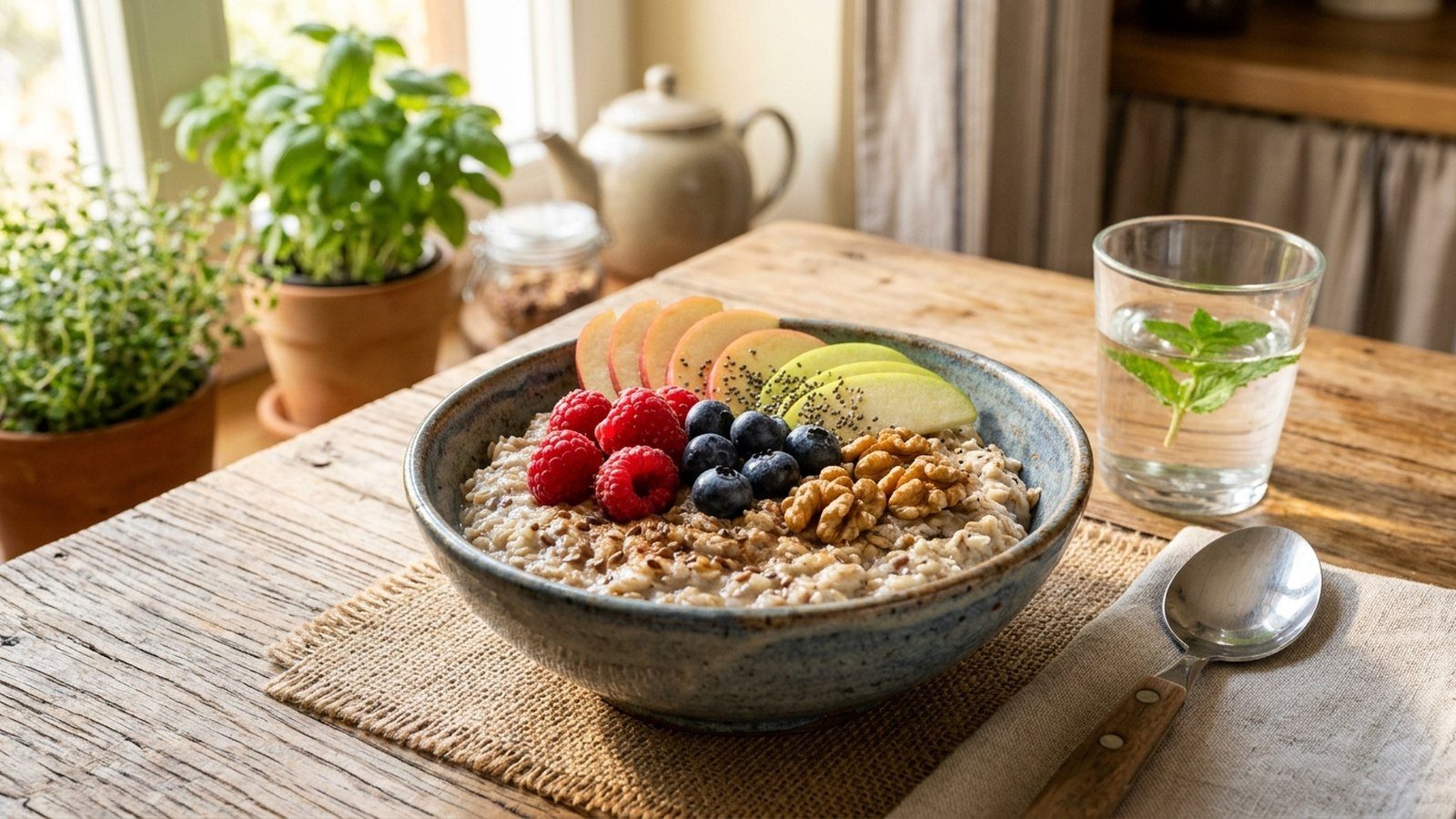
Oats with fruit, nuts and seeds add several grams of different fibers before the day has really started.
Our Gut Health & Microbiome guide puts fiber alongside the other everyday foundations of gut health in a step-by-step plan. If you're curious how gut health connects to how you feel day to day, our article on your gut as the surprising epicenter of aging is a good next read. Sleep is part of the picture too: our article on sleep and gut health looks at how your sleep and your gut microbiome talk to each other.
Food First: What About Fiber Supplements?
Fiber supplements are popular, but they aren't all alike. Only some have the physical properties, such as forming a gel, that researchers connect with the benefits seen in studies, and supplements can't be assumed to do what fiber from whole foods does [3]. Whole foods also bring a mix of fiber types along with vitamins, minerals and other plant compounds.
I want to be clear that this isn't about doing everything perfectly. A food-first approach simply means building most of your fiber from a variety of plant foods, then talking with a doctor or registered dietitian if you're considering a supplement, especially if you take medications or have a digestive condition. Our article on when diet changes alone don't seem to be enough looks at other factors that shape gut health, and our article on leaky gut causes and signs explains what the research says about the gut lining.
The Toxicity Score Quiz is a free educational self-assessment that can help you see where to start; it's an educational tool only and doesn't replace a visit to your doctor.
When to Talk to a Doctor
A little extra gas when you first add fiber is common. But talk to a doctor if changing your diet brings on ongoing pain, or if you have a change in bowel habits that lasts more than a few weeks. See a doctor promptly for blood in your stool, unexplained weight loss, ongoing diarrhea, or severe or worsening abdominal pain.
If you have a digestive condition, have had bowel surgery, or have been told to follow a special diet, ask your doctor or a registered dietitian how much fiber, and which kinds, suit you before making big changes.
In our next article, we'll look at gut health testing: what each kind of test can and can't tell you.
References
- Makki, K., Deehan, E. C., Walter, J., & Bäckhed, F. (2018). The impact of dietary fiber on gut microbiota in host health and disease. Cell Host & Microbe, 23(6), 705–715. https://doi.org/10.1016/j.chom.2018.05.012
- Holscher, H. D. (2017). Dietary fiber and prebiotics and the gastrointestinal microbiota. Gut Microbes, 8(2), 172–184. https://doi.org/10.1080/19490976.2017.1290756
- McRorie, J. W., Jr. (2015). Evidence-based approach to fiber supplements and clinically meaningful health benefits, part 1: what to look for and how to recommend an effective fiber therapy. Nutrition Today, 50(2), 82–89. https://doi.org/10.1097/NT.0000000000000082
- Quagliani, D., & Felt-Gunderson, P. (2017). Closing America's fiber intake gap: communication strategies from a Food and Fiber Summit. American Journal of Lifestyle Medicine, 11(1), 80–85. https://doi.org/10.1177/1559827615588079
- MedlinePlus Medical Encyclopedia. Fiber. U.S. National Library of Medicine (reviewed July 2026). https://medlineplus.gov/ency/article/002470.htm
- U.S. Food and Drug Administration. Daily Value on the Nutrition and Supplement Facts Labels. https://www.fda.gov/food/nutrition-facts-label/daily-value-nutrition-and-supplement-facts-labels
- Wastyk, H. C., Fragiadakis, G. K., Perelman, D., et al. (2021). Gut-microbiota-targeted diets modulate human immune status. Cell, 184(16), 4137–4153.e14. https://doi.org/10.1016/j.cell.2021.06.019
- Sonnenburg, E. D., Smits, S. A., Tikhonov, M., et al. (2016). Diet-induced extinctions in the gut microbiota compound over generations. Nature, 529(7585), 212–215. https://doi.org/10.1038/nature16504
Frequently Asked Questions
Q: How much fiber should I eat a day for gut health?
A: Most adults are advised to eat about 21 to 38 grams of fiber a day, depending on age and sex. The Daily Value on US food labels is 28 grams, a handy single target. Most Americans eat only about 15 to 16 grams, so many people can benefit from adding more fiber gradually, from a variety of plant foods.
Q: What is the difference between soluble and insoluble fiber?
A: Soluble fiber attracts water and turns to gel during digestion; it's found in oats, barley, beans, lentils, nuts, seeds and some fruits. Insoluble fiber doesn't dissolve in water and mainly adds bulk; it's found in wheat bran, vegetables and whole grains. Most plant foods contain both, which is why eating a variety covers you.
Q: What is prebiotic fiber?
A: Prebiotic fiber is fiber that beneficial gut bacteria can use selectively. They ferment it into short-chain fatty acids, compounds that act on the gut lining and beyond. Inulin, found in chicory root, onions, garlic, leeks and asparagus, is one of the best-studied examples. How strongly a prebiotic changes your gut bacteria varies from person to person.
Q: Why does fiber make me bloated?
A: It's usually a sign of adding too much too quickly. When gut bacteria ferment fiber they produce gas, and a sudden jump in fiber can cause gas and bloating. Adding fiber gradually over a few weeks and drinking enough water usually helps. If bloating or pain continues, or comes with other symptoms, talk to your doctor.
Q: Does eating more fiber change your gut bacteria?
A: It can, though not always quickly. Reviews describe fiber as one of the main ways diet shapes the gut microbiome. In a small human study, several weeks of extra fiber increased the gut bacteria's capacity to break down fiber, while overall diversity stayed stable, and people responded differently depending on the bacteria they started with.
Q: Is it better to get fiber from food or supplements?
A: Food is generally the better foundation. Fiber supplements differ a lot, only some have the properties linked with benefits in studies, and they can't be assumed to do what fiber from whole foods does. Whole foods also bring a mix of fiber types and nutrients. If you're considering a supplement, ask your doctor or a registered dietitian first.
This article is part of our gut health and microbiome guide.

Ready to Discover Your Score?
This 2-minute quiz is the essential first step to understanding your body's current toxic load and identifying the root cause of how you feel.
Take The Toxicity QuizExplore More Articles
Dive deeper into topics like detoxification, gut health, and mental clarity on our blog. Knowledge is the key to taking control of your health.
Visit The Blog